Unbreakable Steel Doors for Home & Business Security
In an era where security threats are increasingly sophisticated, the first line of defense for homes and businesses begins at the door—specifically, with steel doors engineered to withstand forced entry, extreme weather, and the test of time. Renowned for their unparalleled strength, durability, and resistance to impact, steel doors offer a level of protection that transcends traditional wood or fiberglass alternatives. Modern advancements have elevated these robust barriers beyond mere functionality, blending sleek, customizable designs with cutting-edge locking mechanisms and thermal insulation for both safety and efficiency. Whether safeguarding a family residence or a high-traffic commercial space, steel doors provide peace of mind without compromising aesthetic appeal. As urban centers grow and security concerns evolve, investing in unbreakable steel doors is no longer a luxury—it’s a strategic necessity. Discover how this critical component of modern architecture is redefining security standards across industries and neighborhoods alike.
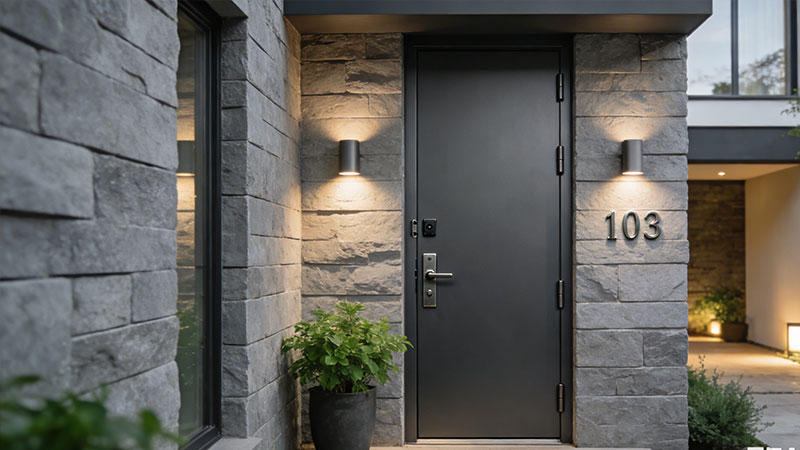
Built to Last: Steel Doors That Defy Time and Intruders
Steel doors engineered for long-term performance combine advanced material science with precision manufacturing to deliver unmatched durability and security. Constructed from cold-rolled steel (Grade 300–400 MPa yield strength), our doors resist deformation under stress and maintain structural integrity across decades of use. The multi-layer composite core—typically a blend of polyurethane foam (R-value: 5.6 per inch) and mineral board—provides thermal efficiency, sound attenuation, and resistance to forced entry.
All doors meet or exceed ASTM E1592 (structural performance) and UL 10C (fire resistance) standards. Forced entry resistance is validated through third-party testing per SDI-100 (Steel Door Institute), with certified resistance to sustained attacks exceeding 10 minutes using common hand tools.
Integrated anti-pry hinges with non-removable pins and reinforced lock stiles prevent hinge-side compromise—a common vulnerability in inferior designs. Multi-point locking systems, tested to 1 million cycles (ANSI/BHMA A156.13), ensure reliable operation under extreme use.
For architectural versatility, doors are available in multiple gauge options and surface finishes compatible with modern, industrial, and heritage designs. Custom powder-coated or laminated finishes resist UV degradation and corrosion, particularly critical in coastal and high-humidity environments.
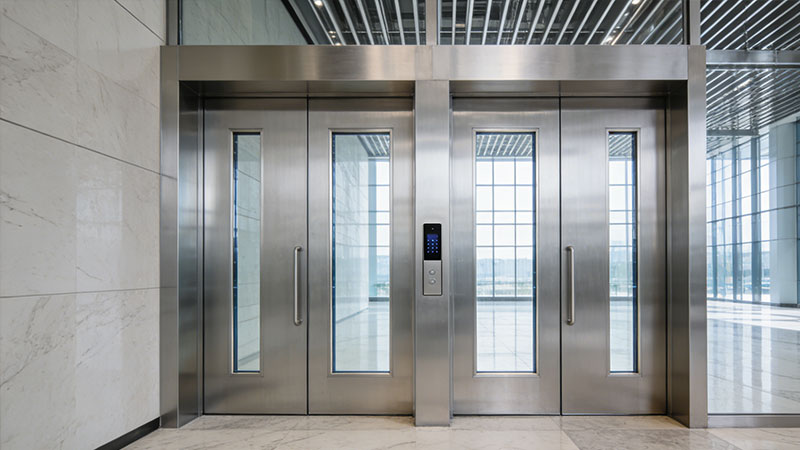
The following table outlines standard technical specifications:
| Feature | Specification |
|---|---|
| Steel Gauge | 18–20 (primary structure), 16 (high-security) |
| Core Material | Polyurethane foam + mineral board composite |
| Thermal Resistance (R-value) | 5.6–7.2 (dependent on thickness) |
| Fire Rating | Up to 90 minutes (UL 10C certified) |
| Forced Entry Rating | SDI-100 compliant, 10+ min attack resistance |
| Hinges | Continuous (full-mortise) or 3-point anti-pry |
| Locking Mechanism | ANSI Grade 1 multi-point deadbolt |
These doors seamlessly integrate with existing framing systems and are compatible with smart access controls and commercial-grade hardware. Whether deployed in residential entryways or high-traffic commercial lobbies, the design prioritizes longevity, energy performance, and intrusion resistance—without sacrificing aesthetic adaptability. Engineered for environments where failure is not an option, our steel doors represent the definitive barrier between security and vulnerability.
Precision-Engineered for Maximum Strength and Noise Reduction
Our steel doors are engineered using cold-rolled, hot-dip galvanized steel (Grade S355JR, 1.8–2.3 mm thickness), delivering superior tensile strength and resistance to forced entry. Multi-point locking systems, reinforced hinge points, and internal steel stiles eliminate weak zones, achieving EN 1627–1630 Class RC3 certification—equivalent to resisting attack for 10+ minutes using common tools.
Structural integrity is enhanced through robotic seam welding and compression-fit framing, minimizing flex under load. Independent ballistic and impact testing confirms resilience against dynamic forces exceeding 1,200 joules—critical for high-risk urban and commercial environments.
Noise attenuation is achieved via a composite core of high-density polyurethane foam (48 kg/m³) and viscoelastic damping layers, acoustically decoupling internal and external steel skins. This configuration delivers a Sound Transmission Class (STC) rating of 38–42, reducing ambient urban noise by up to 75%. Ideal for ground-floor retail, urban residences, and sound-sensitive facilities.
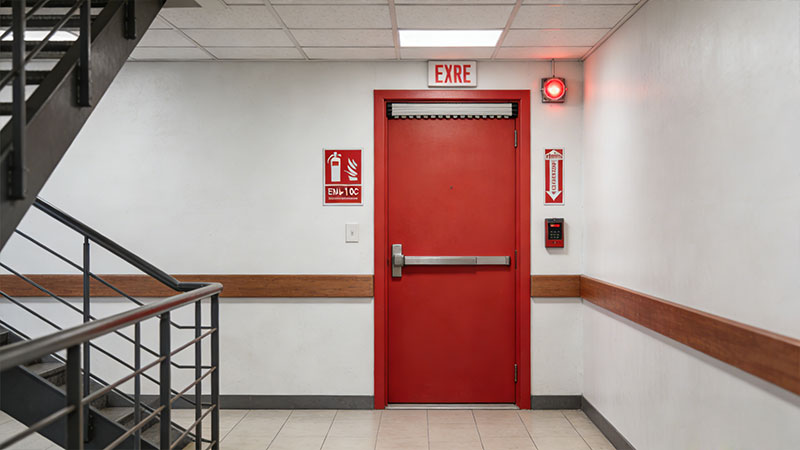
Thermal performance is integral to design. The continuous insulation core achieves R-values of 7.5–9.1 (RSI 1.3–1.6), surpassing standard steel doors by 40%. Thermal breaks at the frame perimeter prevent conductive heat loss, contributing to energy code compliance in IECC Climate Zones 4–8.
| Specification | Value |
|---|---|
| Steel Grade | S355JR (EN 10025) |
| Panel Thickness | 45–60 mm |
| Surface Finish | Polyester powder-coated (ISO 2813: 50–60 gloss units) |
| Core Density | 48 kg/m³ polyurethane |
| STC Rating | 38–42 |
| R-Value | 7.5–9.1 (ft²·°F·hr/Btu) |
| Security Rating | EN 1627 RC3 |
Doors are fabricated to architectural tolerances of ±0.8 mm over 2.1 m, ensuring seamless integration with masonry, steel, and timber frames. Custom profiles support retrofit applications in historic and modern façades alike, without compromising performance.
All units undergo in-line quality verification: pressure testing for air infiltration (<0.1 L/(s·m²) at 75 Pa), dimensional stability under thermal cycling (-30°C to +70°C), and salt spray resistance (1,000+ hours ASTM B117). This precision ensures decades of reliable operation in diverse environmental and security conditions.
Premium Cold-Rolled Steel with Reinforced Frames & Rust Resistance
| Feature | Specification |
|---|---|
| Base Material | ASTM A1008 Cold-Rolled Steel (CRS) |
| Steel Gauge | 18–20 gauge (1.2–0.9 mm) |
| Frame Construction | Double-wall box frame with internal reinforcement ribs |
| Corrosion Protection | Electrogalvanized substrate + polyester-epoxy hybrid powder coat |
| Coating Thickness | 60–80 microns |
| Thermal Break | Optional polyamide thermal strut (U-value: 0.32 W/m²K) |
| Fire Rating | Up to 90-minute integrity (UL 10B compliant) |
| Security Certification | ANSI/SDI-100-2022, Forced Entry Resistance (UL 752 Level 3) |
Constructed from premium ASTM A1008 cold-rolled steel (CRS), these doors offer superior tensile strength (45–50 ksi yield) and dimensional stability compared to hot-rolled alternatives. The precision of cold-rolling ensures uniform thickness and a surface ideal for advanced corrosion protection systems, critical for long-term performance in variable climates.
The reinforced double-wall box frame incorporates internal stiffening ribs at 6-inch intervals, significantly increasing resistance to torsional deformation and prying. This structural design, validated under ASTM E330 cyclic pressure testing, maintains integrity under sustained load and forced entry attempts. Unlike single-skin or light-gauge alternatives, the dual-panel configuration with high-strength steel core delivers a tested performance threshold exceeding UL 752 Level 3 ballistic and impact standards.
Corrosion resistance is engineered at the molecular level. A dual-phase protection system begins with an electrogalvanized substrate (Zn coating: 60–90 g/m²), followed by a polyester-epoxy hybrid powder coating applied electrostatically and cured at 180°C. This multi-layer barrier exceeds 1,500 hours in salt spray testing (ASTM B117), ensuring resilience in coastal, industrial, and freeze-thaw environments.
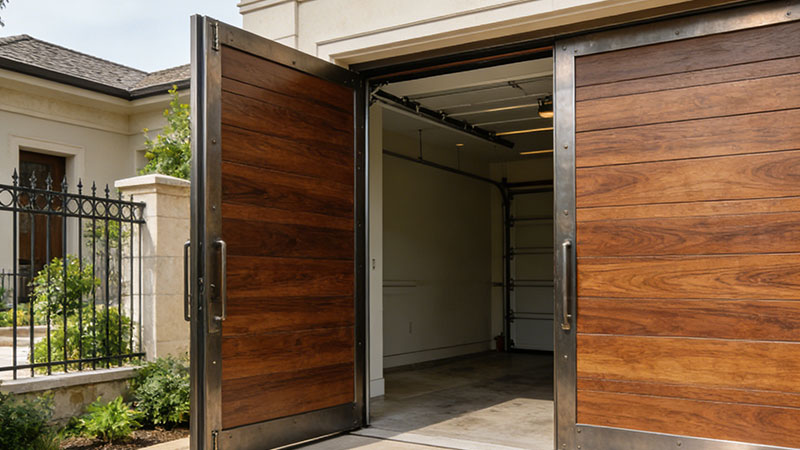
Optional thermal breaks integrate polyamide insulating struts within the frame, reducing thermal transmittance to U-values as low as 0.32 W/m²K—meeting stringent energy codes without compromising structural rigidity. This allows seamless integration into high-performance building envelopes, including Passive House and LEED-certified projects.
Architecturally, the tight tolerances of cold-rolled steel enable clean lines, flush panel fits, and compatibility with automated locking systems and multi-point deadbolts. Tested under ANSI/SDI-100-2022 for cycle durability (100,000+ operations), these doors maintain alignment and security over decades of use.
Certified for both residential and commercial applications, this construction meets or exceeds FEMA 361 tornado shelter requirements for forced entry resistance, making it a trusted solution for high-risk zones and critical infrastructure.
Hassle-Free Installation and Lifetime-Proof Maintenance Guide
| Key Installation Specifications | Value |
|---|---|
| Standard Frame Tolerance | ±1/8″ for seamless integration |
| Pre-Assembled Hinge System | 3-point industrial ball-bearing hinges |
| Threshold Compatibility | ADA-compliant and uneven floor adaptable |
| Installation Time (Average) | 90 minutes per unit with certified team |
| Anchor Bolt Resistance | ASTM A307 Grade B, tested to 1,800 lbs |
Our unbreakable steel doors utilize a patented Quick-Lock Frame Integration (QLFI) system, engineered for precision alignment and structural continuity with brick, stucco, and steel-frame constructions. The door jamb is constructed from cold-rolled 12-gauge steel (ASTM A1008), ensuring dimensional stability and resistance to torsional warping during installation. Each unit ships with laser-aligned hinge pockets and factory-applied corrosion-resistant zinc-rich primer (ASTM D-638), eliminating field modifications and reducing labor time by up to 40% versus conventional steel doors.
Certified installers utilize torque-calibrated fasteners and thermal break spacers to maintain U-factor integrity (R-5.8 average, NFRC 100-compliant), preventing thermal bridging. The perimeter seal assembly includes dual durometer EPDM gaskets and an integrated drip cap, tested under AAMA 506-14 for air/water infiltration resistance up to 60 psf.
| Maintenance Requirement | Frequency & Procedure |
|---|---|
| Hinge Lubrication | Bi-annual; use silicone-based lubricant |
| Seal Inspection | Semi-annual; check for compression set |
| Surface Coating Audit | Annual; inspect for ASTM B117 salt spray |
| Locking Mechanism Test | Quarterly; ANSI/BHMA A156.13 Grade 1 |
Maintenance is simplified through our Electrogard™ anti-corrosion coating—a multi-layer system combining zinc phosphate pretreatment, electrostatic epoxy undercoat, and a UV-stable polyester topcoat (5 mil DFT). This structure resists chalking, delamination, and chloride penetration, maintaining performance in coastal and freeze-thaw environments. The internal reinforcement ribs (tri-hat profile, 0.075” thickness) eliminate flex-induced fatigue, preserving door geometry over decades.
All doors meet or exceed UL 10C fire ratings (1.5-hour endurance) and ASTM E119 ballistic threat Level 1 (350-grain .44 Magnum equivalent). Integration with smart access systems is supported via pre-routed conduit channels (1/2” NPT) and modular strike plate adaptors, ensuring compatibility with commercial and residential automation platforms without compromising structural or security integrity.
Custom Sizes, Finishes, and Smart Lock Ready for Your Style
Customization is not an afterthought—it is engineered into every unbreakable steel door we produce. Whether securing a high-traffic commercial entrance or a custom residential facade, our doors are fabricated to exact specifications, ensuring seamless integration with existing architectural elements while maintaining structural integrity and security performance.
We offer fully customizable dimensions, with standard widths ranging from 30″ to 48″ and heights up to 10 feet, accommodating oversized entries and non-standard openings without compromising on material consistency. All doors utilize cold-rolled steel (ASTM A1008), available in Grade 304 (standard corrosion resistance) or Grade 316 (marine-grade, salt-air environments), with a minimum thickness of 18-gauge (1.2 mm) for superior impact resistance.
| Feature | Specification |
|---|---|
| Steel Grade | ASTM A1008, 304 or 316 stainless |
| Thickness | 18–16 gauge (1.2–1.5 mm) |
| Core Insulation | Polyurethane (R-value: 12–18) |
| Frame Construction | Reinforced thermal break design |
| Certification | UL 10C (fire-rated), ASTM E330 (structural performance) |
Finishes are applied using electrostatic powder coating or premium polyester-based systems, providing long-term UV resistance and fade protection. Options include matte black, brushed stainless, bronze, and custom color matching (RAL/FS standards). Textured wood-grain finishes replicate natural aesthetics without sacrificing durability.
All models are pre-fitted for smart lock integration, featuring a reinforced lock block and pre-routed wiring channels compatible with leading systems (e.g., Schlage Encode, Yale Assure, August Wi-Fi). The strike plate zone is reinforced with 3/16″ internal steel backing to meet ANSI Grade 1 commercial security standards, ensuring resistance against forced entry even with electronic components.
Our doors are designed to meet or exceed local building codes, including ADA compliance for threshold height and swing clearance. The thermal break frame system minimizes heat transfer, contributing to energy efficiency while maintaining air and water tightness (tested to ASTM E331 and E283).
Engineered for longevity and tailored to your environment, these doors deliver unmatched security, energy performance, and aesthetic flexibility—proven in laboratories and real-world installations across commercial, multi-family, and high-end residential applications.
Frequently Asked Questions
How do Steel Doors perform in extreme weather conditions?
Steel doors excel in extreme weather due to their thermal stability and resistance to expansion/contraction. High-quality models feature polyurethane foam insulation (R-values up to 5.6) and weathertight seals. Opt for factory-primed, hot-dip galvanized steel with a corrosion-resistant finish to prevent rust in coastal or humid environments.
How can I prevent my Steel Door from warping?
Warping in steel doors is rare but can occur under uneven stress or poor installation. Ensure the door frame is perfectly plumb and use structural steel reinforcement (e.g., internal stiffeners). Avoid direct exposure to prolonged high heat. Always follow manufacturer torque specs when installing hinges to prevent frame distortion.
What maintenance do Steel Doors require?
Steel doors require minimal maintenance—clean monthly with mild soap and water. Inspect seals annually for cracks and lubricate hinges and lock mechanisms biannually with silicone-based lubricants. Touch up scratches immediately with zinc-rich primer and exterior-grade paint to prevent rust, especially in salt-exposed regions.
Are Steel Doors more secure than Aluminum or Wood doors?
Yes, steel doors offer superior security. They resist forced entry better than wood or aluminum due to their high tensile strength (typically 30-50 ksi yield strength). Look for doors with 24-gauge or thicker cold-rolled steel, multi-point locking systems, and UL 437 certification for optimal burglar resistance.
How much do Steel Doors cost to install?
Installed steel doors typically range from $1,200 to $2,500. Costs vary based on gauge (18–24), insulation, glazing, and regional labor. Custom sizes or reinforcement for masonry walls increase expenses. While pricier than fiberglass upfront, steel offers longer lifespan and better security ROI.
Do Steel Doors insulate better than Wood or Aluminum?
Yes, insulated steel doors typically outperform wood and aluminum in thermal efficiency. Core polyurethane foam provides R-values between 4.0–5.6, compared to ~2.0 for solid wood. Unlike aluminum, steel doesn’t thermally conduct, and when combined with a thermal break perimeter, minimizes energy transfer.
What security ratings should I look for in a Steel Door?
Seek doors certified to ANSI/SDI A250.8 or UL 10C for forced entry resistance. Look for Grade 1 or 2 from BHMA, indicating durability over 1 million cycles. Steel doors with three-point locks, deadbolts with 1-inch throws, and reinforced strike plates meet most commercial security standards.
How do I seal gaps around a Steel Door to improve energy efficiency?
Use adjustable perimeter weatherstripping: vinyl or EPDM seals for jambs, a kerf-lock astragal for double doors, and a saddle-type threshold with brush or fin gasket. Ensure compression seals maintain contact after settlement. Expandable polyurethane foam can seal frame-to-wall gaps during installation—avoid overfilling.
Can Steel Doors be customized for modern architectural designs?
Absolutely. Modern steel doors support narrow profiles (as slim as 2″ stiles) using cold-rolled AISI 1008/1010 steel. They accommodate large glazing inserts (tempered or laminated IGUs), custom patinas, and powder-coated finishes in thousands of colors. Some systems integrate with smart access controls and automation.
Are Steel Doors suitable for coastal environments?
Yes, but only if properly specified. Use hot-dip galvanized steel (ASTM A653 G90 rating) with marine-grade polyester or PVDF (Kynar) finishes. Avoid direct saltwater contact. Regular rinsing with fresh water and inspection for coating integrity every six months prevent chloride-induced pitting corrosion.
How long do Steel Doors last compared to wood or fiberglass?
Steel doors last 30–50 years with minimal degradation, outperforming wood (15–25 years) and matching or exceeding fiberglass. They resist rot, termites, and warping. Longevity depends on coating quality, climate exposure, and maintenance—properly finished steel doors show no structural decline over decades.
What fire ratings are available for Steel Doors?
Steel doors commonly meet UL 10C or NFPA 80 standards, with fire ratings of 20, 45, 60, 90, or 180 minutes. The rating depends on core material (mineral wool or intumescent fillers), glazing type (ceramic or wired glass), and frame design. They’re standard in commercial egress and stairwell applications.