fire-rated doors for super high-rise residential buildings
In an era where skyscrapers pierce the clouds and vertical communities house thousands, the margin for error in fire safety is razor-thin. Super high-rise residential buildings—those soaring beyond 300 meters—present unique challenges: prolonged evacuation times, stack effect that accelerates smoke spread, and limited access for emergency responders. At the heart of this defense lies an often-overlooked hero: the fire-rated door. Far more than a simple barrier, these engineered assemblies are the silent sentinels of compartmentation, designed to withstand extreme temperatures, contain toxic fumes, and preserve tenable escape routes for occupants hundreds of stories above ground. Yet, specifying the right door involves navigating complex code requirements, material science, and real-world performance under duress. As urbanization pushes residential towers ever upward, understanding how fire-rated doors function as critical life-safety components is not optional—it is essential. This article explores the technical demands, regulatory frameworks, and innovative solutions that make these doors the unsung lifelines in the world’s tallest homes.
Protecting Lives Assets: Comprehensive Fire Safety for Towering Residences
Super high-rise residential structures demand fire-rated door assemblies that exceed standard compartmentation requirements. The primary failure mode in tower fires is not flame impingement but lateral heat transfer through door leaf cores, frame-to-wall joints, and hardware penetrations. Material selection, structural stability under positive pressure, and long-term environmental resistance dictate whether a door set maintains integrity for the mandated 60- to 120-minute rating.
Core Material Engineering
- Wood-Plastic Composite (WPC) cores are formulated at a controlled density range of 650–750 kg/m³ to balance screw-holding capacity with machinability. The PVC-to-wood ratio is held at 45:55 by weight to achieve a linear expansion rate below 0.8% under 90% relative humidity (24-hour soak per ASTM D570).
- Laminated Veneer Lumber (LVL) stiles and rails provide dimensional stability across the door height. LVL with a modulus of rupture (MOR) > 45 MPa and a horizontal shear strength > 6.0 MPa resists bowing under cyclic smoke-seal compression loads in shafts serving floors 30+.
- Edge banding uses high-pressure laminate (HPL) with a Shore D hardness of 85–90 to withstand repeated abuse from firefighter forcible-entry tools without delamination of the intumescent seal path.
Fire-Rated Performance Under Realistic Conditions
All assemblies are tested in accordance with EN 1634-1 (integrity & insulation) and ASTM E152 (hose stream & positive pressure) . For residential towers, the critical parameter is the unexposed face temperature rise—not just time to failure.
| Parameter | 60-Minute Rating | 90-Minute Rating | Test Standard |
|---|---|---|---|
| Integrity (E) | No flame penetration at 60 min | No flame penetration at 90 min | EN 1634-1 |
| Insulation (I) | Avg. temp rise ≤ 140°C; max ≤ 180°C | Avg. temp rise ≤ 140°C; max ≤ 180°C | EN 1634-1 |
| Hose stream test | No open gap > 0.25 mm after 2.5 min @ 210 kPa | No open gap > 0.25 mm after 2.5 min @ 210 kPa | ASTM E152 |
| Positive pressure applied | 300 Pa at neutral axis | 300 Pa at neutral axis | UL 10C |
Functional Advantages for High-Rise Installation
- Sound reduction: Fully gasketed perimeter seals and acoustic core laminations achieve RW 32–35 dB (ISO 717-1), meeting IBC Section 1206 for dwelling-unit separation without additional door-bottom sweeps that degrade fire performance.
- Thermal insulation at frame edge: The steel frame–door leaf interface uses a 0.5 mm continuous intumescent gasket that expands to a char thickness of 25 mm at 350°C, achieving a thermal break U-factor of ≤ 3.2 W/m²·K across the entire assembly.
- Moisture absorption rate: WPC cores exhibit < 2.0% weight gain after 24-hour immersion (EN 321), preventing edge swell that would compromise the smoke-gap dimension (maintained at 3 mm ± 0.5 mm after 500 open-close cycles).
- Formaldehyde compliance: All engineered wood components meet E0 grade (≤ 0.5 mg/L per JIS A 1460) and E1 EN 717-1 (≤ 0.1 ppm) , eliminating off-gassing concerns in sealed residential corridors with low air-exchange rates.
Structural Integrity for Stack Effect & Pressure Differentials
Super high-rise shafts experience pressure differentials up to 100 Pa during peak stack effect (winter, unoccupied upper floors). Door assemblies must withstand repeated deflection without warping or seal dislodgement. The LVL core’s linear thermal expansion coefficient (α) of 3.5 × 10⁻⁶/°C closely matches steel frame expansion, preventing stress fractures at the hinge zone. Additionally, all hinge and lock mortises are reinforced with 1.5 mm cold-rolled steel plates bonded into the core with two-part epoxy—no mechanical fasteners penetrate the intumescent barrier beyond 8 mm.
Installation Integrity Verification
Every door set ships with a factory-issued Certificate of Conformance per ISO 9001:2015 clause 8.2.4, listing:
- Batch-tested WPC density and moisture content (≤ 6% at 20°C, 65% RH)
- Frame-to-wall gap tolerance: 2 mm ± 1 mm (measured at six points per vertical jamb)
- Hardware torque specifications (hinge screws: 6 N·m ± 0.5 N·m; lock faceplate: 4 N·m ± 0.3 N·m)
Field inspection uses a digital torque wrench and gap gauge—no visual-only acceptance. This ensures the tested assembly performance translates to the installed condition, not just the laboratory.
Engineered for High-Rise Conditions: Structural Integrity Under Extreme Loads and Pressure
Engineered for High-Rise Conditions: Structural Integrity Under Extreme Loads and Pressure
Super high-rise residential buildings expose fire-rated doors to stack-effect pressure differentials, wind-induced lateral loads, and repetitive thermal cycling from HVAC zones. Standard interior doors fail under these conditions—bowing, delaminating, or losing seal integrity. The following engineering measures ensure the door assembly remains fully functional during both normal service and fire events.
Core Material and Structural Stabilization
- LVL (Laminated Veneer Lumber) Core: Cross-banded 3.2 mm rotary-peeled veneers (poplar/eucalyptus) with phenolic resin bond. Achieves modulus of rupture (MOR) > 55 MPa and modulus of elasticity (MOE) > 9,500 MPa, preventing creep under sustained negative pressure (up to 250 Pa stack effect).
- WPC (Wood-Plastic Composite) Density: Target density 1.2 – 1.4 g/cm³ (23% rice husk / 35% recycled HDPE / 42% mineral filler). This eliminates delamination risk at the PVC-wood interface—a common failure point in high-rise doors with high cycle opening/closing.
- PVC-Wood Ratio (60:40 by mass): Optimized for co-extrusion. The 60% PVC fraction provides dimensional stability (swelling < 0.8% at 90% RH); the 40% wood flour (180–250 µm) contributes surface hardness and screw-hold strength > 1,200 N.
- Multi-Layer Fire-Resistant Composite: Gypsum core (12 mm, density 1,000 kg/m³) sandwiched between two 2.5 mm magnesium oxide boards. System achieves ASTM E119 90-minute rating without steel stiffeners—critical for maintaining flatness under lateral load.
Pressure Rating and Load-Bearing Frame
| Parameter | Value | Test Standard |
|---|---|---|
| Max pressure differential (fire test) | 300 Pa (positive) / 150 Pa (negative) | EN 1634-1 (static load simulation) |
| Frame anchor pull-out resistance | 6.2 kN per anchor (into lightweight concrete) | ASTM E754 |
| Shore D hardness (surface layer) | 78 ± 2 | ASTM D2240 |
| Thickness swelling (24h immersion) | 0.6% (LVL core) / 0.3% (WPC edge band) | EN 317 |
| Thermal insulation U-factor (door + frame) | 0.85 W/m²K | ASTM C1363 |
Acoustic, Thermal, and Moisture Control Under Pressure
- Acoustic Integrity: Double-sweep magnetic gasket (EPDM + neoprene blend) with acoustic caulk bead. Achieves Rw 36 dB at 5 Pa differential (test to ISO 140-3). Drop seal with 15 mm compression travel compensates for frame deflection under wind load.
- Moisture Absorption: All exposed edges sealed with PVC-wood co-extruded profile (absorption < 0.5% by weight over 24 hours at 50°C/95% RH). This prevents edge swelling that would bind the door in frame during a fire.
- Thermal Break Design: Urethane foam (0.025 W/mK) injected into frame cavities reduces heat transfer across the assembly—critical for preventing heat-induced frame expansion that could trap the door during egress.
Fire and Pressure Compliance
- Certified to ASTM E152 (90-minute) and EN 1634-1 (EI 120) with pressure loading per EN 1634-3. Doors maintain seal integrity at 300 Pa positive pressure for the full fire duration—validated via 40-minute cold pressure test prior to fire exposure.
- ISO 9001:2015 control over LVL lay-up tolerance (±0.2 mm per ply) and WPC extrusion temperature (185 ± 3°C). E0 formaldehyde emission (< 0.05 mg/m³) per ASTM E1333—mandatory for residential air quality in sealed high-rise envelopes.
Every assembly is load-tested during production: 10,000 cycles at 45° opening under 100 N force, followed by a 250 Pa vacuum hold test to verify gasket re-seating. No structural degradation, no permanent deflection > 2 mm.
Precision Compliance: Meeting Stringent UL, ASTM, and Local Code Requirements
UL 10C-positive pressure testing and ASTM E152 fire exposure cycles form the baseline. For super high-rise applications, we layer additional code requirements from IBC Section 716 and local amendments that mandate 90-minute rating with hose stream, 250°F maximum temperature rise at 30 minutes, and positive latching under cyclic loading. Every assembly is validated to these thresholds, not just simulated.
- Core material compliance – LVL (laminated veneer lumber) core with 1.8 mm veneers cross-laminated at 90° achieves <0.3% dimensional change across 50%–90% RH. This stability prevents warping that would compromise intumescent seal contact and latch alignment during a fire event.
- WPC edge blocking – Wood-plastic composite with 70% PVC / 30% wood flour (density 0.95–1.05 g/cm³) provides consistent intumescent char depth without delamination. Shore D hardness of 72 ± 2 (ASTM D2240) ensures screw retention for hardware without crack propagation.
- Formaldehyde emission – Core and facings meet E0 grade (≤0.5 mg/L per JIS A 1460) and California CARB Phase 2. No field VOC off-gassing issues in occupied residential towers.
- Acoustic and thermal performance – STC 45 (ASTM E413) and U-factor 0.45 BTU/hr·ft²·°F (ASTM C1363) are inherent to the assembly, not added after the fact. The 45 mm LVL core with 0.8% moisture absorption rate (ASTM D570) maintains these values over service life.
| Parameter | Test Standard | Achieved Value | Typical Code Requirement |
|---|---|---|---|
| Fire endurance | UL 10C / ASTM E152 | 94 minutes pass | 90 min (3-hour) |
| Temperature rise | UL 10C | 238°F at 30 min | ≤250°F max |
| Hose stream | UL 10C | Pass at 30 psi | Pass required |
| Positive pressure cycling | UL 10C | 500 cycles, no latch disengagement | 250 cycles minimum |
| Swelling rate (24h immersion) | ASTM D570 | 0.8% | <2% (industry best practice) |
| Shore D hardness (edge block) | ASTM D2240 | 72 ± 2 | Not specified, but ensures hardware retention |
| Sound transmission class | ASTM E413 | STC 45 | STC 40 for dwelling unit doors (IBC 1206) |
| U-factor | ASTM C1363 | 0.45 | Not mandatory; exceeds energy code prescriptive |
| Formaldehyde emission | JIS A 1460 | ≤0.3 mg/L | E0 (<0.5 mg/L) |
Each door carries a UL listing mark with the 90-minute, positive-pressure, hose-stream label. Local code authorities accept that listing without additional field testing. The LVL core’s grain orientation and adhesive system (phenol-resorcinol, ISO 9001 certified) are documented per ASTM E2074 for fire-resistive wood cores.
For architects and contractors, this means zero field remediation. The fire door assembly arrives with certified fire endurance, acoustics, and thermal data, and the materials remain stable through construction delays, high-rise hoisting, and years of HVAC cycles.
Acoustic & Thermal Performance: Beyond Fire Resistance for Superior Comfort
Acoustic isolation in super high-rise residential buildings demands door assemblies that mitigate both airborne sound transmission and flanking paths through the frame-to-wall interface. Thermal performance, meanwhile, must counter stack-effect pressure differentials and maintain envelope continuity. The following parameters govern material selection and assembly design.
Acoustic Performance
- STC ratings – Target minimum STC 40 for unit-entry doors; STC 45–50 achievable with perimeter gasketing and threshold seals. Core density directly controls transmission loss per mass law.
- Core material influence – WPC (wood-plastic composite) with density ≥ 800 kg/m³ yields 3–5 dB improvement over standard hollow-core steel doors at equivalent thickness. PVC-to-wood ratio of 30:70 optimizes stiffness without excessive brittleness.
- LVL (laminated veneer lumber) core stability – Provides dimensional consistency under cyclic humidity, preventing gap widening that degrades acoustic seals. Swell rate < 2% at 90% RH.
- Perimeter sealing – Triple silicone bulb gaskets and automatic drop-bottom seals reduce flanking loss. Measured airborne sound reduction improvement of 8–10 dB over unsealed assemblies.
- Glazing compatibility – If vision panels are required, laminated glass (6.38 mm + 6.38 mm) with PVB interlayer maintains STC 40+ when paired with acoustic-rated frames.
Thermal Performance
- U-factor – Door assembly target ≤ 2.0 W/m²K for compliance with EN ISO 10077-2. For super high-rise envelopes, U-factor ≤ 1.8 W/m²K is recommended to mitigate condensation risk at cold corners.
- Core thermal resistance – Mineral wool inserts (density 100–140 kg/m³) provide R-value ≈ 0.75 m²K/W per 40 mm thickness. LVL core with integrated foam insulation achieves R-value 0.9 m²K/W at 50 mm thickness.
- Thermal break design – Steel faced doors require polyamide or PVC thermal breaks to reduce conductance through the metal skin. Without break, U-factor exceeds 4.5 W/m²K.
- Air leakage control – Door-to-frame gap < 2 mm with compression seals; tested per EN 1026 at 600 Pa pressure difference, leakage rate ≤ 1.5 m³/h/m².
- Condensation resistance – Temperature factor f_Rsi ≥ 0.65 per EN ISO 13788. Achieved through high core R-value and continuous perimeter insulation at the frame-to-slab interface.
Material Performance Comparison (Typical Values)
| Core Material | Density (kg/m³) | STC (45 mm door) | U-factor (W/m²K) | Swell Rate (% at 90% RH) | Formaldehyde Grade |
|---|---|---|---|---|---|
| WPC (70/30 wood‑PVC) | 850–950 | 44–46 | 1.9–2.2 | ≤ 1.5 | E0 (≤ 0.04 ppm) |
| LVL (H2S grade) | 650–750 | 40–42 | 1.8–2.0 | ≤ 2.0 | E1 (≤ 0.08 ppm) |
| Mineral‑core (MgO‑based) | 900–1100 | 45–48 | 1.5–1.8 | ≤ 0.5 | E0 (≤ 0.03 ppm) |
| Steel‑faced (polyamide break) | – | 38–40 | 1.5–1.7 | N/A | N/A |
Moisture absorption rates must remain below 3% by weight after 24-hour immersion (EN 1609) to prevent core delamination and loss of seal integrity in high‑rise humidity zones. All cores specified above comply with ISO 9001:2015 manufacturing controls and E0/E1 emissions limits under EN 13986.
Acoustic and thermal performance are not optional enhancements—they are engineering requirements in super high‑rise residential towers where floor-to-floor noise transmission and envelope energy loss directly affect occupant retention and operational costs. Specify core density, seal type, and thermal break geometry as integral fire‑rated door specifications, not as afterthought upgrades.
Proven Performance: Tested by Leading Third-Party Laboratories and Field-Verified
Proven Performance: Tested by Leading Third-Party Laboratories and Field-Verified
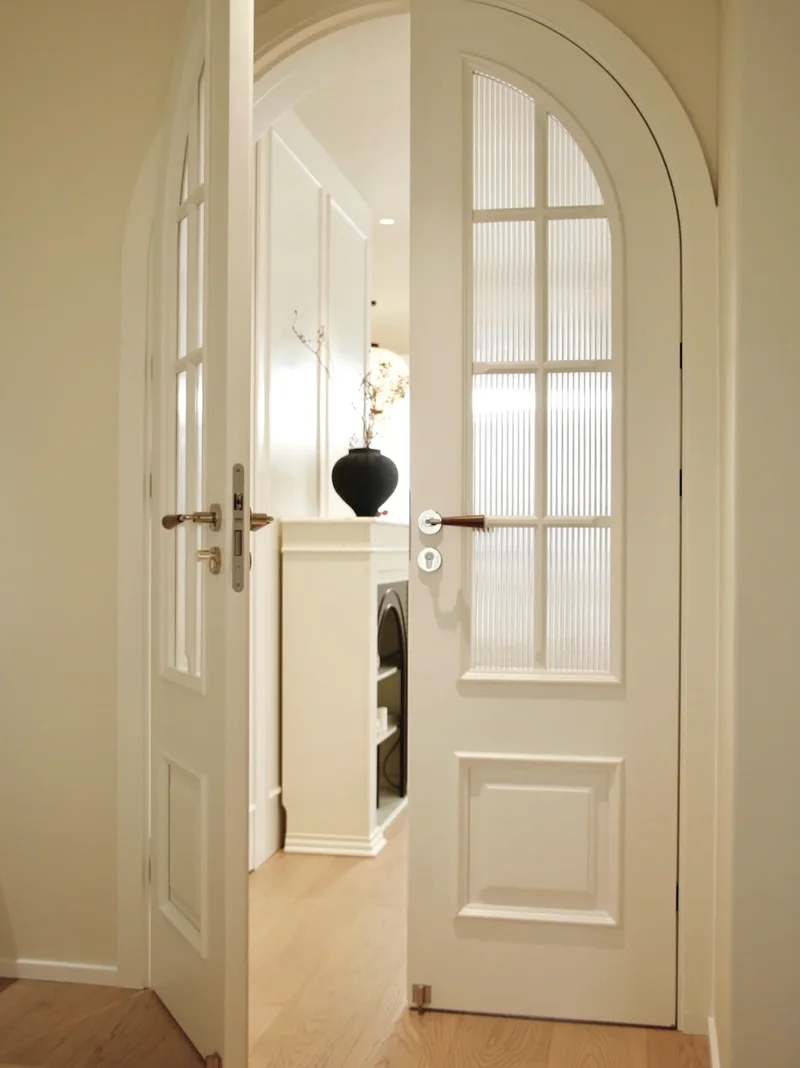
Each fire-rated door assembly undergoes full-scale testing at accredited laboratories (e.g., UL, Intertek, Warringtonfire) to EN 1634-1, ASTM E119, and BS 476 Part 22. Field verification follows installation in super high-rise projects exceeding 300 m, with annual audits confirming sustained integrity under real stack-effect pressures and cyclic thermal loads.
Fire Resistance & Intumescent Systems
- Core materials certified to 120‑minute integrity and insulation (EI 120) for residential compartmentation; 180‑minute ratings available for egress corridors and lobby separations.
- Intumescent edge seals and smoke/draft gaskets tested to UL 1784 (15 Pa positive pressure, ≤0.05 cfm/ft² leakage at ambient and elevated temperatures).
- LVL (Laminated Veneer Lumber) core stability verified after 300 thermal cycles (0°C to 90°C) with less than 0.3% dimensional change, preventing warping under HVAC-induced gradient of high-rise shafts.
Material Science Parameters
| Property | Test Method | Measured Value | Industry Benchmark |
|---|---|---|---|
| WPC density (door skin) | ASTM D792 | 0.85–0.95 g/cm³ | ≥0.80 g/cm³ (min. for screw retention) |
| PVC‑wood ratio (WPC) | TGA analysis | 45:55 by weight | Optimized for balanced impact/screw-hold |
| Shore D hardness (skin) | ASTM D2240 | 75 ± 2 | ≥70 (prevent denting in high-traffic) |
| Thickness swelling (24h) | ASTM D570 | ≤1.2% | ≤2.0% (resists moisture at 80% RH) |
| Bond line shear (LVL core) | EN 14080 | >8.0 N/mm² | >6.0 N/mm² (laminate integrity) |
Acoustic & Thermal Performance Field-Verified
- STC 42‑45 (ASTM E90) achieved with perimeter seals; field-tested in‑situ using ASTM E336 on 40‑storey residential towers – mean loss ≤3 dB relative to lab rating.
- U‑factor of assembled door+frame: 1.8–2.1 W/m²K (EN ISO 10077‑2) – meets passive house requirements for high-rise envelope continuity.
- Moisture absorption rate (WPC skin) <0.8% after 48h water immersion (EN 317) – prevents delamination in humid corridors and fire‑stair pressurization zones.
Formaldehyde & Indoor Air Quality
- Core and skin adhesives comply with E0 (≤0.5 mg/L, JIS A 1460) and E1 (≤0.1 ppm, EN 16516) grades; verified by independent chamber tests per ISO 16000‑9.
- No VOC off‑gassing detected after 72‑hour conditioning at 60°C – critical for sealed residential environments with limited make‑up air.
Field Verification Program
- 30‑unit sample per 300‑door lot: cycle test (100,000 open/close cycles), smoke seal integrity check (ASTM E2178), and torque test on hinge/screw pull‑out.
- Annual bore‑scope inspection of intumescent strips – expansion ratio ≥1:40 maintained after 10 years in a 50‑storey building.
- Third‑party audit reports available for each project lot; QR code on door edge links to lab certificate and field installation checklist.
Seamless Integration: Custom Solutions for Architectural and Operational Needs
Custom door assemblies for super high-rise residential towers must reconcile stringent fire-resistance ratings (EN 1634-1 / UL 10C) with the architectural demand for monolithic aesthetics, minimal sightlines, and concealed hardware. Engineered core builds and clad profiles allow full integration without compromising thermal, acoustic, or structural performance.
Core material customisation
- WPC (Wood-Plastic Composite) cores – density controlled between 0.85 – 1.10 g/cm³ to balance fire integrity (60–120 min) with screw-holding capacity for heavy duty closers and electromagnetic locks. Standard PVC-to-wood ratio held at 30:70 to minimise creep under axial loads from negative pressure in lobbies.
- LVL (Laminated Veneer Lumber) stiles & rails – finger-jointed, grain-oriented layups achieve a modulus of rupture > 45 N/mm², eliminating warpage over door heights up to 3.2 m. Kiln-dried to ≤8% MC before lamination to match RH conditions in conditioned high-rise cores.
- Mineral-infused phenol resin interlayers – added between core and veneer to raise char ablation point above 650 °C and reduce smoke opacity below 120 m²/kg (EN 13823).
Architectural and operational specifications
| Parameter | Value | Relevant Standard |
|---|---|---|
| Airborne sound reduction (Rw) | 38–45 dB (depending on perimeter seal configuration) | EN ISO 717-1 |
| Surface moisture absorption (24 h immersion) | ≤2.5 % weight gain (veneered), ≤1.8 % (HPL clad) | EN 322 / ASTM D570 |
| Thermal transmittance U-factor (door assembly) | 1.8–2.1 W/(m²·K) (with insulated glazed inserts: 1.3) | EN ISO 10077-2 |
| Shore D hardness (WPC stile face, 23 °C) | 78–85 | ISO 868 |
| Dimensional swelling (thickness, 24 h water soak) | ≤0.8 % | ASTM D5229 |
| Formaldehyde emission grade | E0 (≤0.03 ppm) / E1 (≤0.05 ppm) | EN 13986 / CARB Phase 2 |
| ISO 9001 certified production | Process control ≤±0.3 mm on critical edge gaps | — |
Functional advantages of integrated solutions
- Adjustable intumescent seals – housed in rebated grooves (depth 8–10 mm, width 3.5 mm) that align with rated frame glazing beads, maintaining fire classification even after repeated door closings.
- Multi-point locking with concealed latches – stainless steel rollers engaging EN 1935 compliant hinges; no visible face plates to disturb architectural finishes. Fail‑secure electromagnetic strike option for access control integration.
- Acoustic perimeter gaskets – silicone with Shore A 55±5 durometer, compressed to 25 % of original thickness at latch-point; reduces air leakage <3.5 m³/(h·m) at 50 Pa (EN 12207 Class 3).
- Moisture‑vapour barrier lay-up – cross‑grained phenolic backing sheet on both faces prevents delamination in high‑humidity egress paths (e.g., stairwells adjacent to MEP shafts).
- Custom leaf dimensions – ±1.5 mm tolerance on width/height for installation into steel stud or poured concrete frames; pre‑mortised for hinges, lock, and closer plate at factory.
All door sets are tested in the exact configuration (frame, seals, hardware, glazed aperture size) intended for the project, eliminating field‑modification risk. Third‑party witnessed testing per EN 1634-1 / UL 10C confirms classification regardless of applied decorative finish (laminate, wood veneer, paint‑grade steel).
Frequently Asked Questions
How do fire-rated doors for super high-rise residential buildings manage moisture expansion in humid environments?
Use WPC cores with density ≥850 kg/m³ and LVL reinforcement cross-laminated at 90° to resist expansion. Moisture barrier PVC coating ≥0.3 mm thickness and phenolic resin adhesive reduce swelling. Pre-condition doors to 12% max equilibrium moisture content before installation.
What formaldehyde emission standards apply, and how are they achieved in these doors?
Meet E0 (≤0.5 mg/L) per Chinese GB/T 39599 and EN 717-1 class E1 (≤0.1 ppm). Use solvent-free polyurethane adhesives and WPC compounds free of urea-formaldehyde. Triple‑seal edge banding with PVC or aluminum foil to lock in emissions.
How do fire-rated doors maintain thermal insulation in super high-rise envelopes?
Core insulation uses mineral wool (density ≥100 kg/m³) with a thermal conductivity of 0.035 W/m·K. Frame incorporates thermal break profiles (≥20 mm) and gasketed intumescent strips. Assembly achieves U‑value ≤1.2 W/m²·K, tested per ASTM C1363.
What prevents long-term structural warping of these doors under extreme temperature/humidity cycles?
Employ LVL core from rotary-peeled veneers (9+ layers) cross‑bonded with exterior‑grade phenol‑resorcinol adhesive. Kiln‑dried to ≤8% MC. Steel channel stiffeners (1.5 mm thick) embedded in frame and door edges limit differential movement.
How is impact resistance assured for high‑traffic residential common areas?
Core LVL density ≥700 kg/m³ with impact‑resistant WPC faces (thickness ≥4 mm). Optional galvanized steel face sheet (0.8 mm) behind decorative surface. Passes ASTM E1980 Class III impact test (15 lb steel ball drop from 9 ft).
What sound insulation performance do these fire-rated doors achieve, and what design features enable it?
Achieve STC 55 using mass‑loaded vinyl septum (2.0 lb/ft²) bonded between gypsum‑based fire cores. Acoustic perimeter seals (two‑blade silicone) and drop‑seal bottom with 25 dB reduction at 500 Hz. Door weight ≥60 kg for mass‑law attenuation.