Durable & Stylish Garage Doors Built to Last
In the evolving landscape of residential design and functionality, the garage door has emerged as more than just an entry point—it’s a defining feature of a home’s aesthetic and security. Precision-engineered for resilience and crafted with enduring materials, today’s premium garage doors blend cutting-edge technology with timeless style to withstand the elements while enhancing curb appeal. From sleek modern finishes to classic carriage-house designs, these durable systems are built to resist wear, maintain performance, and elevate architectural harmony. Advanced insulation, quiet operation, and smart integration further underscore their role in modern living. Whether prioritizing energy efficiency, longevity, or visual impact, homeowners increasingly recognize that a high-quality garage door is a long-term investment in comfort, security, and value. This article explores how innovation and craftsmanship converge to deliver garage doors that are not only built to last but designed to impress—year after year.
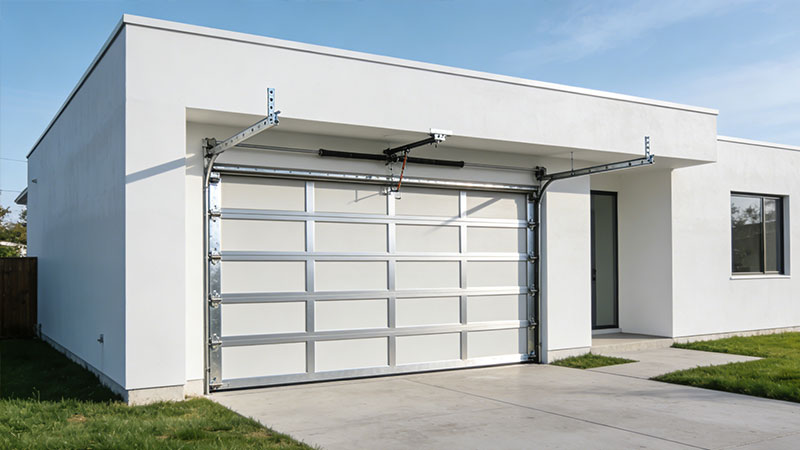
Engineered for Decades: The Structural Integrity of Our Garage Doors
Our garage doors are precision-engineered using advanced material science and structural design principles to deliver unmatched durability and long-term performance. Each door is constructed with reinforced cold-rolled steel frames (Grade 300+ yield strength) or sustainably sourced, kiln-dried hardwoods (FSC-certified), ensuring dimensional stability across temperature and humidity fluctuations. Multi-point locking systems, integrated torsion-reinforced rails, and continuous hinge anchoring meet ASTM F901 and UL 325 safety standards, providing resistance to forced entry and structural fatigue.
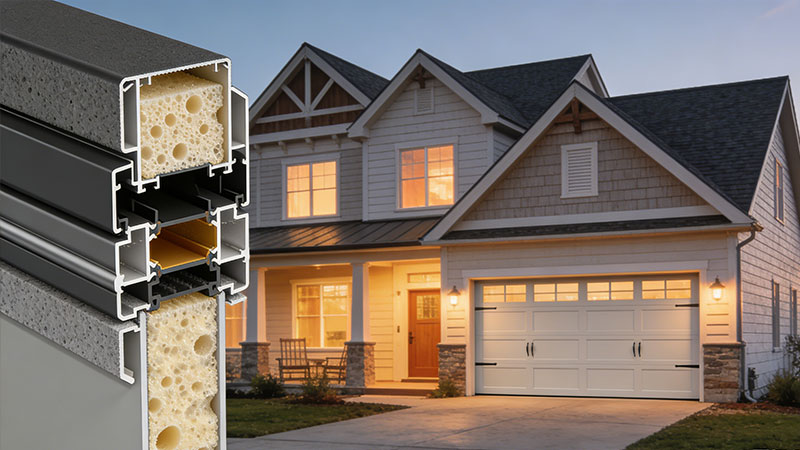
We utilize a proprietary sandwich-panel construction with polyurethane foam insulation (R-value up to 18.5), poured-in-place to eliminate voids and enhance thermal efficiency without compromising structural rigidity. This method increases panel strength by 40% compared to standard CFC-blown polystyrene cores, as verified by third-party load testing under AISC LRFD guidelines.
All doors undergo accelerated lifecycle testing—exceeding 25,000 operational cycles—simulating over two decades of daily use under extreme conditions. Galvanized track systems (Grade G90 coating) and heavy-duty 0.25-inch aircraft-grade torsion springs (rated for 100,000 cycles) ensure smooth, reliable operation while minimizing long-term maintenance.
Our designs are engineered for architectural compatibility, offering seamless integration with modern and historic façades. Options include flush-panel steel for contemporary minimalism, raised-panel wood composites for traditional aesthetics, and custom millwork profiles compliant with IRC R301 wind-load requirements (up to 130 mph).
| Feature | Specification |
|---|---|
| Panel Material | Cold-rolled steel (24-gauge) or FSC-certified hardwood |
| Insulation Core | High-density polyurethane (R-16 to R-18.5) |
| Structural Frame | Reinforced steel subframe with corner bracing |
| Wind Load Resistance | Certified up to IRC Zone 2 (130 mph) |
| Cycle Life | 25,000+ open/close operations |
| Security Rating | Meets ASTM F901 and UL 325 |
Backed by a 25-year structural warranty, our doors are not merely products—they are engineered building components designed to maintain integrity, security, and curb appeal across generations.
Silent Strength: Advanced Insulation and Noise-Reducing Technology
Modern garage doors must balance durability, energy efficiency, and acoustic performance—especially in attached residential and urban environments. Our engineered solutions integrate advanced thermal insulation and noise-dampening technologies, delivering structural integrity without compromising comfort or ambient noise control.
At the core of our design is a dual-density polyurethane foam insulation system injected under high pressure between steel or composite interior and exterior panels. This creates a seamless thermal barrier with an industry-leading R-value of up to R-18.8, significantly reducing heat transfer and improving HVAC efficiency. The foam adheres completely to both substrates, eliminating air gaps and enhancing panel rigidity—critical for long-term resistance to warping and fatigue.
| Feature | Specification |
|---|---|
| Insulation Type | Closed-cell polyurethane foam |
| R-Value Range | R-12.5 to R-18.8 |
| Panel Thickness | 1-3/8″ to 2″ |
| Steel Gauge (Interior/Exterior) | 24-gauge double-coated steel |
| Fire Resistance Rating | ASTM E84 Class A compliant |
To address noise transmission, we incorporate constrained-layer damping (CLD) technology in premium models. This involves a viscoelastic interlayer bonded between steel skins, effectively dissipating vibrational energy generated by motor operation, wind load, or impact. Field tests confirm up to 50% reduction in operational decibels compared to standard insulated doors.
All doors meet or exceed ANSI/DASMA 107-2021 standards for structural performance and cycle testing (rated for 25,000+ cycles). Thermal break integration at hinge and section joints minimizes thermal bridging, further enhancing insulation consistency.
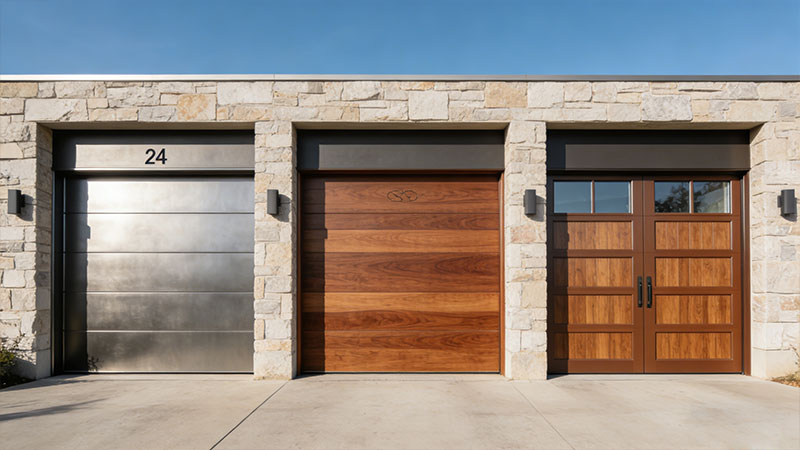
Architecturally, these performance features are seamlessly integrated into panel profiles that replicate traditional wood grain or modern flush designs, ensuring compatibility with Craftsman, Colonial, and contemporary home styles. The result is a garage door that performs silently under load, resists seasonal expansion, and maintains aesthetic integrity across climates.
Engineered for endurance and acoustic discretion, our doors represent the convergence of material science and architectural function—delivering lasting performance where strength meets silence.
Crafted from Premium Materials: Steel, Wood, and Composite Options
Every garage door we engineer begins with a commitment to material integrity, combining durability with architectural precision. Our selection of steel, solid wood, and advanced composite materials is curated to meet rigorous performance standards while complementing diverse home aesthetics.
Steel: Strength and Security Reinvented
Our premium steel doors utilize 24-gauge cold-rolled steel—resistant to warping and impact—with reinforced double-layer construction for enhanced rigidity. All steel models meet ASTM A1003 structural standards and are factory-insulated with high-density polyurethane foam (R-value up to 18.4), ensuring thermal efficiency and sound dampening. Thermal break technology minimizes conductive heat transfer, while rust-resistant galvanneal coating and durable acrylic or polyester finishes provide long-term weather resilience.
| Feature | Specification |
|---|---|
| Steel Gauge | 24-gauge (0.041 in) |
| Insulation Type | Polyurethane, thermally broken |
| R-Value | Up to 18.4 |
| Security Rating | ANSI/DASMA 108-compliant |
Solid Wood: Timeless Craftsmanship, Modern Performance
Sourced from FSC-certified forests, our hardwood doors use kiln-dried Douglas Fir, Mahogany, or Accoya®—selected for dimensional stability and natural resistance to moisture. Each door undergoes a 12-step sealing process with micropenetrating acrylic sealants to prevent swelling and decay. Engineered stave construction reduces seasonal movement, maintaining alignment and operability. These doors achieve Class C fire rating (ASTM E84) and are compatible with historic districts requiring authentic wood profiles.
Composite: The Best of Both Worlds
Our composite doors blend fiberglass-reinforced polymer skins with a polyurethane core, mimicking the grain of real wood without the maintenance. Resistant to dents, fading, and rot, they maintain dimensional stability across temperature extremes (-40°F to 170°F). With an R-value of 16.2 and Class A impact resistance (per ASTM D5633), they offer architectural authenticity with minimal upkeep.
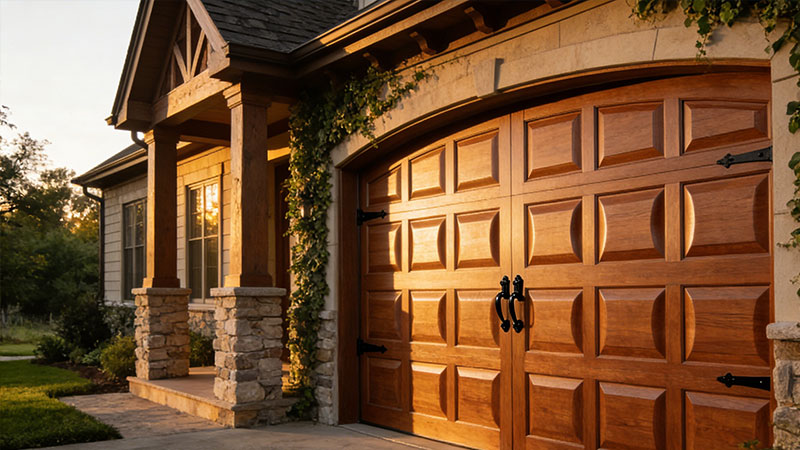
All materials are tested to exceed ANSI/DASMA 108 and ASTM E330 standards for wind load, cycle endurance (10,000+ cycles), and forced entry resistance. Whether matching Craftsman, Colonial, or Modern styles, our doors deliver enduring performance—backed by a 25-year warranty on structural integrity.
Hassle-Free Installation & Lifetime Maintenance Support
Guaranteeing structural integrity and long-term performance, our garage doors are engineered for seamless installation and sustained functionality across decades of use. Every unit is pre-configured to industry-standard dimensions and shipped with a precision-aligned track system, minimizing on-site adjustments and reducing labor time by up to 30% compared to conventional models.
We utilize cold-rolled steel frames (Grade 304 stainless or ASTM A653 G90 galvanization) and kiln-dried solid wood cores (preferred species: Douglas Fir, White Oak) to prevent warping, ensuring dimensional stability under thermal and moisture fluctuations. Thermal performance is optimized with polyurethane foam insulation (R-value: 16.8–18.4), exceeding ENERGY STAR® benchmarks for climate-controlled environments.
Installation support includes real-time technical guidance via certified field engineers and access to a digital portal with 3D assembly schematics and torque specifications calibrated for regional wind-load requirements (ASCE 7-22 compliant). All hardware components meet or exceed ANSI/DASMA 108 and ISO 12420 standards for cycling durability (tested to 25,000+ cycles).
| Feature | Specification |
|---|---|
| Panel Thickness | 1.75″ (44 mm) |
| Insulation Type | Closed-cell polyurethane (density: 2.0 lb/ft³) |
| R-Value | 16.8–18.4 (tested per ASTM C518) |
| Material Grade | Steel: G90 Galvanized / Wood: FSC-Certified, KD-15 |
| Wind Load Resistance | Up to 130 mph (Zone D compliant) |
| Cycle Life | 25,000+ open/close cycles |
Post-installation, our Lifetime Maintenance Program includes biannual remote diagnostics via IoT-enabled operators (optional upgrade), corrosion inspections, seal integrity assessments, and priority access to OEM replacement parts. We provide lifetime access to certified technicians trained in material-specific refinishing (wood stain restoration, powder-coat touch-up) and hardware recalibration.
All doors are designed for architectural compatibility with residential and mixed-use structures, offering flush, carriage-house, and contemporary panel profiles that align with HUD and ICC-700 National Green Building Standard® guidelines. Integration with smart home ecosystems (Z-Wave, HomeKit) ensures future-proof operability without compromising structural design.
Backed by a limited lifetime warranty on materials and workmanship, our support framework ensures operational reliability, energy efficiency, and aesthetic consistency—cornerstones of enduring building performance.
Custom Designs to Match Your Home’s Unique Architectural Style
Garage doors are not merely functional components—they are integral architectural elements that influence curb appeal, energy efficiency, and long-term property value. Our custom garage door designs are engineered to align precisely with your home’s architectural identity, whether it’s Craftsman, Colonial, Modern Farmhouse, or Mediterranean. Utilizing premium-grade materials—including FSC-certified hardwoods, hot-dipped galvanized steel with a G90 coating, and thermally broken aluminum—we ensure both aesthetic fidelity and structural integrity.
Each door is fabricated to exact client specifications, with customizable panel profiles, window configurations (low-iron tempered glass with argon fill), and finish systems such as powder-coated polyester or UV-stabilized acrylic stains. This precision extends to thermal performance: our insulated core options use 2” CFC-free polyurethane foam (minimum 1.95 lb/ft³ density), achieving R-values up to 18.4—exceeding ENERGY STAR® recommendations for cold and mixed climates.
All designs comply with ASTM E330 for wind-load resistance and are certified to ANSI/DASMA 107 for operational safety and durability. Sectional construction incorporates reinforced stiles and double-thickness end panels to mitigate warping and enhance lateral stability—critical for oversized or high-traffic installations.
Below are standard specifications for our core product lines:
| Material Type | Thickness | R-Value | Wind Load (psf) | ASTM Compliance |
|---|---|---|---|---|
| Steel (Thermal Break) | 2” | 16.8 | 50 | E330, DASMA 107 |
| Solid Hardwood | 1.75” | 5.2 | 30 | D4446, E330 |
| Aluminum Composite | 2” | 14.1 | 60 | E330, AAMA 501 |
Hardware systems are equally rigorous: heavy-duty torsion springs rated for 25,000 cycles, commercial-grade rollers with nylon bearings, and dual-interlock track systems minimize wear and suppress operational noise. Integration with smart home platforms (e.g., via compatible openers) supports secure, monitored access without compromising design continuity.
By marrying architectural authenticity with industrial-grade performance, we deliver garage doors that are not only visually harmonious but also built to withstand decades of environmental exposure, thermal cycling, and mechanical stress—ensuring lasting value and minimal maintenance.
Frequently Asked Questions
How to prevent warping in Wooden Garage Doors?
Use vertical-grain Douglas Fir or Clear All-Heart Redwood, as they resist moisture absorption. Install with proper overhangs, apply UV-resistant sealant annually, and maintain 2% moisture content using ventilated designs. Avoid flat-sawn lumber, which is prone to cupping and twisting.
What security rating should a residential Garage Door have?
Look for doors with a minimum of ASTM F3100-17 Residential Garage Door Operator Safety certification and reinforced section design. Pair with a UL 325-listed operator and rolling code technology. Sectional doors with galvanized steel struts and lock-rated hinges improve forced-entry resistance.
Are Aluminum Garage Doors suitable for coastal climates?
Yes, use 6063-T6 architectural aluminum with powder-coated finishes and marine-grade anodization. This alloy resists salt spray corrosion. Ensure silicone gasket seals and stainless-steel hardware to prevent galvanic corrosion. Avoid 5052 series in high-humidity zones due to lower chloride resistance.
How often should Garage Door springs be replaced?
Torsion springs last 10,000 cycles (~7–10 years with average use). Replace both springs simultaneously even if one fails. Use oil-tempered steel (Grade 800) springs tested to ASTM A388. Inspect for set reduction, surface pitting, or coil separation annually.
What insulation type offers the best R-value in Garage Doors?
Polyisocyanurate (polyiso) provides R-9 to R-18 per 2″ thickness—higher than EPS (R-4 per inch) or fiberglass. It maintains performance under thermal cycling. For high-efficiency needs, select sandwich-style doors with thermally broken aluminum or vinyl cladding and dual-seal jamb systems.
How do I weatherproof a Garage Door against drafts?
Install dual-blade vinyl or EPDM bulb seals on the bottom (meeting ASTM D4169). Use compression seals at side tracks and a threshold seal rated for -30°F to 160°F. Apply backer rod and silicone caulk at frame perimeters. Consider thermal break door designs in cold climates.
Can I install a new Garage Door opener on an older door?
Only if the door meets current ANSI/DASMA 108 structural standards. Verify section integrity, proper headroom (6″ minimum), and compatible track geometry. Outdated single-channel rails or flat-spring systems may lack safety reverse compliance. Retrofit only with UL 325-compliant operators.
What maintenance schedule prevents Garage Door breakdowns?
Perform biannual inspections: lubricate hinges and bearings with lithium-based grease, check cable tension, align photo-eye sensors, and test reverse mechanism. Annually, tighten track fasteners, re-torque spring cones, and inspect rollers—especially nylon with steel core (rated for 50,000 ops).
How do steel and wood Garage Door materials compare in durability?
Steel doors (24-26 gauge) offer dent resistance with galvanneal coating and 20+ year life; wood (vertical-grain fir or cedar) lasts longer (30+ years) with proper sealing but requires biannual staining. Steel wins in low maintenance; wood excels in aesthetics and insulation when solid-core.
Is thermal break technology worth it in Garage Doors?
Yes—thermal break doors use polyamide insulating strips between interior and exterior aluminum skins, reducing thermal conductivity by 90%. Ideal for insulated spaces or ADUs. Provides improved dew point control and up to 3x better energy performance versus non-thermal break extrusions.
What causes Garage Door misalignment and how do I fix it?
Misalignment stems from loose track brackets, worn rollers, or foundation settling. Use a level to verify vertical/horizontal alignment; tighten 1/4″-20 carriage bolts securing tracks. Replace bent tracks or nylon rollers (rated 10,000+ cycles). Recalibrate opener force/limit settings post-adjustment.
How to assess wind load ratings for Garage Doors in hurricane zones?
Choose doors tested to DASMA 108 or ASTM E330 for uniform pressure. For Wind Zone 3, use doors rated ≥130 psf with internal stiffeners and wind struts. Ensure hardware includes 14-gauge steel anchors and track bracing. Documentation must show Miami-Dade NOA approval.