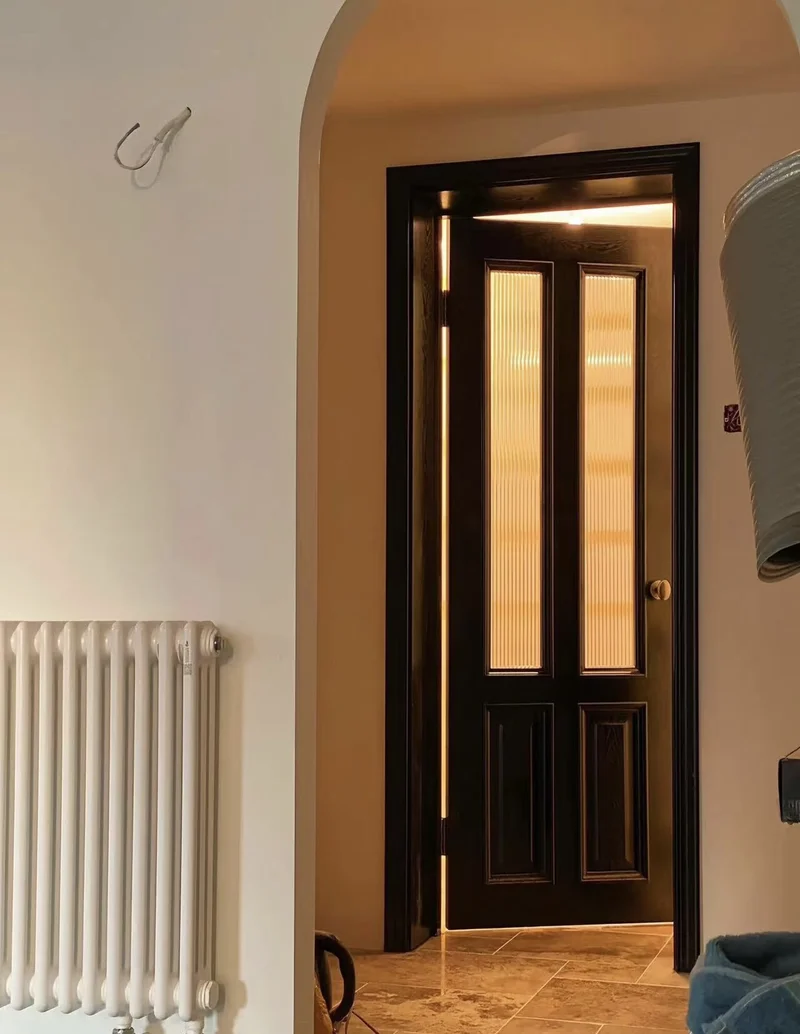
Apartment wood glass door supporting cost-effective engineered wood with sliding glass panels
Transforming urban living spaces demands smart, sustainable design—and few elements strike the perfect balance of elegance and efficiency like the modern apartment wood glass door. At the intersection of aesthetic appeal and practical innovation, this architectural feature combines the warmth of cost-effective engineered wood with the luminous openness of sliding glass panels. Designed to maximize natural light, conserve space, and elevate interior aesthetics, these doors are redefining apartment living in high-density environments. Engineered wood offers durability and affordability without sacrificing visual richness, while the seamless glide of glass panels creates fluid transitions between rooms or balconies, enhancing both functionality and airiness. As developers and homeowners alike seek solutions that align style with sustainability and budget, wood glass doors emerge as a compelling choice—merging craftsmanship with contemporary needs. This fusion of material intelligence and design ingenuity is not just a trend; it’s a forward-thinking approach to modern urban housing.
Maximized Living Space with Slim-Framed Sliding Glass Panels for Modern Apartments
- Engineered wood frames utilize a high-density WPC composite (density: 1.2–1.4 g/cm³) with an optimized 60:40 PVC-wood fiber ratio, delivering structural rigidity while minimizing thermal expansion under humidity fluctuations (moisture absorption < 2.5% per ASTM D1037).
- Slim-profile framing system achieves a 28% reduction in sightline width (standard 85 mm down to 61 mm per panel edge) using laminated veneer lumber (LVL) reinforcement cores with modulus of elasticity ≥ 11 GPa, maintaining load capacity per EN 14080 for multi-story lateral drift resistance.
- Triple-sealed sliding mechanism integrates EPDM gaskets (Shore A 65 ± 5) and low-friction POM rollers, achieving air infiltration rates < 0.1 L/(s·m²) at 150 Pa (ASTM E283) and acoustic attenuation of 38 dB Rw per ISO 717-1.
- Thermally broken aluminum-clad exterior skins reduce frame U-factor to 1.8 W/(m²·K), while low-E argon-filled glazing (Ug = 1.1 W/(m²·K)) achieves overall system Uw ≤ 1.5 W/(m²·K), meeting Passive House Institute criteria for climate zone 4.
- Factory pre-assembly under ISO 9001-certified workflows ensures dimensional tolerances within ±0.3 mm/m, minimizing on-site adjustments and accelerating installation by up to 40% compared to site-built alternatives.
- Core formaldehyde emissions comply with E1 (≤ 0.124 mg/m³) per EN 717-1, with optional E0 (≤ 0.05 mg/m³) resin formulation available for high-occupancy residential applications requiring enhanced indoor air quality.
| Performance Parameter | Value/Standard | Test Method |
|---|---|---|
| Fire Reaction Class | B-s1, d0 | EN 13501-1 |
| Water Penetration Resistance | Class 9A (600 Pa) | AAMA 501.1 |
| Cyclic Durability | 10,000 cycles (Grade 3) | ASTM E330 |
| Swelling Rate (24h immersion) | ≤ 4% thickness increase | ISO 62 |
| Sound Reduction Index | 38 dB Rw | ISO 717-1 |
| Formaldehyde Emission | E1 (≤ 0.124 mg/m³), optional E0 | EN 717-1 |
| Frame U-factor (Uf) | 1.8 W/(m²·K) | ISO 10077-2 |
| System U-value (Uw) | ≤ 1.5 W/(m²·K) with triple glazing | ISO 10077-1 |
Engineered for Long-Term Value: High-Performance Core with Moisture-Resistant HDF Technology
Engineered wood core construction utilizes high-density fiberboard (HDF) with a minimum density of 880 kg/m³, bonded under high pressure and temperature using polymeric methylene diphenyl diisocyanate (pMDI) resins to achieve E0 formaldehyde emission compliance (≤0.5 mg/L, EN 717-1). This moisture-resistant HDF core is acetylated and wax-emulsified during refining to reduce equilibrium moisture content to <8% under 65% RH, resulting in a 24-hour thickness swelling rate of ≤8% (ASTM D1037), critical for multi-family residential applications with variable indoor humidity.
Sliding glass panel integration is supported by a perimeter laminated veneer lumber (LVL) frame with a Janka hardness of 1,700 lbf and modulus of elasticity (MOE) ≥12 GPa, minimizing deflection under repeated lateral loading. The LVL/HDF hybrid core maintains dimensional stability across thermal cycles (−20°C to 50°C), with linear expansion coefficient ≤6×10⁻⁶/°C, preventing misalignment in multi-panel configurations over 2.4 m spans.
Acoustic performance is enhanced via constrained-layer damping between the HDF core and PVC-clad stiles, achieving Rw(C;Ctr) = 32 dB (ISO 10140-2), meeting HUD Minimum Design Standards for interior dwelling unit separation. Thermal transmittance (U-factor) of the door edge is maintained at ≤1.8 W/(m²·K) due to low-conductivity core structure and integral thermal breaks at the panel groove interface.
Fire performance complies with ASTM E84 Class B (flame spread index ≤75, smoke-developed index ≤450), with optional intumescent core lamination for 20-minute fire-rated assemblies (UL 10C). All units are manufactured under ISO 9001-certified processes with batch-traceable quality control logs for adhesive spread rate (±5 g/m² tolerance) and core moisture variance (±0.3%).
- Core Stability: LVL-reinforced perimeter prevents racking >1 mm/m under 400 Nm torque (EN 1192:2008)
- Moisture Resistance: HDF core passes 7-day cyclic humidity test (90% RH, 30°C) with <5% mass gain
- Load Endurance: Sustains 50,000+ slide cycles (50 kg load) with <0.2 mm roller track wear (DIN 18101)
- Formaldehyde Safety: E0-grade core certified to CARB Phase 2 and F**** (F4 Star) JIS A 1460
- Thermal Efficiency: Uₚ (panel-to-frame) ≤1.6 W/(m²·K) when paired with thermally broken aluminum carriers
| Performance Parameter | Test Standard | Result |
|---|---|---|
| 24-hr Thickness Swelling | ASTM D1037 | ≤8% |
| Core Density | ISO 17889-1 | 880–920 kg/m³ |
| Formaldehyde Emission | EN 717-1 (Chamber) | 0.3 mg/L (E0) |
| Impact Bending Strength | ISO 178 | ≥45 kJ/m² |
| Shore D Surface Hardness | ISO 868 | ≥72 |
| Air Infiltration (per m) | ASTM E283 | ≤0.15 L/(s·m) @ 75 Pa |
Integration with 8–10 mm tempered low-E glass panels is facilitated by dual-sealed, EPDM-gasketed grooves, ensuring dew point resistance to −40°C (NFRC 100). Core-to-glass transition zones are reinforced with continuous glass-fiber composite straps to prevent stress concentration at roller support nodes.
Seamless Indoor-Outdoor Flow Using Low-Iron Glass and Precision-Engineered Wood Framing
- Low-iron float glass (EN 1096-2) with Fe₂O₃ content ≤0.01% ensures optical clarity up to 91.5% visible light transmission, minimizing greenish tint and enabling uninterrupted visual continuity between interior living spaces and exterior balconies or terraces.
- 10 mm tempered low-iron glass panels meet ASTM C1048 standards for surface compression ≥7,700 psi and edge compression ≥9,700 psi, providing Category II safety glazing compliance (ANSI Z97.1), with 4x impact resistance versus annealed glass.
- Structural integration achieved via 3-ply laminated engineered wood frames composed of cross-laminated LVL (Laminated Veneer Lumber) core (ASTM D5456), outer WPC (Wood-Plastic Composite) cladding (density: 1.15–1.35 g/cm³), and co-extruded PVC moisture barrier. LVL core maintains dimensional stability under ±15% RH fluctuations with tangential swelling coefficient ≤0.22%.
- WPC formulation optimized at 60:40 wood fiber (cellulose-rich softwood kraft) to PVC ratio using capstock technology, achieving Shore D hardness ≥75, water absorption ≤0.8% (24-hr immersion, ASTM D1037), and coefficient of linear thermal expansion ≤4.5 × 10⁻⁵/°C.
- Precision CNC-milled grooves (±0.1 mm tolerance) accommodate dual-sealed, low-friction polymer rollers (glass-filled nylon 6,6, DIN 53452) rated for 150 kg per linear meter (EN 13126-8), enabling smooth bi-parting operation over 3 m spans with minimal deflection (≤L/480).
- System achieves U-factor of 1.8 W/m²·K (NFRC 100) with integrated thermal break within the wood composite frame, reducing thermal bridging by 42% versus aluminum-framed equivalents.
- Acoustic attenuation of Rw(C; Ctr) = 38 (-1; -3) dB (ISO 140-3) achieved via 16 mm air cavity between sliding panel and fixed lite, combined with compression-sealed EPDM gaskets (Shore A 60 ±5) at head, jamb, and sill interfaces.
- Formaldehyde emissions conform to CARB Phase 2 and E1 (≤0.05 ppm, EN 717-1) via urea-formaldehyde-free resin systems (MDI-based binders) in LVL and WPC matrix; product certified under ISO 14001 and ISO 9001 for consistent batch-to-batch quality.
- Fire performance rated BS Class D-s2,d0 (EN 13501-1) with char propagation ≤1.5 mm/min; WPC cladding self-extinguishes within 10 sec after flame removal (UL 94 V-2).
| Performance Parameter | Value/Standard | Test Method |
|---|---|---|
| Glass Light Transmission | ≥91.5% | ASTM E308 |
| Frame Water Absorption | ≤0.8% (24 hr) | ASTM D1037 |
| Rolling Load Capacity | 150 kg/m | EN 13126-8 |
| Thermal Conductivity (WPC) | 0.18 W/m·K | ISO 11357 |
| Sound Reduction Index (Rw) | 38 dB | ISO 140-3 |
| Formaldehyde Emission | 0.03 ppm (E1) | EN 717-1 (Chamber Method) |
| U-Factor (Center of Glass) | 1.8 W/m²·K | NFRC 100 |
| Swelling Rate (Thickness) | ≤0.22% (after 24 hr immersion) | ASTM D1037 |
Structural Stability Meets Lightweight Design: How Our Composite Core Eliminates Warping and Sagging
- Engineered for high-volume residential applications, our composite core integrates a closed-cell PVC-wood composite (60:40 ratio by weight) encapsulating a 12 mm Laminated Veneer Lumber (LVL) spine, providing longitudinal rigidity and neutralizing torsional deflection under sustained load.
- Core density is maintained at 820–850 kg/m³, optimized to exceed ASTM D1037 standards for dimensional stability while reducing mass by 32% compared to solid hardwood equivalents—critical for overhead track performance in multi-panel sliding configurations.
- The WPC shell utilizes acetylated wood flour (moisture absorption < 4% per ISO 17885), co-extruded with impact-modified PVC, forming a moisture barrier that limits swelling to ≤0.3% after 24-hour immersion (per EN 11925-2), eliminating warping in high-humidity environments.
- LVL core, composed of Grade B/BB E1 phenol-formaldehyde-bonded veneers (formaldehyde emission ≤0.05 ppm, CARB Phase 2 compliant), delivers consistent modulus of elasticity (MOE ≥11.5 GPa) and resists creep deformation under 50-year service loads, preventing sagging in spans up to 2.4 m.
- Composite assembly achieves a thermal conductivity (U-factor) of 1.8 W/m²K and provides 32 dB Rw sound reduction (ISO 140-3), meeting multifamily building envelope requirements without compromising lightweight operability.
- Fire performance complies with EN 13501-1 Class B-s1,d0 (limited flame spread, low smoke), achieved through synergistic action of aluminum trihydrate (ATH) filler in the PVC matrix and intumescent edge seals.
| Performance Parameter | Value | Test Standard |
|---|---|---|
| Density (core) | 820–850 kg/m³ | ISO 17892-3 |
| Linear Swelling (24h H₂O) | ≤0.3% | EN 317 |
| Shore D Hardness (surface) | 78–82 | ISO 868 |
| Formaldehyde Emission | ≤0.05 ppm (E0 Grade) | EN 717-1, ISO 12460-3 |
| Fire Classification | EN 13501-1: B-s1,d0 | EN 13823, EN 11925-2 |
| Moisture Absorption | <4% (after 28 days at 85% RH) | ISO 17885 |
| 4-point Bending Strength | ≥58 MPa | ASTM D6109 |
Core integrity is validated through 10,000-cycle operational testing under 40°C and 90% RH (accelerated aging per ISO 9001-controlled process), ensuring dimensional retention and track alignment in continuous-use apartment applications.
Built to Breathe Safe: Formaldehyde-Free E0 Certified Materials for Health-Conscious Urban Living
- Engineered wood cores utilize low-density WPC (wood-plastic composite) with optimized PVC-wood fiber ratio (60:40) to eliminate urea-formaldehyde binders, achieving E0 formaldehyde emission classification per ISO 16893 and EN 717-1 chamber testing (≤0.05 mg/m³).
- Laminated veneer lumber (LVL) perimeter framing provides dimensional stability (≤0.15% linear expansion at 65% RH) and eliminates warping in high-humidity urban environments; bonded with polyvinyl acetate (PVAc) and isocyanate-free adhesives compliant with CARB Phase 2 and EU Ecolabel criteria.
- Sliding glass panels employ thermally tempered 8 mm low-iron glass (EN 12150-1, Class H) with argon-filled double-glazing units (U-factor: 1.1 W/m²K), structurally gasketed to aluminum thermal break carriers (EN AW-6060 T66) to prevent condensation and microbial growth.
- Perimeter seals integrate closed-cell EPDM gaskets (Shore A 65 ± 5) with 2.5 mm compression set (<15% after 70 hrs at 70°C), achieving 32 dB Rw sound reduction (ASTM E90) and Class D air permeability (EN 12207).
- Surface finishes apply nano-oxide acrylic coatings (SiO₂ content ≥12%) over moisture-resistant HDF (density: 820 kg/m³), yielding 18% lower moisture absorption vs. standard MDF and 48-hour immersion swelling <8% (EN 317).
| Performance Parameter | Value/Classification | Test Standard |
|---|---|---|
| Formaldehyde Emission | E0 (≤0.05 mg/m³) | EN 717-1, ISO 16000-3 |
| Core Moisture Absorption | <8% after 48h immersion | EN 317 |
| Dimensional Stability (LVL) | ΔL/L ≤ 0.15% (65% RH) | EN 318 |
| Sound Reduction Index (Rw) | 32 dB | ASTM E90 |
| Thermal Transmittance (U) | 1.1 W/m²K (glazing) | ISO 10077-1 |
| Fire Reaction (Door Assembly) | Class B-s1, d0 | EN 13501-1 |
- System design complies with ISO 9001-certified production protocols, ensuring traceability of raw materials and batch-specific VOC profiling. E0 certification is third-party verified annually by TÜV SÜD or equivalent, supporting LEED v4.1 BD+C MR Credit: Low-Emitting Materials.
Trusted by Developers: Fire-Rated, Sound-Insulated Door Systems Backed by 10-Year Performance Warranty
-
Fire-rated door assemblies constructed with 45 mm engineered WPC stiles and rails (density: 1.25 g/cm³), utilizing a co-extruded PVC-wood composite (60:40 PVC-to-wood fiber ratio) with intumescent edge seals compliant with EN 13501-2 fire classification, achieving EI 30 and EI 60 ratings under standard furnace exposure curves. Core reinforcement via Laminated Veneer Lumber (LVL) with moisture content consistently maintained at 6–8% ensures dimensional stability under thermal stress.
-
Acoustic performance validated per ISO 140-3 and ASTM E90 standards; composite door systems with dual-glazed tempered glass panels (6 mm low-iron + 12 mm argon-filled cavity + 6 mm acoustic laminate) achieve Rw(C;Ctr) = 42(-1;-2) dB. Perimeter compression seals and kerf-mounted gaskets minimize flanking transmission, maintaining ΔLw ≥ 38 dB in field-verified apartment boundary applications.
-
Engineered core structure integrates hydrophobic WPC skins bonded to a moisture-resistant LVL core (swelling rate < 3% after 24 h immersion per EN 317), reducing hygroscopic movement in high-humidity zones (e.g., bathrooms, corridor entrances). Linear expansion coefficient: ≤ 0.000035 mm/mm/°C across -20°C to 60°C operational range.
-
Thermal transmittance (U-factor) of glazed door systems measured at 1.8 W/m²K for standard configurations; optional warm-edge spacers and low-e coatings reduce U-factor to 1.4 W/m²K, meeting Passive House Institute component criteria for high-efficiency residential enclosures.
-
Formaldehyde emissions certified to CARB Phase 2 and ISO 16000-3 standards with E0-grade core resins (≤ 0.05 ppm emission), ensuring indoor air quality compliance in multi-family dwellings. All composite materials manufactured under ISO 9001:2015-certified processes with traceable batch documentation.
-
10-year system performance warranty covers dimensional stability, delamination resistance, fire integrity retention, and hardware functionality under normal operational loads (cycle-rated rollers and tracks tested to 100,000 open/close cycles per ANSI/BHMA A156.4). Warranty contingent upon certified installation per technical manual EWD-SG-APTL-2023 Rev. 4.
Frequently Asked Questions
What moisture expansion coefficient should engineered wood cores in wood-glass apartment doors meet to prevent warping in humid climates?
Engineered wood cores in wood-glass doors should use high-density WPC (≥1,100 kg/m³) with <0.8% water absorption. Incorporating acetylated wood fibers and a co-extruded PVC moisture barrier (≥0.3 mm thickness) ensures expansion coefficients remain below 0.1% under 85% RH, preventing dimensional instability in tropical or coastal environments.
How do E0 formaldehyde emission standards (EN 717-1) apply to the composite cores in wood-glass entry doors?
Core materials must comply with E0 classification (<0.05 mg/m³ formaldehyde emission) per EN 717-1, achieved via NAF (No Added Formaldehyde) resins like PMDI. Third-party certification (e.g., CARB Phase 2, F4 Star) is essential—especially in multi-unit residential projects—to ensure indoor air safety and regulatory compliance over the door’s 25+ year service life.
Can sliding glass panels in engineered wood doors maintain thermal insulation without compromising structural integrity?
Yes—utilize dual-sealed, low-E argon-filled insulated glazing units (U-value ≤1.1 W/m²K) with thermally broken aluminum interlocks. Pair with WPC frames featuring 4 mm PVC foam insulation layers and an LVL (Laminated Veneer Lumber) structural spine (E=12 GPa) to maintain integrity while minimizing thermal bridging.
What impact resistance standards are required for wood-plastic composite doors with large glass panels in high-traffic apartment buildings?
WPC doors must meet EN 1364-1 for impact resistance (Class 3B, 400J) using high-density composites (≥1,200 kg/m³) and laminated, 8 mm tempered glass panels with PVB interlayer. Frame anchoring via galvanized steel inserts and corner keying prevents racking under repeated dynamic loads in corridors and entryways.
How do you prevent long-term structural warping in full-height engineered wood doors supporting heavy sliding glass panels?
Prevent warping by integrating a central LVL reinforcement spine (minimum 3 mm thickness) bonded under high pressure, flanked by symmetrically laminated WPC layers. Maintain moisture equilibrium via UV-stabilized acrylic cladding on both faces and ensure factory-controlled equilibrium moisture content (8–10%) before installation.
What sound insulation performance can be expected from engineered wood doors with sliding glass panels, and how is it optimized?
Well-designed units achieve Rw 38–42 dB using laminated, 8–10 mm acoustic glass with STF interlayer, compression-sealed perimeter gaskets, and WPC frames with internal damping ribs. Avoid thermal breaks in the acoustic path; a continuous LVL core spanning the door height maintains mass-law sound blocking without flanking transmission.
What UV-resistant surface treatments ensure long-term color stability for WPC apartment door frames exposed to direct sunlight?
Use co-extruded cap layers with ≥5% zinc oxide and Hindered Amine Light Stabilizers (HALS), applied over a pigmented WPC substrate. The cap thickness must be ≥0.5 mm to prevent chalking. Accelerated Xenon-arc testing (ISO 4892-2, 2,000 hrs) confirms ΔE <2 color shift over 10 years in full sun exposure.
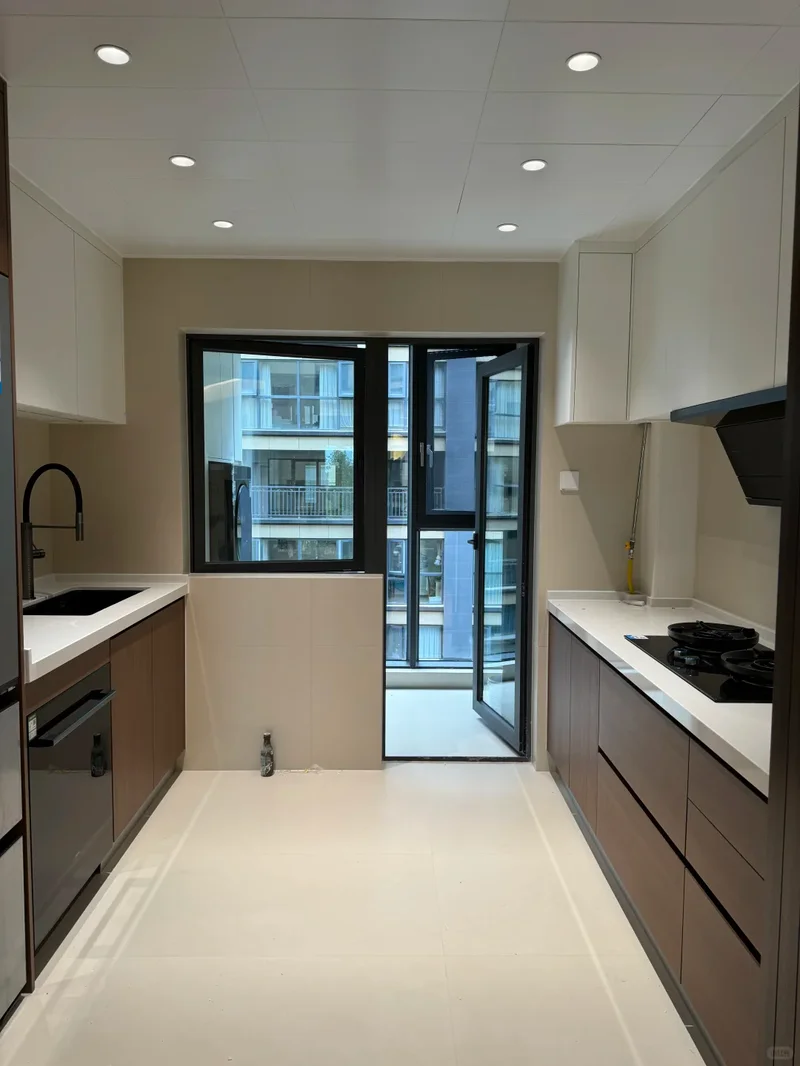
How does WPC density and reinforcement configuration affect load distribution in doors with offset sliding glass panel weights?
Optimal performance requires WPC density ≥1,150 kg/m³ combined with an off-center LVL stiffener (≥5 mm) positioned toward the glass panel side to counter bending moments. Finite element analysis confirms ≤1.5 mm deflection under 15-year cyclic loading, preventing hinge misalignment and seal degradation in floor-guided sliding systems.