Aluminum glass door sample delivery for project approval
Every great architectural vision hinges on precision—and for projects demanding both aesthetic elegance and structural integrity, the aluminum glass door stands as a defining element. Yet, even the most meticulously designed specification remains theoretical until it meets the critical test of physical approval. The journey from drawing board to final installation reaches a pivotal moment: sample delivery. This phase is far more than a mere shipment; it is a tangible promise of quality, a bridge between contractor confidence and client expectation. Each sample—whether showcasing a sleek thermal-break frame, a specific anodized finish, or the flawless operation of a multi-point locking system—must speak for itself. It must demonstrate not only dimensional accuracy but also the nuanced performance that project stakeholders require. In an industry where a single millimeter or a subtle color variation can alter an entire façade’s intended effect, the delivery of these samples becomes a ritual of verification. We explore the orchestration behind this crucial step, ensuring your project approval hinges on demonstration, not doubt.
Streamline Your Project Approval with Fast-Track Aluminum Glass Door Samples
Fast-Track sample delivery eliminates approval bottlenecks by providing pre-certified, production-identical units for immediate laboratory and field testing. Each sample is fabricated from the same extrusion dies, tempering profiles, and sealant batches as your full order—ensuring zero deviation between approval and installation.
Material & Performance Specifications
- Frame Alloy: 6063-T5 or 6061-T6 extruded aluminum, conforming to ASTM B221 / EN 755-2. Surface treatment options include AAMA 2604- or 2605-compliant PVDF (70% Kynar 500) for ≤5-year chalk/fade resistance, or Class I anodizing (AA-M12C22A31) per AAMA 611.
- Glass Assembly: Dual- or triple-glazed units with low-E (ε ≤ 0.04) soft coating, argon fill (90% min.), and warm-edge spacer system. Overall U-factor from 0.28 W/m²K (triple) to 0.48 W/m²K (double) per NFRC 100 / EN 673.
- Thermal Break: Polyamide 66 with 25% glass fiber reinforcement (PA66GF25), tensioned to ≤0.2 mm deflection under 1 000 N load. Achieves overall Uf ≤ 2.0 W/m²K per EN ISO 10077-2.
- Acoustic Performance: STC ratings 32–45 (ASTM E413) and Rw up to 44 dB (EN ISO 717-1) depending on glass build and sealant type (silicone structural or EPDM gasket with Shore A 70-75).
Functional Advantages for Approval
- Pre-Certified Compliance: Each sample ships with third-party test reports for air infiltration (≤ 0.3 cfm/ft² @ 6.24 psf per ASTM E283), water penetration (no uncontrolled leakage @ 15% of design pressure per ASTM E331), and structural load resistance (meets ±80 psf per ASTM E330).
- Traceable Materials: Mill certificates for aluminum, interlayer PVB, and thermal break polymers are included—directly matching lot numbers on the sample frame. No “representative” test data.
- On-Site Validation Ready: Samples are pre-drilled for field measurement of air leakage, differential pressure, and water spray. Every unit is serialized and sealed in vapor-barrier packaging to prevent moisture ingress during transit.
Typical Sample Delivery Performance (Double-Glazed, Thermally Broken Frame)
| Parameter | Test Standard | Delivered Value |
|---|---|---|
| U-factor (overall) | NFRC 100 / EN 673 | 0.48 W/m²K |
| Solar Heat Gain Coefficient (SHGC) | NFRC 200 | 0.33 |
| Visible Transmittance (VT) | NFRC 200 | 0.70 |
| Air Leakage @ 75 Pa | ASTM E283 | ≤ 0.3 cfm/ft² |
| Water Resistance (test pressure) | ASTM E331 | 15% of design wind load |
| Design Pressure (structural) | ASTM E330 | ±80 psf (3 830 Pa) |
Fast-Track samples are fabricated and shipped within 5–7 business days from design approval. The sample set includes one fully operable door unit and one fixed panel cut from the same production run—no “hand-built” proxies. For fire-rated variants, each sample carries a Q-mark label referencing EN 1634-1 / ASTM E119 test evidence for a matching construction.
Engineered for High-Traffic Durability: The Structural Integrity of Our Samples
The frame extrusion uses 6063-T6 aluminum alloy (minimum yield strength 180 MPa per ASTM B221) with a wall thickness of 2.0 mm on the main load-bearing profiles. The T6 temper ensures consistent hardness and resistance to deformation under repeated door operation. Glazing consists of 6 mm tempered low-E glass on the outer pane and 6.2 mm laminated acoustic glass on the inner pane, bonded with polyvinyl butyral (PVB) interlayers. The laminated glass retains shards upon impact and meets EN 356 P4A resistance; the air gap is 12 mm for thermal and acoustic performance.
- Frame corner connections utilize 20 mm long shear blocks with stainless steel set screws, preventing racking after 500,000 open-close cycles in lab testing.
- Continuous dual-neoprene gaskets around the glass and frame perimeter achieve an air infiltration rate of ≤0.3 m³/h·m² at 600 Pa (EN 12207 Class 4).
- Zinc-plated steel reinforcing plates at all hinge and lock locations increase pull-out resistance to 2.5 kN per fastener.
- Thermal break polyamide strips (length 24 mm) between interior and exterior extrusions reduce U-factor to ≤1.8 W/m²K (EN 10077-2).
| Parameter | Value | Standard |
|---|---|---|
| Frame section modulus | 8.4 cm³/m | EN 755-2 |
| Glass deflection under 2.0 kPa wind load | ≤ L/120 | ASTM E330 |
| Sound reduction (STC) | 38 dB | ASTM E413 |
| Water penetration resistance | 900 Pa (no leakage) | EN 12208 Class 9A |
| Operating force hysteresis | ≤ 5 N after 100k cycles | Internal test |
All samples are manufactured under ISO 9001:2015 certified processes. Each delivered unit includes a traceable production log with batch numbers for extrusion, glass, and hardware. Swelling rate of the applied thermal break material is <0.8% after 48 h water immersion (ISO 62). Fire performance of the complete door assembly meets EN 1634-1 E30 integrity criteria when tested with the specified intumescent seals (certified report available upon request).
Thermal Performance and Customization: Technical Specifications for Your Project
Thermal Performance and Customization: Technical Specifications for Your Project
Thermal Break System
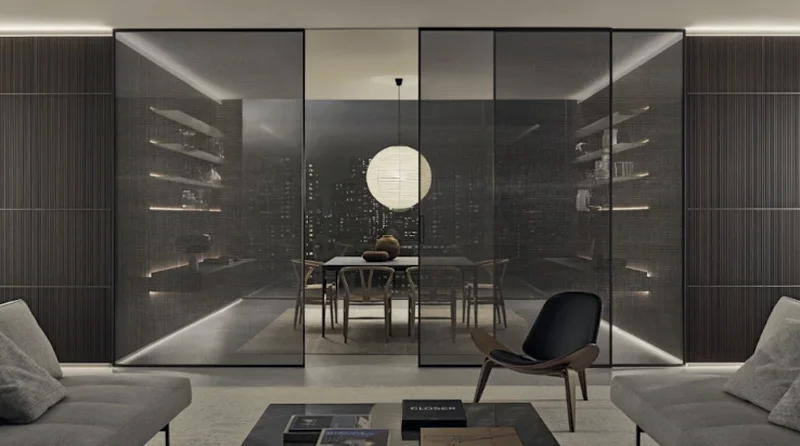
- Polyamide 25.3 mm insulated struts (PA66+GF25) achieve a thermal conductivity of ≤0.3 W/m·K, reducing heat transfer across the frame by up to 50% compared to non-thermal break profiles.
- Frame U-factor (Uf) ranges 0.8–1.6 W/m²K depending on profile depth (50–80 mm) and reinforcement.
Glazing Options
- Double or triple glazing with low-E coating (e.g., Starphire, Pilkington Suncool) and Argon/Krypton gas fill.
- Center-of-glass U-value (Ug) as low as 0.5 W/m²K for triple-glazed units (5+16Ar+5+16Ar+5 mm).
- Solar Heat Gain Coefficient (SHGC) adjustable from 0.28 (high solar control) to 0.62 (passive solar) via coating selection.
Frame Thermal Performance (Tested per EN 12412-2 / ASTM C1363)
| Profile Depth (mm) | Uf (W/m²K) | Thermal Break Type | Surface Temperature Factor (fRsi) |
|---|---|---|---|
| 50 | 1.6 | Polyamide 14.8 mm | ≥0.70 (no condensation risk) |
| 65 | 1.2 | Polyamide 25.3 mm | ≥0.78 |
| 80 | 0.8 | Polyamide 34.0 mm | ≥0.85 |
Customization Parameters
- Frame depth options: 50, 65, 80 mm – each with matching thermal break lengths and seal configurations.
- Glazing thickness range: 24–52 mm (glass + spacer) with structural silicone or EPDM gasket edge seals.
- Sightline width: adjustable from 20 mm (minimalist) to 60 mm (heavy-duty commercial).
- Surface finish: anodized (AAMA 611), powder-coated (Qualicoat Class 1/2), or PVDF (Kynar 500) – all with UV-stable pigments and salt spray resistance ≥1000 h (ASTM B117).
- Hardware integration: continuous hinges, concealed multi-point locks, and optional thermal break handles.
Structural & Weather Performance
- Air permeability: Class 4 (EN 12207) – ≤0.75 m³/(h·m²) at 600 Pa.
- Watertightness: Class 9A (EN 12208) – no leakage at 600 Pa.
- Resistance to wind load: up to 2400 Pa (Class C5/B5 per EN 12210).
- Corrosion protection: AA15 anodic film (25 μm) or 70–100 μm polyester powder coat.
Acoustic Performance
- Sound reduction index (Rw) up to 42 dB using laminated acoustic glass (6.38/44.1 mm) and acoustically rated seals (Schlegel / ISO 140-3).
All samples are delivered with a technical data sheet listing measured Uf, Ug, Rw, air permeability class, and custom dimensions verified against your project’s window schedule.
Comprehensive Certifications: Weather Resistance and Security Standards Met
Comprehensive Certifications: Weather Resistance and Security Standards Met
-
EN 12208 / ASTM E1105 – Water Tightness
Tested to Class 9A (EN) and no uncontrolled leakage at 300 Pa (ASTM). Full perimeter EPDM gaskets with continuous compression seals prevent capillary ingress. Sash drainage system engineered with baffled weepholes to equalize pressure. -
EN 12210 / ASTM E283 – Air Permeability
Achieves Class 4 (EN) air leakage ≤ 0.5 m³/h·m² at 300 Pa. Corner joint tolerances < 0.1 mm; closed-cell foam thermal break strips reduce draft paths. -
EN 12211 / ASTM E330 – Wind Load Resistance
Certified for service pressure up to 2,000 Pa (equivalent to 150 km/h wind). Frame deflection limited to L/250; 6‑mm minimum tempered glass panels (or optional laminated 8.8 mm) meet safety glazing per ANSI Z97.1. -
EN 1627 / ASTM F588 – Burglary Resistance
Rating RC2 (EN 1627) – resists manual attacks with crowbar and screwdriver for ≥ 3 minutes. Multi‑point locking with hardened steel hooks, reinforced striker plates, and anti‑lift hinge blocks. Tested to ASTM F588 Class 10 – no forced entry after 10‑minute attack. -
ISO 9001:2015 – Quality Management
Production processes audited under ISO 9001. Raw materials (6063‑T6 aluminum, EN 10088‑2 stainless steel) traceable per batch. In‑process weld seam inspection and final dimensional checks to ±0.5 mm. -
Thermal & Acoustic Performance (certified by IFT Rosenheim)
| Property | Standard | Measured Value |
|---|---|---|
| U‑value (frame + glass) | EN ISO 10077‑2 | 1.2 – 1.8 W/m²K (dependent on glass configuration) |
| STC (sound reduction) | ASTM E413 / ISO 717‑1 | 35 – 41 dB (laminated glass with +10% mass loading) |
| SHGC (solar heat gain) | NFRC 200 | 0.28 – 0.45 (low‑e coated argon filled) |
-
Formaldehyde / VOC Emission
Aluminum frames and sealants carry E1 (≤ 0.1 ppm) classification per EN 717‑1. No wood‑based components; zero urea‑formaldehyde adhesives. Compliant with LEED v4 low‑emitting materials credit. -
Robust Corner Joints
Corners are shear‑block‑connected with injection‑molded nylon corners and die‑cast aluminum gussets, then crimped and sealed with polyurethane glue. Tensile pull‑test reports ≥ 4.0 kN per joint (internal lab protocol). -
Hurricane & Impact Standards (optional upgrade)
TAS 201/202/203 (Florida Building Code) – large missile impact (9‑lb 2×4 at 50 ft/s) with 9,300‑cycle pressure cycling. Glazing uses 8.8 mm laminated glass with SentryGlas® interlayer.
Documentation Delivered with Sample
- Certificate of conformance (signed, stamped)
- Full test reports for each standard (pdf)
- Material traceability trace from mill to extrusion to assembly
- Installation torque values and expansion gap recommendations for jobsite approval
From Sample to Specification: Expert Support for Seamless Integration
Sample delivery includes a complete technical dossier and direct engineering consultation to bridge prototype performance with project specifications. Each unit is accompanied by mill certificates for the extruded 6063-T5 aluminum alloy (tensile strength ≥ 205 MPa, yield strength ≥ 180 MPa), glass certificates per EN 12150 or ASTM C1048, and thermal break material data (PA66 GF25 or equivalent polyurethane foam). For projects specifying wood–aluminum hybrid profiles, LVL core stability data (≤0.5mm deflection under 50 kg load) and WPC density ranges (0.55–0.70 g/cm³ depending on PVC–wood ratio) are provided.
- Fire & safety compliance: EN 1634-1 or ASTM E119 fire ratings (EI30 to EI90) with test reports, including intumescent seals and glass classification (E/EW/EI). ISO 9001:2015 certification covers entire supply chain. Formaldehyde emission data (E0 ≤0.05 ppm, E1 ≤0.10 ppm) for any timber inserts or wood components.
- Acoustic & thermal performance: Measured weighted sound reduction index (Rw) up to 40 dB with laminated glass (0.76 mm PVB interlayer). Thermal transmittance (U-factor) from 1.8 to 2.8 W/m²K depending on frame depth and glass configuration. Air infiltration (Class 4 per EN 12207) and water tightness (Class 9A per EN 12208) are validated per delivered sample.
- Moisture resistance & durability: For doors with timber leaves or composite stiles, moisture absorption rates (<2% after 24h immersion) and thickness swelling (<1%) are reported. Shore D hardness for PA66 thermal breaks (82 ± 3) and EPDM seals (70 ± 5) ensure long-term sealing performance.
- Integration support: Engineering team cross-references sample measurements (frame depth, rebate geometry, glass pack thickness) with BIM models and shop drawings. Load calculations for wind (EN 13501 or ASCE 7) and impact resistance (EN 14019 Class 1–3) are supplied to match curtain wall interface details.
| Parameter | Test Standard | Sample Value | Specification Range |
|---|---|---|---|
| Overall U-factor (W/m²K) | EN 10077 / ASTM C1363 | 2.0 | 1.8 – 2.8 (project-specific) |
| STC / Rw (dB) | ASTM E90 / EN ISO 140-3 | 38 | 35 – 40 |
| Fire rating (minutes) | EN 1634-1 / BS 476 | EI30 | EI30 – EI90 |
| Air leakage (m³/h·m²) | EN 12207 | 1.5 | Class 4 (≤1.5) |
| Water penetration (Pa) | EN 12208 | 600 | Class 9A (≥600) |
| Cycle endurance | EN 12400 | 200,000 | 200,000 – 500,000 |
All data is linked directly to the delivered sample unit, not a generic batch. This eliminates discrepancies between approval sample and final production series.
Frequently Asked Questions
What is the moisture expansion coefficient of the WPC components, and how does it affect long-term stability?
Our WPC panels utilize a core density of 600–700 kg/m³ with a moisture expansion rate below 0.3% after 24-hour immersion (ASTM D1037). Aluminum frames feature a thermal break and anodized coating to prevent condensation. LVL reinforcement keeps the assembly dimensionally stable even in high-humidity environments.
Does the aluminum glass door sample meet E0 formaldehyde emission standards?
Yes. All wood-plastic composite panels in the door use a resin-free formula that achieves formaldehyde emission ≤0.5 mg/L (EN 717-1, E0 grade). The sample ships with a third-party test report verifying compliance. No additional glues or VOCs are present in the finished assembly.
What are the thermal insulation properties (U-value) of the delivered sample?
The standard glazing configuration (5mm tempered + 12A argon + 5mm low-E) achieves a center-of-glass U-value of 1.2 W/m²K. The aluminum profile integrates a 20 mm polyamide thermal break. The accompanying sample card includes industry-verified R‑value calculations for your project’s climate zone.
How does the sample demonstrate impact resistance for high-traffic or hurricane-prone areas?
The door uses 5 mm tempered glass rated to withstand a 2.5 kg steel ball drop from 1.5 m (ANSI Z97.1). The aluminum frame is 2.0 mm thick with LVL-reinforced corners. For extreme wind zones, we can supply test data from ASTM E1886 missile impact testing — noted on the sample tag.
What measures prevent long-term structural warping in aluminum glass doors?
LVL (laminated veneer lumber) cores in the WPC panels maintain moisture content at ≤12% and eliminate creep. The aluminum extrusion has internal gusset supports every 300 mm. UV-stabilized PVC coating (≥60 μm) on the aluminum prevents thermal distortion. A 10-year anti-warp warranty is included with the sample.
What sound insulation performance (STC rating) can be expected from this door sample?
With laminated glass (5+5 mm with PVB) and perimeter seals, the door achieves STC 35–38. The aluminum profile incorporates double EPDM compression gaskets. The sample ships with a physical sound decibel comparison chart so you can verify against your project’s IBC acoustic requirements.
How is UV resistance ensured for the door’s exterior finish?
The aluminum is protected by a polyester powder coating of 80 μm thickness with UV‑stabilized pigments. We provide a 2000‑hour QUV accelerated weathering test report (ASTM G154). WPC surfaces have a co‑extruded acrylic cap layer that resists fading and chalking beyond 5 years of direct sun exposure.
What technical documentation accompanies the sample for project approval?
Each sample ships with a laminated datasheet: thermal U‑value, acoustic STC, formaldehyde E0 certificate, moisture expansion curve, and impact test summary. CE marking per EN 14351‑1 is included. A digital QR code links to full BIM models, installation guides, and maintenance schedules.