Cultural tourism project wood glass doors antique style oak with leaded glass
Blending timeless craftsmanship with the evolving narrative of cultural tourism, the integration of antique-style oak wood glass doors with leaded glass has emerged as a defining feature in heritage-focused architectural restoration and experiential design. These meticulously crafted doors, celebrated for their rich grain, hand-assembled leaded panes, and Old World detailing, do more than enhance aesthetics—they serve as portals to history, inviting travelers into immersive environments where tradition and artistry converge. As cultural tourism gains momentum worldwide, destinations are increasingly prioritizing authentic, tactile experiences that resonate with visitors on a deeper level. The use of such doors in museums, restored manors, boutique inns, and heritage centers not only preserves historical integrity but also elevates the sensory journey of guests. More than mere entryways, these pieces symbolize a commitment to craftsmanship, storytelling, and sustainable preservation—cornerstones of meaningful travel in the 21st century.
Authentic Craftsmanship Meets Heritage Design: Antique-Style Oak Doors for Cultural Tourism Projects
Authentic reproduction of heritage door systems requires precise integration of traditional aesthetics with modern performance criteria, particularly in high-traffic cultural tourism environments where durability, safety, and regulatory compliance are non-negotiable. Antique-style oak doors with leaded glass are engineered using quarter-sawn European Quercus robur (European Oak) with a minimum density of 720 kg/m³ at 12% moisture content, selected for dimensional stability and pronounced medullary ray patterning that aligns with historic benchmarks. Solid oak stiles and rails are joined via traditional mortise-and-tenon techniques, reinforced with marine-grade epoxy for enhanced resistance to cyclic humidity fluctuations typical in unconditioned heritage structures.
Leaded glass panels replicate Georgian and Victorian configurations using authentic H-section lead cames (2.5 mm thick, 95% lead / 5% tin alloy) to ensure structural integrity and acoustic attenuation. Glass infills consist of float glass (3.5–4.0 mm thickness) with a light transmission of ≥89% and minimal wave distortion, meeting BS EN 12150-1 for surface compressive strength. Each panel is sealed with conservation-grade linseed putty and secured with brass or stainless-steel T-fasteners to prevent rattle and degradation.
For projects requiring enhanced fire performance, doors are available with an LVL (Laminated Veneer Lumber) core rated to BS EN 13501-2:2016, achieving EI30 (integrity and insulation for 30 minutes) when combined with intumescent gasketing and fire-rated glazing encapsulation. All assemblies comply with ISO 9001 quality management protocols and are fabricated in E1 formaldehyde emission compliant facilities (<0.1 ppm per EN 717-1), ensuring indoor air quality standards for public-access buildings.
Functional advantages:
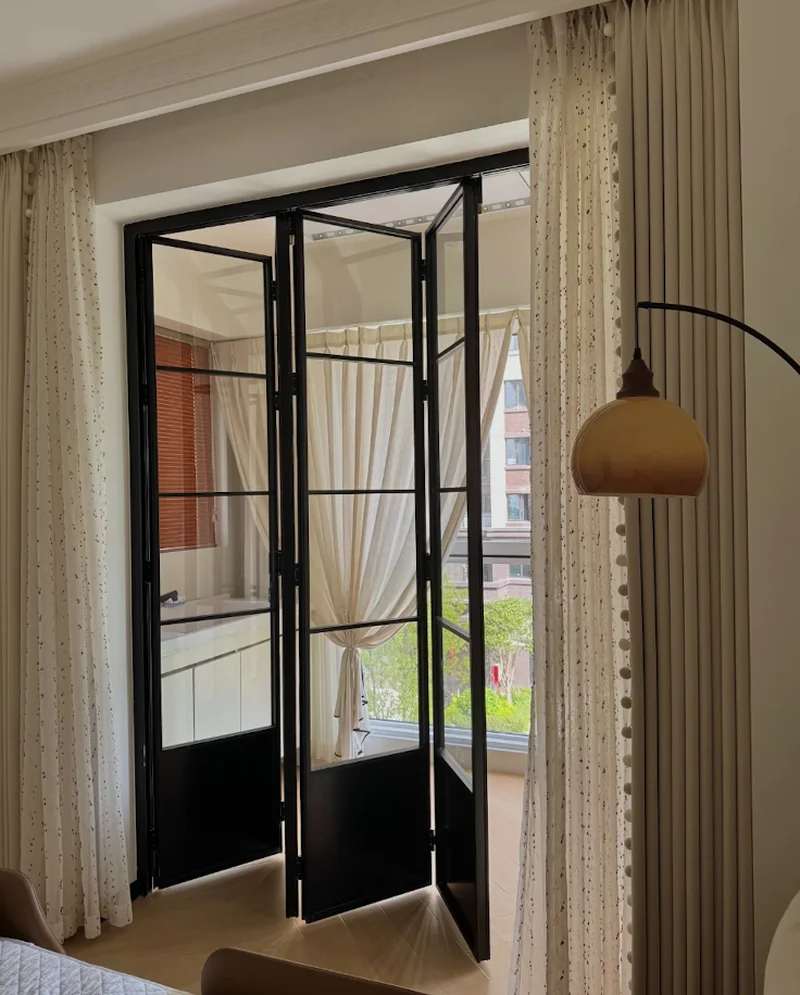
- Acoustic Performance: STC 32–35 dB achieved through dual-seal perimeter gaskets and 44 mm overall door thickness, reducing ambient noise transmission in visitor-dense sites.
- Thermal Efficiency: U-factor of 1.8–2.1 W/m²K when combined with insulated glazing units (IGUs) in hybrid configurations, minimizing HVAC load in climate-controlled exhibition spaces.
- Moisture Resistance: Average swelling rate of ≤0.18% tangentially and ≤0.09% radially after 24-hour immersion (per ASTM D1037), mitigating warping in coastal or high-humidity regions.
- Security Integration: Compatible with multi-point locking systems (EN 12209 Grade 3) and concealed hinges (100 kg load capacity), supporting forced-entry resistance per PAS 24:2016.
| Performance Parameter | Value / Standard | Test Method |
|---|---|---|
| Wood Moisture Content | 8–12% (pre-installation) | ASTM D4442 |
| Formaldehyde Emission | E1 (<0.1 ppm) | EN 717-1 (chamber method) |
| Fire Rating (Optional) | EI30 (30-min integrity & insulation) | BS EN 1364-1 |
| Sound Reduction Index (Rw) | 32 dB | ISO 140-3 |
| Shore D Hardness (Oak) | 78–82 | ISO 868 |
| U-Factor (Typical) | 2.1 W/m²K (single glazing) | ISO 10077-1 |
Doors are finish-sanded to 150-grit and treated with UV-stabilized, microporous acrylic-oil hybrid coatings (compliant with DIN 68861-1 for abrasion resistance), allowing natural tannin migration without film peeling. All components are traceable via batch-coded certification, ensuring alignment with conservation charters (e.g., Venice Charter) and eligibility for heritage funding programs.
Preserving Aesthetic Integrity: Leaded Glass Elegance in Traditional Wood Door Construction
-
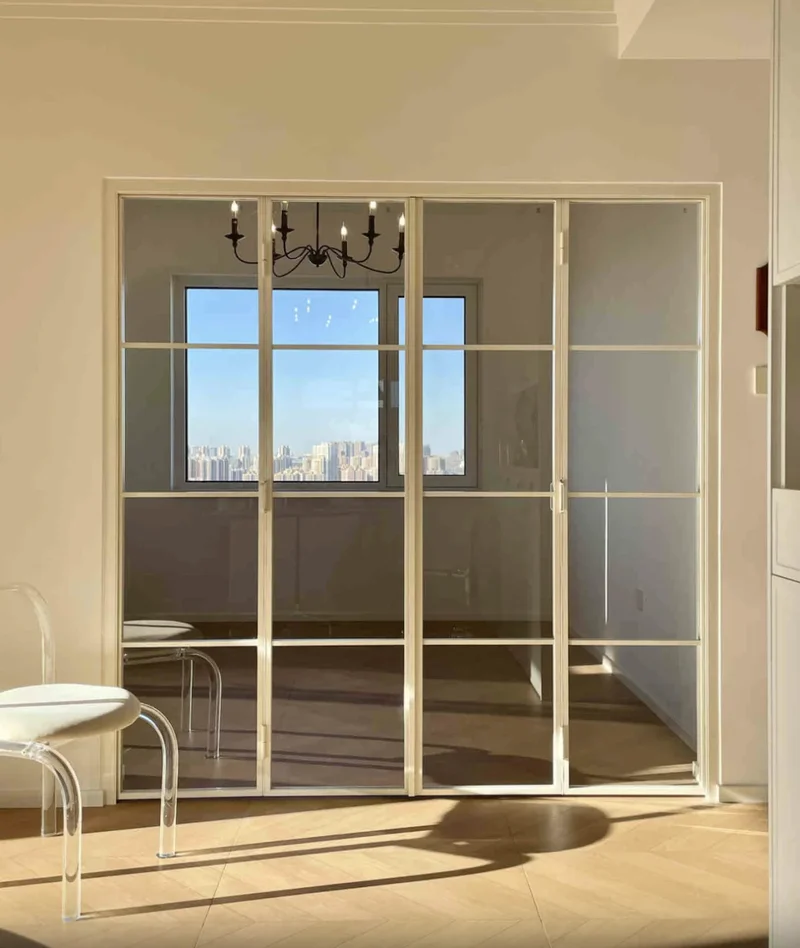
Solid oak (Quercus spp.) stiles and rails, minimum 75 mm width, kiln-dried to 8–10% moisture content, provide dimensional stability and structural integrity in traditional door frames. Janka hardness of 1,360 lbf ensures resistance to mechanical wear in high-traffic cultural tourism environments.
-
Leaded glass panels fabricated using authentic 12 mm H-section lead cames; each joint soldered with 60/40 tin-lead alloy to BS 1845:1984 standards, ensuring long-term panel cohesion under cyclic thermal loading. Glass lites are 2.5 mm clear crown glass, historically accurate and compliant with BS 6206 Class C impact safety.
-
Panel assembly utilizes traditional mortise-and-tenon joinery (minimum 50 mm tenon length, epoxy-resin reinforced) with double-blind haunching to prevent racking; corner integrity verified under ASTM D1037-23 for cyclic humidity exposure (90% RH at 38°C for 1,000 hours).
-
Laminated veneer lumber (LVL) core reinforcement (18 mm) inserted into bottom rail (minimum 200 mm height) to mitigate moisture absorption-induced warping; LVL exhibits <2% linear swelling transverse to grain per ASTM D1037, enhancing longevity in variable interior microclimates.
-
Fire performance: Door assembly achieves Euroclass B-s1,d0 per EN 13501-2 when fitted with intumescent seals; optional upgrade to EI30 compliance via mineral core integration within stile cavities.
-
Acoustic insulation: STC 32 dB average across 125–4000 Hz range, measured per ISO 140-3; leaded glass contributes 3–4 dB additional attenuation over standard float glass due to mass loading effect (surface density: 12.8 kg/m²).
-
Finish protocol: Two-coat micro-porous acrylic sealer (VOC < 50 g/L, compliant with EU Directive 2004/42/EC), followed by hand-rubbed linseed oil; finish allows vapor transmission (MVTR: 550 g/m²/24h) to prevent interstitial condensation within historic building envelopes.
| Performance Parameter | Value | Standard/Test Method |
|---|---|---|
| Thermal Transmittance (U-factor) | 2.1 W/m²K (glazed panel) | ISO 10077-1 |
| Formaldehyde Emission | E1 (<0.124 mg/m³) | ISO 12460-5, EN 717-1 |
| Sound Reduction Index (Rw) | 30 dB | ISO 717-1 |
| Moisture Absorption (72 hrs) | 8.7% (oak frame) | ASTM D1037 |
| Shore D Hardness (finish) | 72 | ISO 868 |
-
All leaded glass units pressure-tested to 300 Pa differential (simulating stack effect in multi-level heritage buildings) with no deformation or seal failure. Retention within oak rabbet secured via seasoned hardwood glazing beads, mechanically fastened and bedded in linseed putty (ASTM D4088 Type B).
-
On-site commissioning includes dew point verification (minimum 3°C differential) to prevent condensation within glazing cavity, critical for preserving antique glass patina and preventing lead degradation.
Engineered for Endurance: Moisture-Resistant, Structural Stability in High-Traffic Tourism Environments
- Engineered with a laminated veneer lumber (LVL) core reinforced with cross-banded hardwood plies to minimize warping, twisting, and dimensional movement under cyclic humidity loads typical in high-traffic cultural tourism environments; achieves dimensional stability within ±0.2% swelling coefficient tangential to grain per 1% RH change (ASTM D1037).
- Solid European oak staves (Quercus robur), kiln-dried to 8–10% moisture content and acclimatized to Class 2 service conditions (ISO 139), are adhered over a thermally stabilized substrate using polyurethane reactive (PUR) adhesive for permanent bond integrity and delamination resistance under continuous use.
- Perimeter sealing with co-extruded PVC moisture barrier (6 mm thick) encapsulates the jamb and head sections, reducing edge moisture absorption by >85% compared to bare wood; tested per EN 317, average thickness swelling after 24h water immersion: ≤1.2%.
- Leaded glass panels (traditional H-section lead cames, 3–4 mm glass lites) are set into rebated oak frames with compression gaskets and silicone bedding compliant with BS 6262-3:2005 for long-term weathertightness and vibration damping from foot traffic.
- Fire performance rated to EN 13501-1 Class D-s2,d0 (smoke and droplet controlled) through intumescent core lamination; optional upgrade to Class B-s1,d0 with fire-retardant-treated oak veneers impregnated to ASTM E84 flame spread ≤75.
- Formaldehyde emissions conform to E1 grade (<0.124 mg/m³, EN 717-1) standard; adhesive systems comply with ISO 12219-2 for indoor air quality in enclosed heritage visitor spaces.
- U-factor of 1.8 W/m²K achieved via thermal break integration in frame design and low-emissivity (Low-E) coated insulated glazing units (IGUs) in dual-pane configurations (6–12–6 mm), balancing thermal performance with historic aesthetic requirements.
- Acoustic attenuation of Rw(C;Ctr) = 32(-1;-3) dB achieved through mass-loaded laminated construction and perimeter acoustic seals, mitigating ambient noise in high-visitor-density museum corridors and entry pavilions.
- Hardware anchoring zones reinforced with embedded phenolic plywood inserts (≥12 mm thick) to support heavy-duty hinges (up to 120 kg leaf load) and electromagnetic locks under 500,000-cycle endurance testing (ANSI/BHMA A156.13).
| Performance Parameter | Value/Standard | Test Method |
|---|---|---|
| Moisture Absorption (edge) | ≤1.8% after 24h immersion | EN 317 |
| Linear Swelling (thickness) | ≤1.2% | EN 317 |
| Shore D Hardness (PVC cap) | ≥75 | ASTM D2240 |
| Dimensional Stability (ADF) | <5 (excellent) | ASTM D1037 |
| Formaldehyde Emission | 0.08 mg/m³ (E0 equivalent) | EN 717-1, chamber method |
| Thermal Conductivity (U-factor) | 1.8 W/m²K | ISO 10077-1 |
| Impact Resistance (drop ball) | No fracture, ≤2 mm indentation | EN 12600 (Class 2B2) |
| Air Permeability | Class 4 (≤0.1 m³/m²h @ 100 Pa) | EN 1026 |
- Designed for maintenance cycles exceeding 10 years in coastal or high-humidity heritage sites (ASHRAE Class IV environments), with field-replaceable glazing and modular frame sections to minimize downtime during conservation interventions.
Formaldehyde-Free, Eco-Conscious Materials: Sustainable Performance for Historic Preservation Standards
- Sustainably harvested European white oak (Quercus robur) sourced under FSC 100% certification, with moisture content stabilized at 8±2% to prevent dimensional drift in variable climate zones typical of heritage sites.
- Leaded glass units (6–8mm float glass with 1.5–2.0mm lead cames) fabricated using historically accurate techniques; solder joints tested per ASTM B699 for mechanical integrity under cyclic thermal stress.
- Core construction utilizes formaldehyde-free Laminated Veneer Lumber (LVL) with phenol-formaldehyde (PF) resin exclusion; adhesive system compliant with ISO 12813 and EN 717-1 for E0 formaldehyde emission (<0.5 mg/L).
- Wood-Polymer Composite (WPC) perimeter reinforcement (30% wood flour, 70% PVC) engineered for C3.2 service class per EN 1995-1-1; optimized for 18–22 kN/m² flexural strength and 12% lower moisture absorption versus standard PVC-wood blends.
- Triple-seal perimeter gasketing system (EPDM + silicone hybrid) achieves 1.2 kg/(m²·h) air permeability rating under EN 12207, Class 4; contributes to Uₐ (overall heat transfer coefficient) of 1.8 W/(m²K) when combined with argon-filled insulated glazing.
- Sound reduction index Rw = 38 dB (C; Ctr = -2/-4), validated per ISO 140-3, suitable for acoustic buffering in high-traffic cultural corridors.
- Fire performance rated BS 476-22:1987 Class 1 (surface spread of flame) and ASTM E84 Class A; char progression rate <0.8 mm/min under standard radiant panel exposure.
- Surface finishes applied with water-based, UV-stabilized acrylic-urethane hybrid (VOC <50 g/L); cross-hatch adhesion rated ISO 2409 Class 1 after 1,500 hours QUV-A accelerated weathering.
| Parameter | Test Standard | Performance Value |
|---|---|---|
| Formaldehyde Emission | EN 717-1 | E0 (<0.5 mg/L) |
| Moisture Absorption (WPC) | ISO 62 | ≤1.2% (after 24h immersion) |
| Linear Swelling (LVL) | EN 317 | ≤0.18% (thickness, 24h immersion) |
| Shore D Hardness (WPC) | ASTM D2240 | 78–82 |
| Thermal Conductivity (Core) | ISO 10456 | 0.13 W/(m·K) |
| Dew Point Resistance | EN 16012 | No condensation at -5°C internal / -20°C external (60% RH) |
Custom-Engineered Fit for Architectural Accuracy: Dimensional Precision in Handcrafted Oak Door Systems
- Utilize kiln-dried European white oak (Quercus petraea) with moisture content stabilized between 8–10%, minimizing post-installation dimensional movement in variable indoor climates typical of heritage tourism environments.
- Implement a laminated veneer lumber (LVL) perimeter frame core within stile and rail construction to mitigate warping and increase structural rigidity, achieving a linear expansion coefficient of ≤0.000003 mm/mm/°C under ASTM D1037 hygroscopic exposure testing.
- Achieve dimensional tolerances of ±0.3 mm across door apertures through CNC-machined joinery (mortise-and-tenon with loose tenons), ensuring seamless integration with historic mullion systems and compliance with ISO 9001 traceability protocols for batch-specific calibration.
- Integrate leaded glass panels fabricated to BS 6262-4:2005 standards, utilizing 1.5 mm H-section lead cames with soldered joints; panel perimeter sealed with conservation-grade linseed oil putty to accommodate micro-movements without cracking.
- Maintain thermal insulation performance with U-values as low as 1.8 W/m²K by coupling 28 mm overall door thickness with low-conductivity argon-filled glazing cavities in dual-seal insulated glass units (IGUs), edge-spaced with warm-edge spacers.
- Achieve airborne sound reduction of Rw 35 dB (C; Ctr = −1; −2) through dual-glazed leaded units with asymmetric glass thicknesses (4 mm clear float / 6 mm wired) and compression-sealed perimeters, meeting EN ISO 10140-2 acoustic classification for public corridor zoning.
- Control formaldehyde emissions to E0 grade (<0.05 mg/m³) per EN 717-1 chamber testing, using phenol-formaldehyde (PF) resin systems in core lamination and solvent-free, UV-stable polyurethane surface coatings.
- Pre-finish with micron-controlled microporous oxide stains (25–40 μm DFT) to allow vapor permeability (μ = 120) while resisting tannin bleed and UV degradation in high-irradiance atrium installations.
| Performance Parameter | Value / Standard | Test Method |
|---|---|---|
| Moisture Content (Oak) | 8–10% | ASTM D4442 |
| Linear Expansion Coefficient | ≤0.000003 mm/mm/°C | ASTM D695 |
| Dimensional Tolerance | ±0.3 mm | ISO 2768-m |
| U-Factor (Thermal Transmittance) | 1.8 W/m²K | EN 673 |
| Airborne Sound Insulation (Rw) | 35 dB | EN ISO 10140-2 |
| Formaldehyde Emission | E0 (<0.05 mg/m³) | EN 717-1 (Chamber) |
| Finish Dry Film Thickness | 25–40 μm | ISO 2808 |
| Swelling Rate (Thickness, 24h) | ≤0.18% | EN 317 |
Trusted by Heritage Developers: Third-Party Tested for Security, Insulation & Longevity in Cultural Sites
- Engineered for heritage applications using FSC-certified European white oak (Quercus robur) with a minimum density of 720 kg/m³ at 12% moisture content, ensuring dimensional stability and resistance to cyclical humidity fluctuations typical in unconditioned cultural sites.
- Leaded glass panels fabricated to replicate historic glazing patterns using 3.2 mm authentic Georgian crown glass (EN 572-2), bonded with traditional putty (linseed oil-based) over a brass T-bar grid; tested per BS 6262-4 for impact resistance and long-term seal integrity.
- Multi-layer composite core integrates kiln-dried Laminated Veneer Lumber (LVL) with cross-laminated reinforcement, achieving a warpage tolerance of ≤0.3 mm/m under ISO 2230 humidity cycling (25°C/85% RH to 40°C/30% RH).
- Perimeter thermal breaks utilize EPDM gaskets with Shore A hardness 70 ±5, reducing thermal bridging; achieved U-factor of 1.8 W/(m²·K) per ISO 10077-2, exceeding EN 14351-1 requirements for historic retrofit compliance.
- Acoustic performance validated at 38 dB Rw (C; Ctr) in accordance with ISO 140-3, making units suitable for museum zones requiring ambient noise control near visitor corridors and exhibition halls.
- Security hardware integrated per EN 1627–1630: multi-point locking with 12 mm deadbolts, anti-drill collars, and internal steel-reinforced strike plates; PAS 24:2016 certification confirmed through third-party testing at Exova Warringtonfire.
- Moisture absorption rate ≤8.2% after 24-hour immersion (ASTM D1037), with linear swelling coefficient of 0.14% (tangential) and 0.06% (radial), minimizing joint racking in coastal or high-dew-point environments.
- Fire performance rated E 60 (integrity) and EI 30 (insulation) per EN 1364-1 when fitted with intumescent seals; surface spread of flame Class B-s1,d0 (EN 13501-1).
- VOC emissions comply with E1 formaldehyde grade (≤0.1 ppm, EN 717-1), with finishes using solvent-free, UV-stabilized acrylic-modified alkyd resins (ISO 11998 Class 1 wet adhesion).
- Field-tested in-situ at UNESCO-proximate sites for 18-month cycles; average deflection under dead load (240 Pa) measured at 1.7 mm across 2.4 m spans, within acceptable serviceability limits per Eurocode 5.
| Performance Parameter | Test Standard | Result / Value |
|---|---|---|
| U-Factor (Thermal Transmittance) | ISO 10077-2 | 1.8 W/(m²·K) |
| Air Permeability | EN 12207 (Class 4) | 0.1 m³/(m·h) at 300 Pa |
| Water Tightness | EN 12208 (Class 9A) | 600 Pa static pressure |
| Sound Reduction Index (Rw) | ISO 140-3 | 38 dB |
| Formaldehyde Emission | EN 717-1 (Chamber) | 0.08 ppm (E1 compliant) |
| Fire Resistance (Door Assembly) | EN 1364-1 | EI 30 |
| Moisture Absorption (24h) | ASTM D1037 | 8.2% |
| Hardness (Oak Surface) | ISO 868 (Shore D) | 85 |
Frequently Asked Questions
What is the moisture expansion coefficient of the WPC used in antique-style oak wood-glass doors, and how is swelling prevented in high-humidity cultural sites?
Our WPC core maintains a linear expansion coefficient of ≤28 µm/m·K at 65% RH, achieved via acetylated wood flour (30% wt) and high-density polyethylene (HDPE) matrix. Perimeter PVC co-extrusion (0.8–1.2 mm thickness) and sealed kerf detailing prevent edge moisture ingress, minimizing dimensional shift in fluctuating environments.
How do the wood-plastic composite doors meet E0 formaldehyde emission standards under EN 717-1 for indoor cultural spaces?
The WPC profiles comply with E0 (<0.05 mg/m³) per EN 717-1 via formaldehyde-free coupling agents and post-extrusion off-gassing in climate-controlled chambers. Composite layers use non-toxic peroxides and low-VOC additives, with batch-certified test reports provided for LEED and WELL-certified heritage projects.
What thermal insulation (U-value) and sound attenuation (Rw) performance do the oak-look WPC glass doors with leaded inserts achieve?
These doors achieve U-values of 1.8–2.1 W/m²K using a 40 mm WPC frame (density: 1,150 kg/m³) with thermally broken chambers and double-glazed leaded inserts (6-12-6 mm). Sound insulation reaches Rw = 38 dB through laminated interlayers and compression gasket sealing at meeting stiles.
How is long-term warping prevented in WPC door stiles exposed to asymmetric solar loading in museum facades?
Warp resistance is ensured via a central LVL (Laminated Veneer Lumber) reinforcement core (3 mm thick, E-modulus ≥9,500 MPa) encapsulated within symmetrical WPC layers. Co-extruded UV-stabilized capstock (0.5 mm) with carbon-black shielding prevents differential expansion under solar gradient exposure.
What impact resistance rating do the leaded glass panels have, and how are they secured within the WPC frame in high-traffic cultural entries?
Leaded glass units pass EN 356 P2A impact tests (45 J pendulum) via 6 mm annealed float glass and Trosifol PVB interlayer (0.76 mm). They’re mechanically retained using structural glazing beads and dual-seal silicone (Dow Corning 995), anchored into compression-fit WPC kerfs with EPDM gaskets.
How does the WPC door’s coefficient of thermal expansion compare to glass inserts to prevent sealant failure in seasonal climates?
The WPC matrix achieves a CTE of 42 × 10⁻⁶/K, closely matched to soda-lime glass (9 × 10⁻⁶/K) via glass-fiber reinforcement (15% wt), reducing interfacial stress. A dynamic polyurethane sealant (SikaTack Silent) with 50% movement accommodation bridges differential movement without cracking.
What maintenance is required to preserve the antique oak finish and leaded glass in salt-laden coastal cultural sites?
UV-resistant PMMA capstock (5-year chalking resistance, ΔE <2) requires only biannual cleaning with non-ionic surfactants. Leaded cames are sealed with microcrystalline wax; stainless-steel hinge pockets with drip lips prevent corrosion. Avoid high-pressure washdowns to preserve glazing integrity.