Custom-Sized Engineered Wood Doors for Boutique Apartment Developments | Premium Interior Solutions
In the realm of boutique apartment developments, where design precision and architectural individuality define the standard of luxury, interior elements must rise to meet exacting aesthetic and functional demands. Custom-sized engineered wood doors have emerged as a cornerstone of premium interior solutions, blending the timeless warmth of natural wood with the structural integrity and sustainability of advanced engineering. Meticulously crafted to fit unique spatial dimensions and design visions, these doors offer developers unparalleled flexibility in achieving cohesive, high-end finishes across bespoke floor plans. Resistant to warping, moisture, and dimensional instability, engineered wood delivers enduring performance without compromising on elegance. From sleek, minimalist panel doors to richly grained statement pieces, customization extends beyond size to include finishes, profiles, and hardware integration—ensuring seamless alignment with a project’s distinctive character. For discerning architects and developers committed to craftsmanship and consistency, custom-engineered wood doors represent the perfect fusion of form, function, and fine detail in today’s most exclusive residential spaces.
Why Boutique Apartment Developers Choose Custom-Sized Engineered Wood Doors
-
Precision integration with architectural intent
Boutique apartment developments prioritize architectural coherence and spatial refinement. Custom-sized engineered wood doors enable exact alignment with non-standard door openings, ceiling heights, and wall configurations common in boutique designs. This precision eliminates compromises in aesthetics or functionality, ensuring seamless integration with bespoke floor plans and high-end interior layouts. -
Enhanced design continuity and aesthetic control
Unlike mass-produced doors constrained by standard dimensions, custom-sized doors maintain design consistency across varied room types—studio, one-bedroom, or penthouse units. Developers leverage engineered wood’s stability and surface uniformity to match door finishes with flooring, cabinetry, and wall treatments, achieving a unified material palette. The ability to specify exact dimensions supports flush installations, minimalist hardware integration, and concealed hinges—hallmarks of curated interior experiences. -
Structural and environmental performance
Engineered wood offers superior dimensional stability compared to solid timber, particularly in climate-controlled multi-residential environments where humidity and temperature fluctuate. Custom sizing ensures optimal fit within steel or timber framing systems, reducing stress points, warping risks, and long-term maintenance. The layered construction of engineered wood resists expansion and contraction, preserving door alignment and acoustic integrity over time. -
Streamlined project coordination and reduced waste
Pre-dimensioned doors aligned with architectural specifications minimize on-site adjustments, accelerating installation timelines and reducing labor costs. Fabricated to exact requirements, these doors decrease material waste during fitting—a critical consideration in sustainable development practices and efficient project delivery. Off-site precision manufacturing also supports just-in-time logistics, aligning with tight urban construction schedules. -
Compliance with acoustic and fire performance standards
Custom sizing does not compromise regulatory compliance. Engineered wood doors can be constructed with core materials and edge seals to meet STC 45+ acoustic ratings and 20- to 90-minute fire resistance requirements, depending on assembly. Developers retain full control over performance specifications while achieving tailor-fit solutions for private corridors, unit entries, and service areas. -
Long-term value and brand differentiation
In competitive urban markets, interior detailing defines perceived quality. Custom-sized engineered wood doors signal attention to detail, contributing to tenant satisfaction, premium positioning, and asset valuation. For boutique developers, this combination of precision, performance, and aesthetics is not an indulgence—it is a strategic component of differentiated, high-margin residential delivery.
The Advantages of Engineered Wood in High-End Residential Construction
-
Engineered wood has emerged as a material of choice in high-end residential construction, particularly in boutique apartment developments where precision, performance, and aesthetics converge. Unlike solid wood, engineered wood is constructed through the lamination of multiple wood veneers or strands under controlled conditions, resulting in a product that offers superior dimensional stability and resistance to warping, twisting, and shrinking—critical attributes in environments with fluctuating humidity and temperature.
-
One of the foremost advantages lies in dimensional consistency. Engineered wood maintains its form over time, ensuring that custom-sized doors retain a precise fit within tight architectural tolerances. This stability supports seamless integration with modern building envelopes, including high-performance insulation systems and acoustically rated partitions common in luxury multifamily projects.
-
From a design standpoint, engineered wood provides unparalleled versatility. It can be manufactured to exact dimensions, profiles, and thicknesses, enabling architects and interior designers to achieve bespoke door solutions without compromising structural integrity. Its layered composition also allows for premium veneer finishes that replicate rare or exotic hardwoods, offering aesthetic richness with sustainable sourcing.
-
Sustainability is another compelling factor. Engineered wood optimizes raw material usage by utilizing fast-growing, responsibly managed forests and wood byproducts, reducing environmental impact without sacrificing quality. This aligns with the growing demand for eco-conscious materials in premium residential developments seeking green certifications such as LEED or BREEAM.
-
Additionally, engineered wood demonstrates excellent performance in fire resistance, sound attenuation, and impact durability when integrated with appropriate core materials and construction techniques. These properties make it ideal for interior applications in multi-unit residential buildings where acoustic privacy and long-term durability are paramount.
-
Finally, the manufacturing process enables efficient prefabrication and tighter quality control, reducing on-site labor and installation time—key considerations in high-end projects where schedule adherence and craftsmanship precision are non-negotiable. The result is a refined interior solution that balances elegance, functionality, and longevity.
Tailored Dimensions and Design Flexibility for Unique Apartment Layouts
-
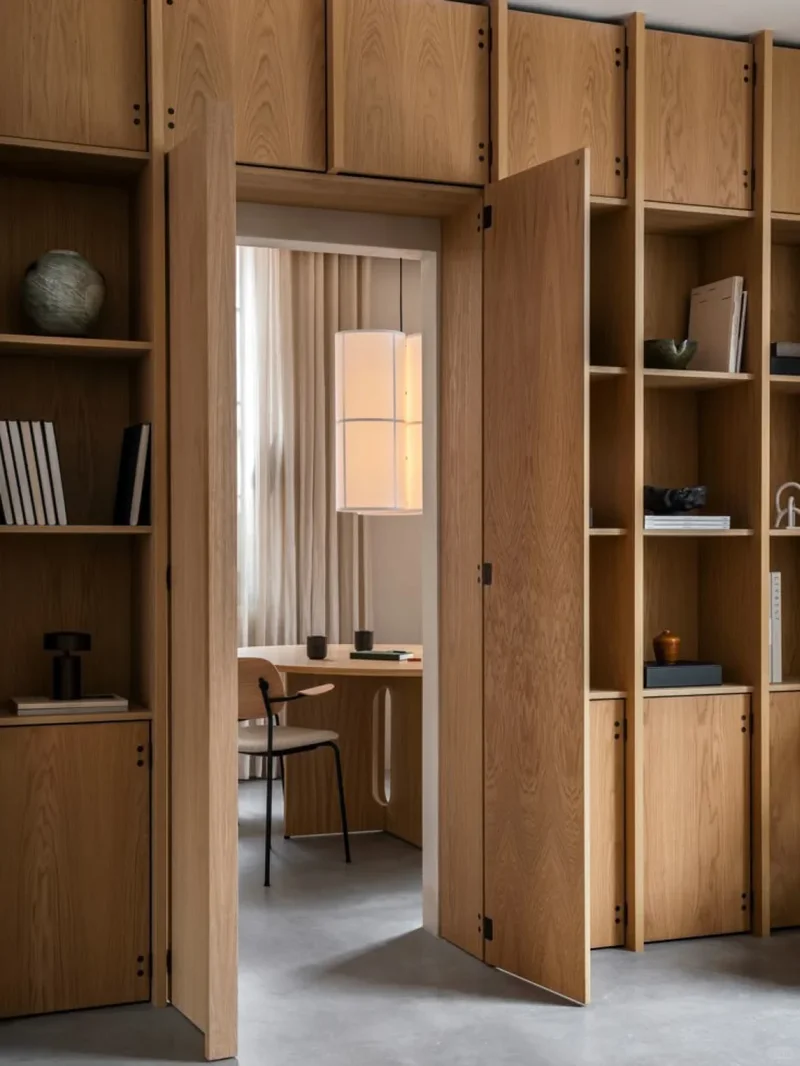
Engineered wood doors offer unparalleled adaptability in dimensions and configuration, making them ideal for boutique apartment developments where architectural uniqueness defines value. Unlike mass-produced standard doors, custom-sized engineered wood units are fabricated to exact project specifications, accommodating non-standard openings, ceiling heights, and spatial constraints inherent in distinctive layouts.
-
Design flexibility extends beyond mere dimensions. Precision milling techniques allow for bespoke profiles, edge treatments, and panel configurations that align with the developer’s aesthetic vision—whether minimalist, transitional, or heritage-inspired. This enables seamless integration with custom millwork, built-in cabinetry, and specialty wall systems, ensuring continuity across interior elements.
-
In boutique developments, where unit layouts often vary significantly across floors or wings, modular adaptability is critical. Engineered wood substrates provide dimensional stability across variable humidity and temperature conditions, ensuring long-term performance even in tightly conditioned urban environments. This stability supports larger door formats—such as full-height 8- or 9-foot units or wide double doors—without warping or structural compromise.
-
Integration with premium hardware systems—concealed hinges, soft-close mechanisms, and low-profile tracks for sliding variants—further enhances functionality within compact or irregular spaces. Pocket, bi-fold, and pivot configurations can be precisely engineered to match threshold allowances and wall depths, maximizing usable floor area without sacrificing elegance.
-
Acoustic performance can be tailored in tandem with dimensional customization. Engineered wood doors can incorporate layered core constructions and perimeter sealing systems to meet specific sound transmission class (STC) requirements, essential for maintaining privacy in closely spaced residential units.
-
Digital templating and CNC manufacturing ensure millimeter-accurate production, reducing on-site adjustments and installation delays. Each door is fabricated to align precisely with as-built conditions, a critical advantage in renovations or conversions where structural variances are common.
-
From a design authority perspective, the ability to specify exact proportions, sightlines, and threshold details empowers architects to maintain rigorous design intent across all units. This level of control reinforces brand exclusivity and attention to detail—hallmarks of premium residential developments.
-
Ultimately, custom-sized engineered wood doors bridge architectural ambition with practical performance, transforming spatial constraints into design opportunities without compromising on quality, durability, or aesthetic coherence.
Sustainability and Performance: Matching Luxury with Eco-Conscious Building Standards
-
Engineered wood doors represent a convergence of refined aesthetics and sustainable innovation, particularly in boutique apartment developments where design integrity and environmental responsibility must coexist. These custom-sized interior solutions offer architects and developers a means to achieve luxury finishes without compromising eco-conscious building standards.
-
Unlike solid timber counterparts, engineered wood doors utilize a core constructed from sustainably sourced, fast-growing softwoods or recycled wood fibers, layered with a veneer of premium hardwood. This composite structure reduces dependency on old-growth forests while maintaining the visual warmth and tactile quality expected in high-end residential interiors.
-
The manufacturing process for engineered wood doors integrates precision CNC machining and low-emission adhesives compliant with stringent environmental certifications such as FSC, PEFC, and CARB Phase 2. These standards ensure responsible forestry practices and minimize off-gassing of volatile organic compounds (VOCs), contributing directly to improved indoor air quality—an essential criterion in WELL and LEED-certified developments.
-
Custom sizing further enhances sustainability by reducing on-site waste. Pre-finished, dimensionally accurate doors arrive ready for installation, eliminating the need for field cutting, sanding, and finishing, which not only lowers labor costs but also reduces particulate emissions and construction-phase environmental impact.
-
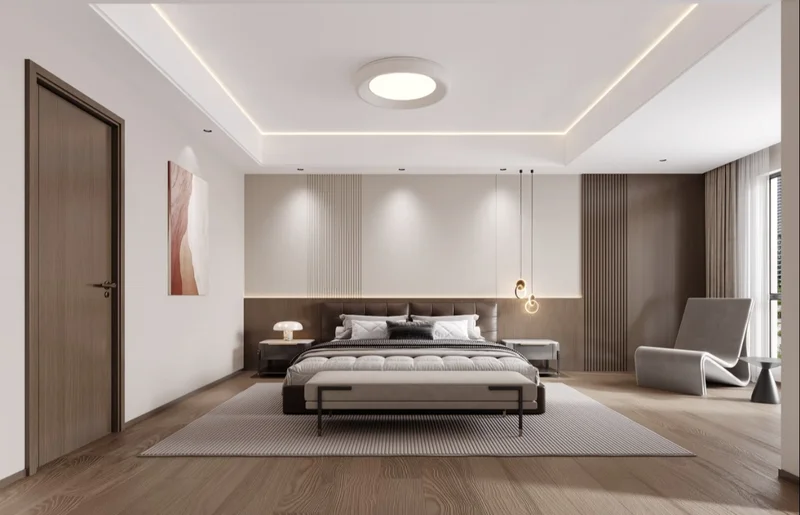
Performance attributes align closely with sustainability goals. Engineered wood exhibits superior dimensional stability compared to solid wood, resisting warping, shrinking, and swelling due to humidity fluctuations—critical in multi-unit residential environments with variable climate control. This long-term durability reduces maintenance cycles and replacement frequency, extending service life and lowering lifecycle environmental costs.
-
Acoustic performance is another critical factor in boutique apartments, where sound privacy is paramount. Engineered wood doors can be designed with enhanced core densities and sealing systems to achieve STC ratings exceeding 45, meeting rigorous acoustic requirements without resorting to non-renewable materials.
-
When specified with water-based finishes, recycled content components, and end-of-life recyclability in mind, engineered wood doors become a holistic solution—balancing aesthetic sophistication, operational performance, and environmental stewardship. For developers targeting both market differentiation and compliance with green building codes, these doors exemplify how premium interior solutions can meet, and exceed, contemporary sustainability benchmarks.
Integrating Custom Doors into Architectural Vision and Brand Identity
-
Custom-sized engineered wood doors serve as pivotal design elements that bridge architectural intent with brand identity in boutique apartment developments. Far beyond mere functional partitions, these doors embody the narrative of space—refining user experience while reinforcing the project’s aesthetic and conceptual coherence.
-
Precision-engineered to exact dimensions, these doors eliminate compromises in layout efficiency and design continuity. Their seamless integration into spatial plans allows architects to execute unobstructed sightlines, maximize usable floor area, and maintain consistency in material expression across thresholds—critical in compact, high-value units where every millimeter and material transition is scrutinized.
-
Material authenticity is paramount. Engineered wood substrates, when paired with premium veneers or finishes, replicate the warmth and grain variation of solid timber while offering superior dimensional stability. This balance enables designers to specify large door formats—sliding, pivoting, or flush-panel—without warping risks or acoustical compromise, supporting both longevity and luxury perception.
-
Design differentiation emerges through tailored detailing: concealed hinges, frameless perimeters, integrated handles, and bespoke reveal profiles. These features, when aligned with overarching interior motifs—be it minimalist, industrial, or biophilic—elevate doors from utilitarian components to curated design statements.
-
From a branding perspective, consistency in door design across units fosters recognition and reinforces the development’s unique positioning. A unified door aesthetic—repeated in entry, wardrobe, and bathroom applications—creates rhythm and familiarity, contributing to a cohesive resident experience. Developers leverage this consistency to articulate lifestyle propositions, whether through the warmth of oak in heritage-inspired lofts or the refined austerity of matte-lacquered finishes in contemporary towers.
-
Furthermore, engineered wood supports sustainability narratives without sacrificing performance. Sourced from responsibly managed forests and optimized for material yield, it aligns with eco-conscious branding while meeting fire, acoustic, and durability standards required in multi-residential construction.
-
The strategic specification of custom doors thus acts as both a design enabler and brand amplifier. When aligned with architectural vision and resident expectations, these elements transcend function—becoming silent ambassadors of quality, intention, and identity in the boutique residential landscape.
Frequently Asked Questions
What are the key benefits of using custom-sized engineered wood doors in boutique apartment developments?
Custom-sized engineered wood doors offer superior dimensional stability, reduced warping, and enhanced acoustic and thermal performance compared to solid wood. They are ideal for boutique developments where precise architectural fit, design consistency, and performance under variable humidity conditions are critical. Their layered construction allows for larger door sizes without sacrificing durability, enabling seamless integration into unique floor plans.
How do engineered wood doors compare to solid wood in terms of longevity and maintenance?
Engineered wood doors are constructed with a core of plywood or composite material layered with real wood veneers, providing superior resistance to moisture and temperature changes. This makes them less prone to swelling, shrinking, or cracking compared to solid wood. When properly finished and maintained, engineered wood doors can match or exceed the lifespan of solid wood, particularly in climate-controlled urban environments typical of boutique apartments.
Can custom-engineered wood doors be designed to meet fire and building code requirements?
Yes, custom-engineered wood doors can be manufactured with fire-rated cores and intumescent seals to achieve required fire resistance ratings (typically 20- to 90-minute fire doors). These doors are tested and certified to meet ASTM, UL, and local building codes, including NFPA and IBC standards—essential for multi-family residential compliance in boutique apartment complexes.
What customization options are available for engineered wood doors in high-end apartment projects?
Manufacturers offer extensive customization, including non-standard dimensions (heights up to 10 feet, widths beyond 36 inches), architectural profiles (raised panels, glass inserts), custom edge banding, and premium wood veneer species (e.g., walnut, rift oak, or sapele). Doors can be pre-finished with UV-cured or pre-catalyzed lacquers for durability and uniform appearance across units.
How do acoustic performance considerations influence the design of engineered wood doors?
High-performance engineered wood doors can achieve Sound Transmission Class (STC) ratings of 45–55 when paired with proper seals and frames. Design elements such as denser core materials, perimeter acoustic gaskets, and proper door alignment significantly reduce sound transfer—critical for privacy in compact boutique apartment layouts.
Are custom-sized engineered wood doors compatible with smart locking and access control systems?
Yes, engineered wood doors can be pre-routed during manufacturing to integrate smart locks, access control hardware, RFID readers, and wireless entry systems. Their stable core supports precise mortising and long-term alignment of electronic components, ensuring reliable operation in high-traffic residential settings.
What structural considerations are required when installing oversized engineered wood doors?
Oversized doors (e.g., 8 ft+ in height or 36+ in width) require reinforced jamb systems, heavy-duty adjustable hinges (e.g., ball-bearing or pivot hinges), and engineered frames to support long-term operation without sagging. Installation should be done by certified professionals following manufacturer specifications to maintain warranty and performance.
How do environmental and sustainability standards impact the selection of engineered wood doors?
High-end engineered wood doors often use FSC-certified veneers and low-VOC adhesives compliant with CARB2 and LEED v4 standards. Their efficient use of wood resources and longer service life contribute to sustainable building certifications—important for boutique developers marketing eco-conscious living spaces.