Eco-Friendly FSC Certified Wooden Doors: Sustainable Solutions for Green Building Projects
In the evolving landscape of sustainable architecture, every design decision carries environmental weight—none more impactful than the materials we choose for fundamental building elements. Among these, FSC certified wooden doors are emerging as a hallmark of eco-conscious construction, combining timeless aesthetic appeal with verifiable environmental stewardship. Sourced from responsibly managed forests that prioritize biodiversity, worker welfare, and long-term ecological balance, these doors offer architects and builders a powerful tool to meet green building standards such as LEED and BREEAM. Beyond compliance, FSC certification ensures traceability from forest to finished product, providing transparency that resonates with environmentally aware clients and communities. As sustainability transitions from trend to imperative, eco-friendly wooden doors are no longer a niche option—they are a strategic choice for projects committed to reducing carbon footprints and promoting renewable resources. With strength, beauty, and integrity built in, FSC certified doors represent more than an entryway—they symbolize a gateway to a more sustainable future in construction.
Why FSC Certification Matters for Sustainable Wood Door Selection
- Ensures wood originates from responsibly managed forests that maintain biodiversity, ecosystem integrity, and community rights
- Provides verifiable chain-of-custody traceability from forest to finished product
- Supports compliance with leading green building standards such as LEED, BREEAM, and Living Building Challenge
- Mitigates risk of illegal logging and deforestation through independent third-party audits
- Enhances building project sustainability credentials for certification and reporting purposes
FSC (Forest Stewardship Council) certification is a critical benchmark in the selection of wood doors for environmentally responsible construction. When specifying wooden doors, architects, builders, and project owners must consider not only aesthetic and performance criteria but also the environmental and social implications of material sourcing. FSC certification provides a globally recognized framework ensuring that wood products originate from forests managed in accordance with rigorous ecological, social, and economic standards.
The FSC system mandates that forest operations protect wildlife habitats, conserve old-growth and high-conservation-value forests, and respect the rights of Indigenous peoples and local communities. For wood door manufacturers, sourcing FSC-certified timber demonstrates a commitment to ethical supply chains and long-term resource sustainability. Each certified product carries a chain-of-custody certification, allowing full traceability from the forest to the final installation—offering transparency and accountability that generic “sustainable” claims cannot match.
From a regulatory and compliance standpoint, FSC certification directly supports achievement of key green building rating system credits. Projects pursuing LEED v4.1, for instance, can earn Material and Resource credits through FSC-compliant sourcing. Similarly, public procurement policies in numerous countries now require or favor FSC-certified wood, reflecting its status as a policy-aligned sustainability tool.
Beyond compliance, FSC certification mitigates reputational and legal risks associated with deforestation and illegal timber trade. As supply chain due diligence becomes increasingly scrutinized under evolving environmental regulations, specifying FSC-certified wooden doors provides assurance of legal and ethical sourcing.
In high-performance green building projects, material choices must align with overarching sustainability goals. Selecting FSC-certified wooden doors is not merely a procurement decision—it is a strategic commitment to environmental stewardship, regulatory resilience, and long-term value.
The Role of Eco-Friendly Wooden Doors in Green Building Standards
-
Eco-friendly wooden doors, particularly those certified by the Forest Stewardship Council (FSC), play a pivotal role in meeting rigorous green building standards such as LEED, BREEAM, and the Living Building Challenge. These standards prioritize materials that demonstrate sustainable sourcing, low environmental impact, and contribution to human and ecological health—criteria directly addressed by responsibly harvested and manufactured wooden doors.
-
FSC certification ensures that wood originates from forests managed to meet strict environmental, social, and economic criteria, including biodiversity conservation, protection of indigenous rights, and sustainable harvest levels. When specified in building projects, FSC-certified wooden doors contribute to credits under material sourcing and responsible forestry categories within green building rating systems. For example, LEED v4.1 awards points for Building Product Disclosure and Optimization – Sourcing of Raw Materials, where FSC-certified products qualify for achievement.
-
Beyond certification, the inherent properties of solid wood—renewability, carbon sequestration, and biodegradability—align with life cycle assessment (LCA) goals promoted by green standards. Wood stores carbon throughout its service life, effectively reducing the building’s embodied carbon. Compared to steel or aluminum doors, FSC-certified wooden doors typically exhibit lower embodied energy due to less intensive processing and transportation when sourced regionally.
-
Additionally, modern manufacturing techniques enhance the sustainability profile of wooden doors. Water-based finishes, low-VOC adhesives, and precision engineering reduce emissions and waste, supporting indoor air quality and material efficiency requirements. These attributes contribute to credits related to indoor environmental quality and material ingredient transparency.
-
Design integration also matters. High-performance wooden doors with thermal breaks and superior insulation properties support energy efficiency targets, reducing heating and cooling loads. When combined with durable construction and end-of-life recyclability or compostability, they fulfill circular economy principles embedded in advanced green building frameworks.
-
In summary, eco-friendly wooden doors are not merely architectural components but strategic elements in sustainable design. Their compliance with FSC standards and compatibility with green building metrics make them essential for projects aiming for certification and long-term environmental responsibility.
Benefits of Choosing FSC Certified Doors for LEED and BREEAM Compliance
-
FSC (Forest Stewardship Council) certification ensures that wooden doors originate from responsibly managed forests that provide environmental, social, and economic benefits. For green building projects pursuing LEED (Leadership in Energy and Environmental Design) and BREEAM (Building Research Establishment Environmental Assessment Method) certification, specifying FSC certified wooden doors directly contributes to achieving key sustainability credits.
-
Under LEED v4.1, FSC certified wood products support compliance with the “Building Product Disclosure and Optimization – Sourcing of Raw Materials” credit. Projects can earn one point by using at least 50% FSC-certified wood based on cost. This threshold can be partially or fully met through the inclusion of FSC certified doors, which are typically categorized under Division 06 (Wood, Plastics, and Composites) in construction specifications. Moreover, using FSC products contributes to environmental product declarations (EPDs) and material ingredient reporting, enhancing transparency and responsible sourcing profiles.
-
In BREEAM, FSC certification aligns with the “Materials” category, particularly Mat 01 (Life Cycle Impacts) and Mat 02 (Responsible sourcing of materials). BREEAM awards up to three credits for sourcing materials with third-party sustainability certification, with FSC being a recognized and preferred standard. FSC compliance demonstrates adherence to chain-of-custody requirements, ensuring traceability from forest to final product—a critical factor in BREEAM’s material assessment framework.
-
Beyond direct credit attainment, FSC certified doors support broader project sustainability goals. They mitigate deforestation, protect biodiversity, and uphold indigenous rights—values integral to both LEED and BREEAM frameworks. Additionally, specifying FSC products strengthens a project’s environmental narrative, appealing to stakeholders committed to ethical procurement and long-term ecological stewardship.
-
Architects, developers, and contractors who prioritize FSC certified wooden doors not only streamline documentation for certification audits but also future-proof their projects against tightening environmental regulations. As global demand for verifiable sustainability grows, FSC certification remains a benchmark for credible, high-integrity material sourcing in high-performance green buildings.
Design and Durability: Combining Aesthetics with Environmental Responsibility
-
FSC Certified wooden doors represent the convergence of refined design, structural longevity, and environmental stewardship, offering architects and builders a material solution that satisfies both aesthetic and sustainability criteria in green building projects. The integration of Forest Stewardship Council (FSC) certification ensures that every component of the door originates from responsibly managed forests, where biodiversity, ecosystem integrity, and community rights are upheld.
-
Aesthetic versatility is a hallmark of FSC certified hardwoods such as oak, ash, and walnut. These species accept stains, finishes, and textures with exceptional consistency, enabling seamless integration into contemporary, traditional, or minimalist architectural styles. Precision milling and engineered laminated construction enhance dimensional stability, minimizing warping and seasonal movement—common concerns in solid wood applications. This precision not only improves visual alignment and operation but also extends service life, reducing the need for replacement and maintenance.

-
Durability in wooden doors is directly linked to responsible species selection and manufacturing standards. FSC certification mandates traceability and chain-of-custody protocols, ensuring that only mature, sustainably harvested timber enters production. When combined with advanced kiln-drying techniques and water-resistant, low-VOC finishes, these doors achieve performance parity with conventional alternatives while maintaining a lower environmental footprint. Resistance to moisture, UV degradation, and mechanical wear is further enhanced through engineered core constructions, including cross-laminated staves or hybrid wood-composite substrates.
-
Life cycle analysis demonstrates that FSC certified wooden doors outperform steel and synthetic alternatives in embodied energy and end-of-life recyclability. At decommissioning, untreated FSC wood can be repurposed or safely biodegraded, contributing to circular material flows. Moreover, the carbon sequestration inherent in solid wood acts as a long-term carbon sink, offsetting emissions across the building’s operational phase.
-
Designers specifying FSC certified wooden doors are not merely selecting a product—they are endorsing a system of ecological accountability, material integrity, and enduring craftsmanship, aligning project outcomes with LEED, BREEAM, and Living Building Challenge standards.
Sourcing Sustainable Timber: How FSC Ensures Ethical Forest Management
-
Sourcing sustainable timber is a cornerstone of responsible construction, particularly in green building projects where environmental integrity is paramount. The Forest Stewardship Council (FSC) provides a globally recognized certification system that ensures wood products, including those used in wooden doors, originate from forests managed in accordance with rigorous ecological, social, and economic standards.
-
FSC certification operates through an independent, third-party audit process that verifies forest management practices meet strict criteria for sustainability. These criteria include maintaining high conservation value forests, protecting biodiversity, respecting indigenous peoples’ rights, ensuring fair labor practices, and applying science-based harvesting techniques that maintain long-term forest health.
-
For manufacturers of wooden doors, sourcing FSC-certified timber demonstrates a verifiable commitment to ethical supply chains. Each FSC-certified product carries a chain-of-custody certification, which tracks wood from the forest to the final product. This traceability ensures that every component can be audited and verified, reducing the risk of illegal logging or deforestation.
-
The use of FSC-certified timber in door production aligns with leading green building standards such as LEED, BREEAM, and Living Building Challenge. Projects incorporating FSC-certified materials often earn credits toward certification, enhancing their sustainability profile and market value.
-
Moreover, FSC’s framework promotes adaptive management, requiring continuous improvement in forest operations. This includes monitoring forest regeneration, minimizing chemical use, preserving water resources, and engaging local communities in stewardship efforts. As a result, FSC-certified forests are not only sustainable but also contribute to resilient ecosystems and livelihoods.
-
Architects, developers, and builders seeking to meet sustainability targets should prioritize FSC-certified wooden doors as part of a holistic approach to responsible material selection. The certification provides assurance that each door contributes to the preservation of forest ecosystems while meeting performance and aesthetic requirements.
-
In an era of increasing environmental accountability, FSC certification is not merely a label—it is a benchmark of ethical responsibility and long-term stewardship in the timber industry.
Frequently Asked Questions
What are FSC certified wooden doors and why are they essential for green building projects?
FSC (Forest Stewardship Council) certified wooden doors come from responsibly managed forests that meet rigorous environmental, social, and economic standards. For green building projects, these doors contribute to sustainability by ensuring traceability, reducing deforestation, and supporting biodiversity. Their use helps projects qualify for LEED, BREEAM, and other green building certification points, particularly under materials and resources credits.
How do FSC certified wooden doors contribute to LEED certification?
FSC certified wooden doors can earn LEED v4.1 Building Design and Construction (BD+C) credits under “Building Product Disclosure and Optimization – Sourcing of Raw Materials” (MR Credit). Projects can earn 1–2 points by using FSC-certified wood representing at least 50% of total permanently installed material costs. These doors provide documented chain-of-custody certification, validating sustainable sourcing compliant with LEED requirements.
Are FSC certified wooden doors durable and suitable for high-performance green buildings?
Yes, FSC certified wooden doors are manufactured from high-quality, responsibly harvested timber species such as oak, Douglas fir, or maple, known for structural integrity and longevity. When properly finished and maintained, they meet or exceed performance standards for insulation, soundproofing, and dimensional stability. Engineered FSC wood door cores can further enhance thermal performance, aligning with Passive House or Net Zero design criteria.
How does specifying FSC certified wood support environmental and social responsibility?
Specifying FSC certified wood ensures forest conservation, protection of indigenous rights, and worker welfare in forestry operations. Unlike generic “sustainable” claims, FSC certification includes independent audits, promoting transparency across the supply chain. Using FSC doors reduces carbon footprint by encouraging carbon sequestration in sustainably managed forests and lowering illegal logging risks in global supply chains.
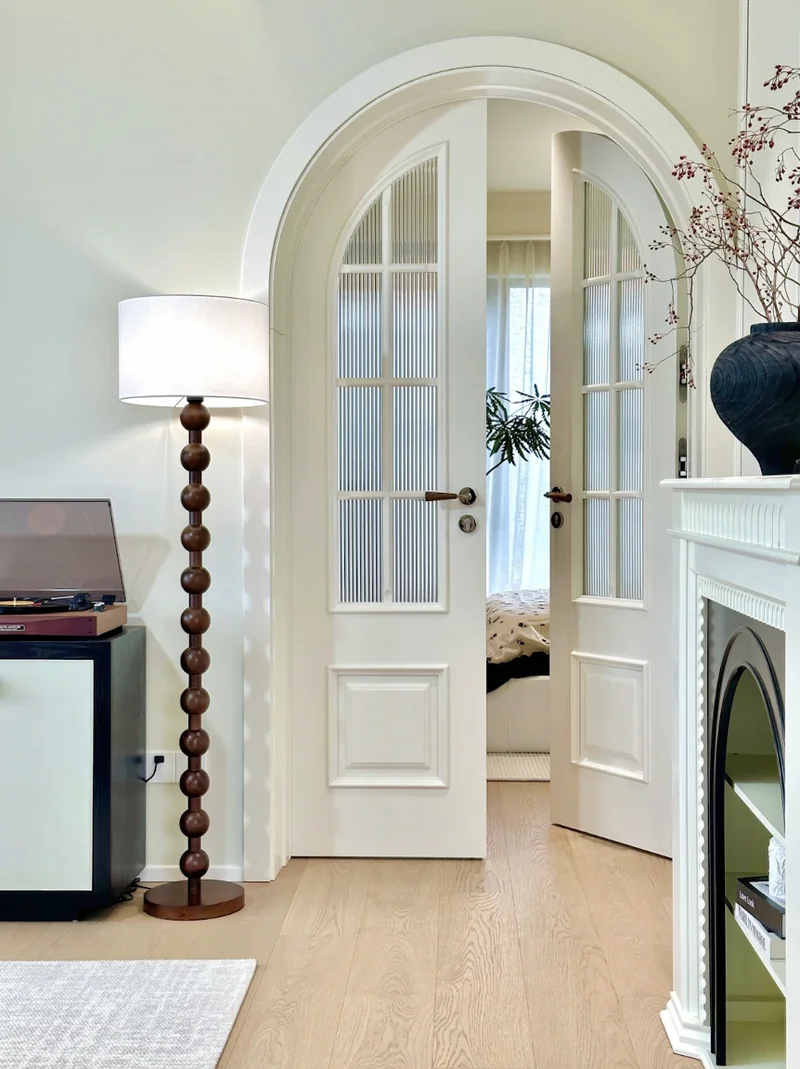
Can FSC certified wooden doors be customized for modern architectural designs?
Yes, FSC certified doors are available in a wide range of custom profiles, glazing options, finishes, and hardware integrations. Manufacturers offer engineered stave or finger-jointed cores for improved stability and design flexibility. Architects can achieve minimalist, modern, or traditional aesthetics while maintaining green building compliance, combining aesthetic versatility with sustainability.
What should architects and developers verify when sourcing FSC certified wooden doors?
Architects must confirm FSC Chain-of-Custody (CoC) certification for both the product and supplier. They should request the FSC certificate code and verify it via the FSC database. Additionally, specify FSC 100%, FSC Recycled, or FSC Mixed (with % content) on project documentation. Avoid generic claims like “eco-friendly wood” unless backed by verifiable FSC documentation to prevent greenwashing.
Do FSC certified wooden doors cost significantly more than conventional wood doors?
While FSC certified doors may carry a 10–20% premium due to certification overhead and selective harvesting, life-cycle cost analysis often justifies the investment. The added cost is frequently offset by earning green building points, enhancing marketability, and meeting public procurement or municipal sustainability mandates. Bulk procurement and early specification can also mitigate price differentials.
How do FSC certified doors compare to alternative sustainable door materials like bamboo or recycled metal?
FSC wood doors excel in carbon sequestration, thermal performance, and biodegradability. While bamboo grows faster, it often lacks established FSC chain-of-custody scalability and may involve high-impact processing. Recycled metal doors offer durability but typically have higher embodied energy. FSC wood provides a balanced ecological footprint with renewable sourcing, making it a preferred choice in comprehensive sustainable design strategies.