Engineered Wood Glass Doors with Anti-Warping Technology & Frosted Glass for Modern Office Partitions
In today’s evolving workplace, office partitions must balance aesthetics, functionality, and durability—and engineered wood glass doors are redefining the standard. Combining the warmth of wood with the sleek transparency of frosted glass, these innovative doors offer a sophisticated solution for modern office environments. Utilizing advanced anti-warping technology, they resist humidity, temperature fluctuations, and structural stress, ensuring long-term stability and seamless operation. The integration of frosted glass enhances privacy without sacrificing natural light, fostering open, collaborative spaces that still maintain acoustic and visual boundaries. Precision-engineered for flawless performance, these doors align with contemporary design principles while delivering unmatched resilience. Ideal for conference rooms, executive offices, or open-plan workspaces, they represent the perfect synergy of form and function. As businesses prioritize both employee well-being and architectural elegance, engineered wood glass doors with anti-warping technology and frosted glass are emerging as the intelligent choice for forward-thinking office design.
Why Engineered Wood Glass Doors Are Ideal for Contemporary Office Spaces
-
Engineered wood glass doors represent a confluence of structural integrity, aesthetic refinement, and functional adaptability—qualities essential for modern office environments. By integrating anti-warping technology with frosted glass panels, these doors deliver long-term performance and visual elegance, making them an optimal choice for contemporary office partitions.
-
The core material—engineered wood—is specifically designed to resist dimensional instability caused by humidity, temperature fluctuations, and prolonged use. Unlike solid wood, which is prone to expansion, contraction, and warping, engineered wood utilizes cross-laminated veneers and moisture-resistant resins, ensuring flatness and durability over time. When paired with anti-warping technology, such as moisture barriers and stabilized core layers, these doors maintain alignment and smooth operation, even in high-traffic office settings.
-
Frosted glass inserts serve both aesthetic and practical purposes. They allow natural and artificial light to permeate across workspaces, reducing reliance on electric lighting and enhancing spatial perception within enclosed areas. This light transmittance contributes to occupant well-being and supports open, collaborative environments—key tenets of modern office design. Simultaneously, the opacity of frosted glass preserves visual privacy, making it ideal for meeting rooms, executive offices, or HR consultation areas where confidentiality is required without complete isolation.
-
Aesthetically, engineered wood provides a warm, professional finish that complements minimalist and biophilic design trends. Available in a range of wood grain finishes and profiles, these doors integrate seamlessly with various interior schemes while offering a more cost-effective and sustainable alternative to solid hardwood.
-
From an installation and maintenance perspective, these doors are lightweight relative to solid wood counterparts, simplifying handling and reducing structural load demands. Their surfaces are treated for scratch and stain resistance, ensuring longevity with minimal upkeep.
-
In summary, engineered wood glass doors with anti-warping technology and frosted glass meet the stringent demands of today’s commercial interiors—balancing durability, design, light management, and privacy in one high-performance solution. Their adaptability across diverse office typologies underscores their role as a cornerstone of intelligent, future-ready workspace design.
Anti-Warping Features in Engineered Wood: Enhancing Durability and Performance
-
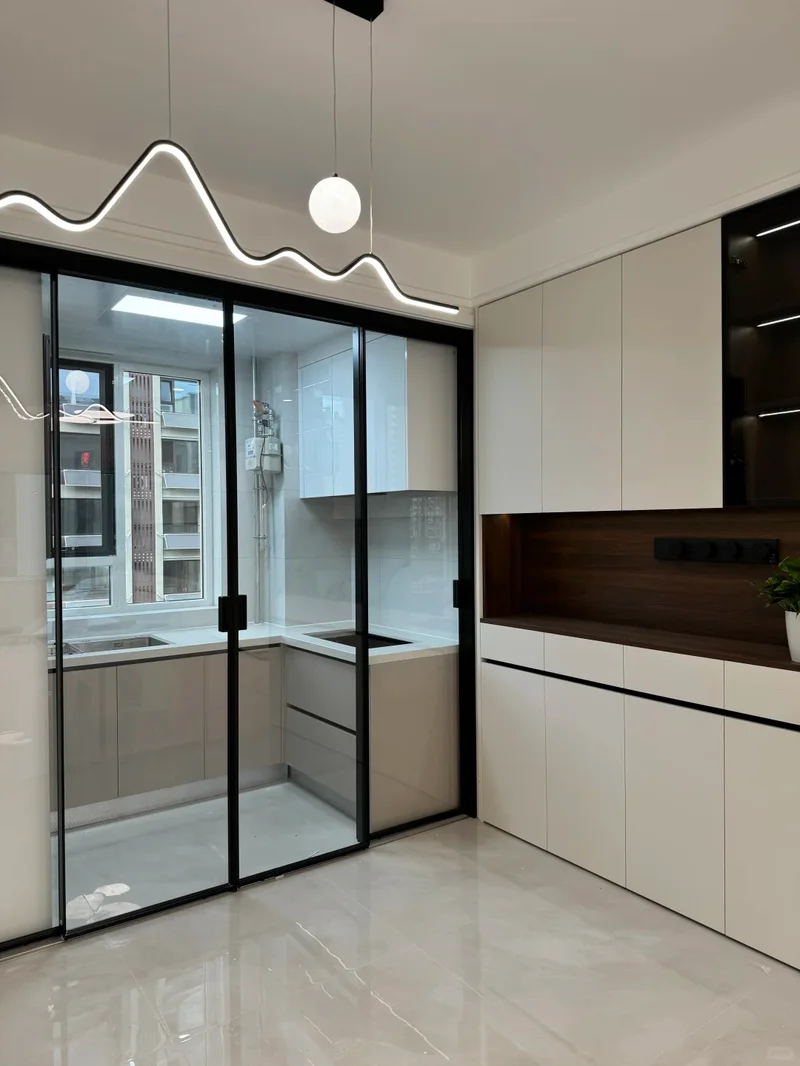
Engineered wood has become a preferred material for modern office partitions due to its dimensional stability, sustainability, and compatibility with contemporary design elements such as frosted glass. A critical factor in its performance is resistance to warping—a common failure mode in wood-based products exposed to fluctuating humidity, temperature, and mechanical stress. Anti-warping technology in engineered wood doors addresses these challenges through advanced material engineering and structural design.
-
The core of anti-warping performance lies in the multi-ply construction of engineered wood. Unlike solid wood, which expands and contracts significantly across the grain, engineered wood utilizes cross-laminated veneers or high-density fiberboard (HDF) cores. Each layer is oriented perpendicularly to the adjacent one, creating balanced internal stresses that counteract dimensional movement. This cross-grain lamination effectively neutralizes warping, cupping, and twisting under variable environmental conditions.
-
Moisture-resistant treatments further enhance stability. Many high-performance engineered wood doors incorporate water-repellent resins and edge-sealing technologies during manufacturing. These treatments minimize moisture ingress—particularly critical in environments with HVAC cycling or high humidity—preventing localized swelling that leads to distortion.
-
Dimensional integrity is also supported by precision manufacturing. CNC machining ensures uniform thickness and alignment, reducing internal stresses that may arise from inconsistent material distribution. Additionally, post-production acclimatization protocols stabilize the panels before installation, ensuring they perform predictably in service.
-
Integration with frosted glass panels introduces unique structural demands. Glass adds localized rigidity but can create differential expansion if not properly framed. Anti-warping engineered wood doors use thermally matched substrates and flexible, compression-fit glazing channels that accommodate minor movement without transferring stress to the wood core.
-
In commercial applications, long-term flatness is essential for seamless operation of sliding or pivoting mechanisms. Warping compromises door alignment, increases wear on hardware, and degrades acoustic and visual continuity in office partitions. Anti-warping engineered wood ensures consistent performance over decades, even in dynamic interior environments.
-
Performance validation occurs through accelerated aging tests simulating years of thermal and hygrometric cycling. Products meeting stringent industry standards (e.g., ANSI 01.01, EN 13986) demonstrate less than 1 mm deflection over 2-meter spans under controlled stress conditions—confirming their suitability for precision installations.
-
The synergy of material science, structural engineering, and environmental resilience defines the next generation of engineered wood doors—delivering durability, minimal maintenance, and aesthetic reliability in modern office architecture.
The Advantages of Frosted Glass in Office Door Partitions
- Enhances visual privacy while maintaining luminosity
- Supports acoustic separation without full enclosure
- Reinforces modern aesthetic alignment with open-concept design
- Integrates seamlessly with engineered wood frames for structural stability
- Reduces glare and visual noise in high-traffic workspaces
Frosted glass is a strategic material choice in contemporary office door partitions, particularly when combined with engineered wood and anti-warping technology. Its primary advantage lies in its ability to obscure direct line-of-sight while transmitting natural and artificial light, fostering an environment that is both private and visually open. This balance supports organizational transparency and spatial continuity without compromising individual or team confidentiality—critical in settings such as meeting rooms, executive offices, or collaborative pods.
From a design standpoint, frosted glass aligns with minimalist, modern architectural language. Its matte, diffused surface provides a sleek, professional appearance that complements high-end finishes and corporate branding. Unlike solid partitions, it avoids creating a sense of enclosure or visual heaviness, making spaces appear larger and more inviting. This is particularly valuable in urban offices where square footage is limited and perceived spaciousness enhances occupant well-being.
Functionally, frosted glass contributes to acoustic management. When laminated or paired with insulated glazing units, it attenuates sound transmission between zones. While not a full sound barrier, it significantly reduces speech intelligibility and ambient noise, supporting focus and reducing auditory distractions—key metrics in productivity-driven workplaces.
The integration of frosted glass with engineered wood frames enhances durability and performance. Engineered wood offers dimensional stability and resistance to warping under fluctuating humidity and temperature—common challenges in large office environments. When combined with anti-warping technology, the door system maintains precise alignment and smooth operation over time, ensuring long-term reliability and reduced maintenance costs.
Additionally, frosted glass simplifies compliance with daylighting standards in green building certifications such as LEED or WELL. By enabling light penetration from windows and central atria into interior spaces, it reduces dependency on electric lighting, lowering energy consumption and supporting sustainable design goals.
In sum, frosted glass in engineered wood door systems delivers a high-performance solution that balances privacy, aesthetics, durability, and environmental responsibility—making it a cornerstone of modern office partition design.
Design Flexibility and Aesthetic Appeal of Wood-Glass Hybrid Doors
-
Engineered wood-glass hybrid doors represent a convergence of structural innovation and architectural refinement, offering unparalleled design flexibility for modern office environments. The integration of anti-warping engineered wood cores with frosted glass panels enables architects and interior designers to achieve both aesthetic sophistication and functional performance.
-
The engineered wood component, typically constructed from cross-laminated or laminated veneer lumber, provides dimensional stability and resists moisture-induced deformation. This stability allows for slender profiles, taller door configurations, and seamless integration with varied partition systems—features increasingly demanded in open-plan and modular office layouts.
-
Frosted glass infills enhance spatial continuity while maintaining visual privacy—a critical balance in contemporary workplace design. The diffused light transmission reduces reliance on artificial lighting, contributing to energy efficiency and occupant well-being. Available in etched, sandblasted, or digitally printed finishes, frosted glass can be customized to align with corporate branding, acoustic requirements, or design motifs.
-
Design flexibility extends to configuration options: single-swing, double-leaf, sliding, or pivoting mechanisms can be implemented without compromising structural integrity. The hybrid construction supports integration with frameless glass partitions, aluminum slimline framing, or full-height wall systems, enabling cohesive design language across office zones.
-
Surface treatments on the engineered wood—such as matte laminates, real wood veneers, or UV-cured coatings—allow precise alignment with interior material palettes. These finishes are durable, scratch-resistant, and consistent across batches, ensuring long-term aesthetic coherence in high-traffic environments.
-
The hybrid format also facilitates integration of smart building elements: embedded access control sensors, wireless locking mechanisms, or acoustic gaskets can be incorporated during manufacturing without affecting visual lines or material integrity.
-
From a compositional standpoint, the juxtaposition of warm, textured wood with translucent glass creates a balanced sensory experience—softening the sterility often associated with commercial interiors while projecting professionalism and innovation.
-
These doors support biophilic design principles by introducing natural material elements and maximizing daylight penetration. This contributes not only to aesthetic appeal but also to measurable improvements in occupant focus and satisfaction.
-
Ultimately, engineered wood-glass hybrid doors are not merely functional components but strategic design tools—enabling dynamic, branded, and human-centric workspaces that adapt to evolving operational and aesthetic demands.
Installation and Maintenance Tips for Long-Lasting Office Partition Doors
- Ensure subfloor is level within ±2 mm over a 2-meter span prior to installation. Uneven surfaces compromise alignment and accelerate wear on hinges and tracks.
- Verify door opening dimensions match manufacturer specifications, accounting for tolerance adjustments. Use laser leveling tools for precision during framing.
- Install engineered wood glass doors using manufacturer-recommended hardware only. Over-tightening fasteners can damage anti-warping core structures; torque should not exceed 1.8 Nm.
- Align vertical jambs plumb to within 1.5 mm per meter height. Misalignment induces stress on glass edges and frame joints, increasing risk of delamination or seal failure.
- Apply protective edge seals on engineered wood components during installation to prevent moisture ingress, especially in high-humidity environments.
- For sliding configurations, inspect track alignment and clean debris weekly. Use non-abrasive lubricants compatible with anodized aluminum tracks quarterly to maintain smooth operation.
- Maintain a controlled indoor environment: 40–60% relative humidity and temperatures between 18–26°C. Engineered wood cores are dimensionally stable within this range due to anti-warping technology, but prolonged exposure to extremes may degrade performance.
- Avoid direct water contact with door edges or base. Clean glass surfaces with pH-neutral cleaners; ammonia-based solutions may compromise frosted glass coatings over time.
- Inspect hinges, pivot points, and glazing gaskets semi-annually for signs of wear, corrosion, or compression set. Replace components at first indication of fatigue to prevent cascading failure.
- Train facilities personnel to recognize early signs of frame distortion or seal degradation. Immediate corrective action preserves warranty eligibility and long-term integrity.
- Do not mount accessories (e.g., signage, handles beyond spec) without consulting structural load data. Unauthorized modifications void performance guarantees.
- Store replacement panels in a flat, dry, climate-controlled area when not in use. Stacking loads must not exceed 1.5 meters in height to prevent edge compression.
Proper installation and disciplined maintenance are critical to achieving the full service life of engineered wood glass doors. These systems leverage advanced composite cores and sealed frosted glazing to resist environmental deformation, but their longevity depends on adherence to technical protocols. Precision in alignment, environmental control, and routine inspection collectively ensure optimal function, aesthetic retention, and structural reliability across a 15+ year lifecycle.
Frequently Asked Questions
What are engineered wood glass doors and why are they ideal for office partitions?
Engineered wood glass doors combine a stable engineered wood frame with integrated glass panels—often frosted—to create durable, sound-dampening, and visually appealing partitions. They are ideal for office spaces because they balance privacy with natural light transmission, resist warping better than solid wood, and offer consistent structural performance in varying humidity and temperature conditions.
How do engineered wood glass doors resist warping compared to solid wood?
Engineered wood doors use cross-laminated or veneered composite cores that minimize expansion and contraction due to moisture fluctuations. This layered construction provides superior dimensional stability over solid wood, significantly reducing the risk of warping, bowing, or twisting—common issues in office environments with HVAC cycles and temperature shifts.
Why is frosted glass commonly used in office partition doors?
Frosted glass provides visual privacy while maintaining light diffusion, creating an open yet professional atmosphere. Ideal for office partitions, it obscures direct sightlines without creating visual barriers, enhancing employee comfort and compliance with privacy regulations—especially in HR or executive areas—while meeting architectural daylighting standards.
What core materials in engineered wood doors offer the best anti-warping performance?
High-density fiberboard (HDF), plywood cross-cores, and moisture-resistant particleboard with balanced structural layers offer optimal anti-warping performance. These materials undergo controlled manufacturing processes with consistent resin bonding, minimizing internal stress and enhancing resilience in dynamic indoor climates typical of commercial buildings.
How should engineered wood glass doors be installed to prevent long-term warping?
For maximum durability, doors must be installed in a level, plumb frame with even shimming and proper clearances (typically 3mm top/sides). Use HVAC-stabilized environments during acclimatization (48+ hours on-site), avoid direct contact with flooring, and ensure balanced environmental exposure on both sides to prevent differential moisture absorption.
Can frosted glass in office partition doors be customized for branding or acoustic performance?
Yes. Frosted glass can be digitally printed with company logos or design patterns for brand integration. For acoustic needs, pair frosted laminated glass with acoustic interlayers or sealants at the edges to achieve STC (Sound Transmission Class) ratings of 35–45, effectively reducing noise transfer between offices and meeting rooms.
What are the best finishes for anti-warping and durability in engineered wood office doors?
Moisture-resistant laminate, UV-cured acrylic, or thermally fused melamine (TFM) finishes provide superior protection against humidity, abrasion, and warping. These finishes create a vapor barrier on the engineered wood surface, critical in high-traffic office areas where spills, cleaning, and humidity variations are common.
How do thermal and humidity fluctuations affect engineered wood glass doors?
While engineered wood is more stable than solid wood, extreme or prolonged humidity (above 60% RH) and temperature swings can still stress the core and adhesive bonds. Proper HVAC control, balanced airflow, and perimeter sealing mitigate risks, preserving door integrity and aligning with LEED and WELL Building Standard recommendations for interior environments.
Are engineered wood glass doors suitable for fire-rated office partitions?
Standard engineered wood glass doors are not inherently fire-rated but can meet fire safety codes when integrated into certified fire-rated partition systems with intumescent seals and tested glass assemblies (e.g., wired or ceramic frosted glass). Always specify doors compliant with local regulations such as NFPA 80 or EN 1634-1.
What acoustic performance can be expected from frosted glass in engineered doors?
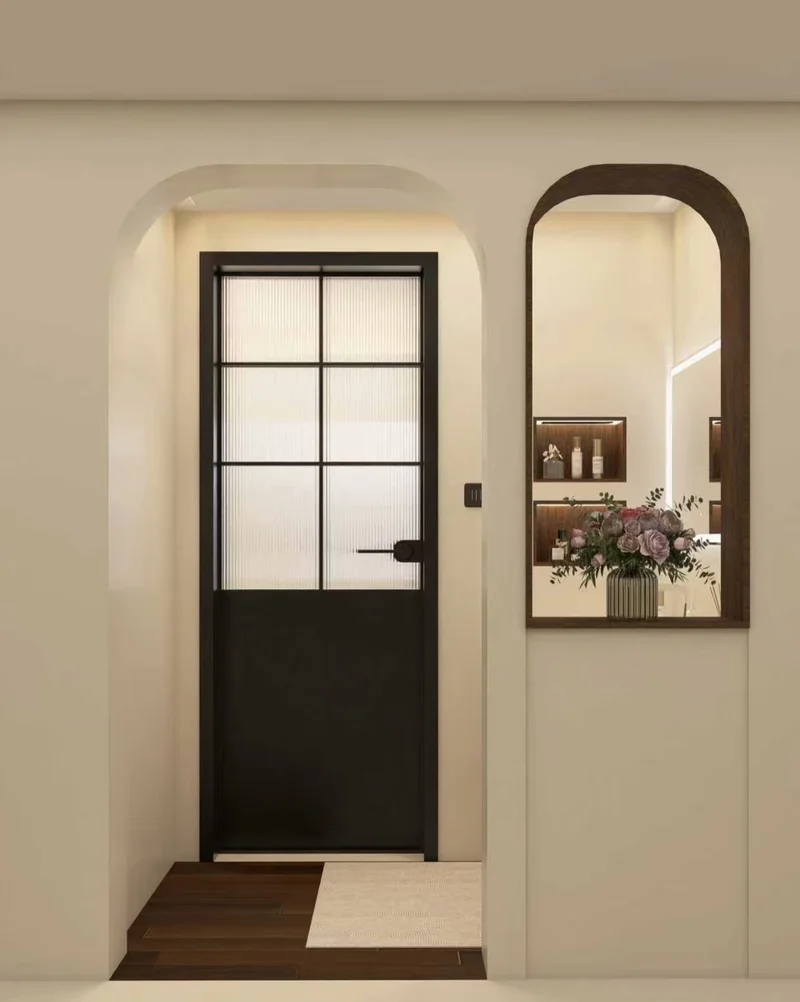
Frosted annealed glass (6–10mm) alone offers STC 27–30. For better sound control, use insulated glazing units (IGUs) or laminated frosted glass with acoustic PVB, achieving STC 35–42. Combined with sealed frames and acoustic gaskets, engineered wood glass doors effectively reduce speech intelligibility across office zones.
How do you maintain and clean engineered wood glass doors to extend lifespan?
Clean glass with ammonia-free glass cleaners to preserve frosting integrity. Wipe engineered wood surfaces with a slightly damp cloth and pH-neutral cleaner—avoid steam or excessive moisture. Regularly inspect and maintain seals, hinges, and threshold gaps to prevent moisture ingress and ensure long-term anti-warping performance.
What certifications should I look for in high-quality engineered wood glass partition doors?
Look for doors compliant with ANSI/AWC A190.1 (structural performance), ISO 9001 (quality management), and FSC or SCS-certified wood sourcing. For commercial interiors, ensure compliance with ADA (accessibility), ICC-AC01 (door core standards), and VOC emissions under CA 01350 or GREENGUARD for indoor air quality.