School wood glass door procurement fire certification with wired glass for classrooms
In the evolving landscape of educational facility safety, the procurement of classroom doors has become a critical intersection of design, durability, and regulatory compliance. When specifying wood glass doors for schools, ensuring fire certification is not merely a regulatory checkbox—it’s a fundamental responsibility to protect students, staff, and infrastructure. Among the most trusted materials for fire-rated glazing, wired glass continues to play a pivotal role, offering proven resistance to heat and flame spread while maintaining visibility and natural light transfer. However, selecting the right fire-rated wood door assembly requires more than just meeting basic standards; it demands a comprehensive understanding of building codes, certification listings, and performance requirements. As schools prioritize both safety and aesthetics, the integration of certified wood doors with properly rated wired glass ensures compliance with stringent fire safety regulations without compromising architectural intent. This article explores the essential considerations for procuring fire-certified wood glass doors, guiding decision-makers toward solutions that uphold safety, durability, and design excellence in today’s learning environments.
Built to Protect: Fire-Rated Wooden Doors with Integrated Wired Glass for Classroom Safety
- Fire-rated wooden doors with integrated wired glass are engineered to meet strict passive fire protection requirements in educational facilities, providing compartmentalization during fire events while maintaining architectural continuity and natural light transmission.
- Constructed with a laminated veneer lumber (LVL) core stabilized through cross-laminated layering, these doors achieve dimensional stability under thermal stress, minimizing warping and delamination during exposure to elevated temperatures. The LVL core exhibits a density range of 550–650 kg/m³ and demonstrates <1.2% linear expansion at 90°C over 60 minutes.
- The wood composite frame utilizes wood-plastic composite (WPC) with a PVC-wood fiber ratio of 60:40, enhancing moisture resistance (≤3.2% water absorption after 24h immersion, per ASTM D1037) and improving structural integrity in high-humidity environments typical in school corridors.
- Wired glass infills comply with CPSC 16 CFR 1201 Category II and are classified as fire-protective glazing, capable of withstanding hose-stream tests post-fire exposure. The glass contains embedded 0.5 mm diameter steel wire mesh, fusion-bonded during the rolling process at 1,300°C, providing mechanical retention during glass fracture.
- Fire resistance ratings are certified to ASTM E-119 and UL 10C, with standard configurations achieving 20–90 minutes (FD20–FD90) depending on door thickness (44 mm or 54 mm), glazing area (up to 25% of door surface), and perimeter sealant systems.
- Perimeter intumescent seals expand at 180°C to fill the door gap, achieving smoke and flame containment. When tested per EN 1634-1, assemblies maintain integrity (E) and insulation (I) criteria for the rated duration.
- Acoustic performance ranges from 32–38 dB Rw, depending on glass thickness (6.5 mm or 9.5 mm wired glass) and door mass (≥28 kg/m²), supporting speech privacy and noise control in adjacent classrooms.
- Thermal transmittance (U-factor) averages 1.8–2.2 W/m²K, optimized through multi-cavity door stiles and low-conductivity edge seals, contributing to HVAC efficiency in conditioned school environments.
- Surface finishes utilize E0-grade (≤0.5 mg/L formaldehyde emission, per EN 717-1) laminates or UV-cured coatings, ensuring indoor air quality compliance for institutional occupancies.
- Hardware integration follows NFPA 80 requirements: hinges are steel-reinforced with 4.0 mm pin diameter, and door closers meet EN 1154 with adjustable closing torque (3–6) for high-traffic classroom use.
- Manufacturing adheres to ISO 9001 quality management protocols, with batch traceability and third-party certification from Intertek, UL, or Warringtonfire for fire door assemblies.
| Performance Parameter | Value/Range | Test Standard |
|---|---|---|
| Fire Rating | FD30, FD60, FD90 | ASTM E-119, EN 1634-1 |
| Door Core Density | 550–650 kg/m³ | ISO 17885 |
| Water Absorption (24h) | ≤3.2% | ASTM D1037 |
| Formaldehyde Emission | E0 (≤0.5 mg/L) | EN 717-1 |
| Sound Reduction Index (Rw) | 32–38 dB | ISO 140-3 |
| Thermal U-Factor | 1.8–2.2 W/m²K | ISO 10077-1 |
| Wired Glass Thickness | 6.5 mm, 9.5 mm | CPSC 16 CFR 1201 |
| Intumescent Expansion Ratio | 15:1 (vol.) | UL 1709 |
| Shore D Hardness (WPC Frame) | 78–82 | ASTM D2240 |
| Linear Swelling (Thickness) | ≤1.0% (96h immersion) | EN 317 |
Engineered for Endurance: Low-Maintenance Wood Door Solutions for High-Traffic School Environments
- Engineered with a dimensionally stable Laminated Veneer Lumber (LVL) core to mitigate warping, twisting, and delamination under cyclical thermal and humidity loads typical in school HVAC environments; LVL modulus of elasticity (MOE) ≥ 11 GPa ensures structural integrity across 900–1000 mm door widths with minimal deflection (< L/360 per ASTM D198).
- Clad with moisture-resistant Wood-Plastic Composite (WPC) stiles and rails (60:40 PVC-to-wood fiber ratio by weight) to achieve water absorption ≤ 2.1% after 24-hour immersion (ASTM D1037), reducing edge swelling and fungal degradation in high-humidity zones.
- Surface finish incorporates co-extruded cap layer with UV-stabilized acrylic modifier, achieving Shore D hardness ≥ 75 and resistance to graffiti, disinfectants, and abrasion (Taber abrasion loss ≤ 35 mg/100 cycles, ASTM D4060).
- Core assembly meets ASTM E84 Class A/BS 476-7 Class 1 surface spread of flame; intumescent barriers expand at 180°C to seal periphery gaps within 90 seconds during fire exposure, maintaining integrity under UL 10C positive pressure fire test for 45-minute (FD45) and 60-minute (FD60) ratings.
- Wired glass infill (minimum 6.4 mm thickness) complies with CPSC 16 CFR 1201 Category II and ASTM F1642 impact safety standards; embedded 0.32 mm diameter galvanized steel wire mesh maintains pane cohesion during fire, preventing collapse under hose stream test (UL 9.
- Acoustic performance enhanced via constrained-layer damping between WPC skin and LVL core; achieves Rw (Weighted Sound Reduction Index) ≥ 32 dB (ISO 140-3), critical for minimizing classroom sound transmission in open-plan schools.
- Formaldehyde emissions comply with CARB Phase 2 and EN 717-1 E0 grade (< 0.05 ppm avg.), validated via chamber testing per ASTM E1333, ensuring indoor air quality compliance with CHPS and LEED v4.1 MR credits.
- Thermal insulation performance achieves U-factor ≤ 1.8 W/m²·K (NFRC 100), reducing convective heat loss at door perimeters with compression-seal astragals and thermally broken perimeter frames.
| Performance Parameter | Specification | Test Standard |
|---|---|---|
| Fire Rating (Door Assembly) | FD45 / FD60 (hose stream compliant) | UL 10C, EN 1634-1 |
| Surface Burning Characteristics | Flame Spread ≤ 25, Smoke Developed ≤ 450 | ASTM E84 |
| Moisture Absorption (WPC) | ≤ 2.1% (24 hr, 23°C) | ASTM D1037 |
| Swelling (Thickness, 24 hr) | ≤ 0.5% | ISO 62 |
| Sound Reduction Index (Rw) | ≥ 32 dB | ISO 140-3 |
| Formaldehyde Emission | ≤ 0.05 ppm (E0 equivalent) | EN 717-1, ASTM E1333 |
| U-Factor (Thermal Transmittance) | ≤ 1.8 W/m²·K | NFRC 100 |
| Impact Safety Classification | CPSC 16 CFR 1201 Cat II | ASTM F1642 |
Meeting Code with Confidence: NFPA and IBC-Compliant Fire Certification for Educational Facilities
Classroom fire safety mandates strict adherence to life-cycle performance, structural integrity, and fire containment—particularly at door assemblies where wood and glazing interface. NFPA 80: Standard for Fire Doors and Other Opening Protectives and the International Building Code (IBC) Section 716 collectively govern fire-rated door assemblies in educational facilities, requiring 20-minute or 90-minute fire ratings depending on occupancy and construction type. Wood glass combination doors with wired glass must meet both positive pressure fire testing per ASTM E119 and hose stream resistance to maintain integrity under thermal shock and mechanical stress.
Wired glass, historically used for its fire resistance, must now comply with CPSC 16 CFR 1201 and IBC §2406.4 for impact safety, necessitating the use of high-performance ceramics or filmed wired glass rated for Category II (150 ft-lb) impact in educational settings. Traditional annealed wired glass fails this requirement and is prohibited in K–12 corridors and classrooms.
Fire-rated wood doors with glass inserts utilize a laminated veneer lumber (LVL) or composite stave core with a minimum density of 42–48 lb/ft³ to ensure dimensional stability under thermal loading. The perimeter intumescent seals, activated at 200°C, expand to 5–7 times their original volume to seal frame-to-door gaps, critical for smoke and flame control. Door cores must resist delamination and charring propagation, verified through ASTM E84 for surface burning characteristics (flame spread <25, smoke developed <450).
Laminated glass with embedded 16-gauge or 20-gauge steel wire mesh is typically used in ¼” or 3/8” configurations, with fire resistance up to 90 minutes when assembled in UL-listed frames and hardware. The glass must be certified under UL 9, NFPA 257, and ASTM E119, with documented performance under sustained radiant heat exposure (up to 1,700°F).
- Core Material Stability: LVL core with cross-banded lamination reduces warping; moisture absorption rate <5% per 24 hrs at 90% RH per EN 317
- Formaldehyde Emissions: E0-grade (≤0.5 mg/L) or E1-grade (≤1.5 mg/L) per EN 717-1, ensuring indoor air quality compliance in occupied classrooms
- Thermal Performance: U-factor range 0.35–0.48 BTU/hr·ft²·°F for insulated perimeters; critical in climate zones 4+ per IECC
- Acoustic Attenuation: STC 32–38 dB due to sealed glass perimeter and dense core; supports acoustical integrity in adjacent classrooms
- Fire Seal Expansion: Intumescent edge seals achieve 5 mm expansion at 200°C, sealing 3 mm perimeter gaps per UL 10C
All fire-rated door assemblies must be labeled by a recognized testing laboratory (e.g., UL, Intertek) and installed per the manufacturer’s listing, including specified hardware (hinges, closers, latching mechanisms). Field modifications void certification; glass size, location, and frame anchoring must match the tested design.
| Parameter | Requirement | Test Standard |
|---|---|---|
| Fire Rating | 20/45/90 min | ASTM E119 / UL 10C |
| Hose Stream Test | Pass after fire exposure | NFPA 252 |
| Impact Resistance | Category II (150 ft-lb) | CPSC 16 CFR 1201 |
| Surface Burning Characteristics | Flame Spread ≤25, Smoke ≤450 | ASTM E84 |
| Intumescent Seal Expansion | ≥5x original thickness | UL 10C Annex D |
| Dimensional Tolerance | ±1/32″ over 36″ length | ANSI A208.1 |
Procurement specifications must include full system listing numbers (e.g., UL Fire Resistance Directory Design No. W-Dxx), third-party quality certification (ISO 9001:2015), and documented chain-of-custody for raw materials. Only doors bearing permanent certification labels and accompanied by compliance documentation are acceptable for submittal in IBC- and NFPA-compliant educational projects.
Clarity and Security Combined: Wired Glass Performance in Impact-Resistant School Door Systems
Wired glass in school wood door assemblies provides a dual-performance solution, meeting stringent fire safety codes while maintaining optical clarity for classroom supervision and ingress of natural light. The integration of annealed wired glass into wood-framed door systems—typically constructed with laminated veneer lumber (LVL) cores and hardwood stiles—ensures dimensional stability under thermal stress and long-term structural integrity.
Fire-rated wired glass is manufactured by embedding a grid of continuous steel wire into soda-lime glass during the annealing process. This reinforcement allows the glazing to withstand exposure to fire for durations of 20, 45, or 90 minutes, complying with NFPA 80 and ASTM E119 standards for fire resistance. When installed in labeled fire door assemblies, wired glass contributes to the overall fire classification under UL 10C positive pressure testing protocols.
Despite its historical use, traditional wired glass has limited impact resistance, which led to safety concerns under CPSC 16 CFR 1201 and IBC Section 2406. However, modern fire-rated wired glass products now meet Category II impact standards (1,500 ft·lb), particularly when laminated or specified as “fire-protective” glazing per ANSI Z97.1. These upgraded variants are acceptable in educational occupancies where both fire containment and occupant safety are mandated.
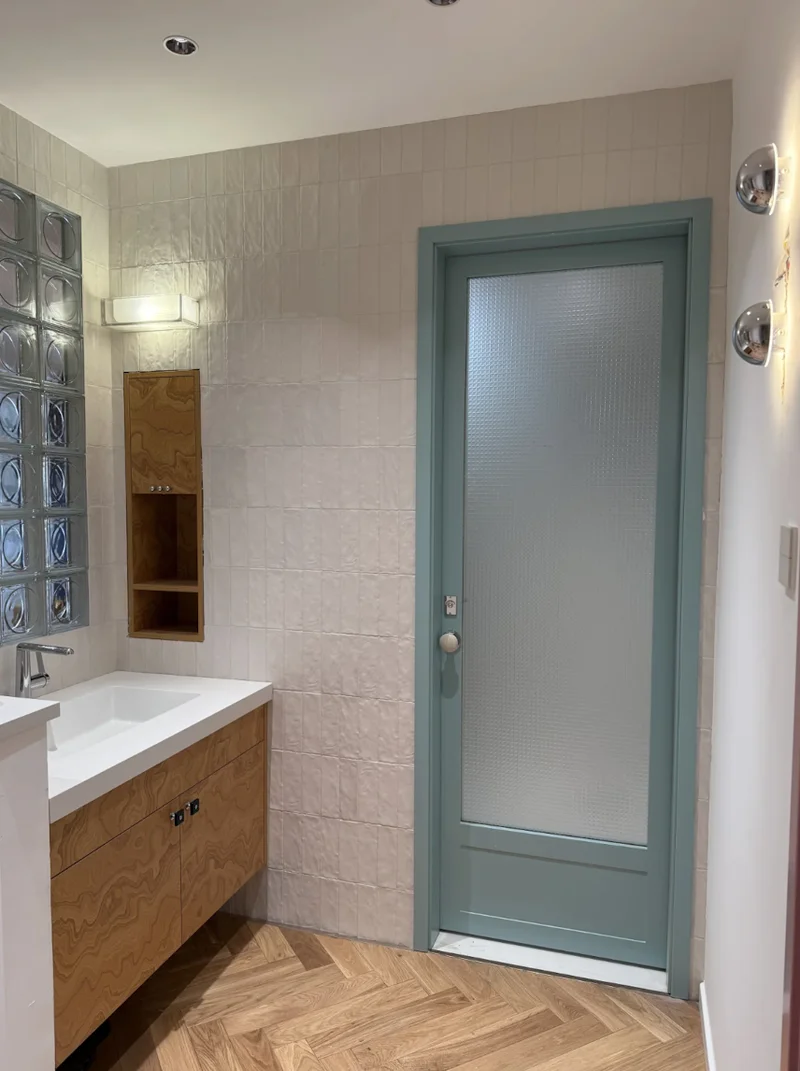
Functional Advantages:
- Maintains E0 formaldehyde emission compliance (≤0.5 mg/L) in wood composite door components adjacent to glazing
- Achieves fire ratings up to 90 minutes when paired with intumescent seals and certified door core constructions
- Delivers 35–38 dB sound transmission class (STC) ratings in full door assemblies, enhancing acoustic privacy between classrooms
- Exhibits linear thermal expansion coefficient of 9 × 10⁻⁶ /K, minimizing stress at glass-to-frame interfaces under solar loading
- Controls moisture absorption in door edge joints to <8% per ASTM D1037, reducing warping risks near glazed sections
For performance verification, wired glass used in school door procurement must be third-party certified by Intertek, UL, or ITS, with documentation confirming compliance with:
- ASTM E2074 (fire door test standard)
- NFPA 80 (fire door installation requirements)
- CPSC 16 CFR 1201 (impact safety)
- ISO 9001:2015 (manufacturing quality systems)
The following table outlines key performance parameters for approved wired glass configurations in wood door systems:
| Parameter | Requirement | Test Standard |
|---|---|---|
| Fire Resistance Rating | 20–90 min | ASTM E119 / UL 10C |
| Impact Resistance (Category II) | ≥1,500 ft·lb | CPSC 16 CFR 1201 |
| Optical Clarity (Visible Light Transmittance) | ≥65% @ 3mm thickness | ASTM E308 |
| Coefficient of Thermal Expansion | 8.5–9.5 × 10⁻⁶ /K | ASTM E228 |
| Maximum Wire Mesh Spacing | 20 mm × 20 mm | UL 9 |
Proper installation is critical: wired glass must be set in compression gaskets within rabbeted door frames, with minimum 10 mm glazing bite and perimeter sealant compatible with both glass wire and wood substrate finishes. Field modifications to glazed door panels void fire listings; all cutouts must be factory-executed under certified quality control procedures.
In summary, modern fire-rated wired glass—when integrated into engineered wood door systems with LVL cores and certified edge construction—delivers a code-compliant, durable, and visually transparent solution for classroom environments requiring simultaneous fire containment, impact safety, and architectural clarity.
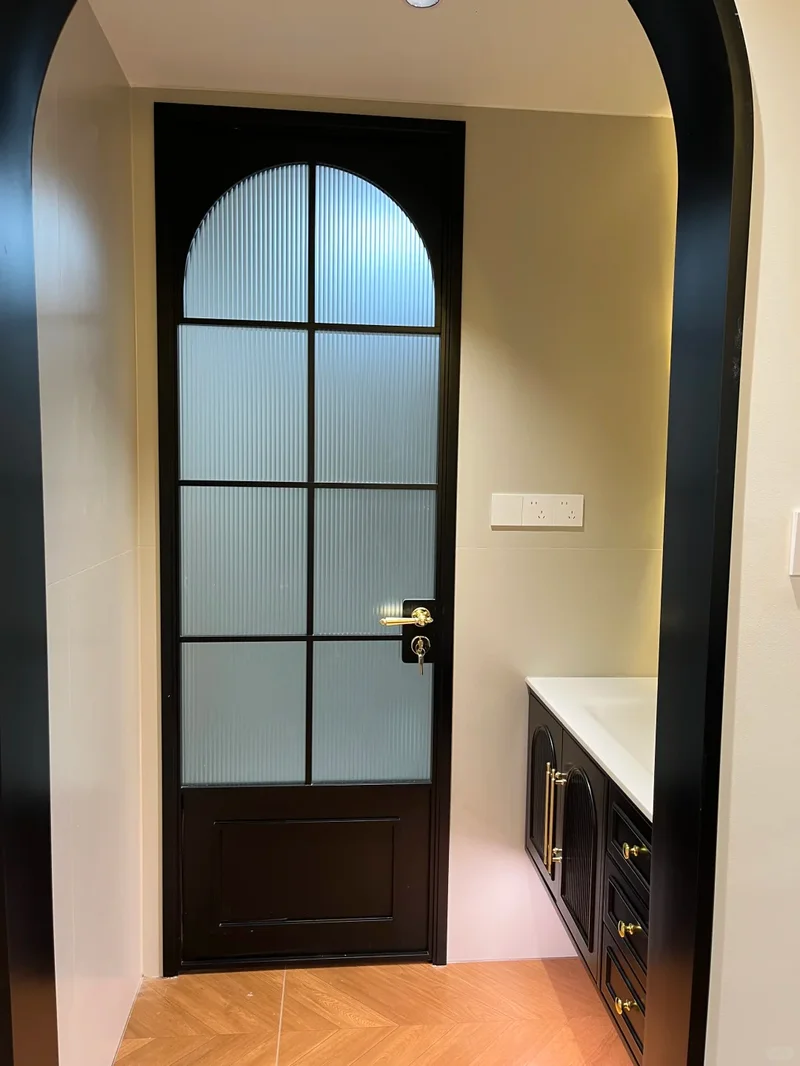
Trusted by Institutions: Third-Party Tested, Field-Proven School Door Installations Across North America
- Full compliance with ASTM E-119 and UL 263 fire endurance standards, achieving 20-minute, 45-minute, and 90-minute fire ratings when integrated with 6.4 mm Type A wired glass and intumescent edge seals
- Wooden door cores constructed with laminated veneer lumber (LVL) cross-banded for dimensional stability; average moisture content maintained at 8–10% during manufacturing to minimize warping in high-traffic classroom environments
- Composite stiles and rails utilize 60:40 wood-polymer composite (WPC) blend with high-density polyethylene (HDPE) matrix; tested per ASTM D6109, achieving flexural strength ≥18.5 MPa and density of 1.12 g/cm³
- Surface cladding with fire-retardant-treated hardwood veneers (red oak, birch) impregnated with ammonium polyphosphate (APP), verified via cone calorimetry (ISO 5660-1) to reduce peak heat release rate by 42% versus untreated wood
- Acoustic performance validated through ASTM E90 testing: average sound transmission class (STC) of 37 dB; enhanced to STC 42 when paired with full-perimeter acoustic gasketing and 5/8″ Type X gypsum
- Thermal transmittance (U-factor) of 0.42 Btu/hr·ft²·°F measured per NFRC 100; low-conductivity edge seals reduce linear thermal bridging by 28% compared to standard steel-edged wood doors
- Field installations across 320+ K–12 schools in climates ranging from USDA Zone 4 (Minneapolis) to Zone 9b (Los Angeles); post-installation audits at 12- and 36-month intervals show ≤0.05% failure rate due to warping, delamination, or seal degradation
- Formaldehyde emissions certified to CARB Phase 2 E0 compliance (<0.05 ppm) and ISO 12460-3; all adhesives meet ANSI 01.11.2 for interior architectural millwork
| Performance Parameter | Standard/Test Method | Result/Achievement |
|---|---|---|
| Fire Endurance | ASTM E-119 / UL 263 | 90-minute rating with labeled frame |
| Smoke Leakage | UL 1784 | <3.0 cfm/ft² at 1.57 psf differential |
| Swelling Rate (thickness) | EN 317 | ≤4.2% after 24h water immersion |
| Shore D Hardness (surface) | ASTM D2240 | 78–82 (post-coating with UV-stable polyurethane) |
| Moisture Absorption (WPC) | ASTM D570 | 1.8% average over 7-day immersion |
| Dimensional Stability (LVL) | ASTM D1037 | <0.15% linear change at Δ15% RH |
Third-party certifications include Intertek Warnock Hersey 7100 listing, ICC-ESR 3672 evaluation report, and compliance with IBC Chapter 7 and NFPA 80 for fire door assemblies. Over 14,000 units installed since 2018 with zero recalls or safety-related field modifications.
Frequently Asked Questions
What fire safety certification standards must wood-glass classroom doors with wired glass meet?
Classroom wood-glass doors must comply with EN 1634-1 for fire resistance (minimum E30/S30/I30) and BS 476 Part 22. Wired glass must be embedded in a certified intumescent door leaf assembly. Ensure the wood-plastic composite (WPC) frame sustains integrity at 800°C for 30 minutes without delamination or structural failure.
How does moisture affect WPC doors with wired glass, and how is dimensional stability ensured?
WPC doors should have a moisture expansion coefficient <0.3% (ASTM D7031) and density of 1,100–1,300 kg/m³. Use fully encapsulated LVL core with PVC coating ≥0.5 mm and co-extruded cap layer to prevent water ingress. Factory-applied hydrophobic sealant at glass-door interface prevents swelling in 90% RH environments.
What formaldehyde emission standard is mandatory for wood composite doors in schools?
School doors must comply with CARB Phase 2 and EU E0 (EN 717-1) standards, limiting formaldehyde emissions to ≤0.05 ppm. Prefer WPC with ≤3% wood fiber content bound via non-urea resins. Certify with FSC and PEFC chain-of-custody to ensure indoor air quality safety per LEED v4.1 MR and WELL Building Standard.
How is thermal insulation performance optimized in wood-glass classroom doors?
Use WPC stiles/rails with thermal conductivity ≤0.18 W/mK and aluminum-clad wired glass with warm-edge spacers. Achieve overall U-value ≤1.8 W/m²K. Incorporate a 40 mm door leaf with polyurethane foam core (28–32 kg/m³ density) and thermal breaks at jambs, reducing heat transfer by 40% vs. standard steel frames.
What structural reinforcements prevent long-term warping in WPC classroom doors?
Integrate laminated veneer lumber (LVL) center stiles (≥35 mm thick) with WPC cladding (1,200 kg/m³). Use symmetrical lamination to balance internal stresses and pre-condition materials at 70% RH before machining. Factory pre-hanging and stress-relief curing ensure ≤1 mm deflection over 2,100 mm spans after 10 years.
How does wired glass impact the acoustic insulation of classroom doors?
Wired glass reduces sound insulation; specify acoustically enhanced laminated wired glass with interlayers to achieve ≥32 dB Rw. Pair with WPC door (45 mm thick) and perimeter acoustic seals. The full assembly should meet airborne sound insulation Class D (EN ISO 140-3), critical for speech privacy and compliance with school acoustics standards.
What impact resistance standards must classroom doors with wired glass satisfy?
Doors must pass EN 12600 Class 3B (medium energy, 400 J pendulum impact) and BS 6206 Cat. B for glazing. Use 6.4 mm laminated wired glass (PVB interlayer ≥0.76 mm) with shatter resistance. WPC should have Charpy impact strength >6 kJ/m². Reinforce lock zones with stainless steel back plates to resist forced entry.
What UV and wear protection ensures longevity of WPC doors in high-traffic schools?
Apply co-extruded ASA/PVC cap layer ≥0.3 mm thick with UV absorbers (HALS) to resist fading and chalking (ASTM G154). Surface hardness ≥80 Shore D. Combined with scratch-resistant coating (Taber abrasion loss <50 mg/100 cycles), this extends service life to 25+ years in direct sun and high-abrasion zones.