Soundproof Maple Wood Glass Doors with 30dB STC & Low-E Glass for Modern Conference Rooms
In today’s fast-paced corporate environments, privacy, aesthetics, and acoustic performance are non-negotiable—especially within the collaborative spaces of modern conference rooms. Introducing soundproof maple wood glass doors engineered to deliver an exceptional 30dB Sound Transmission Class (STC) rating, these doors masterfully balance elegance with acoustic integrity. Crafted from sustainably sourced maple wood and integrated with advanced Low-E (low-emissivity) glass, they not only reduce external noise infiltration but also enhance energy efficiency by minimizing heat transfer. The fusion of natural wood warmth with sleek, transparent glass creates a sophisticated visual appeal that complements contemporary office designs. Ideal for boardrooms, executive suites, and collaborative hubs, these doors offer a quiet sanctuary where focus and productivity thrive. More than just a doorway, they represent a strategic investment in workplace acoustics, comfort, and style—ensuring confidential discussions remain private and uninterrupted. Discover how innovation in materials and design is redefining the modern workspace.
Why Maple Wood Glass Doors Are Ideal for Executive Conference Rooms
- Premium aesthetic integration with modern executive interiors
- Superior acoustic performance with 30dB Sound Transmission Class (STC) rating
- Energy-efficient Low-E glass enhancing environmental control
- Durable maple wood construction ensuring longevity and stability
- Balanced transparency and privacy for confidential discussions
Maple wood glass doors represent the optimal fusion of acoustic integrity, architectural elegance, and functional performance—making them exceptionally well-suited for executive conference rooms where discretion, comfort, and design excellence are paramount. The integration of a 30dB STC-rated soundproof construction ensures that sensitive conversations remain confidential, effectively isolating the interior from adjacent office noise, HVAC systems, and open-plan environments. This level of sound attenuation meets the rigorous demands of high-level corporate discussions, board meetings, and private strategy sessions.
The use of tempered Low-E (low-emissivity) glass further enhances performance by minimizing solar heat gain while maximizing natural daylight penetration. This contributes to improved thermal efficiency, reducing HVAC load and supporting sustainable building standards without compromising visual openness. The glass, when paired with maple wood frames, creates a warm, professional aesthetic that aligns with executive-grade interiors. Maple wood is prized for its fine, uniform grain, light tonal consistency, and resistance to warping—qualities that ensure long-term structural and visual stability in controlled indoor environments.
From a design perspective, the semi-transparent nature of the glass maintains spatial connectivity and transparency, fostering a sense of openness while still providing acoustic and visual boundaries when needed. This balance supports both collaboration and concentration—critical in executive settings where transitions between teamwork and private deliberation are frequent.
Moreover, the door system’s construction adheres to commercial durability standards, with reinforced framing, precision seals, and tested assembly protocols that ensure consistent performance over time. These doors are not only functional but also contribute to the room’s overall acoustic envelope, working in tandem with insulated walls and ceilings to achieve comprehensive sound containment.
In executive spaces where image, performance, and operational efficiency converge, maple wood glass doors with 30dB STC and Low-E glass provide a technically robust and aesthetically refined solution.
Achieving 30dB Sound Insulation: How Acoustic Performance Elevates Privacy
-
Achieving 30dB Sound Transmission Class (STC) performance in interior architectural elements, particularly glass doors, is a pivotal benchmark for ensuring speech privacy in modern commercial environments. An STC rating of 30 signifies that typical conversational speech is rendered inaudible through the barrier, a critical requirement for conference rooms where confidentiality and concentration are paramount.
-
Sound insulation at this level is not merely a function of material thickness but results from precise engineering of layered systems. In the case of maple wood glass doors, the integration of laminated acoustic interlayers within insulated glass units (IGUs), combined with thermally broken aluminum or reinforced timber frames, creates a composite barrier that disrupts sound wave propagation. The 30dB attenuation is achieved through mass, damping, and decoupling principles—key tenets of architectural acoustics.
-
Low-E (low-emissivity) glass, while primarily selected for thermal performance, contributes indirectly to acoustic efficacy by enabling the use of larger, sealed, multi-pane configurations that support sound attenuation. When paired with acoustic PVB interlayers and optimized air gaps within the IGU, the system effectively dampens frequencies associated with human speech (typically 500 Hz to 2000 Hz), where privacy breaches most commonly occur.
-
Critical to achieving consistent 30dB performance is the attention to peripheral details: perimeter sealing with acoustic gaskets, compression weatherstripping at door edges, and proper installation to eliminate flanking paths. Even minor gaps or misalignments can reduce effective STC by 10dB or more, undermining the integrity of the entire assembly.
-
In modern conference settings, where open-plan layouts increase ambient noise and acoustic exposure, doors rated at 30dB STC serve as essential control points. They enable compliance with acoustic standards such as ANSI/ASA S12.60 for speech privacy in corporate environments and support cognitive performance by reducing auditory distractions.
-
The integration of high-performance maple wood doors with 30dB STC-rated glazing represents a convergence of aesthetic refinement and acoustic rigor. These systems do not merely meet baseline expectations—they redefine spatial quality by ensuring that visual transparency does not come at the expense of auditory discretion.
Low-E Glass Technology: Energy Efficiency and Natural Light in Meeting Spaces
-
Low-E (low-emissivity) glass technology represents a critical advancement in building envelope performance, particularly in modern conference rooms where energy efficiency and occupant comfort are paramount. By applying a microscopically thin, transparent coating to glass surfaces, Low-E glass minimizes the transmission of infrared and ultraviolet light without compromising visible light transmittance. This enables optimal daylight harvesting while significantly reducing solar heat gain, a key factor in maintaining stable interior temperatures.
-
In high-performance meeting spaces, thermal regulation directly influences HVAC load and overall energy consumption. Low-E glass mitigates radiant heat transfer by reflecting long-wave infrared energy—keeping interiors cooler in summer and warmer in winter. This dynamic contributes to reduced reliance on mechanical heating and cooling systems, translating into measurable energy savings and enhanced sustainability metrics for commercial facilities.
-
The integration of Low-E glass into soundproof maple wood glass doors combines aesthetic warmth with technical precision. These doors, designed for modern conference environments, leverage the optical clarity of Low-E coated glass to preserve unobstructed natural light flow between interior zones. This promotes visual connectivity and psychological well-being, crucial elements in collaborative work settings, while maintaining acoustic integrity through a 30dB STC-rated construction.
-
Two primary types of Low-E coatings—passive (hard-coat) and solar control (soft-coat)—offer tailored solutions depending on climate and orientation. Solar control Low-E coatings, typically used in warmer climates, exhibit higher selectivity by allowing ample daylight while rejecting excessive solar heat. Passive Low-E coatings, better suited for colder regions, prioritize thermal retention without sacrificing luminous efficacy.
-
Performance metrics for Low-E glass are evaluated through parameters such as U-factor, Solar Heat Gain Coefficient (SHGC), and Visible Light Transmittance (VLT). High-performing units achieve a balanced profile: low SHGC and U-factor with high VLT. When engineered into maple wood glass doors, these metrics ensure that conference rooms remain thermally efficient, visually open, and acoustically isolated—meeting the triad of modern architectural demands.
-
Ultimately, Low-E glass is not merely an energy-saving component but a strategic design enabler, aligning environmental performance with human-centric workspace objectives.
Design and Durability: Combining Aesthetic Appeal with Functional Strength
-
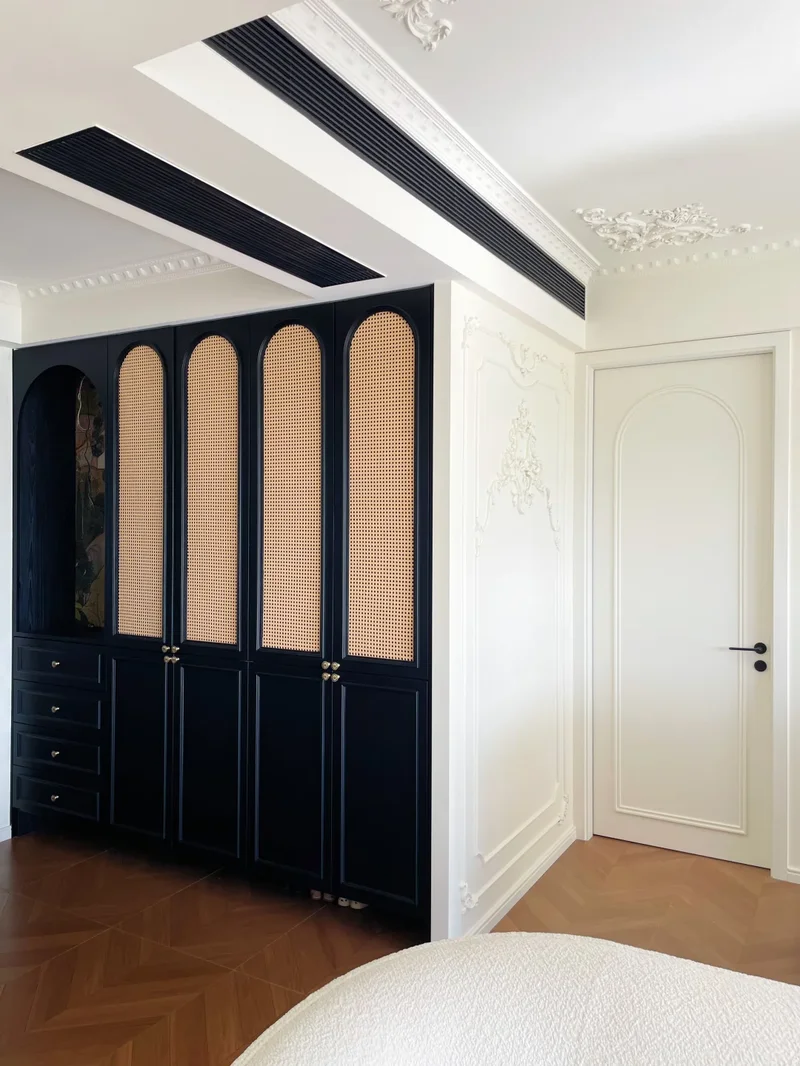
Premium maple wood veneer provides a natural, refined aesthetic, characterized by consistent grain patterns and warm tonal variation, ideal for executive and collaborative environments. The material is carefully sourced from sustainably managed forests, ensuring both environmental responsibility and long-term visual integrity.
-
Each door panel undergoes a multi-stage finishing process, including UV-cured acrylic coating, which enhances surface hardness, resists abrasion, and protects against common office contaminants such as alcohol-based sanitizers and cleaning agents. This finish maintains luster and color stability over time, minimizing maintenance and preserving design continuity.
-
The structural core integrates high-density composite materials engineered for dimensional stability, preventing warping, twisting, or delamination under fluctuating humidity and temperature conditions typical in commercial buildings. This ensures consistent operation of integrated hardware and tight seal alignment critical for acoustic performance.
-
Low-E (low-emissivity) glass is hermetically sealed within a thermally broken aluminum frame, minimizing thermal transfer while maintaining transparency and daylight penetration. The coating reflects infrared energy, contributing to HVAC efficiency without compromising the sleek, modern appearance essential in contemporary office design.
-
Acoustic integrity is maintained through a dual-glazed configuration with asymmetric glass layers and a sealed air gap, achieving a verified 30 dB Sound Transmission Class (STC) rating. This level of attenuation effectively isolates speech and ambient noise, supporting privacy and concentration in conference and meeting spaces.
-
All perimeter joints utilize compression gaskets and drop seals that engage automatically upon closure, eliminating air and sound leakage paths. These components are concealed within the design to preserve clean sightlines while delivering measurable performance.
-
Hardware integration—including heavy-duty hinges, automatic door bottoms, and multi-point locking systems—is embedded within the door structure to distribute mechanical stress and ensure smooth, silent operation over millions of cycles.
The result is a door system that harmonizes architectural elegance with industrial-grade resilience, meeting the acoustic, thermal, and operational demands of high-performance commercial interiors. Each unit undergoes rigorous in-line testing for air infiltration, sound attenuation, and cycle endurance prior to shipment, certifying compliance with ASTM and ISO standards for commercial door assemblies.
Custom Integration: Installing Premium Soundproof Doors in Office Environments
-
Premium soundproof doors significantly enhance acoustic integrity in modern office environments, particularly in high-traffic or sensitive areas such as executive suites, conference rooms, and recording studios. The integration of soundproof maple wood glass doors with a certified 30dB Sound Transmission Class (STC) rating demands precision in both design and installation to achieve optimal performance.
-
Successful installation begins with a comprehensive site assessment. Accurate measurements of the door opening, evaluation of existing framing, and verification of floor flatness are critical. Any deviation from dimensional tolerances can compromise the acoustic seal. Subfloor irregularities must be corrected to ensure uniform compression of perimeter seals upon door closure.
-
The frame must be constructed from rigid, non-resonant materials and securely anchored to structural elements. Use of steel-reinforced jambs enhances stability and minimizes flex, which can degrade sound isolation. The door assembly should be installed with continuous perimeter acoustic seals—compression tubes or sweep seals at the threshold—to eliminate air gaps, the primary vectors for sound leakage.
-
Low-E (low-emissivity) glass integrated into the door panel serves dual purposes: it maintains visual transparency for open office aesthetics while contributing to thermal efficiency. The glass must be laminated and sealed within a thermally broken frame to prevent condensation and preserve acoustic performance. Ensure glazing is installed with acoustic-grade gaskets and fully bedded in non-shrinking sealant.
-
Hardware selection is equally vital. Self-closing hinges and automatic drop seals engage upon closure, ensuring consistent sealing without user intervention. Electrified strikes or access control hardware must be installed without compromising the door’s continuity or creating penetration points that degrade STC performance.
-
Post-installation verification includes both operational testing and optional field STC measurement. The door should close smoothly, engage all seals uniformly, and operate without binding. Any gaps exceeding 1/8 inch or noticeable light penetration indicate a failure in the acoustic envelope.
-
Regular maintenance of seals, hardware alignment, and threshold components ensures sustained performance. When executed with technical rigor, custom integration of these doors delivers measurable acoustic privacy, aligning with both functional requirements and architectural intent in contemporary office environments.
Frequently Asked Questions
What makes maple wood glass doors effective for soundproofing conference rooms?
Maple wood glass doors offer excellent soundproofing due to the dense hardwood frame, which minimizes sound transmission through structural gaps. When combined with sealed framing systems and laminated or insulated glass, they achieve STC (Sound Transmission Class) ratings up to 30dB—effective for blocking typical office noise. The use of thermal breaks and acoustic gaskets further enhances noise reduction by preventing flanking sound paths.
How does 30dB soundproofing perform in real-world office environments?
A 30dB sound insulation rating reduces noise to the level of a whisper or quiet library, making speech largely unintelligible across the barrier. In conference rooms, this attenuation ensures private conversations remain confidential and minimizes distractions from adjacent spaces, meeting ISO 23599 standards for acoustic privacy in professional environments.
Why is low-E glass recommended for soundproof maple wood glass doors?
Low-emissivity (low-E) glass improves thermal performance by reflecting infrared light while allowing visible light transmission, reducing HVAC load. While its primary function is energy efficiency, low-E coatings are often applied to insulated glass units (IGUs) used in soundproof doors. These IGUs—typically filled with argon gas—also contribute to acoustic performance by adding mass and damping vibration between glass panes.
Can maple wood doors with glass meet both acoustic and fire safety codes?
Yes, engineered maple wood doors can be certified to meet fire ratings (e.g., 20–90 minutes) and acoustical standards simultaneously. Fire-rated versions use intumescent seals and tempered glass compliant with ASTM E119. The glazing must maintain integrity under heat while still contributing to the 30dB STC performance, commonly achieved using laminated or ceramic glass options within a UL-listed assembly.
What door core construction maximizes sound insulation in maple wood glass doors?
Doors with a stave-core or composite mineral core (e.g., fire-rated particleboard or calcium silicate) outperform hollow or lite cores. A solid core increases mass and damping, essential for blocking mid-to-low frequency sound. When sandwiched between hardwood veneers and paired with acoustic perimeter seals, such construction ensures minimal sound leakage and meets STC 30+ benchmarks.
How important is the door frame and installation in achieving 30dB sound reduction?
Proper framing and installation are critical—up to 80% of sound leakage occurs at gaps and weak seals. Expert installations use perimeter acoustic seals, automatic door bottoms, and resilient channels to decouple the door assembly from the wall structure. Steel-reinforced jambs with hermetic seals ensure long-term performance that maintains the engineered STC 30 rating.
Are double-glazed glass panels necessary in maple wood doors for 30dB soundproofing?
Yes, double-glazed (insulated) glass units are typically required to reach 30dB attenuation. A configuration such as 6mm glass + 12mm argon gap + 6mm glass offers mass, air damping, and thermal efficiency. Asymmetric laminated glass (e.g., 6mm/8mm) further improves performance by disrupting resonant frequencies that compromise uniform glass layers.
What acoustic standards should be referenced when specifying soundproof doors for conference rooms?
Designers should reference ASTM E90 (laboratory air-borne sound insulation), ASTM E413 (STC rating classification), and ISO 140 for testing consistency. For speech privacy, ASTM E1110 and E1111 evaluate speech privacy potential (SPP). Compliance with these ensures third-party-verified performance and proper integration into LEED or WELL Building Standard projects.
Can custom sizes and configurations maintain the 30dB soundproofing rating?
Custom-sized maple wood glass doors can maintain 30dB ratings if engineered within certified test parameters. Widening glass lites or altering dimensions must be reviewed by a certified acoustic engineer, and the full assembly—including seals, frame, and hardware—must be part of a tested system to preserve acoustic integrity.
What door hardware contributes to maintaining sound integrity?
Acoustic performance relies on hardware such as compression seals, automatic drop-down thresholds, and heavy-duty hinges that ensure consistent alignment and tight closure. Electric strikes and access control devices should not compromise seal compression. Acoustic-rated panic bars and closers further ensure the door reseals completely after each use.
How does glass area impact sound transmission in maple wood conference room doors?
Increased glass area can reduce sound insulation if not properly engineered. However, using laminated glass with a PVB or SGP interlayer, combined with insulated glazing units, mitigates this. Design best practices limit visible glass to 30–50% of door area and use thicker glass panes near the hinge and latch edges to minimize vibration transfer.
What maintenance is required to sustain 30dB soundproofing over time?
Routine maintenance includes inspecting acoustic seals for wear, ensuring automatic door bottoms function properly, and verifying door alignment to prevent gaps. Quarterly checks of closers and hinges maintain consistent pressure on seals. Low-E glass should be cleaned with non-abrasive materials to preserve coating integrity and optical clarity.