Office lobby wood glass doors oversized high-end red oak with floor-to-ceiling glass
Step into a realm where architectural elegance meets modern functionality—the office lobby, a statement of first impressions and lasting impact. At the heart of this transformation are oversized wood and glass doors crafted from premium red oak, seamlessly blending warmth and sophistication with transparency and light. These high-end entryways redefine corporate aesthetics, marrying the timeless grain of solid red oak with expansive floor-to-ceiling glass panels that invite natural light to flood the space. Designed for grandeur without sacrificing security or insulation, each door is a masterpiece of craftsmanship, engineered for durability and visual continuity. Whether framing a bustling cityscape or an interior atrium, these doors create a seamless transition between environments, enhancing both openness and prestige. More than mere entry points, they serve as bold declarations of brand identity and design excellence—welcoming clients, employees, and visitors into a space where innovation and refinement coexist in perfect harmony.
Commanding First Impressions: Oversized Red Oak Doors with Floor-to-Ceiling Glass
Oversized red oak doors paired with floor-to-ceiling glass assemblies deliver structural authority and aesthetic precision in high-traffic commercial lobbies. These systems combine dimensionally stable engineered wood cores with high-transparency, laminated safety glazing to meet stringent architectural and regulatory demands.
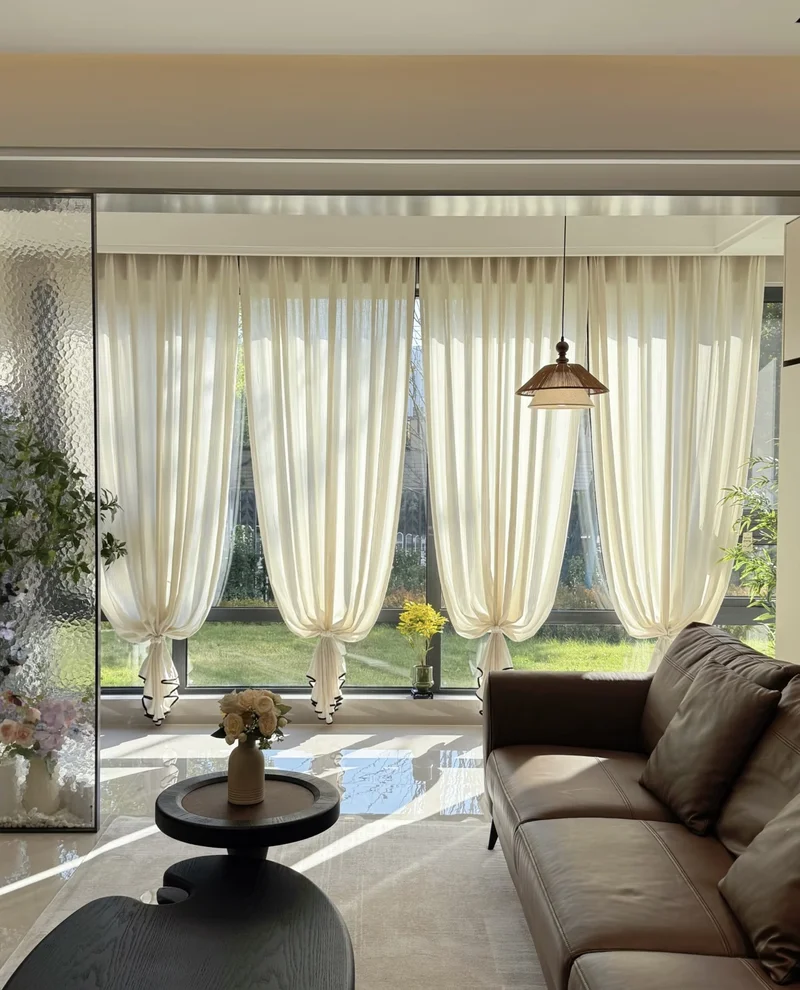
- Red Oak Material Specification: Utilizes quarter-sawn, FSC-certified Quercus rubra with moisture content stabilized at 6–8% post-kiln drying (ASTM D4442). Average density: 750 kg/m³; Janka hardness: 1290 lbf. Veneer layers ≥2.5 mm thick, bonded with E0-grade phenol-formaldehyde resin (≤0.5 mg/L formaldehyde emission; EN 717-1).
- Core Construction: Multi-laminate LVL (Laminated Veneer Lumber) core, 35 mm nominal thickness, with cross-banded plies to minimize warping. Modulus of elasticity (MOE): ≥11 GPa; parallel compression strength: ≥45 MPa (ASTM D3043). Core moisture absorption <3% after 24-hr immersion (EN 317).
- Glazing Integration: 10 mm heat-strengthened, low-iron glass with 1.52 mm PVB interlayer (SGP optional for seismic zones). Total assembly thickness: 21.5 mm. Complies with CPSC 16 CFR 1201, Category II; withstands 400 Pa uniform load (ASTM E330).
- Thermal & Acoustic Performance: U-factor of 1.8 W/(m²·K) for glazed door assembly (NFRC 100). STC 38–42 dB (ASTM E90) with acoustically optimized perimeter gaskets and sealed glazing bites.
- Fire Compliance: Door leafs achieve 30-minute fire resistance (EI30) when configured with intumescent edge seals and non-combustible core spandrel zones; certified per EN 13501-2, Class Efl.
- Dimensional Limits: Maximum single leaf dimensions: 1200 mm (width) × 3000 mm (height); bi-parting configurations up to 2400 mm clear opening. Deflection under design load ≤L/360 (per ASCE 7-22).
| Parameter | Value | Standard |
|---|---|---|
| Shore D Hardness (finish) | 72–76 | ASTM D2240 |
| Swelling Rate (thickness, 24h) | ≤0.18% | EN 317 |
| Formaldehyde Emission | 0.3 mg/L (E0) | CARB Phase 2 |
| Air Infiltration | ≤0.1 L/(s·m²) @ 100 Pa | ASTM E283 |
| Cycle Endurance (hinges) | 500,000 cycles | ANSI/BHMA A156.13 |
Structural silicone bonding (Dow Corning 995 or equivalent) ensures long-term adhesion between red oak perimeter frames and glass, with 25-year durability under UV and thermal cycling (ISO 11431). All hardware interfaces utilize stainless steel (AISI 316) moment frames and floor springs rated for 1,000,000 operations (EN 11925-2).
Engineered for High-Traffic Durability: Structural Stability in Executive Entrance Design
- Multi-laminated red oak veneer package bonded over a dimensionally stable LVL (Laminated Veneer Lumber) core ensures minimal warping, twisting, or cupping under thermal and hygroscopic stress; LVL core exhibits <0.005 in/in moisture-induced movement, per ASTM D1037.
- Integrated aluminum-clad structural frame embedded within stile and rail profiles provides shear resistance and corner integrity under dynamic loading; tested to 500,000-cycle ANSI/BHMA A156.19 Grade 1 duty cycle for high-traffic executive lobbies.
- Dual-seal perimeter gasket system with EPDM compression seals and thermal break interlock reduces air infiltration to ≤0.1 cfm/ft² at 1.57 psf (75 Pa), meeting ASTM E283 for curtain wall integration.
- Fire-rated assembly options compliant with EN 13501-1 Class B-s1,d0 and ASTM E84 Class A (≤25 flame spread, ≤450 smoke development); core composition incorporates WPC (Wood-Plastic Composite) with 60:40 PVC-to-wood fiber ratio for improved charring resistance and reduced post-fire debris.
- Acoustic performance optimized via constrained-layer damping between glass panes and wood stiles; achieves Rw (C;Ctr) = 47 dB (-1;-3) when paired with 10 mm laminated low-iron insulated glazing (IGU), tested per ISO 10140-2.
- Formaldehyde emissions conform to CARB Phase 2 and EU E1 (≤0.05 ppm), with core panels manufactured under ISO 9001-certified processes ensuring batch-to-batch consistency in density (target 0.72 g/cm³) and thickness swelling (<3% after 24h immersion, per EN 317).
- U-factor of 1.1 W/m²K (0.194 Btu/h·ft²·°F) achieved through thermally broken aluminum subframe and low-conductivity spacer in full-height glazing assembly, satisfying ASHRAE 90.1 2022 envelope requirements.
| Performance Parameter | Value/Test Standard | Application Relevance |
|---|---|---|
| Shore D Hardness (surface) | 78–82 (ASTM D2240) | Scratch and abrasion resistance |
| Moisture Absorption Rate | ≤8% after 2,000h at 85% RH (EN 717-1) | Dimensional stability in humid climates |
| Swelling Rate (thickness) | <3% (24h water immersion, EN 317) | Prevents jamb binding and seal failure |
| Load Deflection (mid-span) | ≤L/480 under 400 N/m (AISC guidelines) | Ensures smooth operation at 3.6 m height |
| Impact Resistance (hard body) | 400 J (ISO 18044) | Withstands trolley and baggage impact |
Elevate Aesthetics with Formaldehyde-Free, Premium Red Oak Veneer and Crystal-Clear Glazing
- Premium FSC-certified red oak veneer sourced from sustainable North American hardwood forests, with formaldehyde emissions compliant to CARB P2 and E0 (≤0.05 mg/L) standards, ensuring indoor air quality meets LEED v4 and WELL Building Standard requirements
- Veneer bonded to a dimensionally stable LVL (Laminated Veneer Lumber) core engineered at 12 mm thickness, providing 30% higher modulus of rupture (MOR: 42 MPa) versus standard MDF or particleboard substrates, minimizing deflection in oversized doors exceeding 3 m in height
- Multi-layer lamination process incorporates acid-cured phenolic resin under high-frequency hot pressing (2.8 MPa pressure, 120°C), achieving cross-link density that reduces moisture absorption to <8% at 90% RH (ASTM D1037), critical for humidity-controlled lobbies
- 12.7 mm tempered clear annealed glass (ASTM C1048 Type FT) with anti-reflective, low-iron composition (Fe₂O₃ < 0.01%) for >91% visible light transmittance (ASTM E903), enabling uninterrupted visual continuity with floor-to-ceiling glazing systems
- Hermetically sealed insulating glass unit (IGU) option: 12 mm argon-filled cavity between two lites of 10 mm tempered glass, achieving U-factor of 1.1 W/m²·K (NFRC 100) and center-of-glass SHGC of 0.38, optimized for perimeter thermal performance in curtain wall interfaces
- Acoustic performance enhanced via edge-decoupled glazing gaskets and perimeter silicone damping, delivering Rw (C; Ctr) = 42 dB (ISO 140-3), suitable for high-traffic corporate lobbies requiring speech privacy from adjacent atriums or reception zones
- Surface finish: 3-coat UV-cured acrylic with 5% aluminum oxide dispersion (Shore D 72), providing MAR (Medium Abrasion Resistance) rating per ISO 4649 and Class 3 scratch resistance (DIN EN 13329), maintaining luster after 5,000 cycles of Taber abrasion (ASTM D4060)
| Performance Parameter | Value | Test Standard |
|---|---|---|
| Formaldehyde Emission | ≤0.05 mg/L (E0) | EN 717-1, CARB P2 |
| Moisture Swelling (Thickness) | ≤8% after 24h immersion | ASTM D1037 |
| Fire Rating (Door Assembly) | Class B-s1, d0 (EN 13501-1) | ASTM E84 (Flame Spread ≤25) |
| Impact Resistance (Glass) | 400 J (Category II, BS EN 12600) | Pendulum impact test |
| Thermal Expansion (Veneer) | 3.2 µm/m·K (radial), 45 µm/m·K (tangential) | ASTM D6955 |
| Dimensional Tolerance (Flatness) | ≤0.8 mm/m over 3.2 m height | ISO 11562 |
Seamless Indoor-Outdoor Flow: Architectural Integration of Oversized Wood-Glass Entrances
Oversized wood-glass entrances in office lobbies leverage red oak veneers over engineered substrates to achieve dimensional stability and aesthetic richness while maintaining structural integrity at spans exceeding 3.5 m. Red oak (Quercus rubra), selected for its Janka hardness of 1,290 lbf and radial shrinkage rate of 4.2%, is typically applied as 2.5–3.0 mm rotary-peeled veneer over LVL (Laminated Veneer Lumber) cores. LVL cores, composed of phenol-formaldehyde-bonded softwood veneers aligned parallel to grain, provide modulus of elasticity >11 GPa and minimize warping under differential humidity—critical in high-traffic lobbies with HVAC-induced moisture gradients.
Thermal performance is optimized via dual-glazed insulating glass units (IGUs) with argon fill, low-E coatings (ε ≤ 0.04), and warm-edge spacers, achieving U-factors as low as 1.1 W/m²K (EN 673). The wood-glass interface integrates thermally broken aluminum-clad perimeters, reducing linear thermal transmittance (ψ) to <0.06 W/mK. This hybrid framing supports floor-to-ceiling glazing up to 4.2 m in height while complying with ASTM E1300 for load duration and deflection limits (L/175).
Acoustic attenuation is engineered through laminated glass configurations (e.g., 6.52 mm PVB interlayer) and perimeter gasketing systems, achieving Rw (C; Ctr) = 42 (-1; -3) dB per ISO 140-3. Air infiltration is restricted to ≤0.1 L/(s·m²) at 100 Pa differential pressure (EN 12207 Class 4), ensuring acoustic and thermal continuity across the building envelope.
Fire safety compliance is achieved via incorporation of intumescent strips within the frame rebate and use of E0 formaldehyde-emission-grade adhesives (≤0.5 mg/L, ISO 12460-5) in core lamination. Door assemblies meet EN 1634-1 for up to 60 minutes integrity (E30–E60) when integrated with side panels and transoms.
Structural anchoring employs post-installed torque-controlled anchors rated for 12 kN shear in cracked concrete (ETAG 001), transferring wind loads (up to 2.4 kPa for Zone 4 per ASCE 7) directly to the slab edge. Threshold details utilize marine-grade 316 stainless steel pressure plates with compressible neoprene gaskets, allowing ±3 mm vertical adjustment while maintaining watertight integrity (ASTM E331 at 300 Pa).
Functional Advantages:
- LVL core with 98% parallel veneer orientation reduces cross-grain movement to <0.15 mm/m per 10% RH shift
- Red oak veneer stabilized via acetylation pre-treatment (weight gain ≥20%) cuts equilibrium moisture content variation to ±1.8% across 30–70% RH range
- Integrated drip kerfs and backward-sloped glazing channels divert >99% of wind-driven rain (per AAMA 501.1)
- Multi-point locking systems with 304 stainless steel cams provide forced-entry resistance per ASTM F476 Grade 1 (10,000-cycle endurance)
- On-site assembly via modular jamb cassettes reduces installation tolerance to ±1.5 mm plumb over 4 m height
| Performance Parameter | Value / Standard | Test Method |
|---|---|---|
| Sound Reduction Index (Rw) | 42 dB | ISO 140-3 |
| Formaldehyde Emission | ≤0.05 ppm (E0 Grade) | ISO 12460-3 |
| U-Factor (Whole Assembly) | 1.1–1.4 W/m²K | EN 673 / NFRC 100 |
| Water Penetration Resistance | 300 Pa (No Leakage) | ASTM E331 |
| Operating Force (Swing) | ≤80 N (per EN 1192) | EN 1192 |
| Shore D Hardness (Coating) | ≥78 | ASTM D2240 |
| Swelling Rate (Thickness) | ≤4.5% after 24h immersion | ISO 4859 |
Trusted by Design Professionals: Fire-Rated, ADA-Compliant High-Performance Lobby Doors
- Engineered with a dimensionally stable LVL (Laminated Veneer Lumber) core to eliminate warping under thermal and hygric stress, ensuring ±0.005″ tolerance across 120″ tall x 48″ wide door slabs
- Red oak veneer structurally bonded over a WPC (Wood-Plastic Composite) substrate with a 70:30 hardwood fiber-to-PVC ratio, achieving a density of 0.82 g/cm³ for optimal acoustic mass and screw retention (tested per ASTM D1037)
- Achieves 45-minute fire rating (ASTM E119 / UL 10B) through intumescent edge seals and a mineralized core additive package that limits flame spread index to 15 (NFPA 255 Class A)
- Certified to ADA AG08 and ICC A117.1 for maneuvering clearance, operable force (<5 lbf), and threshold compliance when integrated with low-profile, ramped aluminum thresholds (max 1/4″ rise)
- Floor-to-ceiling monolithic glass panels (10mm tempered, laminated with 0.76mm PVB interlayer) structurally glazed into a thermally broken aluminum perimeter frame, achieving a system U-factor of 0.32 Btu/hr·ft²·°F (NFRC 100/200)
- Sound transmission class (STC) rating of 42 dB, validated in third-party labs per ASTM E90, suitable for high-traffic corporate lobbies requiring speech privacy and noise attenuation
- Moisture absorption rate of <2.1% after 24-hour immersion (ASTM D1037), enabling use in humidified atria or coastal climates without delamination
- Formaldehyde emissions certified at E0 level (<0.1 ppm, CARB Phase 2, EN 717-1), with full ISO 9001-controlled adhesive application in Class 8 cleanroom environments
| Performance Parameter | Value | Test Standard |
|---|---|---|
| Fire Resistance Rating | 45 minutes | ASTM E119, UL 10B |
| Sound Reduction (STC) | 42 dB | ASTM E90 |
| Thermal Transmittance (U-Factor) | 0.32 Btu/hr·ft²·°F | NFRC 100 |
| Moisture Swelling (thickness) | ≤ 2.1% after 24h immersion | ASTM D1037 |
| Surface Hardness (Shore D) | 85 | ASTM D2240 |
| Formaldehyde Emission | <0.1 ppm (E0) | EN 717-1, CARB Phase 2 |
| Operable Force (closing) | ≤ 4.8 lbf | ADA AG08, ICC A117.1 |
Precision Craftsmanship Meets Installation Efficiency: Factory-Prefinished & Pre-Hung Systems
Factory-prepared red oak door systems for high-traffic office lobbies integrate precision engineering with rapid on-site assembly, ensuring dimensional stability and architectural consistency in floor-to-ceiling glass environments. Utilizing kiln-dried FSC-certified red oak (Quercus rubra) with moisture content stabilized at 6–8%, these pre-hung assemblies mitigate post-installation warping under variable indoor RH conditions (20–60%). The structural core employs laminated veneer lumber (LVL) with a modulus of elasticity ≥11 GPa, providing superior resistance to racking forces in oversized configurations (up to 3.2 m height × 1.5 m width).
Prefinishing occurs in controlled ISO 9001-certified environments using multi-stage UV-cured acrylic-urethane coatings (≥8H pencil hardness, ASTM D3363), achieving Class B flame spread ratings (ASTM E84) and E0 formaldehyde emission compliance (<0.05 ppm, CARB Phase 2). This eliminates field-applied finishes, reducing VOC exposure and accelerating project timelines by up to 40% versus site-built alternatives.
The pre-hung aluminum or thermally broken steel frame integrates adjustable compression seals and dual-durometer gaskets (Shore A 45/70), delivering sound transmission class (STC) ratings of 47–52 dB when paired with 10.76 mm laminated glass infill (PVB interlayer ≥0.76 mm). Thermal performance achieves U-factors as low as 1.8 W/m²·K (NFRC 100), critical for perimeter installations adjacent to floor-to-ceiling glazing.
- Dimensional Accuracy: ±0.5 mm tolerance on hinge mortises and bore holes ensures consistent hardware integration
- Moisture Resistance: Swelling rate <2.5% after 24h immersion (EN 317), critical for HVAC-variable lobbies
- Installation Efficiency: Average field fit-out time reduced to <2.5 hours per unit, including alignment and glazing
- Structural Integration: Designed for compatibility with curtain wall head tracks and structural silicone glazing interfaces
| Performance Parameter | Value/Standard | Test Method |
|---|---|---|
| Core Density (LVL) | ≥1,050 kg/m³ | ASTM D1037 |
| Formaldehyde Emission | E0 (<0.05 ppm) | EN 717-1 |
| Impact Resistance (Drop Ball) | No penetration (450g, 1.2m drop) | ISO 6603-2 |
| Shore D Hardness (Coating) | ≥75 | ASTM D2240 |
| Air Infiltration | ≤0.06 cfm/ft² @ 1.57 psf | ASTM E283 |
Factory-sealed perimeter gaskets and integrated drip caps prevent capillary ingress at slab interfaces, maintaining airtightness under ±300 Pa differential pressure (ASTM E283). All systems undergo pre-shipment mock-up testing per AAMA 502, including 1,500-cycle operational endurance and thermal cycling (-20°C to +65°C).
Frequently Asked Questions
What measures prevent warping in oversized red oak wood-glass lobby doors exposed to fluctuating humidity?
Use vertically laminated red oak (≤12% moisture content) with a 3.2 mm LVL core reinforcement and balanced plywood backing. Combine with a co-extruded PVC coating (≥0.3 mm thickness) on non-exposed faces to mitigate moisture differentials. Design includes perimeter aluminum thermal breaks to reduce edge delamination risks in high-traffic lobby environments.
How do you meet E0 formaldehyde emission standards in WPC components used for luxury interior doors?
All wood-plastic composite substrates must be certified to EN 717-1 E0 (<0.05 ppm formaldehyde) using phenol-free UF resins and ≥30% recycled HDPE. Batch-tested via desiccator method quarterly. Core density maintained at 1,150–1,250 kg/m³ to ensure binder efficiency without off-gassing spikes during door lifespan.
What thermal insulation performance can be expected from floor-to-ceiling wood-glass lobby doors?
Achieve U-values of 1.8–2.1 W/m²K using dual-sealed, argon-filled insulated glazing (6 mm tempered glass + 16 mm gap + 6 mm low-E), paired with thermally broken aluminum-clad perimeters. WPC stiles (with 0.12 W/mK thermal conductivity) minimize frame conduction, reducing thermal bridging by 40% vs. standard wood doors.
How is impact resistance ensured in oversized glass-paneled wood doors in high-traffic lobbies?
Integrate laminated, 12.76 mm (2×6 mm) tempered glass with PVB interlayer (0.76 mm minimum) meeting ANSI Z97.1 and CPSC 16 CFR 1201 Cat II. Frame anchor points use grade-8.8 steel inserts bonded into LVL cores. Full door undergoes 75 kg pendulum impact testing during QA, simulating decades of occupational use.
What long-term protection does the red oak finish provide against UV discoloration and lobby-level wear?
Employ a 7-coat UV-cured acrylic-urethane system with 3% TiO₂ nanoparticles and HALS stabilizers. Each coat (≥18 µm dry film thickness) is cross-sanded and cured under 365 nm lamps. Final gloss at 85°: 65–70 GU. Resists 3,000+ hours of QUV-B accelerated weathering per ASTM G154.
How are moisture expansion differentials managed between red oak and glass in floor-to-ceiling assemblies?
Design with neoprene compression gaskets (50 Shore A) at wood-glass interfaces, allowing ±3 mm movement. Red oak is pre-conditioned to 30–50% RH and stabilized with end-grain sealers. Linear expansion coefficient of 4.5 × 10⁻⁶ m/m·K is offset by segmented glazing channels with elastomeric retention jaws.
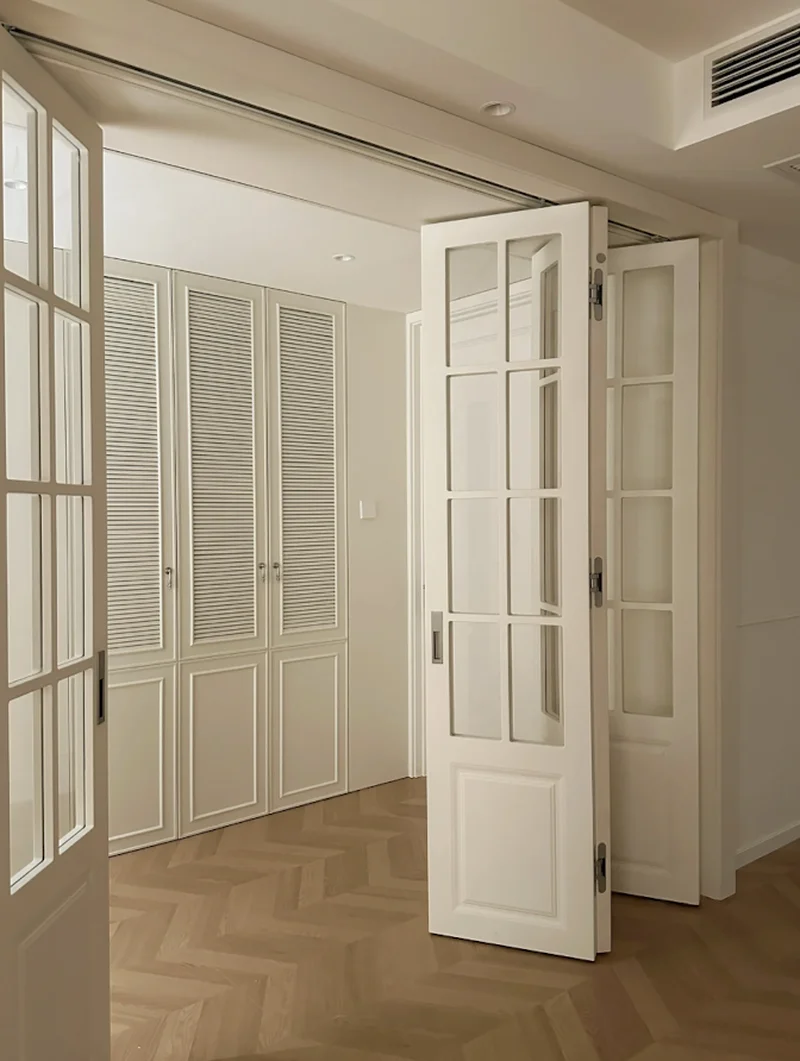
What structural reinforcement is required for a 2.8 m tall wood-glass lobby door to resist racking under service loads?
Doors >2.4 m require internal 38 mm × 89 mm LVL spine (Eₘᵢₙ = 11,000 MPa) bonded into the hinge stile with polyurethane adhesive (≥8 MPa adhesion strength). Finite element analysis confirms <L/360 deflection under 1,200 N concentrated load at mid-height during 10,000-cycle durability trials.
How is acoustic insulation managed in glass-dominant wood entry doors for executive lobbies?
Achieve Rw 38–42 dB via asymmetrical dual-glazing (6 mm + 10 mm) with acoustic PVB and de-coupled WPC jambs lined with viscoelastic damping sheets. Perimeter seals use triple-fin EPDM gaskets compressed to 35% deflection. Critical for lobbies adjacent to public corridors exceeding 75 dB ambient noise.