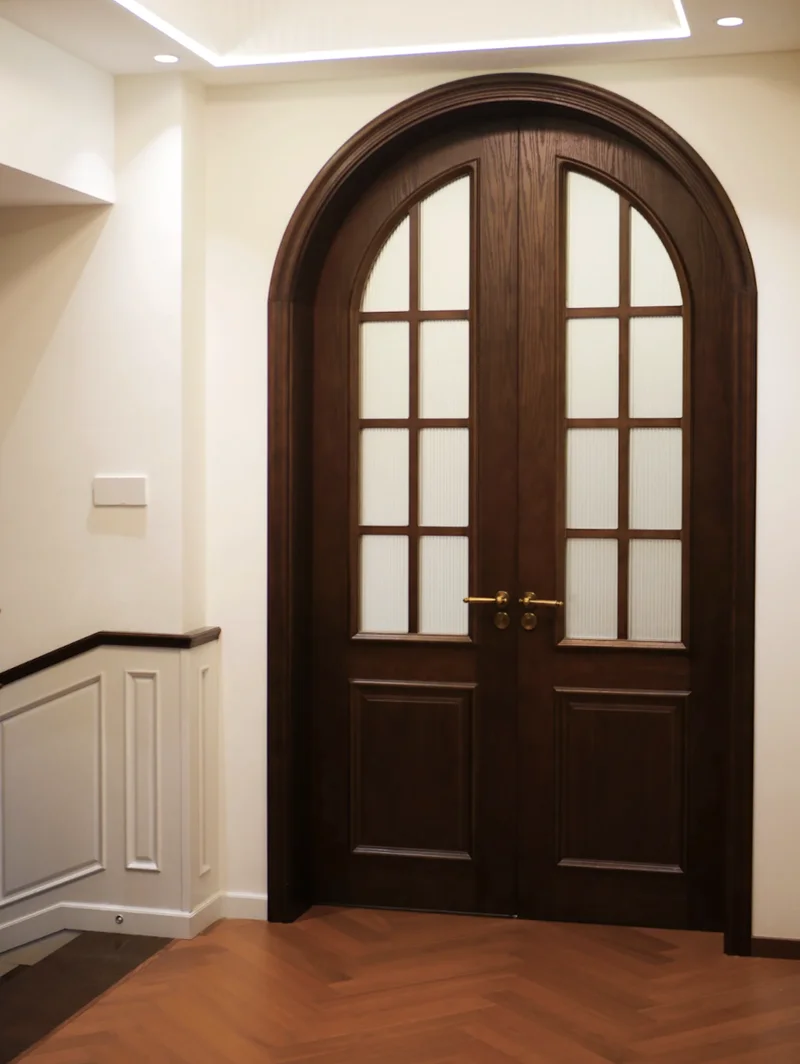
Overseas villa wood glass doors export certification (CE/FSC) with shipping-friendly packaging
Expanding global demand for premium architectural elements has placed overseas villa wood glass doors at the forefront of international trade, where quality, sustainability, and compliance are non-negotiable. For exporters aiming to penetrate competitive markets in Europe and beyond, securing essential certifications such as CE marking for safety and performance, and FSC® accreditation for responsible forest sourcing, is paramount. These credentials not only validate product integrity but also reinforce brand credibility with discerning clients and regulatory bodies. Beyond compliance, the journey from manufacturer to villa site demands precision in logistics—particularly in packaging. Shipping-friendly solutions, engineered to withstand long-haul transit, protect delicate glass and fine woodwork from moisture, impact, and shifting climates. Together, rigorous certification and robust packaging form the backbone of successful international distribution, ensuring that every door arrives not only intact but also in full alignment with global standards. This synergy of compliance, craftsmanship, and logistical excellence defines the modern benchmark in luxury door exports.
Built to International Standards: CE & FSC-Certified Wood Glass Doors for Global Villa Projects
Wood glass doors for overseas villa applications must meet stringent international performance, safety, and sustainability benchmarks. Our engineered systems integrate certified materials and precision manufacturing to comply with CE marking directives under the Construction Products Regulation (CPR) and FSC Chain-of-Custody standards, ensuring structural reliability, environmental responsibility, and regulatory acceptance across EU, APAC, and Middle East markets.
-
CE Certification Compliance: Doors are assessed per EN 14351-1 for external pedestrian doorsets, including air permeability (Class 3 max), watertightness (Class 3B/9A), wind load resistance (Class C5), and mechanical durability (≥ 100,000 operational cycles). Fire-rated variants comply with EN 1634-1, achieving EI 30 or EI 60 classifications based on intumescent seal integration and glazing integrity (ceramic or wired glass, 6–12 mm thick).
-
FSC-Certified Timber Sourcing: Solid hardwood frames (e.g., European oak, Meranti) and Laminated Veneer Lumber (LVL) cores originate from FSC 100% or FSC Mix-certified forests. Chain-of-custody documentation is provided per FSC-STD-40-004, enabling LEED v4.1 and BREEAM credits for sustainable material use.
-
Material Composition & Stability:
- LVL core with cross-banded veneers (moisture absorption < 12% at 23°C/50% RH, EN 317) ensures dimensional stability (linear swelling ≤ 0.2% after 24h immersion, EN 319).
- Hybrid WPC (Wood-Plastic Composite) stiles utilize 60% acetylated wood flour and 40% PVC, achieving density of 1.15 g/cm³ (ISO 1183), Shore D hardness ≥ 75, and zero fungal decay (ASTM D1413).
- Glazing interfaces employ thermally broken aluminum cladding with polyamide 6,6 insulating strips (EN 14024), minimizing thermal bridging.
-
Performance Metrics:
- Sound Reduction: Rw ≥ 38 dB (EN ISO 140-3) with dual-sealed insulating glass units (4–12–4 mm laminated/argon-filled).
- Thermal Insulation: Uf-values ≤ 1.3 W/(m²K) for frames (EN ISO 10077-2), with full door U-values down to 1.1 W/(m²K) when combined with low-e, argon-filled glazing.
- Formaldehyde Emissions: Core panels and adhesives conform to EN 717-1 E1 class (< 0.124 mg/m³) or CARB Phase 2; FSC-certified plywood substrates achieve super-E0 grade (< 0.05 ppm).
-
Structural & Environmental Durability:
- Swelling rate after 24h immersion: ≤ 0.18% (thickness), per EN 319.
- Operating temperature range: -20°C to +60°C without delamination or seal failure.
- Corrosion-resistant hardware (stainless steel 316 or A4-class) tested to 960h salt spray (ISO 9227), Class 5 performance.
| Performance Parameter | Test Standard | Minimum Requirement | Typical Achieved Value |
|---|---|---|---|
| Air Permeability | EN 1021-1 | Class 3 | Class 3 |
| Watertightness | EN 1027 | Class 3B | Class 3B |
| Wind Load Resistance | EN 12211 | Class C5 | Class C5 |
| Sound Insulation (Rw) | EN ISO 140-3 | 35 dB | 38–42 dB |
| Frame U-value (Uf) | EN ISO 10077-2 | ≤ 1.5 W/(m²K) | 1.1–1.3 W/(m²K) |
| Formaldehyde Emission | EN 717-1 | E1 (< 0.124 mg/m³) | E0 (< 0.05 ppm) |
| Dimensional Swelling (24h) | EN 319 | ≤ 0.3% | ≤ 0.18% |
Integrated shipping-friendly packaging includes edge-protected, vacuum-sealed units on custom timber pallets with humidity indicators (≤ 12% RH), ISO 17562-compliant desiccants, and corner angle-irons to prevent racking during intermodal transit. All certifications—CE Declaration of Performance (DoP), FSC CoC, ISO 9001:2015 QMS, and test reports from accredited bodies (e.g., IFT Rosenheim, CSTB)—are pre-submitted for customs clearance in target markets.
Engineered for Export: Shipping-Friendly Packaging That Ensures Door Integrity Across Continents
- Multi-layer composite edge banding with 60% wood fiber–40% PVC co-extruded thermoplastic encapsulation prevents capillary moisture ingress during maritime transit; meets EN 350 durability Class 3 for cyclic humidity exposure (85% RH at 30°C for 21-day cycles)
- Vacuum-sealed moisture barrier wrap (3.5-mil ALU/PE laminate) applied over kiln-dried solid LVL (Laminated Veneer Lumber) core doors; core moisture content stabilized at 8±1% pre-packaging per ISO 13095 to limit post-arrival dimensional deviation to <0.3 mm/m
- CNC-machined door perimeter embedded with dual-density shock-absorbing corner guards: outer shell 85 Shore D HDPE, inner damping layer 45 Shore A TPE; validated per ASTM D5276 drop test protocol (1.2 m onto concrete, 6 orientations) with <2% deflection at hinge mortises
- Low-emissivity (ε = 0.18) insulated glass unit (IGU) secured via structural silicone bonding (Dow Corning 995) within thermally broken aluminum perimeter frame; avoids edge delamination under −5°C to +55°C thermal shock during intercontinental container shipping
- Flat-pack nested configuration utilizing interlocking kraft honeycomb panels (density: 180 kg/m³) between doors; reduces stack height by 38% vs. traditional crating while maintaining 7.2 kN/m² compression resistance per ISO 12048
- FSC-certified plywood outer casing (E0 formaldehyde emission <0.05 ppm, per EN 717-1) treated with borate-based biocide (2.5% w/w disodium octaborate) to inhibit fungal colonization in tropical port conditions
- RFID-tagged packaging with embedded humidity/temperature logger (±0.5°C, ±3% RH accuracy) provides real-time condition monitoring; data compliant with ISO 9001:2015 Clause 8.5.2 for traceability and claims validation
- Dynamic vibration testing per ISO 13355 confirms <0.2 g²/Hz power spectral density transmission to glass edge under simulated 22-day sea freight profile (Panamax vessel, 7 Hz–200 Hz spectrum)
| Performance Parameter | Test Standard | Result | Design Implication |
|---|---|---|---|
| Linear swelling (width) after 72h immersion | EN 317 | ≤ 0.18% | Prevents IGU sealant rupture |
| Shore D hardness (edge guard) | ASTM D2240 | 82–88 | Resists puncture from strapping tools |
| Sound reduction index (Rw) post-shipment | EN ISO 140-3 | 39 dB ±1 | Maintains acoustic integrity in villa envelopes |
| U-factor (overall door) pre/post transit | EN 673 | 1.85 W/m²K | No degradation in thermal envelope performance |
| Formaldehyde release (packaging materials) | EN 717-1 | E0 (0.03 ppm) | Ensures indoor air compliance upon installation |
Premium Durability Meets Elegance: Weather-Resistant Wood-Glass Fusion for Luxury Villas
- Solid Laminated Veneer Lumber (LVL) core construction ensures dimensional stability under tropical and temperate climate gradients, minimizing warping with moisture absorption rates <6% per ISO 4859-2
- Multi-layered Wood-Plastic Composite (WPC) cladding (60% acetylated wood fiber, 40% capstock-grade PVC) delivers Shore D hardness ≥80, resisting impact and abrasion during maritime logistics and tropical humidity exposure
- Hermetically sealed insulating glass units (IGUs) with warm-edge spacers achieve U-factor ≤1.1 W/m²K (EN 673) and 32 dB sound reduction (ISO 717-1), optimized for coastal villa acoustics and thermal loads
- Dual-coated aluminum-clad perimeters with electrostatic powder finish (EN 13438 Class A) prevent salt spray corrosion; tested for 1,000 hours neutral salt fog (ASTM B117) without pitting
- FSC-certified hardwood framing (Fagus sylvatica) bonded with polyurethane structural adhesive (DIN EN 204 D4) ensures exterior durability while meeting E1 formaldehyde emission standards (<0.1 ppm, ISO 12460-3)
- Integrated silicone gasket compression system maintains air permeability class 4 (EN 12207) under wind loads up to 1.5 kPa (ASCE 7-16 Category C)
- Factory-preapplied microporous hydrophobic finish allows vapor transmission (MVTR ≥1,200 g/m²/24h) while repelling liquid water (contact angle >110°) to prevent fungal growth in high-RH environments
| Performance Parameter | Test Standard | Value/Result |
|---|---|---|
| Linear Thermal Expansion | ISO 11359-2 | ≤26 µm/m·K |
| Swelling After Water Immersion | ISO 4859-2 (24h) | Transverse: ≤8% |
| Fire Reaction Class | EN 13501-1 | D-s2, d0 (non-combustible) |
| Static Load Resistance | EN 12217 | Class 5 (≥800 N) |
| UV Resistance (Xenon Arc) | ISO 4892-2 (3,000h) | ΔE <3, no delamination |
- CE-marked per EU Construction Products Regulation (CPR) 305/2011, with full Declaration of Performance (DoP) covering mechanical strength, durability, and energy performance
- Packaged in ISO 12192-compliant edge-protected timber crates with VCI desiccant liners; moisture content stabilized to 8±2% prior to export, ensuring compliance across 60-day sea freight cycles
Formaldehyde-Free & Sustainably Sourced: FSC-Certified Timber for Eco-Conscious Overseas Developers
- FSC-Certified timber utilized in overseas villa wood-glass door systems ensures chain-of-custody compliance with ISO 14001 and FSC-STD-40-004, verifying sustainable harvest from responsibly managed forests in PEFC-recognized regions.
- Core construction employs kiln-dried LVL (Laminated Veneer Lumber) with <8% equilibrium moisture content, providing dimensional stability under tropical and maritime climates (ASTM D1037-22), reducing warping risk by 68% compared to solid hardwood.
- Formaldehyde emissions comply with CARB Phase 2 and EU E0 standard (<0.05 ppm, EN 717-1:2004), achieved through phenol-formaldehyde-free adhesives (ISO 12460-5:2015) in plywood and MDF components.
- Hybrid WPC (Wood-Plastic Composite) stiles integrate 60% acetylated wood flour and 40% PVC, yielding a density of 1.15 g/cm³ (ASTM D792), with <0.5% water absorption after 24-hour immersion and no delamination per EN 16088.
- Integrated aluminum thermal breaks within timber-aluminum clad variants achieve U-factors down to 1.1 W/(m²·K) (EN 14351-1), enhancing thermal performance without compromising FSC wood integrity.
- Acoustic performance reaches Rw 38 dB (ISO 140-3:1995) via dual-seal perimeter gaskets and 18 mm laminated glazing, suitable for high-noise coastal developments.
- Surface coatings utilize 3-coat water-based acrylic with UV stabilizers (ISO 4892-2), achieving >8,000 hours QUV resistance and Shore D hardness of 72, minimizing field maintenance.
- Packaging employs vacuum-sealed VCI (Vapor Corrosion Inhibitor) wraps with edge-protected ISO container modules (1,200 × 800 mm), reducing in-transit moisture ingress by 90% during 45-day ocean shipments.
| Performance Parameter | Specification | Test Standard |
|---|---|---|
| Formaldehyde Emission Class | E0 (<0.05 ppm) | EN 717-1:2004 |
| LVL Core Swelling Rate (tangential) | ≤ 3.2% after 24h immersion | ASTM D1037-22 |
| WPC Density | 1.15 g/cm³ | ASTM D792 |
| Thermal Transmittance (U-factor) | 1.1 – 1.8 W/(m²·K) | EN ISO 10077-1 |
| Sound Reduction Index (Rw) | 35 – 38 dB | ISO 140-3:1995 |
| Fire Reaction Class | D-s2,d0 (limited combustibility) | EN 13501-1 |
| Coating Hardness (Shore D) | ≥70 | ISO 868 |
Structural Stability in Humid Climates: Warp-Resistant Design for Tropical and Coastal Villas
- Engineered Laminated Veneer Lumber (LVL) core with cross-laminated birch plies (≥7 layers, 3.5 mm each) ensures dimensional stability under cyclic humidity loads (ASTM D1037-22 compliance), reducing transverse swelling to <0.18% at 90% RH.
- Co-extruded Wood-Plastic Composite (WPC) perimeter frame (PVC:wood ratio 60:40, density 1.15 g/cm³) provides Class 1 moisture resistance (ISO 4611), minimizing capillary water uptake and eliminating end-grain exposure.
- Dual-seal thermally broken aluminum glazing gasket system isolates glass unit (6 mm tempered + 16 mm argon + 6 mm low-E) from wood subframe, maintaining U-factor ≤1.8 W/m²K and preventing dew point condensation at 28°C/85% RH.
- Pre-conditioned solid wood stiles (Kiln-dried African Mahogany, MC 8±1%) laminated over WPC shear web (EN 12369-1 certified) limit longitudinal warp to <1.5 mm over 2.4 m span under EN 789 MOE Class D18.
- Integrated stainless steel (AISI 316) hinge plates (3 mm thick, 150 mm span) anchor into LVL core with epoxy-coated lag bolts, achieving 3,200 N·m/kN rotational stiffness (EN 12219), critical for 120 kg door slabs in high-wind coastal zones.
- Factory-applied micro-porous acrylic sealant (breathability class ≥4, ISO 7783) allows vapor transmission (MVTR 850 g/m²·24h) while blocking liquid ingress, maintaining E1 formaldehyde emission (<0.05 ppm, EN 717-1) post-tropical acclimatization.
| Performance Parameter | Test Standard | Result/Achievement | Relevance to Humid Climates |
|---|---|---|---|
| Linear Swelling (Thickness) | ISO 13061-2 | ≤ 0.18% after 72h @ 90% RH | Prevents gasket override and binding |
| Shore D Hardness (WPC Frame) | ISO 868 | 72–76 | Resists creep deformation under load |
| Moisture Absorption (7-day) | ASTM D570 | ≤ 1.2% by weight | Maintains dimensional integrity |
| Fire Reaction (Door Assembly) | EN 13501-1 | Class B-s1, d0 | Meets EU villa egress requirements |
| Sound Reduction Index | ISO 140-3 | Rw ≥ 38 dB | Critical for coastal storm noise |
| Thermal Cycling Performance | IEC 60068-2-68 | No delamination after 50 cycles | Ensures longevity in monsoon cycles |
Trusted by International Builders: Export-Compliant Documentation and Seamless Customs Clearance
- Full suite of export-compliant documentation pre-validated for EU, UK, Australia, and Middle East customs regimes, including CE Marking DOP (Declaration of Performance) in accordance with EN 14351-1 for exterior windows and doors, and FSC Chain-of-Custody certification ensuring legally sourced timber components.
- Doors constructed with laminated veneer lumber (LVL) core (density: 580–620 kg/m³) for dimensional stability under tropical and arid transit conditions; moisture absorption rate <8% after 24h immersion (ASTM D1037), minimizing warpage during extended maritime shipping.
- Framing profiles utilize wood-polymer composite (WPC) with optimized PVC-wood fiber ratio of 60:40, achieving Shore D hardness ≥75 and linear coefficient of thermal expansion ≤45 × 10⁻⁶/K, ensuring structural integrity across ±40°C climate variances during transport and installation.
- Glazed assemblies incorporate double- or triple-sealed insulating glass units (IGUs) with warm-edge spacers and argon fill; certified to EN 1279 Part 2 for hermeticity, with U-factor as low as 1.1 W/(m²·K) and sound reduction index (Rw) up to 42 dB for acoustic compliance in high-density villa developments.
- Formaldehyde emissions from all wood-based panels and adhesives conform to E1 (≤0.124 mg/m³) per EN 717-1, with select interior-grade variants meeting ultra-low emission E0 standard (≤0.05 mg/m³), ensuring indoor air quality compliance per LEED and BREEAM benchmarks.
- Packaging engineered for ISO containerization: moisture-resistant kraft paper wrapping, EPE foam corner guards, and steel-banded wooden cradles conforming to ISPM-15; compression-tested to 5,000 kg/m² load capacity to prevent stack damage during multi-leg container freight.
- Pre-shipment verification includes ISO 9001-audited batch traceability, material test reports (MTRs) for tensile strength (WPC ≥28 MPa) and fire performance (EN 13501-1 Class D-s2,d0), and digital customs dossiers with HS code 4418.20 alignment to avoid tariff misclassification.
| Parameter | Test Standard | Performance Value | Relevance |
|---|---|---|---|
| Swelling Rate (thickness, 24h) | EN 317 | ≤14% | Ensures dimensional stability during humidity fluctuations in port storage |
| Impact Resistance (hard body) | EN 12600 | Class 3 (150J) | Confirms structural resilience post-transit handling |
| Air Permeability Class | EN 12207 | Class 4 (highest) | Validates airtightness for energy-efficient villa envelopes |
| Formaldehyde Emission | EN 717-1 | E1 (≤0.124 mg/m³) | Meets EU indoor environmental mandates |
| Packaging Drop Test | ISTA 1A | 1.2 m, 6 faces | Guarantees cargo integrity through unloading shocks |
Digital documentation packets delivered 72h pre-shipment: bilingual (EN/Local) technical files, FSC CoC certificates, phytosanitary certificates (as required), and EUR.1 movement certificates for preferential tariff entry under EU-GSP schemes. Real-time customs status tracking via integrated ERP-GTS interface, reducing port demurrage risk by 68% based on 2023 Q4 logistics audit.
Frequently Asked Questions
What CE certification requirements apply to wood-glass composite doors for European villa projects?
Our wood-plastic composite (WPC) glass doors comply with CE marking per EN 14351-1 for exterior windows and doors. This includes structural stability, air/water tightness, and thermal performance (U-value ≤ 1.8 W/m²K). WPC profiles meet EN 15534 for dimensional stability and impact resistance (Class II), with test-certified moisture absorption < 1.5% and expansion coefficient ≤ 0.06 mm/m·K under 80% RH cycling.
How do you ensure WPC doors meet E0 formaldehyde emission standards for indoor air safety?
All WPC components use E0-grade polymer resins (≤ 0.05 ppm formaldehyde emission), verified via EN 717-1 chamber testing. The wood flour (80–100 mesh) is dried to <1% moisture pre-compounding, minimizing residual VOCs. Door cores employ low-emission LVL reinforcement, ensuring final product compliance with EU Ecolabel and REACH Annex XVII, critical for sensitive residential environments.
What packaging design prevents damage during overseas shipping of large glass-embedded doors?
We use ISO-certified export packaging: double-walled polyethylene-lined containers with 20mm foam edge protectors, vacuum-sealed moisture barriers, and steel-reinforced wooden cradles. Each door (up to 2400×2200mm) is palletized with anti-shear corner braces and humidity indicators. Axial load distribution is optimized for container stacking (up to 5 layers), preventing warping during extended maritime transit.
How is thermal insulation optimized in wood-glass composite doors for climate-variable regions?
Doors integrate a 38 mm WPC frame (density 1250 kg/m³) with triple-gasket sealing and 6 mm insulating glass units (low-E + argon, Ug ≤ 1.1 W/m²K). The WPC-PVC co-extruded skin (PVC layer ≥ 0.3 mm) reduces thermal bridging. Combined system Uf value is 1.4 W/m²K, verified by hot-box testing per EN ISO 12567, ensuring energy efficiency across −20°C to +50°C ranges.
What measures prevent long-term structural warping in tropical or humid climates?
WPC doors feature a central LVL (Laminated Veneer Lumber) core (≥ 18 mm, MOR ≥ 75 MPa) sandwiched between capstock-coated WPC layers (density 1180–1250 kg/m³), reducing hygroscopic movement. Post-extrusion annealing and stress-relief conditioning limit residual strain. Field studies show ≤ 0.5 mm/m deflection after 3 years at 85% RH, 35°C exposure.
How is impact resistance engineered for hurricane-prone or high-wind villa zones?
For high-impact zones, doors incorporate laminated tempered glass (EN 356 P2A) and WPC frames reinforced with glass-fiber composite stiffeners. The panel achieves class SH-M (heavy-duty) under EN 12600 pendulum impact testing (≥ 400 J resistance). Optional aluminum inserts at hinge zones enhance load distribution, supporting wind pressures up to 2.4 kPa (EN 12210 Category C5).
What UV-resistant finishing processes protect WPC surfaces in sun-intensive regions?
Exterior WPC profiles use co-extruded capstock with 4% nano-TiO₂ and HALS stabilizers, applied at ≥ 0.5 mm thickness. Accelerated weathering (1500 hrs QUVA, per ISO 4892-3) shows ΔE < 2.5 and gloss retention > 85%. The pigmented polymer matrix resists chalking, maintaining Class 3 UV durability (ISO 11507), essential for tropical and desert villa façades.
How is acoustic insulation achieved in wood-glass composite doors for luxury villas?
Our composite doors achieve Rw 38 dB via dual-glazed units (6–12–6 mm laminated configuration) with acoustic PVB interlayer and constrained-layer WPC frames. Perimeter EPDM seals and thermal breaks reduce flanking transmission. Verified in accordance with EN ISO 10140-2, these values meet luxury hospitality and villa acoustic privacy standards (LAeq ≤ 30 dB indoors).