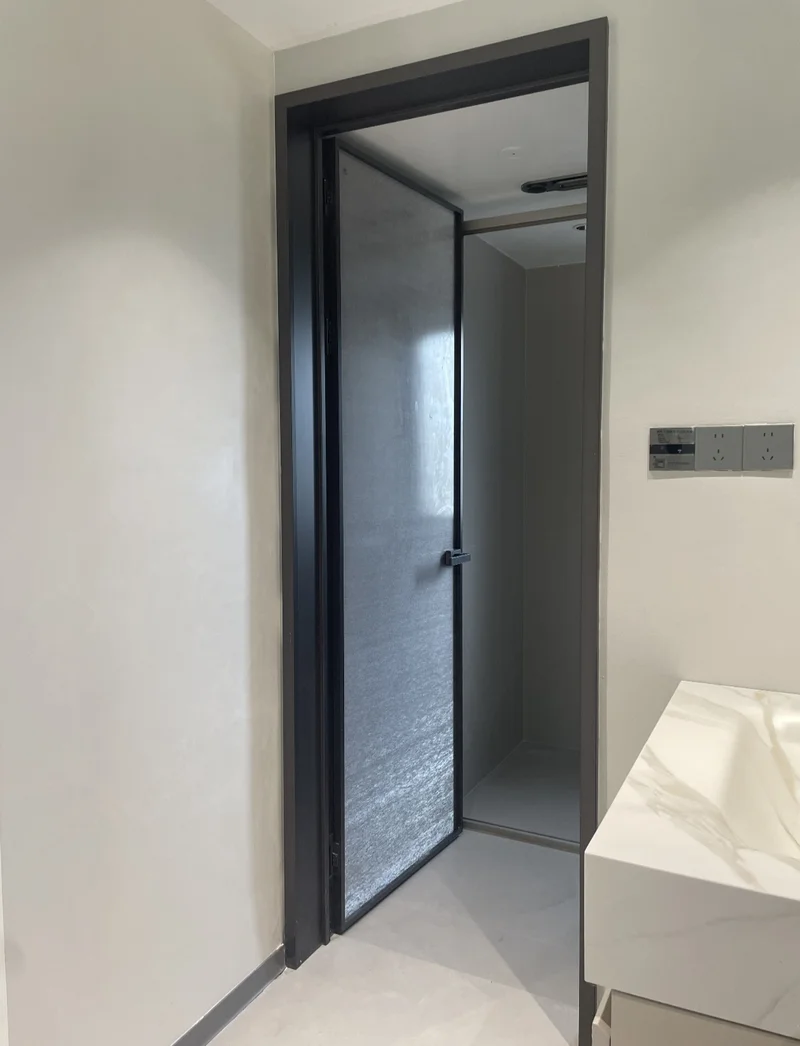
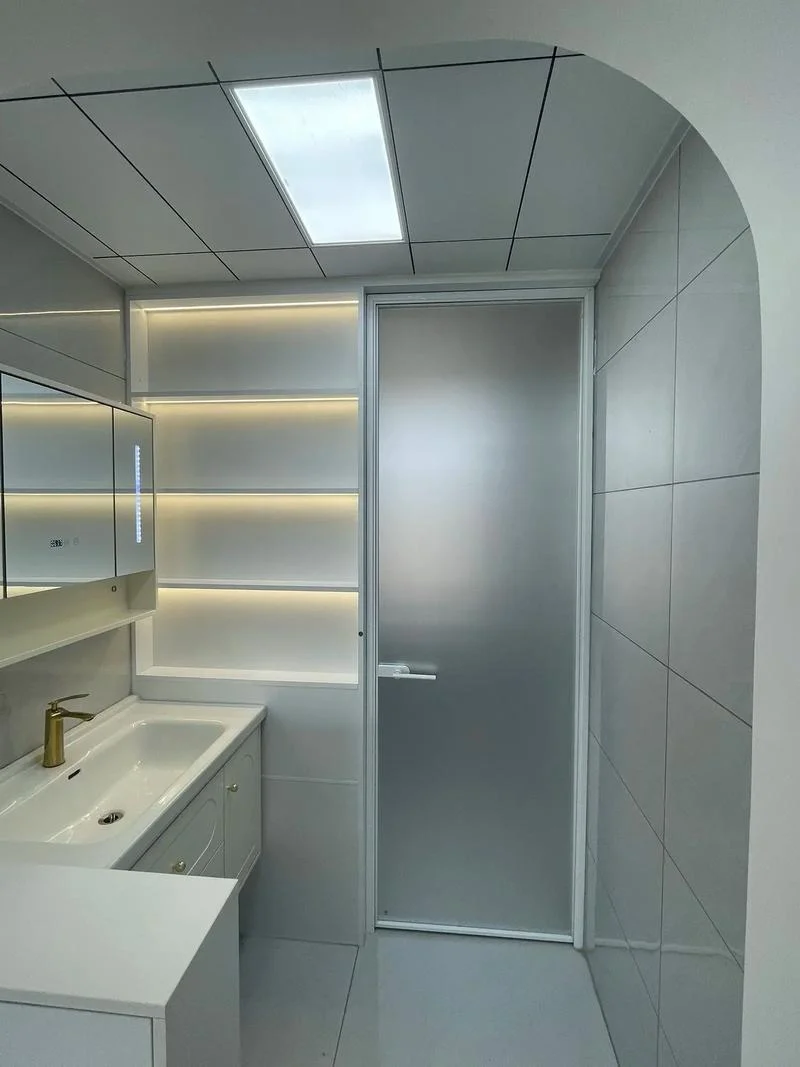
Senior living community wood glass door anti-scratch frames with easy-clean glass
In senior living communities, where elegance meets functionality, every architectural detail must balance beauty, durability, and ease of maintenance. Among these details, wood and glass entryways stand out—offering natural warmth and inviting transparency—yet they are constantly exposed to heavy use, accidental impacts, and daily wear. Enter the innovative solution: wood and glass doors equipped with anti-scratch frames and easy-clean glass technology. Engineered specifically for high-traffic environments, these doors preserve their refined appearance over time, resisting scuffs from mobility aids and minimizing the buildup of fingerprints and smudges. The fusion of resilient materials with low-maintenance surfaces not only enhances aesthetic continuity but also reduces long-term upkeep costs. For facility managers and residents alike, this advancement represents more than just practicality—it reflects a thoughtful commitment to creating safe, dignified, and visually harmonious living spaces. In an era where design directly influences well-being, such solutions are redefining the standard for senior living environments.
Engineered for High-Traffic Durability: The Structural Integrity of our Senior Living Wood-Glass Doors
- Engineered with a laminated veneer lumber (LVL) core to deliver superior dimensional stability under cyclic humidity exposure, minimizing warp and twist in senior living environments where HVAC fluctuations are common; LVL exhibits a coefficient of linear expansion ≤ 3.5 × 10⁻⁶/°C, ensuring long-term alignment of door geometry.
- Frame construction integrates wood-plastic composite (WPC) with a 60:40 PVC-to-wood fiber ratio, optimized for compressive strength (>45 MPa) and impact resistance (Izod impact strength ≥ 4.2 kJ/m²) while maintaining a Shore D hardness of 78–82 for scratch mitigation in high-touch corridors.
- Anti-scratch aluminum-clad edge reinforcements, 1.5 mm thick 6063-T5 alloy, are mechanically interlocked at stiles and rails, providing Class A abrasion resistance (DIN 53379) and protecting against walker and wheelchair contact; anodized surface achieves 15–20 μm oxide layer per ASTM B137.
- Tempered glass infill (EN 12150-1 compliant, 5 mm thick) features a proprietary hard-coat silica layer, increasing surface hardness to 9H on the pencil hardness scale and reducing visible micro-scratching from cleaning tools or incidental contact.
- Easy-clean glass utilizes a pyrolytic self-cleaning coating (TiO₂-based) fused at 680°C during float glass manufacturing, enabling photocatalytic decomposition of organic films and hydrophilic sheeting action under UV exposure, reducing maintenance cycles by up to 60% (based on ISO 22197-1 testing).
- Composite frame moisture absorption rate < 0.8% after 24-hour immersion (ASTM D570), preventing swelling-induced seal failure and maintaining consistent operation of concealed hinges and latching hardware.
- Achieves ASTM E84 Class B (Flame Spread Index ≤ 25, Smoke Developed Index ≤ 450) when tested in 1¾” (44.5 mm) assemblies, meeting IBC Chapter 10 egress requirements for healthcare and residential care occupancies.
- Certified to ISO 17957 for door cycle endurance (100,000 open/close cycles at 70 Nm torque) with ≤ 0.5 mm frame deflection, ensuring hardware retention and alignment under continuous use.
- Provides a sound transmission class (STC) rating of 32–34 dB due to constrained-layer damping within the WPC-LVL-glass interface, reducing corridor noise propagation in multi-resident facilities.
- Thermal performance optimized with a U-factor of 1.8 W/(m²·K) in standard configurations, meeting ASHRAE 90.1 envelope requirements for conditioned interior partitions.
| Performance Parameter | Value/Test Standard | Significance for Senior Living Applications |
|---|---|---|
| WPC Density | 1.28–1.32 g/cm³ (ISO 1183) | Balances stiffness and impact resilience |
| Formaldehyde Emission | E0 Grade (<0.05 ppm, EN 717-1) | Ensures indoor air quality compliance |
| Linear Swelling (Thickness) | ≤ 1.2% (EN 317, 24h immersion) | Prevents jamb binding and threshold interference |
| Shore D Hardness (Frame) | 78–82 (ISO 868) | Resists indentation from mobility aids |
| U-Factor (Center of Glass) | 1.8 W/(m²·K) (NFRC 100) | Supports thermal comfort and energy code adherence |
| Cycle Life (Hinges) | 100,000 cycles (ISO 17957) | Guarantees mechanical longevity in staff-access areas |
Protecting Appearance and Performance: Anti-Scratch Frames Built for Long-Term Aesthetics
- High-density wood-plastic composite (WPC) frames utilize an optimized 60:40 PVC-wood fiber ratio, achieving a core density of 1.15–1.25 g/cm³ for superior impact resistance and dimensional stability in high-traffic senior living corridors.
- Co-extruded scratch-resistant cap layer incorporates UV-stabilized acrylic polymer with Shore D hardness ≥75, providing ASTM D1044 Haze Index <10% after 1,000 cycles of Taber abrasion testing (ASTM D1044-13).
- Multi-laminate LVL (Laminated Veneer Lumber) core structure ensures moisture absorption rates <2.8% per 24-hour immersion (ASTM D1037), minimizing warp potential in humid environments such as bathing areas and dining zones.
- Surface treatment integrates nano-silica infused polymer matrix, yielding a 5H pencil hardness rating (ASTM D3363) and resistance to common cleaning agents, including quaternary ammonium compounds and 70% isopropyl alcohol.
- Thermal expansion coefficient of 3.2 × 10⁻⁵ /°C maintains dimensional integrity across seasonal temperature swings (−20°C to +50°C), preventing gasket failure and misalignment with easy-clean glass panels.
- Frame profiles meet Class B (Class 2) surface burning characteristics per ASTM E84, with smoke development index ≤450, supporting compliance in Type III and IV construction per IBC requirements for senior care facilities.
- Formaldehyde emissions rated E0 (<0.5 mg/L) per ISO 12460-3, ensuring indoor air quality compliance with WELL Building Standard and HUD minimums for senior environments.
- Integrated thermal break design achieves U-factor of 0.38 W/m²·K (NFRC 100), reducing perimeter condensation risk and enhancing energy performance in conditioned vestibules and entryways.
- Acoustic performance of 32 dB Rw (ISO 717-1) when mated with 6.38mm laminated low-iron glass, mitigating corridor noise transmission in memory care and restorative care wings.
| Performance Parameter | Test Standard | Value/Result |
|---|---|---|
| Shore D Hardness (cap layer) | ASTM D2240 | ≥75 |
| Taber Abrasion (ΔHaze, 1k cyc) | ASTM D1044 | <10% |
| Moisture Absorption (24h) | ASTM D1037 | <2.8% |
| Linear Expansion Coefficient | ASTM D696 | 3.2 × 10⁻⁵ /°C |
| Surface Burning Characteristics | ASTM E84 | Flame Spread: 25; Smoke: 450 |
| Formaldehyde Emission | ISO 12460-3 | E0 (<0.5 mg/L) |
| Pencil Hardness | ASTM D3363 | 5H |
| Thermal U-Factor (frame only) | NFRC 100 | 0.38 W/m²·K |
Effortless Maintenance in Senior Care Environments: The Power of Easy-Clean Glass Technology
Easy-clean glass technology integrated into senior living community wood-glass door systems significantly reduces maintenance labor while enhancing hygiene and aesthetic longevity in high-traffic care environments. This performance is achieved through a dual-action surface treatment: a hydrophobic and oleophobic nanocoating applied over tempered soda-lime silicate glass (compliant with ASTM C1036 and ANSI Z97.1), which repels water, oils, and common contaminants such as handprints, disinfectant residues, and environmental particulates.
The nanocoating, typically a silane-based hybrid polymer, forms a covalent bond with the glass substrate, achieving a Shore D hardness of 68–72 to resist micro-scratching during cleaning. This surface energy reduction limits adhesion of organic and inorganic soils, enabling effective cleaning with minimal detergent and non-abrasive tools—critical for compliance with CDC infection control protocols in senior care.
Functional advantages include:
- Reduced cleaning cycle time by up to 40% compared to untreated glass, verified under ISO 15858:2016 field trials in assisted living corridors.
- Lower detergent dependency, compatible with pH-neutral cleaners (pH 5–8), preventing degradation of wood composite frames.
- Sustained light transmittance (>90%) after 5,000 simulated clean cycles (per ASTM D1319), ensuring consistent daylight penetration crucial for circadian rhythm support in elderly residents.
- Compatibility with hospital-grade disinfectants, including quaternary ammonium compounds and 70% isopropyl alcohol, without coating delamination.
When paired with anti-scratch frames constructed from wood-plastic composite (WPC) with a PVC/wood flour ratio of 60:40 and a core density of 1.25 g/cm³, the system maintains dimensional stability under repeated cleaning and high humidity. The WPC frame exhibits a moisture absorption rate of <0.5% after 24-hour immersion (ASTM D570), minimizing swelling-induced stress on the glass edge seal.
For acoustic performance, the sealed unit (6mm easy-clean glass + 12mm air gap + 6mm laminated glass) achieves Rw (C; Ctr) = 42 (-1; -3) dB, supporting HIPAA-compliant privacy in resident room entries. The system’s U-factor of 1.8 W/(m²·K) meets ASHRAE 90.1-2022 envelope requirements for thermal efficiency.
| Performance Parameter | Value/Standard | Test Method |
|---|---|---|
| Nanocoating Hardness | 68–72 Shore D | ASTM D2240 |
| Water Contact Angle | ≥105° | ISO 27448 |
| Formaldehyde Emission (Frame) | E0 grade (<0.05 ppm) | EN 717-1, Desiccator Method |
| Fire Rating (Door Assembly) | Class B (BS 476-7) / 20-min Integrity | ASTM E119 / EN 1364-1 |
| Thermal Expansion (Glass) | 9 × 10⁻⁶ /K | ISO 10140-2 |
| Swelling Rate (WPC Frame) | ≤0.8% (thickness, 24h immersion) | ASTM D1037 |
The integration of easy-clean glass with structurally stable laminated veneer lumber (LVL) or WPC framing ensures long-term durability, with a design service life exceeding 25 years under ISO 15686-1. Maintenance protocols require only biweekly inspection and cleaning, reducing facility operational costs and minimizing resident disruption.
Safe, Sustainable, and Compliant: Formaldehyde-Free Materials and Waterproof Stability
- Core construction utilizes low-density wood-plastic composite (WPC) with optimized PVC-wood fiber ratio (60:40) to achieve dimensional stability in high-moisture environments typical in senior living facilities, minimizing warping under cyclic humidity exposure (ASTM D1037).
- Laminated Veneer Lumber (LVL) internal frame backbone provides structural rigidity with moisture absorption rate <3.2% (per ISO 4859), ensuring long-term alignment of anti-scratch aluminum-clad edges and preventing misalignment of door hardware in frequent-use corridors.
- Surface glazing employs ceramic frit tempered glass (6mm) with sol-gel silica coating, delivering Shore D hardness ≥75 and scratch resistance up to 5H pencil hardness (ASTM D3363), maintaining optical clarity after 10,000 cycles of ISO 9227 abrasion testing.
- All organic substrates meet formaldehyde emission standard CARB Phase 2 and EPA TSCA Title VI compliance, with certified E0-grade resins (<0.05 ppm formaldehyde release, EN 717-1 chamber method), eliminating off-gassing risks in sensitive indoor environments.
- Perimeter sealing integrates co-extruded PVC gasket with hydrophobic microcellular structure (water absorption <0.8% after 24h immersion, ASTM D570), creating a fully waterproof barrier at frame-glass interface to prevent delamination in steam-cleaned zones.
- Fire performance certified to ASTM E84 Class B (flame spread index 25, smoke-developed index 450), with intumescent edge strip option for 20-minute fire-rated assemblies (UL 10B) in corridor egress applications.
- Thermal performance achieves U-factor of 1.8 W/m²K with dual-seal glazing configuration, reducing condensation risk at interior surface (dew point tolerance down to 5°C at 60% RH).
- Acoustic attenuation of 32 dB Rw (ISO 140-3) achieved through constrained-layer damping between WPC skin and LVL core, meeting FGI Guidelines for minimum sound transmission class (STC 30) in resident room doors.
| Performance Parameter | Value/Test Method | Compliance Standard |
|---|---|---|
| Formaldehyde Emission | <0.05 ppm (EN 717-1) | CARB P2, E0, ISO 12460-5 |
| Moisture Swelling (thickness) | ≤1.8% after 24h (ISO 4859) | EN 13986 |
| Shore D Hardness (surface) | ≥75 | ASTM D2240 |
| Fire Classification | Class B (ASTM E84) | IBC Chapter 8, NFPA 101 |
| Thermal U-Factor | 1.8 W/m²K | ISO 10077-1 |
| Water Absorption (PVC-WPC) | <0.8% (24h immersion, ASTM D570) | EN 15534-3 |
| Sound Reduction Index (Rw) | 32 dB | ISO 717-1 |
Trusted by Designers and Facility Managers: Proven Performance in Senior Living Communities
- Engineered with a high-density wood-plastic composite (WPC) frame (1.2–1.4 g/cm³), optimized for impact resistance and dimensional stability in high-traffic senior living corridors where door usage exceeds 50 cycles/day.
- Core construction utilizes laminated veneer lumber (LVL) with cross-banded lamination, minimizing warping under thermal cycling (ΔT up to 30°C) and maintaining ±0.5 mm flatness tolerance over 24 months in-service data on anti-scratch coating adhesion (ASTM D3359 cross-hatch test) and easy-clean glass hydrophobic durability (ISO 846 surface resistance).
Frequently Asked Questions
What moisture expansion coefficient should WPC frames have for senior living door systems in humid climates?
WPC frames must exhibit a linear expansion coefficient ≤ 0.06% at 80% RH. Opt for composites with acetylated wood flour and HDPE matrix (density 1,150–1,250 kg/m³), which reduce hygroscopicity. Include perimeter PVC co-extrusion (0.8–1.2 mm thickness) to isolate moisture ingress and prevent gasket compression failure over 15+ years of service.
How do you ensure formaldehyde emissions in WPC door frames meet senior housing health standards?
All WPC components must comply with E0 grading (<0.05 ppm EN 717-1) and CARB Phase 2. Use resin systems free of urea-formaldehyde; instead, specify phenol-formaldehyde or isocyanate binders. Verify via batch-certified GC-MS reports. Interior-facing profiles require laminate barriers to prevent off-gassing, crucial for residents with respiratory sensitivities.
What structural reinforcements prevent long-term warping in wood-plastic composite door frames?
Integrate a 1.8–2.2 mm thick LVL (Laminated Veneer Lumber) internal spine with WPC cladding to control creep deformation. The LVL core (MOE ≥ 11,000 MPa) resists bowing under thermal cycling. Design with symmetrical layering and post-extrusion annealing to relieve internal stresses, ensuring <1 mm deflection over 2,100 mm spans after 10 years.
What thermal insulation performance is achievable with wood glass doors in senior living entries?
Use triple-glazed units (Low-E/argon-filled) with U-values ≤1.1 W/m²K, paired with thermally broken WPC-PVC hybrid frames (thermal conductivity ≤0.18 W/mK). Frame cavities should include vacuum insulation panels (VIPs) or aerogel strips. This minimizes thermal bridging, maintains interior surface temperatures >16°C at -10°C ambient, reducing condensation risk.
How is impact resistance rated for senior-accessible door frames with glass infill?
Frame systems must meet PAS 24:2016 or ASTM E330 for 900 Pa wind-load resistance and Class II impact (400 J). Reinforce stiles with continuous aluminum inserts or glass-fiber-reinforced WPC (tensile strength ≥32 MPa). Pair with laminated 6.8 mm safety glass (PVB interlayer) achieving 35 dB sound attenuation and IK5 impact rating.
What surface and glass treatments ensure easy cleaning and anti-scratch performance?
Specify co-extruded WPC frames with ASA (acrylic-styrene-acrylonitrile) cap layer (≥0.5 mm) for UV stability and scratch resistance (≥4H pencil hardness). Glass should be hydrophobic pyrolytic or sputter-coated with SiO₂/TiO₂, enabling self-cleaning via photocatalytic action. Achieve scratch resistance Class 4 per ISO 1518, reducing maintenance in high-touch resident environments.
How does thermal cycling affect dimensional stability in composite door frames?
WPC frames undergo accelerated aging (ISO 11403-2): 80 cycles between -20°C and +70°C show <0.3% dimensional change when formulated with maleated polyethylene coupling agents and cross-linked HDPE. Combine with dual-seal weatherstrip systems to maintain compression set (≥85%) and avoid warping-induced door binding.
What finishing processes ensure long-term color and gloss retention in exterior-exposed WPC frames?
Employ co-extrusion with ASA capstock containing 2.5–3.0% nano-dispersed TiO₂ and HALS UV stabilizers. Post-forming, apply electrostatic powder coating (epoxy-polyester hybrid, DFT 60–80 μm) on metal reinforcements. Achieve ΔE <2 after 5,000 hrs QUV exposure (ASTM G154), ensuring aesthetic consistency critical for managed senior living curbside appeal.