Wood glass door customization CAD drawing 3D effect preview for designers
For the discerning designer, the space between a client’s vision and the final installation is bridged by precision and clarity. The art of custom wood and glass door fabrication demands more than sketches; it requires a tangible preview of light, texture, and proportion. This is where advanced CAD drawing and 3D effect visualization become indispensable tools. Moving beyond flat blueprints, these technologies allow you to present photorealistic renderings that capture the interplay of grain and transparency, the subtlety of joinery, and the door’s relationship to its architectural environment. This process not only streamlines approvals and minimizes costly revisions but also elevates your creative dialogue, transforming abstract concepts into compelling, actionable designs that inspire confidence at every stage of the project.
From Vision to Reality: How Our CAD-Driven 3D Previews Eliminate Design Guesswork
Our CAD-driven 3D preview platform is not a visualization tool; it is a predictive engineering environment. It translates aesthetic intent into quantifiable material performance and manufacturing reality before fabrication begins. The core of this system is a parametric library of material profiles and jointing logic, ensuring every visualized element corresponds to a physically viable specification.
Key Functional Advantages of the Predictive Preview System:
- Material Integrity Visualization: The system renders not just color and grain, but material properties. You can specify and preview the visual impact of different core materials (e.g., the consistent, low-warp grain orientation of an LVL core vs. solid stave) and their interaction with glass infill framing systems.
- Performance Data Integration: Critical performance metrics are linked to material selections in the model. Previewing a door for a coastal application will simultaneously display the engineered moisture absorption rate (<8% for WPC) and the relevant thermal insulation U-factor.
- Clash Detection in Context: The preview identifies not only geometric clashes but also material compatibility issues, such as the differential expansion between a hardwood frame and a large, thermally stressed glass panel, preventing long-term failure.
- Fabrication-Ready Output: The 3D model is the direct source for CNC machine G-code and cut lists. What you see is what will be precisely manufactured, eliminating interpretation errors from 2D drawings.
The preview’s accuracy is rooted in our proprietary database of certified material specifications. Below is a reference table for core material options and their linked performance characteristics, which are dynamically applied within the CAD model.
| Material Core | Density (kg/m³) | Typical Application | Key Performance Data (Linked to Preview) |
|---|---|---|---|
| LVL (Laminated Veneer Lumber) | 680-720 | High-stability interior/exterior doors | Dimensional stability (swelling rate <0.3%), ASTM E84 Class A fire rating, predictable screw holding force. |
| Solid Wood Stave Core | 500-650 (species dependent) | Premium interior doors | Acoustic damping properties (varies by species), natural grain aesthetics, higher thermal mass. |
| WPC (Wood-Plastic Composite) | 950-1100 | High-moisture areas (bathrooms, spas) | Moisture absorption <8%, Shore D hardness ~65, fungal resistance, E0 formaldehyde grade. |
| Particleboard/MDF (Melamine-faced) | 650-800 | Cost-effective interior solutions | ISO 9001 controlled density profiles, EN 13986 compliance, available with E1 or E0 emissions grades. |
Eliminating Guesswork in Critical Details:
- Fire & Safety Compliance: Selecting a fire-rated door in the preview auto-populates the necessary specifications—material certifications (EN 1634-1, ASTM E2768), required intumescent seal dimensions, and glass type (ceramic vs. tempered) with its respective integrity rating.
- Acoustic Performance: Specifying a target sound reduction (e.g., 35 dB Rw) filters core, glass thickness (6mm/10.10mm laminated), and seal options. The preview then accurately represents the necessary door section depth and seal profile visibility.
- Structural Glazing: For full-glass doors, the preview calculates and visually confirms the minimum frame depth and hardware reinforcement required based on the glass pane’s dimensions, thickness (e.g., 12mm tempered), and wind load parameters, adhering to ASTM E1300 standards.
This process ensures the final fabricated product performs as the designer envisioned, with all architectural, environmental, and regulatory parameters resolved digitally. The 3D preview is the definitive technical handshake between design intent and engineered reality.
Precision Customization for Unique Architectural Projects: Tailoring Wood Glass Doors to Your Specs
Precision customization begins with the fundamental material composition. Our engineered wood-glass door systems utilize a hybrid core and cladding approach to meet exacting architectural specifications while ensuring structural integrity and long-term performance.
Core Material Selection & Engineering
The stability of the door leaf is paramount. We offer three core material options, each engineered for specific environmental and performance criteria.
| Core Type | Primary Composition | Key Properties | Best For |
|---|---|---|---|
| High-Density LVL | Cross-laminated veneers, phenolic resin. | Dimensional stability (<0.1% swelling rate @ 65% RH), superior screw-holding force, minimal warping. | High-traffic commercial entries, environments with minor humidity fluctuation. |
| WPC (Wood-Plastic Composite) | 60-70% wood flour, HDPE/PP matrix, additives. | Moisture resistance (<0.5% water absorption), fungal/rot immunity, Shore D hardness of 78-82. | Coastal properties, spas, bathrooms, and high-humidity zones. |
| Hybrid Particleboard | Fine wood particles, isocyanate (MDI) binder. | Excellent weight-to-stiffness ratio, E0 formaldehyde emission (≤0.025 ppm), flatness. | Interior applications where ultra-low VOC and cost-effectiveness are critical. |
Cladding & Glazing: Technical Integration
The cladding is not merely aesthetic; it is a performance layer. We laminate real wood veneers (oak, walnut, teak) or high-fidelity PVC wood foils to the core using isocyanate adhesives under high pressure and heat. This process ensures:
- Delamination Resistance: Bond strength exceeds 1.5 N/mm² (EN 205).
- Moisture Barrier: The lamination process seals the core, reducing the moisture absorption rate of the overall assembly to below 8%.
- Custom Veneer Matching: For large-scale projects, veneer sheets can be sequenced from the same flitch for grain and color consistency across multiple doors.
Glazing is structurally integrated. We employ thermally broken aluminum or solid wood stiles/rails with precision-machined glazing rebates. Silicone secondary seals and dual-durometer gaskets (EPDM/PVC) ensure performance.
Performance Tailoring & Compliance
Every custom door is engineered to meet project-specific performance benchmarks. Key adjustable parameters include:
- Acoustic Insulation: By varying core density, glass thickness (6mm to 12mm laminated), and seal geometry, we achieve tested sound reduction ratings (Rw) from 28 dB to 42 dB.
- Thermal Insulation: Utilizing double or triple glazing with Low-E coatings and argon fill, coupled with insulated core materials, results in U-factors as low as 0.8 W/m²K.
- Fire Rating: Doors can be engineered to meet EN 1634-1 / ASTM E2074 standards for integrity (E) and, with appropriate glass, insulation (EI) ratings of 30 to 60 minutes. Core materials are treated with non-halogenated fire retardants.
- Structural & Safety: Glass can be specified as fully tempered (EN 12150), laminated safety (EN 14449), or with integrated polyester interlayers for burglar resistance (EN 1627). Hardware preparation is CNC-machined to support high-cycle commercial locksets and closers.
From CAD to Physical Verification
The CAD drawing and 3D preview are direct inputs to our CNC machining centers. This digital thread ensures:
- Dimensional Fidelity: Tolerances of ±0.5mm on cutouts and edge profiles.
- Hardware Integration: Precise mortising for hinges, multi-point locks, and concealed closers.
- Visual Verification: The 3D effect preview provides an accurate representation of material grain direction, glass transparency/transmission, and sightline proportions, allowing for design sign-off before manufacturing begins.
All customization is governed by a ISO 9001:2015 certified quality management system, with material certifications (CE marking, EPDs) and performance test reports provided for submittal packages.
Enhancing Collaboration and Client Approval with Photorealistic 3D Renderings
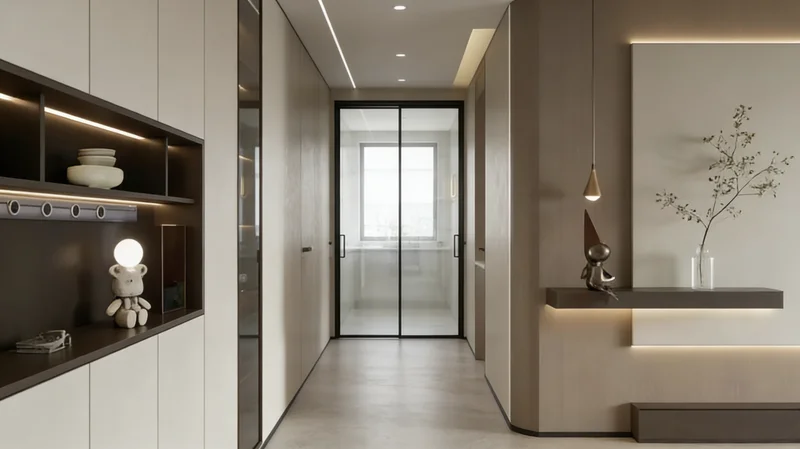
Photorealistic 3D renderings, derived directly from the parametric CAD model, transform technical specifications into an unambiguous visual language. This eliminates the interpretative gap between 2D drawings and physical reality, directly addressing the core challenge of aligning designer intent, engineering feasibility, and client expectation. For wood-glass door systems, where material interaction and performance are critical, this visualization is not merely illustrative but an integral part of the technical review process.
Functional Advantages for the Project Workflow:
- Pre-Construction Conflict Resolution: Interference checks extend beyond frame components to material tolerances. Renderings visualize the integration of glass types (e.g., laminated vs. tempered) with wood or Wood-Plastic Composite (WPC) stiles, revealing potential gasket compression issues or thermal bridging details at junctions before fabrication.
- Material Science Validation: Clients and architects can visually assess the authentic representation of wood grain orientation, WPC surface texture, and glass transparency/reflectivity. This allows for informed decisions on material upgrades, such as specifying a higher-density WPC core (≥ 0.65 g/cm³) for improved screw-holding power in heavy door leaves.
- Performance Specification Visualization: Critical but invisible performance metrics can be annotated and contextualized. For example, a rendering can highlight the multi-chambered PVC-u profile or the engineered LVL (Laminated Veneer Lumber) core, with callouts directly linking the visual to its technical benefit: dimensional stability (< 0.1% swelling rate at 65% RH) or structural integrity.
- Streamlined Compliance & Approval: Renderings serve as a direct reference document for verifying that the proposed design meets referenced standards. Annotations can embed key certifications (e.g., EN 16034 for fire/smoke resistance, E1 formaldehyde emission grade) and performance data, creating a consolidated visual-technical dossier for client sign-off.
Technical Parameters Visualized & Communicated:
The following table exemplifies how renderings, paired with data, precisely define product selection and set performance expectations for stakeholders.
| Visualized Element | Technical Parameter & Standard | Impact on Specification & Approval |
|---|---|---|
| Door Leaf Core Construction | Core Density (kg/m³), LVL Ply Count, Adhesive Type (ISO 9001 traceable) | Validates structural load capacity, hinge & lock suitability, and long-term warpage resistance. |
| Glass Infill & Glazing Bead | Glass Thickness (mm), U-factor (W/m²K), Sound Reduction (dB, ASTM E90), Safety Class (EN 12600) | Quantifies thermal insulation, acoustic performance, and safety compliance for project submittals. |
| Frame/Stile Material | Moisture Absorption Rate (%), Shore D Hardness (WPC/PVC), Fire Rating (EN 13501-2) | Informs suitability for high-humidity environments (e.g., lobbies), durability against impact, and compartmentation strategy. |
| Finish & Surface Texture | Formaldehyde Emission Class (E0/E1 per EN 16516), Coating Film Thickness (microns), UV Resistance Rating | Provides assurance on indoor air quality, finish longevity, and colorfastness for architectural consistency. |
This integration of photorealistic visualization with engineering data shifts client consultations from abstract discussions to concrete, evidence-based decision-making. It builds trust by demonstrating technical competency upfront, significantly reducing approval cycles and mitigating the risk of post-installation disputes over material appearance or system performance. The rendering becomes the single source of truth, ensuring all parties are aligned on a technically sound and visually accurate final product.
Technical Excellence: Material Integrity and Structural Stability in Custom Wood Glass Doors
The structural integrity of a custom wood glass door is defined by the engineered composition of its stiles, rails, and core, not merely its aesthetic profile. Our manufacturing protocol ensures every component meets precise material specifications to guarantee long-term performance in diverse architectural environments.
Core Material Stability: The Foundation
The door’s stability against warping, twisting, and sagging is contingent upon its core construction. We utilize a multi-layered, cross-grained LVL (Laminated Veneer Lumber) core, which provides superior dimensional stability compared to solid timber or particle-based cores. This engineered wood product has a controlled moisture content (typically 6-8%) and a uniform density profile, resulting in minimal linear expansion.
| Core Material Property | Specification | Performance Implication |
|---|---|---|
| Density | 680-720 kg/m³ | Optimal strength-to-weight ratio; prevents fastener pull-through. |
| Moisture Content | 6-8% at time of fabrication | Minimizes post-installation movement; critical for seamless operation. |
| Formaldehyde Emission | E0 (≤0.5 mg/L, JIS F****/CARB2 compliant) | Ensures indoor air quality compliance for residential and commercial projects. |
| Swelling Rate (Thickness) | < 10% after 24h water immersion (EN 317) | Validates resistance to humidity fluctuations in bathrooms, lobbies, etc. |
Advanced Cladding & Surface Materials
The exterior surfaces are clad with high-performance Wood Plastic Composite (WPC) or reconstituted veneers, selected for their environmental resilience and consistent machinability.
- WPC Cladding: Formulated with a PVC-to-wood-flour ratio optimized for UV stability and impact resistance. A high polymer content ensures a low water absorption rate (<0.5%), effectively eliminating rot and fungal growth.
- Reconstituted Veneers: Provide the authentic grain of premium wood species with enhanced consistency. They are backed with fiberglass mesh to prevent checking and are finished with catalyzed varnishes achieving a Shore D hardness of >85 for scratch resistance.
- Fire Performance: Core and cladding systems can be engineered to achieve up to 30/60-minute integrity ratings (EN 13501-2 or ASTM E84 Class A), with intumescent seals integrated into the CAD-detailed rabbets.
Integrated Glazing System Structural Performance
The glazing unit is a structural component. Our CAD detailing specifies:
- Sightline Optimization: The depth of the glazing rabbet is calculated to provide a minimum 12mm bite for the insulating glass unit (IGU), ensuring mechanical retention and proper load transfer.
- Thermal & Acoustic Insulation: IGUs are specified with warm-edge spacers and argon fill, achieving U-factors as low as 1.0 W/(m²·K). Laminated glass configurations provide sound reduction ratings (Rw) up to 40 dB.
- Structural Silicone & Gaskets: High-modulus structural silicone is used for high-wind-load applications, while EPDM gaskets provide a durable, compression-set-resistant seal for standard installations, as detailed in cross-sectional CAD views.
Quality Assurance & Compliance
All material batches are certified to relevant international standards, providing traceability and performance guarantees. This includes ISO 9001:2015 for quality management, and compliance with EN 14351-1 for door sets. Material certificates for fire rating, formaldehyde emission, and physical performance are available for project submittals.
Streamlining Procurement: From Digital Blueprint to On-Time Delivery Assurance
The digital blueprint is the foundational control document, transforming a designer’s vision into a manufacturable specification. This precision eliminates interpretation errors, ensuring every component—from the engineered wood substrate to the glazing rebate—is defined to exacting tolerances. The procurement and manufacturing pipeline is directly driven by this data.
Functional Advantages of a Digitally-Driven Pipeline:
- Unambiguous Material Specification: CAD data embeds precise material calls (e.g., 750 kg/m³ high-density WPC core, AA-grade laminated veneer lumber (LVL) with cross-banding for dimensional stability, or a 70/30 PVC-wood composite ratio for exterior cladding). This prevents substitution and guarantees performance.
- Automated Cut Lists & Yield Optimization: Nesting software directly utilizes panel and component geometries from the 3D model, minimizing raw material waste for wood, glass, and metal elements, directly impacting cost and sustainability metrics.
- Pre-Qualified Supplier Integration: Technical drawings reference specific compliance certifications (e.g., EN 13501-1 fire class B-s1,d0; ASTM E84 Class A; CARB Phase 2 or E0/E1 formaldehyde emission grades). Procurement partners are vetted against these standards, ensuring material integrity from source.
- Predictable Lead Time Modeling: With every component quantified, logistics for specialized items (e.g., tempered laminated glass with acoustic PVB interlayer, or custom anodized aluminum profiles) are scheduled in parallel, not sequentially, compressing the overall project timeline.
Critical Performance Parameters Validated by Digital Specification:
| Parameter | Typical Specification Range | Standard Test Method | Impact on Procurement & Performance Assurance |
|---|---|---|---|
| Core Material Stability (Swelling Rate) | ≤ 12% over 24h immersion (for WPC) | EN 317 / ASTM D1037 | Defines moisture resistance for high-humidity zones; dictates packaging & storage protocols. |
| Sound Reduction Index (Rw) | 30-42 dB (system-dependent) | EN ISO 10140-2 | Validates glazing thickness, seal type, and core density selection for acoustic partitions. |
| Thermal Transmittance (U-factor) | 1.2 – 1.8 W/(m²·K) (door system) | EN ISO 10077-1 / ASTM C1363 | Confirms insulation value of composite core and thermal break profiles for energy code compliance. |
| Surface Hardness | ≥ 80 Shore D (for high-wear surfaces) | ASTM D2240 | Informs selection of laminate or veneer finish, ensuring durability in commercial traffic areas. |
| Fire Resistance Integrity | EI 30 / EI 60 (door-leaf and glazing system) | EN 1634-1 / ASTM E119 | Mandates certified material sourcing (glass, intumescent seals, mineral cores) and assembly under controlled factory conditions. |
On-time delivery assurance is a function of supply chain transparency. Each custom door assembly is tracked via a unique identifier linked to its CAD model. Fabrication milestones (machining, glazing, finishing) and quality checkpoints (hinge reinforcement alignment, sealant application) are digitally logged. This allows for real-time progress visibility and proactive intervention, transforming delivery from an estimate into a monitored, assured outcome. The final installation is a direct physical realization of the approved digital preview.
Frequently Asked Questions
How do you ensure dimensional stability against humidity in wood-glass doors?
We engineer WPC profiles with <0.3% moisture expansion coefficient, using co-extruded PVC cladding (≥0.5mm) as a moisture barrier. Doors integrate an LVL core, kiln-dried to 8-10% moisture content, preventing warping. All joints are mechanically fastened with sealed, waterproof adhesives for long-term stability in humid environments.
What standards govern material safety and formaldehyde emissions?
Our customization strictly adheres to EN 16516 (E1 ≤ 0.124 mg/m³) and CARB Phase 2 standards, using E0-grade (<0.05 ppm) engineered wood cores and WPCs. All composite materials are certified with SGS reports, ensuring indoor air quality safety and compliance with global green building certifications.
How is thermal insulation performance quantified in your door systems?
Doors achieve a U-value of ≤1.2 W/m²K through a multi-chamber WPC profile design (density ≥ 700 kg/m³) and insulated glass units (argon-filled, Low-E coating). The thermal break in the frame and core significantly reduces energy transfer, meeting passive house component standards for exterior applications.
What methods prevent long-term structural warping or sagging?
We reinforce doors with a full-perimeter steel or aluminum alloy skeleton embedded within the WPC frame. Hinges are mounted to this metal substructure. The LVL core is cross-laminated, and we conduct accelerated aging tests (85% RH, 60°C) to validate a 10-year anti-warping guarantee.
Can you detail the impact resistance and security features?
The design incorporates laminated safety glass (6+6mm, PVB interlayer) and a high-density WPC skin (≥900 kg/m³). The lock area is reinforced with a steel plate. The assembly withstands over 100 Joules of impact force, exceeding EN 1627 RC2 security ratings for forced entry resistance.
What sound insulation levels do your customized doors provide?
Doors achieve STC 35-40 dB using a combination of a solid core, asymmetric glass thickness (e.g., 8mm/12mm), and sealed multi-layer gaskets. The WPC frame itself has inherent dampening properties. Critical is the precision in the CAD drawing to ensure perfect fit and continuous seals upon installation.
How do you ensure color fastness and surface durability outdoors?
We apply a 5-layer co-extrusion process with ASA/PMMA capstock (≥0.2mm) containing UV stabilizers. The finish undergoes 2000+ hours of QUV accelerated weathering testing per ASTM G154, ensuring ∆E < 2. This prevents fading, chalking, and degradation from sun exposure for over 15 years.
What CAD data and previews do you provide for precise procurement?
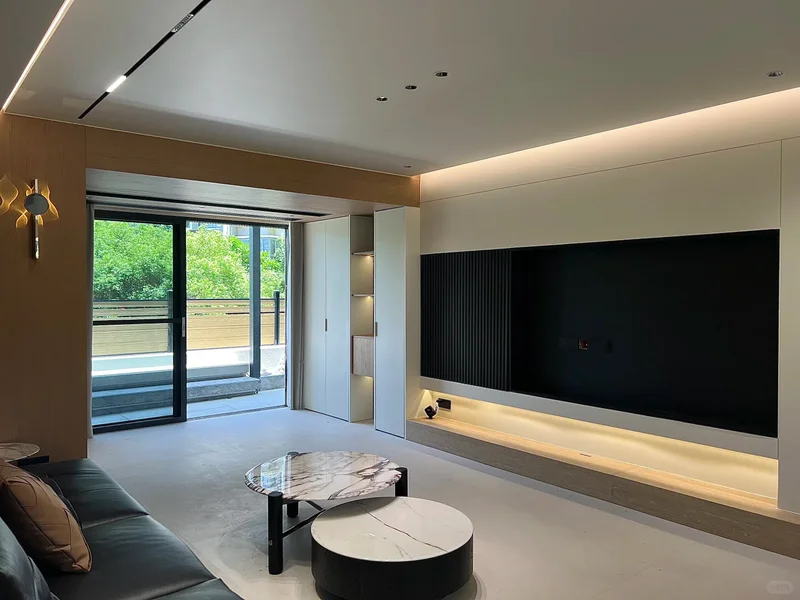
We deliver full 1:1 scale DWG drawings with detailed layer management, 3D STEP files for BIM integration, and photorealistic renders showing material finishes. All critical tolerances (≤±0.5mm), hardware cutouts, and sealant groove dimensions are explicitly annotated to prevent fabrication and site-fit errors.