Aluminum Glass Doors with Anti-Slam Hinges for Hospitals: Durable, Safe, and Hygienic Solutions
In the demanding environment of a modern hospital, every detail must be engineered for performance, safety, and infection control. Doorways, as critical points of high traffic and patient movement, require solutions that are far more than mere architectural elements. This is where aluminum glass doors equipped with specialized anti-slam hinges become indispensable. These systems offer a powerful trifecta: the inherent durability and sleek, modern aesthetic of aluminum framing, the transparency and light-enhancing quality of glass, and the crucial safety mechanism of hinges that prevent violent slamming. Together, they create a seamless barrier that promotes a calm, secure, and hygienic atmosphere—protecting patients, staff, and sensitive equipment while ensuring smooth, reliable operation day after day.
Enhancing Hospital Safety and Hygiene with Anti-Slam Door Technology
The primary function of an anti-slam hinge is to eliminate uncontrolled door velocity, thereby preventing impact damage to the door leaf, frame, and adjacent wall systems. In a hospital environment, this controlled closure is a foundational safety feature. It mitigates the risk of injury to staff, patients, and visitors from sudden door movements, protects sensitive medical equipment mounted on or near the door, and reduces disruptive noise pollution—a critical factor in patient recovery zones. The integration of this technology with aluminum-glass door systems creates a composite solution where material durability and mechanical performance are synergistically enhanced.
Functional Advantages of Integrated Anti-Slam Systems:
- Controlled Egress & Traffic Flow: Ensures predictable door operation during high-traffic or emergency situations, maintaining clear egress paths without compromising closure.
- Acoustic Dampening: Significantly reduces slam-related noise transmission. When paired with specialized acoustic gaskets and laminated glass, overall sound reduction can exceed 35 dB Rw.
- Extended Hardware & Material Lifespan: Eliminates peak impact forces on hinges, locks, and panic hardware. This directly preserves the structural integrity of the aluminum frame and glass panel seals, reducing maintenance cycles and total cost of ownership.
- Hygiene Preservation: Controlled closure prevents violent air displacement (the “piston effect”), which can disrupt pressure gradients in isolation rooms and spread airborne particulates. This supports containment protocols.
The efficacy of the anti-slam mechanism is contingent upon its compatibility with the door assembly’s specifications. The hinge must be calibrated to the precise mass and pivot geometry of the door leaf. For a typical hospital-grade aluminum-glass door, this involves calculating the moment of inertia based on the glazing unit’s weight and the alloy profile’s section modulus.
| Performance Parameter | Specification Range | Test Standard / Note |
|---|---|---|
| Door Leaf Mass Capacity | 40 kg to 120 kg | Hinge rating must exceed calculated dynamic load. |
| Closing Force Adjustment | 5 to 7 Newton Meters (Nm) | Adjustable via hydraulic valve for consistent speed. |
| Closing Delay / Latch Speed | Adjustable 0-180 second delay; final 15° latching at ≥0.8 m/s | Ensures positive seal without slam. |
| Cycle Testing | ≥500,000 cycles at rated load | ASTM F1574; simulates 10+ years of high-use operation. |
| Corrosion Resistance | Grade 4 or higher per ASTM B117 Salt Spray | Essential for hygiene-driven chemical cleaning. |
From a hygiene standpoint, the hinge design must preclude the accumulation of contaminants. Fully concealed or sheathed pivot models with smooth, crevice-free surfaces are specified. The use of stainless steel pins and bearings within an anodized or powder-coated aluminum housing (minimum 25µm coating thickness) ensures compatibility with hospital-grade disinfectants without risk of corrosion or finish degradation.
The aluminum framework itself contributes directly to hygiene and safety. The alloy undergoes a pretreatment and electrostatic powder coating process, resulting in a non-porous, monolithic surface with a microbial adhesion resistance far superior to porous materials. When specified with a 1.2mm minimum profile wall thickness and reinforced corner cleats, the frame provides the necessary rigidity to ensure the anti-slam hinge functions within its calibrated parameters indefinitely, without frame deflection or sag that would compromise sealing and operation.
Engineered for High-Traffic Durability: The Structural Integrity of Aluminum Glass Doors
The structural integrity of a hospital door system is non-negotiable, dictated by constant use, impact from equipment, and stringent hygiene protocols. Our aluminum glass doors are engineered from the ground up to meet this challenge, beginning with the alloy specification. We utilize 6063-T5 or 6063-T6 aluminum extrusions, which provide an optimal balance of yield strength (≥ 160 MPa for T5, ≥ 215 MPa for T6) and corrosion resistance. The profiles are designed with multi-chambered, thermally broken sections to manage structural loads and thermal bridging effectively.
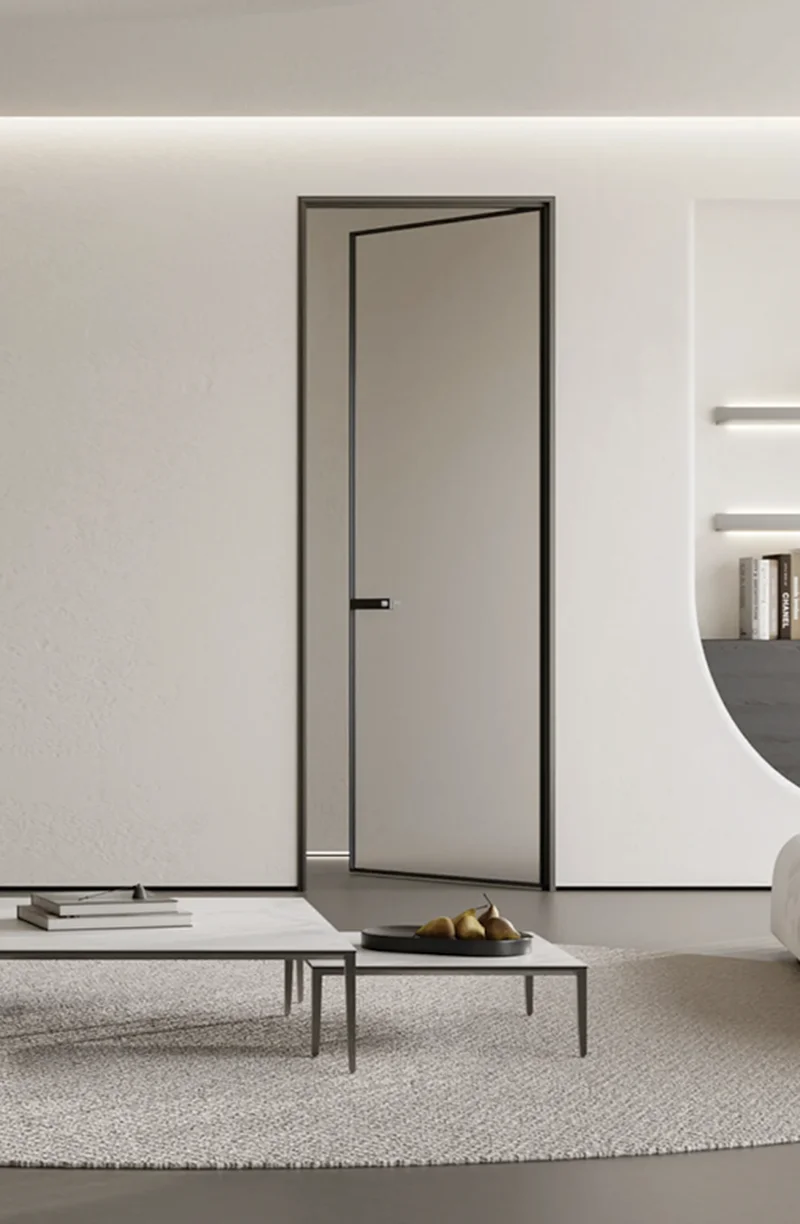
Core Functional Advantages:
- High-Cycle Hardware Integration: The structural frame is engineered to serve as the foundation for the anti-slam hinge mechanism. Mounting points are reinforced, and the frame geometry is calculated to absorb and distribute the kinetic energy from door operation over thousands of cycles without deformation.
- Impact-Resistant Glazing: Standard glazing is tempered safety glass (minimum 6mm thickness), meeting ANSI Z97.1 / EN 12150. For high-risk areas, laminated glass with a PVB interlayer is specified, providing retained integrity upon impact.
- Corrosion Defense: A multi-stage pre-treatment (chromate-free) prepares the aluminum for a durable powder-coat finish. This finish typically achieves a Class 4 (>1,000 hours) resistance in salt spray testing per ASTM B117, ensuring longevity in sanitized environments.
- Precision Sealing: Integrated EPDM gaskets within the frame provide an acoustic and environmental seal, critical for maintaining pressure differentials in isolation rooms and reducing noise transmission.
Technical Performance Parameters:
| Parameter | Specification | Standard / Test Method | Relevance to High-Traffic Durability |
|---|---|---|---|
| Aluminum Alloy Temper | 6063-T5 or T6 | ASTM B221 / EN 755 | Defines tensile strength, yield point, and hardness for impact resistance. |
| Frame Wall Thickness | Minimum 1.8mm (visible), 2.5mm+ (structural) | Industry Best Practice | Ensures rigidity, prevents twisting under load, and provides secure hardware anchorage. |
| Powder Coat Thickness | 60-80 μm | QUALICOAT Class 2 / AAMA 2604 | Provides a robust, chemically resistant barrier against frequent cleaning agents. |
| Door Deflection Under Load | ≤ L/175 at 300N load | EN 1191 / ASTM E330 | Quantifies stiffness and resistance to deformation from lateral pressure. |
| Operating Cycle Rating | ≥ 500,000 cycles (door + hinge system) | Simulated testing per BHMA A156.115 | Validates long-term mechanical durability for high-frequency use. |
| Acoustic Performance | Up to 37 dB Rw (with appropriate glazing & seal) | EN ISO 10140-2 | Achieved through system design, not just material; critical for patient rest. |
The integration with the anti-slam hinge system is a critical engineering consideration. The door’s mass and dimensions are factored into the hinge’s damping coefficient to ensure a controlled, reliable close every time, eliminating the high-velocity impacts that are the primary cause of frame loosening, glass stress, and hardware failure. This synergy between the door structure and the controlled-motion hardware is what defines true durability in a hospital setting, transforming a passive barrier into an active, reliable component of the building system.
Optimizing Patient Care with Quiet, Smooth, and Controlled Door Operation
The acoustic and operational performance of a door system directly impacts patient recovery, staff efficiency, and overall environmental control. In high-stress hospital settings, uncontrolled door movement—characterized by slamming, abrupt stops, and excessive noise—can disrupt sleep cycles, increase anxiety, and interfere with sensitive medical equipment. The integration of precision-engineered anti-slam hinges with architectural-grade aluminum and glass assemblies transforms door operation from a functional necessity into a critical component of patient-centered design.
Core Mechanism: The Anti-Slam Hinge
Unlike standard pivots or closers, a dedicated anti-slam hinge is a velocity-dependent hydraulic damping system integrated directly into the hinge barrel. As the door approaches the final 10-15 degrees of closure, the mechanism engages, providing progressive resistance to decelerate the door leaf smoothly to a full latch. This eliminates the kinetic energy that causes slamming. Key performance parameters for hospital-grade hinges include:
| Parameter | Specification | Test Standard / Rationale |
|---|---|---|
| Closing Force Adjustment | 3-5 adjustable settings (EN 1154) | Allows tuning for varying door mass (25-45kg typical) and air pressure differentials. |
| Damping Cycle Lifespan | ≥ 500,000 cycles (Grade 1, EN 1154) | Ensures long-term reliability without performance degradation. |
| Sound Damping Performance | Reduces closing impact noise to ≤ 25 dB(A) at 1m. | Critical for patient zones; measured per ISO 10140-2 in typical assembly. |
| Corrosion Resistance | Minimum 480 hrs salt spray test (ASTM B117). | Mandatory for hygiene-driven chemical cleaning regimens. |
Functional Advantages for the Care Environment
- Acoustic Control: The damped closure, combined with a full-perimeter compression seal (EPDM with minimum 40% density), achieves a sound reduction of 28-32 dB (Rw) for the complete assembly. This directly supports restorative sleep and confidential consultation.
- Enhanced Safety & Accessibility: Predictable, slow final closure prevents injury to fingers, hands, or mobile equipment (IV poles, wheelchairs). It ensures compliance with accessibility guidelines requiring manageable operating forces.
- Infection Control: Smooth, controlled operation minimizes air piston effect, which can forcibly transfer airborne particles and microbes between spaces. This is critical in isolation, OR, and ICU contexts.
- Durability & Maintenance: The hydraulic mechanism is fully sealed, requiring no lubrication. The aluminum profile, with a minimum 15-micron anodized or powder-coated finish (Class 2 per Qualicoat), withstands frequent cleaning with disinfectants without corrosion.
System Integration for Optimal Performance
The hinge’s efficacy is contingent on correct integration with the total door assembly. The aluminum frame must provide absolute torsional stability (using reinforced corner cleats or welded corners) to prevent sag that would misalign the hinge and compromise damping. Glass specification—typically 10-12mm tempered or laminated safety glass—must account for precise weight to match the hinge’s damping range. Furthermore, the threshold and head details must incorporate appropriate seals to work in concert with the damped closure, ensuring an effective acoustic and pressure barrier.
Meeting Hospital Standards: Compliance and Technical Specifications for Healthcare Environments
Hospital-grade aluminum glass door systems are engineered to meet a stringent matrix of regulatory, performance, and safety standards. Compliance is not an optional feature but a foundational design parameter, ensuring patient safety, staff efficiency, and long-term facility integrity.
Core Compliance Frameworks
- Fire & Smoke Containment: Doorsets are certified to EN 1634-1 / ASTM E2074 for integrity (E) and, where specified, radiation control (EW) and smoke leakage (S). Typical ratings are EI30 to EI60. Gaskets are intumescent, expanding under heat to seal the perimeter.
- Hygiene & Indoor Air Quality: All materials, including gaskets, powder coatings, and any composite components, comply with E1 (<0.1 ppm formaldehyde) or equivalent low-VOC emission standards. Anodized or polyester powder-coated (ISO 9001 certified process) aluminum surfaces provide non-porous, chemically resistant finishes that withstand repeated cleaning with hospital-grade disinfectants (e.g., quaternary ammonium compounds, diluted bleach) without degradation.
- Structural & Performance Standards: Full doorset assemblies are tested to EN 14351-1 / ASTM E1886 for performance characteristics including cycle testing (exceeding 1,000,000 cycles for anti-slam hinges), air permeability, watertightness, and wind load resistance.
Technical Specifications for Critical Performance
| Parameter | Specification | Test Standard / Rationale |
|---|---|---|
| Acoustic Insulation | Rw 37-42 dB (for double-glazed units) | EN ISO 10140-2; critical for patient privacy and noise-controlled zones. |
| Thermal Transmittance (U-value) | 1.8 – 2.2 W/m²K (thermally broken frame, double glazing) | EN ISO 10077-2; contributes to energy efficiency and ambient comfort. |
| Impact Resistance (Glazing) | Class 1B1 or 2B1 (EN 12600) / CPSC 16 CFR 1201 Cat. II | Laminated safety glass with PVB or ionoplast interlayer; contains fragments upon impact. |
| Hinge Cycle Life | Minimum 500,000 cycles (soft-close function) | EN 1935:2002; anti-slam mechanism must maintain damping performance throughout rated cycles. |
| Hardness & Abrasion | Minimum 600h salt spray (ISO 9227), coating hardness >H (pencil test) | Ensures long-term durability in high-traffic, high-cleaning environments. |
Architectural & Functional Advantages
- Controlled Egress & Traffic Flow: Anti-slam hinge mechanisms provide silent, controlled closure at a consistent speed, eliminating door hold-open devices and reducing maintenance. This is essential for infection control (maintaining pressure gradients) and patient areas where sudden noise is detrimental.
- Barrier-Free Access: Integrated systems allow for seamless compatibility with automatic operators (EN 16005), providing hands-free operation for compliance with ADA/EN 301549 accessibility requirements.
- Maintenance & Longevity: The use of marine-grade aluminum alloys (e.g., 6063-T6) with appropriate anodic oxidation or powder coating ensures resistance to corrosion from frequent cleaning. All hardware is specified with stainless steel bearings and self-lubricating polymers to function reliably under constant use.
- Safety & Glazing: Laminated glass must be used throughout. For critical areas, the inner pane can be specified as anti-ligature tempered glass, with the laminate providing fall-back containment. All glass edges are fully captured within the aluminum profile with continuous silicone bedding for a hygienic seal.
Specification Checklist for Tender Documents
- [ ] Full doorset fire certification (including frame, glass, hardware).
- [ ] Declarations of Performance (DoP) per EU Construction Products Regulation (CPR) or equivalent.
- [ ] Evidence of chemical resistance of finishes to specific cleaning agents.
- [ ] Detailed hinge cycle test reports from an accredited laboratory.
- [ ] Acoustic and thermal performance data for the complete assembly.
- [ ] Details of threshold design (minimized or ramped for wheelchair access) and floor sealing method.
Trusted by Healthcare Facilities: Case Studies and Installation Support
Proven Performance in Critical Environments
Our aluminum glass door systems are specified for healthcare facilities due to their demonstrable performance under continuous use. The primary aluminum alloy, typically 6063-T5 or 6061-T6, provides a yield strength exceeding 160 MPa, ensuring long-term structural integrity for high-traffic openings. The integration of anti-slam hydraulic hinges is non-negotiable for patient and staff safety, with closing force adjustable between 2.5 to 4.5 Nm to ensure reliable, controlled closure without excessive force that could compromise the door leaf or frame.
Key functional advantages in hospital settings include:
- Controlled Egress & Infection Control: The calibrated hinge mechanism eliminates door slam, which minimizes air pressure fluctuations that can disrupt controlled airflows in isolation rooms, operating theaters, and pharmacies.
- Durability Under Frequent Sanitization: The anodized or powder-coated finish (typically 70-80μm DFT) on aluminum profiles exhibits high chemical resistance, withstanding repeated cleaning with hospital-grade disinfectants (pH 2-12) without degradation.
- Acoustic Performance for Patient Rest: Paired with appropriate perimeter seals (EPDM gaskets with a minimum Shore A hardness of 60), the system achieves sound reduction ratings (Rw) of up to 38 dB, critical for patient ward privacy and ICU quiet zones.
- Hygienic Design Integrity: Framing systems are designed with minimal horizontal surfaces and radiused corners to prevent dust accumulation. Glass is typically 10-12mm tempered or laminated, with option for anti-bacterial coating (e.g., silver-ion based) to meet hygiene protocols.
Installation & Integration Support
Precise installation is critical to realizing the designed performance. We provide comprehensive support to ensure specification compliance on-site.
Technical Support Documentation:
- Detailed Shop Drawings: AIA/CAD format drawings with exact dimensions, structural load calculations, and anchorage details specific to hospital wall constructions (e.g., concrete, CMU, or metal stud with gypsum board).
- Integration Manuals: Guides for interfacing with adjacent systems, including floor details for seamless transitions with vinyl sheet flooring or conductive flooring, and head detail integration with ceiling grids and HVAC diffusers.
On-Site Coordination:
- Pre-Installation Review: A technical review of rough opening tolerances (typically +5mm, -3mm) and surrounding structure prior to delivery.
- Certified Installer Network: Access to installers trained on hospital-specific protocols, including infection control barriers (ICRA) and working in occupied facilities.
Case Study: Regional Medical Center ICU Wing Upgrade
Project Challenge: Replace aging timber doors in an active ICU with a solution to reduce noise transmission, improve hygiene, and withstand constant use and cleaning, with zero tolerance for operational downtime.
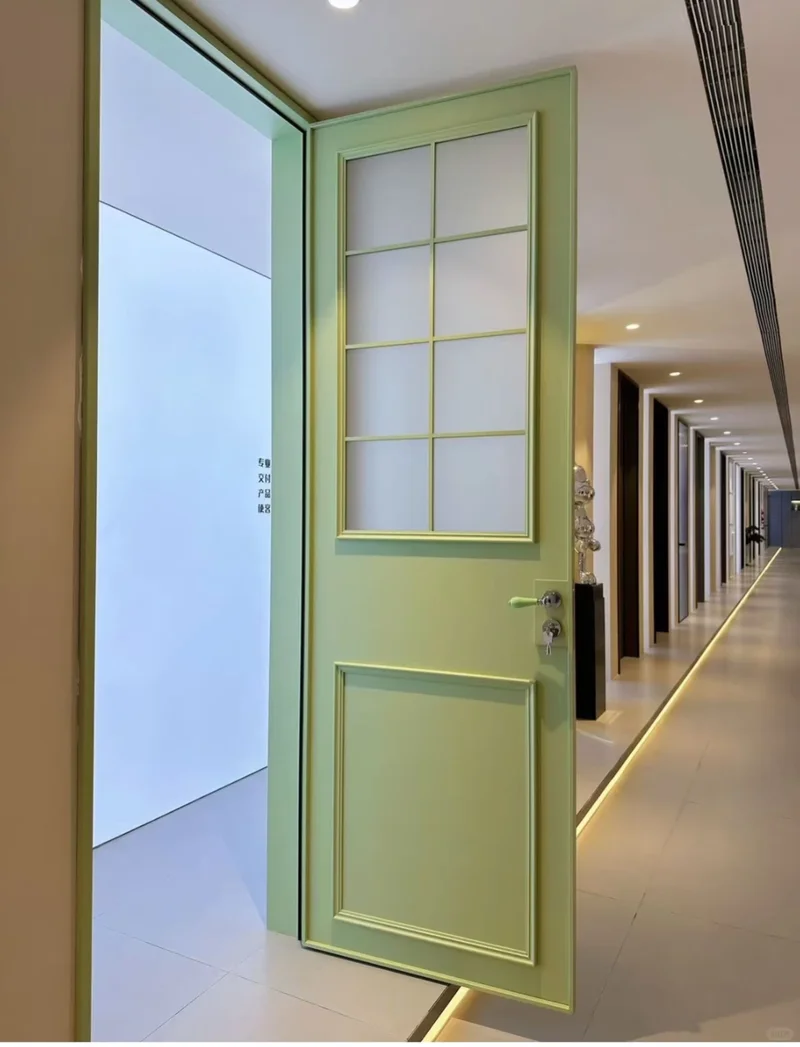
Specified Solution: A suite of 24 full-lite aluminum glass doors with integrated anti-slam hinges and automatic bottom seals.
Technical Parameters & Performance Data:
| Parameter | Specification | Test Standard | Result in Application |
|---|---|---|---|
| Door Leaf Construction | 44mm thermally broken aluminum profile, 10mm laminated glass | EN 14351-1 | U-factor maintained at 1.8 W/m²K |
| Hinge Closing Force | Adjustable hydraulic mechanism | EN 1154 | Set to 3.2 Nm for consistent, quiet closure |
| Sound Reduction Index (Rw) | Full assembly with perimeter seals | ISO 10140-2 | 36 dB achieved, reducing corridor noise ingress |
| Surface Hardness | Polyester powder coating | ASTM D3363 | Pencil hardness >2H; no marking from cleaning agents |
| Cycle Testing | Full door assembly | EN 1191 | Exceeded 500,000 cycles with no performance decline |
Outcome: The installation was completed in phased shifts to maintain ICU operations. Post-installation, facility management reported a measurable reduction in ambient noise levels and noted the doors required only routine cleaning with no degradation to finishes after 18 months of service.
Frequently Asked Questions
How do anti-slam hinges ensure safety and durability in high-traffic hospital environments?
Anti-slam hinges integrate hydraulic or pneumatic dampers to control door closing speed, preventing violent impacts. For longevity, specify hinges with stainless steel bearings and a minimum 500,000-cycle certification. This reduces structural stress on the frame and glass, minimizing maintenance and ensuring reliable operation in critical zones like emergency departments.
What standards should WPC or aluminum door cores meet for formaldehyde emissions in sensitive areas?
Insist on E0-grade (≤0.5 mg/L) or EN 717-1 compliant cores, ensuring formaldehyde emissions are medically negligible. For wood-plastic composites, verify independent certification reports. Pair with UV-cured acrylic finishes that seal the material, preventing off-gassing and maintaining indoor air quality in patient rooms and ICUs.
How is thermal insulation and condensation managed in aluminum-glass door systems?
Utilize thermally broken aluminum profiles with polyamide barriers and multi-chamber designs. Glazing must be double or triple insulated glass units (IGU) with low-E coatings and argon fill. This achieves a U-value below 1.6 W/m²K, bridging the indoor-outdoor thermal gap and preventing condensation that compromises hygiene.
What specifications prevent long-term warping in hospital door systems?
Select engineered cores like high-density LVL (≥650 kg/m³) or mineral-filled WPC. Critical is the full-perimeter structural reinforcement and uniform PVC coating (≥0.5mm). Factory pre-hanging and climate-conditioning of components to site-specific RH levels before installation are mandatory to eliminate post-installation dimensional instability.
How do you achieve required impact resistance and sound insulation?
For impact resistance, specify tempered or laminated safety glass (min. 10mm thickness) and reinforced lock stile areas. Sound insulation of ≥32 dB Rw is achieved using acoustic seals, magnetic gaskets, and specialized glazing configurations. This contains noise between wards while withstanding collisions from beds and equipment.
What finishing processes ensure hygiene and long-term corrosion resistance?
Opt for powder-coated finishes with a minimum 70μm thickness, applied via pretreatment chromating. For high-touch areas, specify antimicrobial additive coatings. Anodized aluminum (AA25 grade) is superior for coastal or high-humidity zones, providing a hard, non-porous surface that withstands frequent cleaning with harsh disinfectants.
How are moisture expansion issues mitigated in composite door materials?
For WPC, use materials with a linear expansion coefficient below 0.06% per °C and density > 1,200 kg/m³. Design must include expansion gaps calculated for local climate, and fixings must be stainless steel and allow for movement. This prevents buckling or seal failure in humid areas like laundries and sterilization rooms.