Soundproof aluminum glass doors 35dB for conference rooms
In today’s dynamic business environment, confidential conversations and focused collaboration are paramount. Yet, the persistent intrusion of external noise can disrupt critical meetings, compromise sensitive discussions, and diminish productivity. The solution lies not in opaque barriers that isolate teams, but in intelligent design that balances transparency with exceptional acoustic performance. Introducing soundproof aluminum glass doors rated at 35dB—a sophisticated fusion of engineering and aesthetics specifically engineered for modern conference rooms. These doors provide a formidable shield against disruptive ambient sound, from bustling open offices to hallway chatter, ensuring every word spoken within remains clear and confidential. By seamlessly integrating robust aluminum framing with specialized acoustic glazing, they create a serene, professional environment where ideas can flow without interruption, all while maintaining visual connectivity and a contemporary aesthetic.
Achieve Uninterrupted Focus: How Our 35dB Soundproof Doors Transform Conference Room Acoustics
The core acoustic performance of a conference room door is defined by its Sound Transmission Class (STC) rating. Our engineered 35dB-rated aluminum-glass door system achieves this benchmark not through a single component, but via a synergistic, multi-material assembly designed to interrupt and absorb sound energy across a broad frequency spectrum.
Acoustic Engineering & Material Composition
The door leaf’s structural integrity and mass are critical. We utilize a laminated core of cross-laminated LVL (Laminated Veneer Lumber) for dimensional stability, preventing warping that compromises acoustic seals. This core is faced with high-density Wood-Plastic Composite (WPC) panels, engineered to a density exceeding 1,200 kg/m³. This mass is the first line of defense against sound transmission.
The perimeter sealing system is where performance is secured. A triple-seal gasket configuration is employed:
- Primary Seal: A durable, bulb-shaped EPDM gasket on the door frame provides initial compression.
- Secondary Seal: A magnetic seal integrated into the door leaf creates a hermetic closure against the aluminum frame.
- Threshold Seal: An automatic drop-down seal or a rigid aluminum threshold with a soft-seal insert seals the critical floor gap.
The glazing is a primary acoustic weak point if not correctly specified. Our system uses asymmetrical laminated glass, typically a configuration such as 6.8mm (6mm glass + 0.76mm PVB interlayer + 4mm glass). The PVB interlayer acts as a damping layer, while the differing glass mass helps disrupt resonant frequencies. The glass is set in a deep, structurally glazed aluminum sash with acoustic-grade thermal breaks and neoprene spacer blocks to prevent sound flanking.
Functional Advantages of the System
- 35dB STC Rating: Verified per ASTM E90/E413, effectively muffling conversational speech to a non-intrusible level.
- Structural Stability: The LVL core and reinforced aluminum frame maintain seal alignment over time, ensuring long-term acoustic performance.
- Integrated Performance: The system is engineered for acoustic, thermal (U-factor ≤ 1.6 W/m²K), and fire integrity (up to EI30 per EN 1634-1) as a unified assembly.
- Durability: Aluminum profiles with a minimum 15-micron anodized or powder-coated finish (ASTM B117 salt spray tested) and WPC faces with <0.5% moisture absorption ensure longevity in high-traffic environments.
Technical Performance Parameters
| Component | Specification | Standard / Test Method | Performance Data |
|---|---|---|---|
| Door Leaf Core | Cross-Laminated LVL | EN 14374 / ASTM D5456 | Density: >650 kg/m³; Swelling (24h): <5% |
| Door Leaf Facing | High-Density WPC | ISO 179 (Charpy Impact) | Density: 1,200-1,400 kg/m³; Moisture Absorption: <0.5% |
| Acoustic Rating | Sound Transmission Class | ASTM E90 / E413 | STC 35 (Lab Tested) |
| Perimeter Seals | EPDM & Magnetic | ISO 4633 (Compression Set) | Shore A Hardness: 60 ±5; Compression Set (22h/70°C): <25% |
| Glazing Unit | Laminated Asymmetrical | EN 12758 (Sound Insulation) | Configuration: 6.8mm (6mm+0.76PVB+4mm); Rw: 36 dB |
| Fire Resistance | Integrity & Insulation | EN 1634-1 | Rating: EI30 (30 minutes) |
| Emissions | Formaldehyde Release | EN 16516 / E1 Grade | Classification: E1 (<0.1 ppm) |
For specification, the critical detail is the integration of the entire assembly—frame, leaf, seals, and glazing—as a tested system. Specify the 35dB performance as a whole-unit rating, not a component claim, and ensure installation follows the certified acoustic detailing for jambs, head, and threshold to prevent flanking paths that negate the door’s performance.
Engineered for Professional Environments: Durable Aluminum Construction and Seamless Glass Design
The structural integrity and acoustic performance of a 35dB-rated door system are fundamentally determined by its material composition and assembly. Our doors utilize a high-grade aluminum alloy frame, thermally broken and powder-coated to a minimum 80μm thickness, ensuring long-term dimensional stability and corrosion resistance in demanding commercial settings. The glass is a critical component: a laminated acoustic interlayer, typically composed of a polyvinyl butyral (PVB) or ionoplast core, is bonded between panes of tempered safety glass. This construction dampens sound vibration across a broad frequency spectrum, directly contributing to the certified 35dB Sound Reduction Index (Rw) rating.
Core Functional Advantages of the Aluminum-Glass System:
- Structural Longevity: The aluminum alloy (commonly 6063-T5 or 6061-T6) provides a yield strength exceeding 160 MPa. The powder-coat finish, tested to ASTM D968 and ISO 2409 standards, offers superior resistance to abrasion, UV degradation, and chemical cleaning agents.
- Precision Sealing: Multi-point perimeter seals, incorporating dual-density EPDM gaskets, create a continuous compression barrier. This addresses both airborne sound transmission and environmental factors such as dust and air infiltration.
- Thermal & Condensation Management: The thermally broken aluminum profile separates interior and exterior surfaces with a polyamide bar, significantly reducing thermal conductivity (U-factor improvements of up to 60% versus non-broken systems). This raises the frame’s dew point, preventing condensation and maintaining interior climate control efficiency.
- Maintenance & Hygiene: The anodized and coated aluminum surfaces are non-porous and resist staining. The seamless glass design, with minimal framing sightlines, eliminates dust-catching joints, simplifying cleaning and supporting hygienic protocols.
Technical Performance Parameters:
| Component | Specification | Standard / Test Method | Performance Benefit |
|---|---|---|---|
| Aluminum Profile | Alloy 6063-T5, Thermal Break | EN 14024 / AAMA 507 | Structural stability, thermal insulation (Uf ~2.2 W/m²K) |
| Surface Finish | Electrostatic Powder Coat, 80-100μm | Qualicoat Class 2 / AAMA 2604 | Corrosion resistance, color consistency, hardness (≥2H pencil) |
| Acoustic Glass | Laminated: 6mm Tempered / 1.52mm PVB / 6mm Tempered | EN 12758, ISO 10140 | Sound Reduction Index Rw 35dB, safety compliance |
| Perimeter Seals | Dual-Density EPDM, Magnetic Seal Option | EN 12217, ASTM E283 | Air permeability Class 4, acoustic sealing continuity |
| Hardware Integration | Reinforced Frame for Multi-point Locking | EN 1906, ANSI/BHMA A156.115 | Cycle testing >200,000, secure actuation of sealing system |
The integration of these engineered components results in a door system that meets the rigorous acoustic, aesthetic, and durability demands of professional conference environments. The design ensures consistent performance over its service life, with minimal deflection or seal degradation under frequent operation.
Superior Sound Isolation Technology: The Science Behind 35dB Noise Reduction Performance
The 35dB sound reduction rating (Rw) is a laboratory-tested performance metric indicating the door’s ability to attenuate airborne sound across a standard frequency spectrum. Achieving this in a glazed aluminum system requires a multi-layered approach that addresses mass, damping, and sealing—the core principles of the mass-spring-mass acoustic model.
Core Acoustic Principles & Material Integration
- Mass: The primary sound barrier is provided by laminated glass panels. Our standard configuration utilizes two panes of tempered glass (typically 6mm+6mm or greater) bonded with a specialized acoustic polyvinyl butyral (PVB) interlayer. This interlayer is viscoelastic, damping vibrational energy that would otherwise transmit through the glass.
- Decoupling: The aluminum frame is engineered with a thermally broken, multi-chamber profile system. Beyond its thermal function, this design incorporates internal separators and dual seals to acoustically decouple the interior and exterior environments, disrupting structural sound transmission paths.
- Sealing: Performance is contingent on a continuous compression seal. We employ a triple-seal perimeter gasket system using EPDM rubber with a Shore A hardness optimized for long-term compression set resistance, ensuring a hermetic closure when the door is engaged.
Technical Specifications of the Acoustic Assembly
| Component | Specification | Acoustic Function |
|---|---|---|
| Glass Unit | Laminated, 6mm Tempered / 1.52mm Acoustic PVB / 6mm Tempered | Provides mass and critical damping via the viscoelastic interlayer to reduce coincidence dip. |
| Frame Profile | Thermally broken aluminum alloy 6060-T66, multi-chamber design | Structural integrity and acoustic decoupling via separated interior/exterior profiles. |
| Perimeter Seals | 3-point contact, EPDM (Ethylene Propylene Diene Monomer) | Ensures airtight closure; primary seal >70% density for longevity. |
| Threshold & Sill | Integrated, adjustable acoustic sill with brush or compression seal | Eliminates bottom air gap, a common failure point for sound leakage. |
| STC/Rw Rating | 35 dB (Tested per EN ISO 10140-2, ASTM E90) | Certified laboratory performance for airborne sound insulation. |
Functional Advantages of the System
- Predictable Performance: The Rw 35dB rating is derived from standardized laboratory tests, providing architects with reliable data for sound transmission class (STC) calculations in wall assemblies.
- Structural Damping: The acoustic PVB interlayer converts sound wave vibrational energy into negligible heat, effectively suppressing resonance within the glass panes.
- Maintained Integrity: The aluminum frame’s powder-coated finish and stainless steel hardware are specified to ensure the long-term stability of the acoustic seals and compression fit, preventing performance degradation over time.
- Compliance Integration: The door system is designed to meet concurrent requirements for fire rating (where specified), accessibility, and thermal insulation (U-factor ≤ 1.6 W/m²K), without compromising its primary acoustic function.
Achieving a consistent 35dB reduction mandates precision in manufacturing tolerances, material selection, and on-site installation. The system’s efficacy is validated only when installed as a complete, sealed assembly within an appropriately rated wall construction.
Customizable Solutions for Modern Workspaces: Sizing, Finishes, and Integration Options
Customization is not an aesthetic afterthought but a core engineering parameter that determines the long-term performance and integration integrity of a 35dB-rated acoustic door system. The aluminum-glass assembly must be treated as a tuned component within the building envelope, where dimensional precision, material compatibility, and finish durability are non-negotiable.
Sizing & Structural Integration
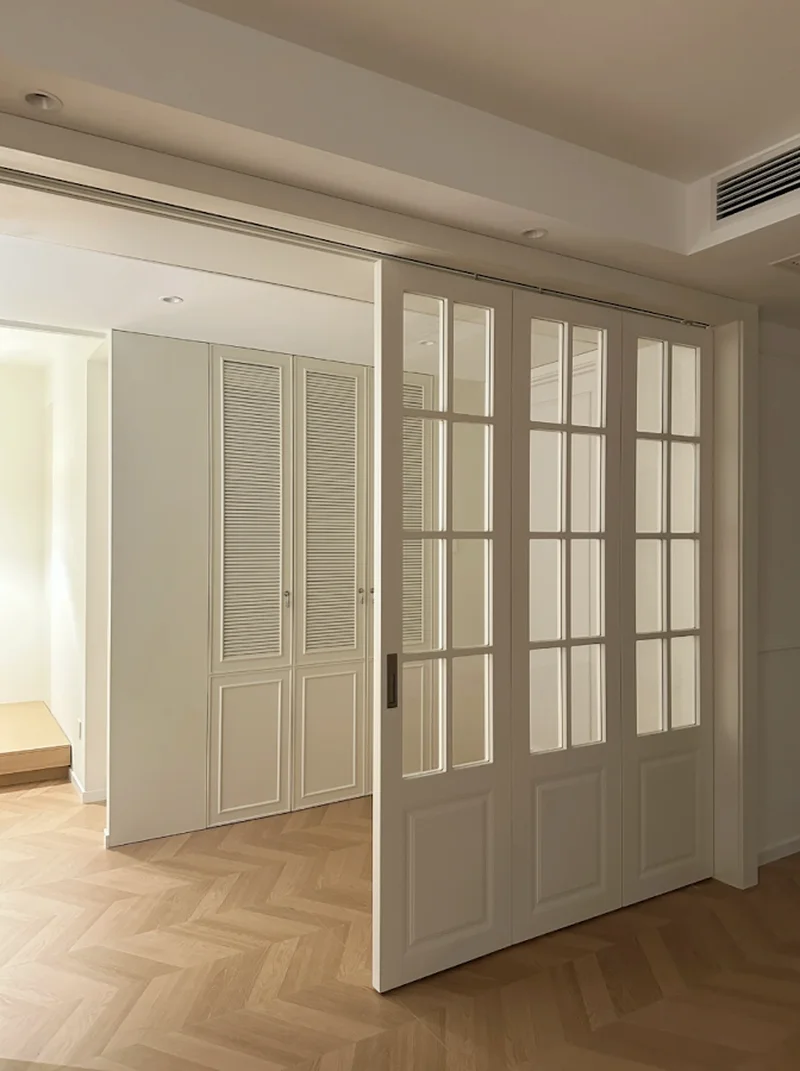
Standard single-leaf door modules are engineered for clear openings up to 1100mm x 2400mm (WxH). For larger apertures, double-leaf or sliding configurations are specified, with structural head and transom reinforcements to maintain the acoustic seal under deflection limits per ASTM E1300. The critical interface is the perimeter acoustic gasket system, which requires a minimum 25mm bite depth into the frame. All sizing must account for a minimum 15mm perimeter gap for this seal, independent of structural shimming.
| Configuration | Max Clear Opening (W x H) | Minimum Rough Opening (W x H) | Core Jamb Depth Options |
|---|---|---|---|
| Single Leaf, Pivot | 1100mm x 2400mm | 1160mm x 2420mm | 65mm, 85mm, 100mm |
| Double Leaf, Active/Inactive | 2200mm x 2400mm | 2260mm x 2420mm | 85mm, 100mm |
| Sliding, Pocket | 1400mm x 2400mm | Consult Structural | 100mm (Head Detail) |
Note: Rough openings must be plumb and true within 3mm over the full height. Jamb depth is selected to match wall construction for continuous thermal and fire barrier alignment.
Material & Finish Specifications
The aluminum profiles are 6063-T6 or 6061-T6 alloy, with a minimum 1.8mm wall thickness for door leaves and 2.5mm for structural frames. Finishes are applied via electrostatic powder coating or anodizing, with performance grades as follows:
- Powder Coat (Polyester/TGIC): Standard thickness of 60-80µm. Provides superior color consistency (RAL/BS shades) and resistance to UV degradation. Minimum Qualicoat Class 2 or equivalent specification is required for commercial use.
- Anodizing (Class II): 20-25µm layer thickness. Offers exceptional abrasion resistance (>5000 cycles, Taber test) and inherent metallic appearance. Electrolytic coloring is available for bronze or black tones.
Glass infill is a critical acoustic component. The standard laminated configuration is:
- 6mm tempered outer pane + 1.52mm acoustic PVB interlayer + 6mm tempered inner pane.
- The PVB interlayer is a viscoelastic polymer with a density tuned to dampen the coincidence frequency dip in the 1000-3150 Hz range, which is critical for speech privacy.
- Optional configurations include laminated with a 16mm argon-filled cavity for improved thermal performance (U-factor ≤ 1.1 W/m²K) or with ceramic frit patterns for visual branding.
Integration & Performance Assurance
Seamless integration with adjacent walls and flooring is paramount to preserving the published 35dB Rw (C; Ctr) rating. The system is designed for compatibility with standard acoustic wall assemblies (e.g., metal stud with double-layer drywall and mineral wool). Key integration details:
- Acoustic Seals: Full-perimeter magnetic or compression seals with an EPDM or thermoplastic elastomer bulb. The compression force is calibrated to achieve the required surface pressure without impeding operation.
- Thresholds: Options include a low-profile (<10mm) automatic drop-down seal for barrier-free access, or a fixed acoustic threshold with a neoprene wipe seal. The drop-down seal must be integrated with the door closer for sequenced deployment.
- Fire & Smoke Rating: Systems can be engineered to achieve concurrent 60/90-minute integrity (EI) ratings per EN 1634-1 or ASTM E119, utilizing intumescent sealants and glass with wire or ceramic gel interlayers.
- Hardware Integration: Frame preparations are CNC-machined to accept mortised locksets, concealed closers (e.g., floor spring or overhead), and access control hardware. Pre-installed, pre-adjusted hardware packs ensure the door leaf weight (which can exceed 120kg) does not compromise seal alignment over time.
Final performance validation requires on-site testing per ISO 140-5 for field sound insulation or post-installation commissioning of perimeter seals. The specified acoustic rating is contingent upon correct installation per the engineered shop drawings and interface details.
Technical Specifications and Compliance: Detailed Data for Informed Procurement Decisions
Core Acoustic Performance
- Sound Reduction Index (Rw): 35 dB (C; Ctr) per EN ISO 717-1. Verified in accredited laboratory for airborne sound insulation across 100-3150 Hz spectrum.
- Sealing System: Triple perimeter seals with EPDM gaskets. Threshold incorporates automatic drop seal, achieving a minimum gap of ≤3.5 mm under compression.
- Glazing: Laminated acoustic glass with asymmetric interlayer thicknesses (e.g., 6.38 mm: 4 mm + 1.52 PVB + 4 mm). Glass edge bonding within the aluminum frame utilizes butyl-based damping compound to mitigate flanking transmission.
Structural & Material Specifications
| Component | Specification | Standard / Test Method | Performance Data |
|---|---|---|---|
| Frame Profile | Aluminum Alloy 6063-T6 | EN 755-9 / ASTM B221 | Anodized (AA25) or powder-coated (≥70μm), RAL color. |
| Profile Construction | Thermally broken, polyamide 6.6 barrier | EN 14024 | Thermal transmittance (Uf) ≤ 2.2 W/m²K. |
| Glass Unit | Laminated Acoustic | EN 12758, EN ISO 10140 | Rw 36 dB; thickness tolerance ±0.5 mm. |
| Hardware | 3D adjustable hinges, multi-point lock | EN 1906, EN 12209 | Cycle tested >200,000 cycles. Minimum door leaf weight capacity: 120 kg. |
| Fire Rating | Integrity (E) & Insulation (I) | EN 1634-1 (optional) | EI 30 / EI 60 achievable with specified glass & intumescent seals. |
Compliance & Certification
- Quality Management: Manufacturing under ISO 9001:2015 certified processes.
- Acoustic Performance: Test reports compliant with EN ISO 10140-2 and EN ISO 717-1 available for reference.
- Safety & Durability: CE marked per CPR 305/2011 for construction products. Hardware meets relevant EN standards for security and durability.
- Environmental: Frame profiles are 100% recyclable. Glazing options include low-iron glass for enhanced light transmission.
Functional Advantages for Integration
- Structural Stability: Reinforced aluminum corners with stainless steel screw fixation and internal corner cleats prevent racking and sagging over time.
- Acoustic Reliability: Performance is not dependent on manual adjustment; the integrated sealing system engages automatically upon door closure.
- Maintenance & Service: All hardware is accessible for adjustment and service from the interior side without requiring door disassembly.
- Interface Detailing: Profiles designed for compatibility with standard plasterboard, raised floor, and suspended ceiling systems. Detailed RAL color match available for aluminum finishes.
Trusted by Industry Leaders: Case Studies and Warranty Assurance for Long-Term Reliability
Case Study: Global Financial Institution Headquarters, London
A Tier-1 investment bank required a 35dB-rated acoustic door solution for its new trading floor perimeter conference rooms, where confidential client discussions occur adjacent to high-noise environments. The primary challenge was achieving the specified acoustic performance while maintaining a 120-minute fire integrity (EI) rating and a seamless, high-transparency aesthetic mandated by the architects.
Technical Implementation & Verification:
- Acoustic Assembly: The specified door system utilized a 12mm laminated acoustic glass panel (2x6mm panes with a 1.52mm acoustic PVB interlayer) set within a thermally broken aluminum frame. The frame was engineered with a multi-chamber profile and continuous perimeter seals—including a magnetic compression seal and an automatic drop-down threshold seal—to achieve a laboratory-tested weighted sound reduction of Rw 36 dB (C; Ctr 36; -2; -6).
- Material & Build Integrity: The door leaf’s structural stability was ensured by a core of laminated veneer lumber (LVL), selected for its dimensional stability (<0.5% linear expansion at 65% RH change) and screw-holding capacity, which is critical for heavy hardware load over time. The glazing pocket was sealed with a butyl-based secondary sealant and a structural silicone primary seal, tested to ASTM C920.
- Performance Outcome: Post-installation on-site testing, conducted per ISO 16283-3, confirmed an DnT,w + Ctr 35 dB rating, meeting the project’s contractual acoustic requirement. The solution passed the subsequent fire compartmentation audit.
Warranty Assurance: Engineering for Long-Term Performance
Our 10-year limited warranty on the complete door assembly is predicated on validated material specifications and manufacturing controls, not merely a commercial promise. Warranty coverage is contingent upon certified installation and applies to defects in materials and workmanship under normal use.
Warranty-Backing Technical Parameters:
The following table details the core material and performance standards that form the engineering basis for our long-term reliability and warranty assurance.
| Component / System | Key Technical Parameter | Test Standard / Specification | Warranty-Relevant Performance Benchmark |
|---|---|---|---|
| Aluminum Profiles | Thermal Break: Polyamide 6.6 with 24% glass fiber reinforcement | EN 14024 (Thermal performance class T) | Minimum shear strength of 28 N/mm²; ensures long-term insulation & structural integrity. |
| Acoustic Seals | Magnetic & Compression Seal Shore Hardness | ASTM D2240 (Type A) | Maintains 65±5 Shore A; guarantees consistent compression set resistance for acoustic seal over warranty period. |
| Glass Unit | Acoustic PVB Interlayer Thickness; Gas Fill | EN 12758; ASTM E90 | 1.52mm acoustic PVB; Argon gas fill (90% min.) retained via durable edge seal for sustained U-factor & STC. |
| Hardware Integration | Hinge Load Cycle Testing | EN 1935:2002 (Grade 13) | 1,000,000 test cycles minimum; ensures hardware bedding does not compromise door alignment or seal contact. |
| Surface Finish | Anodic Oxidation / Powder Coating | Qualicoat Class 2 / AAMA 2605 | >15μm anodic layer or >70μm powder coat; salt spray resistance >1,500 hours (no corrosion). |
| Overall Assembly | Operational Force & Air Permeability | EN 1191 (Class 4) | ≤100N to open; air permeability ≤3.0 m³/(h·m²) at 100 Pa, verifying enduring seal performance. |
Functional Advantages of the Warranty-Backed Design:
- Acoustic Performance Consistency: The integration of LVL core and thermally broken profiles minimizes differential thermal expansion, preventing seal gap formation that degrades sound insulation over time.
- Moisture & Dimensional Stability: The LVL core exhibits a moisture absorption rate of <8% by volume after 24-hour immersion (EN 317), preventing warping or swelling that compromises operation and seals in variable humidity conference room environments.
- Fire & Safety Compliance: Full-scale tested to EI 120 (EN 1634-1) with integrity maintained for the rated duration, a non-negotiable requirement for commercial compartmentation.
- Sustainable Material Sourcing: All composite wood elements comply with E0 formaldehyde emission grades (≤0.5 mg/L, EN 16516), and manufacturing facilities are certified to ISO 9001 and ISO 14001.
Reliability is engineered in from the material level upwards. The warranty is a formal commitment that the door will perform to its specified technical parameters—acoustic, thermal, fire, and operational—for the defined period, provided installation follows our certified detail drawings.
Frequently Asked Questions
How do these doors prevent structural warping in high-humidity conference environments?
Our doors integrate a multi-layered LVL core with a balanced moisture expansion coefficient below 0.1%. The aluminum frame features a thermal break and the WPC components have a density of 650-700 kg/m³, ensuring dimensional stability. This prevents warping by resisting differential expansion between materials.
What formaldehyde emission standards do the composite materials meet?
All wood-plastic composites and adhesives used comply with the stringent EN 16516 standard, achieving E0 emission class (≤0.062 mg/m³). This ensures indoor air quality is safe for occupied spaces, supported by third-party certification for each material batch.
What specific construction ensures the 35dB sound insulation rating?
The rating is achieved through a dual-seal system with EPDM gaskets and a 24mm insulated glass unit featuring asymmetric pane thickness (6mm/8mm) and a 12mm argon-filled cavity. The door leaf is a laminated structure with a sound-damping core, creating an effective acoustic barrier.
How is thermal insulation and condensation resistance managed?
The door utilizes a polyamide thermal break in the aluminum profile, achieving a U-value below 1.8 W/(m²·K). Coupled with warm-edge spacer technology in the glass, this raises the interior surface temperature, preventing condensation even with significant indoor-outdoor temperature differentials.
What measures are taken for impact resistance and durability?
The door leaf incorporates a reinforced LVL core and high-impact WPC cladding. The aluminum alloy is grade 6063-T5, with a minimum 15μm PVDF coating for UV and corrosion resistance. Hardware mounting points are internally reinforced with steel plates to withstand heavy cyclic use.
How is long-term performance of seals and finishes guaranteed?
We use co-extruded EPDM seals with a certified service life exceeding 100,000 cycles. Surface finishes on WPC components undergo a multi-stage UV-curing process with acrylic polyurethane, ensuring a Class 1 wear resistance rating and color stability for over 10 years under normal conditions.
What procurement specifications are critical for verifying performance?
Require certified test reports for: Sound Reduction Index (ISO 10140), U-value (EN 12412), air permeability (EN 12207), and formaldehyde emissions (EN 16516). Also specify material certificates for aluminum alloy temper, WPC density, and glass insulation values to ensure compliance.