Wood glass door bulk OEM processing with customer-provided glass specifications
In the realm of architectural design and bespoke manufacturing, the fusion of natural warmth and luminous transparency is achieved through premium wood glass doors. For businesses and large-scale projects seeking a seamless blend of quality, consistency, and custom design, our specialized bulk OEM processing service offers the definitive solution. We empower you to specify every detail of the glass—be it tint, texture, thickness, or decorative etching—while we expertly handle the precision crafting of the wooden framework. This collaborative approach ensures that your vision is meticulously translated into a cohesive product line, delivered with the efficiency and scalability that only dedicated OEM partnership can provide. Elevate your offerings with doors that are unmistakably yours, built to your exact standards and volume requirements.
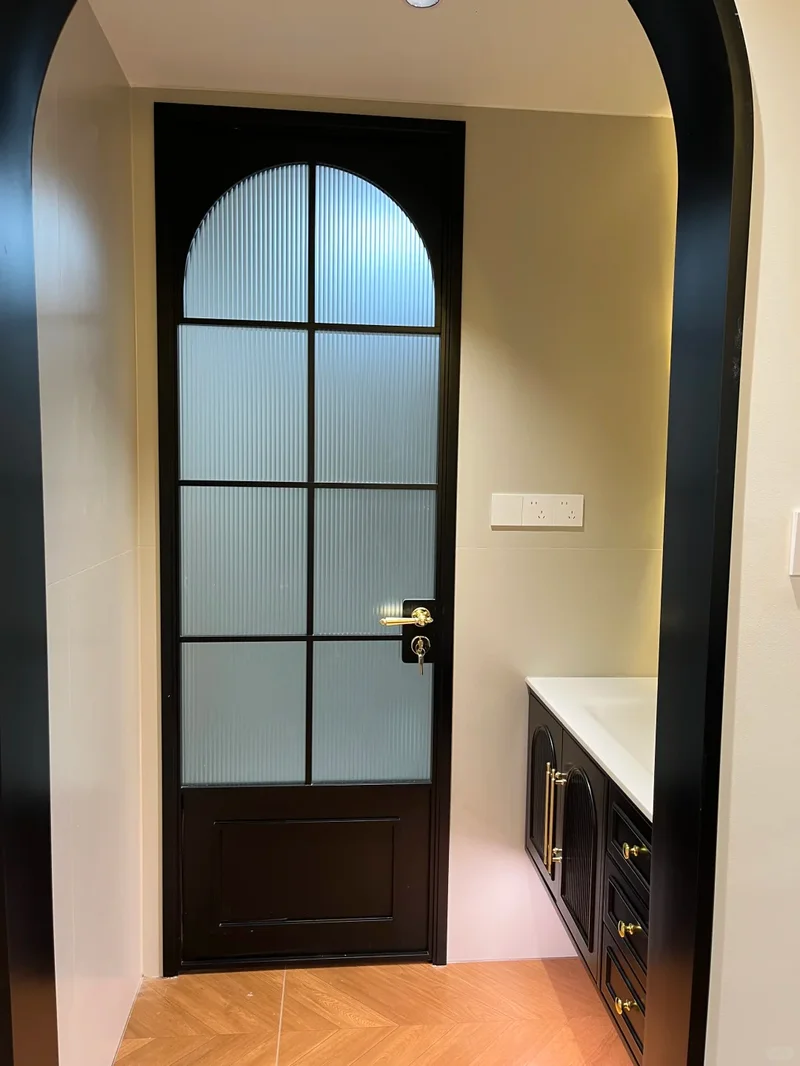
Custom Glass Integration for Unique Design Requirements: Tailoring Wood Glass Doors to Your Specifications
Custom glass integration is a core engineering discipline within our OEM process, transforming a standard door into a performance-engineered architectural element. The success of this integration hinges on the precise coordination between the structural integrity of the door substrate and the physical properties of the specified glazing. Our manufacturing protocols are designed to accommodate a vast range of glass types while ensuring the final assembly meets stringent performance benchmarks.
Substrate Engineering for Glazing Integrity
The door leaf is not a passive frame but an active structural system engineered to support glazing units. Key material considerations include:
- LVL (Laminated Veneer Lumber) Core: Provides exceptional dimensional stability (≤0.1% swelling rate under controlled humidity) and screw-holding power, preventing frame distortion that could compromise glass seals or cause stress fractures.
- WPC (Wood-Plastic Composite) & PVC-Wood Profiles: Engineered for minimal moisture absorption (<0.5%) and thermal expansion. The PVC-wood ratio is calibrated for optimal Shore D hardness (typically 75-82) to ensure a rigid glazing rebate that resists deflection.
- Formaldehyde Compliance: All composite materials and adhesives are certified to E0 or super E0 grades, ensuring indoor air quality is unaffected.
Technical Integration Protocol
Our process is governed by a fit-for-purpose analysis of your glass specification against the door’s performance profile. Critical integration points are:
| Integration Parameter | Engineering Consideration | Typical Performance Outcome |
|---|---|---|
| Glazing Unit Thickness & Weight | Rebate depth/width calculation, hinge load capacity, and core density adjustment to prevent sag. | Supports units from 10mm monolithic to 48mm+ triple-glazed (>120 kg/m²). |
| Thermal Stress Management | Analysis of glass center vs. edge temperature differentials (ΔT) and frame U-factor compatibility. | Prevents thermal breakage; achieves overall U-factors as low as 0.8 W/(m²·K). |
| Acoustic Performance | Synchronization of glass mass-air-mass resonance with door core density and sealing system. | Achieves weighted sound reduction (Rw) up to 45 dB with appropriate acoustic laminated glass. |
| Fire Rating Integrity | Use of certified fire-resistant glass and compatible, non-combustible intumescent seals within the rebate. | Can integrate to achieve EI30 / EI60 ratings (EN 13501-2) when specified. |
Functional Advantages of Tailored Integration
- Structural Synergy: The door substrate is calibrated for the specific weight and stiffness of your glass, eliminating long-term fatigue and ensuring smooth operation.
- Sealed Performance: Proprietary multi-channel gasket systems and silicone bonding protocols are selected based on glass type to guarantee air/water infiltration ratings (e.g., ASTM E283, E547).
- Aesthetic Fidelity: Precise CNC machining of the glazing rebate ensures a consistent sightline and perfect glass reveal, as per architectural drawings, with tolerances within ±0.5mm.
- Quality Assurance: Every integrated unit undergoes staged inspection, including air pressure testing for seals and non-destructive checks for glass stress, under our ISO 9001:2015 certified system.
Specification Guidance for Optimal Integration
To facilitate seamless processing, provide the following with your glass specifications: full dimensional drawings with sightlines, glass type (e.g., tempered, laminated, insulated, low-e coating), exact thickness and unit weight, any special edge work (e.g., pencil polish, arris), and the target performance ratings (thermal, acoustic, safety, fire). This data allows our engineering team to finalize the substrate specification, gasket selection, and assembly method to deliver a fully coherent product.
Bulk OEM Solutions for Streamlined Supply Chain Efficiency: Scalable Production with Consistent Quality
Bulk OEM production is engineered to decouple the variable of glass procurement from the core manufacturing process of the door leaf and frame. This model allows for the continuous, high-volume fabrication of door assemblies to precise dimensional and performance tolerances, with designated cavities ready to receive customer-specified glazing units at the final assembly stage. The efficiency gain is systemic, eliminating production line stoppages for glass changes and enabling just-in-time inventory strategies for the finished product.
Core Technical Advantages of the OEM Model:
- Predictable Material Performance: Utilizing engineered wood composites (WPC, LVL) and polymer-wood blends (PVC-wood) with strictly controlled densities and ratios ensures batch-to-batch consistency in mechanical properties, machining behavior, and long-term dimensional stability. This is foundational for reliable sealing and hardware integration.
- Guaranteed Compliance & Certification: Production under a certified ISO 9001:2015 quality management system, with embedded material traceability, guarantees that every door leaf meets declared architectural standards. This includes consistent fire resistance ratings (e.g., EN 1634-1, ASTM E84), formaldehyde emission classes (E0/E1), and structural performance metrics.
- Optimized Acoustic & Thermal Performance: The door leaf structure, including its core and sealing system, is pre-engineered to achieve specific performance levels. Consistent production ensures reliable attainment of designed sound reduction ratings (Rw up to 42 dB) and thermal insulation values (U-factor as low as 1.0 W/m²K), independent of the final glazing unit’s properties.
- Enhanced Supply Chain Resilience: By standardizing the core door production, manufacturers mitigate risks associated with glass supply volatility. Lead times for the door substrate become fixed and reliable, allowing project planners to synchronize delivery of customer-provided glass for final assembly, streamlining the entire procurement schedule.
Scalable Production Parameters & Quality Benchmarks
The following table outlines the controlled parameters and performance benchmarks maintained across scalable production runs, ensuring architectural-grade consistency.
| Parameter Category | Key Metrics | Performance Benchmark / Standard | Purpose & Impact |
|---|---|---|---|
| Material Consistency | WPC Density, PVC-Wood Ratio, LVL Core Moisture Content | Density: 650-750 kg/m³; Moisture: 8±2% | Ensures uniform machining, screw-holding power, and dimensional stability under varying humidity. |
| Dimensional Tolerance | Leaf/Frame Thickness, Width/Height, Rail/Stile Squareness | ±0.5mm on critical dimensions; Squareness ≤1mm/m | Guarantees perfect fit, alignment, and seamless integration of hardware and sealing gaskets. |
| Surface Durability | Coating Adhesion (Cross-cut), Hardness, Impact Resistance | Adhesion: Class 0-1 (ISO 2409); Hardness: ≥H (Pencil Test) | Provides a robust substrate for finishing, resistant to handling damage during transport and glazing. |
| Environmental Stability | Swelling Rate (24h water immersion), Formaldehyde Emission | Swelling: ≤12% thickness; Emission: E1 (≤0.124 mg/m³) per EN 16516 | Confirms low moisture absorption for dimensional integrity and compliance with indoor air quality regulations. |
| Structural & Fire | Bending Strength, Screw Withdrawal, Fire Rating Integrity | Strength: ≥15 MPa (EN 789); Fire: EI30/60 as specified | Validates load-bearing capacity, hardware security, and compartmentation performance in rated assemblies. |
This controlled, high-volume approach transforms the wood-glass door from a custom-made item into a reliably specifiable architectural component. It provides contractors and architects with the certainty of performance data, the efficiency of modular supply, and the flexibility to meet bespoke aesthetic glazing requirements without compromising on core quality or project timelines.
Enhanced Durability and Weather Resistance: Engineered for Long-Term Performance in Diverse Environments
The structural integrity and long-term performance of a wood-glass door are determined by the composite material science of its frame, not just its glass infill. Our OEM processing utilizes engineered wood composites and laminates specifically formulated to outperform solid timber in dimensional stability and environmental resistance, creating a substrate engineered to reliably support customer-provided glass units over decades.
Core Material Engineering for Stability
The frame’s resistance to warping, swelling, and degradation is a function of its core composition and manufacturing process.
- High-Density Wood-Plastic Composite (WPC) Cladding: The exterior surfaces are clad in a proprietary WPC with a density exceeding 1.2 g/cm³. This high density, achieved through a precise PVC-to-wood-flour ratio and co-extrusion process, provides an impermeable shell with superior resistance to moisture ingress, UV degradation, and surface impact compared to low-density alternatives or painted wood.
- Laminated Veneer Lumber (LVL) Core: The structural core consists of cross-laminated LVL. This engineered wood product homogenizes grain direction and disperses natural defects, providing exceptional dimensional stability (≤0.1% linear expansion per 10% MC change) and consistent screw-holding power across the entire frame profile, critical for hardware integration and long-term alignment.
- Advanced Polymer Edge-Banding: All exposed edges are sealed with thermally fused polymer banding. This creates a continuous, monolithic barrier that prevents moisture wicking into the composite core, which is the primary cause of edge-swelling and delamination in humid environments.
Quantified Performance Under Environmental Stress
Performance is validated against international standards, providing predictable outcomes for architectural specifications.
| Performance Parameter | Test Standard | Typical Performance Data | Benefit |
|---|---|---|---|
| Water Absorption (24h) | ASTM D570 | < 0.8% by weight | Exceptional resistance to swelling and blistering in high-humidity climates. |
| Linear Thermal Expansion | ASTM D696 | 3.5 x 10⁻⁶ /°C | Minimal gap variation with temperature fluctuations, ensuring consistent operation and weather-seal integrity. |
| Surface Hardness | ASTM D2240 (Shore D) | 75 – 80 | High resistance to denting, scratching, and abrasion from impact or cleaning. |
| Formaldehyde Emission | EN 16516 / JIS A 1460 | E0 Grade (< 0.05 ppm) | Meets the most stringent indoor air quality standards for healthy environments. |
Integrated Weathering and Sealing System
Durability is a system property, achieved through the integration of frame engineering, glass bedding, and sealants.
- Drained and Ventilated Glazing System: The glazing channel is designed with a primary seal (structural adhesive) and a secondary drainage pathway. This pressure-equalized design prevents water buildup and allows for controlled moisture egress, protecting both the glass unit and the frame substrate.
- High-Performance Sealant Compatibility: The WPC surface profile is engineered for optimal adhesion with industry-standard silicone and polysulfide glazing sealants, ensuring a permanent, waterproof bond between the frame and the insulated glass unit (IGU).
- Finish Durability: Factory-applied finishes (PVDF coatings or thermofoils) are cross-linked to the WPC substrate, achieving a Class 0 fire rating (BS 476) and superior resistance to fading (≥1,000 hours QUV-A testing), chalking, and chemical cleaning agents.
This engineered approach ensures that the door frame acts as a stable, durable host for the specified glass, maintaining its aesthetic and performance characteristics in diverse climates from coastal to alpine, without the maintenance burdens associated with solid wood.
Precision Craftsmanship and Structural Stability: Ensuring Reliability in High-Traffic Applications
Precision in wood glass door manufacturing is not merely aesthetic; it is a fundamental engineering requirement for structural longevity, especially in high-traffic commercial, hospitality, and institutional settings. Our OEM process integrates advanced material composites with rigorous fabrication protocols to ensure each door functions as a reliable, high-performance architectural component.
Core Material Engineering for Stability
The structural integrity originates from the door’s core and frame composition, engineered to resist warping, sagging, and environmental stress.
- High-Density WPC (Wood-Plastic Composite) Frames: Utilizing a controlled wood flour to polymer (typically PVC) ratio exceeding 60:40, we achieve a density >1.3 g/cm³. This results in superior dimensional stability, a low moisture absorption rate of <0.5%, and a Shore D hardness exceeding 80, providing exceptional resistance to impact and wear.
- LVL (Laminated Veneer Lumber) Core Construction: For solid door sections, we employ cross-banded LVL cores with a minimum thickness of 30mm. This lamination technique neutralizes internal wood stresses, yielding a product with consistent strength, minimal swelling (<2% under 24hr water immersion test per ASTM D1037), and a predictable modulus of elasticity (MOE) for precise load calculation.
- Advanced Joinery & Adhesive Systems: CNC-machined mortise-and-tenon joints are bonded with structural-grade polyurethane adhesives. This creates a monolithic frame with shear strength exceeding the substrate material, preventing joint failure under cyclical loading.
Integration of Customer-Provided Glass
The precise accommodation of specified glazing is critical. Our processing is designed to handle a wide range of glass types—from tempered and laminated safety glass to insulated (IGU) and acoustic variants—without compromising the door’s structural envelope.
- Precision Glazing Recess Tolerances: Glass rebates are machined to a tolerance of ±0.5mm, ensuring a perfect fit for the specified glass thickness. This eliminates stress points and allows for a consistent, compression-fit sealant bead.
- Structural Glazing Support: The frame design incorporates continuous internal support for the glass pane, distributing its weight evenly and preventing downward creep. For heavy glass units (e.g., fire-rated or security laminates), reinforced internal stiffeners are integrated into the core.
Performance Parameters for High-Traffic Reliability
Doors are validated against international standards to guarantee performance in demanding installations.
| Performance Aspect | Test Standard | Typical Achieved Specification | Application Implication |
|---|---|---|---|
| Dimensional Stability (Swelling) | ASTM D1037 | ≤ 1.8% (24hr water immersion) | Ensures consistent operation and seal integrity in high-humidity environments (e.g., lobbies, spas). |
| Sound Reduction (Rw) | ISO 10140-1, -2 | 32 – 38 dB (Core dependent, with sealed glazing) | Contributes to acoustic comfort in offices, hotels, and healthcare settings. |
| Thermal Insulation (U-Factor) | EN ISO 10077-1 | 1.2 – 1.8 W/m²K (With IGU glazing) | Improves building envelope efficiency and occupant comfort. |
| Fire Resistance | EN 1634-1 / ASTM E814 | Up to EI 30 / 45 Integrity & Insulation | Provides certified compartmentalization in corridors and stairwells. |
| Formaldehyde Emission | EN 16516 / ASTM E1333 | E0 / ≤ 0.05 ppm (California CARB Phase 2 compliant) | Guarantees indoor air quality and supports green building certifications. |
| Cycle Testing (Durability) | ANSI/BHMA A156.13 | Exceeds 500,000 cycles (Grade 1) | Validates hardware and hinge longevity for decades of use in public entrances. |
Functional Advantages of the Engineered System
- Predictable Long-Term Behavior: The use of engineered materials (WPC, LVL) with documented physical properties eliminates the variability inherent in solid timber, allowing for accurate finite element analysis (FEA) of door behavior under load.
- Maintained Aesthetic Integrity: Precision machining and stable substrates prevent door skin delamination, edge-band lifting, and finish cracking that plague inferior constructions.
- Seamless Hardware Integration: Reinforced, precision-milled hinge and lock preparation ensures perfect alignment and secure mounting, critical for the reliable function of automated and access control systems.
- Warranty Compliance: The quantifiable and testable nature of all material and performance parameters provides a clear, standards-based foundation for extended warranty coverage.
Eco-Friendly Materials and Low VOC Formulations: Meeting Sustainable Building Standards
The core structural integrity and environmental performance of our OEM wood-glass doors are defined by advanced composite materials and engineered wood products. We prioritize substrates and formulations that meet stringent international sustainability standards without compromising architectural-grade performance.
Engineered Core Materials: Stability and Resource Efficiency
- High-Density Wood Plastic Composite (WPC) Rails and Stiles: Utilizing a controlled PVC-wood flour ratio (typically 60:40) to achieve a density of ≥1.3 g/cm³. This ensures dimensional stability against warping (<0.5% linear change per ASTM D1037), inherent resistance to moisture absorption (<1.5% per 24h immersion), and provides a consistent substrate for precision machining and hardware integration.
- Laminated Veneer Lumber (LVL) or Particleboard Core: Selected for door panels and solid sections. LVL offers superior strength-to-weight ratio and stability (≤0.1% swelling rate at 65% RH) compared to solid timber, utilizing fast-growing, certified plantation wood. All cores are certified to E0 (≤0.5 mg/L HCHO) or E1 (≤1.5 mg/L HCHO) formaldehyde emission grades per EN 13986.
Low-VOC Formulations and Sustainable Finishes
All adhesives, primers, and coating systems are formulated to meet or exceed low-VOC regulations (e.g., CARB ATCM, EU Directive 2004/42/EC).
- Polyurethane (PU) and UV-Cured Acrylic Coatings: Provide durable, high-wear finishes (≥4H pencil hardness, ASTM D3363) with VOC content <100 g/L. UV-curing technology offers near-instant curing, reducing energy consumption and eliminating solvent emissions during production.
- Water-Based Adhesives: Used in lamination and assembly, ensuring strong bonds with negligible VOC off-gassing, contributing to superior indoor air quality (IAQ) in the final installation.
Integrated Performance for Sustainable Building Envelopes
The material selection directly enables doors to contribute to broader building certification points (LEED, BREEAM, DGNB).
- Thermal Insulation: The combination of low-conductivity composite frames and insulated glass units (IGU) results in door U-factors as low as 1.0 W/(m²·K), reducing building energy loads.
- Acoustic Performance: The mass and layered structure of WPC and core materials, combined with sealed glazing, achieve sound reduction ratings (Rw) up to 38 dB (EN ISO 10140-2).
- Fire Safety: Components can be engineered to meet fire resistance ratings (e.g., EI30/EI60 per EN 13501-2) using non-combustible cores and intumescent sealants.
Technical Performance Summary of Standard Material Configurations
| Component | Material Specification | Key Performance Parameter | Test Standard |
|---|---|---|---|
| Frame Profile | High-Density WPC (≥1.3 g/cm³) | Moisture Absorption: <1.5% | ASTM D570 |
| Core Panel | E0-Grade LVL | Swelling Rate (65% to 85% RH): ≤0.1% | EN 317 |
| Surface Hardness | UV-Cured Acrylic Coating | Pencil Hardness: ≥4H | ASTM D3363 |
| Formaldehyde Emission | Core & Adhesive Composite | Emission Class: E0 (≤0.5 mg/L) | EN 16516 / ISO 12460-5 |
| Volatile Organic Compounds | Total Assembly (off-gassing) | TVOC Emission: <0.1 mg/m³ after 28d | ISO 16000-9 |
Our production system, certified to ISO 9001 and ISO 14001, ensures traceability and consistent application of these material specifications. This engineering-led approach guarantees that doors built to customer-provided glass specs are delivered with validated structural and environmental performance data.
Comprehensive Technical Support and Quality Assurance: Building Trust Through Transparent Processes
Our technical partnership begins with a formalized Glass Specification Review Protocol. Upon receipt of your provided glass specifications, our engineering team conducts a multi-point compatibility and performance analysis against our door system parameters. This ensures the integrated unit meets the intended architectural and environmental performance.
Core Engineering Review & Validation Process:
- Structural Load Analysis: We calculate the combined weight of the specified glass (monolithic, laminated, or insulated units) and verify compatibility with our hinge systems, frame reinforcement (typically steel or aluminum within the stiles and rails), and LVL (Laminated Veneer Lumber) core stability. This prevents long-term sagging.
- Glazing Dimension & Tolerance Stack-Up: We analyze your glass dimensions against our manufacturing tolerances for the glazing rebate, ensuring a precise fit for the specified gasket or sealant type, which is critical for acoustic and thermal performance.
- Sealant & Gasket Compatibility: We verify the chemical compatibility of proposed sealants with your glass coatings (e.g., low-E, solar control) and our frame materials (WPC/PVC-wood composite) to prevent adhesion failure or coating degradation.
Material & Performance Specifications (Typical Baseline):
Our standard door leaf construction is engineered for high-traffic commercial and residential use. Key material specifications include:
| Component | Specification & Typical Values | Performance Implication |
|---|---|---|
| Door Leaf Core | LVL (Laminated Veneer Lumber), cross-banded, density ≥ 650 kg/m³ | Provides exceptional dimensional stability, minimizing warping (<1% moisture absorption). Flatness critical for full-perimeter sealing. |
| Frame Material | High-density WPC/PVC-wood composite, Shore D hardness > 75, PVC-wood ratio optimized for low thermal expansion. | High impact resistance, weatherproof, and resistant to fungal decay. Low linear thermal expansion coefficient ensures consistent operation. |
| Fire Rating Option | Core and intumescent seal system designed to meet EN 1634-1 / ASTM E814 standards for integrity (up to 60/90 minutes as configured). | Provides certified compartmentalization; requires specific glass and hardware specifications. |
| Emissions Standard | All composite materials and adhesives comply with E0 (≤0.5 mg/L) or E1 (≤1.5 mg/L) formaldehyde emission grades per EN 16516. | Ensures indoor air quality compliance for sensitive environments. |
| Acoustic Performance | Achievable with appropriate glass specification and sealed construction. Typical Range: 30-42 dB (Rw). | Dependent on glass mass and air gap; we model expected performance based on your glass unit. |
| Thermal Insulation | Door system U-factor primarily driven by glass unit. Our thermally broken frame profile with polyamide barrier supports overall U-factors as low as 1.1 W/(m²·K). | We validate the compatibility of our thermal break with your insulated glass unit spacer system. |
Integrated Quality Assurance Pipeline:
Our ISO 9001:2015 certified quality management system governs every stage, from material intake to final crating. For OEM projects with customer-provided glass, specific protocols are activated:
- Incoming Glass Inspection (Dock Audit): Upon arrival, we verify glass dimensions, thickness, coating integrity (if applicable), and check for transit damage against your provided specs. A non-conformance report is issued immediately for any deviation.
- In-Process Verification: Critical control points include:
- Glazing rebate machining accuracy (CNC verification).
- Application pressure and cure time for structural adhesives.
- Integrity of the primary weather seal (air/water) post-glazing.
- Final Performance Audit: Prior to packing, each door undergoes operational checks (hinge alignment, lock function) and a visual inspection for finish quality and glazing integrity.
Documentation & Traceability:
You receive a comprehensive dossier for each production batch, including:
- Material Certificates (for our supplied components: LVL, composites, hardware).
- Factory Inspection Report for incoming glass (photos and dimensional audit).
- Assembly Process Checklist.
- Final Quality Audit Certificate with a unique serial number traceable to production line data.
This transparent, data-driven process mitigates integration risk and ensures the finished door assembly performs as a cohesive engineered system, not merely as separate components.
Frequently Asked Questions
How do you prevent long-term warping in wood-glass doors under high humidity?
We use LVL core reinforcement with balanced moisture content (<8%) and multi-directional veneer lamination. Doors undergo 72-hour humidity cycling tests (30-90% RH) with ≤0.5mm deformation tolerance. Edge-sealing with 0.8mm PVC coating and stainless steel reinforcement rods provide dimensional stability in tropical climates.
What formaldehyde standards apply to your wood-plastic composite materials?
All WPC components comply with EN 16516 E0 emission class (<0.5mg/L). Core materials use phenol-formaldehyde-free adhesives, with third-party certification for each batch. Our 850kg/m³ density WPC panels incorporate calcium-zinc stabilizers instead of heavy metal additives, ensuring indoor air safety.
How is thermal insulation performance quantified in your door systems?
Doors achieve U-values of 1.2-1.8 W/m²K through 28mm multi-chamber WPC profiles with polyurethane foam cores. Glass units combine Low-E coatings (ε≤0.04) with 16mm argon-filled gaps. Thermal bridge breaks at thresholds reduce heat transfer by 40% compared to standard aluminum frames.
What impact resistance can be expected from your glass-door configurations?
Tempered glass undergoes 9-point stress testing to meet EN 12600 Class 2 impact standards. Our 8+8mm laminated configurations withstand 900J impacts without penetration. WPC profiles feature 2.5mm reinforced corners and stainless steel hinge reinforcements supporting 120kg cyclic loads.
How do you accommodate custom glass specifications while maintaining structural integrity?
Our CNC milling centers precisely calculate load distribution for each glass specification. We reinforce frames based on glass weight/thickness ratios, using titanium alloy hardware for oversized panels. All custom designs undergo FEA simulation verifying ≤L/500 deflection under 1500Pa wind loads.
What sound insulation levels do your door systems provide?
Doors achieve Rw 38-42dB through triple-seal gaskets (EPDM) and 24mm asymmetric cavity designs. Our proprietary WPC composition (65% wood fiber, 35% polymer) provides 32dB natural damping. Combined with 10.8mm laminated glass, this reduces 500Hz frequencies by 95% in laboratory tests.
How is UV resistance ensured for exterior wood-glass doors?
We apply 80μm PVDF coating (70% Kynar 500® resin) cured at 220°C, providing 20-year color retention (ΔE<3). Glass edges receive ceramic frit printing with 99% UV blockage. All WPC surfaces undergo 3000-hour QUV testing simulating 15 years of tropical sun exposure without degradation.