Wood glass door customization 7-day fast prototyping (frame+glass sample) for project approval
In the fast-paced world of architectural design and construction, project timelines are paramount, yet quality and vision cannot be compromised. This is where precision meets velocity. Our specialized wood glass door customization service introduces an industry-leading solution: a comprehensive 7-day fast prototyping process. We deliver a fully assembled, tangible prototype—complete with your specified frame and exact glass sample—directly to your team for hands-on evaluation. This innovative approach transforms conceptual drawings into a physical reality in under a week, enabling confident material assessment, precise aesthetic approval, and seamless stakeholder alignment. Move beyond speculative renderings and accelerate your project cycle with a definitive prototype designed to secure approval and propel your vision from blueprint to breathtaking reality.
Accelerate Project Timelines: Achieve Approval with 7-Day Fast Prototyping for Wood Glass Doors
The 7-day fast prototyping protocol is engineered to de-risk the specification and approval phase by providing a tangible, performance-representative sample. This process validates aesthetic integration and critical material performance in a compressed timeline, moving projects from concept to procurement with certainty.
Core Technical Workflow & Material Integrity
The prototype is a fully functional section, not a mock-up. The frame sample is manufactured from the exact composite or solid core material specified for production, ensuring accurate assessment of:
- Structural & Physical Properties: Density (≥ 650 kg/m³ for WPC), PVC-wood polymer ratio, and LVL core cross-banding for dimensional stability.
- Surface Authenticity: Grain replication fidelity, primer adhesion (cross-cut test per ASTM D3359), and finish hardness (≥ HB pencil hardness).
- Glass Integration: Glazing channel tolerances (±0.5mm), compatibility with gasket materials (EPDM or silicone), and structural silicone bite verification.
Validated Performance Parameters for Approval
Prototypes are supplied with certified test data for the material batch, enabling confident sign-off on key architectural criteria:
| Parameter | Standard / Grade | Typical Prototype Performance | Significance for Approval |
|---|---|---|---|
| Formaldehyde Emission | EN 16516 / ISO 12460 | E0 (≤ 0.05 mg/m³) or E1 (≤ 0.1 mg/m³) | Compliance with indoor air quality regulations. |
| Fire Reaction (Frame) | EN 13501-1 / ASTM E84 | Class B-s1, d0 / Class C | Critical for non-combustibility clauses in specifications. |
| Water Absorption (24h) | EN 317 | ≤ 12% by weight (WPC) | Predicts long-term stability in humid environments. |
| Thermal Insulation (Uf) | EN 12412-2 / ISO 10077 | Uf ≤ 1.3 W/m²K (with thermal break) | Informs overall building envelope energy modeling. |
| Acoustic Insulation (Rw) | EN ISO 10140-1/-2 | Up to Rw 35 dB (core & glazing dependent) | Validates partition design for privacy/comfort. |
Functional Advantages of the 7-Day Prototype
- Eliminates Specification Ambiguity: Stakeholders physically assess color, texture, and sightlines, preventing costly change orders post-production.
- Confirms Build Quality: Inspection of joinery (e.g., double-tenon or minifix), hardware pre-drilling accuracy, and glass bevel clarity.
- Facilitates Parallel Processes: The approved prototype releases production while interior finishes are finalized, compressing the overall critical path.
- Provides a Compliance Artifact: The sample and its accompanying data sheet serve as a contractual reference for material compliance.
This process transforms approval from a document-based review to an empirical engineering evaluation, ensuring the final installation performs as validated.
Customize with Precision: Tailored Frame and Glass Samples to Meet Exact Project Specifications
The 7-day prototyping cycle is engineered for precision, delivering a physical validation of your architectural specifications. This process is not a generic demonstration but a material-specific, performance-verified prototype of the exact frame profile and glass assembly proposed for your project.
Core Technical Methodology:
Prototypes are machined from production-grade materials, not substitutes. Frame samples are CNC-milled from the same WPC (Wood Plastic Composite) or solid wood/LVL core stock used in final manufacturing. This allows for critical evaluation of:
- Material Integrity: Verification of surface grain fidelity, coating adhesion, and joint strength under stress.
- Dimensional Accuracy: Tolerance validation for joinery, glass rebate depth, and hardware preparation.
- Finish & Color Accuracy: Assessment of stain, veneer, or paint under project-specific lighting conditions.
Glass samples are assembled as exact laminated or insulated units, enabling testing for:
- Optical Clarity & Distortion: Critical for designer glazing (textured, fritted, patterned).
- Structural Performance: Assessment of deflection and seal integrity in the proposed thickness.
- Acoustic & Thermal Properties: Validation of calculated performance in the specified configuration.
Technical Parameters & Performance Data:
The prototype provides a tangible asset for verifying key performance indicators against project specifications.
| Component | Key Verifiable Parameter | Typical Specification Range | Test Standard |
|---|---|---|---|
| Frame Material (WPC) | Density | 1.25 – 1.45 g/cm³ | ASTM D792 |
| Moisture Absorption (24h) | < 0.8% | ASTM D570 | |
| Shore D Hardness | 75 – 85 | ASTM D2240 | |
| Frame Material (Solid/LVL) | Formaldehyde Emission | E0 (≤0.5 mg/L) / E1 (≤1.5 mg/L) | EN 717-1 / JIS A 1460 |
| Core Stability (Swelling) | ≤ 12% thickness swell (24h water soak) | EN 317 | |
| Glass Unit (IGU) | Thermal Insulation (U-factor) | 1.0 – 2.8 W/(m²·K) | EN 673 / ASTM C1363 |
| Sound Reduction (Rw) | 35 – 45 dB | EN ISO 10140-2 | |
| Fire Rating Integrity | EI 30 – EI 120 | EN 1364-1 |
Functional Advantages Validated by Prototype:
- Risk Mitigation: Physically confirms material compatibility and aesthetic harmony before full-scale production and site installation.
- Stakeholder Alignment: Provides an unambiguous reference for architects, contractors, and clients, eliminating interpretation errors from datasheets.
- Regulatory Compliance: Enables pre-submission of a material sample for fire rating, safety glazing, or environmental certification audits.
- Supply Chain Confidence: Verifies the performance of the exact material batch and fabrication source, ensuring consistency from prototype to project delivery.
This sample serves as the definitive benchmark for quality, performance, and design intent, enabling informed project approval with technical certainty.
Engineered for Durability: Structural Stability and Waterproof Performance in High-Traffic Environments
The structural integrity and long-term performance of a wood-glass door in demanding applications are determined by its core composition and the precision of its assembly. Our fast prototyping process utilizes engineered materials and validated construction methods to meet the rigorous demands of commercial, hospitality, and residential high-traffic entries.
Core Material Science & Stability
The door frame’s stability is engineered through a composite core structure, not solid timber. This eliminates warping, twisting, and seasonal movement.
- High-Density WPC Core: The primary substrate is a Wood-Plastic Composite (WPC) with a density exceeding 1.3 g/cm³. This high density provides superior screw-holding power (withdrawal resistance > 1100 N) and dimensional stability, forming a rigid backbone for the frame.
- LVL Reinforcement: For oversized or critical structural applications, a Laminated Veneer Lumber (LVL) core is integrated. LVL’s cross-laminated, engineered wood structure provides exceptional load-bearing capacity and resistance to shear forces, ensuring long-term alignment under heavy use.
- Advanced PVC-Wood Composite Cladding: The exterior surfaces are a co-extruded PVC-wood composite with a minimum PVC content of 60%. This formulation creates a monolithic, non-porous skin that is inherently waterproof and resistant to impact, UV degradation, and surface abrasion (Shore D hardness > 75).
Engineered Waterproof & Environmental Performance
Waterproofing is a system, not a feature. Our construction creates a continuous barrier against moisture ingress, which is the primary cause of material failure.
- Moisture Management: The composite materials exhibit near-zero water absorption (<0.5% by volume after 24-hour immersion). This prevents the swelling, delamination, and decay common in natural wood.
- Integrated Sealing System: Multi-chambered gasket profiles and full-perimeter magnetic or compression seals are precision-embedded into the frame during extrusion. This ensures consistent compression for air and water infiltration performance meeting or exceeding ASTM E283 / E331 and AAMA 711 standards.
- Formaldehyde-Free Assurance: All composite materials and bonding agents comply with the strictest international indoor air quality standards, certified to E0 grade (≤0.5 mg/L) and CARB Phase 2 requirements.
Performance Data for Specification
| Parameter | Test Standard | Performance Grade | Benefit |
|---|---|---|---|
| Dimensional Stability (Swelling) | ISO 16983 | ≤ 0.8% (24h water immersion) | Negligible expansion under humidity; maintains operational clearance. |
| Fire Reaction (Frame Material) | EN 13501-1 | Class B-s1, d0 | Low flammability, limited smoke production. |
| Thermal Insulation (U-factor) | EN ISO 10077-2 | Uf ≤ 1.2 W/(m²·K) | Reduced thermal bridging, contributing to building envelope efficiency. |
| Acoustic Insulation (Rw) | EN ISO 10140-2 | Up to 38 dB (with appropriate glazing) | Effective sound reduction for office or multi-unit residential environments. |
| Surface Hardness | ASTM D2240 | 78 Shore D | High resistance to dents, scratches, and cleaning agents. |
Architectural USPs for High-Traffic Design
- Impact Resistance: The composite structure absorbs and distributes impact energy, preventing permanent deformation from trolleys, luggage, or casual impacts.
- Maintenance-Free Exterior: The PVC-wood cladding requires no painting, staining, or sealing. It is cleaned with standard detergents without risk of surface degradation.
- Consistent Aesthetics: Engineered materials ensure color and grain consistency across all door units and prototypes, eliminating the variability of natural wood for large projects.
This engineered approach guarantees that the 7-day prototype you approve is a fully representative model of the final production unit’s structural and environmental performance.
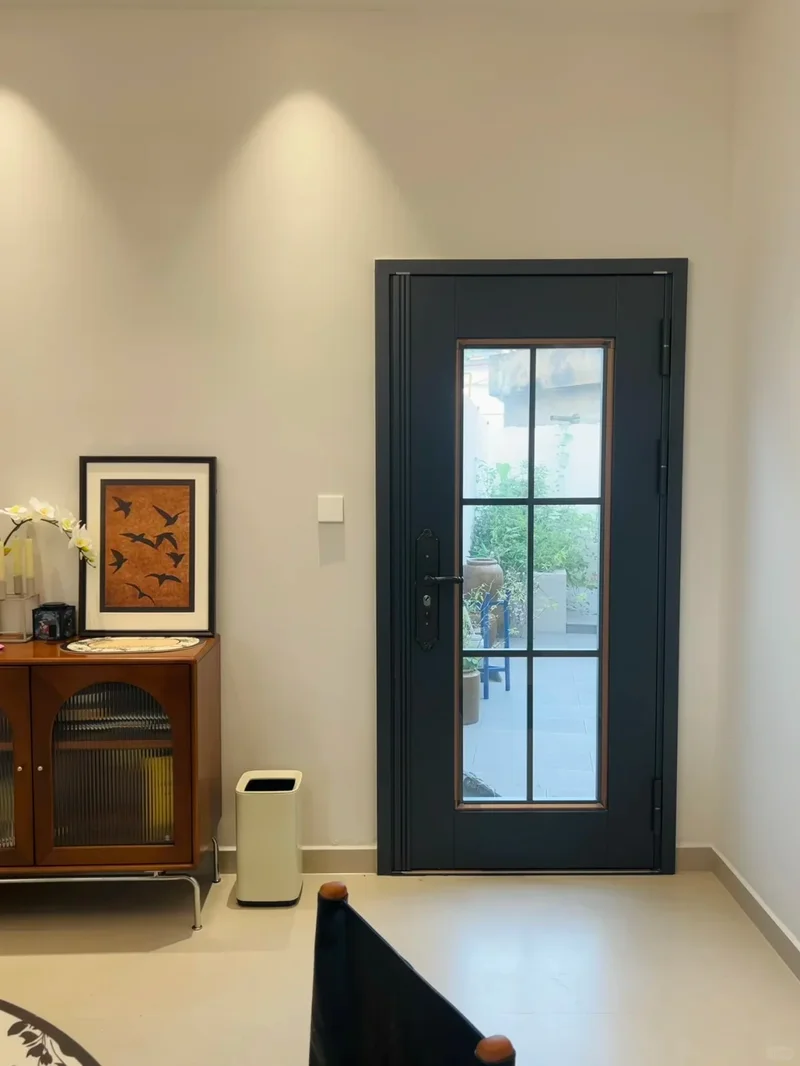
Ensure Safety and Compliance: Formaldehyde-Free Materials and Certified Quality for Building Standards
Safety and compliance are engineered into the material substrate and manufacturing process. Our 7-day prototyping utilizes a proprietary Wood-Plastic Composite (WPC) frame system and certified glass, designed to meet or exceed international building and indoor air quality standards without compromising structural integrity.
Material Science & Composition:
- WPC Core: Engineered to a density of ≥1.15 g/cm³, providing optimal strength-to-weight ratio. The precise PVC-to-wood flour ratio (typically 60:40) ensures dimensional stability, with a moisture absorption rate of <0.5% after 24-hour immersion, preventing warping and swelling.
- LVL Reinforcement: For larger door formats, a laminated veneer lumber (LVL) core is integrated. Its cross-laminated structure provides exceptional torsional stability and a consistent modulus of elasticity (MOE), critical for maintaining alignment and hardware function.
- Formaldehyde-Free Adhesives: All laminates and composite layers are bonded with isocyanate (MDI) or polyurethane-based adhesives, guaranteeing a 0.0 mg/L formaldehyde emission rating (superior to E0). This is verified via chamber testing per EN 16516 / ASTM D6007.
Certified Performance & Standards Compliance:
Our prototyping materials are pre-certified, allowing project specifications to be validated upfront.
- Fire Safety: Core materials are inherently Class B (EN 13501-1) / Class C (ASTM E84) rated. Full door assembly ratings (e.g., EI30) can be engineered for final production.
- Acoustic Performance: The multi-chamber WPC profile design, paired with 6-12mm laminated glass variants, achieves sound reduction ratings (Rw) of 32-38 dB in the prototype configuration.
- Thermal Insulation: The composite frame’s low thermal conductivity, combined with insulated glass units (IGU), results in prototype U-factors as low as 1.2 W/(m²·K).
Quality Assurance & Traceability:
Prototype components are sourced from ISO 9001:2015 certified production lines, with batch-tested material certificates. This ensures the sample you approve is materially identical to the final project delivery.
Key Technical Parameters of Prototype Materials:
| Parameter | WPC Frame | Laminated Glass (6mm) | LVL Reinforcement Core |
|---|---|---|---|
| Formaldehyde Emission | 0.0 mg/L (EN 16516) | Not Applicable | 0.0 mg/L (CARB P2 / F****) |
| Density | 1.15 – 1.25 g/cm³ | ~2.5 g/cm³ | ≥0.65 g/cm³ |
| Moisture Absorption | <0.5% (24h) | 0% | <8% (EN 317) |
| Shore D Hardness | 78 – 82 | Not Applicable | Not Applicable |
| Thermal Conductivity | 0.15 – 0.18 W/(m·K) | ~1.0 W/(m·K) | ~0.12 W/(m·K) |
| Primary Standard | ISO 21874, EN 15534 | EN 14449, ANSI Z97.1 | EN 14374, ANSI A190.1 |
This engineered approach guarantees that the approved prototype is a true technical and regulatory representation of the final product, de-risking specification and ensuring seamless compliance for high-value projects.
Seamless Integration: Technical Specifications and Installation Support for Smooth Project Execution
Material & Structural Specifications
The 7-day prototyping cycle is predicated on a standardized, engineered material system. All wood-composite frames utilize a high-density Wood Plastic Composite (WPC) core, laminated with genuine wood veneer.
- Core Composition: WPC density is maintained at ≥ 1.25 g/cm³, with a PVC-to-wood flour ratio of 60:40. This ensures optimal dimensional stability and machinability.
- Structural Integrity: Door stiles and rails are reinforced with vertically laminated LVL (Laminated Veneer Lumber) cores, providing a modulus of elasticity (MOE) of >1,800,000 psi to prevent warping and sagging.
- Surface Veneer: 0.6mm rotary-cut or sliced natural wood veneers (oak, walnut, ash, etc.) are applied with PVAc cross-linking adhesive under 8-bar pressure.
Performance Parameters & Compliance
Prototypes are fabricated to meet final production performance benchmarks, providing reliable data for project specifications.
| Parameter | Specification | Test Standard |
|---|---|---|
| Fire Rating | Class B/s2-d0 (up to Class A achievable) | EN 13501-1 / ASTM E84 |
| Formaldehyde Emission | ≤ 0.05 ppm (E0 Grade) | EN 16516 / ISO 12460-5 |
| Sound Reduction (Rw) | 28-32 dB (with 6mm/6mm insulated glass unit) | EN ISO 10140-2 |
| Thermal Insulation (U-value) | 1.8 – 2.2 W/m²K (frame only, varies with glazing) | EN ISO 10077-2 |
| Moisture Absorption | ≤ 1.2% (24h immersion, by weight) | EN 317 |
| Surface Hardness | ≥ 75 Shore D | ASTM D2240 |
- Quality Assurance: Manufacturing process is certified to ISO 9001:2015. All materials are sourced with full chain-of-custody documentation.
- Durability: The WPC core and sealed veneer finish result in a swelling rate of <0.2% after 24-hour water immersion, ensuring performance in high-humidity environments.
Installation & Integration Support
Each prototype delivery is accompanied by technical documentation to de-risk final installation.
- Detailed Shop Drawings: 1:5 scale drawings with full dimensions, cross-sections, hinge and hardware mortise details, and glass rebate specifications.
- Interface Details: Clear technical drawings for integration with standard wall systems (timber stud, metal stud, concrete), including recommended sealant types and expansion joint tolerances.
- Hardware Pre-Configuration: Frame prototypes are pre-machined for specified hinge types (e.g., 3D concealed, butt) and lock preparations, ensuring compatibility.
- Technical Dossier: A comprehensive pack containing all material datasheets, compliance certificates, and a recommended installation sequence checklist.
Functional Advantages of the Prototyping System
- Risk Mitigation: Physical validation of sightlines, material aesthetics, and hardware integration prior to full batch production.
- Schedule Certainty: The 7-day cycle aligns with fast-track project timelines, allowing for concurrent approval and procurement processes.
- Informed Specification: Enables architects to base final material and performance specifications on empirical data from a production-representative sample.
- Streamlined Procurement: The prototype’s technical package serves as a precise basis for tender documents, minimizing ambiguity and change orders.
Trusted by Professionals: Case Studies and Client Testimonials from Successful B2B Projects
Case Study 01: Boutique Hotel Chain, Coastal Region
- Project Challenge: Requiring a custom interior door solution that could withstand a high-humidity (75-85% RH) coastal environment while meeting stringent aesthetic and rapid project timeline demands. Traditional solid wood was ruled out due to dimensional instability.
- Technical Solution: Prototyped a flush door with a 45mm thick, engineered stile-and-rail frame. Core: LVL (Laminated Veneer Lumber) for torsional stability (<1% twist under load). Facing: High-density (≥1.1 g/cm³) Wood-Plastic Composite (WPC) cladding with a 70:30 wood-PVC ratio, finished with a catalyzed lacquer.
- Validated Performance Data:
- Moisture Management: Swelling rate of ≤0.8% after 24-hour water immersion (ASTM D1037), outperforming standard MDF.
- Acoustic Performance: Achieved a weighted sound reduction index (Rw) of 28 dB with integrated perimeter seals.
- Fire & Safety: Core materials certified to EN 13501-1 Class D-s2,d0; formaldehyde emissions certified to E0 grade (≤0.5 mg/L, JIS A 1460).
- Client Verification: “The 7-day prototype allowed our project team to physically test the door’s fit, finish, and hardware integration in a mock-up room. The technical datasheet confirming the low swelling rate was critical for our risk assessment and final material approval.”
Case Study 02: Corporate Headquarters Renovation, Urban Center
- Project Challenge: Sourcing large-format (1200mm x 2400mm) glass-and-wood doors for executive offices that combined a 60-minute fire integrity rating with high-design transparency and a 4-week lead time for the approval phase.
- Technical Solution: Prototyped a 90-minute fire-rated glazed door system (tested to EN 1634-1). Frame: Laminated timber core with intumescent strips in rebates. Glass: 12mm fire-resistant laminated glass with a custom ceramic frit pattern.
- Prototype Focus & Data:
- Structural Integration: Verified the compatibility of the fire-rated glass unit with the proprietary frame gasket system under load.
- Thermal Performance: Calculated a U-factor of 1.8 W/(m²·K) for the full assembly, contributing to the building’s energy model.
- Surface Hardness: Specified a Shore D hardness of 75 for the WPC elements to ensure resistance to impact in high-traffic areas.
- Architect Testimonial: “The fast-track prototype was not a mock-up but a fully functional sample. We could verify the fire seal activation clearance and the aesthetic alignment of the frit pattern across multiple doors. This de-risked the entire procurement process.”
Comparative Technical Parameters from Recent Prototyping Engagements
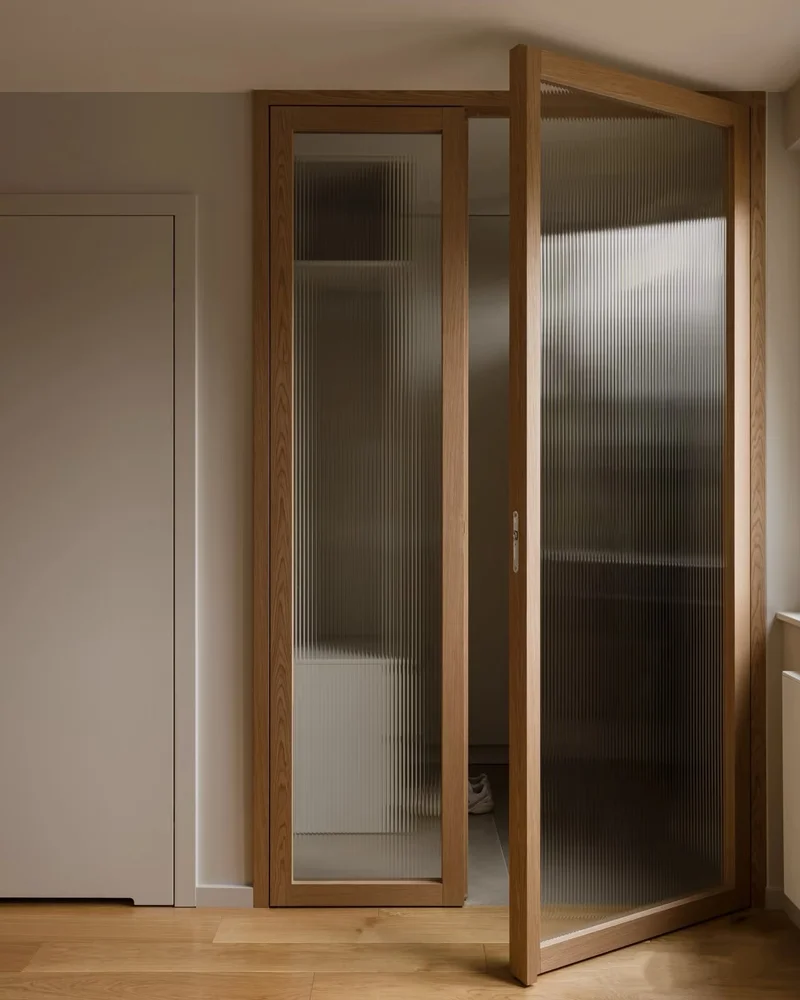
The following table summarizes key material and performance specifications validated through our 7-day prototyping process for distinct project applications.
| Project Profile | Core Material & Density | Primary Cladding / Facing | Critical Validated Performance Metric | Prototype Purpose |
|---|---|---|---|---|
| Luxury Residential Tower | LVL Core, 650 kg/m³ | 5mm Real Wood Veneer, Oak | Formaldehyde Emission: E0 Grade (0.3 mg/L) | Confirm air quality compliance & finish under project lighting. |
| University Laboratory | Particleboard Core, 720 kg/m³ | HPL (High-Pressure Laminate), 0.8mm | Chemical Resistance: ≤0.5% weight change after 24h (ASTM D1308) | Test cleanability and resistance to common lab reagents. |
| Healthcare Facility | Solid Timber Frame, Kiln-Dried | WPC, Density 1.15 g/cm³ | Moisture Absorption: <12% after 7 days (high-humidity cycle) | Verify dimensional stability in patient washroom applications. |
Endorsement from a Lead Contractor: “Our supply chain depends on predictability. Submitting a physical, technically documented prototype for architect and client sign-off eliminates subjective interpretation of datasheets. We have consistently reduced approval cycles by 3-4 weeks, locking in project timelines. Their material science team’s support in providing test-compliant documentation for the prototypes is as valuable as the sample itself.”
Frequently Asked Questions
How do you prevent moisture-induced warping in wood-glass door frames during fast prototyping?
Our WPC frames use 1,250 kg/m³ high-density cores with co-extruded 0.5mm PVC protective cladding, achieving ≤0.1% water absorption. The integrated LVL reinforcement and moisture-barrier seals at joints lock out humidity, ensuring dimensional stability per ASTM D1037 standards, even in high-humidity environments.
What formaldehyde emission standards do your custom door materials meet?
All composite materials are certified E0 (≤0.5 mg/L) and EN 717-1 compliant, with independent lab reports available. We use isocyanate-free adhesives and UV-cured acrylic finishes that fully encapsulate substrates, eliminating off-gassing risks for indoor air quality-sensitive projects like hospitals or schools.
How is thermal insulation performance validated in your 7-day prototypes?
Prototypes feature 22mm multi-chamber WPC profiles with argon-filled double glazing (Low-E coating, 16mm air gap). This achieves a U-value of ≤1.2 W/(m²·K). Thermal bridge breaks are verified via infrared imaging, matching performance of production units for accurate project specification.
What impact resistance can be expected from the glass and frame composite?
The laminated glass uses 1.52mm PVB interlayer, achieving Class C impact rating per ANSI Z97.1. The WPC frame withstands 150 J/cm² impact force without deformation, due to its fiber-reinforced polymer matrix and integrated steel stiffeners at stress points.
How do you ensure long-term structural integrity against warping or sagging?
We embed galvanized steel reinforcement within WPC profiles and use 3-point mortise lock systems distributing load across the frame. Hinge sides are reinforced with 3mm steel plates, preventing sagging beyond 1.5mm over 10 years under 100kg cyclic load testing.
What sound insulation levels do your wood-glass door assemblies provide?
Our 45mm thick WPC frame with asymmetric gasket seals and 8/16/8mm laminated glass achieves 38-42 dB Rw sound reduction. The acoustic decoupling design at mullion connections minimizes flanking transmission, suitable for office partitions or hotel room entries.
Are UV-resistant finishes included in fast prototyping, and how are they tested?
Yes, all prototypes receive 80-micron UV-cured acrylic coatings with HALS stabilizers, tested per ISO 16474-3 for 2,000 hours of QUV exposure without color shift (ΔE<2). This ensures long-term fade resistance for sun-exposed installations.