Wood glass door engineering measurement/design/glass cutting/installation full-cycle service
In the realm of architectural detail and interior craftsmanship, the integration of wood and glass in door systems represents a pinnacle of both aesthetic appeal and technical precision. Achieving a flawless result demands more than just skilled labor; it requires a seamlessly coordinated full-cycle service. From the initial, critical engineering measurements that ensure a perfect fit within your unique space, through to bespoke design that balances vision with structural integrity, followed by the exacting science of glass cutting and tempering, and culminating in meticulous installation—each phase is an interdependent link in a chain of quality. This holistic approach transforms a simple opening into a statement of elegance, durability, and refined engineering, guaranteeing that your wood glass door is not merely installed, but masterfully realized.
Achieving Architectural Harmony: How Our Full-Cycle Service Transforms Your Vision into Reality
The architectural integrity of a project hinges on the precise execution of its components. Our full-cycle engineering service for wood-glass doors is a technical discipline that ensures the final installation is a direct, uncompromised translation of the architectural vision. This is achieved through a controlled, integrated workflow where each phase is governed by material science and engineering standards, eliminating the performance gaps typical of multi-vendor procurement.
Engineering Integration: From Specification to Site
The transformation begins with measurement and design, which are treated as a single, data-driven engineering phase. Our measurement protocols account for structural tolerances, hinge load paths, and thermal expansion coefficients of adjoining materials. The design phase then engineers the door system around this data, specifying:
- Core Material Stability: Selection of LVL (Laminated Veneer Lumber) cores for dimensional stability (<0.1% swelling rate under 65% RH) or high-density WPC (Wood Plastic Composite) cores (≥ 0.85 g/cm³) for extreme humidity environments, preventing warping and ensuring long-term alignment.
- Composite Performance: Precise PVC-wood ratio in composite profiles to optimize Shore D hardness (75-85) for impact resistance while maintaining machinability for clean joinery.
- Glass & Glazing Engineering: Structural calculations for glass thickness, double/triple glazing cavity dimensions, and low-E coating placement to meet target U-factors (as low as 0.8 W/m²K) and STC ratings (up to 45 dB). All cutting follows CNC precision with edgework polished to EN 12150 standards for structural integrity.
Technical Performance Assurance
Every component is specified to meet or exceed international benchmarks, creating a predictable and certified performance envelope for the architect and contractor.
| Performance Parameter | Standard / Grade | Typical Specification | Architectural Benefit |
|---|---|---|---|
| Structural & Durability | EN 14351-1, ASTM E330 | LVL Core, Load Rating ≥ 1200N | Guaranteed longevity, compliance with building codes. |
| Fire Resistance | EN 13501-2, ASTM E84 | Integrity up to 60/90 minutes (EI2) | Life-safety system integration, compartmentalization. |
| Emissions & Safety | ISO 9001, EN 13986 | Formaldehyde Emission Grade E0 / CARB2 | Ensures indoor air quality (IAQ) for sustainable projects. |
| Moisture Resistance | EN 321 (Cyclic Test) | Moisture Absorption < 12% (WPC Core) | Stability in high-humidity zones (lobbies, bathrooms). |
| Acoustic Insulation | EN ISO 10140, ASTM E90 | STC Rating 38 – 45 dB | Effective sound reduction for private offices, studios. |
Functional Advantages of the Full-Cycle Model
- Single-Point Accountability: One engineering team manages the entire technical data flow, from initial site survey to final installation torque specifications, ensuring no loss of critical performance intent.
- Predictable Performance: By controlling material sourcing, fabrication, and glazing in-house, we guarantee that the tested laboratory performance metrics (U-factor, STC, fire rating) are delivered in the field-installed product.
- Seamless Integration: Engineered installation kits and method statements ensure the door system interfaces correctly with the surrounding architecture—whether for curtain wall mullions, interior partitions, or specialized hardware—preserving the designed aesthetic and functional lines.
- Risk Mitigation: Eliminates coordination errors between separate measurers, fabricators, and glaziers, directly reducing on-site rework, delays, and cost overruns for the main contractor.
This end-to-end engineering control is what transforms a conceptual detail into a realized, high-performance architectural element. The result is not just a door, but a fully certified building component that performs as specified, installed with precision, and delivers on the promised architectural harmony.
Precision from the Start: The Critical Role of Professional Measurement in Door System Performance
Accurate field measurement is the non-negotiable foundation upon which every high-performance wood-glass door system is built. It is the first and most critical control point in the quality chain, directly determining the success of design, fabrication, and long-term operational integrity. Errors at this stage are geometrically compounded, leading to costly remediation, compromised performance, and project delays.
Core Engineering Principles Dependent on Measurement
The dimensional data captured on-site dictates the engineering of every component:
- Frame and Leaf Fabrication: Precise opening dimensions (width, height, wall depth, squareness) are input directly into CNC machinery. This ensures the structural frame—whether solid wood, engineered wood (LVL), or Wood-Plastic Composite (WPC)—is milled to exact tolerances. For WPC profiles, this precision ensures consistent density and optimal PVC-wood polymer ratio are maintained at all joints.
- Glass Infill Specification: The measured glazing rebate size dictates the final glass panel dimensions, including the critical edge clearance for structural silicone or gasket systems. An error of even 2mm can exceed the allowable stress tolerance in the glass edge, risking fracture.
- Hardware Integration: Measurements for hinge locations, lock prep, and closer mounting must account for the door leaf’s weight and pivot points. Inaccurate placement leads to premature wear, sagging, and failure to meet cycle-testing standards (e.g., ANSI/BHMA A156.115).
- Seal and Gasket Performance: The perimeter gap dimension, derived from the difference between the opening and the door leaf size, specifies the gasket compression ratio. This is the primary variable affecting the system’s acoustic insulation (dB reduction) and air/water infiltration ratings (ASTM E283, E1105).
Consequences of Measurement Variance
A deviation of ±3mm from design specifications can induce systemic failures:
| Performance Category | Consequence of Dimensional Error | Technical Impact |
|---|---|---|
| Structural & Durability | Binding, racking, or excessive hinge stress. | Compromises LVL core stability; induces permanent deformation in WPC frames; exceeds hardware load ratings. |
| Weather & Acoustics | Inconsistent gasket compression or gaps. | Fails to achieve specified U-factor for thermal insulation; allows water ingress; reduces sound transmission class (STC) rating. |
| Fire & Safety | Gaps exceeding fire seal expansion tolerance. | Voids the fire resistance rating (e.g., EN 1634-1, 20/30/60-minute integrity); prevents proper smoke sealing. |
| Aesthetic & Quality | Visible misalignment, uneven reveals. | Fails to meet architectural finish standards; highlights poor craftsmanship. |
The Professional Measurement Protocol
Our methodology moves beyond simple tape measurements to a forensic analysis of the opening:
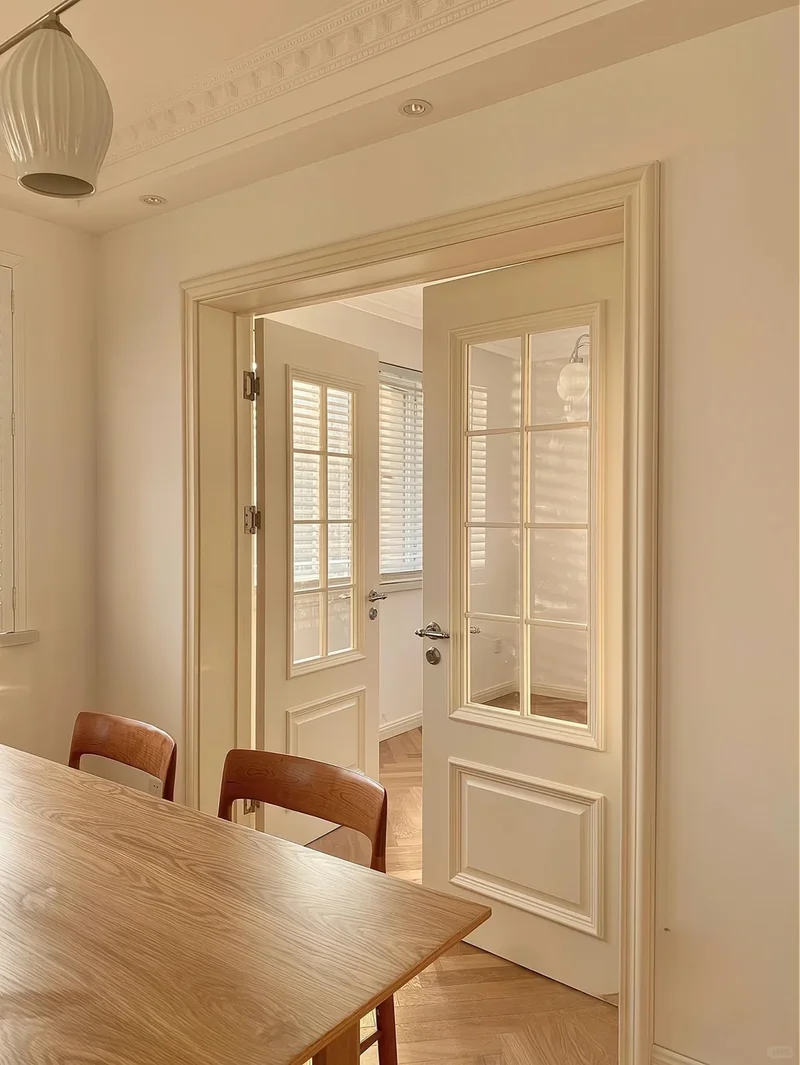
- Geometric Verification: Using laser levels and digital angle finders to document plumb, level, and squareness of all jambs. Out-of-tolerance conditions are flagged for design adaptation or site correction before fabrication.
- Environmental Baseline: Assessment of site conditions (ambient humidity, temperature) that will affect material behavior. This data informs the selection of materials with appropriate moisture absorption rates (<8% for interior, <12% for exterior-grade engineered wood) and expansion joint calculations.
- Substrate Analysis: Evaluation of the surrounding wall construction to specify appropriate fixing methods, ensuring the frame can handle the dead load of heavy glass configurations and dynamic operational loads.
- Digital Documentation: Creation of a comprehensive, dimensioned survey diagram that becomes the binding reference for all subsequent engineering, procurement, and installation phases, ensuring traceability per ISO 9001 principles.
In essence, professional measurement is the process of translating a physical architectural space into a precise, actionable dataset. It is the prerequisite for engineering a door system that delivers on its promised material specifications—from E0/E1 formaldehyde emission compliance and Shore D surface hardness to its designed service life—without compromise.
Designing for Durability and Aesthetics: Custom Engineering Solutions for Every Environment
The core engineering challenge for wood glass doors is resolving the inherent material conflict between wood’s hygroscopic nature and glass’s dimensional stability. Our custom solutions begin with a forensic analysis of the operational environment, which dictates the composite material specification, glass treatment, and sealing system.
Material Engineering & Core Specifications
- Frame Core Stability: We utilize LVL (Laminated Veneer Lumber) cores for high-load or wide-span doors, providing superior dimensional stability (≤0.1% linear expansion under cyclic humidity) compared to solid timber. For ultra-humid environments, a closed-cell PVC or aluminum thermal break core is integrated.
- Cladding Performance: Exterior cladding options are engineered for specific exposures:
- WPC (Wood-Plastic Composite): High-density (≥1.2 g/cm³) formulations with UV stabilizers and anti-fungal agents for coastal or high-moisture zones. The plastic matrix ensures water absorption rates below 0.5%.
- Real Wood Veneers: Applied over stabilized cores, with performance dictated by finish. Multi-step catalyzed lacquer systems (≥7 layers) achieve a Shore D hardness of >85 for scratch resistance.
- Formaldehyde & Fire Compliance: All composite materials and adhesives are certified to E0 (≤0.5 mg/L) or E1 (≤1.5 mg/L) formaldehyde emission grades. Fire-rated assemblies are engineered to meet specified integrity (E) and insulation (I) durations per EN 13501-2 or ASTM E119.
Glass Performance Integration
Glass is not merely an infill but a primary structural and performance component. Laminated glass is standard for safety and acoustics, with the PVB or SGP interlayer thickness tuned for performance.
| Performance Goal | Typical Glass Specification | Key Technical Parameter |
|---|---|---|
| Acoustic Insulation | Laminated Glass (6mm/1.52mm PVB/6mm) + asymmetric air gap + sealed secondary glazing. | Achieves Rw (C; Ctr) up to 42 (-1; -4) dB. |
| Thermal Insulation | Double or triple glazing with Low-E coatings, argon fill, and warm-edge spacers. | Can achieve center-pane U-factors as low as 0.5 W/(m²·K). |
| Solar & Security | Laminated glass with thicker SGP interlayer (e.g., 2.28mm or 3.04mm) or integrated polycarbonate sheets. | Meets impact resistance standards (e.g., CPSC 16 CFR 1201 Cat II) and reduces solar heat gain (SHGC <0.3). |
Sealing System & Hardware Engineering
Durability is ultimately defined by the seal. We specify compression-grade EPDM or silicone gaskets with a minimum projected service life of 25 years, based on ISO 11600 standards for movement capability and recovery. Hardware is selected for a minimum 500,000-cycle rating (ANSI/BHMA A156.115 Grade 1), with pivot systems engineered for doors exceeding 300kg. The integration of threshold seals, drainage weep systems, and pressure-equalized framing details is critical for preventing moisture ingress and ensuring long-term operational smoothness.
Aesthetic Cohesion
Custom engineering enables aesthetic precision. This includes:
- Precision Joinery: CNC-machined mortise and tenon or double-tenon joints for invisible, strong corner connections.
- Sightline Optimization: Structurally calculated minimal frame profiles (down to 45mm sightlines) using reinforced aluminum sub-frames within wood cladding.
- Finish Durability: Digital UV-printing or ceramic frit patterns on glass for permanent decorative effects, or matched opaque stains on wood that penetrate the finish layer to resist wear.
The final design is a performance model, with every component—from core density to gasket durometer—documented in a technical submittal package for architect and contractor review.
Flawless Glass Integration: Advanced Cutting and Fabrication for Perfect Seals and Safety
Flawless glass integration is a non-negotiable requirement for structural integrity, longevity, and occupant safety. It is a precise engineering discipline that begins with material specification and ends with a hermetically sealed, structurally sound assembly. The process is governed by the interplay between the glass unit, the door’s composite frame, and the sealing systems.
Material Compatibility and Engineering Tolerances
The dimensional stability of the door substrate is paramount. Advanced wood-plastic composites (WPC) and laminated veneer lumber (LVL) cores are engineered for minimal thermal expansion and moisture absorption, providing a stable datum for glass installation.
- Frame Stability: A high-density WPC core (≥ 0.65 g/cm³) or a cross-laminated LVL core ensures the glazing rebate maintains its geometry, preventing stress transfer to the glass. PVC-wood composite ratios are optimized for a Shore D hardness of 75-85, providing a resilient yet rigid sealing surface.
- Sealant Chemistry: Dual-sealant systems are employed. A structural silicone (ASTM C920) provides permanent adhesion and load transfer, while a secondary polysulfide or thermoplastic elastomer weather seal accommodates micro-movements. Compatibility testing between sealants, frame coatings, and glass coatings (e.g., low-E) is mandatory.
Precision Cutting and Fabrication Protocol
Glass cutting is performed via computer-numerical-control (CNC) diamond-head routers following DIN 1249 and ANSI Z97.1 tolerances. This ensures not just dimensional accuracy, but critical edgework quality.
- Edgework: Seamed and polished edges (ISO 12543-3) are not an aesthetic choice; they eliminate micro-fractures that can propagate under stress and provide a consistent surface for sealant adhesion.
- Lamination & Tempering: For safety and security, glass is consistently configured as laminated tempered (HS) or heat-soaked tempered (HST). Laminated interlayers (typically 1.52mm PVB or 1.1mm SGP) provide post-breakage integrity and acoustic damping. Heat soaking (EN 14179-1) mitigates the risk of nickel sulfide-induced spontaneous breakage.
Performance-Driven Glazing Specifications
The glazing unit is a engineered component selected for its performance contribution to the overall door system.
| Performance Parameter | Typical Specification | Standard / Test Method | Functional Impact |
|---|---|---|---|
| Thermal Insulation (U-factor) | ≤ 1.1 W/m²K | EN 673 / NFRC 100 | Reduces condensation risk at the glass edge seal and improves overall door U-value. |
| Sound Reduction (Rw) | Up to 42 dB (C;tr) | EN ISO 10140 | Achieved with asymmetric laminated glass, thickened interlayers, and insulated glass unit (IGU) cavity gas fills (Argon/Krypton). |
| Safety & Impact Rating | Class 2B1 (Tempered & Laminated) | ANSI Z97.1 / CPSC 16 CFR 1201 | Mandatory for full-length glazing. Laminated glass maintains barrier upon outer pane failure. |
| Fire Resistance Integrity | Up to 60 minutes (E) | EN 1364-1 / ASTM E119 | Utilizes fire-rated ceramic glass or intumescent gel-filled units within a rated frame assembly. |
| Solar Heat Gain Coefficient (SHGC) | 0.20 – 0.40 | EN 410 / NFRC 200 | Managed with low-E coatings (soft-coat #2 or #3, pyrolytic hard-coat) to control interior heat gain. |
Structural Glazing and Seal Integrity
The method of glass retention is critical. For frameless or minimal-frame designs, structural silicone glazing (SSG) is employed, with bond strength calculations per ASTM C1401. For traditional captured systems, the use of continuous, compression-fit glazing gaskets (EPDM or TPV) with a minimum compression set of <25% (ASTM D395) ensures a permanent weather seal. The glazing cavity is often back-filled with a closed-cell polyethylene foam rod and a desiccant to manage residual moisture and prevent sealant deformation.
Quality Assurance and Compliance
Every integration step is documented under ISO 9001 protocols. This includes:
- Batch testing of glass for optical distortion (ASTM C1651) and thickness tolerance.
- Adhesion and cohesion testing of sealant samples (ASTM C794).
- Final assembly testing for air infiltration (≤ 0.5 cfm/ft² per ASTM E283), water penetration resistance (ASTM E331), and structural performance under uniform load (ASTM E330).
Guaranteed Installation Excellence: Ensuring Structural Integrity and Long-Term Reliability
Guaranteed Installation Excellence: Ensuring Structural Integrity and Long-Term Reliability
Structural integrity begins with the precise integration of engineered materials and components. Our installation protocols are engineered to activate the designed performance of the door system, ensuring long-term reliability by mitigating stress, accommodating environmental movement, and preserving material properties.
Core Installation Principles for Engineered Wood & Glass Systems:
- Frame Integrity & Load Distribution: Installation secures the engineered wood composite (WPC) or solid wood frame to the structural opening using a calculated fastener pattern. This distributes operational loads (hinge, lock, daily use) and prevents point-load stress concentrations that can compromise the LVL (Laminated Veneer Lumber) core’s dimensional stability or induce glass stress.
- Moisture Management Sealing: A continuous, multi-stage sealant barrier is applied at the interface between the door frame and the building structure. This is critical for controlling the moisture absorption rate of wood-based materials, preventing swelling beyond the engineered tolerance (typically <0.8% for premium WPC), and maintaining consistent thermal insulation (U-factor) performance.
- Glass Isolation & Stress Relief: Laminated or insulated glass units (IGUs) are installed within a resilient, closed-cell glazing gasket system. This isolates the glass from direct metal-to-glass contact and frame vibration, a primary factor in achieving the rated acoustic performance (e.g., 35-42 dB Rw reduction) and preventing thermal stress fracture.
- Hardware Integration for Longevity: Hinges and multi-point locking systems are mounted to pre-reinforced zones within the door leaf using through-bolts into stainless steel anchor plates. This ensures cyclic load resistance over the door’s service life, maintaining alignment and preventing sag that could compromise weather seals and security.
Technical Parameters & Performance Benchmarks
The following table outlines key material and performance standards verified and preserved through correct installation.
| Parameter | Standard / Grade | Performance Benchmark | Relevance to Installation |
|---|---|---|---|
| Formaldehyde Emission | EN 13986 / E0/E1 | ≤ 0.065 mg/m³ (E0) | Proper sealing and ventilation during/after installation maintain indoor air quality compliance. |
| Fire Resistance Integrity | EN 1634-1 / ASTM E119 | 30/60/90 min (EI classification) | Preserves the integrity of intumescent seals and non-combustible glass barriers within their frame assembly. |
| Dimensional Stability (Swelling) | EN 317 / ASTM D1037 | ≤ 0.8% thickness swell (24h water immersion) | Correct sealing and drainage directly control exposure, keeping swelling within engineered limits. |
| Thermal Insulation (U-Factor) | EN ISO 10077-1 / ASTM C1363 | U ≤ 1.6 W/(m²·K) for full system | Ensures thermal break continuity and glass spacer alignment, preventing condensation and heat loss. |
| Surface Hardness | ASTM D2240 (Shore D) | ≥ 75 (for high-wear WPC finishes) | Protects the wear layer from impact during fitting and ensures long-term resistance to abrasion. |
Quality Assurance Protocol: Every installation is validated against a project-specific checklist derived from ISO 9001 quality management principles. This includes post-installation verification of plumb/level tolerances (<1.5mm/m), sealant continuity, hardware operation torque, and final clearance checks to ensure unimpeded thermal and acoustic performance. This systematic approach transforms material specifications and design calculations into guaranteed, in-situ performance.
Beyond the Installation: Our Commitment to Ongoing Performance and Client Satisfaction
Our full-cycle service model is engineered to ensure that performance specifications are met not only at handover but throughout the operational lifespan of the door system. We achieve this through material integrity, precision manufacturing, and data-backed performance guarantees.
Post-Installation Performance Assurance
- Material Stability Monitoring: We provide a material dossier for each project, detailing batch-specific properties. This includes WPC core density (≥ 0.75 g/cm³), PVC-wood composite ratios, and LVL core cross-banding specifications to predict and prevent warping or torsional failure.
- Long-Term Seal Integrity: Our glazing systems use structural silicone and EPDM gaskets rated for specific movement accommodation (±5mm shear, ±3mm compression). We specify Shore A hardness and compression set values to ensure lasting weather-tightness and acoustic seals.
- Structural Load Durability: Hinge and pivot systems are selected based on cyclic load testing (exceeding 200,000 cycles per EN 1935) and calculated for the specific door leaf weight and frequency of use, preventing sag and ensuring smooth operation.
Technical Support & Lifecycle Management
Our commitment extends to providing actionable data for facility management.
| Performance Aspect | Key Parameter | Our Standard | Typical Industry Baseline |
|---|---|---|---|
| Fire & Smoke Integrity | Fire Rating (Insulation/Integrity) | EI 30/60 (EN 1634-1) | E 30/60 |
| Acoustic Performance | Weighted Sound Reduction (Rw) | Up to 42 dB (EN ISO 10140) | Up to 35 dB |
| Emissions Compliance | Formaldehyde Emission Grade | E0 (≤ 0.5 mg/L, JIS F**** equivalent) | E1 (≤ 1.5 mg/L) |
| Moisture Resistance | Thickness Swelling (24h immersion) | ≤ 8% (EN 317) | ≤ 12% |
| Thermal Insulation | U-factor (Center of Glass) | As low as 1.1 W/(m²·K) | ~1.6 W/(m²·K) |
- Predictive Maintenance Scheduling: Based on the installed hardware’s duty cycle rating, we provide a recommended maintenance interval schedule for adjustments, seal inspection, and hardware lubrication.
- Performance Verification: We offer post-occupancy evaluation services, including on-site acoustic testing or thermal imaging to verify in-situ performance against design models.
- Documentation & Traceability: All components are traceable via mill certificates, test reports (ASTM E1300 for glass, EN 14351-1 for overall performance), and our ISO 9001:2015 certified quality management records, simplifying future renovations or warranty claims.
Client satisfaction is defined by the absence of callbacks. Our engineered approach, from material science to installed performance data, is designed to deliver precisely that—doors that perform as specified, year after year.
Frequently Asked Questions
What are the critical technical specifications for wood-plastic composite (WPC) door cores to prevent warping in humid climates?
For dimensional stability, specify WPC density ≥ 650 kg/m³ and moisture absorption < 0.5%. The core must integrate an LVL (Laminated Veneer Lumber) reinforcement grid and a balanced PVC coating of at least 0.5mm. This controls differential expansion, ensuring flatness by counteracting internal stresses from humidity fluctuations.
How do you ensure compliance with stringent formaldehyde emission standards (E0/EN) in engineered door components?
We mandate that all wood-based composites, adhesives, and finishes supply certified test reports from accredited labs (e.g., CARB Phase 2 or EN 717-1). Our procurement specifies E0 grade (≤0.5 mg/L) materials exclusively. Factory pre-assembly with PUR adhesive further seals emission pathways, guaranteeing indoor air quality compliance post-installation.
What glass specifications are required for doors to achieve optimal thermal insulation and impact safety?
For insulation, use double-glazed units (≥24mm air gap) with Low-E coating and argon fill (U-value ≤1.1 W/m²K). For safety, specify tempered or laminated glass (minimum 6+6mm), achieving Class 3 impact resistance. The spacer must be warm-edge to prevent condensation and thermal bridging at the perimeter.
What is the engineering protocol for precise door measurement to accommodate building settlement and seasonal expansion?
Our protocol includes triplicate measurements at top, middle, and bottom of the rough opening, noting floor level variances. We add a calculated tolerance gap (typically 3-5mm per side) based on the project’s local annual humidity range and the material’s documented expansion coefficient, ensuring a perfect fit year-round.
How is sound insulation performance quantified and achieved in wood-glass door systems?
Target a weighted sound reduction index (Rw) of ≥32 dB. This is engineered using a solid core, asymmetric glass thicknesses (e.g., 6mm/10mm), and perimeter seals with magnetic or compression gaskets. The critical detail is a fully gasketed, multi-point locking system to eliminate air leakage paths.
What finishing process guarantees long-term UV and wear resistance for exterior door surfaces?
We apply a 5-stage automated finishing line: base coat, grain printing, two layers of catalyzed polyurethane top coat, and a final UV-cured protective layer. This creates a 80-100 micron film thickness with a 3H+ pencil hardness rating, ensuring colorfastness and resistance to abrasion and solar degradation for over 10 years.
What installation method prevents structural stress and ensures the longevity of large glass door panels?
Employ a structural silicone glazing (SSG) or pressure-plate system that allows for controlled linear movement. The panel must be set on reinforced, adjustable stainless steel pivots or hinges with polymer bushings. This creates a floating installation, transferring wind loads to the frame while isolating the glass from operational stresses.