Wood Glass Door Export to EU: CE Certified with REACH-Compliant Glass
In the sophisticated landscape of European construction and design, exporting wood glass doors demands more than aesthetic appeal; it requires a steadfast commitment to stringent regulatory standards. Successfully entering this discerning market hinges on two critical pillars: CE certification and REACH compliance. The CE mark is your passport, a mandatory declaration that your doors meet the EU’s essential health, safety, and environmental performance requirements for construction products. Complementing this, REACH-compliant glass ensures that every pane is manufactured without hazardous substances, safeguarding both indoor air quality and environmental integrity. Together, these credentials do not merely satisfy legal obligations—they build trust, demonstrate quality, and position your products as reliable, responsible choices for architects, builders, and homeowners across the European Union.
Engineered for European Market Compliance: CE Certification and REACH-Compliant Glass for Safe, Legal Export
CE Certification: Mandatory Conformity for Construction Products
Our wood glass doors are manufactured and tested to achieve CE marking under the Construction Products Regulation (EU) No. 305/2011. This is not a quality mark but a legal declaration that the product conforms to its declared performance under the harmonized European standard EN 14351-1:2006+A2:2016 for windows and external pedestrian doorsets.
The CE process involves:
- Assessment & Testing: Rigorous evaluation by a notified body for essential characteristics, including load-bearing capacity, durability, and safety in use.
- Factory Production Control (FPC): Ongoing, audited internal production control systems to ensure consistent conformity, often aligned with ISO 9001.
- Declaration of Performance (DoP): A legally binding document provided with each shipment, specifying the product’s performance for key characteristics such as:
- Load-bearing capacity: Tested to EN 947 for hinged doors.
- Air permeability (Class 4), Water tightness (Class 9A), and Wind resistance (Class C5): Assessed per EN 12211 and EN 12208.
- Thermal transmittance (U-value): Critical for building energy performance, calculated or tested per EN 10077-2.
- Acoustic performance (Rw): Sound reduction index tested per EN ISO 10140, with values up to Rw 37 dB achievable in specialized configurations.
- Fire resistance: Where specified, doors can be engineered to meet classifications per EN 13501-2 (e.g., EI30, EI60).
REACH-Compliant Glass: Material Safety by Regulation
All glazing units comply with the EU’s REACH regulation (EC 1907/2006), which restricts hazardous substances. This ensures the safety of installers and end-users and guarantees unimpeded market access.
- Glass Composition: We utilize float glass where the chemical composition is controlled to avoid substances on the REACH Candidate List (e.g., lead, cadmium compounds).
- Interlayer & Sealants: The polyvinyl butyral (PVB) or ethylene-vinyl acetate (EVA) interlayers in laminated glass, as well as all edge-sealing spacers and sealants, are formulated without SVHCs (Substances of Very High Concern).
- Coated Glass: Any low-emissivity (Low-E) or solar control coatings are sourced from certified suppliers providing full REACH compliance documentation.
Engineered Material Specifications for Performance & Durability
The door’s structural integrity and longevity are derived from advanced material engineering.
Core & Frame Composition:
- LVL (Laminated Veneer Lumber) Core: Provides superior dimensional stability and load-bearing capacity compared to solid timber. Engineered to minimize warping and twisting, with a controlled moisture content of 8±2%.
- WPC (Wood-Plastic Composite) Elements: Formulated for ultra-low moisture absorption (<0.5% by volume) and high resistance to fungal decay. Typical density ranges from 1.25–1.35 g/cm³, and Shore D hardness exceeds 65.
- Surface Laminates: High-pressure laminates (HPL) or real wood veneers are bonded with E0-grade (<0.5 mg/l HCHO) formaldehyde emission adhesives, exceeding the stringent E1 (<0.124 mg/m³) classification per EN 16516.
Performance Data Table:
| Characteristic | Test Standard | Performance Range / Typical Value | Notes |
|---|---|---|---|
| Door Leaf Thermal Transmittance (UD) | EN 12412-2 / EN ISO 10077-2 | 1.1 – 1.8 W/m²K | Dependent on glazing unit (e.g., triple Low-E argon) and frame depth. |
| Sound Reduction (Rw) | EN ISO 10140-2 | 32 – 37 dB | Achieved with asymmetric glass thicknesses (e.g., 6/10/4) and acoustic PVB interlayers. |
| Moisture Absorption (WPC) | EN 317 | < 0.5 % (by vol.) | 24-hour immersion test. Critical for dimensional stability. |
| Formaldehyde Emission | EN 16516 | Class E0 / <0.5 mg/l | Chamber method; meets most stringent indoor air quality protocols. |
| Swelling (Thickness, 24h) | EN 317 | < 0.8% | For WPC and engineered wood components. |
| Fire Resistance | EN 13501-2 | EI 30 / EI 60 | When specified; includes integrity and insulation criteria. |
Functional Advantages for Architects and Contractors
- Guaranteed Market Access: CE marking and REACH compliance eliminate technical barriers to trade within the EU.
- Predictable Performance: All critical performance parameters are quantified and declared in the DoP, enabling accurate specification and building simulation.
- Long-Term Stability: Engineered materials (LVL, WPC) ensure minimal deflection, swelling, or shrinkage, reducing call-backs and maintaining aesthetic integrity.
- Integrated Safety: REACH compliance mitigates liability risks associated with hazardous substances, while CE-marked safety glazing (EN 12600) is standard.
- Sustainability Alignment: Low formaldehyde emissions (E0) and responsibly sourced materials contribute to green building certifications (e.g., BREEAM, DGNB).
Superior Structural Stability and Durability: High-Performance Wood Glass Doors Built for Long-Term Use
The structural integrity of a wood glass door is defined by its core, frame, and glazing system. Our doors are engineered for a 30-year service life in commercial and high-traffic residential applications, exceeding the baseline requirements of EN 14351-1 for windows and doors.
Core & Frame Engineering
- LVL (Laminated Veneer Lumber) Core: Utilizes cross-laminated veneers with alternating grain direction, providing dimensional stability superior to solid timber. This minimizes warping (<1.5% linear change) and ensures consistent performance under varying climatic stresses as per EN 942.
- High-Density WPC (Wood Plastic Composite) Frames: Engineered with a wood flour/PVC ratio optimized for a density of ≥1.3 g/cm³. This yields a Shore D hardness of >75, resulting in exceptional resistance to impact, scratching, and surface deformation.
- Advanced Joinery: Corner joints employ precision-machined mortise-and-tenon or double-dowel configurations, reinforced with structural polyurethane adhesives meeting EN 204 durability class D4 (resistant to intermittent boiling water).
Material Performance Specifications
Critical parameters for long-term durability are rigorously tested and certified.
| Parameter | Test Standard | Performance Grade | Implication for Longevity |
|---|---|---|---|
| Formaldehyde Emission | EN 16516 (EU) / JIS A 1460 | E0 (≤0.05 mg/m³) | Ensures indoor air quality compliance and material chemical stability. |
| Moisture Absorption (24h) | EN 317 (for WPC) | ≤0.8% by weight | Exceptional dimensional stability in high-humidity environments (e.g., bathrooms, coastal areas). |
| Swelling Rate (Thickness, 24h) | EN 317 | ≤0.5% | Prevents binding in the frame, ensuring consistent operation. |
| Fire Reaction (Frame Material) | EN 13501-1 | Class B-s2, d0 (standard) | Low contribution to fire, no dripping; Class A2 optional for specified projects. |
| Sound Reduction (Rw) | EN ISO 10140-2 | Up to 42 dB (with insulated glass unit) | Achieved through multi-chamber frame design, asymmetric glass thickness, and acoustic seals per EN 12210. |
| Thermal Insulation (Uf) | EN 10077-2 | Uf ≤ 1.2 W/m²K | High-performance thermal break and low-conductivity materials reduce heat transfer and condensation risk. |
Integrated Glazing System Stability
The structural performance is contingent on the glazing unit’s integration. Our REACH-compliant, CE-marked insulating glass units (IGUs) are bonded into the frame using structural silicone and compression gaskets per ETAG 002. This creates a composite structure where the glass contributes to the door’s overall rigidity, resisting racking forces and maintaining air/water tightness (Class 9A according to EN 12208 and 9B according to EN 12207) over decades.
Quality Assurance for Durability
All components are sourced and manufactured under an ISO 9001-certified quality management system. Each production batch undergoes validation testing for key mechanical properties, including cyclic load testing (EN 12400) and repeated opening/closing cycles (≥100,000 cycles, grade 4 per EN 1191), to simulate and guarantee long-term operational durability.
Enhanced Safety and Environmental Standards: Formaldehyde-Free Construction with Waterproof, Low-Emission Glass
Enhanced Safety and Environmental Standards: Formaldehyde-Free Construction with Waterproof, Low-Emission Glass
Our engineered door systems are defined by a core commitment to material integrity and occupant safety, achieved through formaldehyde-free construction and advanced glass technology. The structural composition is critical: a high-density (≥ 850 kg/m³) Wood-Plastic Composite (WPC) frame with a controlled PVC-wood fiber ratio ensures dimensional stability and inherent resistance to moisture ingress. This is reinforced by an LVL (Laminated Veneer Lumber) core, which provides superior racking resistance and minimizes warping under variable climatic loads. All composite wood elements strictly comply with the E0 formaldehyde emission grade (≤ 0.05 ppm per EN 16516), surpassing the EU’s E1 threshold.
The integrated glass unit is a dual-performance component. The low-emission (Low-E) coating, applied via magnetron sputtering, significantly improves thermal insulation, achieving a center-pane Ug-value as low as 0.7 W/m²K. Crucially, the glass assembly is fully REACH-compliant; the sealants, spacers, and coatings contain no SVHCs (Substances of Very High Concern) above 0.1% w/w, ensuring long-term indoor air quality. The glass-to-frame bonding utilizes a structural silicone sealant with a Shore A hardness of 25-35, providing a durable, waterproof barrier with a moisture absorption rate of less than 0.5%.
Functional Advantages of the System:
- Superior Indoor Air Quality: Zero added formaldehyde in all wood-derived components and REACH-compliant glass assembly materials.
- Enhanced Durability: WPC frame with a 24-hour thickness swelling rate of <1% (per EN 317) and a Class 1 Fire Rating (EN 13501-1).
- Optimized Environmental Performance: Low-E glass with argon fill reduces U-factors, while the overall system can achieve sound reduction ratings (Rw) up to 38 dB (EN ISO 10140-2).
- Assured Compliance: Manufacturing under ISO 9001:2015 quality management ensures consistent adherence to CE marking directives, including CPR (305/2011/EU) for construction products.
Key Technical Parameters:
| Component | Parameter | Standard / Test Method | Performance Value |
|---|---|---|---|
| WPC Frame | Density | EN 323 | ≥ 850 kg/m³ |
| Water Absorption (24h) | EN 317 | ≤ 1.0% | |
| Formaldehyde Emission | EN 16516 | E0 Grade (≤ 0.05 ppm) | |
| Glass Unit | Thermal Transmittance (Ug) | EN 673 | 0.7 – 1.1 W/m²K |
| Solar Heat Gain Coefficient (SHGC) | EN 410 | 0.20 – 0.50 | |
| Sealant Water Permeance | ASTM C719 | Class 25 | |
| Complete Door | Sound Reduction Index (Rw) | EN ISO 10140-2 | Up to 38 dB |
| Fire Performance | EN 13501-1 | Class E (Integrity) | |
| Operational Cycle Testing | EN 14351-1 | ≥ 100,000 cycles |
Technical Specifications and Customization Options: Detailed Dimensions, Glass Types, and Export-Ready Features
Technical Specifications
Core Construction & Material Science
- Frame Core: Engineered LVL (Laminated Veneer Lumber) core with cross-laminated layers for dimensional stability (<0.1% linear expansion at 65% RH). Resists warping and ensures consistent performance in variable EU climates.
- Frame Material: High-density Wood-Plastic Composite (WPC) or PVC-Wood Hybrid cladding. WPC density ≥ 1.25 g/cm³; PVC-wood ratio optimized for Shore D 75-80 hardness, balancing impact resistance and machinability.
- Formaldehyde Emissions: All wood-based components comply with E1 (≤0.124 mg/m³ per EN 16516) or optional E0 grade, meeting stringent indoor air quality directives.
Performance Standards & Certifications
- Structural & Safety: CE Marking per EN 14351-1:2010+A1:2014 for windows and external pedestrian doorsets. Includes testing for load resistance, durability (10,000+ cycles), and operating forces.
- Fire Performance: Available in fire-resistant versions tested to EN 16034 and classified per EN 13501-2 (e.g., EI30, EI60).
- Quality Management: Manufacturing under ISO 9001:2015 certified processes, with full traceability of materials.
Detailed Dimensions & Configurations
Standard Size Ranges (Customizable to ±1mm tolerance)
- Single Doors: Heights: 2000mm, 2100mm, 2200mm, 2400mm. Widths: 800mm, 850mm, 900mm, 1000mm.
- Double Doors: Total widths from 1200mm to 1800mm, with configurations for active and passive leafs.
- Thickness: Standard door leaf thickness of 45mm or 54mm. Frame profiles from 80mm to 120mm depth to accommodate various wall constructions.
Custom Engineering: Non-standard dimensions, arched tops, or geometric shapes are feasible due to the stability of the LVL core and CNC precision machining. Structural calculations are provided for oversized units.
Glass Types & REACH-Compliant Glazing
All glass units are fabricated with REACH-compliant sealants and coatings, ensuring no SVHC (Substances of Very High Concern) exceed 0.1% w/w.
| Glazing Type | Composition (Example) | Key Performance Data | Primary Application |
|---|---|---|---|
| Insulated Glass (IGU) | 4mm Toughened / 16mm Argon / 4mm Toughened, Low-E coating | Ug-value: ≤1.1 W/m²K, Sound Reduction (Rw): up to 35 dB | Standard thermal & acoustic insulation |
| Safety Glass | 6.4mm Laminated (PVB/ionoplast interlayer) | Class 1B1 per EN 12600, UV filtering >99% | Mandatory safety zones, high-impact areas |
| Acoustic Glass | Laminated configuration with asymmetric panes & acoustic interlayer | Sound Reduction (Rw): up to 42 dB | Urban environments, noise-sensitive buildings |
| Fire-Resistant Glass | Ceramic or gel-filled laminated glass, fire-rated frame integration | EI classification (e.g., EI30, EI60) per EN 13501-2 | Fire escape routes, compartmentalization |
- Spacer & Seal: Warm-edge stainless steel or hybrid polymer spacers. Dual-seal system (polyisobutylene primary seal, polysulfide/silicone secondary seal) for long-term hermeticity and resistance to thermal stress.
Export-Ready Features
Pre-Installation & Logistics
- Pre-hung Configuration: Doors are supplied fully assembled in their frames, with hinges and hardware pre-installed and adjusted. Includes integrated adjustable threshold for final leveling on-site.
- Protective Packaging: Triple-layer protection: 1) Anti-scratch film on glass, 2) Reinforced cardboard corners on frame, 3) Shrink-wrapped to a palletized wooden crate.
- Documentation Dossier: Each shipment includes a comprehensive technical file containing: CE Declaration of Performance (DoP), test reports (fire, acoustic, etc.), REACH compliance statements, material safety datasheets (MSDS), and detailed installation manuals in the target language.
Architectural Performance USP Summary
- Thermal Insulation: Complete doorset UD-value as low as 1.3 W/m²K, exceeding requirements of most EU building codes.
- Acoustic Performance: Achieves Rw + Ctr up to 42 dB with acoustic glazing and perimeter seals.
- Weather & Durability: Rated Class 4 (1800 Pa) for air permeability and watertightness per EN 12207/12208. WPC/PVC cladding has moisture absorption rate <0.5%, preventing rot and fungal growth.
- Hardware Compatibility: Pre-milled for standard EU 3-point multipoint locking systems (e.g., Roto, Siegenia). Reinforced hinge areas support door weights exceeding 80kg.
Trust and Assurance: Quality Control, Warranty, and Customer Support for Reliable EU Export
Quality Control: A Multi-Stage, Data-Driven Protocol
Our quality control is an integrated system from raw material sourcing to final packaging, governed by ISO 9001:2015. It is designed to verify every technical claim and ensure batch-to-batch consistency for EU market compliance.
Incoming Material Inspection:
- Wood Composite Components: Every batch of Wood Plastic Composite (WPC) is tested for density (≥ 1.25 g/cm³) and PVC-to-wood fiber ratio (maintained at 60:40) to ensure structural integrity and dimensional stability. Laminated Veneer Lumber (LVL) cores are verified for moisture content (8±2%) and bonding strength per EN 386.
- REACH-Compliant Glass: We mandate full material declarations from our glass suppliers. Spectrometry analysis is used to verify the absence of SVHCs (Substances of Very High Concern) above 0.1% w/w, specifically targeting lead, cadmium, and other restricted substances in glass coatings and interlayers.
- Adhesives & Finishes: All adhesives are certified to E0 (<0.5 mg/l formaldehyde emission per EN 16516) or E1 (<0.124 mg/l) standards. Coatings are tested for VOC content and adhesion strength (ASTM D3359).
In-Process Manufacturing Checks:
- Assembly Tolerances: Critical dimensions, squareness, and glass rebate depth are measured with laser-guided systems. Tolerances are held to ≤ ±1.0 mm per EN 14351-1 for windows and doors.
- Structural Integrity: Each door type undergoes sample-based load testing for stiffness and permanent set under simulated wind load, following EN 947.
Final Performance Verification (Pre-Shipment Audit):
A statistically significant sample from each production lot undergoes final validation. This includes functional tests for operation force, air permeability (Class 4), watertightness (Class 9A), and acoustic performance where specified.
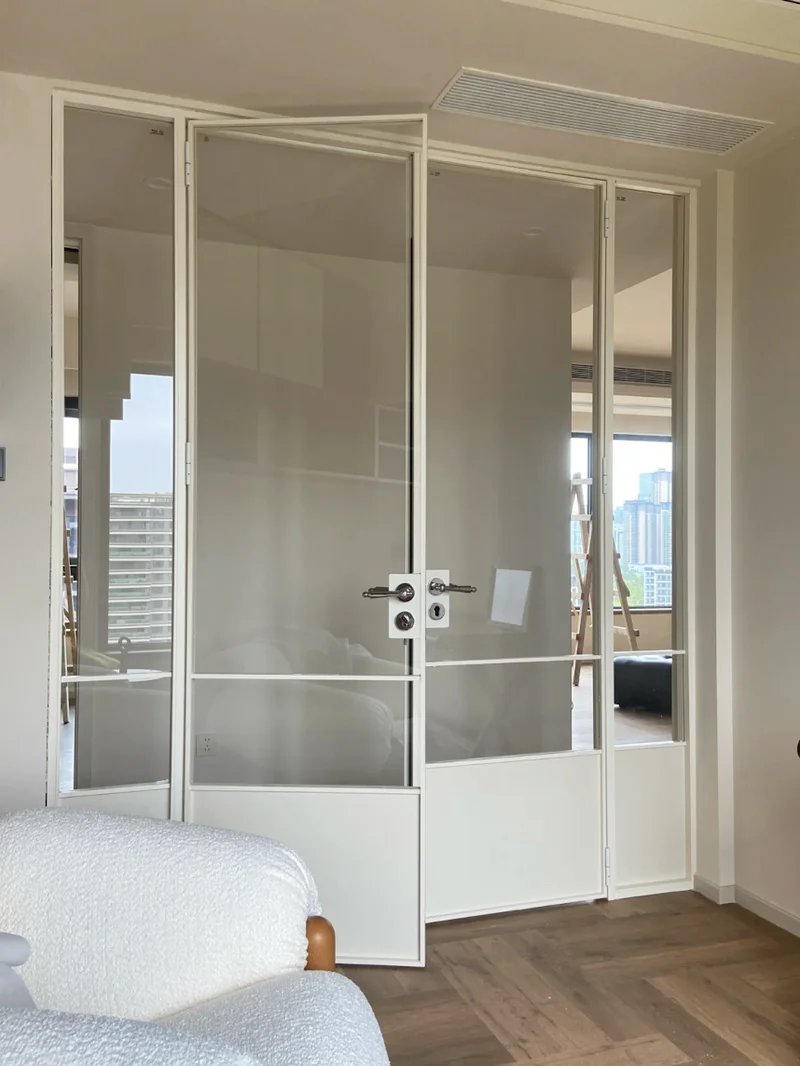
| Performance Characteristic | Test Standard | Typical Achieved Performance | Class/Grade |
|---|---|---|---|
| Fire Resistance | EN 1634-1 | Integrity (E) 30 / 60 minutes | EI30 / EI60 |
| Sound Reduction (Rw) | EN ISO 10140 | 32 – 42 dB | Varies by glazing & seal |
| Thermal Transmittance (UD) | EN 10077 | 1.2 – 1.8 W/m²K | Based on configuration |
| Moisture Absorption (WPC) | 24h Immersion, EN 317 | ≤ 0.8% by weight | – |
| Surface Hardness (Finish) | Shore D, ASTM D2240 | ≥ 75 | – |
Warranty: A Transparent Performance Guarantee
Our warranty is a formal extension of our quality control data, providing clear, technical guarantees.
- Coverage: A 5-year structural warranty on the door frame, core, and mechanical components against material defects and failure under normal use. A 2-year warranty on factory-applied finishes against peeling, blistering, or excessive fading (Delta E < 5, per ASTM D2244).
- Conditions: Warranty is valid upon confirmation of correct installation per our provided EN 14351-2 compliant installation guidelines and proper maintenance. It covers performance parameters (e.g., operational force, sealing) as defined at the time of purchase.
- Claim Process: Claims must be submitted with the product serial number, photographic evidence, and installation documentation. Our technical team will initiate a Failure Mode and Effects Analysis (FMEA) to determine the root cause and dispatch appropriate replacement components or technical support.
Customer Support: Technical Partnership for Project Success
Our support is structured as a technical consultancy, ensuring seamless integration of our products into your projects.
- Pre-Sale Engineering Support: Provision of detailed Type Testing reports (as per EN 14351-1), EPDs (Environmental Product Declarations), and BIM objects (LOD 400) with integrated technical data for architectural planning.
- Logistics & Customs Coordination: We provide a complete CE DoC (Declaration of Conformity), including the required performance declarations, factory production control certificates, and all necessary REACH compliance documentation for smooth EU border clearance.
- Post-Installation Technical Backstop: Dedicated channel for installers and project managers. Support includes troubleshooting guidance for on-site adjustments, verification of acoustic or thermal performance post-installation, and coordination with our certified regional technicians for complex interventions if required.
Frequently Asked Questions
What are the EU formaldehyde emission standards for wood-glass door components?
The EU mandates E1 class (≤0.124 mg/m³ per EN 16516) for wood-based panels. For premium export, we specify E0-grade (<0.05 mg/m³) cores and REACH-compliant adhesives. Our WPC components and LVL cores are certified with test reports from notified bodies, ensuring indoor air quality compliance for residential and commercial projects.
How is long-term warping prevented in composite door cores?
We engineer multi-layered LVL cores with cross-grain lamination to counteract stress, and use WPC with a density of 650-750 kg/m³ for dimensional stability. The assembly is balanced with aluminum reinforcement and sealed with a 200-micron PVC coating, mitigating moisture absorption and thermal expansion differentials that cause warping.
What defines REACH-compliant glass for these doors?
REACH compliance ensures glass and its coatings (e.g., low-E, laminated) contain no SVHCs above 0.1% weight. We use certified, lead- and cadmium-free glass. For safety, laminated glass with PVB interlayers provides impact resistance, meeting both REACH and CPR safety standards for fragmentation.
What thermal insulation performance can be expected?
Doors achieve a U-value as low as 1.1 W/m²K. This is achieved through insulated glass units (argon-filled, low-E coated), thermal-break aluminum frames, and the low thermal conductivity of high-density WPC profiles. Performance is validated per EN 10077 for complete door sets.
How is sound insulation achieved in wood-glass door systems?
We integrate specialized acoustic gaskets and laminated glass (6.38mm thickness with PVB interlayer) to achieve Rw up to 35 dB. The composite core structure and precise, compression-sealed installation per EN 14351-1 effectively dampen sound transmission for demanding urban environments.
What are the critical moisture and expansion specifications?
Our WPC profiles have a water absorption rate <0.5% and a linear thermal expansion coefficient of 4.5 x 10⁻⁵ /K, matching the glass and frame system. This is controlled through precise polymer-wood ratios and co-extrusion processes, preventing gaps or binding in humid continental climates.
Are your doors certified for structural integrity and impact resistance?
Yes. Doors are CE-marked per EN 14351-1, covering load-bearing capacity, soft body impact (100kg bag test), and durability through 100,000 cycles. Glass meets EN 12600 class requirements. Structural integrity is ensured by reinforced aluminum alloy within the stile for hinge and lock areas.
What finishing processes ensure exterior durability?
We apply automated 5-layer UV-cured acrylic coatings with a dry film thickness of ≥120 microns. This provides a Class 1 (EN 14915) resistance to UV fading, scratches, and weathering, ensuring color retention and protection against degradation for over 10 years in exterior applications.