Wood glass door factory regional agency exclusive authorization with marketing support
In today’s discerning architectural and design landscape, the demand for premium wood glass doors that blend timeless elegance with modern functionality is surging. For ambitious entrepreneurs and established building supply professionals, this presents a remarkable opportunity. This article explores the strategic advantages of securing an exclusive regional agency authorization with a leading wood glass door factory. Beyond simply distributing a superior product line, this partnership model provides comprehensive marketing support, empowering you to build a dominant local presence. We will delve into how this collaborative approach—combining factory expertise with your regional market knowledge—creates a powerful, sustainable business model designed for growth, profitability, and long-term success in a competitive marketplace.
Secure Your Market with Exclusive Regional Rights and Marketing Backing
Exclusive regional authorization is a strategic partnership that grants you territorial market control and a protected sales channel for our engineered wood-glass door systems. This model is underpinned by a transfer of technical mastery and sustained marketing investment, ensuring your position as the definitive local expert.
Technical Mastery & Product Integrity
As an authorized agent, you receive comprehensive training on our proprietary material formulations and manufacturing tolerances. This knowledge is critical for specifying the correct product for high-stakes architectural and commercial projects.
- Core Material Stability: Our door cores utilize Laminated Veneer Lumber (LVL) with cross-laminated layers, ensuring dimensional stability (<0.1% linear expansion under 65% RH cycles) and superior screw-holding power compared to solid timber or particle board.
- Advanced Composite Profiles: Frame and sash profiles are engineered from Wood-Plastic Composites (WPC) with a controlled wood fiber to polymer (PVC/PP) ratio, achieving an optimal balance of:
- Density: 1.25-1.35 g/cm³
- Shore D Hardness: 75-80
- Moisture Absorption: <0.8% (24h immersion)
- Performance-Grade Glazing: Systems support double and triple insulating glass units (IGUs) with argon fill and low-E coatings, achieving whole-door thermal insulation values (U-factor) as low as 0.8 W/(m²·K).
Performance Specifications & Compliance
Your exclusivity is backed by certified, verifiable performance data, a key differentiator in competitive bids.
| Parameter | Test Standard | Performance Grade | Application Benchmark |
|---|---|---|---|
| Fire Resistance | EN 13501-2 / ASTM E84 | Class B-s1, d0 / Flame Spread ≤25 | Suitable for commercial egress and multi-family residential corridors. |
| Sound Reduction | EN ISO 10140-2 | Rw 35-42 dB | Effective acoustic separation for office partitions and residential units. |
| Formaldehyde Emission | EN 16516 / ASTM D6007 | E0 (<0.05 ppm) / CARB2 Compliant | Guarantees indoor air quality for healthcare and educational facilities. |
| Swelling Rate (Thickness) | EN 317 | ≤1.5% after 24h water immersion | Ensures long-term integrity in high-humidity environments like spas or coastal buildings. |
Structured Marketing & Lead Generation Support
Our partnership includes a co-investment in targeted demand generation, translating technical superiority into project specifications.
- Lead Registration System: A protected portal for registering project inquiries, preventing internal competition and ensuring your first-right-of-refusal on opportunities within your territory.
- Technical Collateral Library: Access to detailed BIM objects (Revit), CSI 3-part specification sheets, and validated environmental product declarations (EPDs) for seamless integration into architect and contractor plans.
- Co-funded Campaigns: Strategic financial support for local trade shows, AIA/CES accredited lunch-and-learn seminars for architectural firms, and digital campaigns targeting commercial glazing contractors and high-end residential builders.
This partnership structure is designed to build your firm’s technical authority, creating a defensible market position based on product integrity and certified performance, not just price.
Engineered for Durability and Aesthetic Appeal: The Wood-Glass Door Advantage
The structural integrity and longevity of a wood-glass door are determined by its core composition and the performance characteristics of its composite materials. Our doors utilize a multi-layered, engineered core system designed to surpass the dimensional instability of solid timber.
Core Stability & Material Science
- LVL (Laminated Veneer Lumber) Core: The primary load-bearing structure is LVL, with cross-banded veneers that counteract wood’s natural tendency to warp or twist. This provides a stable substrate for hardware mounting and ensures consistent panel geometry.
- Advanced Composite Cladding: The exterior surfaces are clad with high-density Wood Plastic Composite (WPC) or a precision-engineered PVC-wood hybrid.
- WPC Density: Ranges from 1.25-1.45 g/cm³, optimizing the balance between machinability and impact resistance.
- PVC-Wood Ratio: Formulated for minimal linear thermal expansion (<0.06% per °C) and a Shore D hardness of >75, ensuring scratch and dent resistance in high-traffic areas.
Performance Specifications & Compliance
Doors are certified to international standards, providing verifiable data for architectural specifications and regulatory compliance.
| Parameter | Standard / Grade | Performance Value | Benefit |
|---|---|---|---|
| Formaldehyde Emission | EN 16516 / ISO 12460 | E0 Grade (<0.5 mg/L) | Ensures indoor air quality for residential and sensitive environments. |
| Fire Reaction | EN 13501-1 | Class B-s2, d0 (standard) | Low contribution to fire load and minimal smoke production. |
| Sound Insulation | EN ISO 10140-2 | Rw 28-32 dB (varies by glazing) | Provides acoustic privacy in office and multi-family residential applications. |
| Moisture Resistance | EN 321 (Cyclic Test) | Thickness Swelling <12% after 72h immersion | Superior dimensional stability in high-humidity areas (e.g., bathroom, kitchen). |
| Thermal Insulation | EN 12412-2 | U-factor (door panel) as low as 1.1 W/m²K | Contributes to building envelope energy efficiency. |
| Quality Management | ISO 9001:2015 | Certified Manufacturing | Guarantees consistent production quality and traceability. |
Functional & Aesthetic Advantages
- Dimensional Stability: The engineered core and cladding system results in a swelling coefficient of <0.3%, eliminating seasonal gaps and binding.
- Low Maintenance: The composite surface requires no painting, varnishing, or sanding. It is UV-stabilized to resist fading and can be cleaned with standard non-abrasive agents.
- Design Flexibility: The stable core allows for precise, repeatable machining of deep profiles and large glazing apertures. A consistent substrate ensures uniform finish adhesion for a wide range of opaque, stained, or woodgrain laminate finishes.
- Integrated Glazing System: Pre-engineered glazing beads with compression gaskets (EPDM) ensure a weather-tight seal and accommodate various glass types, including double-glazed insulated units, laminated safety glass, or decorative panels.
Comprehensive Marketing Support to Drive Sales and Brand Growth
Our marketing support is engineered to translate technical superiority into commercial specification and sales velocity. We provide the tools and collateral that empower our regional agents to effectively communicate the material and performance advantages of our wood-glass door systems to architects, contractors, and developers.
Technical Collateral & Specification Tools
- Architectural Submittal Packages: Professionally formatted binders containing all critical technical data, including:
- Full material specifications and sourcing certifications.
- Independent laboratory test reports for fire resistance (EN 13501-1 / ASTM E84), structural performance, and acoustic insulation (dB reduction ratings for specific glazing configurations).
- Detailed CAD blocks (DWG), Revit families (RFA), and BIM objects with embedded thermal (U-factor), acoustic, and sustainability data.
- Performance Comparison Dossiers: Data-driven documents that objectively benchmark our products against standard timber, aluminum, and competitor composite doors. These focus on quantifiable long-term value.
| Parameter | Our WPC Door Core | Standard Solid Timber | Competitor Composite |
|---|---|---|---|
| Core Density | 680-720 kg/m³ | 500-600 kg/m³ (variable) | 550-620 kg/m³ |
| Dimensional Stability (Swelling Rate) | ≤ 0.8% (28h immersion) | 5-15% (28h immersion) | 1.5-3.0% (28h immersion) |
| Formaldehyde Emission | E0 (≤ 0.5 mg/L, EN 717-1) | E1 typical (≤ 1.5 mg/L) | E1 typical |
| Thermal Insulation (U-factor) | 1.1 – 1.4 W/m²K | 1.6 – 2.2 W/m²K | 1.3 – 1.7 W/m²K |
- Project Specification Templates: MasterSpec and NBS-style clauses that architects can directly incorporate into tender documents, ensuring correct product application and compliance with building codes.
Lead Generation & Technical Sales Enablement
- Pre-Qualified Project Leads: We utilize industry intelligence platforms to identify and forward specifications for upcoming projects in your region where our door systems’ technical profile (e.g., required fire rating, acoustic performance, or high-humidity application) presents a decisive advantage.
- Factory-Trained Technical Support: Your sales team and key specifiers have direct access to our senior engineering staff for complex project consultations, including custom thermal calculations, bespoke hardware integration, and non-standard size feasibility analyses.
- Sample Kits for Demonstration: Robust, sectioned door samples that allow for tangible demonstration of our core technologies: the stability of the LVL (Laminated Veneer Lumber) frame, the optimized PVC-wood composite ratio for low moisture absorption (<0.6%), and the integration of high-performance glazing seals.
Brand-Building with Engineering Credibility
- Co-Branded Case Studies: Deep-dive analyses of completed projects, focusing on solved challenges (e.g., maintaining door integrity in a coastal, high-salinity environment or achieving a specific STC rating in a hospital).
- Certification & Standards Marketing: Ready-to-use marketing assets highlighting our ISO 9001:2015 quality management system, CE marking, and compliance with international standards for safety, durability, and environmental impact.
- Technical Workshop Sponsorship: We support and co-host Continuing Professional Development (CPD) seminars for architectural firms, focusing on topics such as “Advanced Material Science in Modern Door Systems” or “Meeting Code Requirements for Fire and Acoustics in Commercial Openings.”
Technical Specifications and Customization Options for Your Market Needs
Core Material Specifications & Engineering Standards
Our product line is engineered from the ground up for structural integrity and long-term performance. The core material science defines the product.
- Frame & Sash Composition: We utilize a proprietary Wood-Plastic Composite (WPC) with a minimum density of 1.25 g/cm³, ensuring superior dimensional stability and screw-holding power compared to standard cellular PVC or low-density composites. The optimized PVC-to-wood-flour ratio maximizes weatherability while maintaining a wood-like machinability.
- Structural Core: Doors are built around a Laminated Veneer Lumber (LVL) core. LVL provides exceptional stability (<1% linear expansion), eliminating warping and twist common in solid wood or particleboard cores, and ensures consistent performance across all climate zones.
- Glass & Glazing: Standard insulated glass units (IGU) feature warm-edge spacers and argon fill. We support customization with laminated acoustic glass, tempered safety glass, and low-E coatings to meet specific energy codes (e.g., EN 1279, ASTM E2190).
- Surface Finishes: Multi-layer co-extruded acrylic capstocks (minimum 0.5mm) provide UV resistance and color consistency. For woodgrain finishes, precision-registered foils with scratch-resistant top coats are applied. Full-through color WPC profiles are available for maximum abrasion resistance.
Performance Parameters & Compliance
All products are validated against international standards, providing specifiers with guaranteed performance data.
| Parameter | Performance Grade | Test Standard | Notes |
|---|---|---|---|
| Thermal Insulation (U-value) | Uw ≤ 1.4 W/(m²·K) | EN 10077 / ASTM C1363 | Achievable with triple-glazed IGU and thermal break design. |
| Sound Reduction (Rw) | Up to 42 dB | EN ISO 10140 / ASTM E90 | Dependent on glazing configuration and sealing system. |
| Fire Resistance | Up to EI30 60/60/60 | EN 13501-2 / ASTM E119 | For certified fire-rated door assemblies. |
| Formaldehyde Emission | E0 Grade (<0.05 ppm) | EN 16516 / JIS A 1460 | LVL core and adhesives exceed standard E1 requirements. |
| Water Absorption | ≤ 0.5% (by weight) | EN 12087 | Critical for high-humidity applications. |
| Hardness (Surface) | ≥ 80 Shore D | ASTM D2240 | For co-extruded capstock surfaces. |
Customization Architecture for Regional Adaptation
As an authorized regional agent, you can tailor product offerings to local building codes, aesthetic preferences, and climate challenges.
- Dimensional Flexibility:
- Standard sizes conform to common regional modular construction (e.g., EU, ANZ, or NA rough opening standards).
- Custom oversized units, non-rectangular shapes (arches, radii), and variable sightline configurations are engineered to order.
- Hardware Integration:
- Pre-machined preparations for major multipoint locking systems (e.g., Roto, Siegenia, GU).
- Reinforced hinge and lock blocks engineered into the WPC profile for heavy-duty commercial or high-traffic residential use.
- Functional Upgrades:
- Enhanced Security: Options for laminated security glass, internal steel reinforcement, and high-security lock cylinders.
- Accessibility: Low-threshold sill designs meeting ADA/EN 1 requirements.
- Climate-Specific: Tropicalized versions with enhanced drainage and anti-fungal treatments for high-rainfall regions; arctic-grade versions with triple seals and ultra-low U-factors for extreme cold.
- Aesthetic & Finish Customization:
- Full RAL color matching for co-extruded profiles.
- Selection from over 50 woodgrain foil finishes (oak, walnut, ash, etc.).
- Custom interior panel designs (e.g., WPC shaker, MDF raised panel, glass inserts).
Quality Assurance & Production Control
Our authorization includes access to factory quality protocols, ensuring consistent output for your market.
- Certifications: Full ISO 9001:2015 quality management system. Products carry CE marking where applicable, with supporting DoP (Declaration of Performance).
- Batch Testing: Every production batch undergoes mandatory checks for color consistency, profile dimensions, and mechanical strength.
- Traceability: Each major component (WPC profile, LVL core, IGU) is lot-traceable from raw material to finished door.
Trust-Building Through Proven Factory Quality and Agency Success Stories
Proven Factory Quality: A Foundation in Material Science and Process Control
Our authorization is predicated on a factory partnership that enforces rigorous, quantifiable standards. This is not merely about aesthetics but about predictable, engineered performance that meets architectural specifications.
Core Material Integrity & Technical Specifications
- Advanced Composite Cores: Doors utilize engineered LVL (Laminated Veneer Lumber) cores with cross-laminated layers, ensuring dimensional stability (<0.1% swelling rate at 65% RH) and eliminating warping. For full-glass systems, structural reinforcements are precision-engineered from high-grade aluminum or steel alloys.
- Precision-Engineered Profiles: Exterior and interior framing profiles are extruded from high-density Wood-Plastic Composite (WPC) or PVC-wood hybrids. Critical parameters are strictly controlled:
- WPC Density: Maintained at ≥ 1.3 g/cm³ for optimal strength-to-weight ratio and screw-holding force.
- PVC-Wood Ratio: Optimized for balance between Shore D surface hardness (>75) and impact resistance.
- Formaldehyde Emissions: All panel infills and composite materials certified to E0 (≤0.5 mg/L) or E1 (≤1.5 mg/L) standards per EN 13986.
- Glazing Performance: Factory-sealed insulated glass units (IGU) are standard, with options for laminated acoustic or low-E coatings. Performance is validated:
- Thermal Insulation: Center-pane U-factor as low as 1.1 W/(m²·K).
- Sound Reduction: Achieves up to 40 dB Rw with specialized acoustic glass configurations.
- Safety & Security: Laminated glass options meet CPSC 16 CFR 1201 Cat. II and ANSI Z97.1 impact standards.
Certified Manufacturing & Quality Assurance
The factory operates under an integrated management system, with certifications that are audited, not merely claimed. This provides a verifiable chain of custody and performance assurance for your projects.
- ISO 9001:2015: Documented process control for every production stage, from raw material inspection to final crating.
- Fire Performance Ratings: Doorsets are tested and classified per EN 13501-2 or ASTM E84, with available ratings up to EI 30/60 for integrity and insulation.
- Durability Testing: Cycled for over 100,000 operations (EN 1191) and subjected to accelerated weathering tests (QUV) to guarantee long-term performance in regional climates.
Performance Comparison: Standard vs. Enhanced Configurations
| Parameter | Standard Door System | Enhanced Performance Package |
|---|---|---|
| Core Stability (Swelling Rate) | LVL Core (<0.15% @ 65% RH) | Stabilized Hybrid Core (<0.08% @ 85% RH) |
| Surface Hardness | Shore D 70-75 | Shore D 78-82 (Anti-Scratch Coating) |
| Sound Reduction (Rw) | 32 – 35 dB | 38 – 42 dB (Acoustic Seal & Laminated Glass) |
| Thermal Transmittance (U-value) | 1.4 – 1.6 W/(m²·K) | 1.0 – 1.2 W/(m²·K) (Low-E IGU, Thermal Break) |
| Fire Rating | E 30 (Integrity) | EI 60 (Integrity & Insulation) |
Agency Success Stories: Technical Deployment in Regional Projects
Our authorized agencies succeed by translating this factory capability into solved architectural challenges.
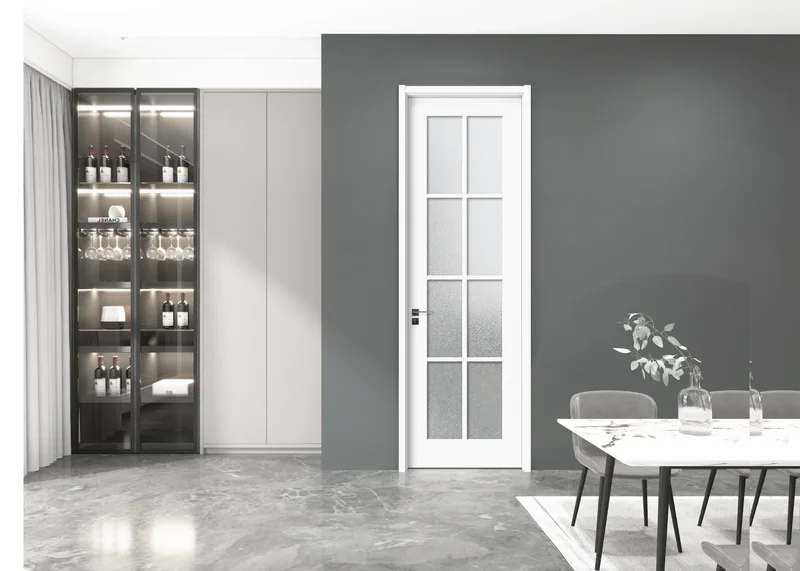
- Coastal High-Rise Residential, [Region A]: An agency specified doors with a stabilized hybrid core and a moisture absorption rate of <12% (per EN 321). Combined with a marine-grade finish, this solution addressed persistent humidity (avg. 85% RH) and salt-laden air, with zero callbacks for swelling or corrosion over 3 years.
- Urban Mixed-Use Development, [Region B]: The project required STC 40+ rated partitions. The agency deployed a system using a solid core with a density of 750 kg/m³, paired with a 12.8mm laminated acoustic glass unit and triple perimeter seals, achieving 42 dB Rw. This met stringent municipal noise ordinance codes for residential over commercial spaces.
- Hospitality Retrofit, [Region C]: For a historic hotel renovation, the agency provided a custom solution: doors meeting modern fire code (EI 30 per local adoption of EN 13501-2) and accessibility standards, machined to accept period-appropriate hardware, demonstrating the factory’s flexibility in meeting both technical and aesthetic heritage constraints.
This documented synergy of factory engineering and agency expertise de-risks specification and ensures that the performance promised is the performance delivered on-site.
Frequently Asked Questions
How do your wood-glass doors prevent structural warping in high-humidity regions?
Our doors utilize LVL core reinforcement with a moisture expansion coefficient below 0.1%, combined with a full-perimeter PVC sealing strip (≥2mm thickness). This engineered wood-plastic composite (WPC) core, stabilized to 750 kg/m³ density, resists hygroscopic stress, ensuring dimensional stability even at 85% relative humidity.
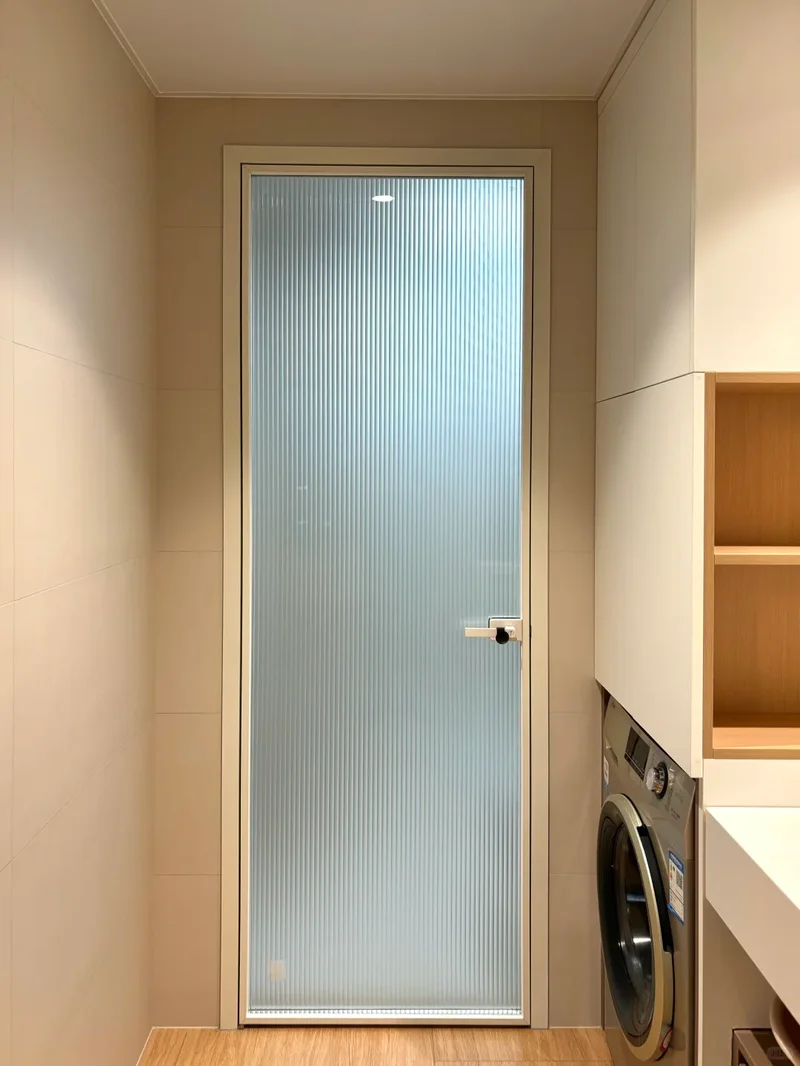
What formaldehyde emission standards do your door materials comply with?
All composite materials are certified to E0 (≤0.05 mg/m³) and EN Standard Class I (≤0.124 mg/m³) emission levels. We use phenol-formaldehyde-free adhesives and UV-cured acrylic coatings that seal any residual VOCs, ensuring indoor air quality meets stringent residential and commercial health regulations.
What is the thermal insulation performance of your door systems?
Our doors achieve a U-value of ≤1.2 W/(m²·K) through a multi-chamber WPC profile design with polyurethane foam core insulation. The double-glazed tempered glass (argon-filled, Low-E coating) and thermal break gaskets work synergistically to minimize heat transfer, significantly reducing energy loss.
How is impact resistance and durability ensured for high-traffic areas?
The door leaf incorporates a 1.2mm thick galvanized steel reinforcement frame embedded within the WPC substrate. Surface layers undergo a 7-step finishing process, including 80μm UV-resistant topcoat and anti-scratch treatment, achieving a Mohs hardness rating of ≥3H to withstand daily abrasion and impact.
What sound insulation levels can be achieved for noise-sensitive projects?
Our acoustic series doors provide a weighted sound reduction index (Rw) of 35-42 dB. This is achieved through asymmetric glass thickness (e.g., 6mm+12mm air gap+8mm), combined with a dense WPC core (≥800 kg/m³) and triple-seal perimeter gaskets to effectively attenuate mid-to-high-frequency noise.
How does the product address concerns about long-term color fading and weathering?
We employ a co-extruded ASA/PMMA capstock layer (≥0.5mm) with UV-absorbers and anti-oxidants over the WPC substrate. This system, tested for 3000+ hours in QUV accelerated weathering chambers, ensures color retention (Delta E ≤3) and prevents chalking or degradation under intense sunlight and temperature cycles.
What fire safety ratings and certifications do your door assemblies hold?
Our fire-rated door assemblies are certified to GB 12955-2008 Class B and can achieve up to 1-hour fire integrity (EI60). This is accomplished using intumescent strips that expand at 180°C, a non-combustible mineral core, and fire-resistant glass, all validated by third-party laboratory testing.
What marketing and technical support is provided to regional agents?
We supply comprehensive launch kits including BIM object files, technical datasheets with ASTM test reports, and installation videos. Dedicated engineering support is available for project-specific calculations (e.g., load-bearing, thermal bridging) and joint on-site commissioning to ensure specification compliance and client satisfaction.