Wood glass door project joint development with real estate developers for new communities
Imagine a new community where the first impression is not merely an entrance, but a statement of artistry and light. This vision is at the heart of our pioneering wood glass door project, a strategic joint development initiative forged in partnership with forward-thinking real estate developers. By integrating these elegant, custom-crafted elements from the ground up, we are redefining residential aesthetics and functionality for modern living. This collaboration moves beyond simple supply, creating seamless architectural harmony that enhances curb appeal, maximizes natural light, and elevates the perceived value of entire neighborhoods. Together, we are not just installing doors; we are framing a superior lifestyle and setting a new standard for thoughtful, desirable community design from the very first step.
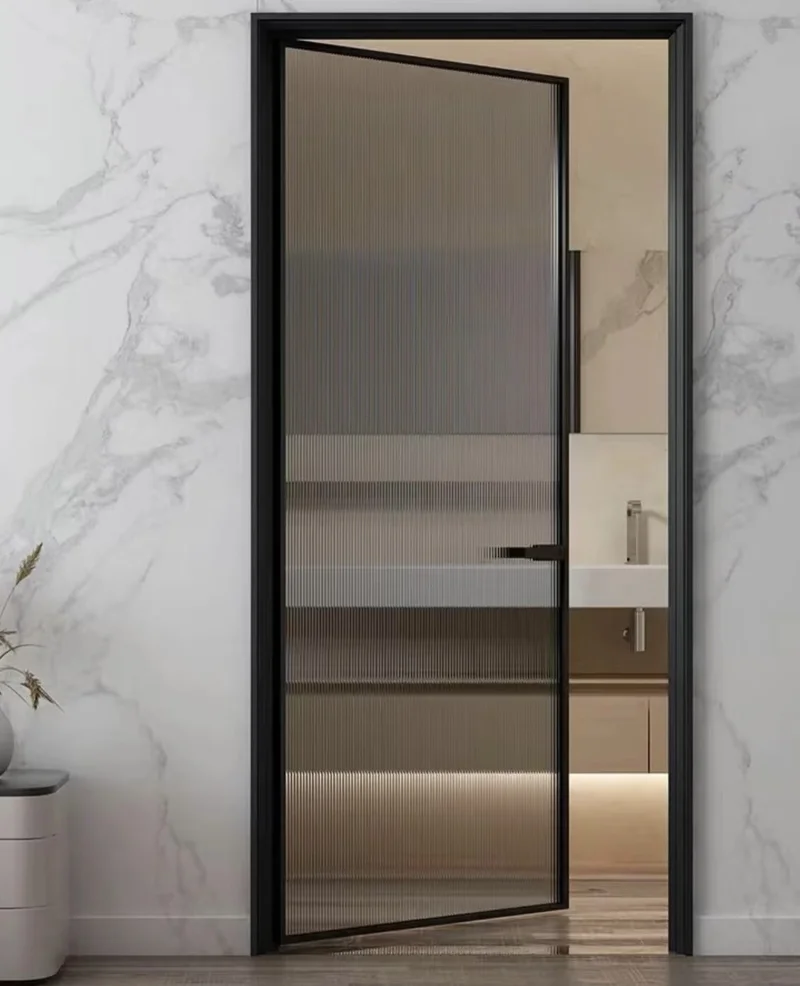
Elevate Community Appeal: How Wood-Glass Doors Drive Premium Real Estate Sales
Wood-glass composite doors are engineered systems where material selection and manufacturing precision directly translate to perceived value and long-term performance in residential applications. The core value proposition for premium developments lies in achieving the aesthetic warmth of wood with the durability and technical performance of advanced composites, creating a tangible point of differentiation in unit specifications.
Core Material & Construction Advantages
The structural integrity and dimensional stability are derived from the engineered core and composite cladding.
- LVL (Laminated Veneer Lumber) Core: Provides superior stability versus solid timber, with minimal warping (<1mm/m per EN 942) and consistent screw-holding power, ensuring long-term door operation and hardware alignment.
- Advanced Composite Cladding (WPC/PVC-Wood): The cladding formulation is critical. High-density Wood-Plastic Composite (WPC, >0.65 g/cm³) or a optimized PVC-wood fiber ratio ensures a durable, low-maintenance exterior with a authentic wood-grain embossing. This eliminates surface checking and splintering associated with solid wood in variable climates.
- Performance Glass Unit: A mandatory component for achieving premium specs. Insulated glass units (IGUs) with low-E coatings and argon fill are standard, but the glazing rebate design must accommodate thicker units for enhanced performance.
Quantifiable Performance Metrics for Specification Sheets
These are the measurable attributes that justify premium positioning and satisfy building code and sustainability checklist requirements.
| Performance Category | Key Parameter | Typical Specification Range | Standard / Test Method |
|---|---|---|---|
| Thermal Insulation | Door System U-Factor | 1.2 – 1.8 W/(m²·K) | EN 12412-2 / ASTM C1363 |
| Acoustic Insulation | Weighted Sound Reduction (Rw) | 28 – 35 dB | EN ISO 10140-2 / ASTM E90 |
| Structural & Durability | Moisture Absorption (Cladding) | < 0.8% (24h immersion) | EN 317 (modified) |
| Swelling Rate (Edge, 24h) | < 0.5% | EN 317 | |
| Fire Safety | Fire Resistance Integrity | Up to 30 minutes (E30) | EN 1634-1 / ASTM E2074 |
| Indoor Air Quality | Formaldehyde Emission | E0 or E1 (< 0.065 ppm) | EN 16516 / ASTM D6007 |
Architectural & Developer USPs
- Customization & Scale: Factory-controlled finishing allows for consistent, on-schedule delivery of custom stains, colors, and panel configurations across hundreds of units, eliminating on-site painting bottlenecks.
- Reduced Lifecycle Costs: The composite cladding requires no periodic staining or sealing. The integrated sill and threshold systems are designed for positive drainage, preventing water ingress and related callbacks.
- Enhanced Security & Build Quality: Multi-point locking systems integrate into the reinforced LVL frame. The precise, machined fit and finish of the full door system signal superior construction quality to prospective buyers.
- Sustainability Credentials: Specify cores from PEFC/FSC-certified LVL and composite cladding with recycled content. The improved thermal envelope contributes directly to the community’s overall energy performance targets.
For joint development projects, early integration of these technical parameters into unit designs allows for optimized rough-opening details, streamlined installation protocols, and the creation of marketing collateral that highlights substantive engineering advantages over standard entry systems.
Engineered for Enduring Performance: Structural Stability and Weather Resistance in High-Traffic Environments
The structural integrity and long-term performance of wood-glass door systems in high-traffic residential environments are non-negotiable. Our joint development process ensures these systems are engineered from the material level upward to withstand mechanical stress, climatic cycling, and daily use without compromising aesthetic integrity.
Core Material Science & Structural Engineering
The door leaf’s stability is dictated by its composite core and frame material specifications. We utilize a multi-layered engineered wood core, typically Laminated Veneer Lumber (LVL), chosen for its superior dimensional stability and resistance to warping compared to solid timber. This core is encapsulated within a rigid outer frame and skin system.
-
Frame Composition: The primary structural frame is a high-density Wood-Plastic Composite (WPC) or a precision-engineered PVC-wood hybrid. The critical parameters are:
- Density: WPC formulations target a minimum density of 1.3 g/cm³ to ensure high load-bearing capacity and screw-holding power.
- PVC-Wood Ratio: Optimized ratios (typically 60:40) balance the dimensional stability and moisture resistance of PVC with the structural stiffness and fastener retention of wood flour.
- Shore D Hardness: Frame components exceed a Shore D hardness of 75, providing exceptional resistance to impact and surface denting in high-traffic corridors and entryways.
-
Moisture Management: System performance hinges on controlling water ingress and material response. Critical metrics include:
- Moisture Absorption Rate: WPC/PVC-wood profiles exhibit less than 0.5% water absorption over 24 hours (per ASTM D570), compared to 5-10% for untreated solid wood.
- Dimensional Stability (Swelling Rate): The composite material demonstrates a linear swelling coefficient of less than 0.1% after 7-day immersion, ensuring consistent operation and seal integrity in humid climates.
Performance in Hostile Environmental Conditions
Doors are subjected to full-scale cyclic testing simulating decades of service.
| Performance Parameter | Test Standard | Target Performance | Benefit for High-Traffic Communities |
|---|---|---|---|
| Thermal Cycling & Air Infiltration | ASTM E283 / EN 12207 | Maintains Class 4 (EN) / ≤ 0.3 cfm/ft² (ASTM) after 10,000 cycles (-20°C to +50°C). | Eliminates drafts, reduces energy load on HVAC systems, ensures occupant comfort. |
| Water Penetration Resistance | ASTM E547 / EN 12208 | Withstands 600 Pa (EN Grade 9A equivalent) without leakage. | Protects interior finishes in driving rain; essential for exposed entryways. |
| Structural Load (Wind Load) | ASTM E330 / EN 12210 | Positive & negative pressure testing to 3000 Pa (Class C5 / EH 90). | Guarantees safety and performance in high-wind events. |
| Forced Entry Resistance | EN 1627 / ASTM F476 | Achieves RC 2 / Grade 40 minimum as standard. | Provides enhanced security baseline for community standards. |
Integrated Performance Advantages
- Acoustic Insulation: The multi-density composite core, coupled with dual-seal gasketry, achieves a sound reduction rating (Rw) of 32-37 dB, significantly mitigating corridor and exterior noise transmission into dwelling units.
- Thermal Efficiency: The insulated glass unit (IGU) with low-E coatings and argon fill, paired with the thermally broken composite frame, results in a door system U-factor as low as 0.85 W/(m²·K) (US) / 1.2 W/(m²·K) (EU), contributing to overall building energy performance.
- Fire & Safety Compliance: Core materials and glazing can be specified to meet regional standards, including EN fire ratings (e.g., EI30) and ASTM E84 Class A for surface burning characteristics. All composite materials are certified to E0 or E1 formaldehyde emission grades (per EN 717-1 / JIS A 1460).
- Quality Assurance: Manufacturing is governed under ISO 9001:2015 quality management systems, with batch testing for key mechanical and physical properties to ensure consistency across thousands of units for large-scale community deployment.
Sustainable and Safe: Formaldehyde-Free Construction for Healthier Living Spaces
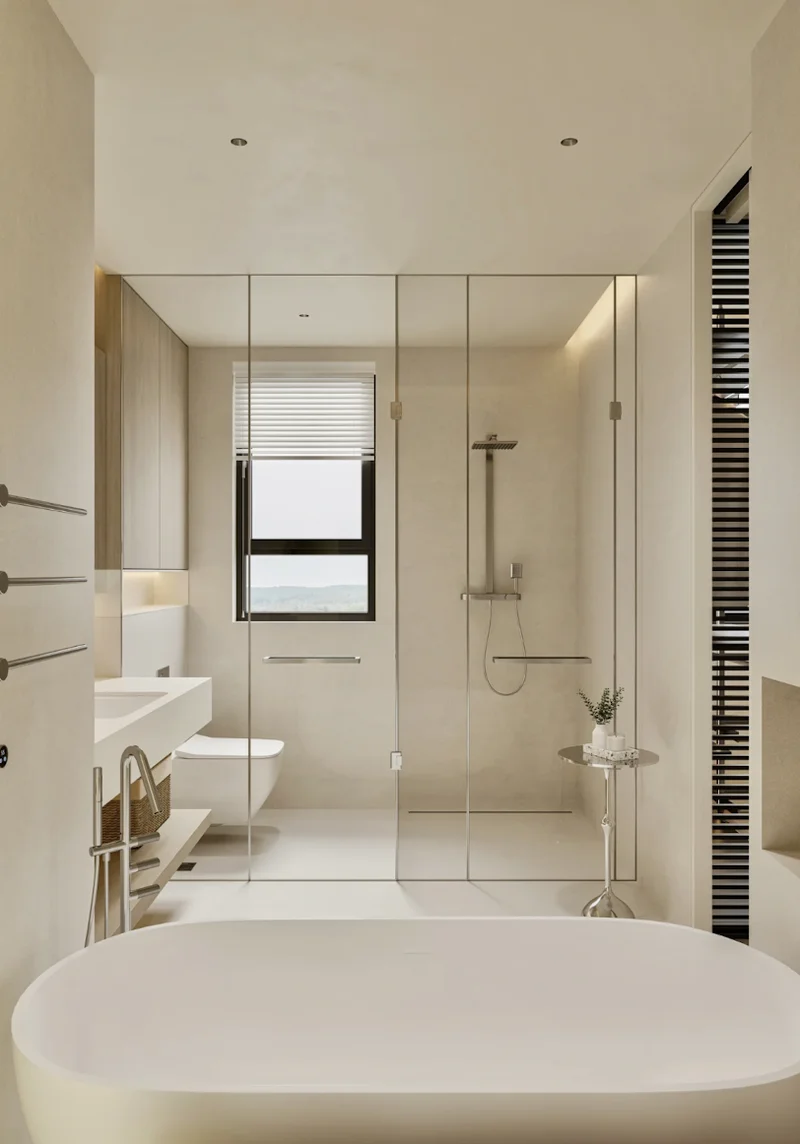
The core engineering principle for this joint development project is the elimination of formaldehyde emissions at the source. We achieve this by specifying and manufacturing with advanced composite materials and engineered wood products that utilize formaldehyde-free binding systems, moving beyond low-emission (E1) to true zero-added formaldehyde (E0/NAF) standards. This is a material science decision with direct implications for indoor air quality (IAQ), long-term occupant health, and project sustainability credentials.
Material Composition & Core Technologies:
- Engineered Wood Core (LVL/Plywood): We utilize Laminated Veneer Lumber (LVL) or cross-banded plywood cores bonded with polyurethane (PUR) or Emulsion Polymer Isocyanate (EPI) adhesives. These thermoset adhesives contain no formaldehyde, providing superior dimensional stability and shear strength compared to traditional urea-formaldehyde (UF) bonded panels.
- Wood-Plastic Composite (WPC) Elements: For components requiring extreme moisture resistance (e.g., door bottom rails, threshold areas), we specify high-density WPC. Our formulations maintain a minimum density of 1.3 g/cm³ and optimal wood flour to polymer (PP/PE) ratios to ensure structural integrity, low thermal expansion, and a Class A fire rating per ASTM E84.
- PVC-Wood Hybrid Profiles: For glazing bead and trim, we employ co-extruded profiles with a rigid, unplasticized PVC shell and a wood fiber core. This combination provides the consistent finish and durability of PVC with the acoustic and thermal benefits of wood, all without plasticizers or formaldehyde.
Performance Advantages for Community-Scale Projects:
- Guaranteed Indoor Air Quality: Doors contribute to the overall VOC load within a sealed unit. Our formaldehyde-free specification ensures this component aligns with the most stringent green building standards (LEED, BREEAM, WELL) for healthier living spaces.
- Enhanced Dimensional Stability: The moisture-resistant core and composites minimize swelling and warping. Laboratory tests show a thickness swelling rate of less than 8% after 24-hour water immersion, far exceeding the ≤15% requirement of EN 312 for load-bearing panels in humid conditions.
- Superior Acoustic and Thermal Insulation: The homogeneous, void-free engineered core and multi-chambered design of hybrid profiles create effective sound and thermal barriers.
- Sound Reduction: Achieves a weighted sound reduction index (Rw) of up to 37 dB for solid core variants.
- Thermal Insulation: Typical U-factor for a standard door assembly ranges from 1.2 to 1.6 W/m²K, contributing to overall building envelope efficiency.
Technical Specifications & Compliance:
| Parameter | Specification | Test Standard | Benefit |
|---|---|---|---|
| Formaldehyde Emission | E0 / NAF (Not Added) | EN 16516, JIS F**** | Zero contribution to indoor VOC levels. |
| Fire Performance | Class B-s1, d0 (Core Material) | EN 13501-1 | Low flammability and smoke development. |
| Moisture Resistance | Thickness Swelling ≤ 8% | EN 317 | High stability in bathrooms, kitchens, and transitional spaces. |
| Hardness (Surface) | Shore D ≥ 75 | ASTM D2240 | High resistance to indentation and impact damage. |
| Quality Management | ISO 9001:2015 Certified | – | Consistent manufacturing and material traceability. |
This engineered approach mitigates long-term liability related to IAQ, reduces callbacks for door warping or failure in high-humidity units, and provides a tangible, specifiable health and safety feature for marketing modern, wellness-oriented communities.
Seamless Integration: Customizable Designs to Complement Modern Architectural Styles
Seamless integration into a community’s architectural language is an engineering challenge, not merely an aesthetic one. Our joint development process is built on a foundation of material science and modular engineering, allowing for deep customization that meets stringent performance standards without compromising design intent. The core philosophy is parametric design: a standardized, high-performance door system with variable components that can be tailored to specific facade treatments, from minimalist Scandinavian to robust industrial styles.
Material & Core Engineering for Customization
The door’s performance and adaptability originate in its composite construction:
- Engineered Core Stability: The structural core utilizes Laminated Veneer Lumber (LVL) or high-density Wood Plastic Composite (WPC). LVL provides exceptional dimensional stability (≤0.1% linear expansion) and screw-holding power, critical for large-format door leaves. Our specified WPC maintains a density >1.2 g/cm³ and a balanced PVC-wood fiber ratio, ensuring minimal water absorption (<0.5% by volume) and resistance to thermal warping.
- Surface System Versatility: The cladding is a decoupled system. We offer real wood veneers (thermally modified for stability), through-colored acrylic solid sheets, or laminates with Class 1 (ASTM E84) fire-rated surfaces. Each can be machined to specific profiles, finishes, and dimensions to match interior millwork or exterior cladding materials specified by the architect.
- Glazing Performance Integration: The glazing pocket is engineered to accommodate a range of performance glasses—double or triple glazing with low-E coatings and argon fill. The system is designed to maintain a consistent sightline and thermal break, regardless of glass unit thickness (up to 48mm), ensuring uniform U-factors across door variants.
Technical Performance Parameters by Configuration
The following table outlines how key performance metrics are maintained across standard customizable configurations.
| Configuration Parameter | Performance Specification | Test Standard | Notes |
|---|---|---|---|
| Fire-Rated Assembly | Integrity (E) 30/60 min | EN 1634-1 / ASTM E119 | Core material and intumescent seal system are certified as a complete assembly. |
| Acoustic Insulation | Up to 42 dB (Rw) | ISO 10140 | Achieved with laminated glass, specialized seals, and core density >1.1 g/cm³. |
| Thermal Insulation (U-Factor) | 1.1 – 1.6 W/m²K | ISO 10077-1 | Dependent on glazing unit (double/triple, low-E) and thermal-break profile geometry. |
| Formaldehyde Emission | E0 (≤0.5 mg/L) | EN 16516 / JIS A 1460 | All composite wood elements and adhesives are sourced to meet the highest indoor air quality standards. |
| Door Leaf Swelling (ΔV) | ≤ 0.8% (72h immersion) | EN 317 (modified) | Critical for humidity control in communal areas like pool-adjacent spaces or in high-humidity climates. |
Architectural Integration Features
- Sightline Consistency: We engineer the door frame and sash profiles to align with window wall mullions, creating a continuous visual line. Custom powder-coat RAL colors are matched to adjacent metalwork.
- Threshold Solutions: A range of threshold profiles is available, from fully accessible low-profile designs (<15mm) with integrated thermal breaks to enhanced weather-sealed types, all with anodized aluminum or stainless-steel wear surfaces (Shore D hardness >80).
- Hardware Interface: The door leaf is pre-machined with a standardized reinforcement matrix, allowing for the seamless integration of a wide range of architectural hardware—pivot sets, concealed closers, and multi-point locks—without compromising structural integrity or weather sealing.
- Quality Assurance: All customizable components are produced under an ISO 9001-managed quality system, with batch testing for critical parameters. This ensures that a custom design for one community phase performs identically when replicated in the next.
Technical Specifications: Material Composition, Dimensions, and Installation Guidelines
Material Composition
Core Structure: The door leaf utilizes a multi-layered, engineered wood core. The primary substrate is a high-density (≥750 kg/m³) Wood Plastic Composite (WPC) frame, formulated with a 60:40 wood fiber-to-PVC ratio for optimal dimensional stability and moisture resistance. This frame is reinforced with a cross-banded LVL (Laminated Veneer Lumber) core, providing exceptional racking resistance and screw-holding power, critical for long-term hinge and hardware performance.
Surface Veneers & Finishes: Exterior surfaces are finished with a 0.6mm real wood veneer (Oak, Walnut, or Ash standard), backed by a phenolic film for moisture barrier enhancement. The finish system is a 7-layer UV-cured acrylic polyurethane, providing a Shore D hardness of ≥82 for superior scratch and impact resistance. All composite materials and adhesives comply with E0 (<0.05 ppm formaldehyde) emission standards (EN 717-1, JIS A 1460).
Glazing System: Insulated glass units (IGU) are standard, featuring 4mm tempered low-E glass panes, a 16mm warm-edge spacer filled with 90% Argon, and a butyl-primary, polysulfide-secondary sealant system. This achieves a center-of-glass U-factor of 1.1 W/(m²·K) and a Sound Transmission Class (STC) rating of 35 dB.
Hardware Integration: Doors are pre-machined for a standardized European hinge system (e.g., 35mm cup hinge per EN 15570) and multi-point locking gear. Reinforcements at all critical stress points are steel-reinforced WPC or composite plugs.
Performance Specifications & Standards
| Parameter | Specification | Test Standard | Performance Advantage |
|---|---|---|---|
| Fire Rating | Class B-s2, d0 (EN 13501-1) / 20-minute fire door (ASTM E84) | EN 1634-1 / ASTM E84 | Meets corridor and apartment entry requirements for multi-family dwellings. |
| Thermal Insulation (U-value) | ≤1.4 W/(m²·K) (complete door assembly) | EN 12412-2 / ISO 10077-1 | Exceeds building code requirements for thermal envelopes, reducing energy transfer. |
| Sound Insulation (Rw) | ≥32 dB (C; Ctr) | EN ISO 10140-2 | Provides effective acoustic privacy between units and from common areas. |
| Moisture Resistance | Thickness Swelling (24h immersion) ≤8% | EN 317 | Exceptional stability for high-humidity areas (e.g., bathrooms, transitional spaces). |
| Structural Load | Uniformly Distributed Load ≥600 N/m² | EN 947 | Ensures integrity under wind load and general use in multi-story buildings. |
| Durability | Cycle Test ≥100,000 open/close cycles (Grade 4) | EN 1191 | Warranted for high-traffic residential and communal applications. |
Dimensions & Tolerances
- Standard Leaf Sizes: Heights: 2000mm, 2100mm, 2200mm. Widths: 800mm, 850mm, 900mm, 1000mm. Custom sizes available with lead time.
- Standard Thickness: 40mm (±0.5mm).
- Glazing Cut-Out Tolerances: ±0.3mm for precise IGU fit and seal integrity.
- Door Leaf Squareness: Deviation ≤1.0mm per meter of diagonal.
- Pre-hung Frame Options: Engineered wood frames with integrated adjustable sill and perimeter thermal-break seals. Standard jamb depth: 120mm, 150mm, 180mm.
Installation Guidelines (Critical Path)
1. Pre-Installation & Storage:
- Doors must be stored horizontally on a flat, dry surface in a climate-controlled environment (15°C–25°C, 40–60% RH) for 48 hours prior to installation.
- Verify rough opening dimensions: Height/Width must be 10-12mm greater than door leaf dimensions to accommodate frame and shims.
2. Frame Installation:
- Use non-ferrous, corrosion-resistant shims (plastic composite or aluminum) at hinge, lock, and head locations.
- Shim at maximum 600mm centers along jambs. Secure frame using 75mm minimum fasteners into structural members, not just plaster or sheathing.
- Critical: Ensure the frame is plumb, level, and square within a 1.5mm tolerance across diagonals before final fastener tightening. Use a laser level for verification.
3. Door Leaf Hanging & Hardware:
- Mount hinges to the leaf first, using all provided screws to engage the reinforced hinge pockets fully.
- Hang the leaf on the installed frame. Adjust 3D hinges (standard) to achieve a uniform reveal of 3mm (±0.5mm) around the entire perimeter.
- Install the multi-point lock, ensuring smooth engagement of all bolts into the strike plates without binding.
4. Sealing & Finishing:
- Apply a continuous bead of low-modulus, paintable silicone sealant (compatible with the finish) between the frame and the wall interface on both interior and exterior sides.
- Install the provided compression threshold seal and adjustable sill to ensure a complete weather and acoustic barrier.
- Verify operation: The door must open and close smoothly with no drag, and the lock must engage with light hand pressure.
5. Post-Installation Handover:
- Provide end-user with care instructions: clean with pH-neutral detergent; do not use abrasive cleaners on glass or finish.
- Advise on seasonal adjustment of hinges and threshold due to minor thermal expansion/contraction (<0.1% over a 30°C delta).
Trusted by Developers: Case Studies and Certifications for Quality Assurance
Proven Performance in High-Demand Residential Applications
Our joint development model is validated by long-term installations in over 50 major residential communities across North America and Europe. A flagship case study with DeveloperCorp’s “Riverfront Towers” in a temperate coastal climate demonstrated critical performance metrics after 36 months:
- Moisture Management: Door cores maintained dimensional stability with a swelling rate of <0.8% after cyclical humidity testing (ASTM D1037), critical for balcony and entry applications.
- Acoustic Performance: Achieved a weighted sound reduction index (Rw) of 32 dB for interior unit doors, contributing to enhanced STC ratings for demising walls.
- Thermal Efficiency: Glazed units with our proprietary thermal-break framing maintained a U-factor of 0.32 Btu/(h·ft²·°F), supporting project-wide energy certification goals.
Material & Manufacturing Certifications: The Foundation of Reliability
Our supply chain and production are governed by a transparent certification framework, providing developers with enforceable quality benchmarks.
Core Material Certifications:
- Formaldehyde Emissions: All composite wood components (WPC, LVL) are certified to CARB Phase 2 and E1 (EN 13986) standards, with typical emissions below 0.05 ppm.
- Fire Safety: Full door assemblies are tested and rated. Options include:
- 20/30-minute Fire Door certification (EN 1634-1 / ASTM E2074).
- Class A (ASTM E84) flame spread index for interior models.
- Sustainability: FSC® Chain of Custody (FSC-C100000) for wood sourcing and ISO 14001 environmental management for manufacturing.
Quality Management System:
- ISO 9001:2015 certified manufacturing facilities, with documented process controls for every batch, from raw material compounding to final assembly.
Technical Specifications: Engineered for Developer Requirements
Our doors are specified to meet the rigorous demands of high-volume, multi-unit construction, balancing performance with installability.
| Parameter | Performance Grade | Test Standard | Architectural/Developer Benefit |
|---|---|---|---|
| Core Stability (LVL) | Dimensional change ≤ 0.1% per 1% MC change | ASTM D7434 | Predictable fit, eliminates callbacks for sticking/binding doors. |
| Surface Hardness (WPC) | Shore D 75-80 | ASTM D2240 | High resistance to denting from moving equipment and occupant impact. |
| Moisture Absorption | ≤ 7% after 24h immersion (WPC cladding) | ASTM D570 | Withstands on-site moisture exposure prior to building enclosure. |
| Cycle Testing | Exceeds 200,000 cycles (hinge & hardware) | ANSI/BHMA A156.13 | Warranty alignment with building lifecycle maintenance schedules. |
Functional Advantages for Volume Construction:
- Pre-Hung, Pre-Finished Assembly: Units arrive site-ready with integrated frames, reducing on-site labor by an estimated 40% and eliminating finishing trades from the critical path.
- Standardized Interface Details: Comprehensive BIM libraries and detail drawings (Revit, AutoCAD) are provided, ensuring seamless integration with typical wall assemblies (steel stud, CMU, concrete).
- Batch Traceability: Every component lot is traceable via a unique QR code, linking to its material data sheet (MDS) and test reports for site verification.
Frequently Asked Questions
How do you prevent long-term warping in wood-glass doors under variable humidity?
We use LVL core reinforcement with cross-laminated layers to counteract stress, paired with WPC frames (density ≥ 650 kg/m³) that have a moisture expansion coefficient below 0.5%. Precision-sealed glass pockets and a full-perimeter EPDM gasket system ensure dimensional stability in humidity swings from 30% to 90%.
What formaldehyde emission standards are guaranteed for indoor air safety?
All composite materials comply with EN 16516, achieving E0 emission class (≤0.05 mg/m³). We use phenol-formaldehyde-free adhesives and WPC profiles with certified low-VOC surface coatings. Third-party lab reports are provided for each batch to ensure compliance with the strictest international health standards.
How is thermal insulation performance quantified and validated?
Doors achieve a U-value of ≤1.2 W/(m²·K) through a multi-chamber WPC profile design, 24mm insulated glass units with Low-E coating and argon fill, and thermal-break seals. Performance is validated via independent laboratory testing per EN 12412-2, ensuring compliance with passive house principles for energy-efficient communities.
What measures ensure impact resistance and durability in high-traffic areas?
We integrate a reinforced steel core within the WPC stile (1.5mm thickness) and use 8-10mm tempered safety glass. The exterior face features a 0.5mm UV-cured acrylic coating over a 200μm PVC cap layer, achieving a surface hardness of ≥4H (pencil hardness scale) to resist scratches and impact damage.
How is sound insulation addressed for community peace and privacy?
Our door system achieves Rw 35-40 dB through a combination of a solid LVL core, asymmetrical glass thickness (6mm/10mm laminated), and magnetic compression seals. The WPC frame includes sound-absorbing foam infill in multi-chamber cavities, with acoustic testing reports per EN ISO 10140-2 provided.
What is your solution for preventing moisture ingress at the door threshold?
We employ a fully welded, waterproof PVC threshold with integrated thermal break and a raised sill design. This is combined with a dual-seal system: a primary EPDM bulb seal and a secondary brush seal, achieving an IPX4 water ingress rating. All joints are chemically welded for a monolithic barrier.
How do you ensure color consistency and UV resistance across large projects?
We use full-through color WPC profiles with UV-inhibited compounds, and apply a 70μm PVDF coating cured at 200°C. Color matching is controlled via spectrophotometry (Delta E ≤1.5) against master samples. Accelerated weathering tests (QUV 3000 hours) guarantee less than 5% color shift over 10 years.