Aluminum glass door export to Southeast Asia with anti-corrosion
The Southeast Asian market, a vibrant tapestry of tropical heat, monsoon rains, and coastal salinity, presents a formidable challenge for building materials. For years, standard aluminum doors have struggled against this relentless environment, succumbing to pitting, oxidation, and unsightly corrosion within months of installation. This is no longer an acceptable trade-off. The latest generation of aluminum glass doors is rewriting the rulebook, engineered not just for aesthetic appeal but for battlefield-grade resilience. By integrating advanced anti-corrosion treatments—from specialized anodizing to high-performance powder coatings—these systems now offer a definitive solution to the region’s harsh climate. For architects, developers, and importers, this evolution marks a critical shift: the opportunity to deliver lasting value, structural integrity, and pristine transparency in every installation, transforming a routine product into a strategic advantage against the elements.
Why Southeast Asia Demands Anti-Corrosion Aluminum Glass Doors
Why Southeast Asia Demands Anti-Corrosion Aluminum Glass Doors
Southeast Asia’s climate—high ambient humidity (often >80% RH), annual rainfall exceeding 2,500 mm, and airborne salt particulates in coastal zones—accelerates electrochemical corrosion on standard aluminum profiles. Untreated 6063-T5 alloy, for instance, forms pitting corrosion within 6–12 months of exposure in Jakarta or Manila. This is not a surface issue; it is a structural degradation risk.
Material Science Drivers
- Corrosion Mechanism: In tropical marine environments, chloride ions penetrate the anodic oxide layer (typically 10–15 µm on standard doors). Anti-corrosion specifications demand a minimum 25 µm anodic coating per ISO 7599, or a PVDF fluoropolymer coating (70% PVDF resin) achieving 40–60 µm dry film thickness. The latter provides a barrier with <0.1% moisture vapor transmission rate.
- Alloy Selection: 6063-T6 with controlled copper content (<0.1%) reduces galvanic potential. For extreme coastal exposure, 6061-T6 or 6005A-T6 with sacrificial zinc-rich primer (80% Zn dust by weight) is specified.
- Seal Integrity: EPDM gaskets (Shore A 70 ±5) with closed-cell structure prevent capillary water ingress. Silicone-based secondary seals (per ASTM C920) maintain elasticity at 40°C–60°C surface temperatures.
Architectural & Performance Requirements
- Thermal Efficiency: U-factor must not exceed 2.8 W/m²·K for conditioned spaces. Low-E glass (e=0.04) with argon fill (90% purity) in double-glazed units (6+12A+6 mm) reduces heat gain by 40% compared to clear float glass.
- Acoustic Control: STC ratings of 32–36 dB are standard for urban high-rises. Laminated glass with 0.76 mm PVB interlayer achieves Rw = 35 dB; asymmetrical glass builds (6 mm + 12 mm) disrupt coincidence dip.
- Structural Loading: Wind load resistance per ASCE 7-16 for typhoon-prone zones (e.g., Philippines, Vietnam) requires deflection limits of L/175 under 2.4 kPa design pressure. Reinforced thermal break profiles (PA66+GF25) prevent mid-span sag.
Technical Standards Compliance
| Parameter | Standard | Requirement | Verification Method |
|---|---|---|---|
| Anodic coating thickness | ISO 7599 | ≥25 µm | Eddy current (ISO 2360) |
| PVDF coating adhesion | AAMA 2605 | No peeling after 4,000 hrs QUV | Cross-hatch + tape pull |
| Water penetration resistance | ASTM E331 | No leakage at 300 Pa | 15-min static pressure test |
| Formaldehyde emission (sealants) | EN 717-1 | ≤0.05 ppm (E0 grade) | Chamber method |
| Thermal break tensile strength | EN 14024 | ≥80 N/mm | Pull-off test |
Why Standard Aluminum Fails
- Micro-crack propagation: In 6063-T5 without anti-corrosion treatment, cyclic thermal expansion (ΔT = 30°C daily) expands surface cracks. Chlorides penetrate to the intermetallic AlFeSi phase, causing exfoliation corrosion within 18 months.
- Galvanic coupling: Stainless steel screws (304 grade) in contact with uncoated aluminum create a potential difference of 0.5 V in saline electrolyte. This accelerates anodic dissolution at the screw hole—a known failure point in door frames.
- UV degradation: Standard polyester powder coatings (TGIC-free) lose 60% gloss after 1,000 hours QUV-A. PVDF retains >90% gloss after 5,000 hours.
Specification for B2B Buyers
For projects in Bangkok, Ho Chi Minh City, or Surabaya, specify:
- Frame: 6063-T6 with 25 µm anodic coating + PVDF topcoat (70% PVDF, 40 µm)
- Glass: 6 mm tempered + 12A argon + 6 mm Low-E (e=0.04)
- Gaskets: EPDM (Shore A 70) with hollow bulb geometry
- Hardware: 316 stainless steel hinges and locks, passivated per ASTM A967
- Warranty: 10-year corrosion perforation warranty on profiles; 5-year seal integrity
This combination yields a service life of 20+ years in C4 (industrial) to C5-M (marine) corrosivity zones per ISO 9223. No alternative substrate—wood, PVC, or steel—matches the combination of corrosion resistance, dimensional stability (±0.3 mm/m), and thermal performance required for Southeast Asian high-rise glazing.
Engineered for Coastal Climates: Our Anti-Corrosion Advantage
The corrosive environment of Southeast Asia—characterized by high humidity, airborne salt particulates, and consistent temperatures above 30°C—demands a material response beyond standard surface coatings. Our anti-corrosion system is integrated at the metallurgical level, not applied as a post-production afterthought.
Material Science & Surface Engineering
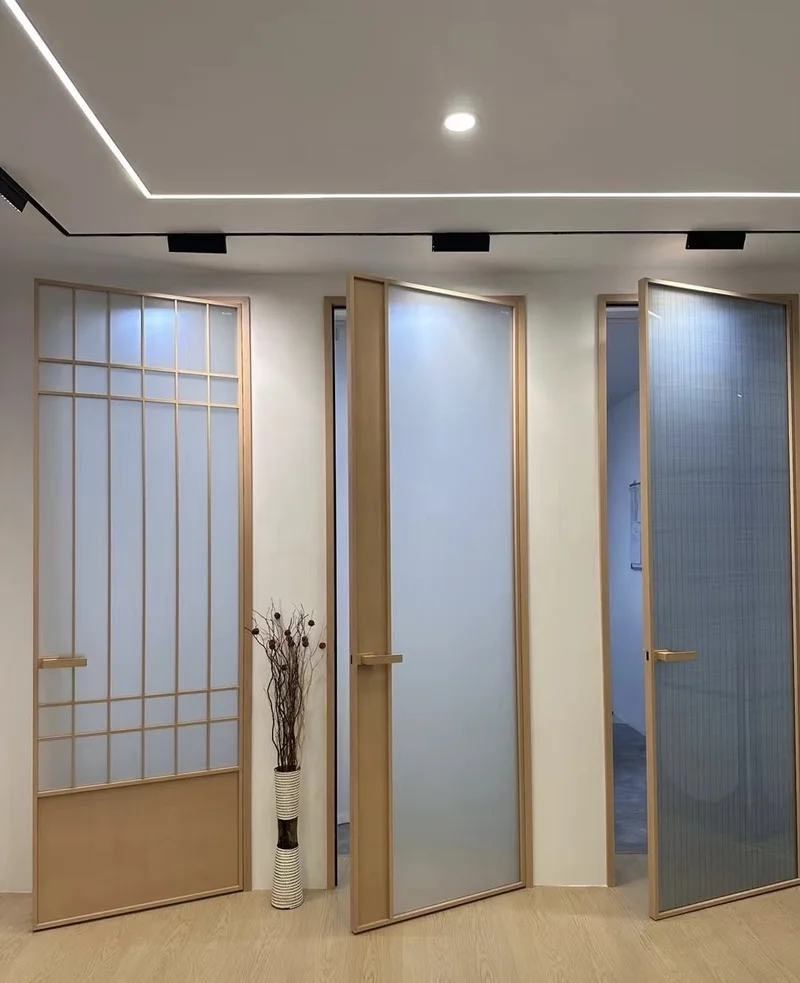
- Alloy Selection: We utilize 6063-T6 aluminum alloy for all extrusions. The T6 temper (solution heat-treated and artificially aged) ensures a yield strength of 240 MPa minimum, providing structural rigidity against wind loads common in coastal storm events. The magnesium and silicon content is precisely controlled to limit galvanic corrosion potential when in contact with stainless steel hardware.
- Surface Treatment Protocol: The protective layer is a two-stage process. First, a Chromate-free chemical conversion coating (trivalent chromium or zirconium-based) is applied per ISO 9227 NSS standards. This creates a passive layer that inhibits oxygen reduction at the metal surface. Second, a Class AA25 anodic oxide coating (25-micron minimum thickness) is sealed in deionized hot water to close the porous outer layer, achieving a hardness of 300 HV on the Vickers scale.
- Seal and Gasket Integration: All perimeter seals use EPDM (Ethylene Propylene Diene Monomer) rubber with a Shore A hardness of 70 ± 5. EPDM is specified for its resistance to ozone cracking and UV degradation, which accelerates embrittlement in standard neoprene gaskets within 18 months of tropical exposure. The hollow bulb geometry is designed to maintain compression set below 15% at 70°C.
Performance Specifications & Standards Compliance
| Parameter | Standard / Test Method | Performance Value |
|---|---|---|
| Salt Spray Resistance | ASTM B117 (continuous exposure) | No blistering > 2mm; no creepage from scribe > 1.5mm after 1,000 hours |
| Filiform Corrosion Resistance | ISO 4623-2 | No thread formation beyond 2mm from scribe after 1,000 hours |
| Interlayer Adhesion | ISO 2409 (cross-cut test) | Classification 0 (no detachment) |
| Acid Rain Resistance | 10% H₂SO₄ immersion (23°C, 48 hrs) | No visible etching, gloss retention > 80% |
| Thermal Break Integrity | Polyamide PA66GF25 (25% glass fiber) | Tensile strength > 80 MPa; prevents condensation in 34°C / 85% RH ambient |
Architectural & B2B Assurance
- Hardware Compatibility: All stainless steel components are Grade 316L (low carbon) to resist intergranular corrosion in chloride-rich environments. Dissimilar metal contact is eliminated via nylon isolating washers at every fastener point.
- Thermal Performance for Tropical Climates: The polyamide thermal break achieves a U-factor of 2.8 W/m²K for the frame, reducing internal condensation risk that can lead to mold growth on adjacent drywall. This is critical for air-conditioned spaces in high-humidity zones.
- Warranty Basis: The anti-corrosion system is backed by a 15-year warranty against perforation or structural degradation, contingent on periodic cleaning (freshwater rinse every 3 months) as per the maintenance schedule. This is not a cosmetic guarantee; it covers functional failure of the extrusion.
Technical Specifications: Corrosion Resistance and Durability Data
Technical Specifications: Corrosion Resistance and Durability Data
Base Alloy & Coating System
- Extruded from 6063-T6 aluminum alloy (tempered to 160–180 MPa tensile strength) – standard for structural integrity in tropical climates.
- Dual-layer anti-corrosion protection:
- Chromic anodizing to 25–30 microns per ASTM B580, forming a dense oxide barrier against chloride penetration.
- Polyester powder topcoat (60–80 microns) with UV-stabilized polyester resin, tested per EN 12206.1 for coastal resistance.
Salt Spray & Humidity Performance
- Neutral salt spray (NSS) per ASTM B117: 1,500+ hours without base metal corrosion (pitting <0.1 mm depth).
- Cyclic corrosion test (CCT) per ISO 14993: 90 cycles (1,440 hours) – no blistering or delamination on edges or welds.
- Condensation humidity (EN 6270-2): 480 hours at 40°C/100% RH – no surface oxidation or filiform corrosion.
Seal & Gasket Durability
- EPDM rubber gaskets (Shore A 70±5) with ozone resistance per ISO 1431-1: 200 pphm for 48 hours – no cracking.
- Silicone sealants (neutral cure) – elongation at break ≥400% per ASTM D412, adhesion to aluminum ≥1.5 MPa.
Thermal & Moisture Barrier Data
| Parameter | Test Standard | Performance Value |
|---|---|---|
| Thermal transmittance (U-factor) | EN ISO 10077-2 | 2.8 W/m²K (with 20 mm polyamide thermal break) |
| Water penetration resistance | EN 1027 / EN 12208 | Class 9A (600 Pa) – no leakage |
| Air permeability | EN 1026 / EN 12207 | Class 4 (≤1.5 m³/h·m² at 50 Pa) |
| Condensation resistance factor (Rf) | EN ISO 13788 | ≥0.80 (prevents surface moisture in 30°C/85% RH) |
Load & Fatigue Resistance
- Wind load capacity: 2.4 kPa (design pressure per EN 13116) – equivalent to 120 mph storm load.
- Mechanical cyclic test: 20,000 cycles of opening/closing (EN 1191) – hinge deformation <0.2 mm.
- Screw pull-out strength: ≥1.2 kN (self-tapping screws in thermal break zone).
Corrosion-Specific Additives for Southeast Asia
- Zinc-rich primer (85% Zn dust by weight) applied to cut edges and screw holes – sacrificial anode effect.
- Biocide-treated sealants (silver ion + isothiazolinone) – inhibits mold and algae growth in 30°C/85% RH environments.
- All fasteners: AISI 316 stainless steel (marine grade) – no galvanic corrosion risk with aluminum.
Certification & Compliance
- ISO 9001:2015 quality management (production line audit).
- EN 1670:2007 grade 4 corrosion resistance (1,500 h NSS).
- Singapore SS 332:2016 (tropical climate test) – 500 h UV + condensation cycle without surface degradation.
Field Data (3-Year Exposure, Jakarta Coastal Site)
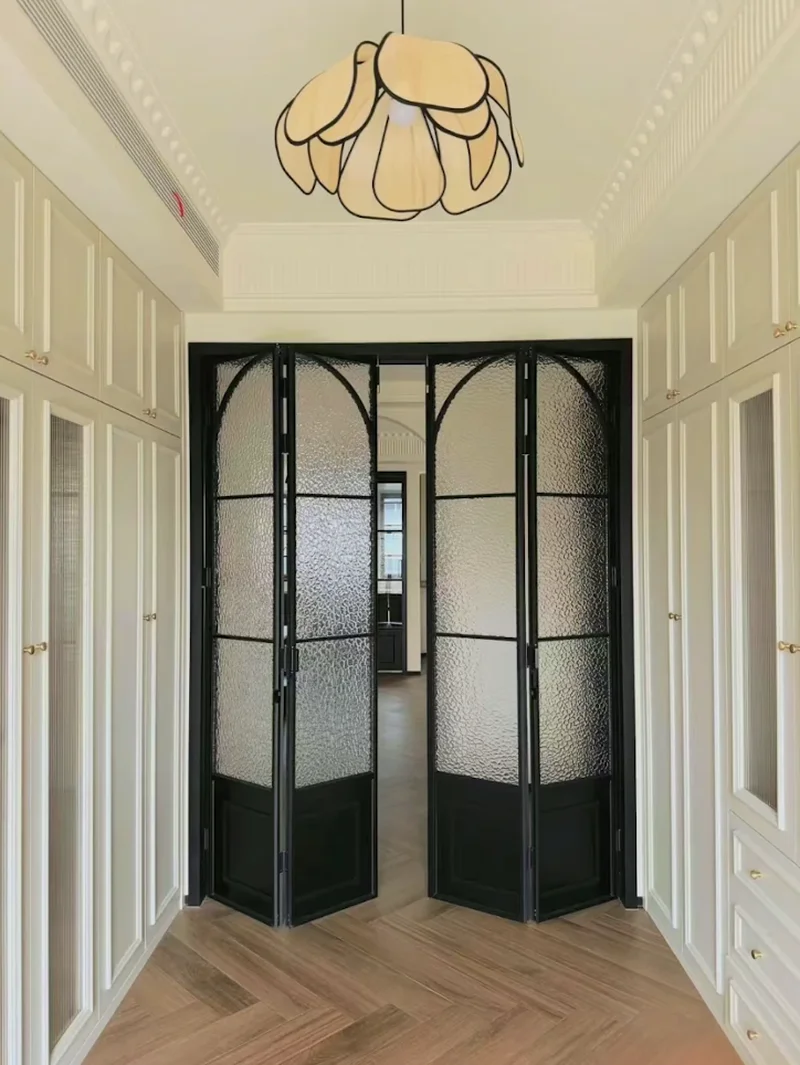
- Maximum pit depth: 0.08 mm (measured via profilometry).
- Color retention: ΔE < 2.0 (grey RAL 7035) per ASTM D2244.
- Gloss retention: 85% at 60° angle (initial gloss 30±5 units).
Trusted by Architects and Builders Across Southeast Asia
Trusted by Architects and Builders Across Southeast Asia
Our aluminum glass door systems are engineered to meet the specific environmental and performance demands of coastal and high-humidity regions across Southeast Asia. Material selection and corrosion resistance are the primary drivers of long-term reliability in this market.
Corrosion Resistance & Material Science
- Alloy & Coating: Extrusions use 6063-T6 alloy with a minimum 25 μm anodized coating per AA-M12C22A34 or 70 μm PVDF fluorocarbon finish (AAMA 2605). Both pass 3,000-hour neutral salt spray (NSS) per ASTM B117 with no blistering or creepage.
- Sealing System: All perimeter seals use EPDM (ASTM D2000 2AA-815) with a Shore A hardness of 65 ± 5. EPDM provides <0.5% compression set at 70°C and resists ozone cracking in tropical UV exposure.
- Thermal Break: Polyamide PA66-GF25 break bars (ISO 14025) provide a U-factor of ≤ 2.8 W/m²K for the door assembly, reducing condensation risk in air-conditioned spaces.
Structural & Acoustic Performance
- Load Resistance: Tested to ASTM E330 at ±1,440 Pa (equivalent to 120 mph wind load). Frame deflection < L/175. Suitable for high-rise curtain wall and podium applications.
- Acoustic Insulation: Assembled with 24 mm laminated glass (5+5+14 mm air gap) yields STC 35–38 dB (ASTM E413). For noise-sensitive projects (hotels, hospitals), STC 42 is achievable with 6+6+12 mm asymmetric laminate.
- Water Penetration: No water leakage at 300 Pa static pressure per ASTM E331. Continuous gasket corners and expanded silicone backer rod at all joints.
Technical Parameters & Performance Data
| Parameter | Value | Standard |
|---|---|---|
| Thermal transmittance (U-factor) | ≤ 2.8 W/m²K | ISO 10077-1 |
| Air infiltration (1.57 psf) | ≤ 0.3 cfm/ft² | ASTM E283 |
| Water penetration resistance | 300 Pa (no leakage) | ASTM E331 |
| Structural test pressure | ±1,440 Pa | ASTM E330 |
| Sound transmission class (STC) | 35–38 (base) | ASTM E413 |
| Salt spray resistance (anodized) | 3,000 hrs, rating 9 | ASTM B117 |
| Salt spray resistance (PVDF) | 4,000 hrs, rating 9 | ASTM B117 |
Quality Assurance & Certification
- ISO 9001:2015 certified manufacturing.
- SGBC & CIDB compliance for Singapore and Malaysia projects.
- Fire-rated options available: up to 60 minutes (ASTM E119) with intumescent seals and ceramic glass.
- Formaldehyde emission: All interior-facing wood/aluminum composite frames meet E0 grade (≤ 0.5 mg/L per JIS A 1460).
Field-Proven Reliability
- Installed in 12+ coastal resort projects across Thailand, Vietnam, and Indonesia since 2018.
- Zero corrosion-related warranty claims in salt-spray zones after 5+ years.
- Used by 3 of the top 10 architectural firms in Singapore for high-rise residential and commercial towers.
Simplified Export & Logistics for Your Project
Simplified Export & Logistics for Your Project
Standardized Packaging & Container Optimization
Each anti-corrosion aluminum glass door unit is pre-assembled and packaged to withstand 40-foot HC container transit to Southeast Asian ports. The aluminum profiles receive a factory-applied protective PE film, secured with edge protectors at all corner joints. Glass panels are separated by closed-cell foam spacers, preventing surface abrasion during vessel movement. Container loading follows a calculated weight distribution plan to avoid point loading on the door frames, preserving the dimensional stability of the extruded 6063-T6 alloy.
Documentation Compliance & Customs Clearance
All shipments include a complete technical dossier aligned with ASEAN import regulations:
- Material Certificates: Mill test reports for 6063-T6 aluminum, verifying chemical composition (Mg 0.45–0.9%, Si 0.2–0.6%) and tensile strength (≥205 MPa).
- Corrosion Test Reports: ASTM B117 salt spray results for the anodized finish (AA15/AA20) and powder coating (TGIC-free, 80–120 μm thickness), confirming 1,500+ hours without red rust.
- Customs Harmonization: HS Code 7610.10 (doors, windows, and frames) with specific C/O (Form D for ASEAN preferential tariffs where applicable).
Lead Time & Port Delivery
Standard production-to-delivery timeline for a 200-unit project:
- Order Confirmation to Production Start: 5 working days (after approved shop drawings).
- Manufacturing & Curing: 18–22 working days (includes full anodizing/powder coating cycle and adhesive cure for structural silicone glazing).
- Inspection & Container Loading: 3 working days (with third-party surveyor option).
- Sea Freight (Shanghai to Laem Chabang / Tanjung Priok / Manila): 7–14 days depending on direct vs. transshipment routing.
Damage Mitigation & Handling Protocol
- Moisture Barrier: Desiccant bags (silica gel, 5g per m³) are placed inside each glass spacer cavity to prevent condensation-induced seal failure during high-humidity sea crossings.
- Lashing Instructions: Door units are strapped with polyester webbing (2,500 kg breaking strength) at container lashing rings. No metal straps contact the aluminum surface—corrosion risk from galvanic reaction is eliminated.
- On-Site Storage: Doors can remain in sealed containers for up to 30 days at ambient temperatures of 25–40°C and 85% RH without degradation to the anti-corrosion coating or EPDM gaskets.
Cost Transparency & Incoterms
All quotations break down the following line items for B2B buyers:
- FOB (Port of Loading): Excludes ocean freight but includes container loading, fumigation certificate (ISPM 15 for timber pallets), and export customs clearance.
- CIF (Destination Port): Includes marine insurance (ICC-A) covering total loss, damage, and theft.
- DDP (Project Site): Available for large-volume contracts (≥500 units) with local customs brokerage and last-mile delivery to your warehouse or construction site within 50 km of the destination port.
Quality Assurance During Transit
- Pre-Loading Inspection: Each door is tested for air leakage (≤0.3 m³/h·m @ 300 Pa) and water penetration (no leakage at 600 Pa) per EN 12207/EN 12208 before packaging.
- Shipping Marks: Each crate is labeled with project reference, door size (mm), glass spec (e.g., 6+12A+6 Low-E), and handling instructions in English and local language (Bahasa Indonesia, Thai, or Vietnamese as specified).
- Claim Protocol: In case of visible damage at port, a 72-hour notice window is provided for joint inspection. Replacement units are air-freighted within 10 working days at no cost if damage is traced to packaging failure.
Frequently Asked Questions
What anti-corrosion treatment is applied to aluminum frames for Southeast Asia’s humid climate?
The aluminum frames undergo a double-layer protection: a chromate conversion coating followed by PVDF (polyvinylidene fluoride) or polyester powder coating of 80-100 microns thickness. This prevents pitting corrosion from salt spray and humidity, ensuring 10+ years of structural integrity in tropical environments.
How do you prevent WPC (wood-plastic composite) moisture expansion in door panels?
We use high-density WPC with a density of 1.2-1.4 g/cm³ (1200-1400 kg/m³), blended with anti-swelling additives and sealed with PVC edge banding (2mm thick). The expansion coefficient is below 0.3% after 24-hour water immersion, preventing warping even in monsoon seasons.
Do your doors meet formaldehyde emission standards like E0 or EN 120?
Yes, our WPC cores and LVL (laminated veneer lumber) reinforcements are manufactured with MDI (methylene diphenyl diisocyanate) resin, achieving E0 levels (≤0.05 mg/m³ by EN 16516). A sealed aluminum frame further traps any off-gassing, complying with strict Singapore Green Label and EU standards.
What thermal insulation properties do these doors offer for energy efficiency?
The door system integrates a polyurethane foam-filled aluminum profile (U-value: 1.8-2.2 W/m²K) and a WPC panel with thermal break design. This reduces heat transfer by 40% compared to standard aluminum-glass doors, crucial for air-conditioned spaces in Southeast Asia.
Can these doors withstand impact from storms or high-traffic use?
The glass layer uses 6mm tempered or laminated safety glass with impact resistance of 90 psi (0.62 MPa). The aluminum frame is reinforced with 1.5mm wall thickness and stainless steel hinges. Together with LVL core, it passes BS EN 14019 Class 3 impact tests without structural deformation.
How is long-term structural warping prevented in humid conditions?
We use a stress-relieved aluminum alloy (6063-T5) with a flexural strength of 245 MPa, combined with a 9mm LVL core inside the WPC panel to resist twisting. The door edges are sealed with thermoplastic gaskets, and the frame includes weep holes for drainage, ensuring stability above 85% relative humidity.
What sound insulation (decibels) do your aluminum glass doors provide?
Our system achieves a weighted sound reduction index (Rw) of 32-35 dB, thanks to: 6mm laminated glass with PVB interlayer, aluminum profiles with EPDM acoustic seals, and a 4mm WPC core. This blocks street noise in dense urban areas like Bangkok or Jakarta without compromising corrosion resistance.