Aluminum glass door installation service for industrial parks
In the dynamic landscape of industrial parks, where efficiency, security, and aesthetics converge, the entry point of a facility speaks volumes. The installation of specialized aluminum glass doors represents a critical investment, far beyond a simple architectural element. These robust systems are engineered to withstand high-traffic environments while maximizing natural light, enhancing operational workflow, and projecting a modern, professional image. A professional installation service is paramount, ensuring not only precise fitting and optimal performance but also long-term durability and compliance with industrial safety standards. From expansive loading bay accesses to sleek executive entrances, the right door solution fortifies security, improves energy efficiency, and ultimately contributes to a more productive and impressive industrial environment.
Maximizing Operational Flow: How Our Aluminum Glass Doors Enhance Industrial Park Accessibility and Efficiency
Aluminum glass door systems are engineered to resolve the fundamental conflict between accessibility and environmental separation in industrial parks. The core design principle leverages the structural integrity of thermally broken aluminum framing paired with high-performance glazing to create large, durable portals that facilitate unimpeded material and personnel flow while maintaining critical internal conditions.
Functional Advantages for Operational Flow:
- High-Frequency Traffic Management: Engineered for a minimum of 500,000 cycles, our door hardware systems (hinges, pivots, sliders) withstand constant use from forklifts, trolleys, and high-volume foot traffic without failure or sagging, ensuring consistent accessibility.
- Maximized Clear Opening & Sightlines: Full-height glass panels and slimline profiles provide near-total visual transparency, drastically reducing blind-spot collisions at intersections between warehouse aisles and loading areas. This supports faster, safer internal logistics.
- Rapid, Sealed Closure: Automatic sliding or swing door options with motion sensors ensure swift opening and positive-latch closing. This minimizes air exchange duration, stabilizing internal temperature and humidity critical for sensitive processes or storage.
- Maintenance of Controlled Environments: The primary technical function is to preserve the integrity of segregated zones—be it climate-controlled warehouses, clean manufacturing areas, or noise-sensitive offices—without acting as a bottleneck.
Technical Performance Parameters:
The operational advantages are quantified through measurable material and assembly standards.
| Performance Category | Key Parameter & Standard | Typical Specification | Impact on Industrial Operation |
|---|---|---|---|
| Structural & Durability | Frame Alloy & Hardness | 6063-T5/T6 Aluminum, Anodized (≥15µm) or Powder-Coated (≥70µm) | Resists impact damage from pallets and equipment, maintains dimensional stability under load. |
| Thermal Insulation | Thermal Transmittance (U-factor) | Uf ≤ 1.6 W/(m²·K) for frame; Ug ≤ 1.0 W/(m²·K) for double-glazed unit | Reduces energy loss at high-traffic portals, stabilizing HVAC loads and operational costs. |
| Acoustic Separation | Sound Reduction Index (Rw) | Rw 35-42 dB for double-glazed units with laminated or asymmetric glass | Allows placement between noisy production floors and adjacent office spaces without functional compromise. |
| Safety & Compliance | Impact Resistance / Fire Rating | Class 1B1 impact rating per EN 12600; Option for EI 30/60 (EN 13501-2) | Mitigates risk of breakage from accidental impact; provides critical compartmentation where required by code. |
| Glazing Performance | Solar Heat Gain Coefficient (SHGC) / Light Transmission | Tunable SHGC (0.25-0.50) with high VLT (>70%) | Manages solar heat load in atriums or south-facing facades, reducing cooling demand while maintaining daylighting. |
Architectural Integration & Specification Integrity:
Successful installation hinges on precision engineering from substrate to hardware. Our service includes forensic-level site measurement to account for structural deflection and floor level tolerances. Frames are anchored using stainless steel bracketry in slotted holes to accommodate thermal expansion of the building shell. All glazing employs structural silicone or compression gasket systems rated for the specific wind load and seismic activity of the region, ensuring long-term weathertightness and mitigating water infiltration that could disrupt interior operations.
The specification chain is closed-loop: aluminum extrusions are certified to ASTM B221; glazing units comply with ASTM E2190 for insulating glass performance; and full assemblies are validated for air infiltration (≤ 0.5 cfm/ft² per ASTM E283), water resistance (≥ 15 psf per ASTM E331), and structural performance (per ASTM E330). This end-to-end control guarantees that the installed system performs as a calibrated component of the building’s envelope and operational workflow.
Engineered for Extreme Conditions: Superior Weather Resistance and Durability in Industrial Environments
Industrial aluminum-glass door systems are engineered to withstand the demanding environmental loads and operational cycles of industrial parks. The primary defense is a multi-layered material and design strategy focused on corrosion resistance, structural integrity, and long-term performance stability.
Core Material Specifications & Fabrication Standards:
- Alloy & Surface Treatment: Profiles are extruded from 6063-T5 or 6061-T6 aluminum alloys, with a minimum 25-micron anodized coating or 70-micron thermosetting polyester powder coating (tested to ASTM B117/ASTM D1654 for salt spray and QUV resistance). This ensures a stable, non-reactive barrier against chemical particulates, salt aerosols, and acidic rainfall common in industrial zones.
- Thermal & Structural Engineering: For thermally broken systems, the polyamide barrier must have a minimum 24mm width and a reinforced glass fiber content (typically >25%) to maintain dimensional stability and compressive strength, preventing deflection under high wind loads and thermal stress. The structural silicone glazing or pressure plate system is calculated to accommodate thermal expansion differentials between aluminum, glass, and framing substrates.
- Glazing Performance: Laminated or insulated glass units (IGUs) are standard. Laminated glass provides inherent safety and sound damping (up to 40 dB STC with specialized interlayers), while IGUs with low-E coatings and argon fill achieve U-factors as low as 0.29 Btu/(hr·ft²·°F), critical for energy management in large door openings.
Performance Under Specific Industrial Stresses:
| Stress Factor | Engineering Response | Test Standard / Performance Metric |
|---|---|---|
| Cyclic Wind Load | Reinforced corner cleats, increased wall thickness at key stress points, and dynamic sealant joints. | Designed to meet EN 12211 or ASTM E330 for positive and negative pressure differentials exceeding 2400 Pa. |
| Corrosive Atmospheres | Architectural-grade anodizing or fluoropolymer coatings with high chemical resistance. | ASTM B117 salt spray resistance >4000 hours without substrate corrosion. |
| Operational Fatigue | Heavy-duty stainless steel roller bearings, reinforced track systems, and multi-point locking gear. | Rated for >100,000 cycles (EN 1527) without significant wear or loss of operability. |
| Water & Air Infiltration | Triple EPDM or silicone gasket seals, internally drained frame systems. | Achieves Class 4 (EN 12208) for watertightness and Class 4 (EN 12207) for air permeability. |
| Impact & Safety | Tempered or heat-soaked laminated glass, mechanically anchored frames. | Complies with CPSC 16 CFR 1201 Cat. II or EN 12600 for impact resistance. |
Functional Advantages for Industrial Application:
- Minimal Maintenance: The inert, coated aluminum surface resists fouling and requires only periodic cleaning with non-abrasive, pH-neutral agents. Hardware components are specified with marine-grade stainless steel or anodized finishes.
- Dimensional Stability: The aluminum profile system maintains its geometry across a wide temperature range (-30°C to +80°C), preventing binding or seal failure. Thermal break materials are selected for low water absorption (<0.5%) to prevent degradation.
- Integrated Performance: Systems are supplied as engineered assemblies, with factory-applied seals and hardware, ensuring consistent on-site performance that meets the calculated thermal, acoustic, and structural parameters.
Seamless Integration and Customization: Tailored Solutions for Diverse Industrial Park Layouts and Needs
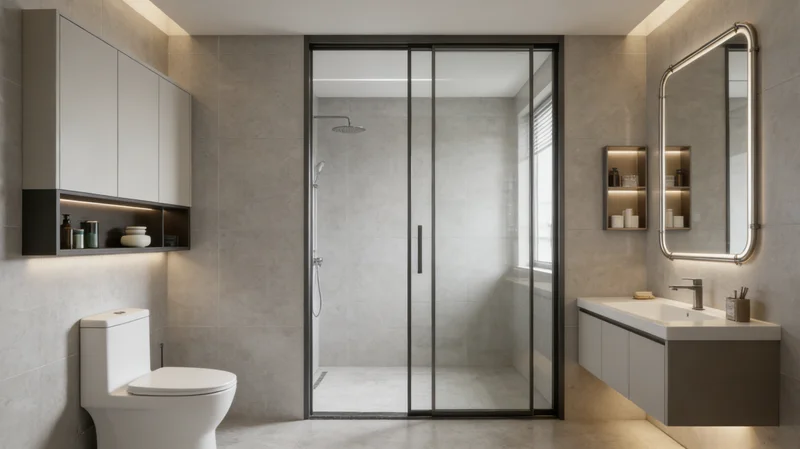
Industrial parks present a unique set of architectural challenges, from managing high-traffic flow and stringent hygiene protocols to accommodating specific thermal, acoustic, and security requirements across diverse facilities. Our engineering approach to aluminum glass door systems is predicated on material science and precision fabrication to ensure seamless integration into any structural and operational context.
Core Engineering Principles for Customization:
- Frame Integrity & Thermal Performance: Utilizing thermally broken 6063-T5 or 6061-T6 aluminum alloy profiles, engineered with multi-chamber designs and polyamide barriers. This achieves U-factors as low as 1.6 W/(m²·K), critical for climate-controlled logistics or manufacturing areas.
- Glazing Configurations: Options range from single-pane tempered for cost-effective partitions to insulated glass units (IGUs) with Low-E coatings and argon fill for superior insulation. Laminated glass interlayers provide enhanced security, impact resistance, and sound reduction up to 40 dB.
- Hardware & Actuation Systems: Integration of heavy-duty, corrosion-resistant hardware (minimum Grade 304 stainless steel) is calibrated for cycle counts exceeding 500,000. Automated actuation systems (sliding, swing, or telescopic) are interfaced with building management systems for access control and traffic optimization.
Technical Specifications for Tailored Applications:
| Application Zone | Primary Challenge | Recommended Door System Configuration | Key Performance Parameters |
|---|---|---|---|
| High-Traffic Logistics Portals | Durability, Cycle Speed, Safety | Heavy-duty automatic sliding doors with laminated safety glass. | Aluminum profile wall thickness: ≥ 2.5mm. Shore D hardness of seals: > 60. Opening speed: Adjustable 0.5-1.0 m/s. |
| Temperature-Sensitive Areas (Cold Storage, Clean Rooms) | Thermal Insulation, Airtight Seal | Thermally broken swing or rapid-roll doors with double-sealed gaskets and insulated panels. | U-factor: ≤ 1.8 W/(m²·K). Air infiltration rate: < 2.5 m³/(m·h) @ 100 Pa. Frame condensation resistance factor (CRF): > 65. |
| Noise-Sensitive Zones (Office Wings, Labs) | Acoustic Attenuation | Acoustic-rated sliding systems with specialized IGUs and perimeter seals. | Sound Reduction Index (Rw): ≥ 35 dB. Core filler density for acoustic frames: ≥ 60 kg/m³. |
| Facade & Architectural Features | Aesthetic Integration, Structural Load | Structural glazing or unitized curtain wall systems with integrated doors. | Deflection limit: L/175 under full design load. Anchor shear capacity: As per project-specific structural calculation. |
Material & Compliance Standards:
All components comply with rigorous international standards. Aluminum extrusions meet ASTM B221 and EN 755. Glazing complies with ANSI Z97.1 / EN 12600 for safety and ASTM E2190 / EN 1279 for IGUs. Fire-rated assemblies are available, tested to ASTM E119 or EN 1364 integrity standards (up to 120 minutes). Sealants and gaskets are selected for low moisture absorption (<5%) and stability across a temperature range of -40°C to +80°C. Fabrication and installation processes are governed by ISO 9001 quality management systems, ensuring dimensional tolerances within ±1.5mm across full assembly.
Advanced Safety and Security Features: Protecting Assets with Robust Structural Design and Access Control
Advanced safety and security in industrial park door systems are achieved through a multi-layered approach, integrating robust structural engineering with intelligent access control. The primary defense is the door assembly itself, designed to resist forced entry, environmental stress, and fire propagation.
Structural Integrity and Forced Entry Resistance
The security envelope begins with the aluminum framing system. Profiles are engineered from 6063-T5 or 6061-T6 alloy, with wall thicknesses exceeding 2.0mm for critical members. These are reinforced with internal stainless steel or galvanized steel cores at lock points and hinges. The glazing is a critical component; standard laminated security glass consists of two or more plies of tempered glass bonded with polyvinyl butyral (PVB) or ionoplast interlayers. For high-risk areas, polycarbonate laminates or wire glass may be specified.
- Ballistic and blast mitigation glazing utilizes multi-layer laminates with varying glass thicknesses and specialized interlayers to absorb energy and retain fragments.
- Enhanced hardware anchoring involves through-bolting or welding of hinge plates and multi-point lock systems directly into the structural steel of the building opening, bypassing weaker curtain wall mullions.
- Anti-lift and anti-rack designs incorporate interlocking thresholds and head details that prevent the door leaf from being pried or twisted from its frame.
Performance Under Environmental and Fire Stress
Doors must maintain integrity under duress beyond direct attack. This requires strict adherence to material specifications and testing standards.
| Feature | Technical Parameter | Standard / Test Method | Performance Implication |
|---|---|---|---|
| Wind Load Resistance | Structural Test Pressure (Pa) | ASTM E330 / EN 12211 | Ensures frame and glazing integrity under high wind and negative pressure. |
| Forced Entry Resistance | Toolset, Time, Attack Methods | ASTM F476, EN 1627-1630 | Classifies resistance grade (e.g., RC2, RC3, Grade 40). |
| Fire Rating | Integrity & Insulation (Minutes) | ASTM E119 / EN 1364-1, EN 1363-1 | Specifies fire-rated glazing and frame system (e.g., 60/90/120 min). |
| Glazing Impact Safety | Drop Height & Impact Class | CPSC 16 CFR 1201, EN 12600 | Ensures safe breakage pattern (tempered) or penetration resistance (laminated). |
Integrated Access Control and Automation
Structural robustness is complemented by electronic access management. Systems are designed for seamless integration with industrial park security networks (BACnet, OPC, proprietary protocols).
- Credential readers support multi-technology formats (125kHz proximity, MIFARE DESFire EV2, Bluetooth LE, biometrics) with encryption for credential data.
- Fail-safe vs. Fail-secure operation is engineered per zone requirement, with battery backup systems maintaining specified operation during power loss.
- Monitoring integration ties door position sensors (magnetic reed or cam-type switches), request-to-exit motion detectors, and alarm monitoring into a central security management system for real-time audit trails and incident response.
- Automated operation for high-traffic or secure material airlocks utilizes heavy-duty industrial operators with torque ratings exceeding 1000 Nm, programmed for controlled speed, soft start/stop, and obstacle detection per EN 16005.
Material and Assembly Specifications
Final performance is contingent on controlled manufacturing and installation.
- Sealant systems use structural silicone or polysulfide compounds with documented compatibility and adhesion tests to the anodized or powder-coated aluminum substrate, ensuring long-term weathertightness and thermal efficiency.
- Hardware cycles are specified for heavy-duty use, with hinges and locks rated for a minimum of 500,000 cycles (ANSI/BHMA A156.115 Grade 1 equivalent).
- Quality assurance mandates that all components, from alloy extrusion to final assembly, are traceable and manufactured under ISO 9001:2015 certified processes, with supporting test reports from accredited laboratories.
Technical Specifications and Compliance: Meeting Industrial Standards for Performance and Sustainability
Material Specifications
- Aluminum Alloy: Primary extrusions utilize 6063-T5 or 6061-T6 alloy, providing a minimum yield strength of 160 MPa. Surface finishing is via powder coating to a minimum thickness of 60µm, conforming to AAMA 2604 or Qualicoat Class 2 for superior corrosion resistance in industrial atmospheres.
- Glass: Typically 6mm to 12mm tempered or laminated safety glass. Laminated configurations (e.g., 6.38mm: 2x3mm glass + 0.38mm PVB interlayer) are standard for critical areas, offering enhanced security and acoustic performance. For high-traffic zones, ANSI Z97.1 or EN 12600 impact resistance is mandatory.
- Seals & Gaskets: EPDM (Ethylene Propylene Diene Monomer) gaskets with a minimum Shore A hardness of 60±5 are used for perimeter sealing, ensuring long-term flexibility and resistance to ozone, UV, and temperature extremes from -40°C to +120°C.
- Hardware: All hinges, locks, and multi-point systems are rated for a minimum of 200,000 cycles (EN 12209, EN 1935). Stainless steel (Grade 304 or 316) is specified for all critical load-bearing components.
Performance Parameters
| Parameter | Standard / Test Method | Performance Range | Notes |
|---|---|---|---|
| Air Infiltration | ASTM E283 / EN 1026 | ≤ 0.5 cfm/ft² (≤ 1.5 m³/hr·m²) | At test pressure of 75 Pa (Class 4 per EN 12207). |
| Water Penetration Resistance | ASTM E331 / EN 1027 | ≥ 300 Pa (Class 9A per EN 12208) | No uncontrolled water penetration at specified pressure. |
| Structural Performance (Wind Load) | ASTM E330 / EN 12211 | Positive & Negative to 2.0 kPa (PSF 40) | Design pressure (DP) rating certified per AAMA 2502/2503. |
| Acoustic Insulation (Rw) | ASTM E90 / EN ISO 717-1 | Up to 42 dB | Achieved with laminated glass and specialized sealing systems. |
| Thermal Transmittance (U-value) | EN ISO 10077-1 / NFRC 100 | 1.8 – 2.5 W/m²·K | For thermally broken frame systems with double glazing. |
| Forced Entry Resistance | ASTM F588 / EN 1627 | Up to RC 2 / RC 3 (EN) | Dependent on glass type, frame anchoring, and hardware. |
Compliance & Certification Framework
- Quality Management: Installation protocols and material traceability are governed by an ISO 9001:2015 certified quality management system.
- Building & Fire Codes: Systems are engineered to meet or exceed relevant sections of the International Building Code (IBC), including fire-rated glazing assemblies where required (tested to ASTM E119/UL 10B or EN 1364). Non-rated doors comply with NFPA 80 for swinging door assemblies.
- Sustainability & Environmental:
- Aluminum extrusions contain a minimum of 70% recycled content. The entire system is 100% recyclable at end-of-life.
- Low-VOC sealants and coatings are used, compliant with SCAQMD rules and EU VOC Directive.
- Thermal break materials are polyamide strips with a minimum tensile strength of 80 MPa, ensuring long-term insulation integrity and condensation resistance.
- Safety Standards: All glass is permanently marked in compliance with CPSC 16 CFR 1201 or EN 12600 for safety glazing. Hardware meets ANSI/BHMA grade 1 or equivalent EN standards for durability and function.
Architectural & Functional Advantages
- Structural Integrity: Engineered for high-cycle operation and impact resistance in demanding logistics and manufacturing environments.
- Environmental Resilience: Powder-coated finishes and EPDM seals provide exceptional resistance to chemical exposure, particulate abrasion, and wide thermal cycling common in industrial parks.
- Maintenance & Serviceability: Modular design allows for component-level replacement. Standardized hardware ensures easy servicing and parts availability.
- Thermal Efficiency: Thermally broken frames with polyamide barriers significantly reduce thermal bridging, lowering energy transfer and mitigating interior condensation.
Trusted by Leading Industrial Parks: Case Studies and Professional Installation Guarantees
Case Study: High-Traffic Logistics Hub, Eastern Region
A 50,000 sqm logistics center required a main access solution for its sorting bay that could withstand constant forklift traffic and 16-hour daily operation cycles. The specification called for a system balancing maximum clear visibility for safety with exceptional durability.
- Core Challenge: Mitigating deflection in the door frame under repeated impact stress from pallet jacks.
- Technical Solution: Implementation of a 6063-T6 aluminum alloy frame with a reinforced structural silicone glazing (SSG) system. The alloy’s minimum tensile strength of 160 MPa and yield strength of 110 MPa provided the necessary structural integrity. The SSG system, with a calculated bite of 18mm and a dual-durometer silicone (45 Shore A for adhesion, 55 Shore A for weatherseal), transferred wind and impact loads directly to the primary structure, eliminating stress points on the glass.
- Performance Outcome: After 24 months of operation, laser-alignment checks show a maximum frame deflection of <1.5mm. The installed system maintains a U-factor of 1.8 W/(m²·K) and achieves a sound reduction rating (Rw) of 38 dB, contributing to improved internal climate control and noise mitigation from the loading yard.
Professional Installation Guarantee: The Critical Interface
Our installation protocol is governed by a framework of technical standards, ensuring the designed performance of the aluminum-glass system is fully realized on-site. The guarantee is not merely a time-based warranty but a certification of correct execution.
Guarantee Pillars & Technical Standards:
| Pillar | Technical Scope | Governing Standards / Metrics |
|---|---|---|
| Structural Integrity & Alignment | Verification of anchor type, embedment depth, and torque settings. Post-installation plumb and level verification across the entire assembly. | ASTM E2112, ASTM C1401. Tolerances ≤ 1.5mm per 3m of frame length. |
| Weatherproofing & Airtightness | Continuous compression of EPDM gaskets (Shore A 70±5), integrity of silicone sealant joints (≥ 8mm width/height ratio). | ASTM C920 (Class 25), ASTM E283 (air infiltration ≤ 0.15 cfm/ft² @ 75 Pa). |
| Operational Performance | Cycle testing of automated systems, force measurement for manual doors, adjustment of roller carriage pre-load. | ANSI/BHMA A156.10 for automated systems, ANSI/BHMA A156.13 for heavy-duty doors. |
| Material Conformance | Batch verification of aluminum alloy temper, glass laminate certification, and hardware grade validation. | Mill certificates per EN 755-9 (Aluminum), EN 14449 (Laminated Glass), ISO 9001:2015 (QMS). |
- Pre-Installation Survey: A mandatory site audit assesses structural substrate suitability (concrete compressive strength, steel deflection limits), interface details with adjacent cladding, and environmental exposure factors to finalize system engineering.
- Commissioning & Handover: Each project receives a complete documentation package, including as-installed drawings, test reports for air/water infiltration, structural calculations, and a maintenance schedule specific to the installed hardware and seals.
This engineered approach to installation transforms the door from a commodity component into a reliable, high-performance building envelope system, with documented performance data providing long-term operational assurance.
Frequently Asked Questions
What are the critical thermal and moisture expansion considerations for aluminum-glass doors in industrial parks?
Industrial-grade doors require aluminum alloys with a thermal break and compatible glass. We specify low-expansion alloys and insulated glass units (IGUs) with warm-edge spacers to manage differential expansion, preventing seal failure and air/water infiltration in fluctuating park environments.
How do you ensure long-term structural integrity and prevent warping in large door systems?
We utilize reinforced aluminum profiles with internal steel or LVL cores, coupled with multi-point heavy-duty hardware. Precision engineering of the frame’s squareness and anchorage to the structural slab is critical to distribute loads and resist the torsional stresses common in high-traffic industrial settings.
What impact resistance and safety standards do your industrial doors meet?
Doors are glazed with tempered or laminated safety glass, often in thicknesses of 10-12mm or more, achieving impact ratings like CPSC 16 CFR 1201 Cat II. The aluminum framework is engineered to withstand specified wind loads and incidental impact, ensuring compliance with stringent industrial safety codes.
Can you detail the sound insulation performance for noise-sensitive park operations?
We achieve 35-45 dB Rw sound reduction by using laminated acoustic glass (PVB interlayer), specialized perimeter seals with EPDM gaskets, and insulated, gasketed aluminum profiles. This creates an effective acoustic barrier against typical industrial park machinery and logistics noise.
What are the key factors for thermal insulation and energy efficiency?
Performance hinges on thermally broken aluminum profiles with polyamide barriers and double or triple glazing with low-E coatings and argon fill. This combination significantly reduces U-factor, minimizing thermal bridging and HVAC load for large, climate-controlled industrial spaces.
How are formaldehyde emissions and material health standards addressed in composite components?
For any wood-plastic composite (WPC) or laminated elements, we exclusively specify materials with certified E0 (<0.05 ppm) or EN (<0.124 mg/m³) formaldehyde emission levels. Core materials are sourced from suppliers providing full material safety data sheets (MSDS) for verification.
What anti-corrosion and UV-resistant finishing processes are used for longevity?
We employ a multi-stage pretreatment followed by electrostatic powder coating with PVDF resins or anodizing at AA20-25 grade. This provides superior resistance to industrial pollutants, salt air, and UV radiation, ensuring color stability and corrosion protection for over 20 years with minimal maintenance.