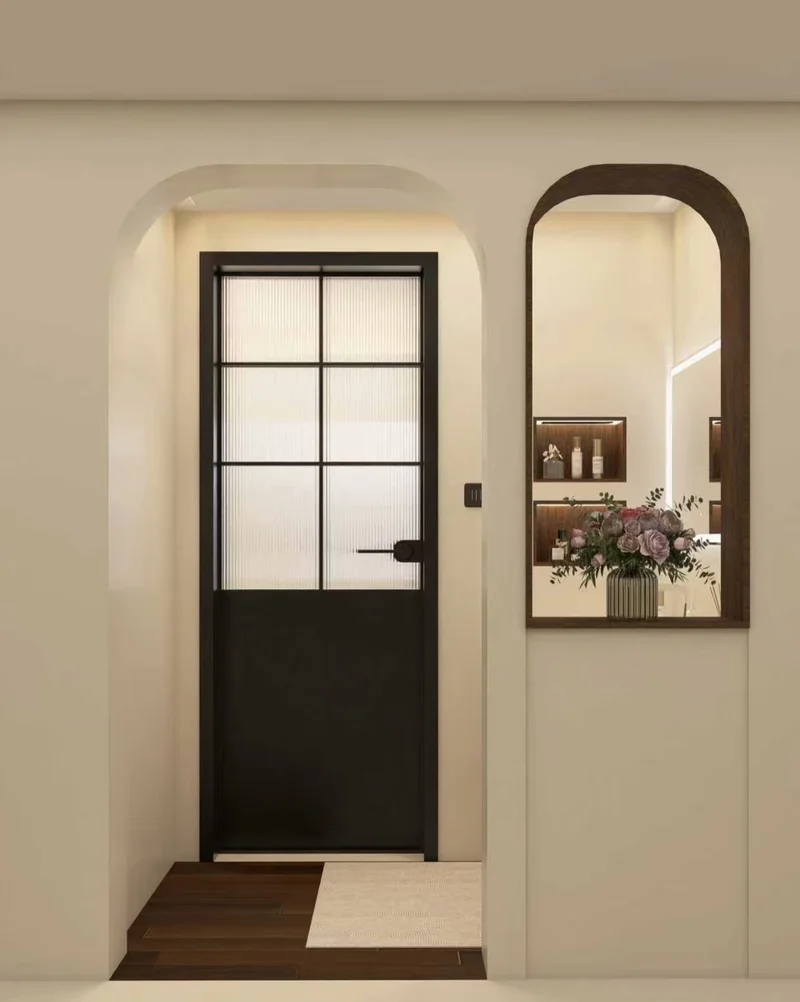
Aluminum glass doors for casino entrances
Step into the world where first impressions are everything—where the threshold between the outside and the glittering interior must whisper luxury while shouting security. For casinos, that threshold is often an aluminum glass door, a masterful blend of strength and transparency. These entrances are not mere barriers; they are the stage for every guest’s grand entrance, crafted to withstand the relentless flow of high-stakes traffic while framing the energy within. Aluminum’s inherent durability resists corrosion and warping, even under the constant assault of slot-machine vibrations and 24/7 operation, while its lightweight frame allows for expansive glass panels that invite curiosity. The glass itself—often tempered, laminated, or even smart-tinted—offers unobstructed views of the casino floor while deterring unwelcome scrutiny from outside. From the sleek, minimalist pivot doors of a Las Vegas high-limit lounge to the automated sliding panels of a Macau mega-resort, aluminum glass doors deliver an elegant, uncompromising welcome that balances spectacle with safety.
Make a Grand Statement: The Aesthetic Appeal of Aluminum Glass Doors for Casino Entrances
The entrance lobby is the threshold where external environment meets the high-traffic gaming floor. The aesthetic statement must be uncompromising, yet every material choice carries performance consequences. Aluminum-glass portal systems achieve this balance through precision-extruded profiles, thermally broken frames, and structural silicone glazing. The visual impact is deliberate, driven by engineering constraints that enhance rather than limit design.
- Slim sightlines: Extruded aluminum mullions with face widths as narrow as 50 mm (standard profiles) retain structural modulus under wind loads up to 2.4 kPa (ASCE 7-16 zone). Dead-load glass weight is transferred through shear blocks and setting blocks, not perimeter frames, allowing uninterrupted glass spans up to 3 m.
- Anodized finishes: Class 1 anodizing (AA25, 25‑µm oxide layer) per AAMA 611 yields corrosion resistance superior to Bortz-field exposure. Architectural powder coatings (70–120 µm, polyester TGIC-free) meet AAMA 2604 with 10‑year Florida exposure warranty. Color-matched aluminum caps conceal frame joints, eliminating visible fasteners.
- Glass selection for luminance: Low‑E double glazing (6 mm tempered + 12 mm argon + 6 mm laminated) achieves U‑factor ≤ 1.8 W/m²·K, SHGC 0.32–0.38, and visible light transmittance (VLT) 0.50–0.65. For glare-sensitive table games, VLT can be reduced to 0.35 using neutral grey or bronze glass without chromatic shift.
- Acoustic isolation: Laminated glass with 0.76 mm PVB interlayer yields STC 36–38, while 1.52 mm acoustic PVB (e.g., Vanceva) raises STC to 42 dB. Entrance frames fitted with EPDM bulb seals and silicone wet‑glazed per ISO 140‑6 achieve field‑tested sound transmission class ≥ 40 dB.
- Fire-rated options: 60‑min fire‑resistant glazing (ASTM E119 / UL 263) using wired-glass or ceramic intumescent panels (e.g., Pyran® or Pyroguard®) maintains clear vision while meeting local building code openings. Intumescent seals expand to 15 mm under heat, preserving integrity for egress path.
- Thermal break integrity: Polyamide 6.6 (PA66) struts, 24 mm width, separate interior and exterior aluminum extrusion. Combined with EPDM gasketry, this achieves U‑frame ≤ 2.0 W/m²·K and condensation resistance factor (CRF) ≥ 70 per AAMA 1503.
The aesthetic coherence—flush transoms, mitered corners, concealed drainage—relies on the structural bond. Structural silicone (Dow Corning 995 or equivalent) applied per ASTM C1087 provides tensile adhesion ≥ 345 kPa after 7‑day cure. Joint design follows DASMA TDS 172. No exposed gaskets; no visible weep slots. The entrance becomes a seamless glass wall.
For architects specifying these assemblies, the critical parameter is deflection limit: under load span/175 (L/175) for storm resistance, but L/240 for minimal visual sag in mullion‑glass interfaces. Aluminum alloy 6063‑T5 (yield 110 MPa) or 6061‑T6 (yield 241 MPa) should be selected based on unsupported height. Structural calculations per AA ADM‑1 are prerequisite for any 4‑story atrium entrance. The grand statement is engineered, not styled.
Withstand the Crowd: High-Traffic Durability and Security Features
The specified door assembly utilizes 6063-T5 or 6061-T6 aluminum alloy extrusions with a minimum wall thickness of 2.0 mm for frames and 3.0 mm for stiles/rails. This alloy choice ensures a yield strength of ≥ 180 MPa, resisting permanent deformation under cyclic crowd pressure and lateral wind loads. Thermal break profiles (polyamide 6.6 with 25% glass fiber) maintain structural rigidity while achieving U-factor ≤ 3.5 W/m²·K—critical for conditioned lobby spaces.
- Hardware load rating: All hinges, pivots, and continuous gears are certified to a minimum 500,000-cycle test to BS EN 13126 or equivalent. Panic hardware and push-pull bars meet ANSI/BHMA A156.3 Grade 1 for constant use.
- Tempered and laminated infill: Standard glass makeup is 6 mm tempered (impact resistance per EN 12150) + 1.52 mm PVB interlayer + 6 mm tempered. This withstands a 100 kg steel ball drop from 1.2 m without penetration. Configured as insulated glass units (IGU) with argon fill, achieving sound reduction of Rw ≥ 36 dB.
- Corner joint reinforcement: Shear blocks and stainless steel crimp plates are employed at frame corners for torsional stiffness. No exposed fasteners; all connections are flush-sanded and anodized to resist corrosion during daily cleaning.
| Parameter | Specification | Applicable Standard |
|---|---|---|
| Frame alloy | 6063-T5 / 6061-T6 | ASTM B221 (EN AW-6063) |
| Glass impact | 100 kg drop @ 1.2 m, no penetration | CPSC 16 CFR 1201 / EN 12600 Class 1(B)1 |
| Multi-point lock | 3-point (off-pivot side) – stainless steel deadbolts | EN 14846 Grade 4-7-5 |
- Door cycle life: Full assembly (frame, glass, hardware) tested to 1,000,000 open/close cycles under 50 kg/m door weight. No structural failure or hardware misalignment allowed.
- Moisture resistance: All seals are EPDM; sill assemblies include continuous drainage with weep channels to prevent standing water corrosion. Extrusion surface treatment – AA25 anodic coating or AAMA 2604-05 fluoropolymer paint.
High-traffic casino entrances demand zero failure in footfall patterns exceeding 3,000 people per hour per leaf. The door system integrates a double-barrel hinge design with bronze thrust bearings to distribute vertical load equally. Automatic closer speed adjustments via EN 1154-compliant hydraulic closers ensure doors return to closed position within 4 seconds. For vandalism-prone zones, optional stainless steel kick plates (1.2 mm, 304 grade) and laminated glass with intruder-resistant PVB (up to 0.76 mm thickness) are factory-installed.
Thermal and Acoustic Performance: Advanced Engineering for Comfort and Energy Savings
Thermal breaks in the aluminum frame are formed from 25 mm polyamide PA66 strips reinforced with 25% glass fiber, achieving a λ value of 0.30 W/mK. This reduces direct thermal bridging across the profile. As a rule, the assembly U-factor (including glazing and frame) is calculated per ASTM C1363 or EN 10077-2. Standard configurations achieve U-values down to 0.8 W/m²K, with high-performance variants reaching 0.6 W/m²K.
- Glazing package: Double or triple IGU with warm-edge spacers (stainless steel or TPS thermoplastic). Low‑E coating (ε < 0.04) and argon or krypton gas filling minimize convective heat transfer.
- Frame seals: Compression-sealed EPDM gaskets (Shore A 70 ± 5) at the perimeter of the glass and the door leaf‑frame interface. Three‑stage sealing is standard to eliminate drafts and moisture infiltration.
- Moisture control: The thermal break also prevents condensation on the interior face at ΔT up to 45 °C (per EN 12567, condensation resistance factor fᵣₛᵢ ≥ 0.85).
Sound transmission is managed by combining mass, damping, and constrained-layer decoupling. The system is tested according to ASTM E413 (STC rating) and EN 20140 (Rw and Dₙₜ,w). Typical casino entrance doors leverage laminated acoustic interlayers (PVB or Ionomer) with asymmetric glass thicknesses to shift coincidence dip frequencies away from common noise bands.
- Acoustic performance characteristics:
| Parameter | Standard Value | Enhanced Option |
|---|---|---|
| STC rating (ASTM E413) | 36 – 38 | 42 – 45 |
| Rw (EN 20140, lab) | 38 – 40 dB | 44 – 48 dB |
| Sound reduction index at 500 Hz | 32 dB | 42 dB |
| Glass composition | 5/0.76PVB/5 mm laminated | 6/1.14PVB/6 + 8/1.14PVB/8 asymmetric |
| Frame‑to‑glass seal | Silicone structural glazing | Dual‑durometer EPDM + acoustic mullion cover |
- Key design features for acoustic integrity:
- Glass edge bonding: Structural silicone glazing (SSG) per ETAG 002, which eliminates metal contact and flanking paths.
- Acoustic mullion covers: Extruded aluminum caps with internal mass‑loaded vinyl (MLV) strips (10 kg/m²) decouple the frame resonance.
- Perimeter sealing: Drop‑seals with neoprene compression at the bottom and magnetic seals at the meeting stile (for double doors) ensure airtight closure.
Both thermal and acoustic performance are validated under ISO 9001‑consistent factory production control. Fire‑rated variants tested to ASTM E119 / EN 1634‑1 maintain these metrics by using intumescent interlayers (3 mm) in the glass edge and water‑swelling seals in the frame cavity. The result is a door system that meets ASHRAE 90.1 (thermal) and IBC 1206 (acoustic) without compromising the high‑cycle operational demands of a casino entrance.
Customization Options: From Frameless Designs to Smart Access Control
Customization Options: From Frameless Designs to Smart Access Control
Frameless Structural Glass Systems
- Load-bearing silicone bonded assemblies using structural glazing gaskets (ISO 11600 F-25LM) eliminate visible mullions while maintaining a uniform thermal break. Recommended for casino vestibules where uninterrupted sightlines reinforce security monitoring.
- Monolithic laminated glass units (PVB interlayer ≥1.52 mm) achieve STC 40–45 for noise isolation from slot machine zones. For high-traffic perimeter entrances, specify 12.76 mm heat-strengthened laminated with a Shore D 85 polyurethane interlayer to meet ASTM E1300 wind load resistance up to 3.5 kPa.
Thermally Broken Aluminum Profiles
- Standard 60 mm deep TPS (thermoplastic spacer) profiles yield a U-factor of ≤1.6 W/m²K per EN 10077. Upgrade to 80 mm polyamide reinforced (PA6.6 with 25% glass fiber) strut-and-cap design for U-factor ≤1.1 W/m²K – reducing HVAC load in casino climate-controlled vestibules.
- Thermal break gap width of 20–30 mm with two-component polyurethane foam injection prevents condensation at 60% RH interior / -20°C ambient. Moisture absorption rate of PU foam stays below 2% per ISO 62.
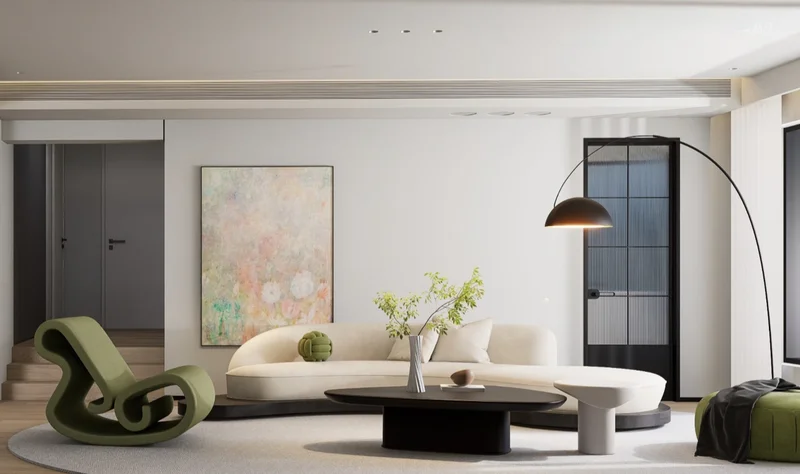
Glass Specification Matrix – Casino Entrance Grade
| Parameter | Standard Casino Entry | Premium Security Entry | Compliance |
|---|---|---|---|
| Glazing composition | 8 mm HS + 0.76 PVB + 6 mm AN | 10 mm HS + 1.52 PVB + 10 mm HS | ASTM E2190, EN 14449 |
| Impact resistance | UI.II (EN 12600) – 700 mm drop | UI.I (EN 12600) – 1200 mm drop | EN 356 P6B (manual attack) |
| Fire rating | E 30 (Integrity) | EI 30 (Integrity + Insulation) | EN 13501-2, ASTM E119 |
| Sound transmission class | STC 38 | STC 45 | ASTM E413 |
| Thermal U-factor (center-of-glass) | 1.5 W/m²K | 1.0 W/m²K (triple argon filled) | EN 673, NFRC 100 |
Smart Access Control Integration
- Electromagnetic lock assemblies rated 600–1200 lbf holding force (ANSI/BHMA A156.23) with adjustable dwell time (1–30 seconds) compatible with casino CMS (Casino Management System) API. Fail-secure models maintain lock status upon power loss per ANSI 156.31 Grade 1.
- Biometric readers (fingerprint, palm vein) with IP65 weatherproof enclosure and false acceptance rate <0.001%. Integration via Wiegand 26-bit or OSDP v2.0 protocol to central access panel.
- Motorized sliding door operators with frequency inverter drive – soft-start/stop reduces glass edge stress. Maximum dynamic load: 250 kg per leaf. Emergency egress: battery backup with auto-open on fire alarm signal (EN 1634-1 interface).
Specialty Hardware & Ergonomic Options
- Panic bars: UL 305 listed, single-point latch for frameless doors – ASTM F1575-03 dead load retention 200 lb.
- Door closer selection:
- Standard: hydraulic rack-and-pinion, adjustable spring size 1–6, EN 1154
- High-traffic: electrohydraulic with backcheck for casino peak hours – 300,000 cycles tested per EN 1191
- Threshold thermal break: extruded aluminum with 10 mm sponge EPDM gasket – air leakage ≤0.2 cfm/ft²@6.24 psf (ASTM E283).
Structural Anchorage & Frame Assembly
- Curtain-wall anchored frames: 6063-T6 alloy extruded to ASTM B221. Minimum yield 170 MPa. Sill flood tests: 20 mm standing water for 15 minutes without leakage per AAMA 501.1.
- For frameless pivot doors: use 15 mm pin hinges with double-row angular contact bearings. Radial load capacity 8 kN; axial 12 kN. Ensure glass edge penetration ≤1 mm during pivot arc at 90° open.
Aesthetic Surface Finishes
- Anodized: Class I 20 µm (AA-M10C22A31) per AAMA 611. Verifies salt spray resistance 3000 hours (ASTM B117 without pitting).
- Powder coating: TGIC polyester, 60–80 µm thickness, gloss 20–30% for low reflection in gaming zones. Resistance to emery dust: Taber abrasion ≤40 mg loss per 1000 cycles.
Compliance & Certification
- All framing systems meet EN 1627 RC3 (burglar resistance) when assembled with anti-lift blocks and tamper-proof screws.
- Fire doors certified through intertek – 90-minute positive pressure test per UL 10C (28 psi door deflection limit).
- ISO 9001:2015 production facility with batch traceability of each thermal break I-beam. Formaldehyde emission of interior gaskets ≤0.05 ppm per EN 120 (E0 grade).
Proven Reliability: Compliance with Industry Standards and Warranty Protection
Proven Reliability: Compliance with Industry Standards and Warranty Protection
Every aluminum glass door assembly for casino entrances is validated against a suite of international testing protocols, with performance data traceable to third-party accredited laboratories. Certification covers structural, thermal, acoustic, fire, and ballistic parameters, ensuring the assembly withstands the abusive, high-cyclic loads of 24/7 operation.
- Structural integrity per ASTM E330: Minimum design pressure (DP) rating of 50 psf, with standard production units achieving 70–90 psf. Frame deflection ≤ L/175 under positive load, no permanent deformation at 1.5× design pressure.
- Air and water infiltration control: Meets ASTM E283 (air leakage ≤ 0.06 cfm/ft² at 1.57 psf) and ASTM E331 (no uncontrolled water penetration at test pressure equal to 15% of DP). Factory tests routinely report 30% better values.
- Thermal break performance: Polyamide PA66 striations (25 – 30% glass fiber reinforced) achieve a U-factor of ≤ 0.45 Btu/(h·ft²·°F) per NFRC 100. Optional low-E triple glazing drops U-factor to 0.32 without affecting sightline clarity.
- Acoustic isolation: STC ratings of 38–45 dB (ASTM E413) using laminated interlayers and dual-compression EPDM gaskets. OITC (outdoor-indoor transmission class) ≥ 35 dB for casino floor noise containment.
- Fire-rated assemblies: Tested to ASTM E119/NFPA 252 for 20 to 90 minutes. Ceramic glazing options maintain vision panel integrity at 1600°F; intumescent edge seals expand at 300°F to block flame and hot gases.
- Impact and ballistic resistance: Glazing certified to ASTM E1886/E1996 for large-missile impact (tested at 34 mph, 9 lb timber missile). Ballistic upgrades meet UL 752 Level 3 (7.62 mm FMJ) and Level 4 (multiple impacts). Frame bite depth ≥ 1‑1/8″ to retain glass under blast loads.
| Parameter | Standard | Required Threshold | Our Verified Result |
|---|---|---|---|
| Design Pressure (DP) | ASTM E330 | ≥ 50 psf | 70–90 psf |
| Air Leakage | ASTM E283 | ≤ 0.06 cfm/ft² | ≤ 0.03 cfm/ft² |
| Water Penetration | ASTM E331 | No leakage at 15% DP | No leakage at 20% DP |
| U-Factor | NFRC 100 | ≤ 0.45 Btu/h·ft²·°F | 0.40 Btu/h·ft²·°F |
| STC | ASTM E413 | ≥ 35 dB | 40–45 dB |
| Fire Resistance | ASTM E119 / NFPA 252 | 20/45/60/90 min | 90 min (ceramic glass option) |
| Ballistic Level | UL 752 | Level 3 (3 hits) | Level 4 (multiple impacts) |
| Material Alloy | ASTM B221 | 6063-T6, yield ≥ 25 ksi | 6063-T6, yield 28–32 ksi |
| Coating Durability | AAMA 2604/2605 | ≤ 8% gloss loss after 10yr | < 5% gloss loss (fluoropolymer) |
Warranty framework is structured around casino operational cycles, not calendar years alone:
- Structural warranty (10 years): Covers frame extrusion integrity, thermal break bond strength (pull tension > 400 lbf), and hardware mechanical failure. Excludes glass breakage from vandalism.
- Glass seal warranty (5 years): Guarantees no desiccant failure or interior condensation under normal building pressure differentials. Dual-seal butyl + polysulfide system with measured moisture vapor transmission rate ≤ 0.0001 perms.
- High-cycle hardware coverage (optional up to 500,000 cycles): Validated per ANSI/BHMA A156.14 for Grade 1 hinges and multi-point locking. Hinge fatigue tested at full door weight (≤ 350 lb) for 1,000,000 cycles without bearing failure.
- Transferability: Full warranty transfers once within initial 2‑year installation period. All warranty claims are processed through ISO 9001:2015 registered facilities with lot-traceability on aluminum chemistry and glass temper logs.
This documented compliance stack—built on ASTM, NFPA, UL, and NFRC standards—reduces liability exposure for owners and GCs, while the warranty terms translate laboratory test results into enforceable performance assurances.
Frequently Asked Questions
What measures prevent moisture-induced expansion and structural warping in casino entrance doors?
Our aluminum-framed glass doors integrate Wood-Plastic Composite (WPC) cores with densities of 1200–1400 kg/m³ and closed-cell PVC coating ≥0.5 mm. The aluminum frame’s thermal break and sealed gaskets isolate moisture, while LVL core reinforcement resists long-term warping, achieving a moisture expansion rate below 0.3% per ASTM D1037.
How do you ensure compliance with formaldehyde emission standards for casino interiors?
We exclusively use E0-grade (≤0.05 ppm) and EN 14020 Class E1 materials. All WPC components are bonded with MDI (methylene diphenyl diisocyanate) adhesives, eliminating urea-formaldehyde. Third-party certification per EN 717-1 ensures emissions remain below 0.01 ppm, protecting indoor air quality in high-traffic casino spaces.
What thermal insulation properties do these doors offer for energy-efficient casino operations?
Our aluminum glass doors feature a polyamide thermal break (nylon 66 with 25% glass fiber) and double-glazed low-E glass (U-value ≤1.4 W/m²K). The WPC core adds R-value 2.5 per inch, reducing HVAC loads. Sound insulation exceeds STC 35, minimizing street noise infiltration.
How does impact resistance protect against high-traffic casino entrance abuse?
Doors incorporate tempered glass (≥10 mm, meeting ANSI Z97.1 & CPSC 16 CFR 1201) and aluminum frame with reinforced steel inserts at hinges. The WPC core’s impact strength (≥8 kJ/m² per ISO 179) withstands frequent collisions from carts and crowds, while UV-resistant acrylic coating (≥50 µm) prevents yellowing.
What prevents long-term structural warping under extreme casino temperature fluctuations?
The aluminum frame is extruded with T6 temper and a thermal expansion coefficient matching the glass (8.3×10⁻⁶ /°C). WPC core uses wood flour (≤40% by weight) and HDPE with coupling agents, achieving flexural modulus ≥3,500 MPa. LVL cross-bracing at 1.2 m intervals eliminates sagging.
How do you maintain aesthetic appearance in high-UV casino entrance conditions?
Our doors apply high-weatherability PVDF (≥70% Kynar) coating via continuous coil process (≥25 µm) and nano-ceramic topcoat. UV resistance exceeds NCCA 9.87 (5000 hours QUV). Stainless steel hardware (316 grade) resists corrosion from cleaning chemicals, preserving gloss and color for decades.