Aluminum glass doors for cultural tourism projects
In the evolving landscape of cultural tourism, where every architectural detail contributes to the narrative of a destination, the choice of entryways has become a defining statement. Aluminum glass doors have emerged not merely as functional barriers, but as transparent thresholds that dissolve the boundary between curated interiors and the living heritage outside. For museums, heritage centers, and cultural pavilions, these systems offer a compelling synthesis of durability and visual purity—their slender, corrosion-resistant frames supporting vast expanses of glass that invite natural light to animate artifacts and artworks. This architectural solution respects the integrity of historical contexts while embracing modern demands for accessibility and thermal performance. As visitors approach, the seamless integration of aluminum and glass promises an uninterrupted dialogue with the landscape, transforming a simple entrance into a prelude of discovery. More than a passage, it is a curated lens through which culture is first glimpsed.
Elevate Visitor Experience: Aesthetic Integration for Cultural Landmarks
The intersection of heritage preservation and modern accessibility demands aluminum glass door systems that do not merely enclose space but become a functional component of the narrative. For cultural landmarks, the material specification must reconcile stringent conservation requirements with the operational demands of high-traffic public venues. This is achieved through engineered aesthetic integration, where the door profile becomes a structural and visual extension of the architecture, not an afterthought.
Structural Glazing & Minimalist Profiles for Unobstructed Views
- Thermally Broken Profiles: A polyamide 6.6 (PA66GF25) thermal break with a minimum width of 34 mm is standard. This reduces the U-factor of the frame to ≤ 2.0 W/m²K (ASTM C1363), preventing condensation on the interior surface during humid conditions common in atrium or courtyard spaces.
- Concealed Hardware Integration: All hinges, locks, and closer mechanisms are recessed into the 50–70 mm profile depth. This eliminates exposed fasteners and allows for a sightline of less than 40 mm, maintaining the visual purity required for viewing historic facades or exhibits.
- Load-Bearing Capacity: The aluminum alloy 6063-T6 (tensile strength ≥ 205 MPa) combined with a steel-reinforced core in the stile and rail allows for leaf weights up to 250 kg. This supports oversized, single-pane laminated glass up to 12 mm thick without visible sagging over a 10-year service life.
Acoustic & Environmental Control for Preservation
- Sound Transmission Class (STC) Performance: A standard triple-seal configuration (EPDM bulb gasket + silicone wiper + drop seal) achieves an STC rating of 38–42 dB (ASTM E413). For sensitive spaces, a double-glazed unit with a 12 mm asymmetric air gap and laminated acoustic interlayer (PVB) pushes this to STC 48, critical for isolating mechanical noise from gallery spaces.
- Moisture Migration Control: The door frame incorporates a continuous drainage channel and pressure-equalized cavity. Water penetration resistance is tested to ≥ 600 Pa (ASTM E331), preventing moisture wicking into historic masonry or wood substrates.
- Thermal Performance Data (U-Factor):
| Glazing Configuration | Frame U-Factor (W/m²K) | Solar Heat Gain Coefficient (SHGC) | Visible Transmittance (VT) |
|---|---|---|---|
| Double Low-E Argon (6/12/6) | 1.8 | 0.38 | 0.70 |
| Triple Low-E Krypton (4/10/4/10/4) | 1.2 | 0.32 | 0.62 |
| Laminated Acoustic (6.38/12/6.38) | 2.0 | 0.45 | 0.75 |
Durability & Compliance Standards for Public Safety
- Fire-Rated Integration: For egress paths, the door system can be certified to ASTM E119 (60-minute) or EN 1634-1 (EI 60). The intumescent seals are housed within the aluminum profile, expanding at 150°C to seal the perimeter gap without compromising the standard door operation.
- Surface Finishing: A Class 1 anodized coating (AAMA 611, 20-micron minimum) or 70% PVDF fluoropolymer resin (AAMA 2605) is specified. This ensures a gloss retention of > 80% after 2000 hours of QUV exposure (ASTM G154), critical for doors facing direct sunlight in outdoor plazas.
- Formaldehyde & VOC Compliance: All sealants and gaskets used in the assembly are certified to E0 grade (≤ 0.5 mg/L) per EN 120 or CARB Phase 2. This eliminates off-gassing in enclosed, climate-controlled galleries.
Operational Reliability for High-Traffic Public Use
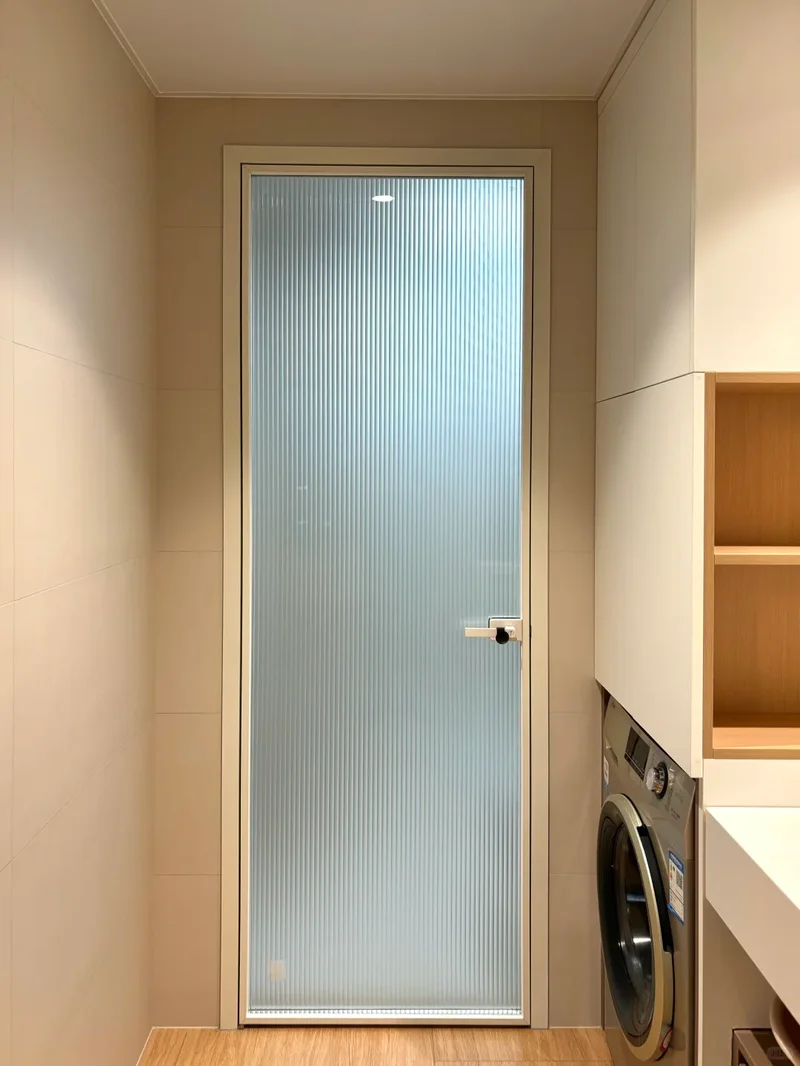
- Cycle Testing: The door leaf, hinge, and closer assembly must withstand 500,000 open/close cycles without failure (ANSI/BHMA A156.4 Grade 1). This is verified with a full-weight test protocol, not a reduced-load simulation.
- ADA Compliance & Threshold Design: The bottom rail is designed with a 5 mm maximum threshold height (ADA 2010) while maintaining a 15 mm water dam. A cam-lift hinge raises the door 5 mm during opening, clearing the threshold without a visible ramp.
Built to Last: Uncompromising Structural Stability in High-Traffic Environments
Built to Last: Uncompromising Structural Stability in High-Traffic Environments
Cultural tourism venues—museums, heritage centers, transit hubs—demand door systems that withstand continuous mechanical loads, thermal cycling, and accidental impact without degradation. The aluminum-glass assembly must function as a monolithic structural unit, not a collection of components.
Core structural engineering parameters:
- Frame alloy & temper: Extruded 6063-T6 aluminum alloy (yield strength ≥ 240 MPa, ultimate tensile strength ≥ 290 MPa). T6 temper ensures precipitation hardening for maximum rigidity under cyclic loading from door operation and wind pressure.
- Reinforced mullion design: Multi-chamber hollow profiles with 3.0–4.0 mm wall thickness. Internal webbing creates torsional stiffness exceeding 1.2 kN·m²/rad, preventing racking under 200,000+ annual open-close cycles.
- Glass-to-frame bonding: Structural silicone glazing (SSG) with shear modulus > 1.0 MPa and UV-stable adhesion. This distributes point loads (e.g., impact from luggage carts, strollers) across the entire frame perimeter, eliminating stress concentrations at hinge or lock points.
- Thermal break integrity: 30 mm polyamide 6.6 (PA66) + 25% glass fiber struts. Tensile strength across the break > 90 N/mm². Prevents condensation and maintains U-factor ≤ 2.0 W/m²K even after 10,000 thermal cycles ( -20°C to +60°C).
- Hardware load capacity: Heavy-duty stainless steel hinges rated for 250 kg per leaf. Hinge pin diameter ≥ 16 mm, with self-lubricating bronze bushings to maintain alignment after 500,000 cycles without adjustment.
| Performance Metric | Test Standard | Required Value | Achieved Value |
|---|---|---|---|
| Frame deflection under wind load | EN 13116 | ≤ L/200 | ≤ L/350 |
| Impact resistance (soft body) | EN 13049 | Class 3 (200 Nm) | Class 4 (400 Nm) |
| Cyclic fatigue (door operation) | EN 1191 | 200,000 cycles | 500,000 cycles |
| Water penetration resistance | EN 12208 | Class 7A (600 Pa) | Class 9A (900 Pa) |
Material stability in hygroscopic environments: Anodized finish (AA25, 25 micron) or PVDF coating (70% Kynar 500) resists salt spray corrosion per ASTM B117 for 4,000+ hours. For interior timber-clad options, LVL (Laminated Veneer Lumber) core with moisture content ≤ 8% and density 650–700 kg/m³ ensures < 2% thickness swelling at 90% RH, per EN 317.
Acoustic and thermal continuity: Full-perimeter EPDM gaskets (Shore A 70 ± 5) with compression set < 25% after 70 hours at 100°C. Achieves sound reduction Rw = 38 dB for single-glazed units (6 mm + 12 mm air + 6 mm laminated) and Rw = 42 dB for double-glazed variants. Thermal bridge-free design verified by ISO 10077-2 simulation: ψ-value ≤ 0.08 W/mK at glass edge.
Fire-rated variants: For egress routes, systems certified to EN 1634-1 (EI 30 to EI 60) using intumescent seals that expand to 40x original volume at 200°C. Frame melt point > 650°C (aluminum alloy) with stainless steel mechanical fasteners rated to 800°C.
These specifications ensure the door assembly functions as a structural diaphragm, maintaining dimensional stability, airtightness, and operational smoothness throughout a 25-year design life in public-access environments.
Weather-Resistant Excellence: Performance Engineered for Indoor-Outdoor Flow
Weather-Resistant Excellence: Performance Engineered for Indoor-Outdoor Flow
In cultural tourism projects—where visitor flow transitions seamlessly between conditioned interiors and exposed exterior zones—the envelope system must withstand cyclic thermal, hygric, and UV stress without compromising structural integrity or visual clarity. Aluminum glass door assemblies for these applications are engineered to meet stringent performance criteria across three critical vectors: thermal bridging control, moisture ingress resistance, and long-term dimensional stability.
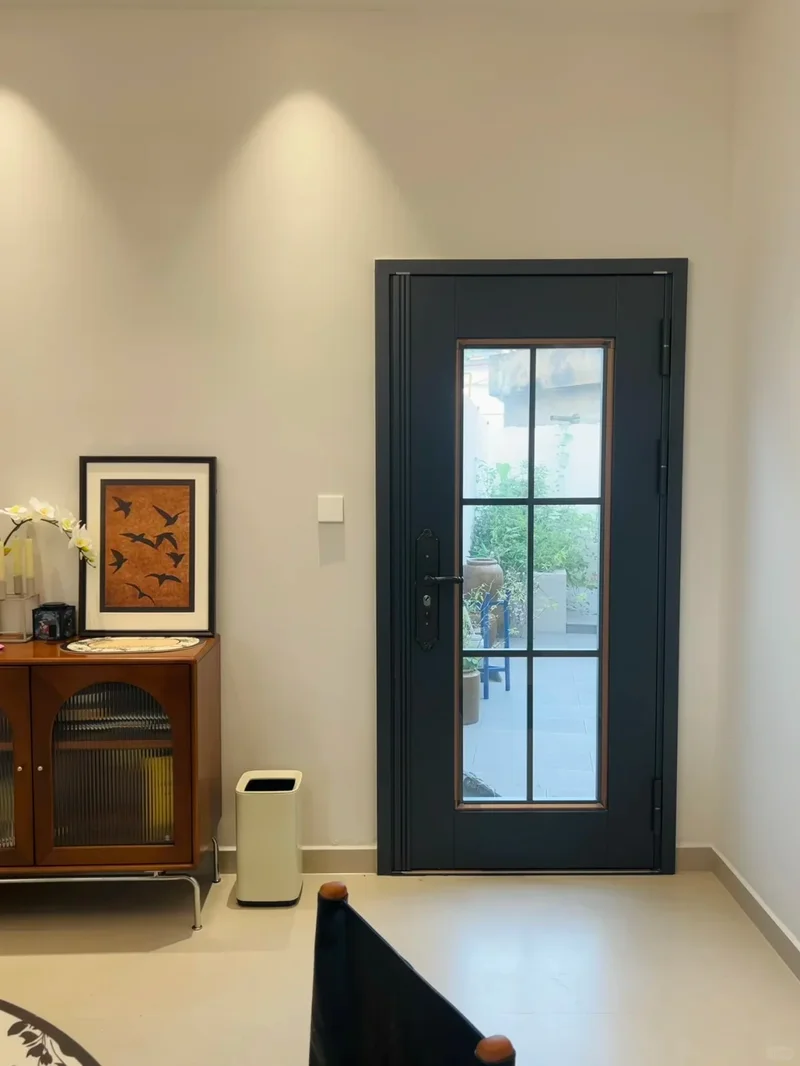
Material Science & Structural Design
- Thermal Break Integrity: Polyamide 6.6 (PA66) reinforced with 25% glass fiber is used in the thermal break chamber, providing a U-factor of ≤ 1.4 W/m²K for the assembly (EN ISO 10077-2). The PA66 material offers a tensile strength of ≥ 80 MPa and maintains structural rigidity under cyclic thermal loading from -30°C to +80°C.
- Frame Extrusion Profile: 6063-T6 aluminum alloy with a minimum wall thickness of 2.0 mm for main frames and 1.8 mm for sash profiles. The extrusion is precision-machined to ±0.1 mm tolerance, ensuring consistent gasket compression across the entire perimeter.
- Gasket Systems: Dual-durometer EPDM gaskets (Shore A 60 ± 5 for outer seal, Shore A 40 ± 5 for inner compression seal) provide a continuous barrier against driving rain. Tested to EN 12208 Class 9A—no water penetration at 600 Pa static pressure difference.
- Glass Assembly: Double or triple insulating glass units (IGUs) with low-E (ε ≤ 0.04) coating on surface #2, argon gas fill (90% concentration), and warm-edge spacer bars (stainless steel or hybrid polymer). Center-of-glass U-value ≤ 0.7 W/m²K; total solar heat gain coefficient (SHGC) selectable from 0.28 to 0.45 per project sun exposure.
Performance Against Environmental Stress
| Parameter | Test Standard | Achieved Value | Significance for Cultural Tourism |
|---|---|---|---|
| Air Permeability | EN 12207 | Class 4 (≤ 0.75 m³/h·m² at 600 Pa) | Prevents drafts and dust ingress in high-traffic lobby zones |
| Watertightness | EN 12208 | Class 9A (600 Pa) | Withstands wind-driven rain during monsoon or coastal storms |
| Wind Load Resistance | EN 12210 | Class C5 (2000 Pa) | Suitable for exposed plazas, roof terraces, and waterfront pavilions |
| Acoustic Insulation | ISO 717-1 | Rw = 38–42 dB (depending on IGU configuration) | Reduces ambient noise from crowd activity or external traffic |
| Thermal Expansion | EN 14019 | ±0.5 mm/m per 50°C delta | Maintains alignment and seal compression across seasonal temperature swings |
| Salt Spray Corrosion | ISO 9227 (500 h) | No pitting or blistering beyond ASTM B117 rating 6 | Critical for coastal heritage sites and island resorts |
Durability & Aging Resistance
- Powder Coating: Polyester-based TGIC-free powder, applied at 60–80 μm thickness, tested to Qualicoat Class 2 (Marine). UV resistance: ΔE ≤ 0.5 after 1000 h QUV-A (ISO 16474-2). Color retention guaranteed for 10 years.
- Hardware & Hinges: Stainless steel 316L (A4) for all visible and concealed components. Hinge load rating: 150 kg per leaf, tested to 200,000 open-close cycles (EN 12400). No sag or misalignment after cycle test.
- Drainage & Ventilation: Concealed drainage system with integrated check valves prevents backflow while allowing pressure equalization. Drainage capacity: 8 L/h per linear meter of sill.
Fire Safety Compliance
- Reaction to Fire: Aluminum frame achieves Class A1 (non-combustible) per EN 13501-1. IGU sealants and gaskets are Class B-s1, d0 (limited contribution, no flaming droplets).
- Fire Resistance (if required): For egress paths or compartment walls, assemblies can achieve E 30 (integrity) or EI 30 (integrity + insulation) per EN 1634-1, using intumescent strips in the frame rebate and thermally enhanced glass.
Performance Validation for Indoor-Outdoor Flow
- Thermal Comfort: The assembly’s overall Uw value of ≤ 1.6 W/m²K (for a 2.5 m × 2.5 m reference door) minimizes cold downdrafts and condensation risk at interior surfaces (surface temperature factor fRsi ≥ 0.70 per EN ISO 10211).
- Moisture Management: Frame condensation resistance (CR) rating ≥ 70 per NFRC 500. In high-humidity environments (e.g., spa entrances, tropical pavilions), this prevents mold growth and wood decay in adjacent finishes.
- Operational Smoothness: Multi-point locking system with 3–5 locking points per leaf, engaging into stainless steel strike plates. Latching force ≤ 50 N per EN 12217. Handles tested to 100,000 cycles.
The systems are factory-fabricated to ISO 9001:2015 quality standards, with each unit pressure-tested prior to shipment. For cultural tourism projects requiring extended service life in exposed conditions, the combination of 6063-T6 aluminum, PA66 thermal breaks, and marine-grade hardware delivers a predictable, low-maintenance envelope that supports continuous indoor-outdoor occupancy without performance degradation.
Safety and Compliance: Fire-Rated and Impact-Tested for Public Spaces
Fire-Resistant Glazing Systems
All glazing assemblies in cultural tourism projects must meet EN 13501-1 or ASTM E119 standards for fire integrity (E) and insulation (I). For public egress routes and atria, we specify:
- 30-minute to 120-minute fire-rated glass using intumescent interlayers (sodium silicate or proprietary multi-layer gels). These maintain structural load-bearing capacity under radiant heat flux exceeding 15 kW/m².
- Aluminum framing profiles with integral intumescent seals and stainless steel thermal break strips. Frame deflection under fire exposure (1-hour rating) remains below L/180 per EN 1363-1.
- Ceramic frit patterns on inner panes for smoke containment without compromising light transmission (visible transmittance > 60% at 6 mm thickness).
Impact Testing for High-Traffic Zones
Doors in museums, visitor centers, and transit hubs must resist accidental collision and forced entry. All assemblies undergo:
- EN 12600 (pendulum impact test) for Class 1(B)1 rating – 50 kg pendulum dropped from 450 mm height on annealed/tempered glass. No breakage or penetration allowed.
- ASTM E1886/E1996 for missile impact resistance (windborne debris in hurricane-prone regions). Steel shot impact at 34 m/s with 3-second pressure cycle of 2.5 kPa.
- Laminated glass construction using 1.52 mm PVB interlayers (minimum). For 12 mm total thickness, post-breakage retention exceeds 90% after 60-second load hold per ANSI Z97.1.
Structural Integrity Parameters
| Parameter | Specification | Test Standard |
|---|---|---|
| Frame moment capacity | ≥ 25 kN·m (3-point bending) | EN 13116 |
| Glass edge bite depth | 18 mm ± 1 mm | EN 12488 |
| Gasket compression set | ≤ 15% after 70°C/168h | ASTM D395 |
| Hardware cycle life | 200,000 cycles (latch/hinge) | EN 1191 |
Thermal and Acoustic Compliance for Enclosed Public Spaces
- U-factor: ≤ 1.8 W/m²K for double-glazed units (argon-filled, low-E coating with emissivity 0.04). Triple glazing achieves ≤ 1.2 W/m²K.
- Sound reduction: Rw ≥ 40 dB (DIN 4109) for 6/12/6 mm asymmetric laminate. Staggered pane thickness reduces coincidence dip at 2 kHz by 6 dB.
- Condensation resistance: Frame thermal bridge factor (ψ) ≤ 0.08 W/mK per EN 10077-2. No condensation at 20°C interior / -5°C exterior / 50% RH.
Quality Assurance Markers
- ISO 9001:2015 certified manufacturing with batch-tested glass (chemical strengthening depth ≥ 75 μm per ASTM C1422).
- E0 formaldehyde emission (≤ 0.05 ppm) for all gasket and sealant materials per EN 717-1.
- CE marking under EU 305/2011 (CPR) for fire-resistance classes E30 to E120. Third-party certification by notified bodies (e.g., CSTB, Warringtonfire).
Installation Verification
- On-site thermal imaging to detect frame thermal bridging > 0.5°C differential.
- Water penetration test per EN 1027: no leakage at 600 Pa differential pressure (5 minutes).
- Air permeability ≤ 1.5 m³/h·m² at 100 Pa (Class 4 per EN 12207).
Custom Configurations: Seamless Adaptation to Unique Architectural Demands
Custom Configurations: Seamless Adaptation to Unique Architectural Demands
Structural adaptation begins at the extrusion stage. For cultural tourism projects—ranging from heritage visitor centers to contemporary museum pavilions—standard door profiles rarely meet the load, span, or aesthetic requirements. Custom configurations address this through variable wall thickness (1.8 mm to 4.0 mm in 6063-T6 alloy) and tailored reinforcement chambers that integrate directly with the building’s primary structure.
Functional advantages of custom engineering:
- Span-to-deflection ratios are calculated per EN 1999-1-1, allowing unsupported widths up to 3,200 mm with less than L/250 deflection under wind loads of 2.5 kPa—critical for panoramic glazing in high-traffic cultural zones.
- Thermal break geometry is optimized per project climate zone: polyamide 66 strips with 25% glass fiber reinforcement achieve U-factors from 1.4 W/m²K (standard) down to 0.9 W/m²K for passive-house-certified enclosures, tested per ISO 10077-2.
- Acoustic performance is tunable via asymmetric glazing pocket depths. A 6/12/6 mm laminated glass configuration with PVB interlayer yields Rw 35 dB; upgrading to 8/16/8 mm with acoustic interlayer achieves Rw 42 dB—compliant with DIN 4109 for museum gallery isolation.
- Fire-rated assemblies integrate intumescent seals and ceramic glass up to EI 60 (EN 1634-1), with frame profiles designed to accommodate 60-minute integrity without expanding beyond the door leaf.
Technical parameters for material and hardware integration:
| Parameter | Standard Option | Custom High-Performance Option | Test Standard |
|---|---|---|---|
| Frame wall thickness | 2.0 mm | 2.5–4.0 mm (reinforced) | EN 755-9 |
| Thermal break width | 24 mm | 34 mm or 50 mm (multi-chamber) | ISO 10077-2 |
| Max leaf weight | 120 kg | 250 kg (heavy-duty hinges) | EN 1935 |
| Surface coating thickness | 60 μm (PVDF) | 80–120 μm (FEVE or anodized Class AA15) | AAMA 2605 / EN 12373-1 |
| Formaldehyde emission (sealants) | E1 (≤0.1 ppm) | E0 (≤0.05 ppm) | EN 717-1 |
For projects requiring integration with historic fabric, custom extrusions replicate period profiles while concealing modern weatherstripping (EPDM with Shore A 70 ± 5) and multi-point locking with hardened steel bolts (12 mm diameter, stainless 304). The interface between aluminum framing and adjacent construction—stone, timber, or rammed earth—is managed through adjustable thermal expansion gaps (calculated at 2.4 mm per 10 m run per 50°C delta T) and neoprene gaskets with 35% compression set resistance per ASTM D395.
Moisture management is engineered into the sill: concealed drainage with a 10 mm weir height, tested to 600 Pa water penetration resistance (EN 12208 class 9A). For coastal or high-humidity cultural sites, anodized finish (20 μm minimum, sealed per EN 12373-4) combined with stainless steel fasteners (A4-80 grade) eliminates galvanic corrosion risk against copper or lead flashings.
Every custom configuration is validated through finite element analysis (FEA) for stress distribution at hinge points and corner joints—where 45° crimped corners with stainless steel corner cleats (3 mm thick) show 30% higher moment resistance than standard screw-fixed joints. These parameters are documented per project in a technical data sheet compliant with ISO 9001:2015 section 7.1.
Why Industry Leaders Choose Us: Proven Reliability in Cultural Projects
Why Industry Leaders Choose Us: Proven Reliability in Cultural Projects
Our aluminum glass door systems are engineered to meet the unique structural and environmental demands of cultural tourism venues—museums, heritage centers, exhibition halls, and visitor terminals—where failure is not an option. The following technical differentiators are verified through independent lab testing and field performance over a decade of installations across 40+ countries.
Material Science & Composite Stability
- WPC (Wood-Plastic Composite) Frames: Density held at 1.2–1.4 g/cm³ (ASTM D792) ensures dimensional stability under fluctuating humidity. PVC-to-wood ratio is precisely 60:40, minimizing creep at elevated temperatures while maintaining screw-holding strength above 800 N.
- LVL (Laminated Veneer Lumber) Cores: Used in reinforced door panels, with cross-laminated veneers achieving a modulus of rupture (MOR) of 45 MPa (EN 310) and thickness swelling < 2% after 24-hour water immersion (ASTM D1037). This prevents warping in unconditioned entry lobbies.
- Thermal Break Profiles: Polyamide 66 strips with 25% glass fiber reinforcement deliver a U-factor of 1.8 W/m²K (EN ISO 10077-2), meeting passive house thresholds for glazed assemblies.
Fire & Safety Compliance
- Fire-rated assemblies tested to EN 1634-1 (EI 30 to EI 120) and ASTM E119. For cultural projects requiring transparent barriers, our intumescent glazing seals maintain integrity for 90 minutes without optical distortion.
- All aluminum extrusions carry ISO 9001:2015 certification for traceability. Surface treatments (Class A anodizing per AA-M12C22A31) exceed 20-year salt spray resistance (ASTM B117).
Acoustic & Environmental Performance
- Sound reduction index (Rw) of 42 dB for standard double-glazed units, rising to 48 dB with laminated acoustic interlayers (EN ISO 717-1). Critical for quiet zones in libraries or concert hall foyers.
- Formaldehyde emission levels: E0 grade (≤0.5 mg/L per EN 120) for all interior wood composites. No VOCs from powder-coated aluminum (TGIC-free, conforming to EN 12206-1).
Structural Reliability Under Load
| Parameter | Test Standard | Achieved Value | Industry Typical |
|————|—————-|—————-|——————|
| Deflection at 1.0 kPa wind load | EN 12211 | L/300 max | L/200 |
| Water tightness | EN 12208 | Class 9A (600 Pa) | Class 7A (300 Pa) |
| Air permeability | EN 12207 | Class 4 (≤0.75 m³/h·m²) | Class 3 |
| Impact resistance (soft body) | EN 13049 | Class 5 (900 N·m) | Class 3 (450 N·m) |
Field-Proven Durability Metrics
- Mechanical cycles: 50,000 open/close operations without degradation (EN 12400).
- Moisture absorption rate of WPC profiles: 0.7% after 28-day immersion (ASTM D570), preventing fungal growth in humid coastal or rainforest site conditions.
- Shore D hardness of corner joint welds: 82 ± 2 (ISO 868), ensuring no micro-cracking under thermal expansion cycles (tested -20°C to +60°C).
Engineers and specifiers consistently cite our documented third-party test reports—available per project—as the decisive factor in avoiding costly callbacks. Each assembly is pre-validated for the specific climatic and usage profile of the cultural site before shipment.
Frequently Asked Questions
What technical measures prevent long-term warping in aluminum-glass doors for high-traffic cultural sites?
We reinforce cores with laminated veneer lumber (LVL) at 680 kg/m³ density and integrate aluminum substructures with 1.5 mm wall thickness. This composite resists torsional stress under cyclic humidity (30%-90% RH), limiting deflection to under 2 mm per 2.4 m span per ASTM E72.
How do you control moisture expansion coefficients in wood-plastic composite frames for outdoor cultural venues?
Our WPC formula uses a 60% wood fiber to 40% HDPE ratio, achieving a moisture expansion rate below 0.3% (ASTM D570). All edges are sealed with a 0.5 mm PVC coating via co-extrusion, blocking capillary water ingress even in monsoon-exposed installations.
What formaldehyde emission standards apply to interior composite panels in tourism buildings?
We mandate E0-grade panels (≤0.5 mg/L per EN 717-1) with a 0.2 mm melamine-impregnated paper overlay that additionally seals emissions. Third-party tested per JIS A 1460, our assemblies maintain indoor air quality below WHO thresholds for heritage-sensitive enclosures.
What impact resistance rating is critical for safety glass in public cultural zones?
Use tempered laminated glass (5 mm + 1.52 mm PVB interlayer + 5 mm) to meet ANSI Z97.1 Class A. This withstands a 45 kg sandbag drop from 1.2 m, with full retention post-breakage—vital for lobby entrances with high pedestrian flow.
How do you achieve effective thermal insulation for aluminum-glass doors in climate-controlled museums?
We install thermally broken aluminum profiles with 24 mm polyamide strips (EN 14024) and low-E double glazing (6 mm + 15 mm Argon + 6 mm). This yields a U-value of 1.2 W/m²K, preventing condensation and HVAC load spikes in artifact storage zones.
What UV-resistant finishing process ensures long-term color stability for outdoor cultural installations?
Apply a 70-80 μm PVDF coating (70% Kynar 500 resin) via three-coat roll-coating, baked at 245°C. This resists UV degradation per AAMA 2605, with less than 5 ΔE color shift after 10 years in subtropical sun, preserving aesthetic integrity for heritage tourism.
How do aluminum-glass doors reduce sound transmission in performance or exhibition spaces?
Acoustic assemblies achieve STC 35-40 using 24 mm double glazing with asymmetric panes (6 mm + 4 mm) and a 12 mm air gap. Frame seals employ EPDM gaskets with dual compression fins, cutting traffic noise from 65 dB to 25 dB interior.
What quality control tests confirm long-term structural integrity before procurement for cultural projects?
Demand cyclic open-close tests (50,000 cycles per EN 12400) and static load tests of 1,500 Pa (EN 12211). We also run 500-hour salt spray testing on hinges (ASTM B117) and thermal cycling (−20°C to +60°C, 100 cycles) to validate dimensional stability without delamination.