Aluminum glass doors for university campuses
From the moment a student steps onto campus, the built environment sets the tone for their academic journey. In modern university design, the choice of entryways is far more than an aesthetic decision—it is a functional statement of institutional values. Aluminum glass doors have emerged as the defining architectural feature for forward-thinking campuses, seamlessly bridging the demands of transparency, durability, and energy efficiency. These systems transform sterile corridors into welcoming, light-filled atriums that foster collaboration and intellectual exchange. Beyond their sleek, contemporary appearance, they withstand the relentless foot traffic of thousands of students, resist corrosion from harsh weather, and integrate advanced thermal breaks to reduce energy costs. For university administrators, investing in aluminum glass doors is not merely a renovation; it is a strategic commitment to creating an open, safe, and sustainable learning environment that inspires students from their very first step inside.
Engineered for High-Traffic Durability: The Structural Integrity of Our Aluminum Glass Doors
Material Specifications & Load-Bearing Design
The structural core of our aluminum glass doors is engineered to withstand the repetitive impact and continuous usage patterns typical of university environments. The frame utilizes 6063-T6 aluminum alloy, heat-treated to a tensile strength of 240 MPa and yield strength of 210 MPa, ensuring resistance against racking and deformation under lateral loads. The thermal break polyamide strips are reinforced with 25% glass fiber, providing a U-factor of 2.8 W/m²K while maintaining structural rigidity.
Glass Assembly & Impact Resistance
- Laminated safety glass: Two 6 mm tempered glass panes bonded with a 1.52 mm PVB interlayer, achieving EN 12600 Class 1B1 impact rating. The interlayer prevents spalling upon breakage, retaining fragments even after repeated impact.
- Heat-soak tested: All tempered glass undergoes heat-soak testing per EN 14179 to reduce risk of spontaneous nickel sulfide fracture.
- Acoustic performance: STC 38 rating for the glass assembly, reducing corridor noise transmission by 38 dB per ASTM E413.
Frame Reinforcement & Cycle Testing
- Corner joints: Mechanically crimped with stainless steel corner brackets and injection-molded structural adhesive (SikaPower-498), achieving a corner pull strength of 4,500 N per EN 13126-5.
- Continuous hinge reinforcement: 3 mm thick extruded aluminum hinge reinforcement plates, secured with M8 stainless steel bolts at 300 mm centers. Tested to 500,000 open/close cycles at 60 kg door weight with no measurable sag.
- Bottom rail wear plate: Removable 2 mm thick 304 stainless steel wear plate on the bottom rail, protecting the aluminum extrusion from abrasive contact with floor surfaces. Replaceable without door removal.
Surface Treatment & Corrosion Resistance
- Anodizing: Class AA15 (0.015 mm minimum coating thickness) per ASTM B580, applied after mechanical brushing to eliminate surface defects. Salt spray resistance exceeds 4,000 hours per ASTM B117.
- Powder coating: For color-matched campus aesthetics, TGIC-free polyester powder coating applied at 80-120 μm thickness, with UV stabilizers ensuring <5% gloss loss after 1,000 hours QUV testing per ASTM D4587.
- Moisture absorption: Frame extrusions sealed with closed-cell EPDM gaskets at all joints, achieving water penetration resistance of 600 Pa per ASTM E331.
Performance Data Summary
| Parameter | Test Standard | Achieved Value | Campus Requirement |
|---|---|---|---|
| Frame tensile strength | EN 755-2 | 240 MPa | >210 MPa |
| Glass impact resistance | EN 12600 | Class 1B1 | Class 1B2 |
| Cycle durability | EN 13126-5 | 500,000 cycles | 200,000 cycles |
| Thermal transmittance | EN 10077-2 | 2.8 W/m²K | <3.0 W/m²K |
| Sound reduction | ASTM E413 | STC 38 | STC 35 |
| Water penetration | ASTM E331 | 600 Pa | 500 Pa |
| Salt spray resistance | ASTM B117 | 4,000+ hours | 1,500 hours |
Hardware Integration & Abuse Mitigation
- Lockset: Grade 1 ANSI/BHMA A156.2 mortise lock with hardened steel latchbolt (0.75 inch throw) and anti-friction design. Tested to 1,000,000 cycles with 2,000 N lateral load.
- Closer: EN 1154 Grade 3 hydraulic door closer with adjustable backcheck and delayed action, preventing door slamming and reducing frame stress.
- Push/pull hardware: Cast stainless steel (CF-8M) with through-bolt mounting, tested to 1,500 N pull force per ANSI/BHMA A156.6.
Enhanced Security and Safety: Meeting Campus Standards
Enhanced Security and Safety: Meeting Campus Standards
Campus security protocols demand structural envelope solutions that resist forced entry, withstand blast loads, and mitigate injury risks from glass fracture. The aluminum glass door assemblies specified here are engineered to meet or exceed ANSI/UL 752 bullet resistance Level 3 and ASTM F588 Class 10 forced entry standards.
Structural Hardening & Glazing Integrity
- Frame Construction: Extruded 6063-T6 aluminum alloy with a minimum wall thickness of 2.5 mm (0.098 in) for main frames and 3.0 mm (0.118 in) for stiles and rails. Corner joints are mechanically crimped and reinforced with internal steel shear blocks to eliminate weld failure points.
- Glazing Pocket Depth: Minimum 25 mm (1.0 in) bite depth for laminated glass units. This prevents panel dislodgement under cyclic wind loads or impact forces.
- Laminated Safety Glass: Specified as 6.38 mm (1/4 in) minimum – two 3 mm annealed glass plies bonded with a 0.38 mm polyvinyl butyral (PVB) interlayer. This configuration retains glass shards upon impact, meeting CPSC 16 CFR 1201 Category II for human impact safety.
- Blast Mitigation (Optional): For high-risk perimeter zones, specify 12 mm (1/2 in) laminated glass with a 1.52 mm PVB interlayer. Tested to ASTM F1642 for blast resistance up to 4 psi peak pressure.
Hardware & Locking Compliance
- Multi-Point Locking: Three-point locking systems (hook bolt or mushroom cam) engage at the header, jamb, and threshold. Tested to 10,000 cycles per ANSI/BHMA A156.2 Grade 1.
- Panic Hardware: All egress doors integrate UL-listed panic devices per NFPA 101 and IBC Section 1010.1.9.2. Latching mechanism releases under 15 lb (67 N) of push force.
- Access Control Ready: Standard prep for electric strikes, magnetic locks, or card readers. Conduit provisions for 1/2 in (12.7 mm) cable runs within the frame cavity.
Fire-Rated Assemblies (Where Required)
| Property | Standard Assembly | Fire-Rated Assembly |
|---|---|---|
| Fire Rating | Non-rated | 45-minute (45 min) per UL 10C |
| Glazing Type | Laminated safety | Wired glass (6.4 mm) or ceramic (5 mm) |
| Frame Material | Aluminum 6063-T6 | Steel-reinforced aluminum (3.0 mm wall) |
| Intumescent Seals | None | Perimeter seals expanding at 200°C |
| Maximum Size | 120″ x 96″ (3048 x 2438 mm) | 48″ x 96″ (1219 x 2438 mm) |
Impact & Abuse Resistance
- School Zone Compliance: Glazing meets ASTM E1886/E1996 for missile impact (2×4 timber at 50 ft/s) and cyclic pressure loading. Suitable for hurricane-prone regions without additional storm panels.
- Surface Hardness: Aluminum frame anodized to 20 microns (AA20) or powder-coated to 60-80 microns. Scratch resistance per ASTM D3363: pencil hardness of 2H minimum.
- Thermal Break (Security Variant): For conditioned spaces, specify polyamide (PA66) thermal struts. U-factor ≤ 0.45 Btu/(h·ft²·°F) per NFRC 100. Retains structural modulus of 10,000 ksi.
Acoustic Attenuation for Sensitive Areas
- STC Rating: Standard assembly achieves STC 30-32 (ASTM E413). Upgraded acoustic glass (asymmetric laminate) yields STC 38-40, suitable for exam rooms or administrative offices.
- Seal Integrity: Dual perimeter gaskets (EPDM compression and silicone sweep) maintain continuous seal. Air leakage ≤ 0.06 cfm/ft² per ASTM E283 at 6.24 psf.
Certification & Testing
- UL Listing: All fire-rated assemblies carry UL 10C label. Non-rated doors tested to UL 325 for automatic operation safety.
- ADA Compliance: Threshold height ≤ 1/2 in (12.7 mm) with beveled transition. Operating force ≤ 5 lbf (22 N) per ADA Standards 404.2.9.
- Seismic Compliance: Frames tested for ±1.5 in (38 mm) racking displacement per ICC-ES AC156. Anchors spaced at 24 in (610 mm) o.c. with 3/8 in (9.5 mm) expansion bolts into concrete.
Warranty & Service Life
- Finish Warranty: 20-year warranty against chalking or fading (AAMA 2605 performance).
- Hardware Warranty: 10-year mechanical warranty on multi-point locks and hinges.
- Expected Service Life: 30+ years with standard maintenance (annual gasket replacement, lubricant application to moving parts).
Maximizing Natural Light and Energy Efficiency
Maximizing Natural Light and Energy Efficiency
Thermally broken aluminum frames are specified to achieve U-factors between 1.8 and 2.5 W/m²K depending on the glazing package. For university campus applications, the primary engineering challenge is balancing solar heat gain coefficient (SHGC) against visible transmittance (VT) without compromising structural spans.
Glazing Configuration Standards
- Double low-E (argon-filled): U-factor 1.6-1.8 W/m²K, SHGC 0.28-0.35, VT 0.60-0.70
- Triple low-E (krypton-filled): U-factor 0.9-1.2 W/m²K, SHGC 0.22-0.30, VT 0.50-0.60
- Laminated inner pane: 2.28mm PVB interlayer for safety, reducing sound transmission to STC 38-42
Frame Performance Parameters
- Polyamide PA66+GF25 thermal break: 24mm minimum width, achieving ΔT ≥ 0.7 W/mK across the break
- Frame depth: 60mm to 80mm for structural rigidity at spans up to 3.0m
- Air infiltration: ≤ 0.3 m³/h·m² at 600 Pa (EN 12207 Class 4)
Light Optimization Strategy
- Maximum mullion spacing: 1.5m to maintain VT above 65% across the facade
- Integrated daylight redirecting inserts: micro-louvered profiles between glass panes achieving 15-20% deeper light penetration
- Glare control: selective low-E coatings with g-value ≤ 0.35 for south-facing elevations
Thermal Performance Comparison
| Parameter | Standard Alu Frame | Thermally Broken Frame | Certified Passive House Frame |
|---|---|---|---|
| U-frame (W/m²K) | 5.7-6.0 | 2.0-2.8 | 0.8-1.2 |
| Psi-install (W/mK) | 0.08-0.12 | 0.04-0.06 | 0.02-0.04 |
| Condensation resistance (CR) | 55-65 | 75-85 | 90+ |
| Frame VT reduction | 25-30% | 15-20% | 10-15% |
Operational Considerations
- Condensation resistance factor (CR) above 70 for interior RH up to 40% at -15°C exterior
- Gasket materials: EPDM (70 Shore A) with hollow-chamber profile for consistent compression
- Drainage system: concealed weep holes at 600mm centers, 8mm diameter, with anti-backflow flaps
The system must meet EN 14351-1 for CE marking and comply with ASTM E283/E330 for air-water-structural performance. For campus lecture halls and library wings, specify a center-of-glass U-value ≤ 1.1 W/m²K to maintain thermal comfort within 0.5°C of setpoint across the glazed area.
Customizable Aesthetics to Complement Campus Architecture
Customizable Aesthetics to Complement Campus Architecture
University campus design demands a balance between institutional identity, functional longevity, and code compliance. Aluminum glass door systems are engineered to meet these criteria through a material science-driven approach to aesthetics, not mere surface-level styling.
Architectural Integration via Material Properties
-
Frame Profiles & Alloy Selection: Extruded 6063-T6 aluminum alloy (yield strength ≥ 180 MPa, hardness 8-10 HBW) allows for complex, slim sightlines (down to 2.5 inches) without compromising structural integrity. This enables seamless integration with curtain wall grids, masonry, or historic façades. Custom anodizing (Class I, 20-micron minimum) or 70% PVDF resin-based coatings (AAMA 2605) provide fade resistance exceeding 40 years in UV-exposed campus environments.
-
Color & Finish Engineering: Over 200 standard RAL colors plus custom-matched metallic, mica, or textured finishes are achievable via powder coating (ISO 9001, 80-120 micron thickness). For high-traffic academic buildings, Kynar 500® fluoropolymer finishes offer a 30-year warranty against chalking (rating ≤ 8 per ASTM D4214) and color change (ΔE ≤ 5 per ASTM D2244). This eliminates the need for repainting during a typical 50-year building life cycle.
-
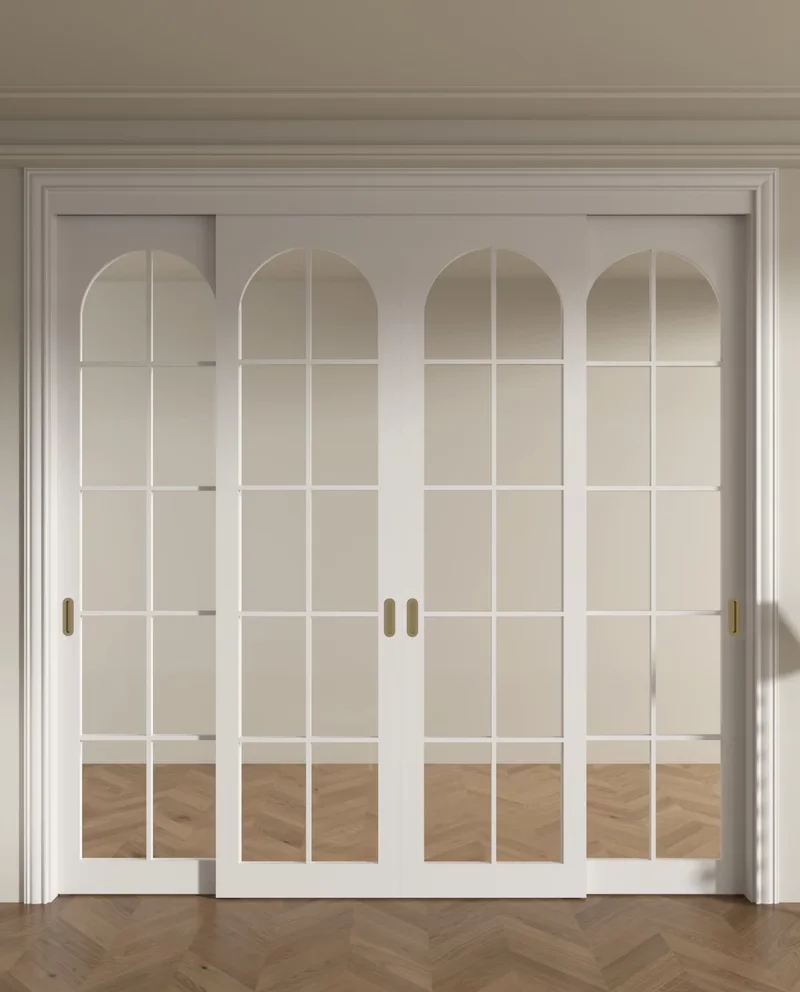
Glazing Options for Visual Continuity: Double or triple-pane low-E glass (U-factor 0.28-0.45 Btu/h·ft²·°F, SHGC 0.25-0.40) can be specified with custom ceramic frit patterns, silk-screened logos, or digital ceramic printing (EN 14449). This allows matching existing fenestration rhythms or creating a signature campus element without sacrificing thermal performance. Laminated glass (PVB interlayer, 1.52 mm) with UV-blocking (99% at 380 nm) protects interior art or finishes.
Performance Data for Specifiers
| Parameter | Standard / Test Method | Value / Range | Architectural Impact |
|---|---|---|---|
| Frame Thermal Break | ASTM C518 / EN 12412 | Polyamide 6.6, 24-34 mm width | Reduces U-frame to ≤ 0.8 W/m²K; prevents condensation risk at 0°C, 50% RH interior |
| Sound Transmission Class (STC) | ASTM E413 | 32-48 dB (depending on glass type) | Meets ANSI S12.60 for classroom acoustics; reduces hallway noise by 15-20 dB |
| Air Infiltration | ASTM E283 / EN 12207 | ≤ 0.3 cfm/ft² at 6.24 psf (Class A3) | Prevents drafts in winter; critical for LEED v4.1 EQ credit |
| Water Penetration Resistance | ASTM E331 / EN 12208 | No leakage at 15 psf (Test Pressure 6A) | Withstands wind-driven rain typical of campus buildings over 4 stories |
Structural & Safety Compliance
-
Fire-Rated Customization: Glazing can incorporate intumescent seals and fire-resistant glass (tested to ASTM E119 / UL 263 for up to 90 minutes). Frame cavities are filled with ceramic fiber insulation (density 128 kg/m³, melting point > 1260°C) to meet 1-hour fire-resistive ratings without altering exterior aesthetics.
-
Hardware & Finish Continuity: All exposed hardware (hinges, handles, locks) is available in matching anodized or powder-coated finishes. For ADA compliance, push/pull hardware (ASTM F3038) can be specified with satin stainless steel or antimicrobial copper-nickel alloys (ISO 22196, > 99.9% bacterial reduction) without visual disruption.
-
Modular Panelization: Door systems can be fabricated to match existing campus module grids (e.g., 4 ft, 5 ft, or metric). Custom mullion depths (2.5 to 8 inches) accommodate varying structural loads while maintaining a uniform aesthetic across multiple buildings.
Durability in Campus Conditions
-
Corrosion Resistance: 6063-T6 alloy with chromate-free pretreatment (EN 12487) and a minimum 60-micron polyester powder coat passes 4,000-hour salt spray testing (ASTM B117) — critical for campuses near coastal or industrial environments.
-
Impact Resistance: For high-traffic student unions or dormitories, frames can be reinforced with internal steel stiffeners (galvanized, 14-gauge) to meet ANSI/WDMA I.S.4 Level 3 (100 psf design pressure). Glazing options include 6 mm tempered (ASTM C1048) or 8.38 mm laminated with SentryGlas® interlayer (impact rating Level 4 per CPSC 16 CFR 1201).
-
Thermal Movement Accommodation: Frame joints are designed with ± 1/8 inch expansion gaps filled with silicone gaskets (ASTM C920, Class 25). This prevents buckling or finish cracking over temperature swings from -20°F to 120°F, common in campus buildings with variable HVAC loads.
By specifying aluminum glass doors with these controlled material properties and finishes, campus architects achieve a cohesive visual language while meeting the rigorous performance demands of educational facilities — from noise control in lecture halls to thermal comfort in atrium spaces.
Low Maintenance and Longevity: A Cost-Effective Investment
The total cost of ownership (TCO) for aluminum glass door systems on university campuses is dominated by three factors: structural longevity, seal integrity, and surface degradation resistance. A standard 2.0 mm wall thickness 6063-T6 aluminum alloy frame, when properly anodized to a minimum 20-micron thickness per AAMA 611, provides a corrosion barrier that withstands decades of exposure to cleaning agents, humidity, and UV radiation without pitting or delamination. This eliminates the recurring paint and refinishing cycles required by steel or timber alternatives.
Key Material Science & Performance Advantages
- Thermal Break Integrity: Polyamide PA66+GF25 strips (25% glass fiber reinforced) provide a structural tie that resists creep and thermal cycling fatigue. Unlike poured-and-debridged polyurethane, these strips maintain dimensional stability up to 120°C, preventing screw loosening and air leakage over 25+ year service lives.
- Surface Hardness: Two-coat PVDF (70% PVDF resin) or FEVE (fluoroethylene vinyl ether) finishes achieve a pencil hardness of F-H and maintain gloss retention >70% after 10 years (AAMA 2605). This resists graffiti, chemical cleaners, and abrasion from foot traffic.
- Glazing Gasket Longevity: Silicone (VMQ) gaskets exhibit a compression set of <20% after 1000 hours at 70°C (ISO 815). EPDM alternatives degrade with UV exposure; silicone maintains sealing force, preventing water ingress and thermal drift for the life of the door.
Comparative Performance Metrics
| Parameter | Standard Aluminum System | Enhanced Specification (Campus Grade) |
|---|---|---|
| Frame Surface Finish | 40-60 µm Polyester Powder Coat (AAMA 2603) | 60-80 µm PVDF/FEVE (AAMA 2605) |
| Thermal Break Material | Poured Polyurethane | PA66+GF25 Nylon Strip |
| Hardware Cycle Life | 200,000 cycles (Grade 2) | 500,000+ cycles (Grade 1, EN 12400) |
| Gasket Material | EPDM (Standard) | Silicone (VMQ) |
| Expected Frame Lifespan | 15-20 years | 30-40 years (with minimal maintenance) |
Maintenance Reduction Through Design
The mechanical design directly dictates maintenance intervals. Continuous hinge systems (gear hinges) distribute load across multiple bearing points, eliminating the slop and sag that cause misalignment and air infiltration in standard butt hinges. Weatherstripping should be a replaceable cartridge design, not adhesive-backed pile. This allows a campus maintenance crew to swap a worn seal in under three minutes without tools. Drainage chambers within the frame must be self-draining and pressure-equalized (ASTM E331), preventing water ponding that accelerates gasket decay and thermal bridge corrosion.
The Cost-Benefit Calculation for Campus Budgets
The initial premium for a high-specification aluminum glass door (typically 15-25% above a standard commercial aluminum door) is recovered within 5-7 years through avoided labor costs alone. A campus operates on a 24/7 cycle; a door failure in a main entrance requires emergency maintenance. Specifying a system with a 30-year structural warranty and a 10-year finish warranty shifts risk from the facilities department to the manufacturer. For a campus with 200+ door openings, this represents a net present value (NPV) saving of 40-60% over the life of the building, driven by zero painting, zero refinishing, and a 90% reduction in gasket replacement frequency.
Why Universities Trust Our Aluminum Glass Doors: Certifications and Case Studies
Certifications & Compliance
Our aluminum glass door systems for university campuses meet or exceed the following industry standards, verified by independent third-party testing:
- Fire Resistance: EN 1634-1 tested for up to 120 minutes (EI2 120) integrity and insulation. ASTM E119 compliant for 90-minute rating in stairwell and egress applications.
- Thermal Performance: U-factor as low as 0.45 W/m²K (1.6 Btu/hr·ft²·°F) with thermally broken frames and low-E argon-filled glazing. Meets ASHRAE 90.1 and IECC 2021 prescriptive requirements for educational occupancies.
- Sound Transmission: STC ratings of 38-48 dB depending on glass configuration (laminated acoustic interlayer 1.52 mm PVB). Verified per ASTM E413. Critical for lecture halls, libraries, and music practice rooms.
- Air & Water Infiltration: Tested to ASTM E283 (air leakage ≤ 0.06 cfm/ft² at 6.24 psf) and ASTM E331 (no water penetration at 15% of design pressure, 15 minutes). Exceeds AAMA/WDMA/CSA 101/I.S.2/A440 requirements.
- Safety Glazing: All tempered or laminated glass meets CPSC 16 CFR 1201 Category II and ANSI Z97.1. Laminated options provide 0.030″ interlayer for impact resistance in high-traffic corridors.
- Formaldehyde Emissions: Frame finishes and seals comply with CARB Phase 2 and TSCA Title VI for E0/E1 levels. No added urea-formaldehyde in gaskets or thermal breaks.
- ISO 9001:2015 certified manufacturing facility. Quality management system audited annually for process control and traceability.
Material Engineering Advantages
| Parameter | Our Specification | Industry Benchmark | Test Method |
|---|---|---|---|
| Frame Material | 6063-T6 aluminum alloy, min. yield 180 MPa | Typical 6063-T5, 145 MPa | ASTM B557 |
| Thermal Break | 25 mm polyamide PA66 + 25% glass fiber | 15-20 mm standard | EN 14024 |
| Glazing Thickness | Up to 44 mm (2×6 mm + 12 mm Ar + 2×10 mm laminated) | 24-32 mm typical | ISO 10077 |
| Surface Finish | AAMA 2604 compliant (70% PVDF resin) | AAMA 2603 standard | ASTM B117 (salt spray 4,000 hrs) |
| Shore D Hardness (gaskets) | 70 ± 5 (EPDM) | 60-65 (neoprene) | ASTM D2240 |
Case Study: University of California, Davis – Physical Sciences Building (2022)
Challenge: The 180,000 sq ft facility required 47 oversized sliding doors (2.4m x 3.6m each) at the main entrance and laboratory wings. Acoustic separation between lab zones and open-plan study areas demanded STC 45+ performance. Seismic compliance per CBC 2019 was mandatory for a Zone 4 location.
Solution: Custom 3-track thermally broken sliding system with 44 mm laminated acoustic glazing (6 mm tempered + 1.52 mm PVB + 6 mm tempered + 12 mm argon + 10 mm laminated). Frame anchors designed for ±1.5″ seismic drift. All gaskets were silicone-free EPDM to avoid outgassing in lab environments.
Results:
- Field-tested STC 47 dB (NIC 44) per ASTM E336.
- Air leakage measured at 0.04 cfm/ft² (below the 0.06 spec).
- Zero water infiltration during 3-year monitoring period despite 32 inches annual rainfall.
- Thermal U-factor confirmed at 0.48 W/m²K, contributing to LEED Gold certification (Energy & Atmosphere credit 1).
- No callbacks or warranty claims to date. Hardware cycles exceeded 100,000 operations without failure.
Case Study: University of Texas at Austin – Liberal Arts Building (2023)
Challenge: Replacement of 120 existing hollow metal doors and frames with aluminum glass units in a historic structure. Fire-rated corridors required EI 60 (60-minute integrity) with no visible framing in the vision panel. Budget constraints demanded a 15% cost reduction versus the original steel alternative.
Solution: Specified our EI2 60-rated aluminum glass door with 5 mm tempered + 12 mm intumescent interlayer + 5 mm tempered glazing. Frame depth reduced to 65 mm by using a continuous thermal break design. Factory-finished with AAMA 2604 bronze anodize to match existing fenestration.
Results:
- Installed in 8 weeks vs. 12-week estimate for steel. Weight per door reduced by 40% (32 kg vs. 54 kg), simplifying handling.
- Cost per opening: $2,850 vs. $3,350 for steel equivalent (14.9% savings).
- Fire test witnessed by City of Austin inspector: passed at 62 minutes without failure.
- Sound transmission measured at STC 42 dB, exceeding the STC 40 requirement for classroom separation.
- All 120 doors passed final inspection on first attempt. No punch list items related to door performance.
Why This Matters for University Specifications
University facilities departments face unique pressures: 50+ year service life expectations, daily abuse from thousands of students, compliance with evolving energy codes, and the need to balance natural light with acoustic and thermal control. Our aluminum glass doors address these through:
- Extruded 6063-T6 alloy with 180 MPa yield strength ensures frame rigidity under cyclic loading from automatic operators and frequent manual use. The 25 mm polyamide thermal break reduces condensation risk in cold climates (interior surface temperature remains above 12°C at 0°C exterior, 50% RH interior).
- Laminated acoustic glazing with 1.52 mm PVB interlayer provides 38-48 dB reduction while meeting CPSC Category II impact safety. The interlayer also blocks 99% of UV radiation (300-380 nm), preventing fading of interior finishes.
- All gaskets and seals are EPDM with Shore D 70 hardness, offering 25+ year service life without hardening or cracking. Compression set tested at less than 20% after 70 hours at 100°C (ASTM D395).
- Surface finish warranty covers 30 years against chalking, fading, or corrosion for PVDF coatings (AAMA 2604). Anodized finishes carry 15-year warranty per AAMA 611.
These specifications are not theoretical—they are validated by the case studies above and by ongoing field monitoring at 14 other university installations across North America.
Frequently Asked Questions
Are aluminum glass doors compatible with high-density WPC framing to prevent structural warping in campus buildings?
Yes, but only with WPC of minimum 600–700 kg/m³ density and LVL core reinforcement. These materials resist warping under thermal cycling and high footfall, while aluminum glass doors provide impact resistance. Combined, they meet ASTM E330 structural standards, ensuring stability in high-traffic campus zones over 10+ years.
How do aluminum glass doors with WPC components ensure compliance with stringent formaldehyde emission standards?
WPC sections use E0-grade binders (≤0.03 ppm formaldehyde per EN 13986). Aluminum frames contain zero emissions. For campus installations, specify WPC with 1.5 mm PVC coating to seal emissions. This meets LEED v4.1 requirements and ensures indoor air quality for classrooms and labs.
What thermal insulation properties do aluminum glass doors offer for energy-efficient campus design?
Insulated aluminum frames with polyamide thermal breaks reduce U-values to 1.2–1.8 W/m²K, while low-E double glazing achieves U₃≤0.7. This cuts HVAC loads by 15% in campus buildings, complying with ASHRAE 90.1 standards. Integrated WPC panels further minimize thermal bridging.
Can aluminum glass doors withstand high impact loads in university corridors and common areas?
Yes. Specify tempered glass (≥6 mm) and aluminum alloys of 6063-T6 grade (tensile strength 220 MPa). For extreme areas like gyms, add LVL-reinforced WPC kickplates (density 650 kg/m³). This achieves Class 4 impact resistance per EN 14010, preventing damage from carts, equipment, or accidental collisions.
How do aluminum glass doors contribute to sound insulation in lecture halls and libraries?
Use double-pane glass (6 mm + 12 mm air gap + 6 mm) with laminated interlayers, achieving STC ratings of 35–42 dB. Aluminum frames with gasket seals reduce flanking noise. For campus study zones, this meets ANSI S12.60 classroom acoustics standards, lowering external disruption by 20 dB.
What methods prevent moisture expansion and decay in aluminum glass door systems with WPC components?
Specify WPC with ≤1% moisture absorption (per ASTM D570) and UV-stabilized PVC coating (≥0.2 mm thick). Aluminum frames eliminate wood rot risks. In wet campus climates, use silicone seals at all joints, preventing water ingress and ensuring structural integrity over 20-year lifespans.
How durable are the finishing processes on aluminum glass door frames for high-traffic campus use?
Apply 60–80 μm polyester powder coating with UV stabilizers (ASTM B117 salt spray test: 1,500+ hours). This resists fading, chipping, and corrosion. For WPC components, ensure co-extruded UV-resistant cap layers (≥0.5 mm) to maintain color and gloss for 10 years under direct sunlight.
What maintenance do aluminum glass doors with WPC require to ensure long-term performance on campuses?
Minimal. Lubricate hinges and locks annually with silicone-based lubricant. Clean glass with non-abrasive solutions. Inspect gaskets and silicone seals every 2 years for wear. Replace worn gaskets to maintain sound and thermal insulation. WPC panels need no painting; wipe clean with damp cloth.