Bulk aluminum glass doors for apartment complexes
In the competitive landscape of modern apartment living, first impressions and lasting value are paramount. This is where the strategic specification of bulk aluminum glass doors becomes a transformative investment for developers and property managers. Far more than mere entry points, these sleek, engineered systems serve as a powerful design statement, flooding communal areas and private units with natural light to create an immediate sense of openness and sophistication. Their inherent strength and durability ensure long-term performance and reduced maintenance, directly impacting operational costs and resident satisfaction. By procuring in bulk, complexes achieve significant economies of scale, securing premium materials that enhance curb appeal, improve energy efficiency, and ultimately elevate the entire living experience, setting a property apart in a crowded market.
Enhancing Apartment Aesthetics and Security: The Modern Appeal of Bulk aluminum glass doors
The architectural specification of bulk aluminum glass doors for apartment complexes is driven by a synthesis of aesthetic imperatives and non-negotiable performance criteria. Modern extruded aluminum alloys, typically 6063-T5 or 6061-T6, provide the structural matrix. Their high strength-to-weight ratio allows for slim, thermally broken profiles that maximize glass area while maintaining critical load-bearing capacity for wind pressure and forced-entry resistance. The anodized or powder-coated finishes, with a typical film thickness of 60-80µm, offer exceptional weatherability (tested to ASTM B117 salt spray standards exceeding 1000 hours) and a near-limitless color palette for design cohesion.
Functional Advantages of Engineered Aluminum Glass Systems:
- Structural & Security Integrity: The alloy’s inherent rigidity, combined with multi-point locking systems (often 3-5 points) engaging into reinforced frames, creates a formidable barrier. Glazing is typically 24mm-36mm insulated glass units (IGUs) with laminated outer panes (6.38mm or 8.38mm), providing both impact resistance and sound attenuation.
- Thermal & Acoustic Performance: Thermally broken profiles with polyamide 6.6 strips achieve U-factors as low as 1.2 W/(m²·K). When paired with argon-filled, low-E coated IGUs, the complete assembly significantly reduces thermal bridging. Acoustic performance is a function of glass mass and air space; standard configurations achieve a Sound Transmission Class (STC) of 35-40 dB, with specialized laminates pushing this above 45 dB.
- Durability & Maintenance: Aluminum is inherently non-combustible (Class A1 per EN 13501-1) and impervious to moisture, rot, and insect damage. The surface finishes exhibit excellent UV stability and require only periodic cleaning, resulting in a lifecycle measured in decades with minimal operational cost.
- Aesthetic Flexibility: The precision of modern extrusion and CNC fabrication allows for clean sightlines, flush thresholds, and seamless integration with curtain wall systems or adjacent cladding. Door configurations include sliding, lift-and-slide, and French styles, all capable of supporting large, uninterrupted panels of glass to blur the boundary between interior and exterior spaces.
Technical Performance Parameters for Specification:
| Parameter | Standard/Typical Value | Notes for Specification |
|---|---|---|
| Profile Alloy & Temper | 6063-T5 / 6061-T6 | T5 offers good extrudability for complex profiles; T6 provides higher yield strength for larger spans. |
| Thermal Break Material | Polyamide 6.6 (PA66) with ≥25% glass fiber | The glass fiber reinforcement is critical for dimensional stability and compressive strength under load. |
| Overall U-Factor (Door Assembly) | 1.2 – 1.8 W/(m²·K) | Dependent on profile design, IGU configuration (low-E coatings, gas fill), and spacer type (warm edge). |
| Air Infiltration | Class 4 per ASTM E283 / EN 12207 | ≤0.5 cfm/ft² at 75 Pa pressure differential is standard for high-performance applications. |
| Water Penetration Resistance | Class 4/5 per ASTM E331 / EN 12208 | Tested at static pressures ≥15% above design pressure for the building location. |
| Structural Performance (Deflection) | L/175 max under ASTM E330 load | Glazing bite and frame depth must be calculated to meet project-specific wind load requirements. |
| Forced-Entry Resistance | ASTM F588 / EN 1627-1630 | Grade 3 or 4 is typical for residential applications, involving cyclic static and dynamic load testing. |
| Acoustic Performance (STC) | 35 – 45 dB | Achieved through asymmetric IGU design (different glass thicknesses) and laminated glass interlayers. |
Final specification must be based on a complete performance envelope, balancing aesthetic goals with the structural, thermal, and security loads defined by the project’s geographic location, building height, and architectural intent. The system’s compatibility with adjacent building envelope components and its installation tolerances, typically within a ±3mm plane, are equally critical for long-term performance.
Engineered for High-Traffic Durability: The Structural Integrity of our Bulk aluminum glass doors
The structural integrity of a bulk aluminum glass door system is defined by its ability to withstand constant mechanical stress, environmental loads, and daily operation without degradation in performance or appearance. Our doors are engineered from the alloy up to meet the rigorous demands of high-traffic residential entrances, lobbies, and common areas.
Core Material Specifications:
The primary structural elements utilize a 6063-T5 or 6063-T6 aluminum alloy, thermally treated for optimal strength-to-weight ratio. This alloy provides a minimum yield strength of 160 MPa (T5) to 215 MPa (T6), ensuring the frame resists permanent deformation under impact or sustained load. Critical components, such as multi-point locking system strike plates and heavy-duty continuous hinges, are fabricated from reinforced 6061-T6 alloy or steel inserts to handle concentrated stress.
Glass and Glazing Integrity:
Structural performance is contingent on the glazing unit. Our standard specification for high-traffic areas is tempered (toughened) glass, which has a surface compression of ≥100 MPa, making it approximately 4-5 times stronger than annealed glass of the same thickness. For critical applications, laminated glass with a polyvinyl butyral (PVB) or SentryGlas® (SGP) interlayer is specified, providing retained integrity even upon breakage. Glazing is secured within a deep, mechanically captured frame channel using a dual-seal system (structural silicone and compression gaskets), transferring wind and impact loads directly to the aluminum frame.
Performance Under Load:
Doors are designed and tested to exceed relevant architectural standards for deflection and operational force.
| Performance Parameter | Test Standard | Minimum Performance Specification |
|---|---|---|
| Uniform Structural Load (Wind Load) | ASTM E330 / EN 12211 | Up to 3000 Pa (PS6 / Class C5) |
| Maximum Allowable Deflection | ASTM E1233 | L/175 of the door leaf height under design load |
| Operating Force (Swing Door) | ANSI/BHMA A156.13 | ≤ 67 N (15 lbf) to initiate swing, ≤ 89 N (20 lbf) to open |
| Cycle Testing (Swing Door) | ANSI/BHMA A156.13 | Grade 1: 1,000,000 cycles |
| Air Infiltration | ASTM E283 / EN 12207 | Class 25 / ≤ 0.3 cfm/ft² |
Functional Advantages for High-Traffic Durability:
- Reinforced Corner Construction: Frame corners are mechanically fastened with precision-drilled screws and reinforced with internal steel or aluminum corner keys, eliminating reliance solely on welded joints for long-term stability.
- Hardware Integration: Hinge and lock preparation is CNC-machined directly into the reinforced frame profile, ensuring precise alignment that prevents sagging and reduces wear on hardware components over thousands of cycles.
- Threshold Design: Sill profiles are engineered for low trip hazard while maintaining a high drainage capacity and compression seal performance, using wear-resistant anodized or thermoplastic finishes to resist abrasion from foot traffic.
- Thermal & Acoustic Stability: The combination of thermally broken aluminum profiles and insulated glass units (IGUs) maintains dimensional stability across temperature extremes, preventing binding or seal failure. This assembly also provides a sound reduction rating (STC) of 35-40 dB, dampening corridor noise.
- Corrosion Resistance: All aluminum extrusions undergo a multi-stage pretreatment and are finished with a architectural-grade 70-micron (min) polyester powder coating or 25-micron (min) anodized layer, achieving a rating of >3,000 hours neutral salt spray resistance (ASTM B117) without red rust.
Long-term durability is a function of precise engineering at every interface—from the alloy chemistry and glass tempering process to the integration of Grade 1 architectural hardware. This systemic approach ensures the door assembly performs as a unified structural component, not merely a collection of parts.
Streamlining Installation and Maintenance: The Practical Benefits for Property Managers
For property managers, the total cost of ownership is heavily influenced by installation efficiency and long-term maintenance demands. Aluminum-glass door systems engineered for bulk procurement are designed to minimize both. The core advantage lies in modularity and precision manufacturing. Extruded aluminum profiles are produced to tight tolerances (typically within ±0.5mm), ensuring consistent fit and alignment across hundreds of door units. This eliminates the need for extensive on-site fabrication or shimming, turning installation into a predictable, assembly-line process.
Key Functional Advantages for Installation & Upkeep:
- Pre-Assembled & Pre-Glazed Units: Factory-sealed insulating glass units (IGUs) are installed into thermally broken frames under controlled conditions, guaranteeing proper gasket compression and eliminating a major source of field errors and future air/water infiltration.
- Standardized Hardware Integration: Hinge and lock preparation is CNC-machined at the factory. This allows for the bulk specification of a single, high-cycle mortise lock or multi-point locking system across all doors, streamlining keying and reducing spare parts inventory.
- Durable Finish Systems: Architectural-grade powder coatings or anodized finishes, applied to AAMA 2604 or Qualicoat Class 2 standards, provide a consistent, UV-resistant surface. This minimizes on-site touch-ups and offers superior resistance to corrosion, abrasion, and cleaning agents compared to wet paints.
- Predictable Maintenance Intervals: Engineered components, such as stainless steel ball-bearing hinges and EPDM perimeter gaskets with defined durometer ratings (e.g., Shore A 70±5), have documented service life expectancies. This allows for proactive, scheduled maintenance rather than reactive repairs.
Technical Performance Data: Impact on Long-Term Operations
The material and design specifications directly translate to reduced operational interventions. The following table outlines key parameters that affect maintenance frequency and tenant satisfaction.
| Performance Parameter | Typical Specification | Practical Benefit for Property Management |
|---|---|---|
| Thermal Insulation (U-factor) | U = 0.45 – 0.60 Btu/(ft²·°F·hr) | Reduces condensation risk on interior surfaces, protecting adjacent finishes and minimizing moisture-related service calls. |
| Air Infiltration (ASTM E283) | ≤ 0.10 cfm/ft² @ 75 Pa | Consistent seal prevents drafts and dust ingress, maintaining indoor air quality and reducing HVAC load. |
| Water Penetration Resistance (ASTM E547) | ≥ 300 Pa minimum | High-performance drainage and pressure equalization in the frame system prevent water damage to interior thresholds and floors. |
| Acoustic Performance (STC Rating) | STC 35 – 40 dB | Mitigates corridor and exterior noise transmission, a leading source of tenant complaints and turnover. |
| Structural Performance (ASTM E330) | Positive & Negative Pressure @ 1500 Pa | Ensures long-term operational reliability under wind load, preventing binding, seal failure, or hardware issues. |
| Finish Durability (AAMA 2604) | 4,000+ hours salt spray resistance | Withstands harsh environmental exposure and repeated cleaning without degradation, preserving curb appeal. |
From a maintenance perspective, the glazing system is critical. The use of dual-sealed IGUs with argon fill and warm-edge spacers maintains insulating performance and prevents interior fogging. The primary seal (typically polyisobutylene – PIB) and secondary structural seal (silicone or polysulfide) are applied in a climate-controlled factory environment, a process far more reliable than field glazing. Should a glass panel require replacement, the unitized glazing bead or snap-in trim system allows for removal and reinstallation without disturbing the primary frame or seals, a task that can be completed by a two-person crew in under 30 minutes per leaf.
Ultimately, the engineering priorities for bulk aluminum-glass doors—dimensional consistency, factory integration, and material longevity—are aligned with property management goals: reducing labor time during fit-out, minimizing disruptive corrective work, and establishing a predictable, long-term maintenance schedule that protects asset value.
Customizable Solutions for Apartment Complexes: Tailoring Bulk aluminum glass doors to Your Needs
Customization in bulk aluminum glass door procurement is not merely aesthetic; it is a critical engineering process that ensures performance specifications align precisely with the architectural, environmental, and regulatory demands of each apartment complex. The core principle is system integration, where every component—from alloy composition to glass infill and hardware—is specified to create a cohesive, high-performance assembly.
Primary Technical Customization Axes:
- Alloy & Thermal Performance: Standard 6063-T5 or 6063-T6 alloys provide structural integrity. For enhanced thermal insulation, specify thermally broken profiles with polyamide barriers. The critical metric is the U-factor (W/m²K) of the complete door assembly, not just the profile. Systems can be engineered to achieve U-factors below 1.3, significantly reducing thermal bridging and HVAC load.
- Glass Infill Specification: This is the largest variable in performance. Options must be selected based on orientation, climate, and acoustic requirements.
- Thermal: Double or triple glazing with Low-E coatings and argon/krypton gas fill.
- Acoustic: Laminated glass with PVB or ionoplast interlayers. Performance is measured in Sound Transmission Class (STC) or Rw (dB); configurations can achieve Rw values of 40-50 dB for effective urban noise mitigation.
- Safety & Security: Tempered or heat-strengthened glass, often in combination with lamination for fall protection and forced-entry resistance.
- Configuration & Operation: Sliding (stacking, lift-and-slide), folding, or swing door systems are selected based on spatial constraints, wind load requirements, and desired aperture size. Hardware must be grade-matched to door size, weight, and frequency of use (e.g., ANSI/BHMA Grade 1 for high-traffic entries).
- Finish & Durability: Powder coating is standard, with specifications for film thickness (typically 60-80µm) and adherence to QUALICOAT Class 1 or 2. For extreme coastal or industrial environments, anodized finishes (AA-M10-25) offer superior corrosion resistance. Color stability is measured by QUV accelerated weathering tests.
Performance Data for Specification:
| Customization Parameter | Standard Offering | Enhanced Performance Specification | Key Test Standard |
|---|---|---|---|
| Thermal Insulation (U-factor) | 2.8 – 3.5 W/m²K | < 1.3 W/m²K (Thermally broken, triple glazed) | EN ISO 10077-1 / NFRC 100 |
| Acoustic Insulation (Rw) | 30-35 dB | 40-50 dB (Laminated glass, sealed systems) | EN ISO 10140 / ASTM E90 |
| Air Infiltration | Class 3 (EN 12207) | Class 4 (EN 12207) | EN 1026 / ASTM E283 |
| Water Tightness | Class 4A (EN 12208) | Class 9A (EN 12208) for driven rain | EN 1027 / ASTM E547 |
| Wind Load Resistance | Class C3 (EN 12210) | Class C5 / B5 (EN 12210) for high-rises | EN 12211 / ASTM E330 |
Critical Integration & Compliance Considerations:
- Structural Engineering: All custom configurations require validation of the framing system’s deflection under maximum wind load and dead load. This involves calculation of the Moment of Inertia (I-value) of the profile and appropriate reinforcement schedules.
- Fire Egress & Safety: For doors serving as fire escape routes, operation, clear width, and hardware must comply with IBC/NFPA 101 requirements for unobstructed egress. Fire-rated glazing assemblies, where required, must carry independent laboratory certification (e.g., UL 9/10B).
- Quality Assurance: Bulk orders must be supported by Mill Certificates for aluminum, test reports from accredited labs (for thermal, acoustic, structural performance), and full traceability under an ISO 9001-managed production system. This documentation is non-negotiable for project close-out and warranty validation.
The goal of a tailored solution is to deliver a facade element that performs as a predictable, durable, and maintenance-free system for the lifecycle of the building. Every specification deviation from a standard must be justified by a quantifiable performance requirement and validated through engineering calculation or certified test data.
Technical Specifications: Performance and Compliance Details for Bulk aluminum glass doors
Material Composition & Fabrication
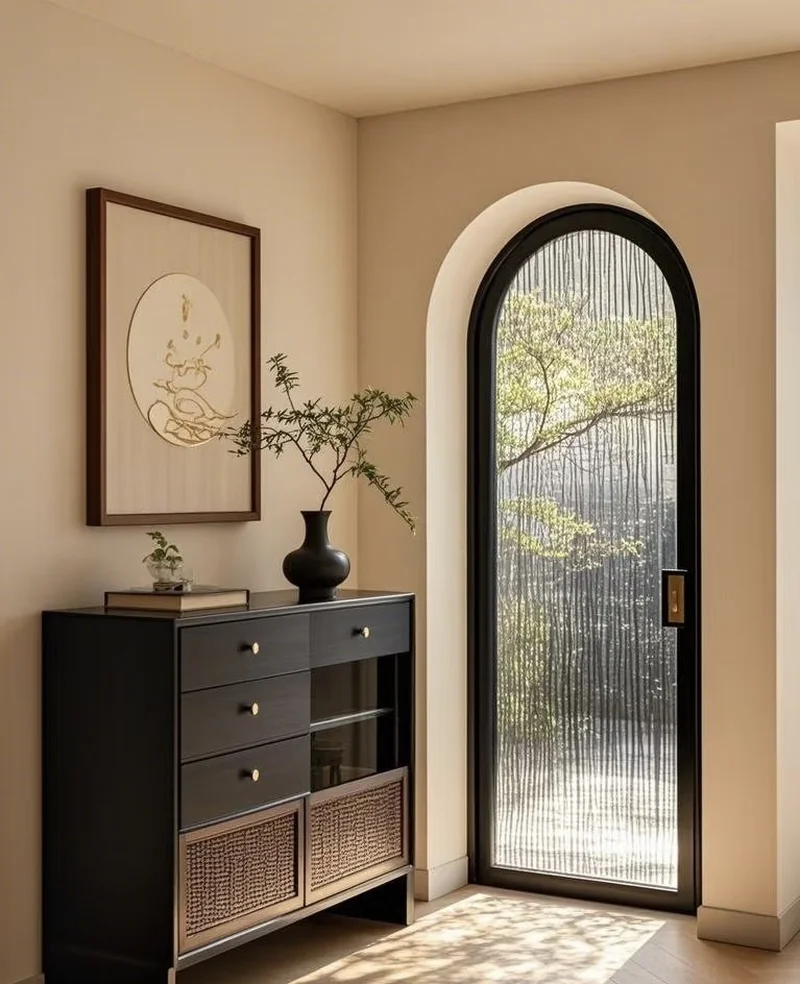
- Frame Alloy: Fabricated from 6063-T5 or 6063-T6 aluminum alloy, thermally broken with a 24mm polyamide strip. Minimum profile wall thickness of 1.8mm for standard applications and 2.0mm for heavy-duty or high-rise applications.
- Glass Specification: Insulated Glass Units (IGU) are standard, with configurations tailored to performance requirements. Typical configurations include:
- Acoustic: 6mm laminated outer pane / 16mm argon-filled cavity / 6mm tempered inner pane. Achieves an OITC rating of up to 38 and an STC rating of up to 42.
- Thermal: Low-E coated double or triple glazing with warm-edge spacers and argon/krypton fill. Center-of-glass U-factors as low as 0.22 W/(m²·K) are achievable.
- Safety & Security: All exterior and common area glazing must be tempered or laminated per ANSI Z97.1 / CPSC 16 CFR 1201 or EN 12600.
- Surface Treatment: Architectural-grade electrostatic powder coating or anodizing per AAMA 2604 (Super Durable) or AAMA 611 (Class I Anodizing) standards, ensuring a minimum 10-year warranty against color fade and chalk.
Structural & Performance Standards
- Air, Water, and Structural Performance: Doors are engineered, tested, and certified to meet or exceed the following North American and international benchmarks:
- AAMA/WDMA/CSA 101/I.S.2/A440: The industry standard for fenestration performance.
- ASTM E283: Air Infiltration ≤ 0.37 cfm/ft² at 6.24 psf (1.5 m³/(h·m²) @ 75 Pa).
- ASTM E331: Water Penetration resistance at a minimum static pressure of 15% of design pressure.
- ASTM E330: Structural performance tested to 150% of design pressure.
- Wind Load Resistance: Engineered for specific project requirements based on ASCE 7 wind load calculations. Standard systems are rated for positive and negative pressures up to 50 psf (2.4 kPa).
- Thermal Performance: The complete door assembly, including frame and glazing, must achieve a U-factor compliant with local energy codes (e.g., IECC, ASHRAE 90.1). Thermal transmittance (U-value) for the entire door assembly typically ranges from 0.40 to 0.60 Btu/(ft²·h·°F) [2.27 to 3.41 W/(m²·K)] depending on glazing and frame configuration.
Compliance & Certification
- Quality Management: Manufacturing facilities must be ISO 9001:2015 certified, with documented material traceability and batch testing protocols.
- Fire Rating: For applications requiring fire separation, doors can be supplied with certified fire-rated glazing and frames meeting NFPA 80 / UL 10C standards for 45, 60, or 90-minute ratings.
- Safety Glazing: Compliance with CPSC 16 CFR 1201 (Category II) and ANSI Z97.1 is mandatory for all hazardous locations (doors, sidelites, low-level glazing).
- Sustainability: Aluminum extrusions shall contain a minimum of 70% recycled content. Full assemblies can contribute to LEED v4/4.1 credits (MRc1, MRc2, EAc2, IEQc1).
Functional & Architectural Advantages
- Acoustic Insulation: Specialized gasketing and glazing configurations provide effective sound attenuation for high-noise environments, critical for urban multi-family buildings.
- Durability & Maintenance: Aluminum’s inherent resistance to corrosion, warping, and decay ensures a long service life with minimal maintenance, limited to periodic cleaning of glass and hardware.
- Operational Smoothness: High-quality, adjustable European-style hardware systems (e.g., 3D adjustable hinges, multi-point locks) ensure consistent operation, security, and long-term alignment.
- Design Flexibility: Available in a wide range of powder coat RAL colors, anodized finishes, and custom glazing options (tints, frits, patterns) to meet architectural design intent without compromising performance.
Typical Performance Data Table
| Parameter | Test Standard | Performance Grade / Typical Value | Notes |
|---|---|---|---|
| Air Infiltration | ASTM E283 | ≤ 0.37 cfm/ft² @ 6.24 psf | Class 40 per AAMA 101 |
| Water Resistance | ASTM E331 | 15% of Design Pressure | Minimum passing grade |
| Structural Load | ASTM E330 | 150% of Design Pressure | Safety factor verification |
| Forced Entry | ASTM F588 | Grade 40 | For accessible swinging doors |
| Thermal Transmittance (U-factor) | NFRC 100 | 0.40 – 0.60 Btu/(ft²·h·°F) | Full assembly rating, varies with glazing |
| Sound Transmission (STC/OITC) | ASTM E90 / E413 | STC 35 – 42 / OITC 30 – 38 | Achieved with acoustic glazing package |
| Cycle Testing | AAMA 920 | ≥ 100,000 cycles (heavy-duty) | Verification of hardware and frame integrity |
Trusted by Property Developers: Case Studies and Certifications for Bulk aluminum glass doors
Material and Performance Specifications for High-Rise Implementation
Our aluminum-glass door systems are engineered to meet the rigorous demands of multi-unit residential construction. The primary aluminum profiles are extruded from 6063-T5 or 6063-T6 alloy, achieving a minimum tensile strength of 160 MPa. Glazing is typically 24mm insulated glass units (IGU) with a warm-edge spacer and argon fill, achieving a center-of-glass U-factor of ≤1.0 W/(m²·K). For acoustic performance, laminated glass configurations (6.38mm or 8.38mm) provide a Sound Transmission Class (STC) rating of 35-40 dB.
Certifications and Compliance
All manufacturing processes and final products are governed by a stringent quality management system certified to ISO 9001:2015. Material compliance is verified through independent laboratory testing against international benchmarks:
- Structural Performance: Tested to ASTM E330 for uniform load deflection and ASTM E283 for air infiltration.
- Weathering & Durability: Subjected to AAMA 2605 voluntary specification for superior organic coating performance (70° gloss retention, chalk resistance).
- Fire Safety: Door assemblies can be specified with EN 13501-2 or local jurisdictional fire ratings for corridor and stairwell applications.
- Thermal Efficiency: Whole-door U-values are calculated and certified per EN 10077-2 or NFRC 100 standards.
Documented Performance in Large-Scale Projects
-
Case Study: The Apex Towers (42-Story, Coastal Environment)
- Challenge: High saline atmospheric corrosion, consistent 65+ dB ambient noise from urban traffic, and stringent energy codes requiring a whole-building U-value of ≤0.48.
- Solution: Implementation of a thermally broken 75mm profile system with a polyamide barrier. Profiles received a 70-micron polyester powder coating (AAMA 2605 compliant). Glazing utilized a 24mm IGU with two low-E coatings and a laminated inner pane for acoustic damping.
- Verified Outcome: Post-installation testing confirmed an in-situ acoustic reduction of 38 dB. Condensation resistance factor (CRF) exceeded 55, and accelerated weathering tests (ASTM G154) showed no corrosion or coating adhesion loss after 4,000 hours.
-
Case Study: Riverwalk Lofts (300-Unit Mid-Rise, Mixed-Use)
- Challenge: Streamlined procurement and installation for bulk order (1,200 door units), with a requirement for enhanced security and impact resistance in ground-floor units.
- Solution: Standardized on a 65mm heavy-duty pivot door system. All glass was specified as 10mm tempered laminated for safety and security. Hardware was pre-engineered to integrate with a centralized access control system.
- Verified Outcome: The standardized design reduced fabrication lead time by 30% and on-site installation time by 22%. Forced-entry testing (ASTM F476) exceeded Grade 40 requirements.
Key Functional Advantages for Developers
- Lifecycle Cost Efficiency: Thermally broken systems reduce thermal bridging, lowering HVAC loads and operational expenses. Anodized or powder-coated finishes require minimal maintenance over a 30+ year service life.
- Logistical and Installation Precision: Factory-glazed units arrive site-ready, eliminating separate glazing trades on-site and reducing sealant failure points. Pre-machined profiles ensure consistent fit and operation.
- Regulatory and Warranty Assurance: Full traceability of material batches and comprehensive test reports (air, water, structural) simplify permitting and inspections. Systems are backed by a 10-year limited warranty on profiles and finishes.
Performance Data Summary: Standard Configurations
| Specification | Standard Unit (65mm Profile) | Performance Unit (75mm Profile) | Test Standard |
|---|---|---|---|
| Whole-Door U-Value | 1.8 W/(m²·K) | 1.4 W/(m²·K) | EN 10077-2 / NFRC 100 |
| Air Infiltration | ≤ 0.5 cfm/ft² @ 75 Pa | ≤ 0.3 cfm/ft² @ 75 Pa | ASTM E283 / EN 1026 |
| Water Penetration Resistance | 15% DRF @ 300 Pa | 15% DRF @ 450 Pa | ASTM E547 / EN 1027 |
| Structural Load (Deflection) | L/175 @ 2400 Pa | L/240 @ 3600 Pa | ASTM E330 / EN 12179 |
| Acoustic Rating (STC) | 32 dB | 38 dB | ASTM E90 / EN ISO 10140 |
Frequently Asked Questions
How do aluminum-glass doors prevent moisture-induced warping in humid climates?
Our doors use thermally-broken aluminum profiles with 1.8-2.0mm wall thickness and a polyamide barrier, achieving a U-value ≤1.6 W/(m²·K). The integrated drainage system and butyl sealants manage condensation. For wooden cores, we specify LVL with ≤12% moisture content and a 60-micron PVDF coating to block vapor ingress.
What formaldehyde emission standards apply to composite materials in these doors?
We exclusively use E0-grade (≤0.5 mg/L) or EN-standard (≤0.124 mg/m³) compliant materials. For wood-plastic composite (WPC) elements, core density is ≥750 kg/m³, bonded with phenol-resorcinol formaldehyde-free adhesives. This ensures indoor air quality meets GB 18580-2017 and stringent international health standards.
Can these doors achieve meaningful thermal insulation for energy-efficient buildings?
Yes, through a multi-chamber thermal break design (PA66 GF25 insulation strips) and dual-sealed 24mm insulated glass units (argon-filled, Low-E coating). The complete assembly achieves a thermal transmittance (Uw) as low as 1.3 W/(m²·K), significantly reducing HVAC load and meeting passive house principles.
What impact resistance and security features are incorporated?
Profiles undergo 10,000-cycle fatigue testing. The glass is typically 6+6mm tempered or laminated, with a 1.52mm PVB interlayer, achieving P2 impact classification. Multi-point locking systems (e.g., 3-point hooks) with stainless steel reinforcements in the frame provide resistance to forced entry exceeding 1500N.
How is long-term structural integrity and anti-sagging ensured?
We integrate reinforced steel or aluminum inserts within the profile cavities at critical stress points (hinge side). Hinges are heavy-duty, adjustable 3D concealed types rated for ≥200,000 cycles. The threshold design includes a reinforced LVL core to prevent deflection under repeated load.
What sound insulation performance (dB) can be expected for apartment use?
Doors with 44mm thick profiles, dual seals (EPDM), and asymmetric glass (e.g., 8mm laminated + 12mm air gap + 6mm tempered) achieve a weighted sound reduction index (Rw) of 38-42 dB. This effectively mitigates corridor and common area noise, complying with residential acoustic standards.
How are finishes protected against UV degradation and weathering?
Aluminum profiles undergo a 3-coat pretreatment (chromate-free) and a 25-30 micron PVDF (70% Kynar 500®) fluorocarbon spray finish. For WPC elements, we use co-extruded caps with UV stabilizers and anti-oxidants, ensuring a ΔE color shift of less than 2.0 after 5,000 hours of accelerated weathering testing.