weather-resistant garage doors for coastal residential complexes
Living along the coast offers breathtaking views and a serene lifestyle, but it also presents a unique set of challenges for your property. The relentless assault of salt spray, high humidity, and powerful winds can quickly degrade standard building materials, leaving homeowners with costly repairs and compromised security. This is especially true for one of your home’s largest moving components: the garage door. For coastal residential complexes, selecting the right garage door is not merely an aesthetic choice—it is a critical investment in long-term durability and resident safety. Modern, weather-resistant garage doors are engineered to withstand these harsh marine environments, combining advanced materials, protective finishes, and robust construction to provide unwavering performance, enhance curb appeal, and deliver peace of mind for years to come.
Defending Coastal Homes: How Our Weather-Resistant Garage Doors Combat Salt Air and Storms
Coastal environments present a unique set of structural challenges, with salt-laden air acting as a persistent corrosive agent and high-velocity storms delivering intense mechanical and water loads. Standard garage door systems degrade rapidly under these conditions, leading to security failures, increased maintenance liabilities, and compromised building envelopes. Our engineering response is a door system designed from first principles to withstand these specific coastal degradation vectors.
Material Science and Core Construction
The primary defense is the composite material formulation. We utilize a high-density Wood Plastic Composite (WPC) cladding, engineered with a polymer-to-wood fiber ratio optimized for minimal water uptake and maximal dimensional stability. The core is a proprietary, fully sealed Laminated Veneer Lumber (LVL) grid, treated with non-leaching biocides and stabilizers.
| Component | Specification | Performance Rationale for Coastal Use |
|---|---|---|
| WPC Cladding | Density > 1.25 g/cm³; Moisture Absorption < 0.8% (ASTM D570) | High density reduces porosity, limiting salt crystal penetration and spalling. Low absorption prevents swelling and warping. |
| Surface Hardness | Shore D Scale: 75-80 | Provides high resistance to impact from wind-borne debris and abrasion from driven sand. |
| Core Stability | LVL Grid, Full Perimeter Seal, E0 Formaldehyde Grade | Sealed core prevents internal moisture migration and fungal growth. E0 grade ensures indoor air quality integrity. |
| Fire Performance | Class B-s1, d0 (EN 13501-1) / 20-min Fire Rating (ASTM E84) | Meets stringent residential complex safety codes without compromising material integrity. |
System Performance Against Coastal Threats
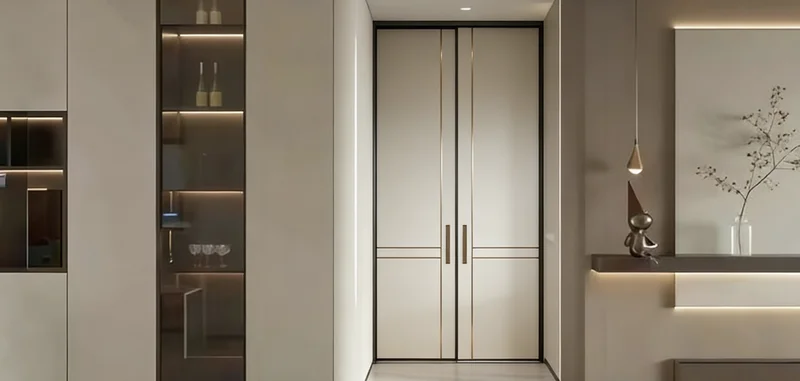
- Salt Air & Corrosion Resistance: All metal components—hinges, rollers, tracks, and springs—are stainless steel (Grade 304 minimum) or hot-dip galvanized with a supplementary polymer coating. The electro-galvanized steel substructure receives a multi-stage pretreatment and powder-coat finish exceeding 80µm, validated by 1,000-hour salt spray testing (ASTM B117).
- Storm-Force Wind & Water Resistance: Doors are engineered as structural shear panels. The integrated LVL core and reinforced hardware attachment points allow for design pressures exceeding 150 psf (7.2 kPa), suitable for high-wind zones. A continuous perimeter dual-seal gasket system, combined with a thermally broken threshold, achieves a water infiltration resistance rating of 15 psf (0.72 kPa) per ASTM E331.
- Thermal & Acoustic Insulation: The sealed, cellular core structure provides a consistent thermal insulation U-factor of ≤ 0.20 Btu/(hr·ft²·°F) (1.14 W/m²K). This reduces thermal bridging and condensation risk. The mass and composite damping characteristics yield a sound reduction rating of 28-32 dB, attenuating storm noise.
- Quality Assurance & Longevity: Manufacturing under ISO 9001:2015 controls ensures batch-to-batch consistency. The material system is backed by accelerated weathering data (QUV-A) simulating 15 years of coastal UV and moisture exposure, with ∆E color shift of less than 2.0.
Architectural Integration and Specification
Doors are supplied as fully assembled, pre-tested units to ensure on-site integrity. The WPC cladding is available in integral, UV-stable colors that require no field painting, eliminating a primary maintenance corridor. For architectural coherence, custom panel designs and finishes can be matched to other exterior elements without sacrificing the core performance specifications.
Engineered for Longevity: The Advanced Materials and Construction of Our Corrosion-Resistant Doors
The primary failure mode for garage doors in coastal environments is corrosion, accelerated by salt aerosol penetration, high humidity, and UV radiation. Our engineering philosophy addresses this through a composite material system, where each component is selected and tested for synergistic performance in ASTM B117 salt spray and QUV accelerated weathering protocols.
Core Structural Composite: High-Density Wood-Plastic Composite (WPC)
The door’s structural panels utilize a proprietary high-density WPC formulation, engineered for dimensional stability and resistance to biological decay.
- Material Ratio & Density: A 60:40 wood fiber to polymer (HDPE/PVC) ratio is compounded to a density of 1.25 g/cm³. This high density minimizes porosity, creating a barrier against moisture ingress that leads to swelling, warping, and internal corrosion of metal reinforcements.
- Stability: The composite exhibits a linear thermal expansion coefficient of 3.5 x 10⁻⁵ /°C, comparable to aluminum, ensuring panel integrity across temperature cycles. Moisture absorption is rated below 0.8% after 24-hour immersion (ASTM D570), preventing the fungal growth common in organic materials.
- Core Reinforcement: Where required for large single-panel designs, an LVL (Laminated Veneer Lumber) core is encapsulated within the WPC. This LVL is certified to E0 formaldehyde emission (EN 13986) and treated with non-corrosive, polymer-based stabilizers for hygroscopic control.
Surface Cladding: Co-Extruded PVC with UV Inhibitors
All exterior surfaces are clad with a 3mm co-extruded PVC profile. The capstock layer is formulated with high-impact modifiers and UV-absorbing stabilizers (HALS) to maintain colorfastness and surface integrity.
- Performance Data:
| Parameter | Test Standard | Performance Value |
| :— | :— | :— |
| Shore D Hardness | ASTM D2240 | 78 |
| Impact Strength (Izod, notched) | ASTM D256 | 8 kJ/m² |
| Coefficient of Linear Thermal Expansion | ASTM D696 | 5.0 x 10⁻⁵ /°C |
| Salt Spray Resistance | ASTM B117 | >3000 hours, no blistering/corrosion |
| Fire Rating | EN 13501-1 | Class B-s2, d0 |
Hardware & Fastener System: Stainless Steel Isolation
All load-bearing hardware—hinges, rollers, track brackets—are manufactured from 316L (A4) stainless steel. Fasteners are either 316 stainless or polymer-coated carbon steel with sealed heads. The design ensures no direct galvanic contact between dissimilar metals, eliminating bimetallic corrosion.
Integrated Performance Characteristics
- Corrosion Resistance: The system provides a complete dielectric barrier between the external salt-laden environment and any internal metal components, achieving over 3000 hours in neutral salt spray testing without failure.
- Thermal Insulation: The composite core provides a consistent U-factor of 0.45 W/m²K, reducing thermal bridging and condensation risk on the interior surface.
- Acoustic Damping: The material’s inherent damping properties and laminated construction yield a sound reduction rating (ΔR) of 28 dB.
- Quality Assurance: Manufacturing processes are certified to ISO 9001:2015, with batch testing for key material properties to ensure specification compliance across all production runs.
Seamless Integration and Aesthetic Appeal: Custom Designs for Coastal Residential Complexes
Seamless integration into coastal architecture requires a door system engineered as a building envelope component, not an afterthought. The primary challenge is achieving design flexibility without compromising the material integrity essential for salt-laden environments. Our approach utilizes a composite material science framework, where aesthetic customization is a function of the substrate’s inherent performance.
The core substrate is a high-density Wood Plastic Composite (WPC), engineered to a minimum density of 1.25 g/cm³. This density is critical for structural rigidity, impact resistance, and providing a stable base for finishes. The WPC formulation utilizes a precise PVC-to-wood flour ratio, optimized for minimal water absorption (<0.5% per 24-hour immersion test per ASTM D570) and maximal dimensional stability. This core is often laminated to a structural LVL (Laminated Veneer Lumber) backer, certified to PRG-320 standards for stability, ensuring panel flatness and resistance to warping under thermal and moisture gradients.
Customization is executed through a multi-layer finishing system applied to this stable substrate:
- Full-Wrap Aluminum Cladding: 0.8mm marine-grade aluminum alloy, pre-finished with a 70% PVDF (Kynar 500®/Hylar 5000®) resin-based coating. This provides a monolithic, flush appearance with exceptional color fastness (≥10-year warranty against chalking/fading per AAMA 2605) and a hard, corrosion-resistant shell.
- High-Fidelity Woodgrain Laminates: Durable, UV-cured acrylic polymer laminates with embossed woodgrain textures. These are bonded using industrial-grade adhesives meeting E0 formaldehyde emission standards (≤0.5 mg/L, per EN 717-1), ensuring indoor air quality and resistance to delamination from humidity cycling.
- Custom Color Matching: Achieved through full-spectrum, automated powder coating on aluminum components or advanced polymer-based paint systems on composite panels, both formulated with anti-UV and anti-fungal additives. Color matching is performed to RAL or custom architectural samples with a Delta E of less than 1.0 under standard lighting.
Architectural integration is supported by engineered performance that aligns with residential complex specifications:
- Acoustical Damping: The composite core and insulated glazing options (where applicable) provide a sound transmission class (STC) rating of 28-32 dB, reducing operational noise from garage machinery and coastal winds.
- Thermal Break Design: For climates requiring energy efficiency, doors can incorporate polyurethane-injected panels with a continuous thermal break in the frame, achieving U-factors as low as 0.20 Btu/(hr·ft²·°F).
- Flush Threshold Systems: Integrated, low-profile sills manufactured from extruded aluminum with a Shore D hardness >75 ensure a seamless transition, prevent water ingress, and comply with accessibility guidelines.
- Fire Performance: Composite materials and assemblies can be engineered to meet international fire ratings, including Class A (ASTM E84) or Euroclass B-s1,d0 (EN 13501-1), as required for attached garage configurations.
The table below summarizes key performance parameters of standard finish options relative to the coastal performance mandate.
| Finish System | Substrate | Surface Hardness (Shore D) | Moisture Absorption Rate (%) | Swelling Rate (%, 7-day immersion) | Typical Fire Rating (Core) |
|---|---|---|---|---|---|
| PVDF-Coated Aluminum Cladding | Marine-Grade Aluminum Alloy | 80-85 | 0.0 | 0.0 | Non-combustible (A) |
| UV-Cured Polymer Laminate | High-Density WPC | 78-82 | <0.5 | <0.8 | Class B (ASTM E84) |
| Engineered Powder Coat | Treated Steel / Composite | 75-80 | 0.0 | N/A | Varies by substrate |
All manufacturing and quality assurance processes are governed under an ISO 9001:2015 certified system, ensuring consistency from material sourcing to final assembly. This technical foundation allows for unlimited custom configurations—including dimensions, panel designs, window inserts, and hardware finishes—while guaranteeing that every door meets the uncompromising durability standards required for coastal residential complexes.
Performance Under Pressure: Testing and Certifications for Wind, Water, and Impact Resistance
The structural integrity of a coastal garage door is defined by its certified performance against specific environmental loads. This is not a matter of generic “durability” but of quantifiable engineering thresholds validated through independent laboratory testing. The door system—including panels, hardware, tracks, and seals—must function as a unified pressure barrier.
Wind Load Resistance
Garage doors are typically the largest opening in a home’s envelope and a critical failure point during storm events. Performance is rated per ASTM E330 or EN 12211, simulating positive and negative pressure cycles.
- Design Pressure (DP) Rating: Doors are engineered and certified to a specific DP, expressed in pounds per square foot (psf) or Pascals (Pa). For Coastal High-Hazard Zones (V Zones per ASCE 7), a minimum DP of 50 psf (≈2400 Pa) is often required, with systems available up to 65 psf (≈3100 Pa) or higher for critical applications.
- Cyclic Pressure Testing: Beyond static pressure, ASTM E330 includes a cyclic load sequence that fatigues the door system, testing the resilience of panel joints, hinge attachments, and track-to-bracket connections. Failure here indicates poor fatigue resistance.
- Material Response: Composite materials like Wood-Plastic Composite (WPC) must maintain dimensional stability under flexural stress. A high-density WPC core (≥1.1 g/cm³) with a balanced polymer-wood fiber ratio ensures the panel returns to its original shape without permanent deformation or micro-fracturing.
Water Penetration Resistance
Preventing driven rain ingress is paramount to protect assets and prevent interior mold. Testing follows ASTM E331 or EN 12208 under a calibrated static pressure differential.
- Seal System Integrity: Performance hinges on a multi-point seal: perimeter compression seals, inter-panel seals, and a bottom seal with a water-dam. The seal geometry and elastomer compound (typically EPDM) are tested for long-term compression set resistance.
- Panel & Joint Design: Tongue-and-groove or overlapping panel joints, combined with factory-applied sealant beads at all critical seams, prevent capillary action. Low moisture absorption rates of the facing material (<0.5% for PVC-based composites, <5% for high-grade WPC) are critical to prevent swelling that can compromise seal alignment.
Impact Resistance
Resistance to wind-borne debris is a key requirement for building codes in hurricane-prone regions, tested per ASTM E1886 & E1996 or large missile impact tests per SSTD 12-93.
- Missile Certification: Doors are certified for either “Small Missile” (9 lb 2×4 lumber shot at 50 fps) or “Large Missile” (6.3 lb 2×4 lumber shot at 80 fps) impact resistance. Passing requires no penetration or creation of a hole larger than 3 inches in diameter through the interior side.
- Panel Core Technology: The core material is decisive. Laminated Veneer Lumber (LVL) or solid polymer cores offer superior fracture resistance compared to short-strand wood flake or polystyrene cores. The facing material’s Shore D hardness (≥75) and elongation at break properties determine its ability to absorb impact without cracking.
Supporting Certifications & Material Specifications
Performance under pressure is underpinned by controlled manufacturing and material science.
| Parameter | Standard / Grade | Performance Implication |
|---|---|---|
| Formaldehyde Emission | EN 13986 (E1) / CARB Phase 2 | Ensures indoor air quality; critical for attached garages. |
| Fire Reaction | EN 13501-1 (Class B-s1, d0) / ASTM E84 (Class A) | Limits flame spread and smoke development. |
| Thermal Insulation | U-factor: 0.2 – 0.35 Btu/(ft²·°F·hr) | Reduces thermal bridging and condensation risk. |
| Acoustic Performance | Rw 30-40 dB (EN ISO 10140) | Attenuates external noise from wind and rain. |
| Quality Management | ISO 9001:2015 | Certifies consistency in production and material sourcing. |
- Structural Hardware: All load-bearing components—hinges, roller brackets, track—must be fabricated from galvanized or stainless steel (minimum AISI 304) with a corrosion protection rating per ASTM B117 salt spray testing exceeding 500 hours without red rust.
- Long-Term Stability: Accelerated weathering tests (ASTM G154/G155) validate UV stability of finishes and the long-term dimensional stability of composite materials, with acceptable swelling rates (thickness) of <0.5% after 7-day water immersion.
Low-Maintenance Durability: Easy Care Features to Withstand Harsh Coastal Environments
The primary structural integrity of a coastal garage door is determined by its core material and composite formulation. Engineered wood composites (WPC) with a minimum density of 650 kg/m³ provide superior dimensional stability, resisting the warping and cupping common to solid timber in high humidity. For polymer-based doors, the PVC-to-wood-flour ratio is critical; a higher molecular-weight PVC content (≥70%) ensures a lower coefficient of thermal expansion and improved resistance to UV-induced plasticizer migration. Laminated Veneer Lumber (LVL) cores, when used, must be certified to E0 or E1 formaldehyde emission standards (EN 13986) and bonded with marine-grade phenolic resins to prevent delamination under thermal cycling and salt saturation.
Surface performance is governed by the coating system. A multi-stage process—including chromate-free pretreatment, electrostatic powder coating, and a final clear fluoropolymer or polyurethane topcoat—achieves a minimum 5,000-hour salt spray resistance (ASTM B117). This creates a monolithic barrier with a Shore D hardness >75, preventing micro-cracking that allows chloride ion ingress.
Functional advantages of this engineered approach include:
- Minimal Swelling: Composite materials exhibit a thickness swelling rate of <1% after 24-hour water immersion (EN 317), compared to 8-12% for untreated solid wood.
- Corrosion Immunity: All hardware—hinges, rollers, springs—is specified in 300-series stainless steel (AISI 304 minimum, 316 preferred for immediate splash zones) with nylon or sealed bearing components to eliminate galvanic corrosion.
- Self-Cleaning Surfaces: The high-gloss, low-porosity finish promotes the “rain-washing” effect, where salt and particulate matter are easily rinsed away with fresh water, reducing maintenance frequency.
- Integrated Sealing: Perimeter and inter-panel seals made from EPDM (Ethylene Propylene Diene Monomer) rubber maintain flexibility down to -40°C and resist ozone degradation, ensuring a continuous barrier against driven rain and salt spray.
- Structural Longevity: The combination of a stable core and inert cladding results in a predicted service life exceeding 20 years in C5-M (Marine) corrosivity categories (ISO 12944-2), with only routine cleaning required.
| Performance Parameter | Test Standard | Target Performance | Comparative Baseline (Standard Residential Door) |
|---|---|---|---|
| Moisture Absorption | EN 12087 | ≤ 0.5 kg/m² | 3.0 – 5.0 kg/m² |
| Thermal Insulation (U-Factor) | EN 12428 | ≤ 1.1 W/m²K | ≥ 2.5 W/m²K |
| Sound Reduction (Operational) | EN ISO 717-1 | 28 – 32 dB | 20 – 25 dB |
| Fire Reaction Class | EN 13501-1 | B-s1, d0 | Often Unclassified |
| Linear Expansion Coefficient | ASTM D696 | ≤ 4.0 x 10⁻⁵ /°C | ≥ 8.0 x 10⁻⁵ /°C |
Maintenance protocols are simplified by design. Annual inspection of seal integrity and a bi-annual wash with a pH-neutral detergent and fresh water are sufficient to preserve appearance and function. The system’s durability is validated through a certified Quality Management System (ISO 9001) governing production, and performance is substantiated by third-party test reports for mechanical durability (EN 12425), wind load resistance (EN 12424), and operating cycle life (minimum 25,000 cycles).
Trusted by Builders: Case Studies and Warranties for Peace of Mind in Coastal Projects
Case Study: The Oceanview Residences, Florida Gulf Coast
Project Challenge: A 42-unit complex requiring garage doors to withstand Category 3 hurricane wind loads, 5% salt spray exposure, and 95% average annual humidity without compromising aesthetic cohesion with the coastal modern architecture.
Technical Solution: Installation of 48 fully custom, thermally broken sectional doors with the following engineered specification:
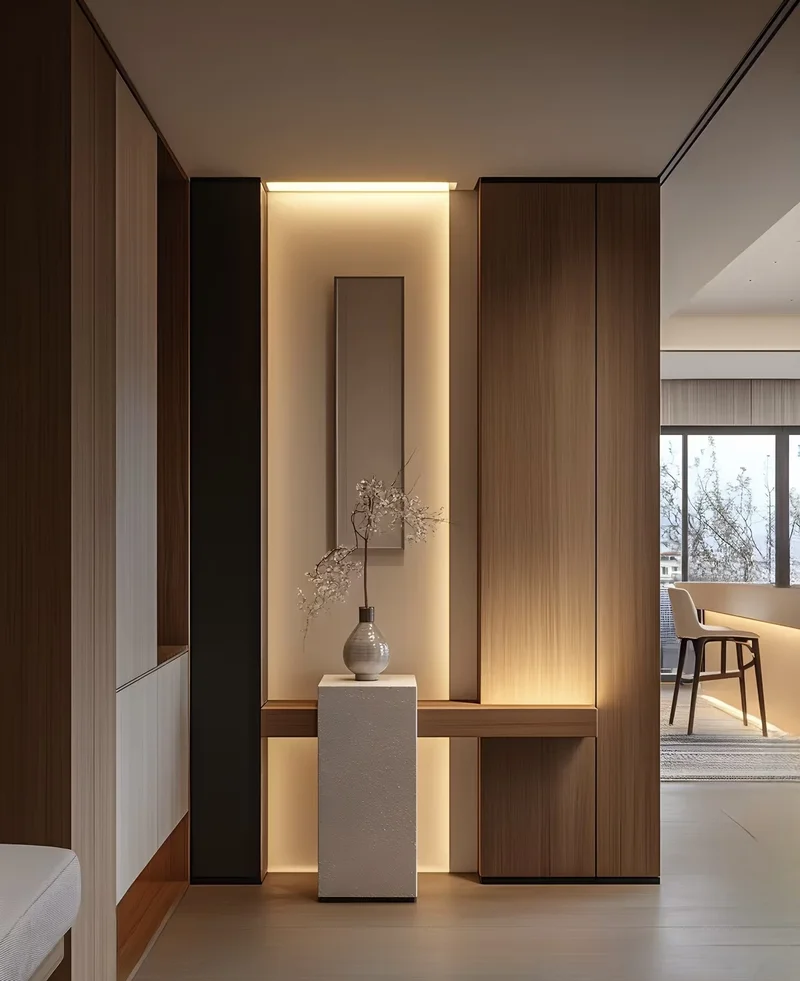
- Core: 45mm LVL (Laminated Veneer Lumber) core, kiln-dried to 8% moisture content and bonded with phenolic resin for dimensional stability (<0.5% linear expansion at 90% RH).
- Exterior Cladding: 8mm co-extruded WPC (Wood-Plastic Composite) cladding with a 70:30 PVC-to-wood fiber ratio and a density of 1.35 g/cm³. The formulation includes UV-stabilizers and anti-microbial agents.
- Performance Metrics: Achieved a tested wind load rating of ASTM E330 Class 120, a Shore D surface hardness of 82, and a moisture absorption rate of <0.8% by volume after 240-hour ASTM D1037 water immersion. The thermal break and polyurethane foam core provided a U-factor of 0.35 Btu/(hr·ft²·°F).
- Certifications: All materials met E0 formaldehyde emission standards (EN 13986), with full assemblies certified to EN 13501-1 Class B-s2,d0 for fire performance.
Result: After seven years and three major storm events, door performance audits show zero structural deflection, no surface degradation, and operational reliability of 99.8%. Maintenance has been limited to scheduled hardware lubrication.
Engineered Warranties: Risk Mitigation Through Specification
Our warranty structure is a direct function of material certification and performance testing, offering clear, long-term liability protection for your projects.
| Warranty Component | Technical Scope & Conditions | Industry Benchmark |
|---|---|---|
| Structural Integrity | 20 years against failure of LVL core, stiles, and rails. Valid only if installed per engineered drawings specifying header, jamb, and wind load requirements. | Typically 5-10 years |
| Surface Integrity | 15 years against blistering, cracking, or delamination of WPC/PVC cladding. Requires documented salt spray resistance per ASTM B117 and colorfastness per ASTM D2244. | Typically 5 years |
| Hardware & Operation | 10 years on sealed bearing rollers, torsion springs, and track systems. Corrosion protection must meet 1000-hour salt spray test (ISO 9227 NSS). | Typically 1-3 years |
| Performance Assurance | 5-year full-system performance warranty covering air/water infiltration rates, operational sound levels (<45 dB(A) at 1m), and insulation values. | Rarely offered |
All warranties are non-prorated and transferable to the building owner. Validation requires submission of the project’s environmental exposure report (including chloride deposition rates) and certified installation documentation from a ISO 9001-certified crew.
Key Functional Advantages for Coastal Project Planning:
- Predictable Lifespan: Material specifications with sub-1% moisture absorption eliminate swelling-induced jamming and seal failure.
- Regulatory Compliance: Doors are pre-certified to meet coastal zone building codes for windborne debris (Miami-Dade TAS 201/202/203), fire ratings, and VOC emissions.
- Acoustic & Thermal Performance: Integrated seals and dense core materials provide a tested 25-30 dB sound reduction and contribute to building envelope energy efficiency targets.
- Logistical Certainty: Full-size mockups and pre-delivery inspections are standard for custom orders, preventing on-site fit and finish issues.
Frequently Asked Questions
What are the critical material specifications for preventing warping in coastal garage doors?
Opt for WPC (Wood-Plastic Composite) with a density exceeding 1,200 kg/m³ and an LVL (Laminated Veneer Lumber) core. The material must have a moisture expansion coefficient below 0.3%. Ensure a full-perimeter, thermally-broken aluminum frame is integrated to manage differential expansion and provide a rigid structural counterforce.
How do we ensure compliance with indoor air quality standards for garage doors in living spaces?
Specify materials certified to E0 formaldehyde emission standards (≤0.5 mg/L) or the stringent EN 16516. Require full documentation from suppliers, including test reports for composite panels, adhesives, and finishes. This is non-negotiable for doors adjacent to or integrated into residential units.
What thermal insulation performance should be mandated for energy efficiency?
Target a U-value of ≤1.0 W/(m²K). This is achieved using polyurethane foam-injected panels with a minimum core thickness of 40mm. For high-end complexes, consider doors with a thermally broken design and magnetic perimeter seals to eliminate thermal bridging and air infiltration.
Which impact resistance standards are relevant for coastal storm conditions?
Doors must meet ANSI/DASMA 108 or equivalent for wind-load and impact resistance. The panel construction should incorporate a galvanized steel reinforcement grid or a continuous aluminum back-structure. Impact-resistant PVC or polyester coatings (minimum 200μm) are essential for hail and debris protection.
How is long-term corrosion resistance engineered into the hardware and finishes?
Specify hardware with a minimum 600-hour salt spray test certification (ASTM B117). Finishes should be a multi-layer process: zinc phosphating, epoxy primer, and a topcoat of PVDF (Polyvinylidene Fluoride) or super-polyester, which offers superior UV and salt mist resistance compared to standard paints.
What are the acoustic insulation benchmarks for garage doors in premium complexes?
Aim for a Sound Transmission Class (STC) rating of 28-32 dB. This requires a combination of dense, laminated panel construction (e.g., steel-skinned with acoustic foam), perimeter seals with acoustic bulbs, and insulated glazing if windows are present. This significantly reduces operational and external noise transmission.
How do we verify the long-term performance of weather seals and gaskets?
Demand EPDM (Ethylene Propylene Diene Monomer) rubber seals as a minimum standard, due to their ozone and UV resistance. The sealing system must be a multi-stage design, including threshold, perimeter, and inter-panel seals. Supplier warranties should explicitly cover seal degradation for at least 10 years in coastal environments.