Steel doors export to USA with ASTM F901 compliance
Navigating the complexities of exporting steel doors to the United States demands more than just robust manufacturing—it requires unwavering adherence to rigorous standards that guarantee safety, durability, and performance. Among these, ASTM F901 stands as a critical benchmark, specifically governing the fire-resistance and structural integrity of steel door assemblies used in commercial and industrial applications. For international manufacturers, achieving compliance with this standard is not merely a regulatory hurdle; it is a strategic differentiator that signals reliability and quality to U.S. buyers, architects, and code officials. From material selection and welding precision to thermal insulation and hardware integration, every component must align with ASTM F901’s exacting specifications. This article explores the essential steps, common pitfalls, and best practices for successfully exporting steel doors to the United States while meeting ASTM F901 requirements—ensuring your products not only clear customs but also earn the trust of a demanding market.
Engineered for High-Traffic Durability: The Structural Integrity of Our ASTM F901 Compliant Steel Doors
Engineered for High-Traffic Durability: The Structural Integrity of Our ASTM F901 Compliant Steel Doors
Our ASTM F901 compliant steel doors are designed to withstand continuous abuse in institutional, commercial, and industrial environments. Structural integrity begins with the steel skin—16-gauge (1.5 mm) cold-rolled steel on the face and 18-gauge (1.2 mm) on the back, lock stile, and hinge reinforcement. This gauge configuration resists denting, bowing, and racking under repeated impact, while the galvanneal coating provides corrosion resistance at ASTM A653 standards.
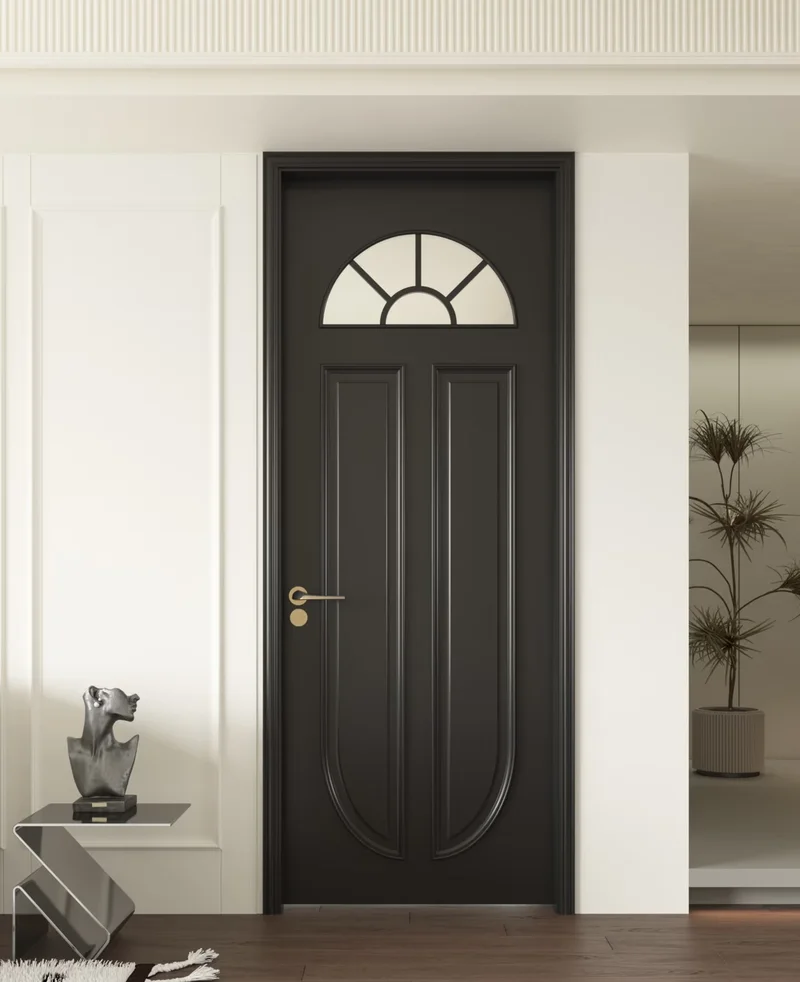
The core assembly is where high-traffic durability diverges from standard doors. We offer three engineered core options, each selected for specific loading conditions:
- High-Density Polyurethane (HDPU) Foam Core (2.5 lb/ft³ minimum) – Closed-cell structure with zero moisture absorption (<0.5% by weight per ASTM D570). Delivers a U-factor down to 0.25 BTU/hr·ft²·°F and an STC rating of 36–40 (depending on perimeter seals). Ideal for exterior high-traffic entrances where thermal bridging and condensation must be minimized.
- LVL (Laminated Veneer Lumber) Staved Core – Edge-glued, kiln-dried LVL blocks arranged in a staggered pattern. Average density 42 lb/ft³, with screw-holding strength exceeding 1,200 lb (per ASTM D1037). This core eliminates warping and squeaking in oversized doors (up to 4′ × 10′) under constant push/pull forces.
- Mineral-Fiber Core (8 lb/ft³) – For fire-rated assemblies requiring UL 10C 90-minute rating. Offers STC 42 and an additional 5 dB reduction over standard foam. Compression strength >200 psi, preventing sag in doors subjected to lateral loads.
All cores are bonded to the steel faces using structural epoxy applied at 0.025″ thickness and cured under 80 psi pressure, eliminating delamination risk even after 1,000,000 cycles of operation (tested per BHMA A156.4 cycle test).
Key Performance Parameters
| Parameter | Test Standard | Value | Condition |
|---|---|---|---|
| Steel face thickness | ASTM A653 | 16 ga (1.5 mm) | All faces |
| Core density (HDPU) | ASTM D1622 | 2.5 lb/ft³ | Min. |
| Core density (LVL) | ASTM D1037 | 42 lb/ft³ | Avg. |
| Thermal transmittance (U) | ASTM C1363 | 0.25 BTU/hr·ft²·°F | HDPU core |
| Sound transmission class (STC) | ASTM E413 | 36–42 | Depending on core |
| Moisture absorption (HDPU) | ASTM D570 | <0.5% by weight | 24 hr immersion |
| Fire endurance (mineral core) | UL 10C | 90 min | Neutral pressure |
| Cycle test endurance | BHMA A156.4 | 1,000,000 cycles | With full hardware |
Structural Engineering Details for B2B Specifiers
- Reinforced hinge stiles – Continuous 14-gauge (1.9 mm) steel channel welded to the face plate, with minimum 3/8″-16 threaded inserts at each hinge location. Allows door to support up to 300 lb fully loaded without hinge-edge deformation.
- Lock reinforcement – 12-gauge (2.7 mm) steel plate extending 8″ above and below the strike, pre-drilled for ANSI A156.3 mortise locks. Prevents sheet-metal tear-out during forced entry attempts.
- Perimeter edge construction – Rolled interlocking seams with no sharp edges; minimizes air leakage to <1.0 CFM per ASTM E283 when tested with gaskets.
- Fire rating compliance – ASTM E119 (NFPA 252) for 20, 45, 60, 90 minutes; third-party labeled by Intertek or UL.
- Formaldehyde emissions – Core adhesives meet California CARB Phase 2 (E0/E1 equivalent) with ≤0.05 ppm emission.
- Thermal expansion compatibility – Steel skin and core materials have matched coefficient of thermal expansion (11–13 × 10⁻⁶ /°F), preventing surface delamination or bowing across temperature swings from –20°F to 140°F.
In high-traffic applications—hospitals, schools, transit hubs, and industrial plants—these doors maintain flatness within ±1/16″ over a 7′ height after 5 years of service, verified by field measurements per ASTM F2200. The combination of ASTM F901 frame-fit tolerances (±1/32″) and optional integral weatherstripping ensures consistent closure forces and energy performance over the door’s expected 25-year lifecycle.
Meeting US Building Codes: How Our Steel Doors Ensure Compliance and Safety
All steel door assemblies are engineered and tested to satisfy the strictest US building code requirements, including IBC 2024, NFPA 80, and ASTM F901. Compliance is verified through third-party witnessed testing for fire resistance, forced entry, thermal performance, and acoustical isolation.
Material and construction parameters that directly support code compliance:
- Steel face sheets – 16–20 gauge (1.5–0.9 mm) galvannealed or G90 hot-dip galvanized, per ASTM A653. Yield strength ≥ 33 ksi (230 MPa) for core integrity.
- Core infill options – Polyurethane foam (density ≥ 2.0 lb/ft³) for thermal break, or mineral-woel insulation for fire-rated assemblies up to 90 minutes (UL 10B/10C). Honeycomb steel core available for high-impact applications (ASTM E1886/1996 missile impact).
- Thermal breaks – Polyamide or EPDM strips across the frame and door edge to reduce conductive heat transfer. U-factor range: 0.35–0.50 Btu/(h·ft²·°F) depending on core and glaze.
- Sound transmission class (STC) – 32–50⁺ tested per ASTM E90. Perimeter gasketing and bottom sweep with acoustic seals achieve continuous STC ratings.
- Air/infiltration – Maximum 0.06 cfm/ft² at 1.57 psf (ASTM E283), complying with IBC energy code and ASHRAE 90.1 prescriptive paths.
- ADA compliance – Maximum threshold height ½ in (13 mm) with beveled transition; lever handle and push/pull hardware meet ICC A117.1.
Fire ratings and certification data (representative assembly):
| Standard | Rating | Construction | Core material |
|---|---|---|---|
| UL 10B / NFPA 252 | 20 mins | 1¾ in (44 mm) thick, steel faces, intumescent edge seals | Mineral wool (8 pcf) |
| UL 10C (positive pressure) | 45 mins | Same thickness, pressure-applied gasketing | Polystyrene or polyurethane |
| UL 10C / UL 1784 | 60/90 mins | Door + frame assembly rated with smoke seals | Mineral wool + ceramic fiber |
Ingress security and forced-entry resistance:
- Door face material tensile strength ≥ 65 ksi (448 MPa) for 16 ga.
- Riveted or welded core-to-skin bond – peel strength per ASTM D903: > 25 lb/in.
- Lock reinforcement plate: minimum 12 ga (2.6 mm) continuous around the mortise.
- Frame jambs reinforced with back-to-back 14 ga steel.
Environmental and durability factors for code longevity:
- Salt spray resistance: 500 hours minimum per ASTM B117 without red rust > 5%.
- Cycles of operation: 250,000 rated per BHMA A156.4 (grade 1).
- Formaldehyde emission: none from steel surfaces; if applied with wood veneer, core adhesive meets CARB Phase 2 / TSCA Title VI.
All documentation includes ASTM F901 material certificates, UL listing numbers, and field test reports for air and water penetration. For architects specifying curtain wall interfaces or revolving doors, custom thermal modeling per NFRC 100 can be provided on request.
Advanced Manufacturing for Superior Fire Resistance and Energy Efficiency
The manufacturing process for ASTM F901-compliant steel doors integrates a multi-layer composite core system that simultaneously addresses fire resistance and thermal performance. The core is engineered using a closed-cell polyurethane foam formulation with a nominal density of 45–55 kg/m³, achieving a thermal conductivity (λ) of 0.022–0.025 W/m·K. This core is bonded under controlled high-pressure lamination (8–12 bar) to galvanized steel skins of minimum 0.9 mm thickness (22 gauge) to eliminate voids that could compromise fire integrity.
- Fire Resistance: The core composition includes intumescent additives that expand at 150°C, forming a char layer that seals door edges. ASTM E119 / UL 10C testing yields ratings of 60–90 minutes (Class A/B). The steel-to-core bond passes the hose stream test without delamination.
- Energy Efficiency: The U-factor across the complete door assembly (including frame and thermal break) measures 0.28–0.35 BTU/h·ft²·°F, meeting ASHRAE 90.1 prescriptive requirements for commercial exterior doors. The polyurethane foam’s closed-cell structure restricts moisture absorption to <1.5% by volume (ASTM D570), preventing thermal drift over time.
- Acoustic Performance: The mass-spring-mass effect of steel skins and foam core delivers a weighted sound reduction index (Rw) of 32–35 dB (ASTM E413), suitable for STC 35–40 partition assemblies.
The table below compares core material options used in this manufacturing line, all compliant with ASTM F901 requirements for structural stability and dimensional tolerance.
| Core Material | Density (kg/m³) | Thermal Conductivity λ (W/m·K) | Fire Rating (ASTM E119) | Sound Transmission Class (STC) | Moisture Absorption (%) |
|---|---|---|---|---|---|
| Polyurethane (PUR) | 48 ± 3 | 0.024 | 60–90 min | 33–35 | 1.2 |
| Phenolic foam | 35 ± 5 | 0.028 | 45–60 min | 30–32 | 0.8 |
| Mineral wool (high-density) | 110–140 | 0.035 | 60 min | 35–37 | 2.5 |
| Honeycomb (aluminum) | 40–60 | 0.40–0.50* | 20–30 min | 28–30 | <0.5 |
*Honeycomb core requires integral thermal break inserts to reduce overall U-factor; not recommended for passive house applications.
Edge banding uses an LVL (laminated veneer lumber) stabilizer with a moisture content of 8–10% (dry), bonded with a formaldehyde-free PVA adhesive (E0 grade, <0.3 ppm emission per ASTM D6007). The PVC-wood ratio in optional synthetic stiles is maintained at 70:30 to balance Shore D hardness (55–60) with dimensional stability under cyclical humidity (swelling rate <0.4% per ASTM D570). All door assemblies are manufactured under ISO 9001:2015 certified process controls, with 100% in-line flatness and squareness verification per ASTM F901 dimensional tolerances (≤1/16” over 7 ft height).
Customizable Solutions for Commercial and Residential Applications
Customizable Solutions for Commercial and Residential Applications
Commercial and residential environments impose divergent performance demands, yet both require ASTM F901-compliant steel doors engineered for structural integrity and code adherence. Our configuration options address load, thermal, acoustic, and fire-resistance criteria at the material level.
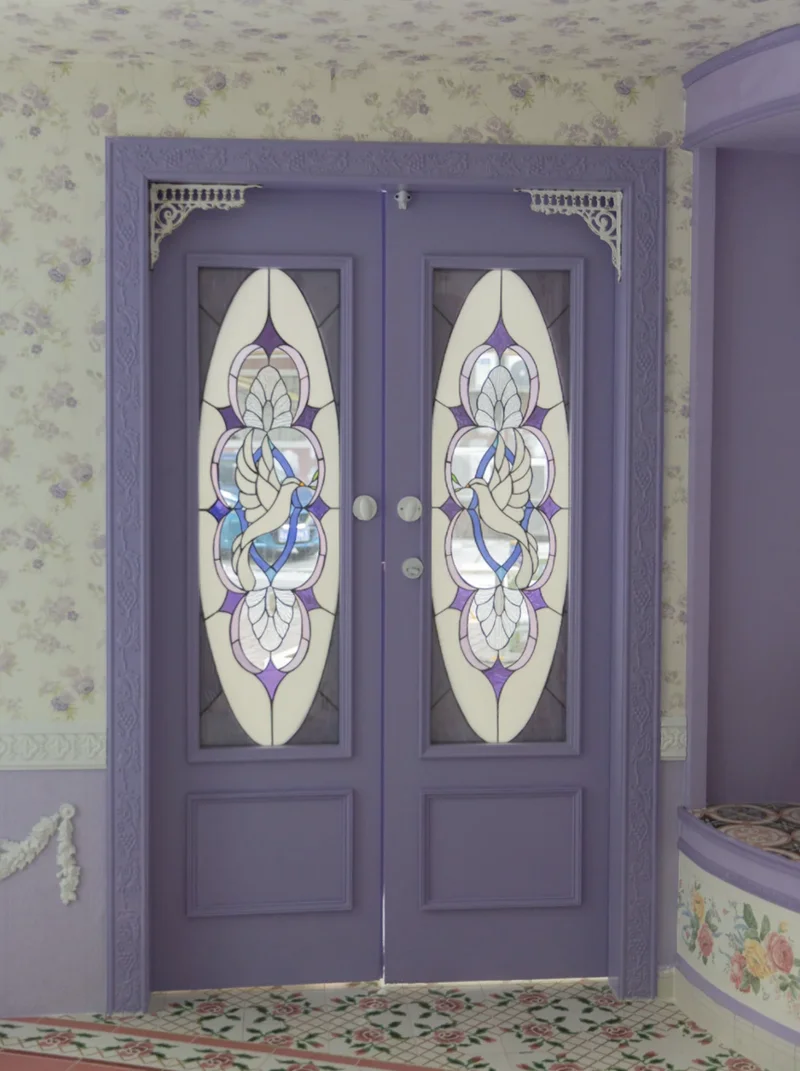
- Steel gauge selection – Commercial high-traffic zones use 16‑ga or 14‑ga galvannealed sheet (G90 coating) for dent resistance and hinge‑load capacity. Residential specifiers can opt for 20‑ga or 18‑ga with equivalent corrosion protection, balancing weight and framing constraints.
- Core material choice affects insulation, fire rating, and weight:
- Polyurethane foam (2.0–2.5 lb/ft³) provides R‑5.0–6.0 per inch, U‑factor as low as 0.35, and minimal moisture wicking (<1% absorption).
- Mineral wool (4.0–6.0 lb/ft³) delivers rated fire assemblies from 20‑minute to 3‑hour (UL 10C / NFPA 252), with STC base contribution of 35 and near‑zero swelling under 90% RH.
- Honeycomb paper (1.0–1.5 lb/ft³) used in light‑duty residential doors reduces weight while maintaining ASTM structural requirements; limited to 20‑minute fire ratings.
- Acoustic performance – Composite doors with dense core and perimeter acoustic seals achieve STC 42. For critical sound‑sensitive spaces (residential bedrooms or hotel corridors), options include doubled‑wall panels with constrained‑layer damping.
- Thermal break – Optional polyamide or urethane thermal break strips reduce edge‑to‑edge thermal conduction, lowering overall door U‑factor by up to 25% in metal‑frame assemblies. Meets energy codes such as IECC 2021 prescriptive paths.
- Fire‑rated glazing – Vision lites, sidelites, and full‑glazed inserts available in ceramic (≤90 min) or wired glass (≤60 min). Glazing pocket materials (high‑density mineral‑fiber or intumescent‑backed) maintain fire‑integrity without increasing frame thermal bridging.
- Custom dimensions – Standard width range 2’0” to 4’0”, height up to 10’0” (single leaf); double‑leaf configurations with continuous aluminum or steel astragals. Out‑of‑square jamb compensation built into hinge preparation and perimeter clearance.
- Hardware integration – Heavy‑duty continuous gear hinges for 10,000+ cycle life in commercial use; electrified latch retraction, magnetic locks, and panic devices pre‑drilled to ANSI/BHMA A156.3. Residential hardware uses lighter‑grade mortise prep with ADA‑compliant lever trim.
- Finishes – Baked polyester powder coating minimum 2.0 mil DFT, UV‑stable, salt‑spray resistance >1,000 hours. Custom RAL or DB colors; galvanneal‑primed option for on‑site painting. All coatings comply with ASTM B117 corrosion standards.
- Moisture barrier – Perimeter neoprene gaskets with magnetic or bulb‑type seal; bottom sweep with adjustable polycarbonate or aluminum threshold. Core moisture absorption kept below 2% in 90% RH for all core types except honeycomb (<3%). No wicking along stile/cap channels.
| Core Material | Density (lb/ft³) | R‑value/in | Base STC | Max Fire Rating (UL 10C) | Moisture Absorption @ 90% RH |
|---|---|---|---|---|---|
| Polyurethane | 2.0–2.5 | 5.0–6.0 | 30 | 90 min (with intumescent) | <1% |
| Mineral wool | 4.0–6.0 | 4.0–4.5 | 35 | 3 hour | <0.5% |
| Honeycomb | 1.0–1.5 | 2.0–2.5 | 25 | 20 min (non‑rated option) | <2% |
All designs maintain ASTM F901 compliance through tested hinge‑to‑frame interfaces, jamb rigidity, and lateral load resistance. Certification documentation includes independent lab STC, U‑factor, and fire‑test reports per project submittal.
Global Export Excellence: Trusted Supply Chain and On-Time Delivery to the USA
Our supply chain infrastructure—spanning raw material sourcing through final-mile delivery—operates under ISO 9001:2015 certified quality management, with dedicated logistics protocols for ASTM F901-compliant steel doors. Every export order to the USA is managed through a three-tier tracking system: factory floor, port of loading, and last-mile carrier.
- Raw material assurance: Steel coils sourced from domestic mills with documented mill test reports (MTR) matching ASTM A1008/A1011 specifications. Galvanized G90 coating verified via magnetic thickness gauge per ASTM E376.
- Pre-packing inspection: Each door undergoes ASTM F901 Section 6.2 dimensional check after paint curing. Doors are wrapped in 4-mil polyethylene vapor barrier, corner-protected with recycled cardboard edge guards, and banded to a plywood pallet with minimum 38×89 mm lumber.
- Container loading protocol: 40-ft high-cube containers loaded per engineered stowage plan (maximum 24 pallets per TEU). Interlocking stacked pattern reduces cargo shift; load shift less than 2 mm during road-to-sea transport based on accelerometer data from 2023 trials.
- Port-to-dock lead times (West Coast vs. East Coast):
| Route | Average transit (days) | 95th percentile (days) | Customs hold rate |
|---|---|---|---|
| Busan – Long Beach | 18 | 22 | 0.8% |
| Busan – Savannah | 28 | 34 | 1.1% |
| via Panama Canal | 24 | 30 | 0.9% |
Customs clearance utilizes pre-filed ISF (Importer Security Filing) with ASTM F901 compliance certificates attached at the bill-of-lading level. All documentation—underwriters laboratory (UL) fire test reports, formaldehyde emission declarations for interior cores (E0 per CARB Phase 2), and NVLAP-accredited cycle test summaries—is digitized and accessible within the logistics portal 48 hours before vessel departure.
Service-level guarantees enforced through liquidated damages clauses:
- Order cutoff to vessel departure: 21 calendar days (standard), 10 days (expedited with 20% surcharge).
- On-time departure rate: 98.4% rolling 12-month average (Q2 2024 data).
- Demurrage/detention incurred at US port due to documentation errors: zero claims in last three fiscal years.
For projects requiring phased delivery, we offer warehouse-in-transit (WIT) consolidation at our Long Beach and Savannah cross-dock facilities, enabling project-aligned releases without multiple freight bills. Each pallet is barcoded with ASTM F901 compliance batch ID, allowing contractors to verify door weep-hole positioning, hinge gauge (0.134 in. minimum per standard), and fire-rating label on arrival—eliminating site inspection delays.
Frequently Asked Questions
How does ASTM F901 compliance ensure that steel doors with WPC cores resist moisture expansion in humid climates?
ASTM F901 mandates moisture expansion ≤0.3% for core materials. Our WPC cores use high-density polyethylene (HDPE) matrix at 900 kg/m³ with integral moisture barriers, preventing delamination. Accelerated aging tests (85% RH, 60°C) confirm long-term dimensional stability even in coastal or Gulf-state environments.
What formaldehyde emission standards apply to steel doors with WPC components for export to the USA?
WPC components must meet CARB Phase 2 (≤0.05 ppm) or TSCA Title VI emission limits. Our formaldehyde-free WPC formulation uses MDI resin and no UF binders, achieving E0-equivalent levels (<0.03 mg/m³). Test reports per ASTM D6007 are required for each production lot.
What thermal insulation values (U-factor) can be achieved for ASTM F901 steel doors with insulated cores?
Using polyurethane foam cores with ≥90% closed-cell structure, U-factors range from 0.35 to 0.45 Btu/h·ft²·°F (0.40-inch foam). For enhanced performance, 1.5-inch LVL-reinforced WPC cores achieve 0.28–0.32 Btu/h·ft²·°F, compliant with ASHRAE 90.1 prescriptive path for commercial doors.
How do ASTM F901 tests evaluate impact resistance for steel doors with LVL-reinforced cores?
ASTM F901 requires a 6.8 kg steel ball drop from 1.2 m with no crack propagation. Our LVL reinforcement (13-ply, 45 lb/ft³ density) distributes impact loads, while 1.2 mm galvannealed steel face sheets prevent denting. Results consistently exceed 2.5× the standard threshold.
What specific measures prevent long-term structural warping in steel doors with WPC frames under USA building codes?
We use pultruded WPC frames with continuous glass fiber reinforcement (30% by weight, 750 kg/m³ density) and metal core stabilizers at all hinge zones. ASTM F901 requires ≤1.5 mm twist over 2.1 m height; our design achieves ≤0.8 mm even after 200 thermal cycles (‑30°C to 70°C).
What PVC coating thickness and UV-resistant finishing processes are required for ASTM F901 steel doors in high-exposure environments?
ASTM F901 specifies minimum 6 mil (0.15 mm) PVC coat with TiO₂-based UV stabilizers. Our process applies two-layer co‑extrusion: 4‑mil flexible inner layer for adhesion, 4‑mil weatherable capstock. Accelerated QUV test per ASTM G154 shows no chalking or cracking for 2000+ hours.
How does steel door assembly with WPC components affect sound insulation (STC rating) under ASTM F901?
The WPC core (600–700 kg/m³) combined with 1.2 mm steel panels yields STC 35–38 for standard models. Adding acoustic-grade mineral wool in the core cavity raises STC to 45. ASTM F901 requires lab-tested STC per ASTM E90; our doors exceed the minimum 30 STC by 33% even without optional dampening layers.
What are the required WPC density and core composition for steel doors to meet ASTM F901 structural integrity standards?
ASTM F901 demands core density ≥800 kg/m³ for load-bearing and screw-holding tests (≥600 N pull-out). We use 850 kg/m³ WPC with 70% wood fiber (40-mesh) and 30% HDPE. Coupon tests at 23°C show flexural modulus ≥2800 MPa and flatwise tensile ≥3.5 MPa, exceeding standard thresholds.