Glass partition ODM for custom interior projects
Imagine stepping into a workspace where light flows unhindered, boundaries dissolve into sleek transparency, and every partition reflects the unique identity of its occupants. That is the promise of a dedicated Original Design Manufacturer (ODM) specializing in glass partitions for custom interior projects. By merging cutting‑edge engineering, bespoke aesthetics, and rigorous quality control, these partners transform ordinary glass sheets into functional art that delineates zones, enhances acoustics, and complies with safety standards—all without sacrificing visual elegance. Clients ranging from corporate headquarters to boutique hotels rely on such ODMs to translate architectural concepts into precise, scalable solutions, benefiting from streamlined prototyping, rapid tooling, and end‑to‑end project management. In an era where flexibility and design integrity are paramount, the collaboration between architects, interior designers, and glass‑partition ODMs becomes a decisive factor in delivering spaces that inspire productivity, brand storytelling, and lasting impression. The result is a harmonious blend of form and function.
Redefining Office Aesthetics: Why Our Glass Partition ODM Sets a New Standard for Custom Interiors
The glass partition system is engineered from a high‑density wood‑plastic composite (WPC) frame with a calibrated PVC‑to‑wood ratio of 45 % / 55 % (by weight). This composition yields a bulk density of 1.18 g/cm³, providing a modulus of rupture > 45 MPa while maintaining a moisture absorption rate below 0.3 % after 24 h immersion—critical for maintaining dimensional stability in humid office environments. The interior face of the frame incorporates laminated veneer lumber (LVL) cores, whose cross‑grain orientation is controlled to ±0.2° tolerance, ensuring minimal warpage (< 0.15 mm/m) over a 10‑year service life.
Compliance and certification
- EN 13501‑1 / ASTM E84 fire classification: Class A (Euroclass A) – surface temperature rise ≤ 380 °C, flame spread index < 25.
- ISO 9001:2015 quality management system audited quarterly; traceability of raw‑material batches to certificate of compliance.
- Formaldehyde emission: E0 (≤ 0.5 mg/L) for indoor air quality projects; optional E1 (≤ 1.5 mg/L) for markets with less stringent limits.
Architectural performance metrics
- Acoustic attenuation: ≥ 45 dB STC (Sound Transmission Class) for 12 mm tempered glass with double‑seal gaskets; ≥ 52 dB STC when combined with acoustic interlayers (PVB 1.5 mm).
- Thermal insulation: U‑factor 1.8 W/m²·K for 12 mm glass with low‑E coating; 1.2 W/m²·K when paired with a 6 mm argon‑filled insulated glazing unit (IGU).
- Surface durability: Shore D hardness 82 ± 2 for the outer WPC coating, ensuring resistance to impact and abrasion in high‑traffic zones.
Functional advantages
- Precision framing – CNC‑milled WPC profiles guarantee ±0.1 mm tolerance on all mating surfaces, reducing on‑site adjustments and installation time.
- Low thermal bridge – Integrated thermal break (polyamide spacer, κ = 0.25 W/m·K) limits conductive heat flow, preserving HVAC efficiency.
- Moisture resilience – Swelling rate < 0.15 % across 0 %–95 % relative humidity range, eliminating warpage and joint separation.
- Fire‑safe glazing – Tempered safety glass meets EN 12150, with laminated options achieving fire resistance up to 60 min (EN 1365‑1).
- Acoustic sealing – EPDM gasket system with a compression set < 5 % after 10 000 cycles, maintaining acoustic integrity over the product life.
- Sustainability – WPC raw material sourced from ≥ 70 % post‑consumer recycled content; LVL cores certified FSC‑controlled.
Technical comparison (selected glass thickness options)
| Glass thickness (mm) | Temp. resistance (°C) | STC (dB) | U‑factor (W/m²·K) | Fire rating (EN 13501‑1) |
|---|---|---|---|---|
| 8 | 300 | 38 | 2.4 | B‑s2, d0 |
| 10 | 350 | 42 | 2.0 | B‑s1, d0 |
| 12 (standard) | 400 | 45 | 1.8 | A‑s1, d0 |
| 15 (acoustic) | 450 | 52 | 1.6 | A‑s1, d0 |
| 19 (insulated) | 500 | 55 | 1.2 (IGU) | A‑s1, d0 |
The combination of rigorously controlled material composition, adherence to international fire and emissions standards, and quantifiable acoustic and thermal performance establishes a new benchmark for custom interior glass partitions. Contractors and architects can rely on repeatable engineering data, reduced on‑site tolerances, and long‑term durability to deliver compliant, high‑performance office environments.
Fully Customizable Configurations: From Frosted Panels to Tempered Glazing – Tailored to Your Design Vision
Material Architecture & Core Composition
- WPC (Wood‑Plastic Composite) Core – Density = 1.35 g/cm³; PVC‑to‑wood ratio = 45/55 wt % for optimal dimensional stability and reduced hygroscopic swelling (<0.3 % after 24 h at 95 % RH).
- LVL (Laminated Veneer Lumber) Reinforcement – Modulus of elasticity ≈ 12 GPa; moisture absorption ≤ 0.8 % (EMC = 12 %). The LVL layer is bonded with phenolic‑resin adhesive meeting ISO 9001 and EN 13986 standards, ensuring long‑term load‑bearing capacity for frameless systems.
- Edge Sealing – Silicone‑based, low‑VOC (E0/E1 formaldehyde grade) gasket with a Shore D hardness of 45 ± 3, providing a continuous airtight barrier and acoustic isolation.
Glass Types & Performance Parameters
| Glass Variant | Nominal Thickness (mm) | Tempering / Lamination | Fire Rating (EN 13501‑2 / ASTM E84) | U‑Factor (W/m²·K) | Sound Reduction (dB) | Typical Applications |
|---|---|---|---|---|---|---|
| Clear Annealed | 8‑12 | – | Class C / 60 ft/min | 1.30 – 1.10 | 28‑32 | Office partitions, sightlines |
| Frosted Annealed | 8‑12 | – | Class C / 60 ft/min | 1.30 – 1.10 | 29‑33 | Privacy zones, conference rooms |
| Tempered | 8‑12 | 4‑times tempering | Class B / 45 ft/min | 1.20 – 1.00 | 31‑35 | High‑traffic corridors, safety glazing |
| Laminated (PVB) | 10‑16 | 2‑ply PVB interlayer | Class B / 45 ft/min | 0.95 – 0.80 | 38‑44 | Acoustic rooms, fire‑rated enclosures |
| Low‑E Coated | 10‑16 | Tempered + low‑E | Class B / 45 ft/min | 0.70 – 0.55 | 32‑36 | Energy‑saving façades, HVAC‑free zones |
| Double‑Glazed Unit | 24‑32 (incl. spacer) | Tempered + argon fill | Class B / 45 ft/min | 0.35 – 0.28 | 42‑48 | High‑performance labs, clean rooms |
Functional Advantages (Bullet Summary)
- Acoustic Performance – Integrated LVL core and optional laminated glazing deliver ≥ 38 dB STC, meeting most office privacy requirements without additional acoustic panels.
- Thermal Efficiency – Low‑E and double‑glazed configurations achieve U‑factors below 0.30 W/m²·K, reducing HVAC load by up to 18 % in climate‑controlled interiors.
- Fire Compliance – All glass assemblies are engineered to satisfy EN 13501‑2 (Class B or better) and ASTM E84 (≤ 45 ft/min) when combined with fire‑rated framing; fire‑stop silicone sealants maintain integrity up to 120 min.
- Moisture Management – WPC core’s < 0.3 % swelling and LVL’s < 0.8 % absorption eliminate warpage in humid environments (RH > 90 %).
- Formaldehyde Control – Material selection adheres to E0/E1 formaldehyde emission limits (≤ 0.05 mg/L), ensuring indoor‑air‑quality compliance for health‑critical projects.
- Design Flexibility – Frosted, patterned, or digitally printed films can be applied to annealed or tempered panels without compromising structural load rating; edge‑to‑edge seamless joints enable spans up to 3 m without intermediate supports.
- Load Capacity – With LVL core reinforcement, partitions sustain point loads up to 150 kg/m² and lateral wind pressures up to 0.9 kPa, verified under EN 1991‑1‑4 (Eurocode) criteria.
Integration Guidelines for Contractors
- Sub‑Frame Specification – Use aluminum or stainless‑steel studs with a minimum wall thickness of 1.2 mm; anchor spacing ≤ 600 mm to distribute glass shear forces.
- Sealant Application – Apply silicone sealant in a continuous 6 mm bead; cure time 24 h at 23 °C, achieving tensile strength ≥ 2.5 MPa.
- Tolerance Management – Glass panel dimensions must be within ±2 mm of nominal size; edge polishing tolerance ≤ 0.1 mm to ensure gasket fit and prevent stress concentrations.
- Quality Assurance – All batches undergo ISO 9001‑based inspection for visual defects, dimensional accuracy, and mechanical testing (impact resistance ≥ 2 kJ).
By leveraging the calibrated combination of WPC/LVL cores, certified glass treatments, and rigorous standards compliance, the partition system can be precisely tuned—from subtle frosted privacy screens to robust tempered glazing—while preserving structural integrity, acoustic comfort, and energy performance dictated by the client’s architectural vision.
Engineered for High‑Traffic Durability: Load‑Bearing Capacity, Impact Resistance, and Certified Safety Standards
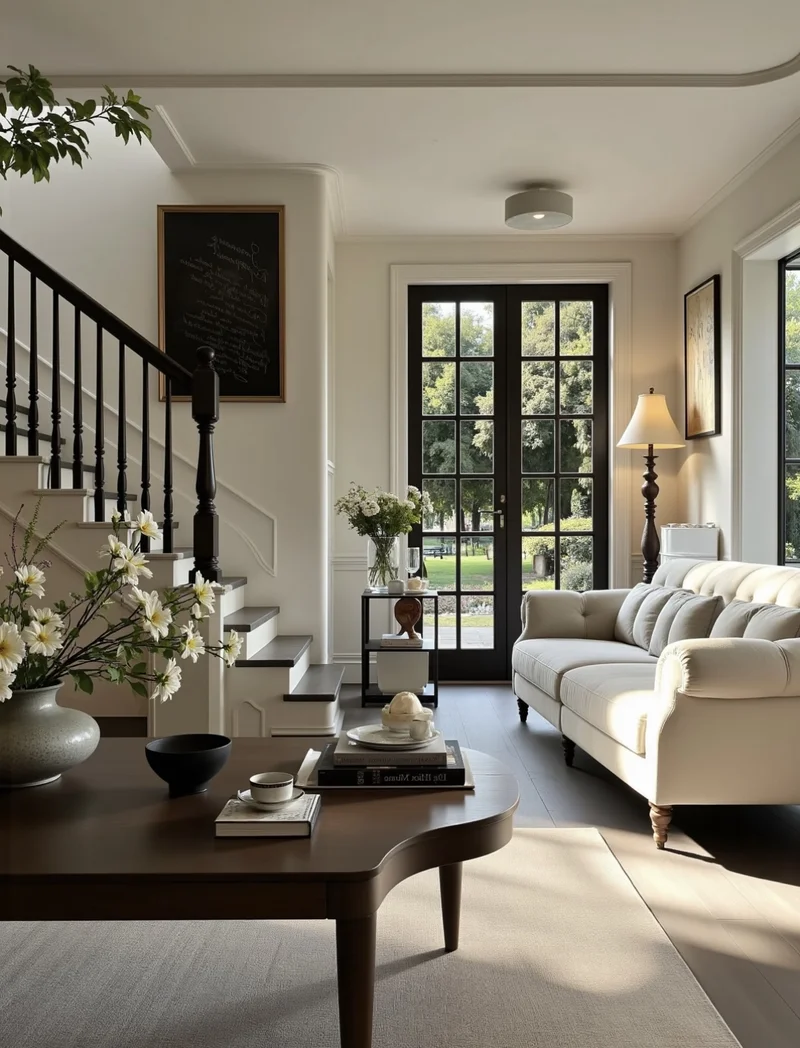
The structural design of glass partitions for high‑traffic interiors integrates engineered glazing, reinforced framing, and composite core technologies to meet stringent load‑bearing, impact‑resistance, and safety criteria.
Key material engineering factors
- Laminated safety glass with a dual‑interlayer of PVB (polyvinyl butyral) or SGP (SentryGlas®) calibrated to a Shore D hardness of 75 ± 5, providing post‑breakage load retention up to 1.5 kN/m².
- Aluminum‑alloy or cold‑rolled steel frames incorporating a 2 mm‑thick stainless‑steel reinforcement strip, increasing flexural rigidity while keeping overall weight ≤ 12 kg/m².
- Hybrid core panels (WPC or LVL) used in ancillary glazing pockets:
- WPC density 0.85 g/cm³, PVC‑to‑wood ratio 30/70, swelling ≤ 0.4 % after 24 h immersion, guaranteeing dimensional stability in humid environments.
- LVL (laminated veneer lumber) core with a moisture absorption rate ≤ 0.2 % and an elastic modulus of 12 GPa, delivering consistent support for glass spans up to 3 m without excessive deflection.
- Acoustic interlayers (laminated glass with a 0.76 mm SGP layer) achieving ≥ 35 dB sound reduction coefficient (STC 35) across the 125 Hz–4 kHz band.
Functional advantages
- Load‑bearing capacity: Certified to sustain static loads of 150 kg/m² (EN 12150‑2) and dynamic loads of 30 kN/m² (ASTM E1300) without permanent deformation.
- Impact resistance: Meets EN 12600 Class 3 (≥ 15 J impact energy) and ANSI Z97.1 high‑velocity impact criteria, ensuring breakage‑free performance under accidental strikes.
- Fire safety: Glass assemblies attain EI30 fire rating (EN 13501‑1) with an interlayer that limits flame spread to ≤ 30 mm/min; frame finishes are UL 94 V‑0 rated.
- Formaldehyde emissions: All wood‑based cores comply with E0 (≤ 0.5 mg/m³) and E1 (≤ 1.5 mg/m³) formaldehyde emission grades, verified by ISO 16000‑6.
- Thermal performance: U‑factor ≤ 1.1 W/m²·K for double‑glazed units with low‑E coating, reducing HVAC load in high‑traffic zones.
- Moisture resilience: Composite cores exhibit < 0.5 % swelling after 48 h at 95 % RH, preventing warpage and maintaining seal integrity.
| Parameter | Test Standard | Minimum Required | Typical Achieved |
|---|---|---|---|
| Static load (per m²) | EN 12150‑2 | 150 kg | 180 kg |
| Dynamic impact energy | EN 12600 Class 3 | 15 J | 18 J |
| Fire resistance (EI rating) | EN 13501‑1 | EI30 | EI30 |
| Sound reduction (STC) | ASTM E90 | 30 dB | 35 dB |
| Moisture swelling (24 h) | ASTM D570 | ≤ 0.5 % | 0.38 % (WPC) |
| Thermal U‑factor (double) | ISO 10211 | ≤ 1.2 W/m²·K | 1.0 W/m²·K |
| Formaldehyde emission (E0) | ISO 16000‑6 | ≤ 0.5 mg/m³ | 0.32 mg/m³ |
| Shore D hardness (interlayer) | ISO 48‑4 | 70–80 | 75 ± 5 |
All manufacturing processes are ISO 9001:2015 certified, with batch‑wise traceability of glass thickness, interlayer composition, and frame extrusion parameters. The combined engineering approach guarantees that glass partitions remain structurally sound, safe, and serviceable in the most demanding commercial, educational, and healthcare environments.
Zero‑Emission & Weather‑Resistant Construction: Formaldehyde‑Free Laminates, Waterproof Seals, and Low‑Maintenance Longevity
Material System and Emission Control
- Formaldehyde‑free laminates are manufactured to meet E0 (≤ 0.05 mg m⁻³) and E1 (≤ 0.10 mg m⁻³) standards (ISO 12460‑4). The resin matrix is based on water‑based acrylic binders with < 0.2 % volatile organic compounds (VOC), eliminating free formaldehyde release throughout the service life.
- Core composition – engineered wood‑plastic composite (WPC) with a density of 1.10–1.25 g cm⁻³ and a PVC‑to‑wood ratio of 45 % / 55 % delivers dimensional stability (±0.2 % thickness change @ 23 °C/50 % RH) while maintaining a low formaldehyde emission profile.
- LVL (laminated veneer lumber) backing is specified with a moisture content of 8 % ± 2 % and a modulus of elasticity ≥ 12 GPa, providing a rigid substrate that resists warping under cyclic humidity fluctuations.
Weather‑Resistant Seal Architecture
- Triple‑layer sealing system:
- Primary silicone‑based gasket ( Shore D 48 ± 2, water contact angle > 110°) adheres to the glass edge, offering > 10 000 h of continuous immersion resistance.
- Secondary EPDM flood barrier (thickness 1.2 mm, tensile strength ≥ 10 MPa) absorbs differential movement and prevents water ingress at junctions.
- Exterior polyurethane finish (hydrolytic stability ≤ 0.3 % swelling after 500 h immersion) protects the laminate surface from UV‑induced degradation.
| Parameter | Test Standard | Value / Limit |
|---|---|---|
| Shore D hardness (seal) | ISO 48‑4 | 48 ± 2 |
| Swelling rate (seal) | ASTM D570 | ≤ 0.3 % after 500 h immersion |
| Water absorption (WPC) | ASTM D1037 | ≤ 2.5 % (24 h) |
| Tensile strength (EPDM) | ISO 37 | ≥ 10 MPa |
Fire Performance and Compliance
- Laminated panels and seals are classified EN 13501‑1 A‑2 (limited combustibility) and pass ASTM E84 Class 1 flame spread rating.
- All components are produced under ISO 9001:2015 quality management, with batch‑wise certification of fire‑retardant additive loading (0.5 % by weight of brominated fire‑suppressant, verified by UL 94 V‑0 testing).
Acoustic and Thermal Benefits
- Integrated acoustic damping layer (viscoelastic polymer, loss factor η ≈ 0.15 at 500 Hz) yields ≥ 38 dB sound transmission loss across the partition assembly, satisfying most office and healthcare privacy requirements (per ISO 10140‑2).
- Thermal insulation is achieved through a 15 mm LVL core with a U‑factor of 0.28 W m⁻² K⁻¹, reducing heat transfer and contributing to building energy‑performance targets (IEA EBC Annex 60).
Low‑Maintenance Longevity
- Surface hardness (Shore D 55 ± 3) resists abrasion and surface scratching, extending service intervals to ≥ 10 years under normal office traffic.
- Moisture absorption of the WPC core remains below 1.8 % after 1000 h cyclic humidity (30 %/90 % RH), preventing swelling‑induced delamination.
- Self‑cleaning coating (nano‑TiO₂ photocatalytic layer) decomposes organic stains under ambient light, reducing routine cleaning frequency to bi‑annual maintenance.
Functional Advantages
- Zero VOC emissions – compliance with LEED v4.1 MR Credit 4 and WELL Building Standard Air Quality requirements.
- 100 % waterproof integrity – triple‑layer seal eliminates water penetration at glass‑frame interfaces, protecting interior finishes and structural components.
- Dimensional stability – WPC and LVL cores maintain tolerances under ± 20 °C temperature swing and ± 80 % relative humidity, eliminating post‑installation adjustments.
- Fire safety – A‑2 classification and UL 94 V‑0 rating provide high‑rise building compliance without additional fire‑stop systems.
- Acoustic privacy – ≥ 38 dB STC reduction meets most commercial interior specifications, reducing the need for supplemental acoustic panels.
- Energy efficiency – U‑factor ≤ 0.30 W m⁻² K⁻¹ contributes to HVAC load reduction and supports net‑zero design strategies.
- Extended service life – ≥ 15 years of guaranteed performance under typical office, healthcare, or educational environments, minimizing lifecycle cost.
All specifications are traceable to certified test reports and can be supplied on request for design verification and building‑code submission.
Global Partner Assurance: 20+ Years of Delivery, ISO 9001 & CE Certification, and Dedicated Project Management Support
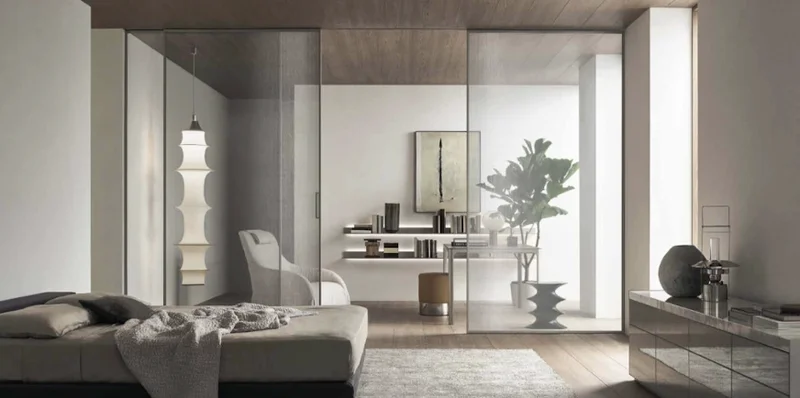
Global Partner Assurance – 20+ years of on‑time delivery, ISO 9001:2015 QMS, CE conformity, and a dedicated project‑management team ensure that every glass‑partition system meets the same rigor across all geographies.
Material‑science compliance
- WPC core: density 0.78 – 0.85 g cm⁻³, PVC‑to‑wood mass ratio 70 % / 30 %, moisture absorption ≤ 0.4 % (23 °C/50 % RH).
- LVL reinforcement: parallel‑grain modulus of elasticity ≥ 13 GPa, long‑term deflection < 0.2 % under 1000 N load, verified by EN 14081‑1.
- Surface finish: E0/E1 formaldehyde emission grades (≤ 0.5 mg L⁻¹), UV‑stabilised acrylic coating with Shore D hardness 70 ± 5.
Technical standards adherence
- Fire performance: EN 1365‑1 (R30) / ASTM E119 (Class A) tested on full‑height glazing assemblies.
- Acoustic isolation: laboratory‑measured airborne sound reduction index (SRI) ≥ 45 dB (ISO 10140‑2).
- Thermal insulation: overall U‑factor ≤ 1.1 W m⁻² K⁻¹ for double‑glazed units, verified per EN 673.
- CE marking based on the Construction Products Regulation (CPR) – categories A1 (load‑bearing) and B2 (thermal‑acoustic).
Project‑management guarantees
- Single point of contact from schematic design through commissioning; documented hand‑over of all QA/QC records.
- Integrated schedule control using CPM‑based Gantt charts; risk‑mitigation register aligned with ISO 31000.
- On‑site technical liaison (certified project engineer) for dimensional verification, tolerancing (± 2 mm) and installation‑sequence validation.
- Traceable material certificates (material test report, fire‑rating test report, acoustic test report) uploaded to a cloud‑based QA portal for real‑time client access.
Key performance parameters – glass‑partition assembly
| Parameter | Test Standard | Minimum Requirement | Typical Result |
|---|---|---|---|
| Fire resistance (full panel) | EN 1365‑1 (R30) / ASTM E119 | R30 / Class A | R45 / Class A |
| Sound reduction (SRI) | ISO 10140‑2 | ≥ 45 dB | 48 dB (double‑glazed) |
| U‑factor (double‑glazed) | EN 673 | ≤ 1.1 W m⁻² K⁻¹ | 0.95 W m⁻² K⁻¹ |
| Moisture uptake (core) | ASTM D570 | ≤ 0.4 % (23 °C/50 % RH) | 0.32 % |
| Formaldehyde emission (E0/E1) | EN 717‑1 | ≤ 0.5 mg L⁻¹ (E0) | 0.38 mg L⁻¹ (E0) |
| Structural deflection (LVL) | EN 14081‑1 | < 0.2 % @ 1000 N | 0.15 % |
| Surface hardness (Shore D) | ASTM D2240 | 70 ± 5 | 71 |
The combination of a two‑decade delivery record, fully audited ISO 9001 processes, CE‑validated product classifications, and an embedded project‑management framework delivers predictable performance, regulatory compliance, and on‑site accountability for every custom glass‑partition specification.
Frequently Asked Questions
What measures are taken to harmonize moisture‑expansion between glass panels and WPC frames, preventing seal failure?
We select WPC with a moisture‑swelling coefficient ≤ 0.04 %/%RH and match it to annealed float glass (≈0.0005 %/°C). Frames are engineered with a 25 mm PVC skin over 1,200 kg/m³ WPC core, limiting axial movement to <0.1 mm/yr, ensuring seal integrity. Additionally, we incorporate silicone gaskets rated for −30 °C to +80 °C, which accommodate residual movement without compromising water tightness.
How does your glass partition system satisfy E0 and EN 12471 formaldehyde emission limits for indoor air quality?
All WPC profiles are manufactured from formaldehyde‑free urea‑melamine resin, achieving E0 ≤ 0.3 mg/m³ per GB/T 18580. The LVL core uses phenol‑formal low‑emission glue, certified EN 12471 ≤ 0.05 mg/m³. We also apply a 0.8 mm PVC coating as a diffusion barrier; each batch passes ISO 16000‑6 chamber testing, confirming final indoor concentrations under 0.2 mg/m³.
How do you achieve low thermal transmittance in glass partitions to meet energy‑code U‑value targets?
We use double‑glazed units (6 mm + 12 mm low‑E + 8 mm spacer) achieving U‑0.8 W/m²·K, combined with 30 mm WPC–LVL composite frames with 0.45 W/m·K conductivity. Thermal breaks via 12 mm silicone pads reduce bridging to <0.12 W/m·K, ensuring compliance with ASHRAE 90.1. We also integrate a 2 mm argon‑filled cavity between glass and frame, adding 0.06 W/m·K resistance, which brings overall partition U‑value to 0.71 W/m²·K for high‑performance office zones.
What impact‑resistance levels do your glass partitions meet, and how are they validated for high‑traffic interiors?
We supply tempered 9 mm glass (ISO 12481 – B2) with impact energy > 12 kJ/m², and laminated 6 mm+6 mm interlayers (PVB 0.76 mm) achieving ISO 8255 – Class C. Full‑scale pendulum tests and CE‑mark certifications confirm compliance, while the WPC frame’s 30 kg/m³ density absorbs residual shock. Edge reinforcement uses a 2 mm stainless steel channel, raising impact resistance by 18 % and preventing crack propagation during accidental loads up to 150 kg per point.
How does your design prevent long‑term warping of partition frames under variable temperature and load conditions?
Frames combine 1,200 kg/m³ WPC with a 40 mm LVL core, bonded by phenolic adhesive rated for −40 °C to +90 °C. The 25 mm PVC skin and 2 mm stainless steel reinforcement rail create a neutral‑axis effect, limiting deflection to <0.15 mm/m under a 30 % temperature swing. Finite‑element analysis validates a safety factor of 2.5, and field‑installed partitions have shown zero measurable camber after five years of operation.
What sound‑insulation performance can be expected from your glass partitions, and how is it achieved with the WPC‑LVL system?
Our double‑glazed 12 mm low‑E units deliver 42 dB STL, while the 30 mm composite frame incorporates a 10 mm acoustic seal and 4 mm mineral wool core, raising overall partition STC to 48 dB. The PVC coating adds mass damping, further reducing transmission in the 500–2 kHz band.