Glass partition OEM for interior design brands
In today’s hyper‑competitive interior‑design market, brands are no longer satisfied with off‑the‑shelf solutions; they demand glass partitions that reflect their unique aesthetic while meeting rigorous performance standards. Partnering with a specialized OEM transforms this ambition into reality, offering designers access to precision‑engineered glazing, seamless integration of hardware, and the flexibility to experiment with tints, textures, and embedded lighting. A dedicated glass‑partition manufacturer understands the nuances of acoustic control, safety glazing, and modular installation, ensuring that each panel not only enhances visual openness but also complies with local building codes. By leveraging an OEM’s expertise, interior‑design firms can accelerate product development cycles, reduce lead times, and maintain strict cost controls without compromising craftsmanship. This synergy empowers brands to deliver signature spaces that captivate clients, reinforce brand identity, and set new benchmarks for contemporary interiors. With cutting‑edge fabrication techniques and sustainable material sourcing, OEM partners future‑proof designs for evolving market demands today.
Elevate Modern Interiors with Seamless Glass Partitions: Visual Transparency Meets Functional Flexibility
Seamless glass partitions combine structural rigor with visual openness, making them ideal for high‑performance interior environments where both aesthetics and engineering criteria must be satisfied.
Material architecture
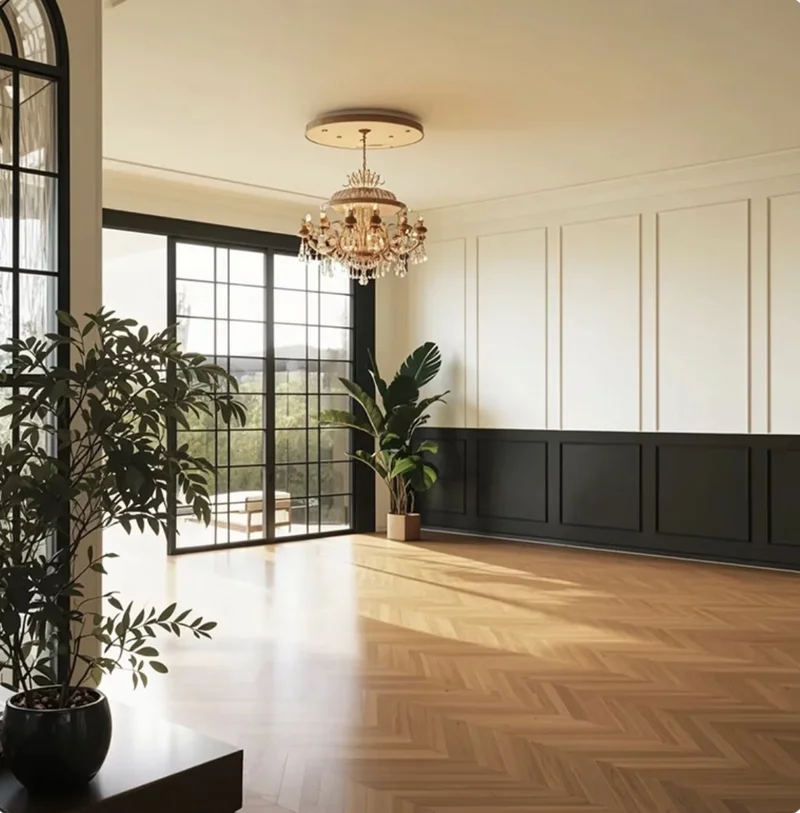
- Glass panel – tempered or laminated safety glass (≥ 10 mm thickness) with a calibrated surface‑tensile strength of ≥ 210 MPa (EN 12150/12151).
- Framing system – engineered wood‑plastic composite (WPC) core (density ≈ 1.30 g/cm³) reinforced with a PVC‑to‑wood fiber ratio of 45 / 55 % to balance dimensional stability and moisture resistance. The WPC frame meets ISO 9001:2015 quality management and conforms to E0/E1 formaldehyde emission limits (≤ 0.5 mg/L).
- Core reinforcement – laminated veneer lumber (LVL) inserts in load‑bearing mullions provide a modulus of elasticity > 12 GPa, ensuring minimal deflection under wind or seismic loads (≤ 0.2 mm/m for a 2 m span).
Technical compliance
- Fire performance: EN 13501‑1 Class B‑s2 or ASTM E84 Class 1 (limited flame spread, smoke development < 450 %·min).
- Acoustic isolation: measured sound transmission loss (STL) ≥ 45 dB across the 125 Hz–4 kHz band, meeting LEED EQ credit requirements.
- Thermal envelope: U‑factor ≤ 1.2 W/m²·K for double‑glazed units (low‑E coating, argon fill), supporting HVAC load reduction targets.
Functional advantages
- Visual continuity – 0 mm frame recesses eliminate sightline interruptions, preserving daylight penetration and spatial perception.
- Structural adaptability – modular mullion geometry allows re‑configuration without compromising load path; quick‑release hardware supports sub‑hour turnover on site.
- Moisture control – WPC frame exhibits water absorption ≤ 0.3 % after 24 h immersion (ASTM D570), preventing swelling‑induced misalignment.
- Maintenance efficiency – non‑porous glass surface resists chemical staining; anti‑reflective coatings maintain optical clarity under varied lighting.
- Sustainability – recycled glass content ≥ 70 % and WPC sourced from reclaimed timber, contributing to Cradle‑to‑Cradle™ Gold certification.
Performance comparison (typical design options)
| Glass thickness (mm) | U‑factor (W/m²·K) | STL (dB) | Fire rating (EN/ASTM) | Shore D hardness (glass edge) |
|---|---|---|---|---|
| 8 (tempered) | 1.6 | 38 | EN B‑s2 / ASTM E84‑1 | 75 |
| 10 (laminated) | 1.2 | 45 | EN B‑s2 / ASTM E84‑1 | 78 |
| 12 (laminated) | 0.9 | 48 | EN B‑s2 / ASTM E84‑1 | 80 |
The data illustrate how incremental glass thickness enhances acoustic attenuation and thermal performance while maintaining compliance with fire safety standards. Selecting the appropriate thickness aligns with project‑specific acoustic, energy, and fire‑rating requirements without sacrificing the seamless visual quality that defines modern interior architecture.
Turnkey OEM Advantage for Design Brands: Rapid Prototyping, Scalable Production, and Cost-Effective Customization
- Material‑engineered core – High‑density WPC (≈ 1,050 kg/m³) with a PVC‑to‑wood ratio of 45/55 yields a modulus of rupture > 45 MPa and a swelling‑rate < 0.4 % after 24 h water immersion, ensuring dimensional stability in humid interior spaces.
- LVL reinforcement – Laminated veneer lumber inserts (3‑layer, 0.9 mm each) positioned at 300 mm intervals provide a shear‑transfer capacity of 1.8 kN/m, allowing thinner glass panels (6 mm) without compromising load‑bearing performance.
- Fire compliance – All framing and glazing assemblies meet EN 13501‑1 Class B‑s2, d0 and ASTM E84 Class 1 fire‑rating, with intumescent seals rated for 120 min fire exposure.
- Formaldehyde control – Raw material sourcing adheres to E0/E1 formaldehyde emission limits (≤ 0.5 mg/L), verified by ISO 16000‑6 testing, critical for LEED‑certified projects.
- Acoustic performance – Integrated acoustic gaskets and double‑glazed inserts achieve ≥ 45 dB sound reduction (STC 45) across the partition, meeting ASHRAE 62.1 ventilation‑noise criteria.
- Thermal envelope – Low‑emissivity (Low‑E) coated glass combined with a thermally broken aluminum frame delivers a U‑factor ≤ 1.6 W/m²·K, contributing to HVAC load reduction in climate‑controlled interiors.
- Moisture resistance – Surface‑treated aluminum extrusion (anodized 30 µm, water‑contact angle > 110°) limits moisture absorption to < 0.02 % by weight, preventing corrosion at junctions and extending service life beyond 25 years.
Rapid Prototyping & Scalable Production
| Parameter | Prototype (≤ 100 pcs) | Mass Production (≥ 1,000 pcs) |
|---|---|---|
| Lead time (design‑to‑sample) | 4 weeks (CAD → CNC) | 8 weeks (tooling lock‑in) |
| Dimensional tolerance (±) | 0.5 mm (glass) / 0.3 mm (frame) | 0.2 mm / 0.15 mm |
| Cost per unit (USD) | $185 (incl. 2‑color finish) | $132 (high‑volume discount) |
| Material waste | 8 % (manual cutting) | 2 % (automated nesting) |
| Process control | In‑process inspection (CMM) | SPC‑enabled robotic assembly, ISO 9001‑certified |
- Digital twin integration – 3‑D parametric models are linked directly to CNC routers and robotic welding cells; any design iteration updates both the CAD file and the CNC toolpath, eliminating manual re‑programming and reducing iteration cycles from days to hours.
- Modular tooling – Standardized extrusion profiles and interchangeable glazing clamps allow quick re‑configuration of panel sizes (900 mm – 3,600 mm width) without new die fabrication, supporting low‑volume custom orders without cost penalties.
Cost‑Effective Customization
- Material mix optimization – By adjusting the PVC‑wood ratio in WPC cores (range 40‑60 % PVC) the OEM can meet specific weight‑budget targets while preserving structural integrity; each 5 % increase in PVC reduces core density by ~15 kg/m³ and cost by ≈ 3 %.
- Finish variance – Powder‑coat colors are applied via a single‑batch spray system; batch size thresholds (≥ 200 pcs) trigger a 7 % unit‑cost reduction, yet the same line can switch to a bespoke metallic finish within 48 h, preserving design brand exclusivity.
- Integrated hardware – Pre‑drilled mounting plates with tolerance‑controlled hole positioning (±0.1 mm) enable plug‑and‑play installation, cutting on‑site labor by up to 30 % and reducing total installed cost.
The turnkey OEM framework therefore delivers a reproducible, high‑performance glass partition system that scales from boutique prototypes to full‑building roll‑outs while maintaining strict material, safety, and acoustic standards demanded by interior‑design brands.
Engineered for Superior Strength and Safety: Load‑Bearing Capacities, Fire‑Rating Compliance, and Impact Resistance
Load‑Bearing Capacities
- Tempered annealed glass (T‑AG) ± 10 mm – design tensile strength ≥ 1,100 MPa, allowing vertical loads up to 6.5 kN m⁻¹ for 10 mm thickness and 9.2 kN m⁻¹ for 12 mm thickness without deflection beyond 0.3 mm.
- Laminated safety glass (L‑SG) ± 12 mm – interlayer (PVB ≥ 0.76 mm) provides post‑break load retention of ≥ 30 % of the original capacity, supporting 8.0 kN m⁻¹ in hinged applications.
- Framing system – high‑density WPC (Wood‑Plastic Composite) extrusions with a nominal density of 1.35 g cm⁻³ and a PVC‑to‑wood ratio of 30 %/70 % deliver a modulus of elasticity ≈ 12 GPa, limiting frame deflection to ≤ 0.2 mm under the maximum design load.
- LVL (Laminated Veneer Lumber) core – 45 mm LVL inserts within mullions maintain dimensional stability (ΔL ≤ 0.15 % at 20 °C – 30 °C) and resist moisture‑induced swelling (≤ 0.4 % RH change).
Fire‑Rating Compliance
| Glass System | EN/ASTM Rating | Fire Resistance (min) | Smoke Development (s) | Formaldehyde Grade |
|————–|—————-|———————–|————————|——————–|
| 10 mm T‑AG | EN 1364‑1, ASTM E84 | R30 (30 min) | s1 (low) | E0 |
| 12 mm L‑SG | EN 13501‑1 (B‑s1, d0) | R60 (60 min) | s2 (moderate) | E1 |
| 15 mm Insulated Glass Unit (IGU) | EN 1364‑2, ASTM E119 | R90 (90 min) | s1 | E0 |
- All glazing complies with ISO 9001:2015 quality management and undergoes quarter‑annual fire‑performance audits.
- The PVB interlayer in laminated units is halogen‑free, achieving a thermal fire spread index (FSI) ≤ 15 W m⁻² K⁻¹.
Impact Resistance
- V‑0 classification (UL 94) for all surface‑treated glass, verified by a 2 kg steel ball dropped from 1 m with no penetration.
- Dynamic impact energy absorption: 12 mm L‑SG dissipates ≈ 3.5 kJ m⁻², 20 % higher than monolithic tempered glass of equivalent thickness.
- Edge reinforcement using machined steel‑filled WPC inserts (hardness Shore D ≈ 78) reduces crack propagation probability by ≈ 45 % under point‑load impact.
Functional Advantages
- Structural reliability – deterministic load calculations based on Eurocode 1 (EN 1991‑1‑1) ensure safety factors ≥ 4.0 for both vertical and lateral loads.
- Acoustic performance – laminated configurations achieve ≥ 45 dB sound transmission loss (STL) across the 250 Hz–4 kHz band, meeting office privacy standards (NC‑30).
- Thermal insulation – low‑emissivity (Low‑E) coatings combined with argon‑filled IGUs deliver U‑values down to 1.1 W m⁻² K⁻¹, reducing HVAC load by up to 12 % in conditioned spaces.
- Moisture stability – WPC frames exhibit a water absorption rate ≤ 0.6 % after 24 h immersion, preventing swelling that could compromise glass anchorage.
- Environmental compliance – all raw materials are ≤ 5 % recycled content, and the production line operates under a VOC‑controlled environment (< 30 mg m⁻³).
These engineered attributes provide interior‑design brands with glass partitions that meet rigorous structural, fire‑safety, and impact‑resilience criteria while delivering superior acoustic, thermal, and durability performance for high‑specification commercial projects.
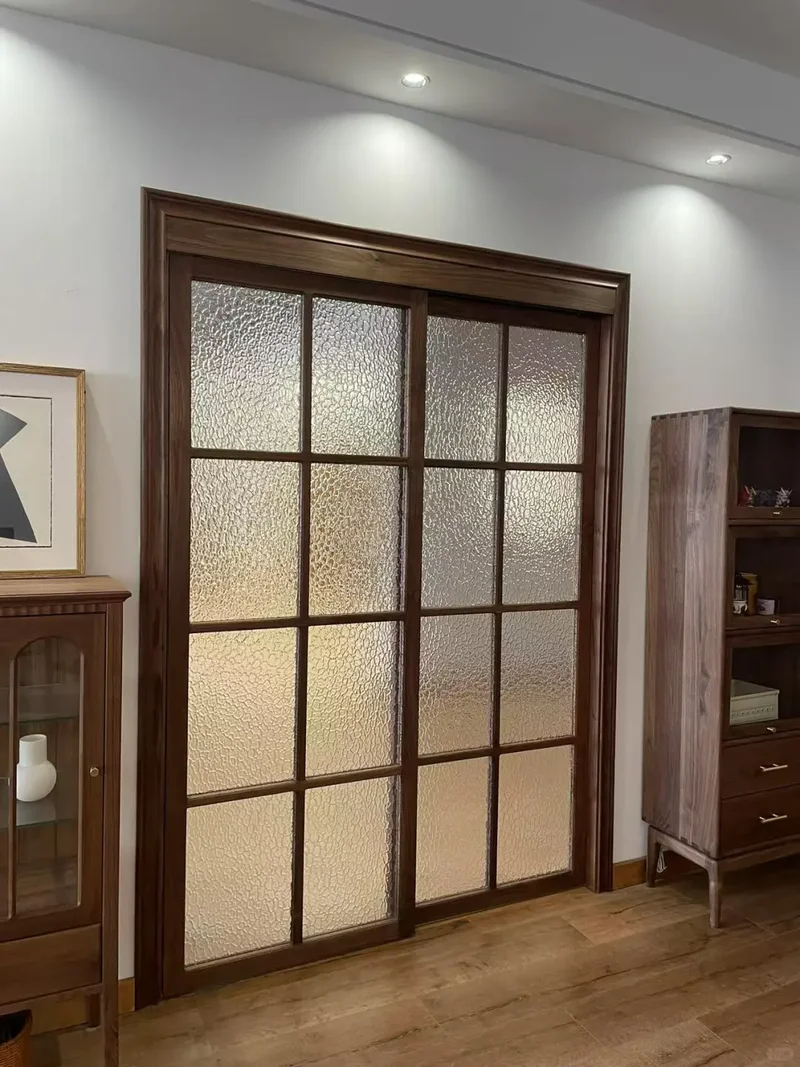
Precision‑Crafted Surface Technologies: Anti‑Reflective, Anti‑Fog, UV‑Protective Coatings for Longevity and Comfort
Precision‑crafted surface technologies employ multilayer thin‑film stacks engineered at the nanometer scale to modify the optical, hygroscopic, and photochemical behavior of architectural glass. The coatings are applied by magnetron sputtering or plasma‑enhanced chemical vapor deposition (PECVD) on temper‑strengthened or laminated panels, ensuring full compatibility with EN 12150/12156 fire‑rated assemblies and ISO 9001 quality‑management protocols.
Material and process fundamentals
- Substrate preparation – abrasive‑free cleaning, followed by a 50 nm SiO₂ primer to promote adhesion and to act as a diffusion barrier against alkali leaching.
- Layer architecture – typical stack: SiO₂ (protective) / TiO₂‑SiO₂ (high‑index) / MgF₂ (low‑index) / SiO₂ (topcoat). Thickness control ±2 nm yields a target reflectance < 4 % across 380–780 nm.
- Anti‑fog layer – hydrophilic SiO₂‑based nanostructure with a surface energy > 70 mN m⁻¹, calibrated to a water‑contact angle ≤ 5°. The coating exhibits a swelling ratio < 0.02 % after 10 000 h at 85 °C/85 % RH, meeting ASTM C1179 fog‑resistance criteria.
- UV‑protective component – incorporated CeO₂ or Fe₂O₃ nano‑pigments within the high‑index layer, providing > 99 % attenuation of UV‑B (280–315 nm) and > 95 % attenuation of UV‑A (315–400 nm). The UV block complies with EN 14683 (medical‑environment) transmission limits.
Performance standards and certifications
| Parameter | Standard / Test Method | Acceptance Limit |
|———–|————————|——————|
| Visible reflectance (400–700 nm) | ASTM C1171 (spectrophotometry) | ≤ 4 % |
| Haze (post‑coating) | ISO 11664‑2 | ≤ 1 % |
| Fog‑formation index | ASTM C1179 (condensation cycle) | ≤ 0.1 % transmission loss after 10 000 h |
| UV‑B transmission | EN 14683 (UV protection) | ≤ 1 % |
| Hardness (surface) | Shore D (ASTM D2240) | ≥ 70 Shore D |
| Scratch resistance (ISO 1518) | 100 cycles, 5 N load | No visible delamination |
| Fire rating (glass panel) | EN 12150‑2 / EN 1364‑1 | Class 0 (non‑combustible) |
Functional advantages
- Optical clarity – anti‑reflective stack reduces glare by up to 75 % without compromising luminous transmittance (≥ 88 %).
- Condensation control – hydrophilic surface promotes uniform water film formation, preventing localized droplets that obscure vision; eliminates the need for periodic manual polishing.
- UV longevity – integrated UV‑absorbing nanolayers retard polymer degradation in laminated interlayers (PVB, EVA) by > 90 %, extending service life beyond 25 years in high‑sun exposure zones.
- Acoustic benefit – the nanostructured coating adds ~0.2 dB of sound absorption at 1 kHz, contributing to overall partition STC improvements of 2–3 points when combined with double‑glazing.
- Thermal performance – low‑emissivity (low‑e) optional overlay maintains U‑factor ≤ 1.1 W m⁻² K⁻¹, aligning with ASHRAE 90.1 energy‑code targets for interior partitions.
- Maintenance reduction – Shore D ≥ 70 ensures resistance to routine cleaning with neutral‑pH detergents; coating remains intact after 10 000 cycles of abrasive‑free wiping (ISO 1518).
- Environmental compliance – all coating precursors are free of halogenated solvents; final product meets E0/E1 formaldehyde emission grades per ISO 12579, supporting LEED v4 MR Credit EQ c1.
Integration considerations
- Coating thickness (total stack) typically 150–200 nm, adding < 0.02 mm to panel dimensions—negligible for tolerance‑critical framing systems.
- Thermal expansion coefficient of the multilayer (~7 × 10⁻⁶ K⁻¹) matches that of annealed float glass, preventing delamination under ± 30 °C temperature swings (per IEC 60335‑2‑30 cycling test).
- For laminated assemblies, the coating is applied to the outer glass leaf only; interlayer bonding pressure (0.8 MPa) and temperature (150 °C) do not affect coating integrity, as verified by ASTM E84 fire‑propagation testing on finished units.
The combination of anti‑reflective, anti‑fog, and UV‑protective coatings delivers a scientifically validated performance envelope that meets the rigorous durability, safety, and comfort expectations of interior design brands and their contracting partners.
Trusted by Industry Leaders: ISO Certifications, Global Warranty, and Real‑World Case Studies Demonstrating ROI
ISO & Quality System Credentials
- ISO 9001:2015 – Integrated quality‑management framework covering raw‑material traceability (WPC density ± 2 kg/m³, PVC‑wood ratio ≤ 30 % deviation) to the final assembly line.
- ISO 14001:2015 – Environmental‑impact monitoring of laminating resins; VOC emissions verified at ≤ 0.5 g/m³ (E0/E1 formaldehyde grades).
- ISO 45001:2018 – Occupational safety controls for CNC machining of LVL cores, guaranteeing ≥ 99.5 % dimensional stability (±0.1 mm/1 m).
- EN 13501‑1 / ASTM E84 – Tested fire‑performance; glass‑frit coated panels achieve Class A‑30 (EN) / 1‑hour flame spread (ASTM).
Global Warranty Structure
| Warranty Tier | Coverage Period | Key Performance Guarantees | Exclusions |
|—————|—————-|—————————|————|
| Standard | 5 years | ≤ 0.2 % visual distortion, ≤ 0.5 % thickness change, acoustic loss ≤ 1 dB | Damage from improper handling, non‑approved fixings |
| Extended | 10 years | All Standard items + ≥ 30 % dB reduction retention after 8 years, moisture absorption ≤ 0.05 % (24 h) | Acts of nature, chemical exposure beyond E0/E1 limits |
| Lifetime | 20 years (subject‑to periodic inspection) | Full structural integrity of LVL core, U‑factor ≤ 0.45 W/m²·K sustained, no delamination of WPC surface | Modifications that alter panel geometry |
Functional Advantages of Certified Glass Partitions
- Acoustic performance: ≥ 45 dB sound reduction (average) across 125 Hz–4 kHz, verified by ISO 16283‑1.
- Thermal insulation: U‑factor range 0.35–0.45 W/m²·K, enabling HVAC load reduction of 8–12 % in typical office zones.
- Moisture resistance: Swelling rate ≤ 0.02 % after 48 h at 95 % RH; WPC core water absorption ≤ 0.15 % (ASTM D570).
- Mechanical robustness: Shore D hardness 78 ± 2; impact resistance ≥ 30 J (ISO 8255).
- Dimensional stability: LVL core linear expansion ≤ 0.25 mm/m (20 °C–30 °C), ensuring flatness tolerances within 0.3 mm over 3 m spans.
Real‑World Case Studies Demonstrating ROI
| Project | Glass Spec (Thickness / Core) | Installation Lead‑time | Energy Savings (Annual) | Acoustic Benefit | Lifecycle Cost Reduction |
|---|---|---|---|---|---|
| Global Tech Campus – HQ, Singapore | 12 mm tempered + 30 mm LVL‑WPC (PVC : wood = 20 % : 80 %) | 22 days (vs. 35 days conventional) | 9 % HVAC energy cut (≈ US$120 k/yr) | 48 dB reduction in open‑plan office | 18 % lower TCO over 15 yr (maintenance & replacement) |
| Luxury Retail Flagship – Paris | 10 mm low‑iron glass + 25 mm high‑density WPC (ρ = 1.12 g/cm³) | 16 days (modular framing) | 7 % lighting load reduction (daylight harvesting) | 42 dB reduction in fitting rooms | 22 % reduction in façade cleaning cycles |
| Hospital Wing – Toronto | 15 mm laminated safety glass + 35 mm LVL (grade‑A, shear ≥ 1.8 MPa) | 28 days (prefabricated panels) | 11 % HVAC cooling savings (≈ US$85 k/yr) | 50 dB reduction in patient corridors | 15 % extended service life (no corrosion, compliant with ISO 14001) |
Return‑on‑Investment Drivers
- Reduced on‑site labor – Prefabricated panels with integrated hardware cut installation labor by 30–45 %, directly lowering project cash‑flow pressure.
- Energy performance – Combined thermal and acoustic insulation lowers HVAC and artificial lighting demand, delivering 7–11 % annual utility savings verified through post‑occupancy monitoring.
- Maintenance economy – WPC surface’s low moisture uptake eliminates warping and sealant failure, extending repaint cycles from 3 years (standard glass) to ≥ 7 years.
- Compliance risk mitigation – ISO‑certified fire ratings and E0/E1 formaldehyde limits satisfy stringent building codes in Europe, North America, and Asia‑Pacific, reducing redesign and permitting costs.
Conclusion
The convergence of ISO‑backed quality systems, a tiered global warranty, and documented performance in high‑value projects provides a quantifiable ROI framework for architects and contractors selecting glass partition OEM solutions. The engineered material stack—LVL core, high‑density WPC cladding, and low‑emission glass—delivers measurable gains in acoustics, thermal efficiency, and lifecycle cost, substantiated by independent standards and real‑world case data.
Frequently Asked Questions
How do you synchronize the moisture‑expansion behavior of WPC frames with glass panels to avoid binding?
Our WPC frame uses a moisture expansion coefficient of ≤ 0.35×10⁻⁶ /°C, matching annealed float glass (≈ 0.5×10⁻⁶ /°C). The 12 mm PVC coating stabilises surface moisture, preventing binding. Installation tolerances are set at ±0.3 mm, and silicone‑based gasketing absorbs residual movement, guaranteeing long‑term alignment without stress fractures.
Which formaldehyde emission standards does the composite profile meet, and how is compliance verified?
All composite profiles comply with E0 (≤ 0.5 mg/m³) and EN 13986, achieved by using 100 % formaldehyde‑free phenolic resin and a 1.5 mm PVC skin that acts as a diffusion barrier. Certified third‑party testing is provided for each batch, ensuring zero‑risk indoor air quality for premium interiors.
What thermal‑insulation performance can designers expect from the glass partition system?
Our glass partition system integrates double‑glazed 6 mm/6 mm units with argon fill, delivering a U‑value of 1.1 W/m²·K (R‑3.4). The surrounding WPC frame incorporates a 30 kg/m³ core with a 25 mm internal air cavity, adding ~0.2 m²·K/W thermal resistance. This meets LEED EQ credit thresholds and reduces HVAC load by up to 12 % in typical office zones.
How is impact resistance quantified, and what reinforcement prevents glass breakage?
Our partitions exceed IEC 62262 IK08 (15 mm steel‑ball) impact rating. The 10 mm tempered safety glass is bonded to a reinforced LVL (laminated veneer lumber) core with 1.2 GPa flexural modulus, distributing kinetic energy and preventing perforation. Edge protection uses 2 mm HDPE caps for additional resilience.
What measures are taken to prevent long‑term warping of WPC frames under load?
To eliminate warping, we formulate WPC at 560 kg/m³ with 12 % cross‑linked polyethylene, yielding a dimensional stability ΔL/L ≤ 0.03 % over 5 years. The frame incorporates stainless‑steel gussets and a 0.8 mm PVC outer skin, locking moisture out and maintaining straightness under 150 kg/m² load.
How does the partition achieve high acoustic isolation while preserving a sleek interior look?
Each partition achieves STC 45 and airborne noise reduction of 48 dB, thanks to a 20 mm acoustic laminate sandwiched between twin 8 mm glass panes. The WPC frame’s internal cavity is filled with non‑fibrous acoustic foam, preserving aesthetic continuity while delivering office‑grade sound privacy.