Solid Wood Interior Doors for 5-Star Hotel Renovation: Elegance, Durability & Premium Guest Experience
In the meticulous world of 5-star hotel renovations, every design decision must harmonize opulence with enduring quality—and few elements define a guest’s experience as subtly and profoundly as the interior doors. Solid wood interior doors have emerged as the quintessential choice for luxury hospitality environments, where elegance is not merely seen but felt. Crafted from premium hardwoods, these doors offer unmatched acoustic insulation, thermal efficiency, and structural integrity, ensuring both guest comfort and operational longevity. Their natural grain patterns and rich finishes elevate hallways and suites alike, conveying a sense of timeless sophistication that synthetic alternatives cannot replicate. For discerning hoteliers, solid wood doors are more than functional partitions—they are silent ambassadors of craftsmanship, setting the tone for an immersive, five-star stay. As renovations prioritize authenticity and sensory excellence, solid wood interior doors stand at the intersection of artistry and performance, redefining luxury one threshold at a time.
Why Solid Wood Interior Doors Define Luxury in 5-Star Hotel Design
-
Solid wood interior doors represent a cornerstone of luxury in 5-star hotel design, where material integrity, acoustic performance, and aesthetic coherence are non-negotiable. Unlike engineered or hollow-core alternatives, solid wood doors deliver unmatched density, contributing to superior sound insulation—a critical factor in preserving guest privacy and ensuring a serene in-room environment. In high-end hospitality, where ambient tranquility is as essential as visual elegance, this acoustic efficacy directly influences guest satisfaction and perceived value.
-
The inherent structural stability of solid wood ensures long-term durability, withstanding the rigorous daily use typical in luxury hotels. High-traffic corridors, VIP suites, and executive lounges demand doors that resist warping, sagging, and wear over time. Solid wood, especially species like walnut, oak, and teak, maintains dimensional integrity and surface finish under continuous operation, reducing lifecycle maintenance costs and preserving design consistency across renovations.
-
Aesthetically, solid wood doors offer a tactile and visual richness that synthetic materials cannot replicate. The natural grain patterns, depth of tone, and ability to accept fine finishes elevate the interior narrative, aligning with the curated craftsmanship expected in five-star environments. When integrated with custom hardware, precise joinery, and tailored profiles, these doors become architectural elements that define spatial hierarchy and reinforce brand identity.
-
From a sustainability standpoint, responsibly sourced solid wood doors support environmental stewardship goals increasingly prioritized by elite hotel operators. Certifications such as FSC or PEFC ensure traceability and ethical forestry practices, enhancing the property’s commitment to sustainable luxury without compromising performance.
-
Finally, solid wood doors contribute to a holistic guest experience by signaling attention to detail. The substantial feel of the door in operation—the weight, the seal, the silence upon closure—subtly communicates quality and exclusivity. In an industry where sensory impressions shape lasting perceptions, this tangible authenticity distinguishes truly exceptional properties.
In sum, solid wood interior doors are not merely functional components but strategic design assets that embody the refinement, resilience, and sensory depth central to 5-star hospitality.
Material Selection: Choosing the Right Hardwood for Hotel Door Elegance and Performance
-
Material selection for solid wood interior doors in a 5-star hotel renovation demands a balance between aesthetic refinement, structural integrity, and long-term performance under intensive use. Hardwood species are preferred for their density, grain stability, and ability to maintain elegance over time. The most suitable choices—such as American black walnut, white oak, and rift-sawn sapele—offer distinct advantages in both appearance and functionality.
-
American black walnut provides a rich, warm tone with deep grain variation, lending immediate sophistication to guestroom and suite entries. Its moderate density ensures durability while remaining workable for intricate detailing. However, it is essential to source FSC-certified walnut to align with sustainability benchmarks expected in premium hospitality developments.
-
White oak stands out for its exceptional moisture resistance, attributed to its closed cellular structure, making it ideal for high-humidity environments such as spa corridors or near poolside guest areas. Its linear, uniform grain accepts stains and finishes uniformly, allowing for consistency across large door installations. When quarter-sawn, white oak exhibits a distinctive fleck pattern that enhances visual prestige without compromising structural resilience.
-
Rift-sawn sapele, an African hardwood, offers a cost-effective alternative to mahogany with comparable density and a tight interlocking grain. Its reddish-brown luster ages gracefully, developing a refined patina. Sapele’s high Janka hardness rating (1,410 lbf) makes it particularly resistant to dents and wear—critical in high-traffic service corridors and back-of-house areas where door impact is frequent.
-
Finishing protocols must be aligned with species characteristics. Pre-catalyzed lacquers or UV-cured finishes are recommended to enhance surface hardness and resist abrasion from luggage, carts, and repeated cleaning. Natural oil finishes may be selected for walnut to emphasize tactile warmth, provided maintenance protocols support periodic reapplication.
-
Environmental acclimation is non-negotiable. All hardwood doors should be conditioned to the building’s final RH and temperature levels for a minimum of 72 hours prior to installation to prevent post-installation warping or gapping.
-
Ultimately, material choice must reflect brand identity, regional context, and lifecycle expectations. Specifying the appropriate hardwood ensures doors contribute not only to acoustic privacy and thermal performance but also to the sensory narrative of luxury that defines the guest experience.
Acoustic Performance and Privacy: How Solid Wood Doors Enhance Guest Comfort
-
Solid wood interior doors significantly contribute to acoustic performance and guest privacy, two critical factors in defining the premium experience expected in five-star hotels. Unlike hollow or composite alternatives, solid core wood doors possess inherent mass and density, which are fundamental to sound attenuation. This density impedes sound wave transmission, effectively reducing airborne noise such as voices, hallway activity, and mechanical systems from adjacent rooms or corridors.
-
The Sound Transmission Class (STC) rating of solid wood doors typically ranges from 30 to 45, depending on construction, thickness, and installation quality. When properly sealed with perimeter acoustic gaskets and paired with well-installed frames and thresholds, these doors can achieve STC ratings at the higher end of this spectrum—exceeding the minimum benchmark for luxury hospitality environments. This level of sound control ensures that guest rooms remain sanctuaries of quiet, essential for rest, relaxation, and uninterrupted sleep.
-
Beyond mass, the natural cellular structure of solid wood contributes to internal damping, where sound energy is absorbed and dissipated within the material rather than reflected or transmitted. This intrinsic acoustic property, combined with precise manufacturing tolerances, minimizes air gaps and flanking paths, further enhancing sound isolation.
-
Privacy in high-end accommodations extends beyond auditory discretion to psychological comfort. The substantial feel of a solid wood door—its weight, closure sound, and tactile quality—subtly signals security and exclusivity. Guests perceive a tangible sense of enclosure and separation from public areas, reinforcing the feeling of personal space and seclusion.
-
Additionally, solid wood doors can be customized to integrate seamlessly with wall assemblies that include resilient channels or acoustic insulation, optimizing overall room envelope performance. Attention to detailing—such as perimeter seals, automatic door bottoms, and proper alignment with fire and smoke ratings—ensures both acoustic integrity and regulatory compliance.
-
In the context of hotel renovation, upgrading to solid wood interior doors represents a strategic investment in guest satisfaction and operational excellence. The resulting improvement in acoustic privacy directly correlates with higher guest retention, positive reviews, and enhanced brand reputation within the competitive luxury hospitality market.
Design Integration: Matching Solid Wood Doors with High-End Interior Aesthetics
-
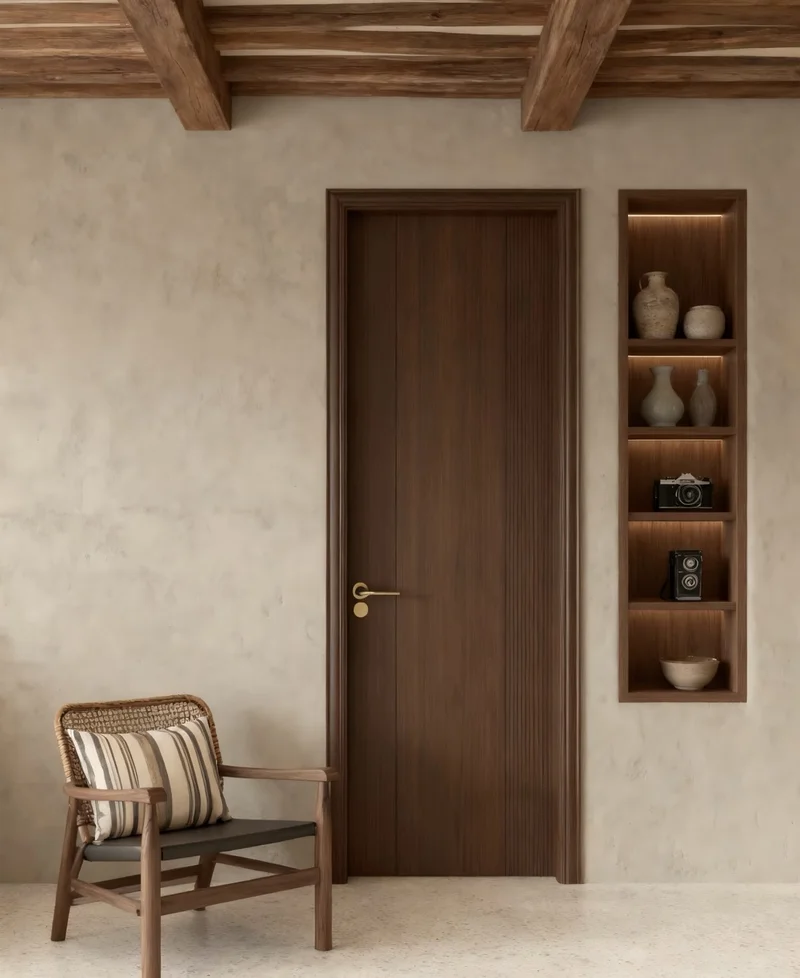
Solid wood interior doors are not merely functional elements but pivotal design features in 5-star hotel environments, where material integrity and aesthetic cohesion define the guest experience. Their integration must align seamlessly with the overarching interior narrative—whether modern minimalist, classic opulence, or contextual heritage—ensuring continuity across spatial transitions.
-
Material selection is foundational. Species such as walnut, oak, and teak offer distinct grain patterns and tonal depth, enabling precise calibration with adjacent surfaces—floors, millwork, and furniture. Consistency in wood species or finish temperature (warm vs. cool undertones) prevents visual dissonance. For instance, quarter-sawn white oak doors with linear grain harmonize with Scandinavian-inspired interiors, while fumed black walnut complements Art Deco detailing.
-
Door profiles must reflect architectural intent. Recessed panel designs evoke traditional grandeur, suitable for heritage hotels, whereas stile-and-rail configurations with minimal detailing support contemporary schemes. Custom profiling allows integration of subtle design cues—beveled edges, fluting, or integrated shadow gaps—that mirror lighting coves or wall paneling, reinforcing design unity.
-
Finish application is critical to both aesthetics and longevity. Micro-pigmented oils or catalyzed lacquers enhance grain character while providing resistance to humidity and abrasion—essential in high-traffic hospitality settings. Finish sheen should be calibrated to ambient lighting; satin finishes reduce glare in naturally lit corridors, while matte options absorb light in intimate suite entries.
-
Hardware pairing completes the design integration. Lever designs, backplates, and finish tones—satin brass, polished chrome, or antique bronze—must complement door proportions and surrounding fixtures. Concealed hinges and flush pulls maintain clean lines in minimalist interiors, whereas ornate knobs or rosettes accentuate classical detailing.
-
Acoustic performance, often governed by STC and IIC ratings, must not be sacrificed for aesthetics. Solid core construction with perimeter sealing ensures guest privacy without compromising design. Strategic lipping or integrated gaskets can be concealed within joinery to maintain visual continuity.
-
Ultimately, successful integration demands collaboration between architects, interior designers, and door manufacturers during specification. Prototyping door assemblies within full-scale mock-ups allows real-time evaluation of scale, proportion, and material interplay—ensuring the final installation elevates both sensory experience and architectural intent.
Sustainability and Long-Term Value of Solid Wood Doors in Luxury Hospitality
-
Solid wood doors represent a convergence of artisanal craftsmanship and sustainable material stewardship in luxury hospitality. When sourced responsibly, solid hardwoods—such as oak, walnut, and teak—originate from managed forests certified by organizations like the Forest Stewardship Council (FSC), ensuring ecological balance and long-term resource availability.
-
The intrinsic durability of solid wood doors significantly reduces lifecycle replacement frequency. With proper maintenance, these doors endure decades of intensive use in high-traffic environments typical of five-star properties. This longevity minimizes material consumption and waste, aligning with circular economy principles by deferring end-of-life disposal and reducing cumulative environmental impact over time.
-
Unlike engineered or composite alternatives that may delaminate or degrade under humidity and mechanical stress, solid wood responds predictably to environmental conditions and can be sanded, refinished, and repaired repeatedly. This renewability enhances asset longevity and supports sustainable operations by extending service life without aesthetic or structural compromise.
-
Lifecycle assessments indicate that the embodied energy of solid wood is often offset by carbon sequestration. Mature hardwoods store significant quantities of carbon dioxide throughout their service life, effectively acting as carbon sinks. When managed sustainably, forests regenerate, maintaining carbon capture capacity and contributing to climate resilience.
-
From a value perspective, solid wood doors enhance long-term property performance. Their timeless aesthetic retains relevance across design cycles, reducing the need for premature renovation driven by stylistic obsolescence. This design permanence supports capital efficiency and reduces the environmental footprint associated with frequent refurbishments.
-
Furthermore, guest perception of authenticity and quality reinforces brand equity in luxury segments. Properties leveraging natural, enduring materials signal commitment to excellence and environmental responsibility—attributes increasingly valued by discerning clientele.
-
Investment in solid wood interiors also supports broader ESG (Environmental, Social, and Governance) objectives. Transparent sourcing, low-VOC finishes, and end-of-life recyclability or biodegradability contribute to green building certifications such as LEED or BREEAM, enhancing regulatory compliance and market differentiation.
In essence, solid wood doors transcend mere functional components—they are strategic assets that deliver enduring environmental, economic, and experiential returns in the premium hospitality landscape.
Frequently Asked Questions
What are the best types of solid wood for interior doors in a 5-star hotel renovation?
Hardwoods such as white oak, walnut, and mahogany are among the top choices for 5-star hotel interior doors due to their density, durability, and luxurious grain patterns. White oak offers excellent moisture resistance and dimensional stability, making it ideal for high-traffic areas. Walnut provides a rich, dark aesthetic preferred in executive suites, while mahogany delivers a classic elegance with exceptional workability and longevity. These species accept fine finishes well and meet the acoustic and aesthetic standards of luxury hospitality environments.
How does solid wood contribute to acoustics in luxury hotel room doors?
Solid wood interior doors significantly enhance sound insulation due to their mass and density, which effectively reduce airborne noise transmission between guest rooms and corridors. For 5-star hotels, specifying solid core doors with a minimum thickness of 45mm and using wood species with high specific gravity (e.g., oak or maple) improves STC (Sound Transmission Class) ratings. When paired with proper perimeter seals and acoustic thresholds, solid wood doors can achieve STC ratings of 45+, meeting stringent hospitality acoustical standards.
What fire safety standards must solid wood doors meet in hotel renovations?
Solid wood interior doors in hotel renovations must comply with local building codes and fire safety regulations, typically requiring a 20-minute or 60-minute fire rating depending on the application. For guest room doors in high-rise hotels, 20-minute fire-rated solid wood doors with intumescent seals and certified steel or gypsum cores are standard. All doors must be tested and labeled by accredited agencies (e.g., UL, Intertek) and installed with compatible hardware to maintain fire integrity. Pre-finished, certified fire-rated wood doors from manufacturers like Marshfield or JELD-WEN are common in luxury projects.
How can solid wood doors be customized for a 5-star hotel’s design narrative?
Precision CNC milling, hand-carved accents, and custom finishing techniques allow solid wood doors to be tailored to a hotel’s design theme—be it contemporary minimalist, Art Deco, or neoclassical. Options include inlays with brass or mother-of-pearl, integrated LED ambient lighting in door edges, textured veneers over solid cores, and bespoke hardware integration. Leading architectural millwork firms collaborate with interior designers to develop door profiles, panel configurations, and finishes that align with the hotel’s brand identity while maintaining structural integrity and durability.
What finishing techniques ensure long-term performance and elegance in hotel wood doors?
Pre-catalyzed or post-catalyzed lacquer finishes offer superior durability, scratch resistance, and UV stability for high-traffic environments. Alternatively, oil-modified polyurethane with micro-deflective properties provides a warm, natural appearance while resisting humidity fluctuations. For 5-star applications, multi-step finishing processes—such as hand-sanding between coats and color-matching to millwork—are standard. Factory-applied finishes under controlled conditions ensure consistency and reduce on-site VOC emissions, aligning with WELL Building or LEED certification goals.
Should solid wood doors be pre-hung in a hotel renovation?
Yes, pre-hung solid wood doors are strongly recommended for 5-star hotel renovations to ensure precise alignment, consistent gaps, and faster installation. Factory-assembled units with precision jamb systems minimize on-site variances, support complex hardware integration (e.g., electronic locks, door closers), and reduce installation time—critical in phased renovation schedules. Using engineered jambs with moisture-resistant cores prevents warping, especially in tropical or variable climates, maintaining a premium fit-and-finish over time.
How do you maintain solid wood interior doors in high-occupancy hotel environments?
Routine maintenance includes bi-weekly cleaning with pH-neutral wood cleaners, quarterly inspection of hinges and seals, and annual re-tightening of hardware. Climate control is critical—maintaining 35–55% RH prevents shrinkage, cupping, or cracking. For touch-up protocols, hotels should keep finish-matched repair kits on-site. Avoid wax-based polishes that can attract dust. Leading properties use preventive maintenance logs and work with millwork specialists for refinishing every 7–10 years to restore luster and protect integrity.
What sustainable sourcing practices should be followed for luxury hotel wood doors?
For 5-star sustainability credentials, specify FSC® (Forest Stewardship Council) or PEFC-certified solid wood from responsibly managed forests. Species like Sapele or African Mahogany should be sourced with chain-of-custody documentation. Partner with millwork suppliers that invest in carbon-neutral manufacturing and low-VOC finishes. Life Cycle Assessments (LCAs) and Environmental Product Declarations (EPDs) validate environmental claims, which are essential for LEED v4.1 or BREEAM compliance in premium hospitality projects.