White Oak Wood Glass Doors with Thermal Break & Insulated Glass for Passive Houses: Efficiency Meets Elegance
Imagine a door that seamlessly blends timeless elegance with cutting-edge performance—where the rich grain of white oak meets precision engineering for unparalleled energy efficiency. White oak wood glass doors with thermal break technology and insulated glass are redefining the standard for high-performance entrances in passive houses, where comfort, sustainability, and design converge. Expertly crafted to minimize thermal bridging, these doors incorporate an advanced thermal break that dramatically reduces heat transfer, while double or triple insulated glazing ensures superior thermal retention and acoustic comfort. The result is a stunning fusion of natural beauty and technical innovation, delivering exceptional U-values that meet the rigorous demands of passive house certification. Beyond energy savings, they flood interiors with natural light, creating bright, inviting spaces rooted in environmental responsibility. For architects, builders, and homeowners committed to sustainable luxury, thermally broken white oak doors represent the pinnacle of modern fenestration—elegance that performs as beautifully as it looks.
Why White Oak Wood Glass Doors Are Ideal for Passive House Design
-
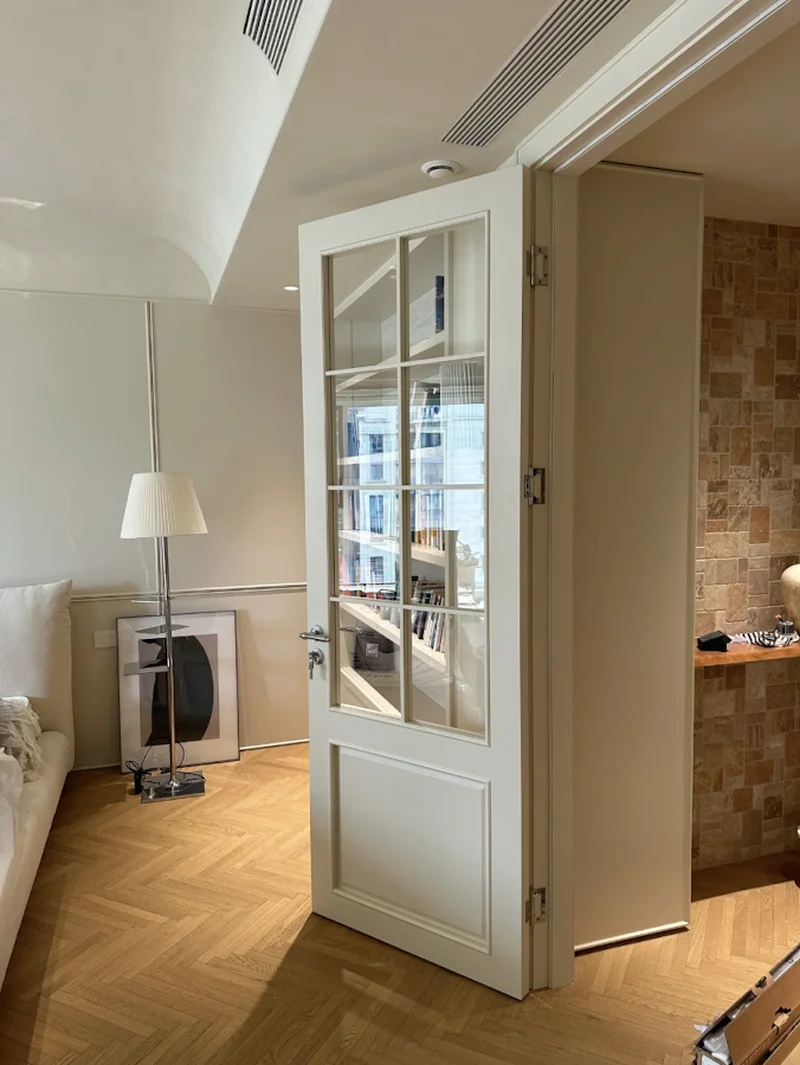
White oak wood glass doors with thermal break and insulated glass units represent a convergence of high-performance building science and refined architectural design, making them exceptionally well-suited for passive house applications. Passive house standards demand rigorous attention to thermal efficiency, airtightness, and minimal thermal bridging—all criteria these doors meet with precision.
-
The inherent thermal stability of white oak, combined with a precisely engineered thermal break within the frame, effectively interrupts conductive heat transfer. This structural discontinuity between interior and exterior aluminum or wood cladding prevents condensation and maintains consistent surface temperatures, directly supporting the passive house goal of uniform indoor comfort with minimal energy input.
-
Insulated glass units (IGUs), typically triple-glazed in passive house projects, are integral to these door systems. Filled with low-conductivity gases such as argon or krypton and featuring warm-edge spacers, they achieve U-values below 0.8 W/(m²K), aligning with passive house certification requirements. The high solar heat gain coefficient (SHGC) can be optimized regionally, allowing passive solar heating in colder climates while maintaining thermal control.
-
Airtightness is paramount in passive house design to minimize uncontrolled air leakage and reduce heating demand. These doors are manufactured to exacting tolerances and integrated with multi-point locking systems and compression seals, achieving air permeability ratings well below passive house thresholds (≤0.6 ACH@50Pa).
-
White oak also contributes to sustainability objectives. Responsibly sourced, it is a renewable, carbon-sequestering material with a low embodied energy compared to aluminum or steel systems. Its durability ensures long service life with minimal maintenance, further enhancing lifecycle performance.
-
Aesthetically, white oak offers a natural warmth and grain consistency that complements both contemporary and traditional passive house designs. The large glazed areas maximize daylight penetration, reducing reliance on artificial lighting and enhancing occupant well-being—key principles in passive house philosophy.
-
In sum, white oak wood glass doors with thermal break and insulated glazing deliver unparalleled thermal performance, durability, and design integrity, making them an ideal choice for projects pursuing the highest standards of energy efficiency and occupant comfort.
The Science Behind Thermal Break Technology in Wood-Aluminum Doors
-
Thermal break technology in wood-aluminum composite doors is a critical engineering solution designed to minimize conductive heat transfer between interior and exterior environments. In passive house construction, where thermal performance is paramount, the integration of a thermal break within the aluminum cladding of white oak wood doors ensures structural longevity, energy efficiency, and occupant comfort.
-
Aluminum, while durable and low-maintenance, possesses high thermal conductivity—approximately 205 W/(m·K)—which, without interruption, creates a thermal bridge between conditioned interior spaces and variable exterior climates. This bridge facilitates unwanted heat loss in winter and heat gain in summer, undermining insulation efforts and increasing energy demand.
-
The thermal break mitigates this issue by introducing a low-conductivity material—typically polyamide 6.6 reinforced with 25% glass fiber—within the aluminum profile. This insulating barrier physically separates the interior and exterior aluminum segments, effectively decoupling thermal pathways. Polyamide’s thermal conductivity (~0.25 W/(m·K)) is over 800 times lower than aluminum, drastically reducing heat flux.
-
In wood-aluminum doors, the structural core remains solid white oak—a material with inherent insulative properties (conductivity ~0.17 W/(m·K)) and dimensional stability. The aluminum cladding protects the wood from UV degradation and moisture, while the thermal break ensures that this protective layer does not compromise thermal integrity.
-
When combined with insulated glazing units (IGUs) featuring low-emissivity coatings, warm-edge spacers, and argon or krypton gas fills, the overall U-value of the door assembly can reach as low as 0.8 W/(m²·K), meeting stringent passive house standards. The thermal break ensures that linear thermal transmittance (Ψ-value) at the frame edge remains minimal, avoiding localized cold spots and surface condensation.
-
Computational fluid dynamics (CFD) and finite element analysis (FEA) validate the performance of thermally broken profiles under real-world temperature gradients. These models confirm uniform surface temperatures across the interior frame, reducing radiant asymmetry and enhancing thermal comfort.
-
The convergence of material science, precision engineering, and architectural design in thermal break technology enables wood-aluminum doors to achieve both high performance and refined aesthetics—essential for premium passive house applications where efficiency and elegance are equally demanded.
Enhancing Energy Efficiency with Double and Triple Insulated Glass Units
-
Double and triple insulated glass units (IGUs) are foundational to achieving superior thermal performance in high-efficiency fenestration systems, particularly in passive house applications where energy conservation is paramount. When integrated into white oak wood glass doors with thermal break technology, these IGUs dramatically reduce heat transfer, minimize thermal bridging, and enhance overall building envelope integrity.
-
Double IGUs typically consist of two panes of glass separated by a sealed spacer filled with inert gas—commonly argon or krypton—offering a U-value range of 1.0 to 1.4 W/(m²K). Triple IGUs add a third pane, further reducing U-values to as low as 0.6–0.8 W/(m²K). This incremental improvement is critical in extreme climates or ultra-low-energy buildings, where even marginal gains in insulation translate into substantial reductions in heating and cooling loads.
-
The performance of IGUs is not solely dependent on the number of panes. Low-emissivity (Low-E) coatings play a pivotal role by reflecting infrared radiation while maintaining visible light transmittance. In cold climates, a soft-coat Low-E on the inner pane retains interior heat; in warmer regions, solar control Low-E coatings mitigate solar heat gain, optimizing year-round energy balance.
-
Gas fills and warm-edge spacers complement these features. Argon and krypton reduce convective heat transfer within the cavity, while stainless steel or thermoplastic spacers minimize edge-of-glass thermal losses—historically a weak point in insulated glazing.
-
When combined with a thermally broken frame—engineered to interrupt conductive heat flow through the door’s structural elements—the synergy between frame and glazing achieves holistic thermal optimization. White oak, with its natural insulative properties and dimensional stability, provides an ideal substrate when paired with such advanced glazing systems.
-
Acoustic performance and occupant comfort are also enhanced. The layered construction of triple IGUs, for example, attenuates external noise by 30–40 dB, contributing to serene interior environments. Moreover, higher interior glass surface temperatures reduce radiant heat loss to cold surfaces, enhancing perceived comfort near glazed assemblies.
-
In passive house design, where heating demand is limited to 15 kWh/(m²·year), the selection of triple IGUs with optimized coatings and gas fills is often indispensable. Their integration into thermally broken white oak doors ensures that aesthetic excellence does not compromise performance, aligning architectural intent with rigorous energy efficiency standards.
Design Flexibility and Aesthetic Appeal of White Oak in Modern Architecture
-
White oak has emerged as a material of choice in modern architectural design, where the convergence of thermal performance and visual refinement defines success. Its inherent structural stability, coupled with a refined grain pattern and warm tonal range—from pale blonde to rich amber—enables seamless integration into minimalist, high-performance environments such as passive houses.
-
The natural elegance of white oak complements the precision engineering of thermal break systems and insulated glass units, creating a harmonious balance between material authenticity and technological advancement. Unlike synthetic or laminated alternatives, white oak provides a living texture that evolves gracefully over time, developing a subtle patina that enhances architectural character without compromising integrity.
-
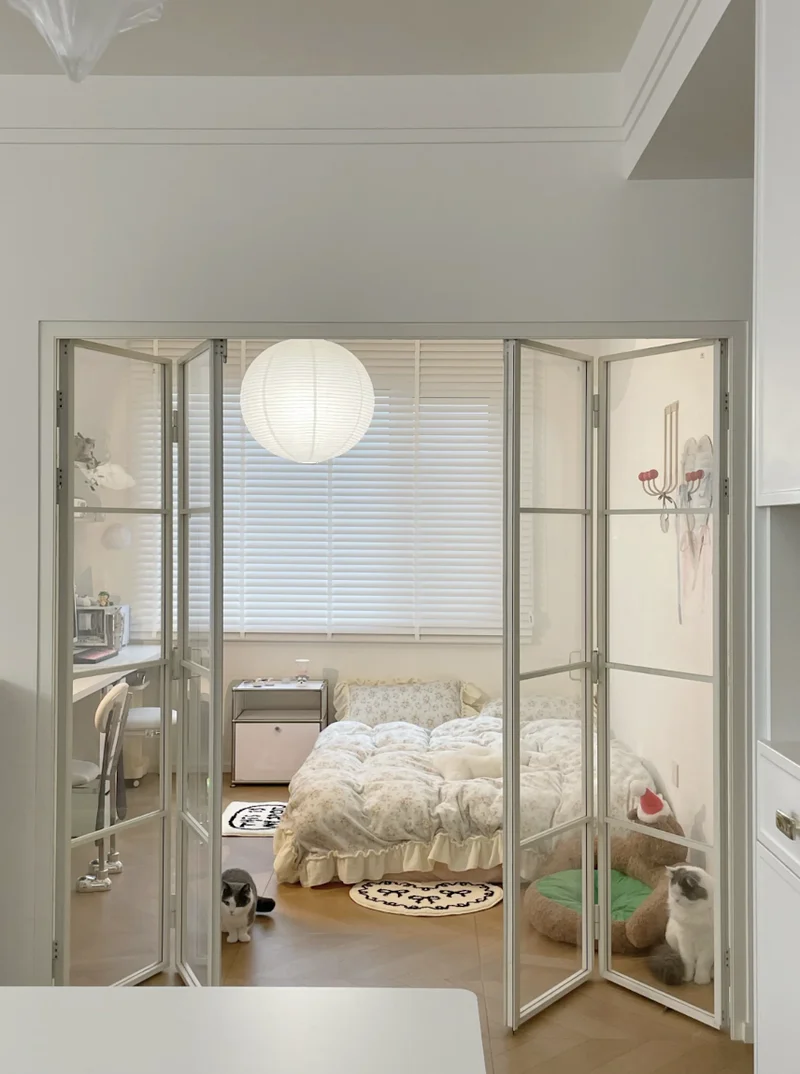
Architects leverage white oak’s dimensional versatility to achieve custom geometries, from expansive floor-to-ceiling sliding systems to slender-framed pivot configurations. Its workability allows for tight tolerances required in passive house assemblies, supporting clean lines and uninterrupted sightlines that define contemporary aesthetics. When paired with low-iron insulated glass, white oak frames enhance luminosity and spatial continuity, dissolving boundaries between interior and exterior.
-
The integration of thermal breaks within white oak door systems does not detract from design coherence; instead, concealed aluminum or polymer interlocks preserve structural performance while maintaining the visual dominance of wood. This engineering subtlety ensures that aesthetic purity is not sacrificed for energy efficiency.
-
Finish options further expand design adaptability. Natural oil finishes preserve the wood’s tactile quality and highlight grain variation, while light stains or cerused treatments can modulate reflectivity and contrast in response to environmental context. These options allow architects to tailor door systems to specific daylight conditions, interior palettes, and regional design sensibilities.
-
Beyond visual appeal, white oak contributes to biophilic design principles—its organic presence fostering occupant well-being through sensory connection to natural materials. In high-efficiency buildings where mechanical systems are minimized, such human-centered qualities become critical design elements.
-
The enduring appeal of white oak lies in its dual capacity: to perform at the highest level of thermal and structural demand while elevating architectural expression through warmth, texture, and timelessness. In modern passive design, it is not merely a cladding material, but a defining architectural voice.
Certification Standards and Performance Metrics for Passive House Doors
- Certification Standards and Performance Metrics for Passive House Doors
Passive House certification demands rigorous performance criteria for all building envelope components, including doors. White oak wood glass doors with thermal break and insulated glass must meet specific standards to qualify under the Passive House Institute (PHI) or PHIUS (Passive House Institute US) frameworks. Central to certification is the U-factor (thermal transmittance), which for doors must typically not exceed 0.8 W/(m²K), ensuring minimal heat loss. This stringent threshold necessitates integrated design solutions such as thermally broken frames, multi-chamber profiles, and advanced sealing systems.
Air tightness is equally critical; doors must demonstrate an air leakage rate of ≤ 0.6 m³/(h·m²) at 50 Pa differential pressure when tested as part of the building envelope. Individual door units are often pre-tested under standard conditions (e.g., EN 12211) to verify compliance before installation. Additionally, the linear thermal transmittance (ψ-value) at the door-to-wall interface must be minimized through careful installation detailing and continuous insulation, typically requiring ψ < 0.01 W/(mK) to prevent thermal bridging.
Solar heat gain coefficient (SHGC) and visible light transmittance (VLT) are performance metrics tailored to climate-specific design strategies. In heating-dominated climates, higher SHGC values (0.4–0.6) are advantageous to maximize passive solar gains, whereas cooling-dominated regions benefit from lower SHGC. VLT should be optimized to maintain daylight autonomy without inducing glare or overheating.
PHI Component Certification is the gold standard for door assemblies, requiring third-party verification of thermal performance, durability, and manufacturing consistency. Products bearing the PHI “Component” label have undergone independent testing per ISO 10077-2 (thermal performance) and EN 12412 (air permeability). Certification also evaluates long-term dimensional stability of white oak under hygrothermal cycling and resistance to condensation at interior surfaces (fRsi ≥ 0.75 at -10°C outdoor temperature).
Performance metrics extend beyond thermal efficiency. Acoustic insulation (RW ≥ 35 dB) and operational durability (≥ 200,000 opening cycles) are increasingly specified to ensure occupant comfort and longevity. Together, these standards ensure that high-performance white oak doors contribute holistically to the energy, comfort, and sustainability objectives of Passive House projects.
Frequently Asked Questions
What is a thermally broken door system and why is it essential for passive houses?
A thermally broken door system incorporates a non-conductive barrier within the frame material—typically aluminum or composite—to prevent heat transfer between interior and exterior environments. For passive houses, which require stringent energy efficiency, thermal breaks drastically reduce condensation risk, improve thermal insulation, and maintain consistent indoor temperatures, ensuring compliance with passive house standards like PHI or Passive House Institute certification.
How does white oak wood contribute to the performance of thermally broken glass doors?
White oak wood provides excellent natural insulation, dimensional stability, and aesthetic warmth. When used in conjunction with a thermally broken frame, it enhances overall thermal performance while resisting moisture and warping. White oak’s low thermal conductivity complements the break technology, and its durability ensures long-term performance in passive house environments where air tightness and thermal efficiency are critical.
Why is insulated glass (IGU) mandatory in passive house door designs?
Insulated glass units (IGUs) feature two or more lites of glass separated by a sealed gas-filled space (typically argon or krypton), minimizing heat transfer. In passive houses, IGUs with center-of-glass U-values below 0.8 W/(m²K) are required to reduce thermal bridging and maintain indoor comfort. When integrated into thermally broken white oak glass doors, IGUs significantly improve the overall Uw (whole-window) value, meeting passive house criteria for energy conservation.
What U-value should thermally broken glass doors achieve for passive house certification?
For compliance with passive house standards, thermally broken glass doors should achieve a Uw value of ≤ 0.85 W/(m²K), including both frame and glazing. High-performance systems using triple-glazed IGUs, warm-edge spacers, and precise white oak-aluminum composite frames often achieve Uw values as low as 0.7 W/(m²K), ensuring minimal thermal transmittance and optimal energy efficiency.
Can thermally broken white oak doors support floor-to-ceiling glass in passive houses?
Yes, but structural and thermal integrity must be preserved. High-performance thermally broken systems use reinforced frames with multi-chamber white oak profiles and concealed steel or composite reinforcements to support large glazed expanses. When paired with triple-glazed IGUs and proper installation detailing (e.g. insulated thresholds), these doors maintain both structural load capacity and the thermal performance necessary for passive house compliance.
How does argon or krypton gas filling improve insulated glass performance in these doors?
Argon and krypton gases have lower thermal conductivity than air, reducing convective heat transfer within IGUs. Krypton, though more expensive, offers superior insulation in narrow gaps, making it ideal for triple-glazed units in high-performance doors. In thermally broken white oak systems, gas filling helps achieve target U-values while minimizing unit thickness, preserving aesthetics and operability.
What role do warm-edge spacers play in thermally broken glass doors for passive houses?
Warm-edge spacers, typically made from stainless steel, structural foam, or thermoplastic materials, replace traditional aluminum spacers at the perimeter of IGUs. They reduce linear thermal transmittance (Ψ-value), minimizing edge-of-glass heat loss and preventing condensation. In passive house applications, warm-edge spacers are critical for achieving low overall Uw values and avoiding mold risk in high-humidity interior environments.
How are thermally broken white oak doors tested and certified for passive house use?
Reputable systems undergo rigorous thermal modeling via software like THERM and WINDOW to calculate U-values and detect thermal bridges. Physical testing includes air and water infiltration, structural loading, and condensation resistance. Certified products may carry PHI Component Certification or meet NFRC 100 and EN 14024 standards, verifying performance suitability for passive house projects.
What installation practices ensure optimal performance of thermally broken doors in passive houses?
Proper installation requires integration within the thermal envelope using airtight membranes (e.g. Intello, Solitex), compression seals, and thermal break alignment with the building’s insulation layer. The door frame must be positioned at the exterior plane of insulation, with all joints sealed using compatible tapes and foams. Incorrect installation can compromise up to 40% of the door’s designed performance.
Are triple-glazed white oak glass doors feasible without excessive weight or operational difficulty?
Yes—modern thermally broken systems use lightweight yet rigid aluminum subframes concealed behind white oak cladding, supporting triple-glazed IGUs (often 40–48 mm thick) while maintaining operability. High-quality multi-point locking hardware, low-friction rollers, and precision hinges allow smooth operation even for large, heavy doors, ensuring long-term functionality without sacrificing passive house performance.
How does solar heat gain coefficient (SHGC) impact door selection in passive house design?
The SHGC measures how much solar radiation passes through a door. In passive houses, optimizing SHGC based on climate and orientation is crucial—higher SHGC (0.5+) is beneficial in cold climates for passive solar heating, while lower SHGC (<0.4) is preferred in hot climates to prevent overheating. Custom low-emissivity (low-e) coatings on IGUs allow tuning of SHGC without compromising U-value.
What maintenance is required for white oak wood-clad thermally broken glass doors?
Annual inspection of seals, drainage channels, and hardware is essential. White oak surfaces should be refinished every 5–7 years with microporous wood finishes (e.g. oil or acrylic) to maintain moisture resistance without trapping vapor. Aluminum thermal break sections require cleaning and lubrication of moving parts. Preventative maintenance ensures lasting performance and avoids compromise of airtightness or thermal efficiency.