Luxury Rosewood Glass Doors with Hand-Carved Frames & Stained Glass for High-End Resorts
Elevating the guest experience begins with a single, unforgettable entrance—where craftsmanship meets opulence. In the world of high-end resorts, rosewood glass doors with hand-carved frames and stained glass are more than architectural elements; they are statements of sophistication, artistry, and timeless elegance. Meticulously crafted from rich, sustainably sourced rosewood, each door is a masterpiece, its frame intricately carved by master artisans to reflect cultural motifs or bespoke designs that echo the resort’s unique identity. The seamless integration of luminous stained glass transforms natural light into a dynamic tapestry of color, creating immersive atmospheres in lobbies, suites, and spa entrances. These doors not only define spaces but also enhance privacy, acoustics, and thermal performance—essential qualities for luxury hospitality environments. For discerning developers and designers, rosewood glass doors represent the ultimate fusion of aesthetic grandeur and functional excellence, setting a new benchmark in resort design where every detail contributes to an unparalleled sense of arrival and refinement.
Why Rosewood Is the Premium Choice for Resort Entryway Elegance
-
Unmatched Natural Beauty: Rosewood is revered for its rich, deep hues ranging from golden brown to deep purplish-red, accented by intricate grain patterns that evolve with age. This inherent aesthetic distinction positions rosewood as a material synonymous with exclusivity and refined taste—qualities essential for high-end resort entryways aiming to make a lasting first impression.
-
Exceptional Durability: Beyond its visual appeal, rosewood possesses exceptional density and natural resistance to warping, moisture, and insect infestation. In tropical or coastal resort environments where humidity and salt exposure are constant challenges, rosewood maintains structural integrity and dimensional stability over decades, minimizing maintenance and preserving long-term value.
-
Acoustic and Thermal Performance: The high density of rosewood contributes to superior sound insulation, reducing ambient noise from external environments and enhancing guest privacy. Additionally, its thermal mass helps moderate indoor temperature fluctuations, supporting energy efficiency in climate-controlled resort lobbies without compromising aesthetic grandeur.
-
Artisan Compatibility: Rosewood’s fine, even texture and moderate workability make it an ideal medium for master artisans executing intricate hand-carved motifs. Whether incorporating cultural symbolism, organic motifs, or geometric precision, the wood holds delicate detailing with exceptional clarity, allowing bespoke frame designs that reflect a resort’s unique identity and elevate craftsmanship to art.
-
Sustainable Prestige: Responsibly sourced rosewood, harvested under strict CITES and FSC guidelines, aligns with the environmental stewardship increasingly demanded by luxury clientele. Resorts leveraging certified rosewood in prominent architectural features signal a commitment to both sustainability and uncompromised quality—enhancing brand equity among discerning travelers.
-
Harmonization with Glass and Stained Artistry: Rosewood’s warm tonality and depth provide a sophisticated contrast to transparent, frosted, or stained glass panels. The interplay of light through colored glass against rosewood’s rich grain creates dynamic visual narratives throughout the day, transforming entryways into immersive experiences.
In high-end resorts, where arrival is a curated moment of transition and impression, rosewood entry doors with hand-carved frames and stained glass represent more than function—they convey legacy, artistry, and uncompromising excellence. The integration of rosewood elevates the guest journey from arrival to anticipation, establishing an immediate standard of luxury.
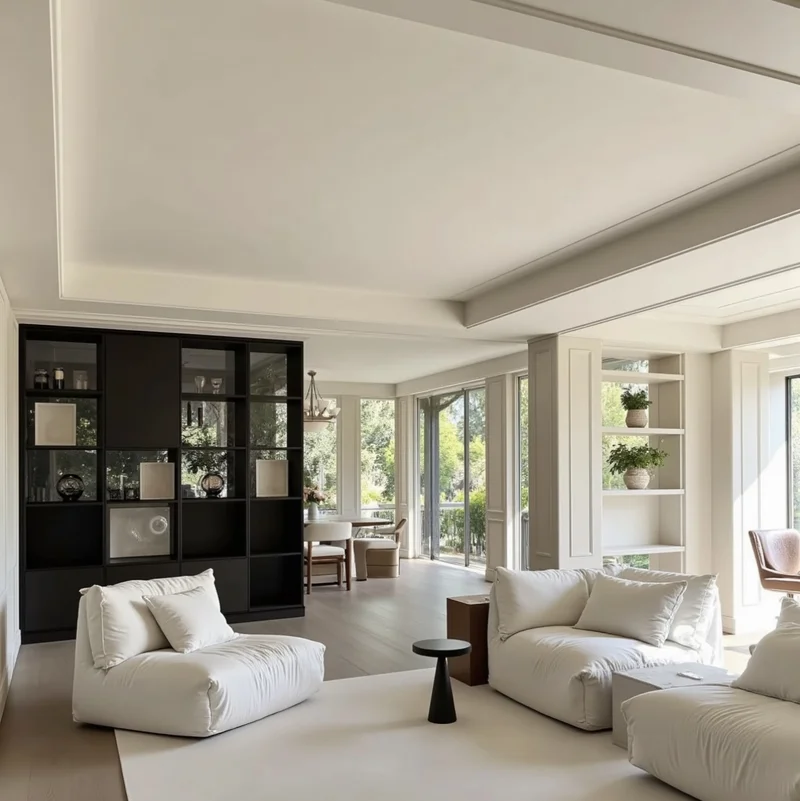
Exquisite Hand-Carved Frames: The Artisan Touch in High-End Door Design
-
Exquisite hand-carved frames represent the pinnacle of craftsmanship in luxury door design, where material excellence converges with artistic precision. In high-end resorts, these frames are not merely functional components but integral elements of architectural storytelling, enhancing ambiance and conveying cultural sophistication. Crafted from premium Indian or Burmese rosewood, each frame is selected for its dense grain, rich patina, and natural resistance to climatic stress—qualities essential for both longevity and aesthetic depth in resort environments.
-
The carving process is executed entirely by master artisans, often trained through generations of woodworking lineage. Utilizing chisels, gouges, and mallets, they translate intricate designs—floral motifs, geometric patterns, or regional iconography—into three-dimensional reliefs that respond dynamically to changing light. Each design is custom-developed to align with the resort’s architectural narrative, whether inspired by Mughal, Balinese, or neoclassical traditions. The level of detail, from feathered foliage to delicate scrollwork, is achieved through hundreds of hours of meticulous handwork, ensuring no two frames are identical.
-
Integration with stained glass further elevates the door’s visual impact. The carved frame acts as a sculptural border, framing and complementing the glass’s color gradients and thematic imagery. This synergy demands exacting coordination between carvers and glass artisans to ensure proportional harmony and structural integrity. The result is a seamless fusion of texture, transparency, and illumination—doors that serve as both portals and art installations.
-
Beyond aesthetics, the construction emphasizes durability and acoustic performance. Multi-layered joinery techniques, including mortise-and-tenon and dovetail joints, ensure stability in high-traffic or humid environments typical of luxury resorts. Finished with hand-rubbed oils or natural lacquers, the rosewood develops a lustrous sheen over time, deepening in character with age.
-
These doors are not merely entries but statements—of heritage, permanence, and refined taste. For high-end resorts seeking to distinguish their guest experience through material authenticity and artisan excellence, hand-carved rosewood frames with stained glass represent an unparalleled investment in architectural legacy.
Stained Glass Mastery: Elevating Ambiance in Luxury Resort Interiors
-
Stained glass, when integrated into luxury resort architecture, transcends mere decoration to become a dynamic medium for shaping spatial experience and emotional resonance. In high-end environments where ambiance dictates guest perception, the strategic use of stained glass in glass doors—particularly those framed by hand-carved wood—introduces a layered interplay of light, color, and craftsmanship that elevates interior narratives.
-
Rosewood glass doors featuring stained glass panels offer a synthesis of material excellence and artisanal precision. The deep, resonant grain of sustainably sourced rosewood provides a rich, warm contrast to the luminous complexity of hand-cut glass. Each panel is assembled using traditional copper-foil or leaded techniques, ensuring structural integrity while maximizing aesthetic nuance. The choice of glass—ranging from cathedral to opalescent varieties—allows for controlled diffusion and chromatic depth, modulating natural light to create evolving patterns throughout the day.
-
Design intent is paramount. In luxury resorts, stained glass motifs are rarely arbitrary. They are often rooted in regional heritage, botanical themes, or abstract interpretations of landscape, subtly reinforcing the property’s sense of place. A door facing a tropical garden may incorporate fluid, organic forms in emerald and sapphire tones, while a spa entrance might employ soft gradients evoking sunrise or water reflection—psychologically priming guests for tranquility.
-
Placement is equally strategic. Entryways, lobby dividers, and suite access points serve as key touchpoints where stained glass functions both as threshold marker and atmospheric catalyst. When backlit during evening hours, these installations transform into glowing focal points, imbuing corridors and transitional spaces with cathedral-like solemnity and warmth.
-
Maintenance and preservation are considered at the design phase. UV-stable glass, protective glazing, and climate-adaptive sealants ensure longevity without compromising optical clarity. Routine care protocols are integrated into facility operations to uphold both beauty and function.
-
Ultimately, stained glass in luxury resort interiors is not an embellishment but an experiential technology—one that harnesses light as a design element and positions craftsmanship as a cornerstone of guest immersion. When executed with the precision and intention exemplified in rosewood-framed glass doors, it becomes a defining feature of architectural distinction.
Blending Durability and Beauty: Engineered Glass for High-Traffic Resort Spaces
-
Engineered glass has emerged as a pivotal material in high-end resort architecture, where the convergence of durability, safety, and aesthetic refinement defines spatial excellence. In environments subjected to constant foot traffic—lobbies, poolside entrances, spa corridors, and grand dining halls—glass must withstand mechanical stress, environmental exposure, and frequent cleaning while maintaining visual integrity. Luxury rosewood-framed glass doors meet these demands through advanced lamination, thermal tempering, and chemical strengthening techniques that elevate standard glass into a resilient architectural component.
-
These doors integrate multi-layered safety glass, often incorporating PVB or ionoplast interlayers, which not only enhance impact resistance but also provide acoustic insulation—critical for preserving the tranquil ambiance of luxury resorts. The engineered glass is precision-cut and finished to align seamlessly with hand-carved rosewood frames, ensuring structural coherence and minimizing stress points. This integration mitigates microfractures and delamination over time, even under thermal cycling and high humidity—common challenges in tropical or coastal resort locations.
-
Aesthetic differentiation is achieved through custom stained glass elements embedded within the laminated layers. Unlike surface-applied stained films, which degrade under UV exposure and abrasion, these encapsulated designs preserve color fidelity and intricate detailing for decades. Artisans collaborate with materials engineers to translate cultural motifs or brand-specific iconography into layered glass compositions that diffuse light with warmth and depth, transforming functional portals into focal artworks.
-
The rosewood frames, sustainably sourced and treated with marine-grade sealants, provide a robust anchor for the glass while contributing organic warmth and textural contrast. Each frame is engineered for dimensional stability, minimizing warping and ensuring long-term alignment with the glass panels. This synergy between natural material and engineered glass results in doors that are as structurally reliable as they are visually arresting.
-
Maintenance is streamlined through hydrophobic and oleophobic coatings applied to the glass surface, reducing water spotting and fingerprint retention—key considerations in high-touch environments. Together, these innovations ensure that rosewood glass doors remain pristine under rigorous use, embodying the resilience and refined elegance expected in world-class hospitality settings.
Design Integration: How Custom Rosewood Doors Enhance Resort Aesthetics
-
Custom rosewood doors with hand-carved frames and stained glass are not merely functional elements but pivotal design features that elevate the aesthetic narrative of high-end resorts. Their integration transcends mere entranceways; they become curated expressions of cultural authenticity, craftsmanship, and luxury.
-
Rosewood, renowned for its rich tonal depth, fine grain, and natural luster, offers unparalleled visual warmth. When milled into door frames and intricately hand-carved by master artisans, it introduces a tactile and visual complexity that resonates with discerning guests. The material’s density ensures longevity while its acoustic properties contribute to the serene ambiance essential in luxury hospitality environments.
-
The incorporation of stained glass within these doors enhances spatial storytelling. Custom-designed glass panels—featuring botanical motifs, regional artistry, or abstract patterns—filter natural light into ambient hues, transforming corridors, lobbies, and suite entries into immersive experiences. This interplay of light and color evolves throughout the day, creating dynamic atmospheres aligned with the resort’s sensory design strategy.
-
From a spatial planning perspective, these doors serve as transitional markers between public and private realms. Positioned at suite thresholds, spa entrances, or executive lounges, they establish hierarchy and exclusivity without compromising openness. The transparency of glass maintains visual continuity, promoting spatial flow while the solid wood frames ground the composition with gravitas.
-
Design cohesion is achieved when rosewood tones and carving motifs are echoed in adjacent elements—furniture, wall paneling, or ceiling details—creating a layered, harmonized environment. Such integration ensures that the doors do not stand in isolation but act as integral components of a holistic design language.
-
Sustainability and provenance further reinforce their value. Responsibly sourced rosewood, certified through recognized forestry standards, aligns with the ethical expectations of luxury clientele. When paired with traditional craftsmanship, these doors reflect a commitment to cultural preservation and environmental stewardship—attributes increasingly integral to brand identity in premium resort operations.
-
Ultimately, the strategic placement and design of custom rosewood glass doors contribute to a resort’s distinctive character, enhancing guest perception through material excellence, artistry, and intentional design integration.
Frequently Asked Questions
What makes Rosewood the ideal material for high-end resort door applications?
Rosewood is prized in luxury architecture for its exceptional density, durability, and rich, dark luster that ages beautifully. Its natural oils enhance resistance to warping and insect damage—critical for high-traffic resort environments subject to humidity and temperature fluctuations. Moreover, Rosewood’s fine grain structure allows for intricate hand-carving without compromising structural integrity, making it the premier choice for bespoke, statement doors in five-star properties.
How does hand-carved framing elevate the value of glass doors in luxury resorts?
Hand-carved Rosewood frames are a hallmark of artisanal craftsmanship, often requiring hundreds of hours by master woodcarvers. These custom frames incorporate cultural motifs, botanical patterns, or brand-specific designs that align with a resort’s architectural narrative. Unlike mass-produced alternatives, hand carving ensures uniqueness and adds an irreplaceable human touch—key to high-end guest experiences and brand differentiation.
What types of stained glass are recommended for Rosewood resort doors?
For Rosewood doors in luxury resorts, mouth-blown cathedral or opalescent stained glass is recommended for its depth, color variation, and artisanal quality. Designs often feature gradient hues that complement the wood’s undertones and allow controlled diffusion of tropical light. Lead came or copper foil techniques ensure longevity and precision, while UV-stabilized pigments protect against sun degradation—essential for beachfront or sun-exposed properties.
How do Rosewood and stained glass doors contribute to acoustic privacy in resort suites?
Multi-layered Rosewood frames act as natural sound attenuators due to the wood’s high density. When paired with laminated or insulated stained glass units (e.g., 6.38mm PVB interlayer), sound transmission is significantly reduced. This combination delivers acoustic privacy for guest rooms and spas while maintaining visual elegance—balancing serene ambiance with architectural opulence.
What maintenance is required to preserve hand-carved Rosewood and stained glass doors?
Regular maintenance includes bi-monthly dusting with microfiber cloths and annual conditioning using museum-grade wood oil to prevent desiccation. Stained glass should be cleaned with non-ammonia solutions to avoid seal degradation. In coastal resorts, quarterly inspections for salt-induced corrosion on metal cames and frame joints are critical. Professional refinishing every 5–7 years maintains luster and structural resilience.
Can Rosewood doors be engineered for hurricane or seismic zones?
Yes—high-end Rosewood doors can be reinforced with concealed aluminum or stainless-steel internal framing and coupled with laminated, impact-resistant stained glass meeting ASTM E1886/E1996 standards. Engineering includes floating panel systems that allow for structural movement, crucial for resorts in seismic or hurricane-prone regions like the Caribbean or Southeast Asia—without compromising aesthetic integrity.
How do sustainable sourcing practices apply to luxury Rosewood doors?
Responsible Rosewood sourcing requires adherence to CITES Appendix II regulations and verification via FSC or PEFC certification. Leading manufacturers partner with plantation-grown Dalbergia or reclaimed timber suppliers. Carbon footprint is minimized through local artisan collaboration and digital templating to reduce waste. Luxury resorts use these credentials to align with eco-certifications like LEED and Green Key.
What security features can be integrated into ornate Rosewood and stained glass doors?
Discreet multi-point locking systems, anti-drill hardened cylinders, and embedded RFID or biometric access controls can be seamlessly integrated. The Rosewood frame allows for concealed hardware routing, preserving aesthetics. Laminated glass with polycarbonate interlayers provides forced entry resistance, satisfying resort security standards without visual compromise.
How do bespoke stained glass designs reflect a resort’s cultural identity?
Custom stained glass can incorporate regional symbolism—such as Balinese mandalas, Moroccan zellige patterns, or Polynesian tapa motifs—using historically accurate color palettes. Collaborations with local artists ensure cultural authenticity, transforming doors into narrative elements that enhance guest immersion and brand storytelling.
Are Rosewood glass doors suitable for bathroom and spa applications?
Yes, but with technical adaptations: Rosewood must be kiln-dried to 8–10% moisture content and sealed with marine-grade epoxy in high-humidity zones. Back-painting or opaque fritted stained glass ensures privacy, while threshold channels and drip edges prevent water ingress. Proper ventilation integration maintains wood stability and finish integrity.
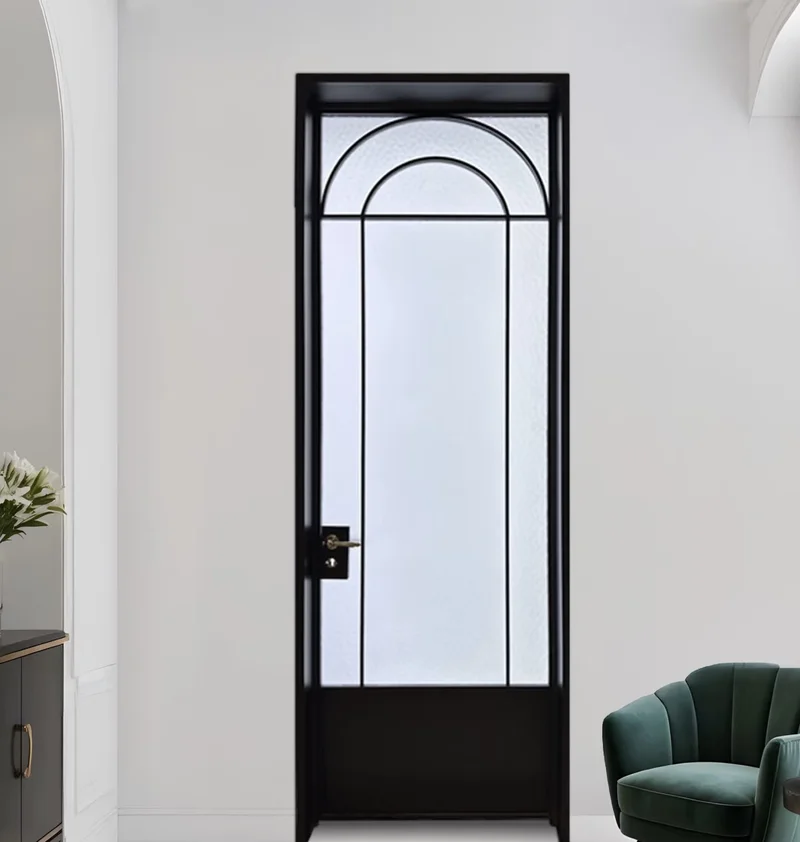
What lighting strategies optimize the visual impact of stained glass resort doors?
Layered lighting is essential: exterior uplighting highlights carving depth, while interior backlights (e.g., 2700K LED strips) intensify stained glass radiance at night. Automated dimming systems sync with circadian lighting protocols, creating dynamic ambiance for guest arrival experiences. Optics should avoid glare while accentuating color saturation.
How are installation tolerances managed for hand-carved natural wood doors?
Precision digital templating and CNC jigs ensure frame alignment within ±0.5mm tolerances. Acclimatization on-site for 7–14 days prevents post-installation movement. Installers use laser-guided leveling and adjustable steel anchors that accommodate minor structural shifts—critical for historic or organic resort structures with non-uniform walls.