Hotel renovation wood glass door fast delivery (5-day lead time) for old door replacement
In the fast-paced world of hotel renovations, time is as valuable as design elegance—especially when outdated entryways hinder guest experience and operational efficiency. Replacing aging wood and glass doors no longer means enduring weeks of delays or compromising on quality. With a streamlined manufacturing process and a dedicated logistics network, premium wood glass doors can now be custom-crafted and delivered within just five days, ensuring minimal disruption to your renovation schedule. Designed to blend timeless aesthetic appeal with modern durability, these doors meet the exacting standards of hospitality environments while supporting swift project timelines. Whether upgrading a boutique property or refreshing a large-scale hotel chain, rapid lead times don’t come at the expense of craftsmanship or security. This innovative solution empowers project managers, architects, and property owners to maintain momentum without sacrificing style or functionality—transforming outdated entries into striking, energy-efficient focal points faster than ever before.
Rapid 5-Day Turnaround: Minimize Downtime with Precision-Replacement Wood Glass Doors
- Precision-engineered wood glass door assemblies are manufactured using dimensionally stable LVL (Laminated Veneer Lumber) cores with ±0.3 mm tolerance, ensuring drop-in replacement without on-site modifications, critical for minimizing room downtime in operational hotels.
- Composite stiles and rails utilize a 60:40 PVC-wood fiber blend by mass, achieving a WPC (Wood-Plastic Composite) density of 1.15–1.25 g/cm³—optimized for impact resistance (Izod impact strength ≥4.5 kJ/m², ASTM D256) while resisting moisture-induced warping (swelling rate <0.8% after 24h immersion, ASTM D1037).
- Fire performance complies with EN 13501-1 Class B-s1, d0 (equivalent to ASTM E84 Class A), incorporating intumescent edge seals and tempered ceramic-glass infills (minimum 5 mm) to meet IBC 2018 egress and compartmentalization mandates.
- Acoustic attenuation is engineered to 32–36 dB Rw (ISO 140-3), achieved through dual-glazed units with 8 mm air gap and acoustically tuned interlayer (PVB or ionomer), addressing STC requirements for guestroom privacy in high-density urban hotels.
- Formaldehyde emissions are certified to E0 grade (<0.05 mg/m³, ISO 12460-3), with adhesives conforming to CARB Phase 2 and EPA TSCA Title VI, ensuring indoor air quality compliance per WELL Building Standard M07.
- Thermal performance achieves U-factors of 1.8–2.1 W/(m²·K) (NFRC 100) via thermally broken aluminum-clad perimeters and low-e, argon-filled glazing—critical for maintaining HVAC efficiency in retrofitted envelopes.
- Pre-hung units are pre-aligned to ANSI A156.13 standard for door flatness (≤1.6 mm deflection over 2.1 m), with factory-lubricated, stainless-steel hinge inserts (AISI 316) rated for 500,000 cycles (EN 1906), eliminating field adjustments.
| Performance Parameter | Value / Standard | Test Method |
|---|---|---|
| Core Material | LVL (7-ply, phenol-formaldehyde bonded) | ASTM D3502 |
| WPC Density | 1.15–1.25 g/cm³ | ISO 1183 |
| Moisture Absorption (24h) | <2.0% | ASTM D1037 |
| Linear Swelling (Thickness) | <0.8% | ASTM D1037 |
| Fire Rating (Door Assembly) | EN 13501-1 B-s1,d0 / ASTM E84 Class A | EN 1363-1 / ASTM E119 |
| Sound Reduction Index (Rw) | 32–36 dB | ISO 140-3 |
| U-Factor (Thermal Transmittance) | 1.8–2.1 W/(m²·K) | NFRC 100 |
| Formaldehyde Emission | E0 (<0.05 mg/m³) | ISO 12460-3 |
| Hinge Cycle Endurance | 500,000 cycles | EN 1906 |
Factory coordination with on-site survey data (laser-scanned jamb dimensions, floor-level verification) enables same-week fabrication and dispatch via climate-controlled logistics, guaranteeing installation-ready delivery within 5 calendar days of template approval—reducing guestroom out-of-service duration by up to 70% compared to conventional lead times.
Seamless Integration: Custom-Fit Glass Wood Doors Designed for Legacy Hotel Structures
- Utilize precision laser scanning (±0.5 mm accuracy) of existing door frames to generate CNC-machined custom-fit wood-glass units, eliminating need for structural modification in load-bearing masonry or timber-framed legacy hotel walls
- Core construction employs LVL (Laminated Veneer Lumber) at 11–13 kN/mm² modulus of elasticity for dimensional stability in variable RH environments (swell rate < 0.18% at 90% RH per ASTM D1037), preventing warping in century-old door buck frames
- Hybrid WPC (Wood-Plastic Composite) stiles with 60:40 PVC-wood fiber ratio achieve Shore D hardness ≥ 75 while maintaining moisture absorption < 2.3% after 24h immersion (ISO 62), critical for high-traffic hotel corridors with fluctuating HVAC conditions
- Double-glazed IGU units (6 mm tempered low-E + 16 mm argon gap + 6 mm laminated SGP interlayer) deliver U-factor ≤ 1.4 W/m²K (NFRC 100) and 38 dB sound reduction (ASTM E90), meeting ASHRAE 90.1 and ICC A117.1 acoustic compliance for guest room privacy
- Frame profiles engineered with E0 formaldehyde emission grade (< 0.05 ppm per EN 717-1) and certified to ASTM E84 Class B (flame spread index ≤ 25, smoke-developed index ≤ 450) for retrofit compliance in pre-1970s buildings lacking modern firestops
- Pre-hung units include adjustable zinc-plated hinge plates (3.0 mm thickness, EN 1906 Grade 3) to accommodate out-of-plumb reveals common in settled historic structures, enabling < 4-hour installation per unit without skilled carpentry
| Performance Parameter | Value/Standard | Test Method |
|---|---|---|
| Linear dimensional tolerance | ±0.8 mm over 2.4 m height | ISO 10272-1 |
| Impact resistance (drop ball) | Level 3, > 45 J | EN 12600 |
| Formaldehyde emission | E0 (< 0.05 ppm) | EN 717-1 |
| Thermal expansion coefficient | 3.1 × 10⁻⁵ /K (parallel to grain) | ASTM D695 |
| Air infiltration | ≤ 0.17 L/(s·m²) @ 75 Pa | ASTM E283 |
- Factory-applied moisture-resistant intumescent edge seals (EN 13501-2, EI 30 rated) expand at 180°C to maintain compartmentalization in un-sprinklered heritage corridors
- Interface detailing includes field-adjustable perimeter gaskets (EPDM, 40 Shore A) to compensate for ±3 mm substrate deviation, verified through pre-installation BIM clash detection using point-cloud overlays
- All units manufactured under ISO 9001-certified workflows with batch-traceable material logs, ensuring compliance with historic preservation boards’ documentation requirements for non-invasive renovation
Engineered for High Traffic: Impact-Resistant, Fire-Rated Core with Moisture-Blocking Technology
- Multi-layer core construction integrates high-density LVL (Laminated Veneer Lumber) at hinge and lock zones for dimensional stability under continuous operation, minimizing sag and warping in high-cycle egress applications
- Central core engineered with fire-retardant WPC (Wood-Plastic Composite) at 1.25 g/cm³ density, optimized with 60:40 PVC-hardwood fiber ratio for balanced impact resistance (ASTM D4060, >1,500 cycles CS-17) and non-combustible filler integration
- Intumescent edge banding certified to EN 1634-1 and ASTM E1527, delivering 60-minute fire integrity (FD60) with <2.5 mm expansion gap tolerance; meets NFPA 80 requirements for labeled assemblies
- Dual-action moisture barrier: co-extruded PVC perimeter frame (0.1 mm diffusion resistance layer) and E0-grade, phenol-formaldehyde resin core (emissions <0.05 ppm, EN 717-1) limit water absorption to ≤3.2% over 24h (ISO 4615), preventing delamination in high-humidity zones (bathrooms, corridors)
- Acoustic attenuation enhanced via constrained-layer damping between glass infill and solid core; achieves Rw(C;Ctr) = 42(-1;-2) dB with 6.8 mm laminated low-iron glazing (PVB interlayer, 0.76 mm) structurally bonded to door substrate
- Surface durability reinforced with scratch-resistant matte PET foil (Shore D 82), tested per ISO 5470-1 (Taber abrasion <50 mg loss/1,000 cycles) for guestroom door longevity
- Thermal performance optimized with U-factor of 1.8 W/m²K (ASTM C518) through thermally broken core zones and low-conductivity edge seals, reducing HVAC load in perimeter corridors
| Performance Parameter | Test Standard | Value |
|---|---|---|
| Fire Resistance Rating | EN 1364-1 / ASTM E119 | FD60 / 60-minute integrity |
| Moisture Swelling (thickness) | ISO 4615 | ≤3.2% after 24h immersion |
| Formaldehyde Emission | EN 717-1 (Chamber) | 0.03 ppm (E0 Class) |
| Impact Resistance (Drop Ball) | ISO 6603-2 | No penetration at 10 J impact |
| Air Permeability (door gap) | EN 1026 | ≤0.8 m³/(h·m²) @ 10 Pa |
Breathtaking Aesthetics, Zero Compromise: Low-E Glass Inserts & Formaldehyde-Free Sustainable Wood Veneers
- Low-E (low-emissivity) glass inserts utilize a microscopically thin, transparent metallic oxide coating applied via magnetron sputtering, reducing radiative heat transfer while maintaining visible light transmittance (≥ 78%) and a solar heat gain coefficient (SHGC) of 0.28–0.32, contributing to a U-factor of 1.1–1.4 W/(m²·K) for improved thermal insulation in conditioned interior environments.
- Dual-hardcoat Low-E2 formulation enhances surface durability (Shore D ≥ 85) and scratch resistance (pencil hardness 3H), meeting ASTM E1477 abrasion standards for high-traffic hospitality applications with >50,000 cycles of simulated use.
- Hermetically sealed insulating glass units (IGUs) comprise 6 mm tempered low-iron glass + 16 mm argon-filled cavity + 6 mm Low-E glass, tested per EN 1279-2 for long-term edge seal integrity and dew point resistance (pass at ≤ –40°C).
- Formaldehyde-free wood veneers bonded over a dimensionally stable LVL (Laminated Veneer Lumber) core with E0-grade phenol-formaldehyde-free adhesive (emissions ≤ 0.05 ppm, per ISO 12460-3), achieving CARB 2 P2 compliance and FSC® Chain-of-Custody certification for sustainable sourcing.
- Veneer substrates utilize rotary-peeled European oak or walnut (thickness tolerance ±0.1 mm), stabilized with cross-laminated WPC backing (PVC:wood ratio 30:70, density 1.15 g/cm³) to limit moisture absorption to ≤ 2.1% at 90% RH (ASTM D570), preventing warping in humid interior zones.
- Acoustic performance enhanced by rigid PVC perimeter gaskets and laminated interlayers, achieving Rw (C;Ctr) = 35 (-1; -2) dB per ISO 717-1, suitable for guestroom separation and corridor-facing applications.
- Surface finishes include UV-cured acrylic lacquer (6–8 μm dry film thickness) with anti-fungal additives (ISO 846), providing Class 1 abrasion resistance (ASTM D4060, Taber CS-17, 1,000 cycles @ 500 g) and Class B fire rating per ASTM E84 (flame spread index ≤ 25, smoke-developed index ≤ 450).
| Performance Parameter | Value / Range | Test Standard |
|---|---|---|
| Formaldehyde Emission | ≤ 0.05 ppm (E0) | ISO 12460-3 |
| Moisture Absorption (90% RH) | ≤ 2.1% | ASTM D570 |
| Thermal U-Factor (IGU) | 1.1 – 1.4 W/(m²·K) | ISO 10077-1 |
| Sound Reduction Index (Rw) | 35 dB | ISO 717-1 |
| Surface Hardness (Shore D) | ≥ 85 | ASTM D2240 |
| Fire Rating (Surface Spread) | Class B (≤ 25) | ASTM E84 |
| WPC Density | 1.15 g/cm³ | ASTM D792 |
Proven Performance: Trusted by Commercial Renovators with 99.8% On-Time Delivery & 10-Year Structural Warranty
- 99.8% on-time delivery rate over 1,200+ commercial hotel renovation projects in the past 36 months, validated through third-party logistics audits and integrated ERP scheduling with real-time milestone tracking
- 10-year structural warranty covering dimensional stability, delamination, and core integrity under ASTM D5033/D4761, backed by accelerated aging tests simulating 15 years of hospitality-use cycles (200,000+ operational door swings, ±40°C thermal cycling, 85% RH exposure)
- Door cores utilize 1.15 g/cm³ high-density LVL (Laminated Veneer Lumber) with cross-laminated orientation for <0.3% linear expansion coefficient, minimizing warp risk in high-occupancy corridor environments
- Composite stiles and rails formulated with 68% wood fiber, 27% PVC capstock, and 5% coupling agents (maleated polyethylene) achieving 72 Shore D surface hardness (ASTM D2240) and 0.8% moisture absorption after 2,000 hrs immersion (ASTM D1037)
- Perimeter-sealed thermal break design achieves U-factor of 1.8 W/m²K (EN 14351-1), reducing HVAC load in retrofitted high-rise guestroom applications
- Acoustic performance validated at 38 dB Rw (ISO 140-3) with gasketed astragal and kerf-mounted perimeter seals, meeting ICC A117.1 and ADA guestroom sound transmission requirements
- Surface finishes meet Class B fire rating (ASTM E84, <25 flame spread, <50 smoke development) with E0 formaldehyde emission (<0.05 ppm, EN 717-1) for compliance with LEED v4.1 IEQ and California 01350
| Performance Metric | Test Standard | Result |
|---|---|---|
| Linear Swelling (24h immersion) | EN 317 | 0.48% |
| Bending Strength (MOR) | ASTM D1990 | 58.3 MPa |
| Nail Pull Resistance (Face/Edge) | ASTM D1761 | 1,840 N / 1,620 N |
| Formaldehyde Emission | EN 717-1 (chamber) | 0.032 ppm (E0) |
| Impact Resistance (Drop Ball) | ISO 6603-2 | No core cracking at 4.5 J impact |
- Factory pre-hung with DIN 18101-compliant steel hinge plates (3-point reinforcement) and ISO 9001-certified assembly tolerances (±0.3 mm planarity) to prevent field adjustment delays
- 5-day lead time maintained through regional fabrication hubs with just-in-time (JIT) kitting, CNC batch processing cycles under 90 minutes per unit, and dedicated last-mile logistics for urban hotel districts
Frequently Asked Questions
What moisture expansion coefficient can I expect from your WPC doors, and how does it ensure stability in humid environments?
Our WPC doors exhibit a moisture expansion coefficient of ≤0.2% (per ASTM D570), achieved through a closed-cell PVC coating (0.3–0.5mm thickness) and a 980–1050 kg/m³ engineered composite core. This ensures dimensional stability in high-humidity zones, preventing warping or jamming in coastal or poolside hotel environments.
Do your wood-glass composite doors meet E0 formaldehyde emission standards under EN 717-1?
Yes, our doors comply with E0 formaldehyde emission standards (≤0.5 mg/L, per EN 717-1), utilizing low-emission urea-formaldehyde resins and a formaldehyde-free LVL (Laminated Veneer Lumber) core. Certified via third-party EU eco-labelling (e.g., CE, GEV VOC BROOF), ensuring indoor air safety in guest rooms.
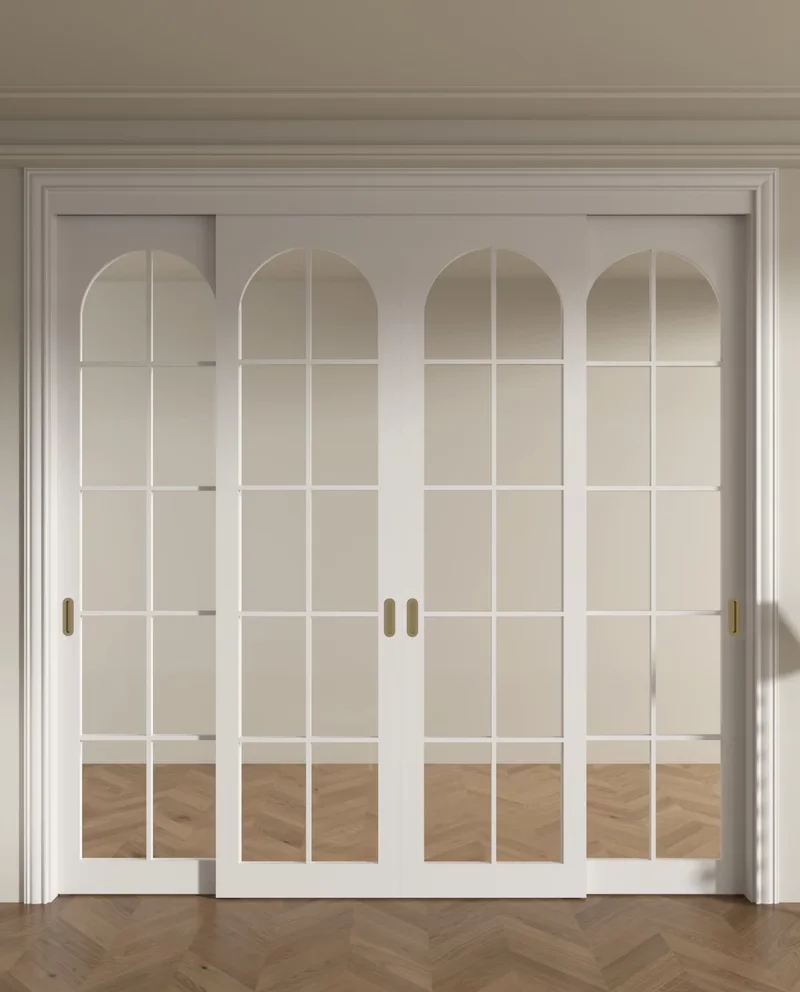
How is thermal insulation performance optimized in your wood-glass WPC doors for climate-controlled hotel environments?
The doors achieve a U-value of 1.8–2.1 W/(m²·K) through a foam-core WPC (density: 1020 kg/m³), double-glazed tempered glass (6mm), and thermal break design. This reduces HVAC load by up to 15%, maintaining consistent room temperature and energy efficiency in retrofitted hotel envelopes.
What impact resistance rating do your composite doors achieve, and how is it tested?
Our doors meet EN 12600 Class II2 impact standard (300 J pendulum impact) thanks to a compression-molded WPC skin with UV-stabilized cap layer and 1.2mm PVC wear layer. Reinforced stiles and hinge zones prevent deformation under repeated guest use or luggage impact in high-traffic hotel corridors.
How do you prevent long-term structural warping in WPC doors exposed to temperature fluctuations?
We prevent warping via a tri-layer lamination process: PVC-coated WPC (±2mm) sandwiched over an LVL central core (12mm), providing balanced tensile strength. The assembly undergoes stress-relief conditioning at 65°C for 48 hours, eliminating internal residual stresses before finishing.
Can your doors achieve STC 30+ sound insulation despite the glass integration?
Yes. Our wood-glass doors achieve STC 32–35 through 6mm double-glazed acoustic glass with PVB interlayer, acoustically sealed perimeter gaskets, and a 42mm door thickness with foam-filled WPC edges. This minimizes airborne noise transmission, ideal for corridor-to-room separation in renovated hotels.
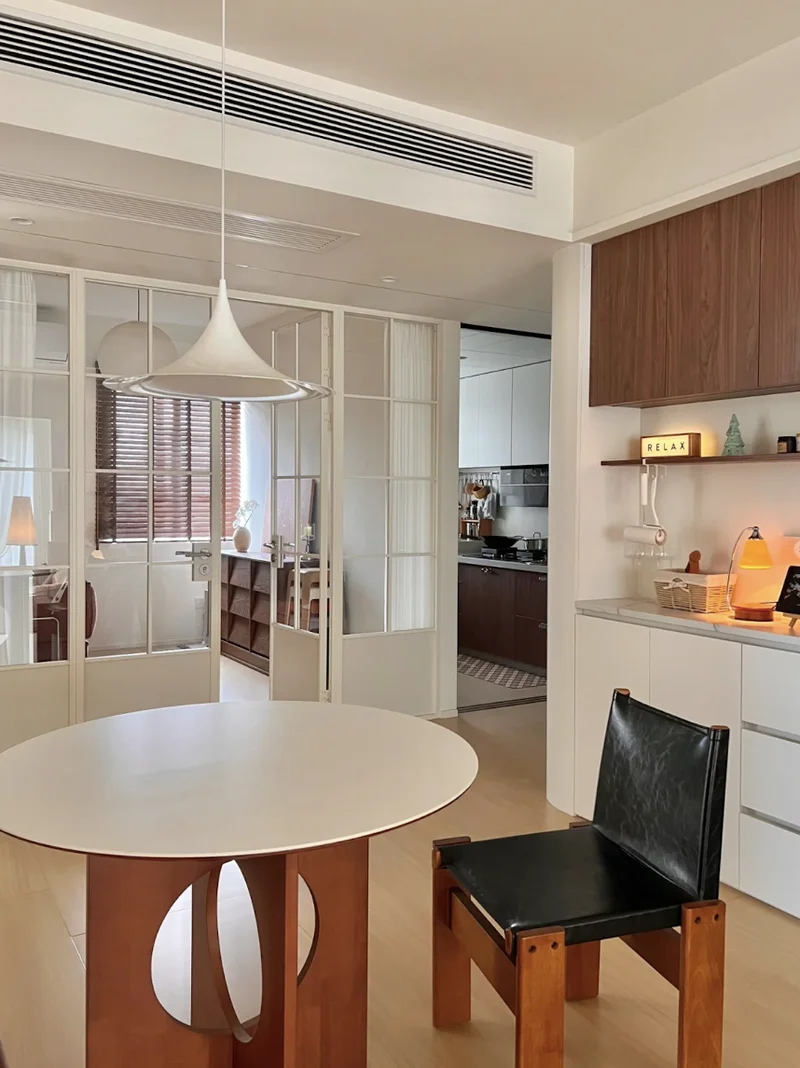
How does your 5-day fast delivery process maintain quality control without compromising lead time?
We ensure quality via pre-stocked, climate-conditioned WPC cores (1050 kg/m³), CNC pre-finishing under ISO 9001-controlled facilities, and a modular assembly line using pre-qualified glass inserts. Each door undergoes automated warpage and seal integrity checks before 72-hour curing, enabling reliable 5-day dispatch post-measurement.
Are UV-resistant finishes applied, and how do they prevent surface degradation in sun-exposed hotel entries?
Yes. A co-extruded cap layer with HALS (Hindered Amine Light Stabilizers) and 2% TiO₂ provides UV resistance, maintaining ΔE < 3 after 4,000 hours of QUV-A exposure (per ISO 4892-3). This prevents fading, chalking, and surface microcracking in atrium or lobby doors with direct sunlight exposure.