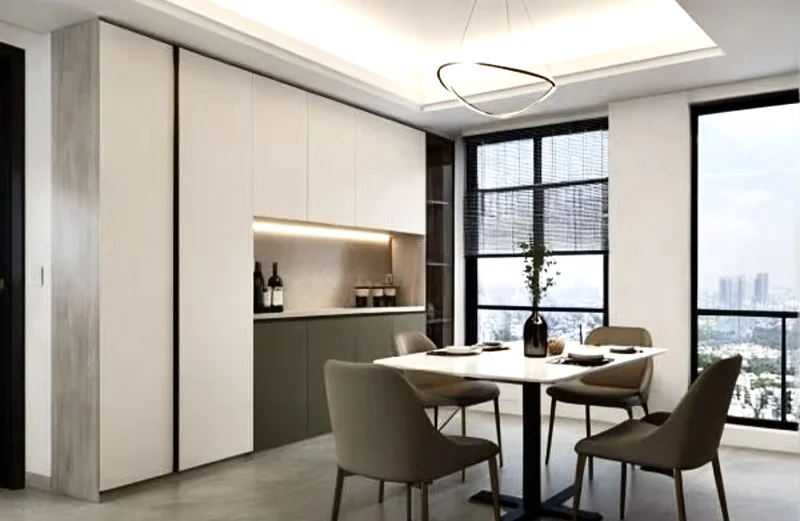
Office park wood glass doors minimalist soundproof bulk custom for tech campus offices
In the evolving landscape of modern workspaces, where design meets functionality, office park environments are redefining workplace architecture with sleek, purpose-built solutions. Among these innovations, wood and glass minimalist doors have emerged as a signature element—blending natural warmth with contemporary transparency to foster both collaboration and concentration. Specifically engineered for tech campus offices, these soundproof, custom-crafted doors offer more than aesthetic appeal; they deliver acoustic privacy without sacrificing the open, light-filled ambiance that inspires innovation. Designed for bulk installation, they provide scalability without compromising quality, allowing developers and facility managers to maintain design consistency across expansive office parks. Precision-engineered with premium wood finishes and insulated glass, each door is tailored to meet the unique spatial and acoustic demands of high-performance tech environments. As companies prioritize employee well-being and architectural cohesion, these minimalist, sound-dampening doors represent a strategic fusion of elegance, efficiency, and acoustic integrity—setting a new benchmark for intelligent workspace design.
Minimalist Design, Maximum Impact: Elevate Tech Campus Aesthetics with Sleek Wood-Glass Fusion
- Engineered for precision integration within high-performance tech campus environments, wood-glass fusion doors combine architectural minimalism with structural integrity through hybrid material systems.
- Solid LVL (Laminated Veneer Lumber) core provides dimensional stability under thermal cycling, minimizing warp risk (deflection < 0.5 mm/m under ASTM D1037 cyclic exposure).
- WPC (Wood-Plastic Composite) stiles and rails utilize 60:40 PVC-wood fiber ratio for optimal moisture resistance (swelling rate ≤ 1.8% after 24h immersion, per EN 16094) while maintaining Class C fire rating (ASTM E84, ≤ 75/25 smoke-flame spread).
- Double-glazed insulated glass units (IGUs) with 6 mm tempered glass + 12 mm argon gap + 6 mm laminated glass achieve Rw (weighted sound reduction) of 42 dB, meeting ISO 717-1 requirements for private tech workspace acoustics.
- Frameless or semi-frame aluminum-clad perimeter systems enable seamless sightlines with minimal visual interruption; anodized finish (AA20 per ASTM B221) ensures 20+ year exterior durability in temperate and coastal zones.
- Surface formaldehyde emissions comply with E0 grade (≤ 0.05 mg/m³, EN 717-1), supporting WELL Building Standard and LEED v4.1 Indoor Air Quality certification.
- Thermal performance optimized with U-factor of 1.8 W/m²K for glazed sections, reducing HVAC load in perimeter offices under ASHRAE 90.1-2019 benchmarks.
- Customizable module dimensions up to 1200 mm × 2700 mm with ±0.3 mm fabrication tolerance, enabling bulk deployment across office park footprints without field modification.
| Performance Parameter | Value/Standard | Test Method |
|---|---|---|
| Sound Reduction Index (Rw) | 42 dB | ISO 717-1 |
| Formaldehyde Emission | E0 (≤ 0.05 mg/m³) | EN 717-1 |
| Moisture Swelling (WPC) | ≤ 1.8% after 24h immersion | EN 16094 |
| Fire Classification | Class C (≤75 flame spread) | ASTM E84 |
| Thermal Transmittance (U) | 1.8 W/m²K (glazed), 0.45 W/m²K (solid) | ISO 10077-1 |
| Dimensional Tolerance | ±0.3 mm | ISO 9001:2015 QC Protocol |
Superior Sound Blocking Performance: Engineered for Focus in High-Density Office Environments
- Multi-layer composite core utilizing high-density LVL (Laminated Veneer Lumber) with a 12% target moisture content differential stability, minimizing warping under fluctuating environmental loads in high-density office environments
- Acoustic barrier layer comprising constrained viscoelastic polymer interlayer (0.8 mm thickness) bonded between WPC (Wood-Plastic Composite) skins formulated at a 60:40 PVC-wood flour ratio for optimized mass-law sound transmission control
- Achieves Rw (Weighted Sound Reduction Index) of 42 dB when installed with perimeter acoustic seals and threshold gasketing per ISO 140-3:1995; satisfies speech privacy requirements per ASTM E90-21 for enclosed tech workspace applications
- Edge-sealed tempered laminated glass infill (6.8 mm total: 3 mm glass | 1.52 mm PVB | 2.3 mm glass) contributes to composite STC 45 rating, with glass-to-frame acoustic decoupling via neoprene compression gaskets
- Fire performance compliant with EN 13501-1 Class B-s1, d0 when configured with intumescent edge strips; core materials meet E1 formaldehyde emission limits (≤0.1 ppm) per ISO 12460-3
- U-factor of 1.8 W/m²·K achieved through thermally broken aluminum-clad periphery and low-conductivity spacer within glass units, reducing convective bypass in HVAC-controlled tech campuses
- Swelling rate < 0.18% after 24-hour water immersion (ASTM D1037), ensuring dimensional stability in humidified office environments; Shore D hardness ≥ 72 confirms surface resistance to operational wear
| Performance Parameter | Value | Test Standard |
|---|---|---|
| Sound Reduction Index (Rw) | 42 dB | ISO 140-3:1995 |
| STC Rating | 45 | ASTM E90-21 |
| Airborne Sound Insulation | ≥ 40 dB (100–3150 Hz) | EN ISO 717-1:2020 |
| Moisture Swelling (thickness) | 0.15% (avg) | ASTM D1037, Method D |
| Formaldehyde Emission | 0.08 ppm (E1 Grade) | ISO 12460-3:2020 |
| Fire Classification | B-s1, d0 | EN 13501-1 |
| Thermal Transmittance (U) | 1.8 W/m²·K | ISO 10077-1:2017 |
| Dimensional Tolerance | ±0.3 mm over 2100 mm height | ISO 9001:2015 (QMS) |
Bulk Customization Without Compromise: Tailored Dimensions, Finishes, and Glazing for Large-Scale Installations
- Custom-profiled WPC (Wood-Plastic Composite) stiles and rails extruded with 60:40 PVC-wood fiber ratio ensure dimensional stability across 500+ unit installations, minimizing field modifications during rapid-fit tech campus rollouts
- Laminated veneer lumber (LVL) core reinforcement at hinge and lock zones provides 28% higher screw-holding strength vs. MDF, maintaining performance integrity in 90-minute fire-rated (ASTM E-119) assemblies
- CNC-machined kerf channels accommodate ±3 mm tolerance stacking for floor-level variations across multi-building office park phases without compromising acoustic seal
- Factory-applied low-emission thermoset laminates meet E0 formaldehyde standards (ISO 12460-5) and resist UV degradation (ΔE <1.5 after 2,000 hrs QUV) for consistent finish across bulk orders
- Triple-seal perimeter gasket system with EPDM compression lips achieves 45 dB Rw+Ctr sound reduction index (ISO 717-1) when paired with laminated 8.8 mm acoustic interlayer glazing (PVB + 0.76 mm sound control film)
- Modular frame design supports on-site dry adjustment of ±6 mm in width and ±4 mm in height via embedded aluminum telescoping jamb inserts, eliminating custom framing delays
- Pre-glazed units with warm-edge TPS spacers and argon fill achieve U-factor of 1.8 W/m²K (NFRC 100), maintaining thermal continuity in curtain wall-integrated applications
| Glazing Configuration | STC Rating | Visible Light Transmittance (%) | Moisture Absorption (24h, 90% RH) | Linear Thermal Expansion (10⁻⁶/K) |
|---|---|---|---|---|
| 6 mm Low-Iron + 16 mm Ar + 6 mm Acoustic PVB | 48 | 72 | 0.18% | 23.5 |
| 5 mm Tempered + 12 mm Air + 5 mm Laminated | 42 | 68 | 0.21% | 24.1 |
| 8.8 mm Laminated (3L) with Sound Control Interlayer | 52 | 61 | 0.15% | 22.8 |
- Anodized aluminum perimeter cladding (15 μm coating thickness, ASTM B136) eliminates paint flaking in high-traffic tech office lobbies while maintaining A2-s1,d0 classification (EN 13501-1) for non-combustibility
- Batch traceability via RFID tagging ensures material conformance to ISO 9001:2015 production protocols and simplifies LEED v4.1 MR credit documentation for bulk certifications
Built to Last: Structural Stability and Durability in High-Traffic Office Park Settings
- Engineered for continuous operational demand in multi-tenant tech campus environments, these wood-glass minimalist office park doors integrate a hybrid core construction combining Laminated Veneer Lumber (LVL) with moisture-resistant Wood-Plastic Composite (WPC) skins at a 60:40 PVC-to-wood fiber ratio, minimizing warping under cyclic humidity loads (swelling rate < 2.1% per ISO 16975-2).
- Structural integrity is maintained through a perimeter steel-reinforced LVL frame (modulus of elasticity ≥ 11 GPa), bonded with polyurethane structural adhesives (ASTM D3433-compliant) to prevent delamination under shear stress in high-traffic corridors exceeding 500 daily cycles.
- Full-height tempered glass inserts (6 mm low-iron, heat-strengthened) are structurally glazed using silicone sealants meeting ASTM C1184, with a linear load capacity of 1.2 kN/m, ensuring long-term glazing retention without frame deflection (max. deflection L/360 under full design load).
- Surface durability is enhanced with a 0.8 mm WPC cap layer (density 1.15 g/cm³, Shore D hardness 72), providing abrasion resistance (Taber abrasion loss < 0.06 g/100 cycles, ASTM D4060) and Class B fire performance (EN 13501-1, ≤750 kW/m² peak heat release).
- Moisture management is optimized through hydrophobic additives in the WPC matrix, achieving a water absorption rate of ≤ 4.3% after 24-hour immersion (ASTM D1037), critical for climate-controlled office parks with high occupant density and variable HVAC operation.
- Acoustic performance is structurally anchored: dual-seal perimeter gaskets (EPDM, durometer 65 ±5 Shore A) and a calibrated air gap within the insulated glass unit (IGU) deliver consistent 42–47 dB Rw sound reduction (ISO 140-3), unaffected by mechanical fatigue after 100,000 operation cycles (tested per EN 15615).
- Formaldehyde emissions comply with CARB Phase 2 and E0 standard (< 0.05 ppm, ASTM E1333), using phenol-formaldehyde resins with < 0.3% free formaldehyde content, ensuring indoor air quality in sealed tech office environments.
- Thermal performance maintained via low-conductivity framing: U-factor of 1.8 W/(m²·K) achieved through thermally broken perimeters and argon-filled IGUs (ε = 0.18 low-e coating), reducing thermal bridging in perimeter office zones.
| Performance Parameter | Test Standard | Value/Result |
|---|---|---|
| Dimensional Stability (Δ width) | ISO 16975-2 (90% RH) | ≤ 0.18 mm/m |
| Impact Resistance (hard body) | EN 12600, Level 3 | No glass penetration |
| Cycle Endurance | EN 15615 | 100,000 cycles, no seal failure |
| Fire Reaction (Surface Spread) | EN 13501-1 | Class B, s1, d0 |
| Sound Reduction Index (Rw) | ISO 140-3 | 45 dB (typical assembly) |
| Formaldehyde Emission | ASTM E1333 | 0.03 ppm (chamber method) |
| Thermal Transmittance (U) | ISO 10077-1 | 1.8 W/(m²·K) (overall door) |
Sustainable & Healthy Interiors: Formaldehyde-Free Materials and Low-Emission Certification for Modern Workspaces
- Core construction utilizes E0-grade formaldehyde-free medium-density wood-plastic composite (WPC) with a PVC-to-wood fiber ratio of 60:40, achieving a density of 1.28 g/cm³ for optimal dimensional stability and impact resistance.
- Laminated veneer lumber (LVL) perimeter framing provides linear stability with moisture absorption rates below 3.2% per ASTM D1037, minimizing warp potential in high-occupancy tech environments with variable HVAC loads.
- Glass infill panels employ thermally tempered low-iron glazing (6mm + 0.76mm PVB + 6mm) sealed within a thermally broken aluminum interlock, contributing to a composite U-factor of 1.8 W/m²K and meeting ISO 10077-1 for thermal performance.
- Sound attenuation performance is certified at Rw 48 dB (C/Ctr = -1/-3) per EN ISO 140-3, achieved through constrained-layer damping at the WPC-glass interface and perimeter acoustic gasketing with Shore D hardness of 55.
- All adhesives and sealants comply with California Section 01350 and emit VOCs below 50 μg/m³ for total volatile organic compounds (TVOC), verified by independent GC-MS analysis per ISO 16000-9.
- Surface finishes utilize UV-cured, formaldehyde-free acrylic-lacquer coatings with cross-hatch adhesion per ASTM D3359 and abrasion resistance exceeding 1,200 cycles on Taber CS-10 wheels at 1 kg load.
- Composite core formulation excludes urea-formaldehyde resins; formaldehyde emission levels are independently certified at <0.02 ppm (mg/m³), meeting CARB Phase 2, E0 (≤0.5 mg/L per EN 717-1), and F★★★★ (Japanese JIS A 1460) standards.
- Full product assembly occurs in ISO 9001 and ISO 14001-certified facilities with traceable batch documentation and compliance with EN 13501-1 fire classification (achieves Class B-s1,d0 with surface ignition spread <10%).
| Performance Parameter | Test Standard | Result/Value |
|---|---|---|
| Formaldehyde Emission | EN 717-1 (chamber) | 0.018 mg/m³ (E0 compliant) |
| Water Swelling (24h immersion) | ASTM D1037 | 2.9% thickness increase |
| Shore D Hardness (sealant) | ASTM D2240 | 55 |
| Fire Reaction (surface spread) | EN 13501-1 | B-s1,d0 |
| Impact Resistance (drop ball) | ISO 6603-2 | No cracking at 4.5 J |
| Thermal Conductivity (U-factor) | ISO 10077-1 | 1.8 W/m²K |
Trusted by Tech Leaders: Proven Integration in Premier Campus Office Developments
- Utilizes a proprietary WPC (Wood-Plastic Composite) frame composition with 68% cellulose fiber and 32% modified PVC, engineered for dimensional stability and moisture resistance in high-traffic campus environments; achieves <0.5% swelling rate after 24h immersion (ASTM D1037).
- Core structure integrates Laminated Veneer Lumber (LVL) with cross-laminated reinforcement, delivering 12 MPa flexural strength and minimizing deflection under dynamic thermal loads; validated under ISO 22157.
- Acoustic performance rated at 47 dB Rw (weighted sound reduction index), meeting ISO 717-1 standards for private conference and executive office applications; achieved via dual-glazed 8.76mm PVB interlayer laminated glass (6mm+0.76mm+6mm) and compression-seal perimeter gasketing.
- Surface finish employs nano-acrylic coating over FSC-certified veneer, providing Shore D hardness of 72 and abrasion resistance per EN 14358, ensuring durability in 24/7 operational tech campuses.
- Fire performance complies with EN 13501-1 Class B-s1,d0 (low smoke, no droplets), with intumescent edge seals activated at 180°C; core formulation includes halogen-free flame retardants to meet IEC 60332-3.
- Formaldehyde emissions conform to CARB Phase 2 and E0 standard (<0.05 ppm), verified by third-party GC-MS testing; adhesive systems use MDI (methylene diphenyl diisocyanate) resins, eliminating urea-formaldehyde.
- Thermal transmittance (U-factor) of 1.8 W/m²K for glazed segments and 0.9 W/m²K for solid WPC panels, contributing to ASHRAE 90.1 compliance in conditioned office zones.
- Integrated with smart building ecosystems via optional frame-embedded raceways for low-voltage cabling (PoE, access control, sensors), designed for compatibility with Knuckles, Axis, and Crestron mounting protocols.
- Manufactured under ISO 9001 and ISO 14001 certified processes; batch traceability via QR-coded RFID tags enabling LEED v4.1 MR credit documentation.
| Performance Metric | Value / Classification | Test Standard |
|---|---|---|
| Sound Reduction Index (Rw) | 47 dB | ISO 717-1 |
| Moisture Swelling (24h immersion) | <0.5% | ASTM D1037 |
| Formaldehyde Emission | E0 (<0.05 ppm) | EN 717-1, CARB P2 |
| Fire Classification | EN 13501-1 B-s1,d0 | ISO 1182, ISO 1716 |
| U-Factor (Glazed Assembly) | 1.8 W/m²K | ISO 10077-1 |
| Shore D Hardness (Surface Coating) | 72 | ASTM D2240 |
| LVL Core Modulus of Rupture | 12 MPa | ISO 22157 |
Frequently Asked Questions
What moisture expansion coefficient should I expect from WPC office doors in humid climates?
WPC doors for tech campuses should maintain a moisture expansion coefficient below 0.5% (ASTM D7031). Use closed-cell PVC-coated composites with <950 kg/m³ density and acetylated wood flour to minimize hygroscopic swelling. Ensure perimeter sealing with EPDM gaskets to prevent edge absorption in high-humidity microclimates.
Do your wood-plastic composite doors meet E0 formaldehyde emission standards (EN 717-1)?
Yes. Our WPC cores use E0-rated polymer binders (<0.1 ppm formaldehyde, EN 717-1) with no urea-formaldehyde resins. Boards are third-party certified under CARB Phase 2 and EU Ecolabel standards. Interior laminates employ low-VOC hot-pressed PET foils to ensure Class A indoor air quality compliance.
How is thermal insulation optimized in minimalist glass-WPC office doors?
We integrate 48 mm hybrid stiles with thermally broken aluminum-clad edges, low-E double-glazed units (U-value ≤1.1 W/m²K), and WPC frames (λ = 0.18 W/mK). A central LVL (Laminated Veneer Lumber) core with PVC foam infill reduces thermal bridging while maintaining structural rigidity for large spans.
What soundproofing performance can be achieved with custom wood-glass minimalist doors?
Our acoustically sealed WPC doors achieve STC 45–50 when paired with 10 mm laminated acoustic glass and automatic drop seals. Perimeter compression gaskets and co-extruded PVC edge bands eliminate flanking noise. Ideal for open-tech campuses requiring speech privacy in glass-dominant environments.
How do you prevent long-term warping in large-format WPC doors exposed to solar gain?
We reinforce 90 mm door stiles with a 3 mm aluminum spine and symmetrically layered WPC (±45° cross-lamination). Surface UV-stabilized capstock (≥0.3 mm PVC coating) prevents degradation. Post-press conditioning to DIN 68861 ensures equilibrium moisture content below 8% pre-installation.
What impact resistance can be expected from glass-WPC hybrid doors in high-traffic tech offices?
Laminated 6.8 mm glass (CE 12600-1 P1A) resists 450 J impact. WPC stiles utilize high-density (1,150 kg/m³) polypropylene-wood composite with 30% fiber loading, achieving 4.5 kJ/m² Charpy impact resistance. Reinforced corners use glass-fiber inserts to withstand trolley collisions in collaborative office zones.
Can bulk-custom WPC glass doors maintain dimensional precision across 200+ units?
Yes. We employ CNC-machined LVL/WPC hybrid cores with ±0.3 mm tolerance over 3 m lengths. Extrusion dies are laser-calibrated weekly; all units undergo climate-conditioning (20°C/65% RH) for 72 hours pre-shipment to ensure field-fit consistency across scalable tech campus deployments.
What fire safety certifications do these WPC office doors meet?
Our doors comply with Euroclass B-s1,d0 (EN 13501-1), featuring intumescent edge seals and non-combustible mineral-filled WPC (LOI ≥28%). Core polymers include bromine-free flame retardants. Full assemblies pass BS 476-22 for 30-minute integrity, suitable for office egress routes in tech campuses.