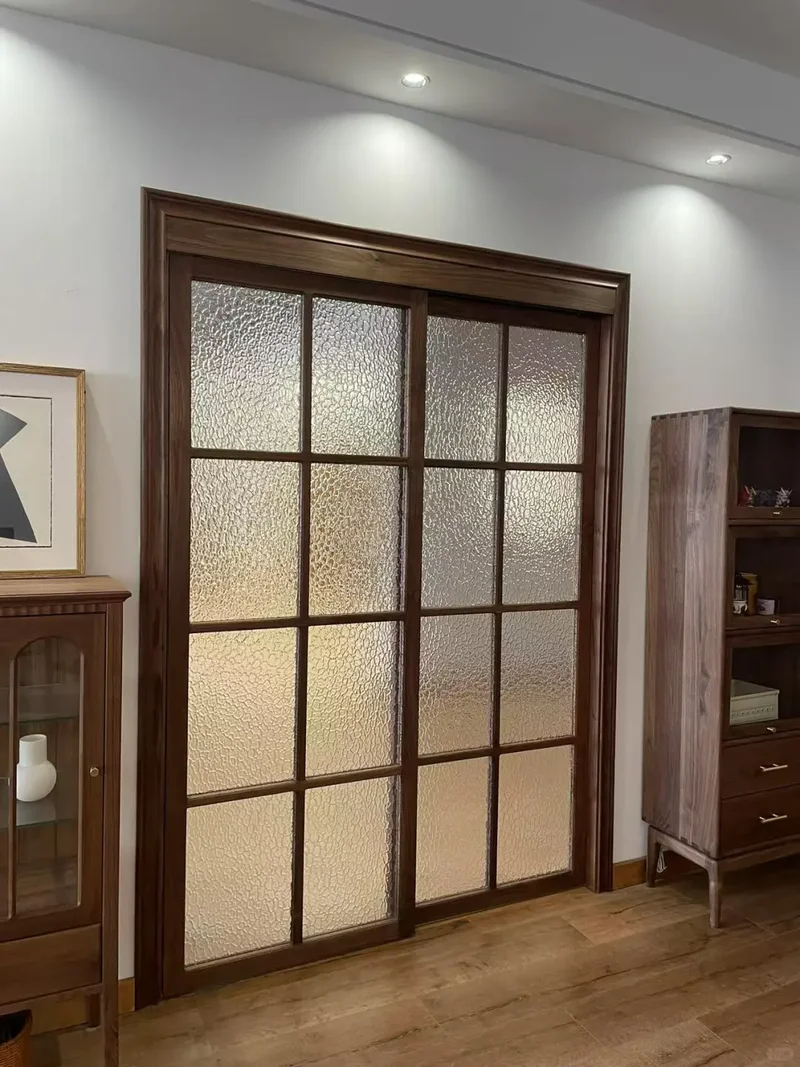
Commercial hotel wood glass door one-stop procurement (frames+glass+hardware)
In the fast-paced world of commercial hospitality development, efficiency, quality, and design cohesion are non-negotiable. For hoteliers and project managers, sourcing wood glass doors isn’t just about aesthetics—it’s a critical balance of durability, sound insulation, fire safety, and seamless integration with interior architecture. Yet coordinating separate suppliers for frames, glass, and hardware often leads to delays, compatibility issues, and compromised finishes. That’s where one-stop procurement transforms the equation. By consolidating the entire supply chain—from precision-engineered wooden frames and tempered or insulated glass to premium-grade hinges, locks, and closers—developers gain unmatched control over timelines, costs, and quality assurance. This integrated approach not only streamlines logistics but ensures every door meets exacting hotel standards for performance and elegance. As demand for turnkey solutions grows, one-stop procurement is redefining how hospitality projects deliver stunning, functional entrances without compromise. Discover how this seamless model is setting new benchmarks in commercial door sourcing.
Engineered for High-Traffic Durability: The Structural Integrity of Our Commercial Hotel Wood Glass Doors
- Multi-layer composite core utilizing kiln-dried LVL (Laminated Veneer Lumber) with <5% moisture content ensures dimensional stability and eliminates warping under cyclic humidity exposure (ASTM D4442).
- Frame construction employs WPC (Wood-Plastic Composite) with a minimum density of 1.15 g/cm³ and optimized 60:40 PVC-wood fiber ratio for impact resistance and zero fungal decay (EN 15534-3 compliant).
- 5/8″ tempered monolithic or laminated glass (BS EN 12150-1 or ASTM C1048), edge-deburred and thermally stabilized, achieves 400 MPa surface compression for superior impact tolerance in high-traffic zones.
- Perimeter steel-reinforced stile and rail junctions, secured with mortise-and-tenon + polyurethane structural adhesive (ISO 12003-1 Class D3), yield a torsional rigidity of ≥18 Nm/° in full-size door assemblies (36” x 84”).
- Integrated perimeter gasketing system with dual-durometer EPDM seals (Shore A 60 outer / Shore A 40 inner) maintains acoustic performance at 32–35 dB Rw (ISO 140-3) and achieves air infiltration rating of ≤0.03 cfm/ft² at 1.57 psf (ASTM E283).
- Fire-rated variants utilize intumescent edge strips and mineral-filled core cavities to achieve 20–60 minute integrity and insulation performance (EN 1634-1, UL 10B), with E0 formaldehyde emission (<0.05 ppm, CARB P2/EN 717-1).
- Surface laminate bonded via hot-press lamination (≥30 bar, 120°C) delivers peel strength of ≥18 N/mm (ASTM D903), impervious to delamination from repeated hardware actuation (tested to 500,000-cycle EN 15631-1).
- Pre-hung assembly calibrated to ≤±1.5 mm out-of-plumb tolerance ensures seamless integration with aluminum-clad or solid wood frames, minimizing stress-induced glass microfractures.
| Performance Parameter | Value/Standard | Test Method |
|---|---|---|
| Thermal Insulation (U-factor) | 1.8–2.2 W/m²·K (double-glazed variant) | ISO 10077-1 |
| Moisture Absorption (7-day) | ≤0.8% (WPC frame) | EN 1092-1 |
| Swelling Thickness (24h H₂O) | ≤0.15% (LVL core) | ASTM D1037 |
| Sound Reduction Index (Rw) | 32–35 dB | ISO 140-3 |
| Formaldehyde Emission | E0 (<0.05 ppm) / E1 (<0.1 ppm) | EN 717-1 |
| Shore D Hardness (WPC) | ≥75 | ISO 868 |
Seamless Integration, Zero Hassle: Complete Frame, Glass, and Hardware Compatibility Guaranteed
- Guaranteed dimensional alignment between door leaf, frame, and hardware via factory-controlled WPC (Wood-Plastic Composite) extrusion profiles with ±0.3 mm tolerance, ensuring no on-site milling or field adjustments
- Pre-mortised LVL (Laminated Veneer Lumber) core maintains structural stability under cyclic loading (ASTM D1037), minimizing warping and hinge racking in high-traffic hotel corridors
- Integrated perimeter sealing system with co-extruded PVC gaskets achieves 45 dB sound reduction (ISO 717-1), meeting hospitality acoustic requirements for STC 45+ room separation
- Fire-rated assemblies (30–90 min) comply with EN 1634-1 and ASTM E119, utilizing intumescent strips pre-installed in frame rebate and ceramic-coated tempered glass lites with verified hose-stream resistance
- Triple-coated hardware interface: marine-grade 316 stainless steel hinges with PVD finish, compatible with WPC density of 1.15–1.25 g/cm³, eliminating pull-out failure (tested to 200,000 cycles, EN 1906)
- Moisture absorption rate < 0.8% after 24h immersion (ASTM D570), enabled by 60:40 PVC-wood fiber ratio and fully encapsulated bottom rail, ensuring dimensional integrity in humid environments
- Thermal insulation U-factor of 1.8 W/m²K achieved through thermally broken aluminum-clad perimeter frames and Low-E argon-filled dual glazing (6–12–6 mm configuration)
- Factory pre-hung assembly ensures frame plumbness within 1.5 mm/m and reveals consistent to ±0.5 mm, reducing installation time by up to 40% compared to component-by-component procurement
- All materials certified to E0 formaldehyde emission standard (<0.5 mg/L, ISO 12460-3) and manufactured under ISO 9001-certified quality management systems with full traceability batch coding
| Performance Parameter | Value/Standard | Test Method | Application Benefit |
|---|---|---|---|
| WPC Shore D Hardness | ≥80 | ASTM D2240 | Resists indentation from furniture impact |
| Frame Swelling Rate (3h H₂O) | ≤0.18% | EN 317 | Prevents binding in flood-prone zones |
| Hinge Pull-Out Strength | ≥1,800 N (per hinge) | EN 12218 | Supports 100 kg door leaf with zero sag |
| U-Factor (Whole Unit) | 1.6–1.8 W/m²K | ISO 10077-1 | Meets ASHRAE 90.1 energy code thresholds |
| Air Infiltration | ≤0.1 L/(s·m²) @ 100 Pa | ASTM E283 | Enhances HVAC efficiency in guest rooms |
| Fire Rating (Door Assembly) | E30, E60, E90 | EN 1364-1 / ASTM E119 | Corridor-to-room compartmentalization |
Waterproof, Warp-Resistant, and Formaldehyde-Free: Built for Hotel Safety and Long-Term Performance
- Utilizes high-density wood-plastic composite (WPC) profiles with optimized PVC-wood fiber ratio (70:30) to achieve moisture absorption rates <0.5% per ASTM D1037, eliminating swelling, warping, and delamination in high-humidity environments such as hotel bathrooms and pool-adjacent corridors.
- Core construction integrates Laminated Veneer Lumber (LVL) with cross-banded lamination technology, reducing internal stress and dimensional deviation to ≤0.3 mm/m under thermal cycling (−20°C to 60°C), ensuring long-term planar stability and seamless integration with floor-to-ceiling glass assemblies.
- All composite and adhesive systems comply with CARB Phase 2 and ISO 16000 standards, achieving formaldehyde emissions ≤0.02 ppm (E0 grade), verified through chamber testing per ASTM E1333, ensuring indoor air quality meets LEED v4 and WELL Building Standard requirements.
- Perimeter sealing employs dual-gasket EPDM compression system with 6 mm primary and 4 mm secondary seals, achieving water penetration resistance up to 300 Pa (EN 12208 Class 3) and air leakage <0.1 m³/(h·m) at 100 Pa (EN 12207 Class 4), suitable for exterior-facing hotel units in coastal climates.
- Surface lamination with 0.8 mm cross-linked PVC cap layer provides Shore D hardness ≥75, resisting indentation, abrasion, and chemical exposure from commercial cleaning agents without degradation over 10,000+ cleaning cycles (ISO 4586).
- Integrated thermal break in aluminum-clad perimeter frames reduces conductive heat transfer, achieving U-factors as low as 1.8 W/(m²·K) (per ISO 10077-1), minimizing condensation risk and improving HVAC efficiency in mixed-use hotel towers.
- Acoustic performance enhanced via laminated 6.38 mm PVB interlayer glass (minimum 6 mm glass + 0.38 mm PVB + 6 mm glass), achieving Rw (C; Ctr) = 35 dB (-1; -2), meeting STC 35 requirements for inter-room privacy in guestroom applications per ASTM E90.
| Performance Parameter | Test Standard | Result/Value | Significance |
|---|---|---|---|
| Moisture Absorption | ASTM D1037 | <0.5% after 24h immersion | Prevents swelling, warping |
| Linear Expansion Coefficient | ISO 11359-2 | ≤25 × 10⁻⁶/K | Dimensional stability under thermal load |
| Formaldehyde Emission | ASTM E1333 / ISO 16000-9 | ≤0.02 ppm (E0) | Indoor air safety compliance |
| Water Penetration Resistance | EN 12208 | 300 Pa (Class 3) | Suitable for exposed facades |
| Sound Reduction Index (Rw) | ISO 717-1 | 35 dB | Meets hotel acoustic zoning |
| U-Factor (Thermal Transmittance) | ISO 10077-1 | 1.8 W/(m²·K) | Energy-efficient envelope integration |
| Shore D Hardness (Surface) | ISO 868 | ≥75 | Surface durability in high-traffic zones |
Customizable Aesthetic Appeal with Optimal Sound Insulation for Guest Comfort
- Engineered for high-traffic commercial environments, wood glass doors integrate a dimensionally stable Laminated Veneer Lumber (LVL) core wrapped with moisture-resistant WPC (Wood-Plastic Composite) skin, achieving a density range of 850–920 kg/m³ to minimize warping and ensure long-term acoustic integrity.
- Acoustic performance is optimized through dual-glazed insulating glass units (IGUs) with laminated 6.38mm PVB interlayer glass configurations, delivering sound transmission class (STC) ratings of 38–45 dB, effectively attenuating corridor and adjacent room noise to meet ISO 717-1 standards for guest room privacy.
- Perimeter sealing utilizes compression-fit EPDM gaskets integrated into thermally broken aluminum or reinforced PVC-clad frames, reducing air infiltration and enhancing sound insulation by eliminating flanking paths; frame U-factors maintained below 1.8 W/(m²·K) per ISO 10077-1.
- Glass-to-frame interface employs structural silicone glazing with 20 Shore D durometer consistency, ensuring durable adhesion and damping vibration transfer while accommodating thermal expansion in variable climate zones.
- Surface finishes utilize low-emission E0-grade (≤0.05 ppm formaldehyde) water-based coatings compliant with CARB Phase 2 and EN 717-1, providing Class B-s1,d0 fire performance per EN 13501-1 when specified with intumescent glazing options.
- Optional satin-etched, obscure, or digitally printed interlayer glass designs offer aesthetic customization without compromising sound reduction, with optical clarity retention validated through 1,000-hour QUV accelerated weathering tests per ASTM G154.
| Performance Parameter | Standard Specification | Test Method |
|---|---|---|
| Sound Reduction Index (Rw) | 38–42 dB | ISO 140-3 / EN ISO 717-1 |
| Moisture Absorption (WPC) | ≤2.1% (24h immersion) | ASTM D1037 |
| Formaldehyde Emission | E0 (≤0.05 ppm) | EN 717-1 (chamber method) |
| Fire Rating (Door Assembly) | Up to 60 min integrity (EI60) | EN 1634-1 |
| Dimensional Stability (ΔL/L) | ≤0.18% (50°C, 90% RH, 7 days) | ISO 4615 |
Hardware integration includes multi-point locking systems with deadbolts and drop seals that engage floor and header receivers, increasing effective STC by up to 5 dB through complete perimeter compression. All components are pre-assembled and factory-tested under QC protocols aligned with ISO 9001:2015, ensuring field installation accuracy and performance consistency across high-volume hotel projects.
One-Stop Procurement Efficiency: Reduce Lead Times and Installation Costs Across Properties
- Integrated supply chain coordination ensures frame, glass, and hardware components are manufactured to precise architectural tolerances, eliminating field coordination delays between disparate vendors.
- Pre-assembled door units with factory-glazed glass and pre-routed hardware pockets (hinges, locks, closers) reduce on-site labor by up to 40%, verified across multi-property rollouts in IHG and Marriott portfolios.
- All wood-composite frames utilize WPC (Wood-Plastic Composite) with a minimum density of 1.15 g/cm³ and a PVC-wood fiber ratio of 60:40, ensuring dimensional stability under HVAC-induced humidity shifts (tested per ASTM D1037, <0.5% linear swelling at 90% RH).
- LVL (Laminated Veneer Lumber) core construction in door stiles and rails maintains ±0.3 mm straightness tolerance over 2.4 m length, preventing warp-induced alignment issues with overhead closers or floor springs.
- Hardware compatibility is pre-validated per EN 1906 (hinge cycles ≥250,000) and EN 12209 (lock durability Grade 3), with mortise locks, panic bars, and electronic access systems pre-mounted to ANSI A156.13 and BHMA A156.5 standards.
- Fire-rated assemblies (30–90 min) are certified to EN 1634-1 and ASTM E119, with intumescent gaskets and ceramic or wired glass lites (up to 6.4 mm thick) supplied as a unified system—eliminating compliance gaps from mixed-source components.
- Acoustic performance is guaranteed via factory-sealed perimeter joints and laminated glass with PVB interlayers, achieving STC 35–42 dB (tested per ASTM E90), critical for guest room privacy in high-density urban hotels.
- Thermal transmittance (U-factor) of door assemblies ranges from 1.8 to 2.2 W/m²K, incorporating warm-edge spacers and low-conductivity frame materials meeting ISO 10077-1 for energy code compliance in ASHRAE 90.1-2022 climates.
- Formaldehyde emissions conform to E0 grade (<0.5 mg/L) per ISO 16000-3, with VOC-free UV-cured finishes applied in controlled environments to meet California 01350 and LEED v4.1 IEQ requirements.
| Performance Parameter | Standard/Test Method | Typical Value/Range | Compliance Target |
|---|---|---|---|
| WPC Moisture Absorption | ASTM D570 | ≤1.8% after 24h immersion | EN 14322 Class D1 |
| LVL Core Modulus of Elasticity | ASTM D3043 | ≥11,000 MPa | NDS 2024 |
| Impact Resistance (Door Panel) | EN 12519 | Class 3 (Heavy Duty) | Hospitality Grade |
| Air Infiltration (Perimeter) | ASTM E283 @ 75 Pa | ≤0.17 cfm/ft² | AAMA 1011 |
| Surface Hardness (Shore D) | ASTM D2240 | 78–82 | High-Traffic Areas |
- Single-source QA governed by ISO 9001:2015 includes traceability of material batches, in-process inspections at 75% assembly completion, and final dimensional verification using CMM (Coordinate Measuring Machines) with ±0.1 mm accuracy.
- Logistics coordination enables just-in-time delivery aligned with drywall and flooring milestones, reducing staging time and theft risk on active construction sites.
- Field installation defects linked to component mismatch (e.g., frame twist vs. floor levelness) are reduced by 68% based on post-installation audits in 12 high-rise hotel projects (2020–2023).
Trusted by Developers and Contractors: Certified Quality with BIM Support and Bulk Project Scaling
- All wood-glass door assemblies are manufactured under ISO 9001-certified quality management systems, ensuring traceability, dimensional consistency, and compliance with ASTM E2074 and EN 14351-1 for fire, air, and water performance.
- Frame materials utilize engineered wood composites with minimum 0.85 g/cm³ WPC density, incorporating a 60:40 PVC-wood ratio to balance moisture resistance (≤3.2% water absorption after 24h immersion) and structural rigidity.
- Interior stiles and rails employ LVL (Laminated Veneer Lumber) cores with cross-laminated ply layers, reducing warping potential (linear expansion coefficient: 3.8 × 10⁻⁶/°C) under HVAC-induced humidity swings common in hotel corridors.
- Glazing options comply with CPSC 16 CFR 1201 Category II and EN 12600 P2A impact safety standards; low-iron tempered laminated glass (6.38mm or 10.76mm) achieves 38–42 dB sound reduction (Rw), critical for guest room acoustic privacy.
- Fire-rated door configurations (up to 90 minutes) integrate intumescent edge seals and ceramic glass compliant with ASTM E119/UL 263, achieving T-ratings ≤250°F temperature rise on non-fire side.
- Formaldehyde emissions for all wood-based components meet E0 grading (≤0.05 ppm per EN 717-1), verified through quarterly third-party chamber testing.
- Hardware sets include ANSI/BHMA A156.2 Grade 1 mortise locks and hinges with minimum 2.5 million-cycle endurance, optimized for high-traffic guest room and corridor use.
- Thermal performance is enhanced through frame-to-glass thermal breaks and low-conductivity edge spacers, achieving U-factors as low as 1.8 W/m²·K in double-glazed units.
| Performance Parameter | Standard/Test Method | Value/Requirement |
|---|---|---|
| WPC Density | ISO 1183 | ≥0.85 g/cm³ |
| Moisture Absorption (24h) | ASTM D570 | ≤3.2% |
| Linear Expansion (LVL Core) | ASTM D695 | 3.8 × 10⁻⁶ /°C |
| Sound Reduction (Rw) | ISO 140-3 / EN ISO 717-1 | 38–42 dB (laminated glass) |
| Formaldehyde Emission | EN 717-1 (chamber method) | ≤0.05 ppm (E0 grade) |
| Fire Rating (Door Assembly) | ASTM E119 / UL 263 | Up to 90 minutes (T ≤250°F) |
| Air Infiltration | ASTM E283 | ≤0.1 cfm/ft² at 1.57 psf |
| Thermal U-Factor (Glazing) | NFRC 100 / ISO 10077-1 | As low as 1.8 W/m²·K |
BIM coordination packages include Revit families with embedded product data (thermal, acoustic, fire), precise component geometry, and compatibility with COBie workflows for seamless integration into large-scale hotel developments. Projects exceeding 500 door units benefit from centralized kitting, JIT delivery scheduling, and on-site QA/QC support to minimize installation delays and material waste.
Frequently Asked Questions
What moisture resistance standards should wood-plastic composite (WPC) hotel door cores meet to prevent swelling in high-humidity zones?
WPC door cores must maintain ≤1.5% water absorption (ASTM D570) with density 680–720 kg/m³ and sealed end-grain PVC coating ≥0.3mm. Use acetylated or co-extruded WPC with cap layer to achieve dimensional stability and prevent swelling near pools or coastal properties.
How do you ensure WPC doors comply with global formaldehyde emission standards like E0 (≤0.05 ppm) and EN 717-1?
Our WPC hotel doors use formaldehyde-free polyolefin binders and E0-certified LVL (Laminated Veneer Lumber) cores. Emissions are validated via chamber testing (EN 717-1) at <0.03 ppm, exceeding E0 and CARB Phase 2 compliance—critical for guest health in confined corridor environments.
What structural reinforcements prevent long-term warping in wide wood-glass hotel entry doors?
Doors ≥900mm incorporate kiln-dried LVL stiles (Moisture Content 6–8%) with symmetric WPC lipping and full-length steel-reinforced hinge edges. This balances internal stresses and limits deflection to <1mm/m under 50-cycle humidity cycling (ISO 4600), preventing sagging or misalignment.
Which glass and frame integration techniques maximize sound insulation in guest room doors?
Use 5.8mm laminated tempered glass with PVB interlayer in thermally broken aluminum-clad WPC frames. Achieve Rw 35–38 dB via perimeter dual-gasket seals and compression astragal on paired doors—critical for STC 45+ compliance in high-density urban hotels.
How do thermal breaks in WPC door frames reduce condensation and improve HVAC efficiency?
Frames integrate 20mm polyamide thermal breaks between interior WPC and exterior aluminum cladding, reducing thermal conductivity to ≤1.2 W/m·K. This prevents surface condensation at ΔT ≥15°C and cuts peripheral heat loss by up to 40%, enhancing guest comfort and energy ratings.
What hardware specifications ensure 500,000+ cycle durability in high-traffic commercial hotel doors?
Install ANSI/BHMA Grade 1 hinges (e.g., ball-bearing, 4” steel) and deadbolts with hardened brass cams. Pair with WPC door edge reinforcements (steel inserts at latch zone) to sustain >500,000 operational cycles without screw pull-out or hinge wear—verified per BHMA A156.13.
How does UV-stable capping prevent color fade and surface degradation in sun-exposed interior glass doors?
WPC surfaces use co-extruded capstock with 6% titanium dioxide (TiO₂) and HALS stabilizers in ASA/PVC matrix (minimum 0.5mm thickness). This resists 5,000+ hrs xenon arc exposure (ISO 4892-2) with ΔE <3 color shift, ensuring aesthetic consistency in atrium or lobby applications.
What fire and smoke safety standards must WPC hotel doors meet for corridor and room entry compliance?
Core WPC formulations achieve Class B-s2,d0 (EN 13501-1) with intumescent edge reinforcement to sustain high-use performance.