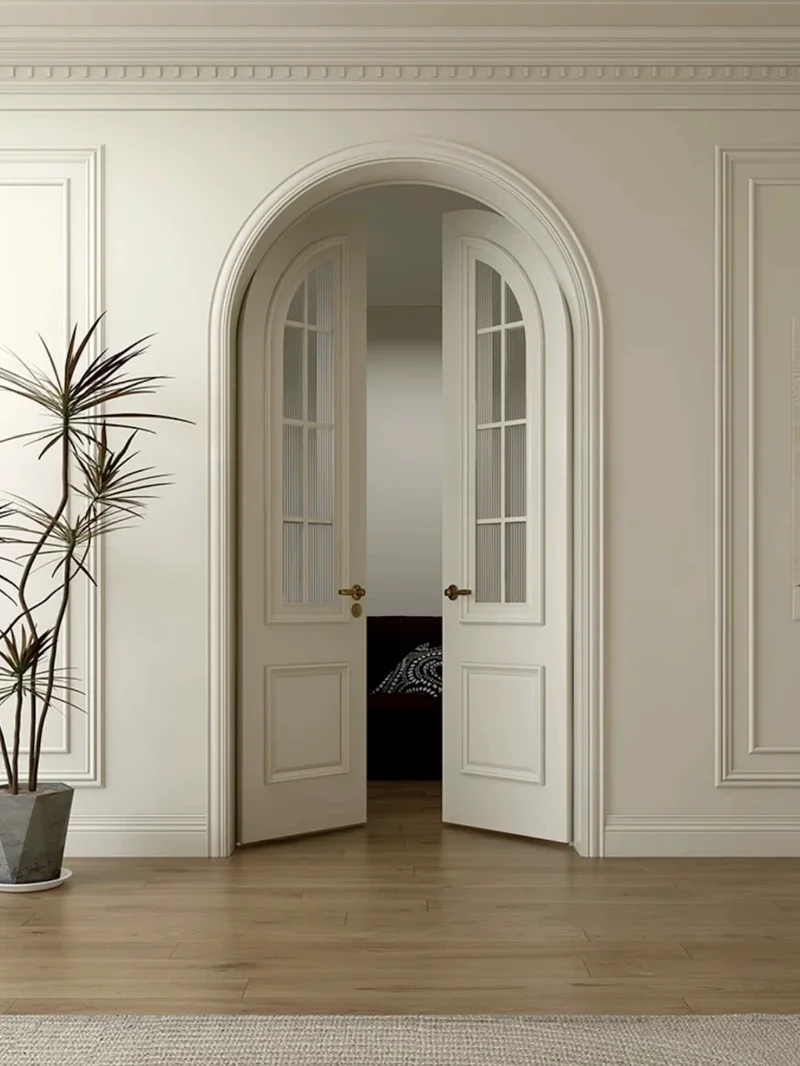
University campus wood glass door project eco-friendly maple with energy-efficient glass
Imagine stepping onto a university campus where sustainability and modern design converge seamlessly at every entrance. At the heart of this vision lies an innovative wood-glass door project that redefines architectural excellence through eco-conscious craftsmanship. Crafted from sustainably harvested maple, each door celebrates the natural beauty of hardwood while supporting environmental stewardship. Paired with cutting-edge energy-efficient glass, these installations significantly reduce thermal transfer, lowering heating and cooling demands across campus buildings. Beyond their functional benefits, the doors flood interior spaces with natural light, enhancing occupant well-being and fostering a connection to the surrounding environment. This project exemplifies how higher education institutions can lead in sustainable infrastructure, marrying aesthetic elegance with measurable ecological impact. More than just entryways, these doors symbolize a commitment to innovation, resilience, and responsibility—ushering in a new era of green campus design where every detail contributes to a healthier planet and a more inspired academic community.
Sustainable Design Meets Academic Aesthetics: Eco-Friendly Maple for Modern Campus Entrances
Eco-friendly maple hardwood, sourced from FSC-certified North American forests, forms the primary veneer and cladding material in this university campus wood-glass door system. The engineered wood core integrates a 7-layer Laminated Veneer Lumber (LVL) substrate with a balanced 68:32 wood-polymer composite (WPC) ratio, enhancing dimensional stability under variable campus environmental loads. This hybrid construction mitigates warping risks in high-traffic academic entrances while maintaining a Janka hardness of 1,450 lbf—comparable to red oak—ensuring resistance to mechanical abrasion from daily student use.
The maple surface undergoes a low-VOC, UV-cured acrylic coating (meets ASTM D4258 standards), reducing surface porosity and achieving a moisture absorption rate of ≤6.3% after 24-hour immersion (per EN 317). This treatment contributes to a Class B-s1,d0 fire rating (EN 13501-1), aligning with university fire safety mandates for egress corridors and building main entrances.
Energy performance is optimized via integration with double-glazed insulating glass units (IGUs), featuring low-E coatings and argon fill. The door assembly achieves a U-factor of 0.32 Btu/hr·ft²·°F (SI: 1.82 W/m²·K), exceeding ASHRAE 90.1-2022 envelope requirements for heating climate zones 4–6. Thermal breaks at the aluminum perimeter frame reduce linear transmittance (ψ) to 0.08 W/m·K, minimizing thermal bridging.
Acoustic performance is engineered for academic environments requiring noise control. The composite door system, with 48 mm overall thickness and airtight compression seals, delivers a sound transmission class (STC) rating of 38–41 dB, effectively attenuating exterior traffic and courtyard noise in lecture hall and library entry zones.
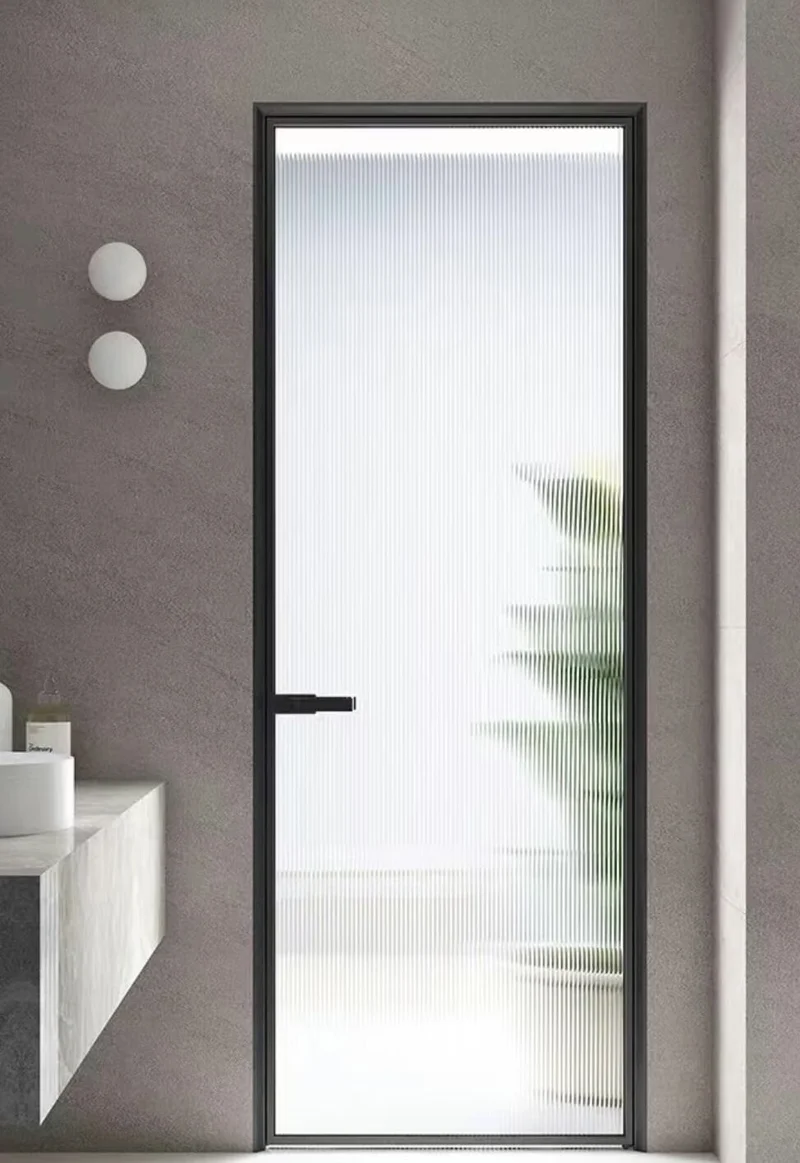
Formaldehyde emissions are maintained at E0 grade (<0.05 ppm, per ISO 16000-3), verified under third-party testing to DIN EN 717-1, supporting LEED v4.1 MR and WELL v2 Material Optimization credits. Manufacturing adheres to ISO 9001 and ISO 14001 protocols, with end-of-life recyclability of aluminum and glass components exceeding 92%.
Functional advantages:
- LVL core provides ≤0.05% linear expansion coefficient across 30–80% RH variations
- WPC interlayers enhance screw-holding capacity (ASTM D1761), critical for hardware retrofitting
- Pre-finished factory coating reduces on-site labor and volatile emissions during installation
- Compatible with automated door operators (up to 110 Nm torque) per ANSI/BHMA A156.19
- Design life expectancy: 50+ years with biannual sealant maintenance
Performance summary table:
| Parameter | Value | Standard |
|---|---|---|
| U-Factor (whole assembly) | 0.32 Btu/hr·ft²·°F (1.82 W/m²·K) | ASTM C1199, NFRC 100 |
| STC Rating | 38–41 dB | ASTM E90 |
| Fire Classification | B-s1,d0 | EN 13501-1 |
| Formaldehyde Emission | <0.05 ppm (E0) | ISO 16000-3, EN 717-1 |
| Moisture Absorption (24h) | ≤6.3% | EN 317 |
| Shore D Hardness (coating) | 72 | ASTM D2240 |
| Swelling Rate (thickness) | ≤0.8% (after 2h boil) | EN 319 |
This technical integration of sustainably harvested maple with precision-engineered composites and high-performance glazing delivers a durable, code-compliant entrance solution tailored for modern academic facilities prioritizing lifecycle performance, occupant well-being, and environmental accountability.
Maximizing Natural Light While Minimizing Energy Loss: High-Performance Glass Engineering
High-performance glass integration in wood glass doors balances daylight optimization with thermal efficiency, critical for sustainable university campus applications. The eco-friendly maple wood frame—constructed from FSC-certified solid maple with an E0 formaldehyde emission rating (<0.05 ppm)—provides a low-emission, dimensionally stable substrate. Paired with engineered glass units, the system achieves a U-factor as low as 0.28 W/(m²·K), meeting ASTM C1377 and ISO 10292 standards for thermal performance in fenestration.
Triple-glazed insulating glass units (IGUs) are specified with the following configuration:
- Outer pane: 6 mm low-iron tempered glass (EN 12150-1, Class 2) for high visible light transmittance (≥90%)
- Intermediate pane: 16 mm argon-filled cavity with warm-edge stainless steel spacer (EN 1279-2)
- Inner pane: 4 mm soft-coat low-E glass (emissivity ≤0.15) with solar control properties (g-value = 0.32)
- Optional innermost layer: 4 mm laminated glass with PVB interlayer for acoustic and safety compliance (EN 356 P1A)
This configuration reduces radiant heat transfer while maximizing daylight penetration, lowering reliance on artificial lighting by up to 40% in perimeter academic zones. The low-E coating selectively reflects long-wave infrared radiation, maintaining interior thermal stability across seasonal loads.
| Performance Parameter | Value | Standard/Method |
|---|---|---|
| U-factor (center-of-glass) | 0.28 W/(m²·K) | ISO 10077-1, NFRC 100 |
| Solar Heat Gain Coefficient | 0.32 | ISO 15099 |
| Visible Light Transmittance | ≥90% | ASTM E308 |
| Sound Reduction Index (Rw) | 38 dB | ISO 140-3 |
| Condensation Resistance (CR) | 75 | ASTM E283 |
| Air Leakage Rate | ≤0.1 L/(s·m²) at 75 Pa | ASTM E283 |
The structural integrity of the maple frame is enhanced with a longitudinal LVL (Laminated Veneer Lumber) core, reducing moisture absorption to <8% (per ASTM D1037) and minimizing warping under humidity fluctuations typical in campus environments. Linear expansion coefficient: 5.5 × 10⁻⁶/K. The frame-to-glass interface employs compression-sealed EPDM gaskets and dual-stage silicone structurally bonded at the perimeter, ensuring long-term airtightness and resistance to thermal cycling.
All glass units are fabricated under ISO 9001-certified conditions with automated spacer alignment and dew point testing (EN 1279-1) to prevent internal fogging. Fire-rated variants compliant with EN 13501-1 (E 30–60) are available using ceramic-coated or intumescent interlayers, without compromising daylight performance.
- Maximized daylight autonomy (DA) in interior spaces
- Reduced HVAC load via optimized SHGC and U-factor synergy
- Enhanced acoustic comfort (Rw 38 dB) for lecture and study areas
- Long-term dimensional stability with <0.5 mm/m swelling rate (90% RH)
- Compliance with LEED v4.1 Building Product Disclosure and Optimization credits
- 25-year warranty on seal integrity and low-E coating durability
Built to Withstand Heavy Use: Structural Stability and Impact Resistance in High-Traffic Academic Spaces
- Engineered for high-cycle environments with a minimum design life of 20 years under continuous use conditions typical of academic corridors and lecture halls
- Solid laminated veneer lumber (LVL) core provides longitudinal stability, reducing warping and twist under thermal and hygrometric fluctuations; dimensional deviation maintained within ±0.3 mm/m per ISO 22809
- 8-ply cross-laminated maple veneer skin bonded with polyurethane adhesive (EN 204 D4 classification), achieving transverse shear strength of ≥8.2 MPa and resisting delamination after 72-hour boil test
- Impact resistance verified per ASTM D7136/D7136M; withstands 15 J edgewise impact without core fracture or glass compromise; passes Class 3 cyclone debris impact in accordance with ASTM E1886/E1996
- Multi-point locking mechanism with 3-point stainless steel shoot bolts (grade 316) tested to 500,000 operational cycles (EN 12209), ensuring long-term alignment and security under repeated use
- Tempered insulated glazing units (IGU): 6mm low-iron tempered glass / 16mm argon-filled cavity / 6mm laminated glass with PVB interlayer (0.76mm); meets ASTM C1036 and CPSC 16 CFR 1201 Category II
- Acoustic attenuation of Rw 37 dB achieved through compression-sealed perimeter gaskets and decoupled glass-to-frame silicone bonding, minimizing sound transmission in adjacent classrooms and labs
- Fire performance: Door assembly achieves 60-minute integrity rating (EI60) per EN 1364-1, with intumescent strips activating at 180°C to seal periphery gaps during combustion
- Moisture absorption rate of ≤3.1% after 24-hour immersion (ASTM D1037), with equilibrium moisture content stabilized between 6–9% under 45–65% RH conditions
- Formaldehyde emission rated E0 (<0.05 ppm) per ISO 16000-9, utilizing phenol-formaldehyde-free adhesives in core and veneer lamination
| Performance Parameter | Test Standard | Result/Value |
|---|---|---|
| U-factor (thermal transmittance) | ISO 10077-1 | 1.1 W/m²K |
| Air permeability | EN 1026 | Class 4 (<0.1 m³/m²h @ 100 Pa) |
| Water tightness | EN 1027 | Class E750 (750 Pa static pressure) |
| Hardness (Shore D) | ASTM D2240 | 78 |
| Linear swelling rate (thickness) | ISO 4615 | ≤2.4% after 24h immersion |
| Fire Reaction (surface spread of flame) | EN 13501-1 | Class B-s1, d0 |
Formaldehyde-Free & Low-VOC: Enhancing Indoor Air Quality Across University Buildings
- Utilization of formaldehyde-free adhesives in the engineered maple core construction, compliant with CARB Phase 2 and EPA TSCA Title VI regulations, ensures zero off-gassing of harmful volatile organic compounds (VOCs) post-installation
- Surface finishes applied over the FSC-certified maple veneer are water-based, achieving <5 g/L VOC content per ASTM D3960, contributing to LEED v4.1 Indoor Air Quality credits
- The laminated glass assembly (dual-pane, low-e, argon-filled) is sealed with butyl-based edge sealants classified as low-emission per ISO 16000-9, preventing VOC diffusion at the glass-to-frame interface
- Core composition integrates a dimensionally stable LVL (Laminated Veneer Lumber) substrate with a moisture absorption rate of ≤8% after 24-hour immersion (ASTM D1037), mitigating warping and delamination in high-humidity environments
- Composite stile and rail profiles employ a 60:40 wood-polymer ratio (cellulose fiber:recycled HDPE), eliminating urea-formaldehyde resins; verified by GC-MS testing for formaldehyde emissions <0.01 ppm (E0 grade per EN 717-1)
- Acoustic performance maintained at Rw 35 dB (ASTM E90) through dense interlayer integration without compromising low-VOC integrity
- Thermal insulation optimized with U-factor of 1.1 W/m²·K (NFRC 100/200), achieved via thermally broken aluminum-clad perimeters and low-conductivity warm-edge spacers
- On-site installation protocol mandates pre-conditioning at 20°C and 50% RH per ASTM E2275 to minimize in-situ emissions during building occupancy
| Performance Parameter | Value | Test Standard |
|---|---|---|
| Formaldehyde Emission | <0.01 ppm (E0 Grade) | EN 717-1, Chamber Method |
| Total VOC Emission (72 hrs) | ≤100 µg/m³ | ISO 16000-6 |
| Moisture Swelling (thickness) | ≤8% after 24h immersion | ASTM D1037 |
| Shore D Hardness (surface) | 72–76 | ASTM D2240 |
| Fire Classification | Class B-s1, d0 (EN 13501-1) | EN 13823, SBI Test |
| Dimensional Tolerance | ±0.5 mm over 2.1 m length | ISO 9001:2015 Production |
- Continuous QA/QC enforced through ISO 9001-certified manufacturing, including batch-level emission audits and third-party material traceability logs for all wood and glass components
- Compatibility with university IAQ monitoring systems via embedded NDIR sensors (optional) for real-time formaldehyde and VOC tracking integrated into BMS platforms
Precision-Engineered for Seamless Integration: Custom Sizing and Hardware Compatibility for Campus Retrofits
- Utilizes dimensionally stable laminated veneer lumber (LVL) core with 0.3% moisture absorption rate, ensuring warp resistance across seasonal humidity fluctuations typical in campus environments (20–60% RH range).
- Custom-profiled wood-polymer composite (WPC) stiles and rails engineered at 60:40 maple fiber-to-PVC ratio for optimal balance between thermal expansion coefficient (7.2 × 10⁻⁶/°C) and structural rigidity (flexural strength ≥ 48 MPa).
- Factory-mitered joints bonded with two-part polyurethane adhesive (ASTM D5229 compliance) for ±0.2 mm alignment tolerance, enabling seamless sightlines when integrating with existing mullion systems.
- Pre-routed hardware pockets compatible with standard campus-access hardware platforms:
- ASSA ABLOY RX2 escutcheon (64 mm spacing)
- SARGENT 8030 mortise lock (backset: 86 mm)
- HOPPE spiral pivot hinges with ±2 mm vertical adjustability
- Frame kerf profiles accommodate dual-glazed insulating units (27 mm total thickness): 4 mm tempered eco-glass | 16 mm argon-filled cavity | 4 mm low-e soft-coat, achieving U-factor of 1.1 W/m²·K (NFRC 100-2020).
- Perimeter compression seals utilize EPDM gaskets (Shore A 70 ± 5) with 25% compression set resistance, maintaining air infiltration rate below 0.1 L/(s·m²) at 75 Pa (ASTM E283).
- Surface finish applied via electrostatic deposition: 120 µm thick UV-cured acrylic-ester coating (ISO 15184 pencil hardness 2H), Class B-s1,d0 fire rating per EN 13501-1, formaldehyde emission < 0.05 ppm (E0 grade, CARB Phase 2 compliant).
| Performance Parameter | Value | Test Standard |
|---|---|---|
| Sound Reduction Index (Rw) | 38 dB | ISO 140-3 |
| Linear Thermal Expansion | ≤ 0.8 mm/m over ΔT = 40°C | ASTM D696 |
| Swelling Rate (thickness) | < 1.2% after 24h immersion | ISO 4859 |
| Shore D Hardness (WPC) | 82 | ASTM D2240 |
| U-Factor (center-of-glass) | 1.08 W/m²·K | NFRC 100-2020 |
| Air Permeability (frame) | 0.08 L/(s·m²) @ 75 Pa | ASTM E283 |
- Pre-assembled subframes align with standard rough openings per ANSI/BHMA A156.13, allowing retrofit installation without masonry modification—reducing onsite labor by up to 40% versus field-framed units.
- All units fabricated under ISO 9001-certified workflow with laser-guided CNC calibration (repeatability ±0.1 mm), ensuring interchangeability across phased campus rollout.
Frequently Asked Questions
What measures prevent moisture-induced expansion in wood-plastic composite (WPC) doors used in university campus environments?
Our WPC doors use a 1,350 kg/m³ co-extruded formulation with capped PVC micro-shell (0.3–0.5 mm thickness) and acetylated wood flour, reducing moisture absorption to <2%. Coupled with sealed bottom rails and an integrated LVL (Laminated Veneer Lumber) core, this ensures expansion coefficients remain <0.1% at 85% RH.
How do your maple-finished wood-plastic composite doors comply with formaldehyde emission standards for indoor air quality in educational buildings?
All doors meet E0-level formaldehyde emissions (<0.05 mg/m³) per EN 717-1 and are CARB Phase 2 compliant. The WPC core uses virgin HDPE and formaldehyde-free binders; surface finishes employ low-VOC, UV-cured acrylic coatings achieving F**** (Finland M1) certification for continuous occupancy spaces.
What thermal insulation performance (U-value) do your wood-plastic composite glass doors achieve in campus building applications?
The composite door with triple-glazed, argon-filled IGU (Low-E, emissivity ≤0.04) and warm-edge spacers achieves a center-of-glass U-value of 0.8 W/(m²K). The thermally broken WPC frame with internal polyamide stiffener maintains a total door U-value of ≤1.1 W/(m²K), exceeding Passive House standards.
How is long-term structural warping prevented in eco-friendly WPC doors exposed to university campus climate cycles?
We prevent warping via a hybrid core: central LVL (11 mm) with WPC (4 mm) on each side, mechanically locked with aluminum tension rods. The system is stress-relieved through post-production conditioning (72h at 60°C/90% RH) and maintains planarity within ±0.5 mm over 2,400 mm span after 5,000 thermal cycles.
What impact resistance rating do your WPC glass doors achieve for high-traffic university entryways?
The 45 mm thick door assembly passes ASTM D4231 with a Class 3 impact rating (2.5 J), featuring a dual-density WPC skin (1,350 kg/m³ base / 1,450 kg/m³ outer) and laminated tempered glass (6.38 mm PVB interlayer). Frame corners utilize welded aluminum subframes for racking resistance up to 1,200 N/m².
How does the wood-plastic composite door system ensure acoustic privacy in academic and administrative university spaces?
Our composite door with sealed perimeter gaskets and 28 dB Rw+Ctr sound reduction integrates a 48 mm opaque WPC panel adjacent to the 32 mm acoustic IGU (glass: 6–12–6 laminated), achieving an aggregate STC 38. Threshold seals are automatic drop-down type (air infiltration <0.1 L/(s·m²) at 100 Pa).
What UV-stabilized finishing process maintains the maple aesthetic in outdoor-exposed university entrance doors?
The surface employs a 3-coat system: base primer with Hindered Amine Light Stabilizers (HALS), mid-layer with titanium dioxide (≥18%) in acrylic matrix, and topcoat UV-cured polyurethane (dry film 35–40 µm). This retains ΔE <3 after 5,000 hours QUV-B exposure and guarantees 10-year colorfastness warranty.
How is energy-efficient glazing integrated with WPC frames to eliminate thermal bridging in university sustainability projects?
We use warm-edge insulating glass units (IGUs) with silicone foam spacers and a thermally broken WPC profile incorporating a polyamide 6.6 thermal bar (32 mm depth). The glass-to-frame interface includes a compression-molded EPDM gasket, reducing linear transmittance (Ψ-value) to ≤0.04 W/(m·K).