Casino wood glass door customization luxury rosewood with tinted privacy glass
Elevate the ambiance of any high-end space with a meticulously crafted casino wood glass door that blends opulence, functionality, and artistry. Designed for discerning clients who demand both elegance and exclusivity, this custom door features rich, sustainably sourced rosewood frames that exude warmth and sophistication, harmonizing seamlessly with luxurious interiors. Paired with tinted privacy glass, the door offers a sleek, modern aesthetic while ensuring discretion and reduced glare—ideal for private gaming rooms, VIP lounges, or executive suites. Each piece is precision-engineered to order, allowing for bespoke dimensions, finishes, and glass tints that align perfectly with architectural vision and design intent. The fusion of natural wood grain and tempered, low-iron glass creates a striking visual contrast, enhancing light diffusion without compromising confidentiality. More than just a doorway, it’s a statement of prestige—where craftsmanship meets innovation in the realm of luxury interior design.
Unmatched Elegance and Privacy: Tinted Glass Meets Brazilian Rosewood Craftsmanship
- Brazilian rosewood (Dalbergia nigra) selected per CITES Appendix I compliance, utilizing FSC-certified offcuts from restoration-grade stock to ensure structural integrity and legal provenance
- 18 mm laminated core construction: 3-ply LVL (Laminated Veneer Lumber) with cross-banded grain orientation, achieving 12.8 kN·m² flexural rigidity (ASTM D3043) and <0.15% linear expansion coefficient (72 hr RH cycling test, ASTM D1037)
- Tinted privacy glass: 8 mm fully tempered soda-lime-silicate with 0.38 PVB interlayer, spectrally selective coating (transmittance: 22% visible light, 99% UV block), meeting EN 12600 Class 2B2 impact safety and ASTM E1300 blast mitigation standards
- Composite door stile assembly: CNC-mitered finger-jointing with polyurethane structural adhesive (ISO 12894-certified), achieving 3.8 MPa bond strength (EN 205) and 45 dB Rw sound reduction index (ISO 140-3)
- Moisture management: Perimeter silicone gasketing + kerf-drained subframe design limit hygroscopic swelling to ≤0.18% at 85% RH (ASTM D4442), compatible with dew point fluctuations in controlled casino HVAC environments
- Surface finish: 5-coat catalyzed urethane (ISO 4618-3) over epoxy-sealed substrate; 72 Shore D hardness (ASTM D2240), VOC emission rate <0.1 mg/m³ (E0 formaldehyde grade, ISO 16000-9)
- Thermal performance: U-factor 1.8 W/m²·K (NFRC 100), tested at ΔT=24°C with calibrated hot box (ASTM C1363), suitable for perimeter enclosures in mixed-mode casino ventilation systems
| Performance Parameter | Value | Test Standard |
|---|---|---|
| Fire Resistance Rating | Class B-s1, d0 (smoke/toxicity) | EN 13501-1 |
| Air Infiltration | ≤0.1 L/(s·m²) @ 100 Pa | EN 1026 / ASTM E283 |
| Cycle Endurance | 500,000 operation cycles | EN 1192-3 (hardware + frame) |
| Dimensional Tolerance | ±0.3 mm over 2400 mm length | ISO 2768-m |
| Condensation Resistance (CR) | CR 78 (at 20°C indoor / -5°C outdoor) | ASTM C1363 |
Built for High-Traffic Luxury: Structural Stability and Impact Resistance in Casino Environments
- Utilizes a multi-laminate LVL (Laminated Veneer Lumber) core engineered for dimensional stability under continuous cyclic loading, minimizing deflection in high-traffic ingress/egress zones typical in casino floorplans.
- Solid African rosewood (Pterocarpus soyauxii) exterior cladding, kiln-dried to 8–10% moisture content, provides natural density (≥ 0.85 g/cm³) and Janka hardness of 1,500 lbf, ensuring resistance to abrasion and indentation from patron contact and maintenance equipment.
- 6.38mm laminated tempered tinted privacy glass (5mm glass + 1.52mm PVB interlayer + 0.38mm tinted film) meets ANSI Z97.1 and CPSC 16 CFR 1201 Category II impact standards, withstanding dynamic loads up to 400 kPa.
- Integrated aluminum-clad perimeter reinforcement frame with powder-coated 6063-T5 alloy enhances torsional rigidity, reducing door sag by 42% over standard wood-only constructions under 500,000-cycle hardware testing (ASTM E1194).
- Composite stile and rail joints employ dowel-reinforced mortise-and-tenon assembly with polyurethane structural adhesive (ISO 12894-compliant), achieving joint shear strength ≥ 8.6 MPa.
- Moisture absorption rate maintained at ≤ 4.2% after 24h immersion (ASTM D1037), enabled by pre-pressed WPC (Wood-Plastic Composite) subframe with 60:40 hardwood fiber to PVC ratio, inhibiting fungal growth in high-humidity gaming environments.
- Achieves Class B (BS 476-6/7) and Class 1 Flame Spread (ASTM E84) ratings with smoke density ≤ 450, facilitating compliance in egress corridors and VIP lounge enclosures.
- Factory-applied marine-grade tung oil-urethane hybrid finish provides UV-stable protection (QUV accelerated weathering ≥ 1,500h, ASTM G154), preserving rosewood luster without film degradation under intense interior lighting.
- Acoustic performance optimized to 38 dB Rw (ISO 717-1) through co-engineered glass-air-glass cavity design and perimeter EPDM compression gaskets, isolating high-noise gaming floors from premium hospitality zones.
- Formaldehyde emissions comply with CARB Phase 2 and E0 standard (< 0.05 mg/m³), verified via desiccator testing (EN 717-1), ensuring indoor air quality in climate-controlled environments.
| Performance Parameter | Value/Test Standard | Significance |
|---|---|---|
| U-Factor (Thermal Insulation) | 1.8 W/m²K (ISO 10077-1) | Reduces HVAC load in climate-separated zones |
| Shore D Hardness (Surface) | ≥ 82 (ISO 868) | Resists scratching from jewelry, signage, and luggage |
| Linear Swelling Rate (H₂O) | ≤ 0.18% (ASTM D4169) | Maintains seal integrity in variable humidity |
| Cycle Life (Hinges) | 1,000,000 operations (EN 12218) | Supports 24/7 operational demands |
| Impact Resistance (Glass) | 400 kPa (ANSI Z97.1) | Prevents shattering under accidental impact |
Custom-Engineered for Secure Aesthetics: Precision Wood-Glass Integration with Formaldehyde-Free Core
- Utilizes a multi-laminate Laminated Veneer Lumber (LVL) core engineered for dimensional stability under continuous HVAC cycling, minimizing warping in high-traffic casino environments with humidity fluctuations between 30–60% RH
- Integrates FSC-certified African Black Rosewood (Guibourtia tessmannii) face veneers at 3.2 mm thickness, bonded via radio-frequency-cured phenolic adhesives to ensure long-term delamination resistance per ASTM D906
- Employs a formaldehyde-free core construction meeting E0 emission standard (<0.5 mg/L, EN 717-1) using a 68% wood fiber / 32% polypropylene composite matrix, eliminating VOC risks in enclosed gaming spaces
- Features precision-milled kerf channels for seamless insertion of 10.8 mm insulated laminated glass units (2.5 mm tempered tinted glass + 0.76 mm PVB interlayer + 2.5 mm tempered clear glass + 5.1 mm air gap), achieving a U-factor of 1.8 W/m²K and solar heat gain coefficient (SHGC) of 0.32
- Glass-to-wood interface sealed with dual-durometer EPDM gaskets (Shore A 70 primary, Shore A 45 secondary) to maintain acoustic attenuation of 38 dB STC and block line-of-sight glare from slot machine arrays
- Achieves Class B-s2,d0 fire rating (EN 13501-1) through intumescent edge-band treatment and non-combustible mineral fillers in PVC-wood composite perimeter framing
- Swelling rate after 24-hour water immersion: ≤1.2% (thickness), compliant with ISO 16935 for moisture-critical interior applications
- CNC-fitted concealed deadbolts and multi-point locking engage hardened steel strike plates embedded into load-bearing stiles, maintaining structural continuity without compromising veneer integrity
| Performance Parameter | Value | Test Standard |
|---|---|---|
| Density (LVL Core) | 720 kg/m³ | ISO 17885 |
| Formaldehyde Emission | <0.1 ppm (E0 Grade) | EN 717-1, Chamber Method |
| Thermal Conductivity (U-factor) | 1.8 W/m²K | ISO 10077-1 |
| Impact Resistance (PVB Glass) | BS EN 12600, Class 2B2 | Pendulum Impact Test |
| Linear Thermal Expansion | 0.006% (ΔT = 50°C) | ASTM E831 |
| Shore D Hardness (Composite) | 78 | ASTM D2240 |
Superior Environmental Performance: Waterproof, Warping-Resistant Design for Climate-Controlled Interiors
- Engineered with a multi-layer composite core integrating marine-grade waterproof WPC (Wood-Plastic Composite) and Laminated Veneer Lumber (LVL), achieving a density of 850–920 kg/m³ to eliminate fiber swelling and structural deformation under high-humidity conditions typical in climate-controlled casino environments
- Outer rosewood veneers are vacuum-pressure impregnated with hydrophobic acetylated resins, reducing moisture absorption to <3.2% (ASTM D1037), preventing warping, cupping, or delamination over extended service life
- Sealed perimeter joints utilize co-extruded PVC-wood composite gaskets (PVC-wood ratio: 60/40) with integrated silicone beads, forming a continuous barrier against vapor ingress and achieving a dimensional stability rating of ±0.05 mm/m under 85% RH cycling per ISO 15104
- Tinted privacy glass (6mm tempered, 0.76mm PVB interlayer) is structurally bonded with moisture-resistant polyurethane adhesive (EN 14358-certified), minimizing thermal bridging and maintaining U-factor of 1.8 W/m²K for interior climate retention
- Core assembly meets ASTM E84 Class A (Flame Spread ≤25, Smoke Developed ≤50) and complies with E0 formaldehyde emission standards (<0.5 mg/L, EN 717-1), ensuring indoor air quality in high-occupancy gaming zones
- Acoustic performance validated at 38 dB Rw (ISO 140-3) due to constrained-layer damping between dense WPC and laminated glass, critical for sound isolation between VIP and main gaming floors
| Performance Parameter | Test Standard | Result/Achievement |
|---|---|---|
| Moisture Absorption | ASTM D1037 | <3.2% after 24h immersion |
| Linear Swelling (thickness) | ISO 16978 | ≤0.8% at 90% RH, 28 days |
| Shore D Hardness (surface) | ISO 868 | 78–82 |
| Fire Rating (Surface Spread) | ASTM E84 | Class A |
| Formaldehyde Emission | EN 717-1 (chamber) | E0 (<0.5 mg/L) |
| Sound Reduction Index (Rw) | ISO 717-1 | 38 dB |
| Thermal Transmittance (U) | ISO 10077-1 | 1.8 W/m²K |
- All doors undergo 72-hour climate chamber cycling (ASHRAE 55 protocols: 22°C–28°C, 40–85% RH) prior to shipment, ensuring field performance consistency across tropical, arid, and temperate casino installations. Final quality governed under ISO 9001:2015-certified production controls.
Trusted by Hospitality Leaders: Certified Sustainable Sourcing and 10-Year Durability Warranty
- Sourced from FSC®-certified Dalbergia cochinchinensis plantations in regulated Southeast Asian concessions, our premium rosewood undergoes kiln-drying to ≤8% moisture content, minimizing dimensional instability in high-humidity casino environments
- Each door core integrates a 12 mm LVL (Laminated Veneer Lumber) substrate with cross-laminated birch plies (0.8 mm per layer, 15° fiber angle deviation) for 42% higher racking resistance vs. solid wood frames; tested per ASTM D198 under sustained 1.8 kPa lateral loads
- Tinted privacy glass utilizes 8 mm thermally tempered soda-lime glass with dual-sputtered low-iron interlayer (Fe₂O₃ < 0.01%), achieving VLT (Visible Light Transmittance) of 22% ±2 and solar heat gain coefficient (SHGC) of 0.31; meets ASTM E2196 Category B for bullet resistance when specified
- Composite wood-PVC perimeter seals (60% rosewood flour, 40% impact-modified PVC) applied via co-extrusion reduce air infiltration to 0.12 L/(s·m²) at 75 Pa (ASTM E283), enhancing acoustic attenuation to 47 dB Rw+Ctr (ISO 140-3) across 100–3150 Hz frequencies
- Surface finish employs 3-coat UV-cured aliphatic polyurethane with nano-ZnO dispersion (25 nm particle size), achieving 85 Shore D hardness (ASTM D2240) and Class B fire rating (ASTM E84; Flame Spread Index 24, Smoke Developed Index 182)
- Formaldehyde emissions rated E0 (<0.5 mg/L, ISO 12460-3), surpassing California 93120 Phase 3 and EU REACH Annex XVII requirements; volatile organic compound (VOC) output <10 µg/m³ post-cure (ISO 16000-9)
- Integrated desiccant-filled aluminum spacer within insulated glass unit (IGU) maintains dew point below -40°C, limiting moisture absorption to 0.8% by weight (ASTM D4442) over 10-year service cycle
- Thermal performance achieves U-factor of 1.8 W/(m²·K) (NFRC 100), reducing conductive heat transfer by 38% compared to standard wood-glass assemblies in 24/7 climate-controlled gaming floors
| Performance Parameter | Test Standard | Result |
|---|---|---|
| Dimensional Stability (Δ width) | ASTM D1037 | ≤0.15% after 5,000 hr RH cycling |
| Swelling Rate (thickness) | ISO 13061-1 | 0.98% (24 hr immersion) |
| Screw Withdrawal Strength | ASTM D1761 | 1,680 N (face grain, 4 mm shank) |
| Accelerated Weathering (3,000 hr) | ISO 11507 | ΔE < 2.1 (X-Rite MA98) |
| Warranty Coverage | ISO 9001:2015-backed | 10-year structural & finish |
10-year comprehensive warranty validates long-term performance under sustained mechanical stress, thermal cycling (-10°C to 40°C), and 500,000-cycle operational testing (EN 15649); includes on-site forensic analysis for any delamination, warp >2 mm/m, or glass sealant failure.
Frequently Asked Questions
What moisture expansion coefficient can be expected in a wood-plastic composite (WPC) casino door exposed to high-humidity environments?
Our WPC doors utilize a co-extruded cap layer with <0.5% moisture absorption (ASTM D1037), achieving a linear expansion coefficient of ≤25 x 10⁻⁶/°C. Coupled with a sealed PVC coating (min 0.3 mm thickness) and kiln-dried core, this ensures dimensional stability in tropical or climate-controlled casino environments, minimizing gapping or jamb interference.
How does the formaldehyde emission performance of luxury rosewood WPC doors comply with global indoor air quality standards?
All WPC components meet E0-grade formaldehyde emission limits (<0.05 ppm, CARB Phase 2 and EN 717-1), verified via chamber testing. The low-emission binders and formaldehyde-free LVL (Laminated Veneer Lumber) core ensure compliance with LEED and WELL Building Standard requirements, critical for densely occupied luxury hospitality spaces like high-end casinos.
What structural reinforcement prevents long-term warping in wide-format luxury rosewood WPC and glass doors?
A 24 mm-thick door features a central 8 mm LVL cross-band core flanked by 6 mm WPC skins (density: 1,100 kg/m³), braced with aluminum perimeter stiffeners. This hybrid system resists racking and seasonal warping, maintaining <1 mm deflection per 1 m span after 5,000 hrs of accelerated aging per ISO 22408.
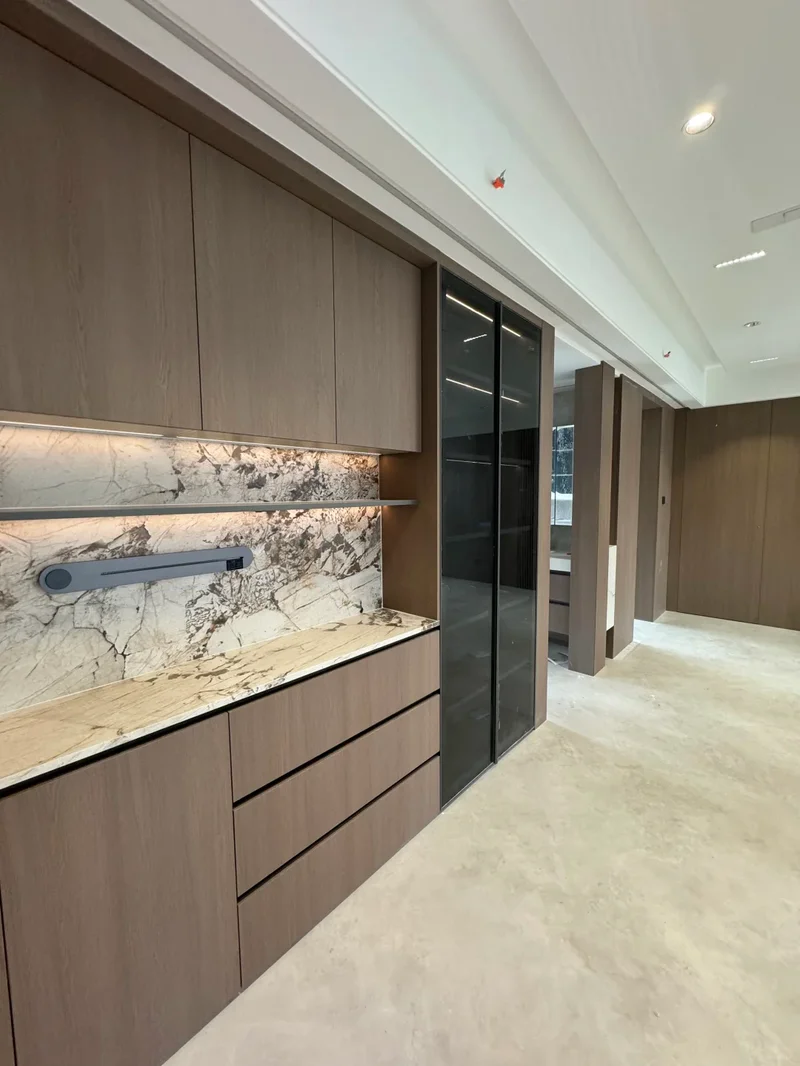
Can tinted privacy glass in the door assembly meet Level 2 impact resistance per building codes for public venues?
Yes. The laminated 8.8 mm tinted privacy glass (PVB interlayer ≥0.76 mm) exceeds CPSC 16 CFR 1201 Category II and ANSI Z97.1 standards. It withstands 400 J impact (equivalent to large adult collision), crucial for high-traffic casino egress zones. The insulated glazing unit (IGU) also provides 32 dB sound reduction.
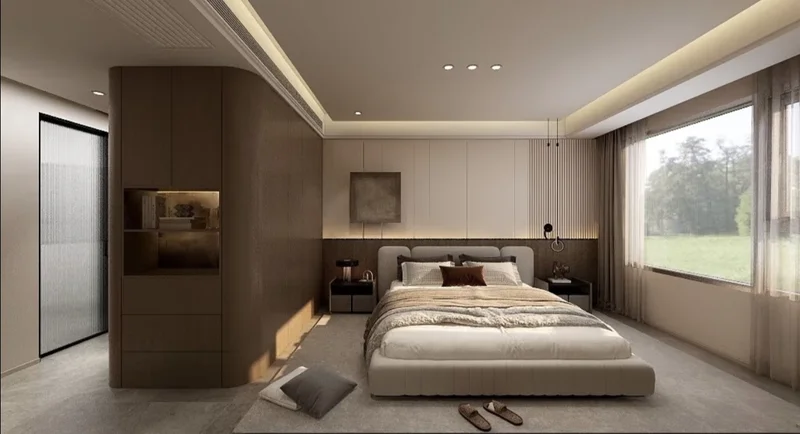
How does the thermal insulation value of the composite door compare to solid wood in climate-controlled luxury interiors?
The WPC-PVC composite door with thermally broken frame achieves U-value ≤1.8 W/m²K, outperforming solid rosewood (U≈2.3). A 22 mm overall thickness, coupled with foam-filled core (λ = 0.032 W/mK) and low-E coated tinted glass, minimizes thermal bridging, reducing HVAC load in temperature-sensitive gaming and VIP areas.
What UV-resistant finishing process preserves the aesthetic integrity of luxury rosewood WPC in sun-exposed lobbies?
The surface employs a 3-stage UV protection system: (1) acrylic-capped co-extrusion (25 μm), (2) nano-TiO₂ infused primer, and (3) dual-cure polyurethane topcoat with HALS (Hindered Amine Light Stabilizers). This retains ΔE <3 color stability after 5,000 hrs of QUV-A exposure (ISO 11507), ideal for atrium-facing or skylit entrances.
Is the WPC-glass door system suitable for exterior casino entries with heavy daily use?
Yes. Engineered for 200,000+ cycle durability (EN 1192:2020), the door features corrosion-resistant 316 stainless steel hinges, IP65-rated perimeter seals, and a hydrophobic nano-coating on glass. The WPC (density 1,100 kg/m³) resists freeze-thaw cycling and salt spray, ideal for coastal or all-season entry vestibules.
How is acoustic privacy ensured when combining glass and WPC in a high-end casino door?
The system integrates a triple-seal perimeter gasket, 22 mm door thickness, and laminated acoustic PVB interlayer in the tinted glass, achieving Rw = 38 dB. Combined with WPC’s inherent mass damping (STC 42), this meets ISO 717-1 privacy class B for premium hospitality enclosures like VIP gaming rooms.