Wood glass door export to Australia AS/NZS 2047 certified with fire-rated glass
In the competitive landscape of architectural exports, meeting stringent safety standards is not just a requirement—it’s a mark of excellence. For businesses seeking to supply the Australian and New Zealand markets, the AS/NZS 2047 certification for fire-rated glass doors represents a critical benchmark. This standard ensures that wood glass doors provide essential protection, containing flames and smoke to safeguard lives and property. Exporting doors that combine the timeless aesthetic of wood with the advanced technology of fire-rated glass requires a deep understanding of both craftsmanship and compliance. Achieving this certification is a testament to a product’s reliability, opening doors to projects where safety and design must seamlessly converge. For exporters, it is the definitive key to building trust and securing a prestigious position in a discerning market.
Meeting Australian Standards: AS/NZS 2047 Compliance for Reliable Door Performance
AS/NZS 2047:2014 is the mandatory Australian/New Zealand standard for external windows and doors, setting the benchmark for structural adequacy, weatherproofing, and durability. For wood glass doors, particularly those integrated with fire-rated glazing, compliance is not a singular achievement but a systems engineering outcome, demanding rigorous control over materials, construction, and testing protocols.
Core Compliance Pillars: Material Integrity & Systems Engineering
Compliance begins with the substrate. Our engineered wood composite (WPC) doors are designed to exceed the dimensional stability and moisture resistance requirements of AS/NZS 2047, which is critical for Australia’s diverse climate zones.
- LVL (Laminated Veneer Lumber) Core: Provides exceptional racking resistance and torsional stability, ensuring the door leaf maintains its geometry under wind load (AS/NZS 1170.2) and operational stress, preventing binding or seal failure.
- Advanced WPC Cladding & Stiles: Formulated with a controlled PVC-wood flour ratio and high density (>1.3 g/cm³), this material achieves a near-zero moisture absorption rate (<0.5%). This directly translates to minimal swelling or shrinkage, preserving the integrity of the weather seal and glass rebate.
- Formaldehyde Emission Control: All composite wood elements comply with E0 (≤0.5 mg/L) or super E0 (≤0.3 mg/L) emission grades as per ISO 12460, ensuring indoor air quality and aligning with Green Star project prerequisites.
Integrated Fire-Rated Glazing System
The integration of fire-rated glass into a compliant AS/NZS 2047 door assembly requires a certified system approach. The glazing unit, frame, and all ancillary components (intumescent seals, beads) must be tested together as a complete assembly.
- Fire & Impact Rating Synergy: Our doors utilize EI classification glazing (per EN 13501-2 or AS 1530.4), providing both integrity (E) and insulation (I) for 30/60/90 minutes. The framing system is engineered to accommodate the specific thermal expansion and weight of these specialized units while maintaining the mandatory Level 3 impact resistance (AS/NZS 4666) for safety glazing in hazardous locations.
- Sealant & Bead Performance: High-temperature silicone sealants and mechanically retained beads are specified to maintain their seal during a fire event and under prolonged UV exposure, ensuring ongoing weatherproofing (AS/NZS 4284).
Quantified Performance Advantages
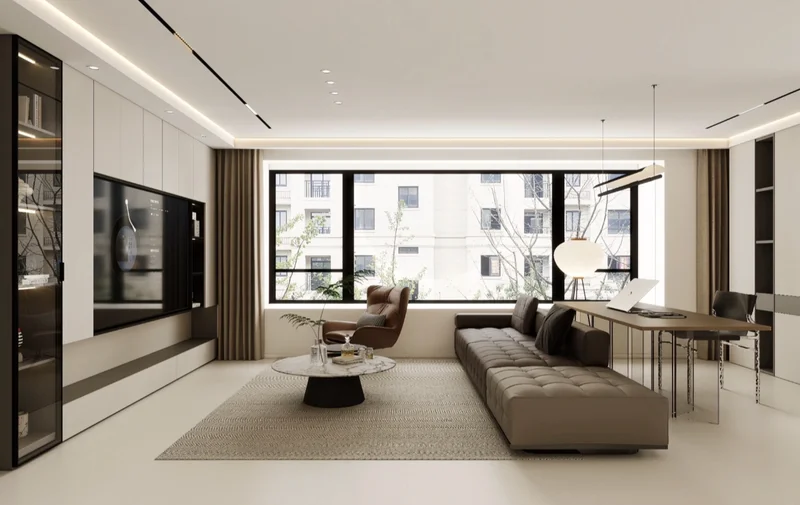
The material science behind our compliant doors delivers measurable benefits beyond the standard.
- Superior Acoustic Insulation: The combination of high-density WPC, LVL core, and laminated or insulated glass units achieves sound reduction ratings (Rw) of 35-42 dB, mitigating external noise transmission.
- Enhanced Thermal Efficiency: The low-conductivity wood composite and thermally broken or insulated glazing options result in improved U-factors, contributing to the building’s overall energy performance.
- Durability & Maintenance: The WPC surface exhibits high Shore D hardness (>75) and superior UV stability, resisting impact, scratching, and fading, which reduces lifecycle maintenance costs.
Certification & Quality Assurance Framework
AS/NZS 2047 compliance is validated through independent testing and audited manufacturing processes.
- Product Certification: Doors are tested and certified by a JAS-ANZ accredited body for compliance with AS/NZS 2047, including cyclic wind pressure, water penetration, and forced entry resistance.
- Fire System Certification: The complete fire-rated door assembly holds evidence of suitability from an accredited laboratory, referencing the specific glazing and door type.
- Manufacturing Control: Production under ISO 9001 ensures batch-to-batch consistency. Key performance parameters are monitored and verified:
| Performance Parameter | Test Standard | Typical Performance Data | Relevance to AS/NZS 2047 |
|---|---|---|---|
| Moisture Absorption | ASTM D570 | < 0.5% (24h immersion) | Dimensional stability, long-term weatherproofing |
| Swelling (Thickness) | EN 317 | < 0.8% (24h water soak) | Prevents seal compression loss & operational issues |
| Thermal Transmittance (U-value) | EN ISO 10077-1 | 1.8 – 2.8 W/m²K (varies with glazing) | Contributes to building envelope performance |
| Sound Reduction (Rw) | ISO 10140-2 | 35 – 42 dB | Enhanced comfort, exceeds minimum requirements |
| Fire Rating (Integrity/Insulation) | AS 1530.4 or EN 13501-2 | EI 30 / EI 60 / EI 90 | Certified system performance for life safety |
In summary, reliable door performance under AS/NZS 2047 is a function of material precision, systems engineering, and certified validation. Our doors are engineered as integrated performance assemblies, ensuring structural reliability, long-term weathertightness, and certified fire resistance for the Australian built environment.
Enhanced Safety with Fire-Rated Glass: Protection and Peace of Mind for Australian Buildings
Fire-rated glass in wood composite doors is a critical engineered system, not merely a component. For Australian projects requiring compliance with AS/NZS 2047, the integration of certified fire-resistant glazing within a structurally stable door leaf is paramount. The core safety principle is the maintenance of integrity (E) and, where specified, insulation (EI) for the mandated period, typically 30/60/120 minutes. This is achieved through a synergistic design where the glass, the door core, and the perimeter sealing work in concert to prevent the passage of flames, hot gases, and radiant heat.
Material Science & Construction Integrity
The performance under thermal stress is dictated by the material properties of the entire assembly:
- LVL (Laminated Veneer Lumber) Core: Provides exceptional dimensional stability and char resistance. Its cross-laminated structure minimizes warping and maintains structural integrity longer under heat compared to solid timber, which can crack and split.
- High-Density WPC (Wood Plastic Composite) Frames: Engineered with optimized wood flour/PVC ratios (typically 60/40 or 70/30) and high-density formulations (>1.3 g/cm³). This results in a low thermal expansion coefficient, high Shore D hardness for impact resistance, and minimal moisture absorption (<0.5%), preventing swelling that could compromise the glass sealant under humid conditions.
- Fire-Rated Glass Types: We specify only ceramics or wired glass units certified to relevant EN (EN 1363-1, EN 1364-1) or ASTM (E119) standards, with Australian Certification Scheme (ACS) evidence of suitability. Ceramic glass offers superior clarity and higher thermal shock resistance.
- Intumescent Sealants: Perimeter seals around the glazing pocket and door edges are formulated to expand at a specific temperature (typically ~120°C), forming an insulating char that blocks smoke and flames, a critical component for achieving the insulation (I) criterion.
Functional Advantages of the Integrated System
- Compartmentalization: Effectively contains fire and smoke to its point of origin, protecting escape routes and assets.
- Visibility & Light: Maintains critical visibility for occupant egress and emergency responder access, unlike solid fire doors.
- Structural Performance: The composite wood-LVL structure ensures the door leaf remains in the frame, resisting distortion and blow-out from pressure build-up during a fire.
- Secondary Performance Metrics: The dense, multi-material construction inherently provides enhanced acoustic insulation (up to 35 dB Rw sound reduction) and thermal insulation (U-factor as low as 1.8 W/m²K), contributing to overall building performance beyond fire safety.
Technical Performance Parameters
The following table outlines key tested performance metrics for a standard 60-minute fire-rated door assembly with ceramic glass.
| Parameter | Standard / Test Method | Performance Data | Notes |
|---|---|---|---|
| Fire Resistance Level (FRL) | AS 1530.4 / EN 1634-1 | -/60/60 (Integrity/Insulation) | Certified for 60 minutes integrity and insulation. |
| Core Material Stability | ISO 16999 (Density) | LVL Core Density: ≥ 680 kg/m³ | High density for consistent char rate. |
| Frame Material Hardness | ASTM D2240 (Shore D) | WPC Frame: 75-80 Shore D | Ensures scratch and impact resistance. |
| Dimensional Stability (Swelling) | EN 317 (24h water immersion) | Thickness Swelling: < 0.8% | Critical for maintaining glass seal integrity in humid climates. |
| Formaldehyde Emission | EN 16516 / AS/NZS 1859.1 | E0 Grade (< 0.065 mg/m³) | Compliant with stringent indoor air quality requirements. |
| Acoustic Performance | ISO 10140-2 (Rw) | Up to 35 dB | Typical performance for 45mm thick composite leaf. |
Compliance & Certification Assurance
All fire-rated door assemblies are manufactured under a certified ISO 9001:2015 quality management system, ensuring traceability and batch consistency. Each shipment for the Australian market is supported by:
- Evidence of Suitability: Issued by a JAS-ANZ accredited body, referencing full-scale test reports to AS 1530.4.
- Chain of Custody: Documentation for LVL and wood components from PEFC or FSC certified sustainable sources.
- Material Safety Data Sheets: For all composite materials, adhesives, and finishes, confirming E0/E1 formaldehyde emission grades.
This engineered approach guarantees that the aesthetic and practical benefits of a wood-glass door do not compromise the fundamental life-safety requirements mandated by the Australian National Construction Code (NCC).
Durable Construction for Export: Weather-Resistant and Long-Lasting in Australian Climates
The structural integrity and longevity of a wood glass door in Australia’s diverse climate—from tropical humidity in the north to arid heat and coastal salt spray—are dictated by its core material composition and protective surface engineering. Our doors are engineered not as monolithic timber, but as a composite system designed for dimensional stability and minimal maintenance under prolonged UV and moisture exposure.
Core Material Stability: Engineered for Zero Warping
The door’s core utilizes a multi-layered LVL (Laminated Veneer Lumber) or high-density WPC (Wood-Plastic Composite) substrate, selected for its superior dimensional stability over solid timber.
- LVL Core: Constructed from cross-banded veneers with phenolic adhesives, it exhibits a swelling coefficient of <0.3% after 24-hour water immersion (tested to AS/NZS 2269.0), effectively eliminating warping and twist common in solid timber.
- High-Density WPC Core: Formulated with a PVC-to-wood flour ratio optimized for a density of 1.35-1.45 g/cm³. This provides a Shore D hardness of >75 and a moisture absorption rate of <0.8% (ASTM D570), ensuring resistance to fungal decay and termite infestation without chemical treatments.
Surface & Edge Sealing: Advanced Weather-Resistant Barriers
The entire door assembly, including all edges and the interface with fire-rated glass, is sealed with a multi-coat, catalyzed polymer finish system.
- Finish System: A 5-layer coating (primer, base coats, reinforced topcoat) with UV inhibitors and anti-hydrolysis agents achieves a QUV accelerated weathering resistance exceeding 2,000 hours (ASTM G154) without significant gloss loss or chalking.
- Critical Edge Sealing: Door and frame edges are sealed with a proprietary epoxy-based edge banding or coating, achieving a water vapor transmission rate (WVTR) of <5 g/m²·24h (EN 1279-2), preventing moisture ingress into the core substrate.
Performance in Australian Climates: Technical Parameters
The following table summarizes key performance metrics relevant to major Australian climate zones.
| Performance Characteristic | Test Standard / Metric | Performance Data | Relevance to Australian Climate |
|---|---|---|---|
| Dimensional Stability (Swelling) | AS/NZS 2269.0 (24h water immersion) | ≤ 0.28% (LVL Core) ≤ 0.25% (WPC Core) | Maintains fit and operation in humid, wet seasons. |
| Moisture Absorption | ASTM D570 (24h immersion) | ≤ 0.7% (WPC Core) | Critical for coastal and high-humidity regions (QLD, NSW coast). |
| Thermal Insulation (U-Factor) | EN ISO 10077-1 (Center of panel) | 1.8 – 2.2 W/m²·K (dependent on glazing) | Reduces thermal bridging, managing condensation risk in temperate southern zones (VIC, TAS). |
| Surface Hardness & Impact | EN ISO 4211-4 (Shore D) | ≥ 78 | Resists damage from driven sand in arid zones and general abrasion. |
| Fire-Rated Glass Seal Integrity | AS/NZS 2047 / AS 1530.4 | Maintains integrity after humidity cycling per AS/NZS 4666 | Ensures the fire-resistant glazing system remains stable and effective despite thermal and moisture cycling. |
Functional Advantages for Long-Term Durability:
- Eliminated Biological Degradation: The engineered core and sealed surfaces provide no nutrient source for mold, fungi, or termites, a critical factor for northern Australian climates.
- Corrosion-Resistant Hardware Integration: All pre-machined hardware mounts are reinforced with stainless steel inserts, and hinges/multipoint locks are specified with 316-grade stainless steel for coastal (salt-laden) environments.
- Sustained Acoustic Performance: The stable core-to-seal bond ensures long-term maintenance of a sound reduction index (Rw) of up to 33 dB (EN ISO 10140-2), as initial performance is not compromised by seasonal swelling/shrinking.
- Low-VOC & Sustainable Material Grades: All composite substrates and adhesives comply with E0 (≤0.5 mg/L HCHO) formaldehyde emission grades (EN 16516), and manufacturing is under ISO 9001 and ISO 14001 certified processes.
Aesthetic and Functional Design: Seamless Integration with Modern Australian Architecture
Modern Australian architecture demands a precise balance of clean lines, natural materiality, and uncompromising performance. Our engineered wood-glass doors are designed from the material level upwards to meet this demand, providing a solution that is both an aesthetic statement and a high-performance building component.
Material Foundation for Aesthetic Integrity
The substrate is critical to long-term visual and dimensional stability. We utilize a multi-layered LVL (Laminated Veneer Lumber) core, cross-banded to counteract natural wood movement, ensuring door panels remain flat and true in Australia’s variable climates. The exterior cladding is a high-density Wood Plastic Composite (WPC), engineered with a PVC-wood flour ratio optimized for:
- Surface Hardness: Shore D >65 for superior scratch and impact resistance.
- Dimensional Stability: Moisture absorption rate <0.8%, virtually eliminating swelling or warping.
- Finish Fidelity: Provides a perfectly consistent substrate for high-pressure laminate or genuine wood veneer finishes, enabling exact matches to Australian architectural specifications for timber species and paint colours (e.g., Resene, Dulux).
Fire-Rated Glazing Integration
The integration of fire-rated glass is architecturally seamless, maintaining slim sightlines. We employ AS/NZS 2047-certified fire-resistant glazing systems (EI30 / EI60) with clear, neutral-tint glass. The glazing beads and intumescent seal channels are precision-machined into the door stile and rail profiles, ensuring a flush, clean joinery detail that complements modern design.
Functional Advantages for Building Performance
Beyond aesthetics, the engineered construction delivers quantified performance benefits critical for commercial and high-end residential projects:
- Acoustic Performance: Achieves sound reduction ratings (Rw) up to 38 dB, contributed by the composite mass, core structure, and acoustic sealing gaskets.
- Thermal Insulation: The low-conductivity WPC cladding and insulated core provide a improved thermal break. Typical door leaf U-factor ranges from 1.8 to 2.2 W/m²K.
- Environmental & Indoor Air Quality: All composite materials and adhesives comply with E0 (<0.5 mg/L) formaldehyde emission grades, supporting Green Star or WELL Building Standard projects. Manufacturing is under ISO 9001 quality management.
Technical Performance Summary
| Parameter | Specification | Standard / Test Method | Benefit |
|---|---|---|---|
| Fire Resistance | Integrity & Insulation (EI) 30/60 minutes | AS/NZS 2047 | Certified life-safety performance |
| Surface Hardness | >65 Shore D | ASTM D2240 | High resistance to denting and abrasion |
| Moisture Absorption | <0.8% (24h immersion) | ASTM D570 | Stability in humid coastal climates |
| Formaldehyde Emission | E0 Grade (<0.5 mg/L) | EN 16516 / ISO 12460-5 | Superior indoor air quality |
| Thermal Transmittance (U-factor) | 1.8 – 2.2 W/m²K (door leaf) | EN 12412-2 | Enhanced energy efficiency |
This technical synergy between advanced material science and certified fire safety allows architects to specify expansive glazed openings without sacrificing the rigorous performance standards required by the Australian building code and sustainable design benchmarks.
Technical Specifications and Customization: Tailored Solutions for Australian Market Requirements
Core Material Specifications
The door leaf is engineered as a composite system, with performance dictated by the precise specification of each component.
- Frame & Stile Core: A laminated veneer lumber (LVL) core provides dimensional stability, with a cross-ply construction to resist warping (<1.5mm deflection per 2100mm height under standard humidity cycling). This is critical for maintaining fire seal integrity and alignment.
- Face Material: High-density Wood Plastic Composite (WPC) panels, with a minimum density of 1.25 g/cm³ and a PVC-wood flour ratio optimized for 70:30. This ensures a Shore D surface hardness of >75, high impact resistance, and a moisture absorption rate of <0.8% after 24-hour immersion, preventing swelling in humid coastal climates.
- Fire-Rated Glazing: Ceramic or multi-layer intumescent laminated glass, factory-glazed and certified to AS 1530.4. Available in integrity (E) and insulation (EW) ratings from 30 to 120 minutes. Glass is set in proprietary, tested fire-rated glazing systems compatible with the door leaf.
- Emissions & Sustainability: All composite wood materials and adhesives comply with E0 (<0.5 mg/L HCHO) or CARB Phase 2 equivalent formaldehyde emission standards. Core materials are sourced from PEFC or FSC-managed forests.
Performance Data Table
The following table summarizes key performance metrics for standard door configurations, verified by independent laboratory testing.
| Parameter | Standard Series | High-Performance Series | Test Method |
|---|---|---|---|
| Fire Resistance | -/60/- | 90/90/90 (Integrity/Insulation/Radiation) | AS 1530.4 |
| Sound Reduction (Rw) | 32 dB | 38 dB | AS 1276 |
| Thermal Transmittance (U-value) | 2.8 W/m²·K | 1.9 W/m²·K | AS/NZS 4201.1 |
| Structural Performance | 4000 Pa (Cyclic Pressure) | 6000 Pa (Cyclic Pressure) | AS 4420.11 |
| Swelling (Thickness) | ≤ 12% (72hr immersion) | ≤ 8% (72hr immersion) | ASTM D1037 |
Customization for Australian Compliance & Climate
Our engineering-to-order process ensures doors meet specific project criteria beyond baseline AS/NZS 2047 certification.
- Bushfire Attack Level (BAL) Adaptations: For BAL 40 and BAL Flame Zone requirements, we integrate non-combustible sills and seals, and specify glazing with enhanced radiant heat performance. Frame materials can be treated or substituted with non-combustible composites where permissible.
- Coastal & High-Humidity Specifications: For Queensland and coastal projects, we specify stainless steel or marine-grade aluminum hardware fixings, enhanced edge-sealing protocols for WPC panels, and anti-microbial additives in composite formulations to resist mould.
- Acoustic & Thermal Upgrades: The LVL core cavity can be filled with mineral wool or acoustic foam to achieve Rw ratings up to 42 dB. Thermal breaks and low-E coated glass units are integrated to improve U-values for energy code compliance.
- Hardware Integration: Doors are pre-prepared for Australian-standard hardware suites, including multi-point locks, panic hardware, and concealed closers. Full-scale mock-ups for hardware coordination are available for major projects to ensure flawless operation post-installation.
Quality Assurance & Documentation
All manufacturing processes are governed under an ISO 9001:2015 certified quality management system. Each fire-rated door is supplied with a comprehensive evidence of suitability (EoS) dossier, including:
- Third-party certification to AS/NZS 2047.
- Material test certificates (formaldehyde, density, fire performance).
- Full-scale test reports from NATA-accredited laboratories.
- Detailed installation and maintenance instructions.
Trusted Export Partner: Quality Assurance and Support for Australian Projects
Our partnership is engineered on a foundation of rigorous, documented quality control and proactive project support, ensuring every door system arrives on-site as a fully compliant, performance-guaranteed component.
Integrated Quality Management System
- Certification Alignment: Our ISO 9001:2015 certified manufacturing process is specifically mapped to the requirements of AS/NZS 2047, AS 1530.4, and AS/NZS 4666. This ensures traceability from raw material inspection to final pre-shipment audit.
- Material Specification & Verification: We enforce strict incoming material protocols. This includes batch testing of fire-rated glass for integrity (EN/AS 3579 compliance), verification of LVL core density (≥650 kg/m³) and stability, and spectrophotometric analysis of surface finishes for UV stability per AS/NZS 2311.
- In-Line Performance Testing: Critical performance parameters are validated during assembly, including cyclic movement tests for glass infill panels and air/water infiltration tests per AS/NZS 4420.
Technical Support & Pre-Installation Engineering
Our engineering team provides direct support to navigate Australian compliance and installation.
- Documentation Package: Each shipment includes a comprehensive dossier: independent test reports, Material Safety Data Sheets (MSDS) for E0/E1 formaldehyde-grade components, detailed installation drawings, and a Declaration of Conformity.
- Pre-Installation Review: We offer a constructability review service for your project’s architectural details, advising on interface tolerances, recommended sealants compatible with Australian climates, and structural support requirements for oversized or custom configurations.
- Performance Data Transparency: Full technical specifications are provided for engineering validation.
| Performance Characteristic | Test Standard | Typical Performance Range | Relevance to Australian Context |
|---|---|---|---|
| Fire Resistance Level (FRL) | AS 1530.4 | -/60/30, -/90/30, -/120/30 | Certified for integrity and insulation. |
| Sound Reduction (Rw) | AS ISO 717.1 | 35 – 42 dB | For acoustic privacy in multi-residential and commercial builds. |
| Thermal Transmittance (U-value) | AS/NZS 4666 | 1.8 – 2.4 W/m²·K | Contributes to building envelope energy efficiency. |
| Door Leaf Swelling (72hr immersion) | AS/NZS 2047 | ≤ 0.8% (WPC/PVC composite) | Critical for dimensional stability in high-humidity coastal zones. |
| Surface Hardness | ASTM D2240 (Shore D) | ≥ 75 (WPC face) | Resistance to impact and abrasion during construction and use. |
Logistics & After-Sales Assurance
- Export-Ready Packaging: Doors are crated in shock-absorbent, moisture-resistant packaging with desiccant packs to prevent transit damage and moisture absorption (target <12% at time of shipment).
- Spare Parts & Lead Time Guarantee: A dedicated inventory of critical components (hinges, gaskets, glass panels) is maintained for rapid dispatch to minimize on-site delays.
- Non-Conformance Protocol: A clear, rapid-response process is in place for the exceptional case of a non-conforming product, including immediate technical analysis and replacement logistics.
Frequently Asked Questions
What are the critical material standards for wood-glass doors to meet AS/NZS 2047 in Australia?
Doors must comply with rigorous performance criteria, including E0 formaldehyde emission levels (≤0.5 mg/L), and utilize fire-rated glass certified to AS 1530.4. Core materials like LVL (Laminated Veneer Lumber) or high-density WPC (≥700 kg/m³) ensure dimensional stability and structural integrity under Australia’s variable climate.
How do you prevent warping and moisture damage in Australian coastal climates?
We engineer doors with ultra-low moisture expansion coefficients (<0.15%) using thermally modified timber or advanced WPC formulations. Integration of PVC protective coatings (minimum 200µm) and sealed, gasketed glazing systems creates a moisture barrier, preventing swelling, decay, and maintaining alignment in high-humidity environments.
What fire-rated glass and framing systems are compliant for export?
Utilize ceramic or wired glass with integrity and insulation ratings (EI30/EI60) tested to AS 1530.4. The framing system, incorporating intumescent seals and non-combustible strips, must be certified as a complete assembly. Glass thickness and bead detailing are critical for maintaining the fire rating under standard door operational stresses.
How is thermal efficiency and condensation risk managed?
Doors feature thermally broken aluminum or reinforced PVC profiles and double-glazed units with low-E coatings and argon fill. This achieves a U-value below 2.0 W/(m²·K). Proper dew point calculation ensures warm-edge spacers are used, moving the condensation point externally to prevent internal moisture buildup.
What specifications ensure impact resistance and long-term durability?
A multi-layer construction is key: a high-impact PVC or aluminum cladding (minimum 1.2mm), reinforced with a steel or aluminum internal stile-and-rail frame. Impact-resistant laminated glass (6.38mm minimum) and corrosion-resistant hardware (304 stainless steel) withstand harsh UV and physical stress, maintaining operation for decades.
How do you achieve required sound insulation in partition or entry applications?
Achieve STC ratings of 30-35 dB through mass-loaded design. This involves laminated glass of differing thicknesses, acoustic interlayers, and fully perimeter-sealed cores (e.g., solid LVL or mineral wool-infilled WPC). Magnetic or compression seals ensure an airtight fit within the frame, blocking sound transmission paths.
Are your finishing processes suitable for Australia’s high UV exposure?
Yes. We apply multi-stage finishes: a UV-resistant primer, followed by acrylic polyurethane or fluorocarbon paint coatings (minimum 80µm DFT). For wood veneers, we use catalyzed varnishes with UV inhibitors. This provides a Class 4 (Severe) durability rating per AS 3730, resisting fading, chalking, and degradation.