Lightweight aluminum glass doors for renovation projects
When planning a renovation, the choice of doors can dramatically transform both the aesthetic and functional dynamics of a space. Lightweight aluminum glass doors have emerged as a premier solution for homeowners and designers seeking to elevate modern interiors. Their sleek, minimalist frames maximize natural light, creating an illusion of expanded space and a seamless connection to the outdoors. Beyond their visual appeal, these doors offer exceptional durability and energy efficiency, with advanced thermal breaks and robust hardware ensuring long-term performance. Whether replacing a dated patio door or reimagining an entire wall, integrating lightweight aluminum glass doors is a strategic investment that blends sophisticated design with practical innovation, ultimately redefining the character and comfort of any renovated environment.
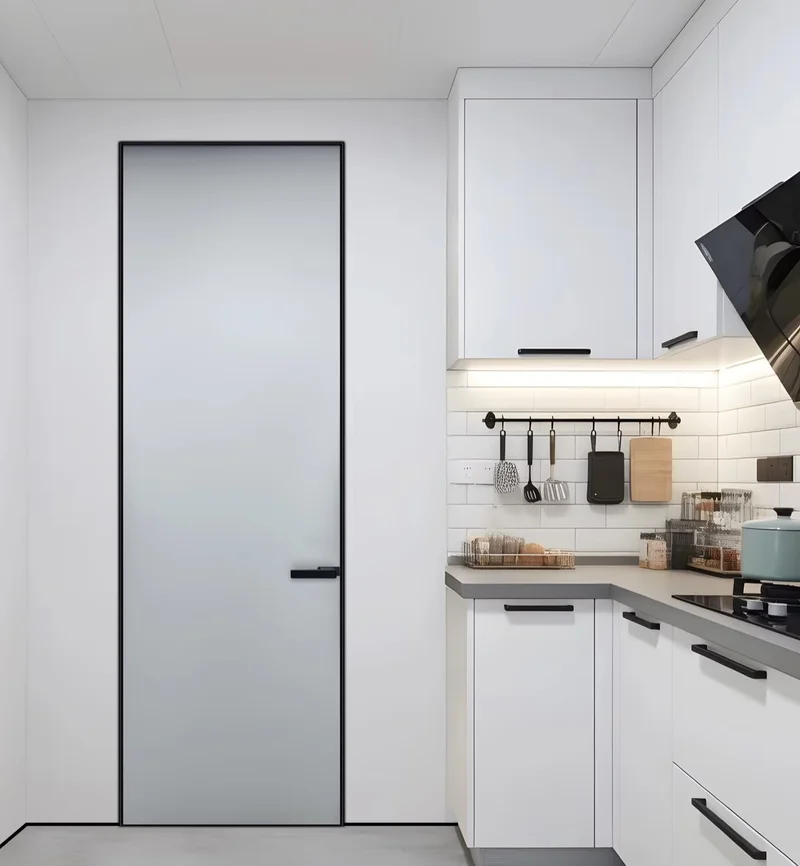
Transform Your Renovation with Sleek, Modern Lightweight aluminum glass doors
The core advantage of lightweight aluminum glass doors in renovation lies in their engineered synergy of minimal structural mass and maximum performance. Unlike traditional materials, the system leverages thermally broken aluminum alloy profiles, typically 6063-T5 or 6060-T66, which offer a yield strength exceeding 160 MPa while maintaining a low density of approximately 2.7 g/cm³. This allows for slimmer sightlines and larger glass infills without compromising structural integrity, critical for modernizing existing building envelopes.
Key Functional Advantages for Renovation:
- Structural Efficiency & Load Redistribution: The high strength-to-weight ratio of the alloy minimizes dead load on existing lintels and foundations. This is paramount in retrofit scenarios where structural capacity is fixed. Slim profile systems (as narrow as 45mm) maximize glazed area, enhancing natural light ingress.
- Thermal Performance & Condensation Resistance: Advanced thermal break technology, using polyamide 66 with glass fiber reinforcement (25% minimum), decouples interior and exterior profiles. When paired with double or triple glazing (Low-E, argon-filled), U-values for the complete door assembly can achieve ≤ 1.4 W/(m²K). The warm-edge spacer systems maintain edge-seal temperatures above dew point, preventing condensation.
- Acoustic Insulation: The mass-spring-mass principle is optimized. The combination of laminated glass (e.g., 6.38mm: 3mm glass + 0.38mm PVB + 3mm glass) and sealed, gasketed profiles within the aluminum frame can provide sound reduction ratings (Rw) of 35-42 dB, effectively mitigating external noise infiltration.
- Durability & Corrosion Resistance: Aluminum profiles are finished with a multi-stage pretreatment (chromate or zirconium-based) and electrostatic powder coating or anodizing. This results in a surface hardness exceeding 600 Vickers (HV) for anodized finishes and a minimum Class 3 (ISO 9227) salt spray resistance, ensuring long-term performance with minimal maintenance.
- Installation Precision & Adaptability: The precision-extruded profiles and modular design allow for precise fitting into often irregular existing openings. Adjustable stainless steel hardware (304 or 316 grade) in hinges and multi-point locking systems facilitate fine-tuning during and after installation to ensure perfect alignment and operation.
Technical Performance Parameters:
| Parameter | Specification | Standard / Test Method | Relevance to Renovation |
|---|---|---|---|
| Profile Wall Thickness | ≥ 1.4mm (Visible), ≥ 1.8mm (Structural) | EN 12020-2, ASTM B221 | Ensures rigidity and durability under wind loads; critical for large pane sizes. |
| Thermal Transmittance (Uf) | ≤ 1.8 W/(m²K) for profile | EN 10077 / ISO 10077-2 | Determines overall energy efficiency and condensation risk of the frame. |
| Air Permeability | Class 4 (600 Pa) | EN 12207 | Ensures draft-free operation and energy loss prevention in older buildings. |
| Water Tightness | Class 9A (≥ 600 Pa) | EN 12208 | Superior resistance to driven rain, protecting existing interior finishes. |
| Wind Load Resistance | Class C5 (≥ 2000 Pa) | EN 12210 | Suitable for high-rise or exposed retrofit applications. |
| Operating Force | ≤ 100 N for sliding systems | EN 12424 | Ensures ease of operation, a key consideration for accessibility upgrades. |
| Hardware Cycle Testing | ≥ 25,000 cycles (Grade 4) | EN 16433 / EN 16434 | Guarantees long-term mechanical reliability of locks and hinges. |
For optimal integration, the glazing specification must be matched to the performance goals. Laminated safety glass is non-negotiable for doors, while the choice of double-glazed units with a 16mm argon-filled cavity and a soft Low-E coating (ε ≤ 0.04) provides the best balance of thermal performance and weight. The entire system’s performance is validated through whole-unit testing to EN 14351-1, providing certified data for building compliance submissions. This engineered approach transforms the renovation challenge of integrating modern aesthetics and performance into existing structures into a predictable, specification-driven process.
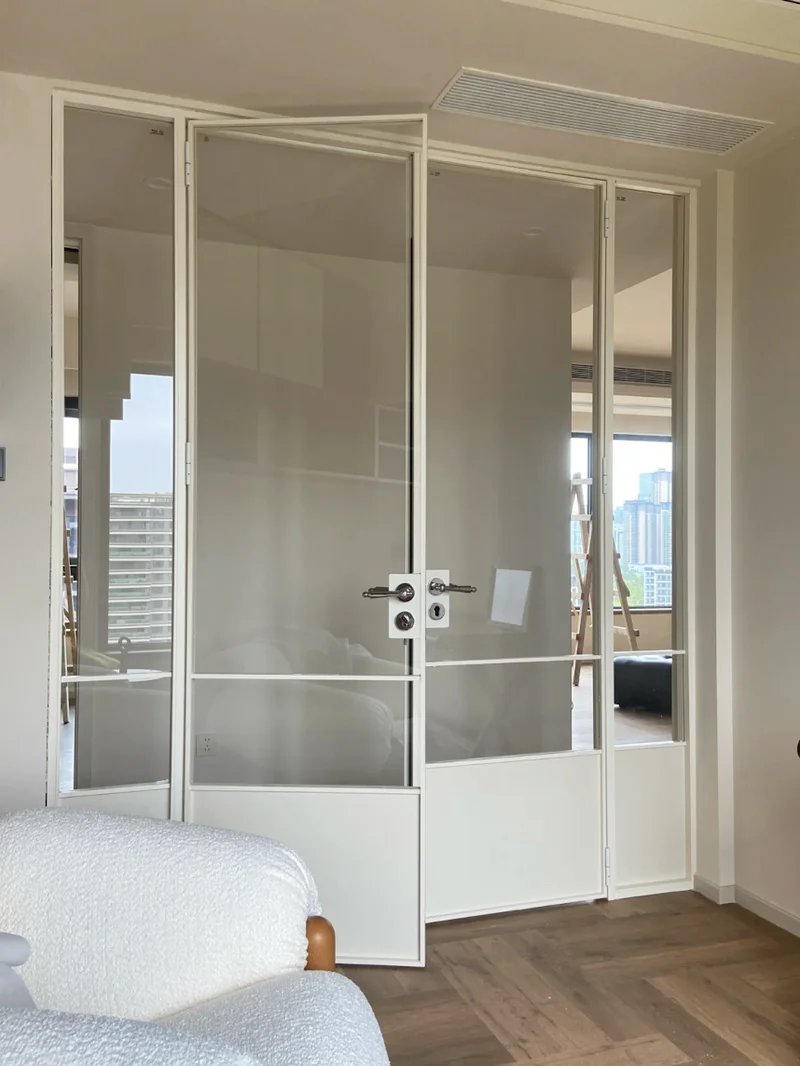
Why Choose Lightweight aluminum glass doors for Enhanced Space and Durability
Lightweight aluminum glass doors are engineered to resolve the core renovation challenges of spatial optimization and long-term performance without structural compromise. The system’s efficacy is rooted in the advanced alloy composition and thermal break technology, which directly influence durability, thermal efficiency, and spatial perception.
Material & Structural Advantages
- High-Strength, Low-Weight Alloy: Utilizing 6063-T5 or 6060-T6 aluminum alloys, these profiles achieve a tensile strength exceeding 160 MPa while minimizing dead load on existing structures. The anodized or powder-coated finishes (typically 70-80 µm) provide a corrosion resistance rating of Class C4 (ISO 12944), ensuring longevity in diverse climates.
- Thermal Break & Insulation: Polyamide 66 thermal break bars with fiberglass reinforcement (24mm standard) drastically reduce thermal bridging. When paired with double or triple glazing (Low-E, argon-filled), the complete door assembly achieves U-factors as low as 1.0 W/(m²·K), exceeding the thermal performance of many solid wall constructions.
- Spatial Enhancement: The minimal sightline profiles (as narrow as 45mm) and capability for large, seamless glass panels maximize natural light penetration (VLT up to 70%) and create uninterrupted visual connections, effectively expanding the perceived spatial volume of renovated interiors.
Performance & Compliance Specifications
| Parameter | Performance Range | Test Standard / Note |
|---|---|---|
| Air Infiltration | ≤ 1.5 m³/(m·h) @ 100 Pa | EN 12207 / Class 4 |
| Water Tightness | ≥ 600 Pa | EN 12208 / Class 9A (Resistance to heavy driving rain) |
| Wind Load Resistance | Up to 2400 Pa (Class C5) | EN 12210 / Suitable for high-rise applications |
| Acoustic Insulation | Rw 40-45 dB | EN ISO 10140 / With laminated acoustic glass |
| Cyclic Durability | > 100,000 cycles | EN 12400 / For sliding or folding systems |
| Fire Rating | Up to EI 30 / EI 60 | EN 13501-2 / For fire-rated glazed assemblies |
Key Durability & Functional Benefits
- Dimensional Stability & Corrosion Resistance: The aluminum frame exhibits negligible swelling or contraction (<0.1%) across humidity ranges of 15-85% RH. The electrochemical protection of the surface finish ensures no degradation from UV exposure or salt spray, maintaining structural integrity and appearance.
- Low Maintenance & Operational Longevity: Unlike organic materials, the system requires no periodic sealing, painting, or treatment. High-quality hardware (e.g., stainless steel rollers, multi-point locking) integrated into reinforced profile chambers ensures smooth operation and security over the lifecycle.
- Integration & Renovation-Specific Design: Engineered for retrofit, profiles accommodate significant glass loads while interfacing cleanly with existing floors, walls, and lintels. Structural silicone glazing (SSG) options allow for flush exterior aesthetics and superior weather sealing.
Engineered for Structural Stability: How Our Lightweight aluminum glass doors Withstand Daily Use
The structural integrity of our lightweight aluminum glass door systems is derived from a synergistic engineering approach, combining advanced alloy design, precision fabrication, and rigorous performance validation. Stability is not an afterthought but a foundational design parameter, ensuring long-term reliability in high-traffic renovation environments.
Core Engineering Principles:
- Alloy Specification & Thermal Break: We utilize 6063-T5 or 6061-T6 aluminum alloys, chosen for their optimal balance of strength-to-weight ratio and corrosion resistance. Extruded profiles are designed with multi-chamber configurations that house a reinforced polyamide thermal break. This barrier not only minimizes thermal bridging (achieving U-factors as low as 1.6 W/(m²·K)) but also increases overall torsional rigidity of the frame section.
- Structural Glazing & Glass Specification: The glass is not merely an infill but a structural component. Laminated glass panels, typically consisting of two or more plies of tempered glass bonded with PVB or SGP interlayers, contribute significantly to the door’s stiffness and impact resistance. For larger spans, the use of heat-soaked, thermally toughened glass is standard to mitigate spontaneous breakage risk.
- Hardware Integration & Load Management: Frame sections are engineered with integral reinforcement channels to accept heavy-duty, multi-point locking hardware. Hinge points are reinforced with steel or stainless steel inserts to distribute cyclic loads, preventing wear elongation and sagging over thousands of operational cycles. The system is designed to exceed EN 14351-1 for performance requirements, including repeated operation and static load testing.
Performance Validation & Technical Parameters:
All systems are validated against international standards to quantify performance. Key metrics for structural and environmental stability include:
| Performance Aspect | Test Standard | Typical Achieved Performance | Critical for Renovation Projects |
|---|---|---|---|
| Air Infiltration | ASTM E283 / EN 1026 | Class 4 (≤ 0.50 cfm/ft²) | Ensures draft-free operation and energy efficiency in updated building envelopes. |
| Water Resistance | ASTM E331 / EN 1027 | Class 5A (≥ 600 Pa) | Protects interior finishes from driven rain, a common concern in retrofit applications. |
| Structural Load (Wind) | ASTM E330 / EN 12211 | Positive & Negative to 2400 Pa (PSF 50) | Guarantees performance in exposed locations or where new openings alter building aerodynamics. |
| Acoustic Insulation | ASTM E90 / ISO 140-3 | Up to 42 dB (Rw) | Manages noise transmission in multi-use residential or commercial renovations. |
| Thermal Transmittance | EN ISO 10077-1 | Uf (Frame) ≤ 1.8 W/(m²·K) | Meets modern energy codes when replacing older, inefficient door systems. |
Functional Advantages for Daily Use:
- Sag Resistance: The combination of high-strength corner cleats (mechanically fastened or welded) and rigid frame profiles maintains squareness and plumb, ensuring consistent alignment and smooth operation without binding.
- Impact & Scratch Resistance: The anodized or powder-coated finishes (qualifying to AAMA 2604 or QUALICOAT Class 2) provide a hard, durable surface. Coupled with tempered glass, the assembly resists damage from incidental contact in active settings.
- Long-Term Dimensional Stability: Aluminum is inherently impervious to moisture, eliminating swelling, warping, or rot that compromises the operation of traditional door materials. This stability is critical for maintaining airtight and watertight seals over the product’s service life.
- Maintenance of Performance: The engineered integration of gaskets (EPDM or silicone), drainage pathways within the frame, and protected hardware ensures that the initially validated performance for air, water, and structural load is maintained indefinitely with routine maintenance.
Waterproof and Low-Maintenance: Ideal for High-Moisture Areas in Renovations
The core structural integrity of a door system in high-moisture environments is defined by its resistance to water ingress and dimensional stability. For renovation projects, this necessitates a system where the frame material and sealing technology work in unison to prevent failure.
Primary Waterproofing Mechanism: The Aluminum Frame
The extruded aluminum alloy profile is inherently impervious to water, rot, and corrosion. Its performance is engineered through:
- Anodizing or Powder Coating: These surface treatments provide a dense, molecularly-bonded barrier. A minimum 25-micron polyester powder coat (tested to QUALICOAT Class 2 or equivalent) ensures long-term resistance to humidity, UV degradation, and salt spray.
- Thermal Break Technology: For thermally improved doors, the polyamide strip within the aluminum frame is chemically inert and hydrophobic, preventing any capillary water transfer between the interior and exterior aluminum sections.
Sealing System: Multi-Stage Barrier
Waterproofing is achieved through a graded pressure-equalization strategy, not a single seal.
- Primary Seal (Outdoor): A durable EPDM (Ethylene Propylene Diene Monomer) gasket, with a Shore A hardness of 60±5, provides the first barrier against wind-driven rain.
- Intermediate Drainage & Pressure Equalization: The frame is designed with dedicated drainage channels and weep holes that allow any incidental moisture to escape, equalizing air pressure to prevent driven infiltration.
- Secondary Seal (Indoor): A second independent EPDM or silicone gasket creates an airtight and water-resistant inner barrier, completing the sealed unit.
Critical Glazing Details
The glass unit must be integrated as a systemic component.
- Glazing Method: Structural silicone glazing (SSG) or wet-glazing with polysulfide or polyurethane sealants provides a monolithic, waterproof bond between the glass and frame, superior to traditional dry gaskets in high-exposure scenarios.
- Insulated Glass Unit (IGU) Integrity: The IGU must use a dual-seal system (primary polyisobutylene sealant and secondary polysulfide/silicone) and desiccant-filled spacer (warm edge technology recommended) to ensure internal cavity remains dry and condensation-free.
Low-Maintenance Operational Advantages
The material science of the system translates directly to reduced lifecycle costs.
- Zero Absorptivity: Aluminum has a 0% water absorption rate, eliminating swelling, warping, or material degradation common to organic materials.
- Surface Durability: High-quality finishes resist staining, do not require painting, and can be cleaned with neutral pH cleaners without degradation.
- Hardware Compatibility: Integrated drainage paths protect corrosion-resistant stainless steel or anodized aluminum multi-point locking hardware, ensuring smooth operation without seizing.
Performance Data for Specification
| Parameter | Test Standard | Typical Performance Value | Notes |
|---|---|---|---|
| Water Tightness | EN 12208 / ASTM E547 | Class 9A (≥600 Pa) | Resistance to severe driving rain. Critical for coastal or exposed elevations. |
| Air Infiltration | EN 12207 / ASTM E283 | Class 4 (≤0.5 m³/m·h @ 100 Pa) | Low infiltration reduces interstitial condensation risk. |
| Thermal Transmittance (Uf) | EN 10077 / ISO 10077 | 1.6 – 3.5 W/m²K | Dependent on profile design and thermal break. Lower Uf minimizes cold surface condensation. |
| Corrosion Resistance | ISO 9227 (Salt Spray) | >1000 hours to white rust | For powder-coated finishes; anodized offers superior inherent resistance. |
| Operational Force | EN 1191 | <100 N for opening | Maintains ease of use despite environmental exposure. |
Specification Checklist for High-Moisture Renovations:
- Specify a minimum watertightness class of 7A (≥300 Pa) for protected areas, and 9A (≥600 Pa) for fully exposed applications.
- Mandate dual EPDM perimeter seals with a defined drainage pathway detail.
- Require structural silicone glazing or a certified wet-glaze system for the glass-to-frame joint.
- Verify finish certification (QUALICOAT for powder, QUALANOD for anodizing) for guaranteed durability.
- Ensure all cut ends and miters are factory-sealed with waterproof sealant to protect the uncoated aluminum substrate.
Technical Specifications and Customization Options for Your Project Needs
Frame and Sash Construction
- Alloy and Temper: Primary structural components utilize 6063-T5 or 6061-T6 aluminum alloy. The T5/T6 temper provides optimal yield strength for structural integrity while maintaining excellent extrudability for complex profiles.
- Thermal Break: A polyamide 66 (PA66) strip with glass fiber reinforcement (minimum 25%) is mechanically locked and crimped within the profile. This creates a continuous thermal barrier, achieving a thermal transmittance (Uf) as low as 1.6 W/m²K for the frame itself.
- Surface Finishes: Standard architectural anodizing (AA-M25-C22, min. 20µm) or electrostatic powder coating (application standard: QUALICOAT Class 2). Powder coatings are tested for corrosion resistance (>1000 hours neutral salt spray, ASTM B117) and colorfastness.
Glazing Specifications
- Insulated Glass Unit (IGU) Performance: Configurations are engineered to meet project-specific acoustic and thermal requirements.
- Thermal Insulation: U-values for the complete door assembly can achieve ≤ 1.0 W/m²K using double or triple glazing with low-emissivity (low-E) coatings (e.g., soft-coat ε ≤ 0.04) and argon/krypton gas fill.
- Acoustic Performance: Laminated glass with polyvinyl butyral (PVB) or ionomer interlayers of varying thicknesses (0.76mm to 2.28mm) provides sound reduction. Achievable weighted sound reduction (Rw) ranges from 35 dB to 42 dB (EN ISO 10140).
- Safety & Security: Laminated glass is standard for full-height doors. Tempered or heat-strengthened glass is used per regional impact safety standards (e.g., CPSC 16 CFR 1201, EN 12600).
Hardware and Sealing Systems
- Hardware Integration: Frames are pre-machined to accept multi-point locking systems (minimum 3-point, typically 5-point). Hinge systems are stainless steel (grade 304 or 316), with adjustable 3D geometry for precise alignment and load-bearing capacity exceeding 120kg per leaf.
- Weather Sealing: Triple-seal design using EPDM gaskets (Shore A hardness 70±5) provides IP44-rated weatherproofing. Critical performance metrics include:
- Air Permeability: Class 4 (EN 12207)
- Water Tightness: Class E1050 (EN 12208)
- Wind Load Resistance: Class C5 (EN 12210)
Customization Parameters
| Parameter | Options & Technical Specifications | Performance Implication |
|---|---|---|
| Profile Width | 50mm, 60mm, 70mm, 80mm standard sightlines. Custom extrusions available. | Wider profiles accommodate thicker IGUs for higher thermal/acoustic performance and allow for more robust hardware. |
| Glass Cavity Thickness | 16mm, 20mm, 24mm, 32mm, 48mm. | Directly correlates with U-value and Rw performance. Thicker cavities permit triple glazing or enhanced gas fills. |
| Color & Finish | Anodized (Natural, Black, Bronze). Powder Coat (RAL/BS range). Woodgrain thermal laminates. | Powder coating thickness: 60-80µm. Woodgrain laminates use 0.3mm thick foils with >2000 hours UV resistance (EN ISO 4892-2). |
| Operational Style | Single swing, double swing, sliding, lift-and-slide, pivot. | Structural load paths and hardware specifications are engineered per style. Sliding systems require specific roller carriage and track profiles for smooth operation under load. |
| Fire Rating | Integrity only (E) or Integrity & Insulation (EI) ratings available. | Utilizes intumescent sealants and glass with ceramic interlayers. Must be specified as a complete, tested assembly (e.g., EI30, EI60 per EN 16034). |
Quality Assurance & Compliance
- All extrusions comply with EN 755-9 and ASTM B221.
- Finished assemblies are performance-tested per relevant EN 14351-1 or ASTM E283/E330 standards.
- Factory production control is certified under ISO 9001:2015.
- Glazing systems comply with CE marking directives and/or North American IGCC standards.
Trusted by Professionals: Certifications and Installation Support for Peace of Mind
The structural integrity and long-term performance of a door system are defined by its material specifications and manufacturing tolerances. Our aluminum-glass door systems are engineered to meet or exceed international standards, providing verifiable data for architectural specifications and contractor installations.
Material & Manufacturing Certifications
- ISO 9001:2015 Certification: Guarantees a consistent, audited quality management system for every extrusion, thermal break, and glass unit produced.
- Material Conformity (EN 12020-2, ASTM B221): Aluminum alloy profiles are supplied with mill certificates confirming mechanical properties (e.g., tensile strength ≥ 160 N/mm²) and dimensional tolerances for precise fabrication.
- Thermal Performance (EN 10077, ISO 10077-1): Certified U-factors for the complete door assembly, including the thermal break (polyamide 66 with glass fiber reinforcement) and insulated glass unit (IGU). Typical center-of-glass Ug values start at 1.0 W/(m²K).
- Acoustic Performance (EN ISO 10140, ASTM E90): Laboratory-tested sound reduction ratings (Rw). Systems are available with performance up to Rw 42 dB, utilizing laminated glass with PVB or SGP interlayers and specialized perimeter seals.
- Air & Water Infiltration (EN 12207, EN 12208, ASTM E283/E331): Certified to performance classes AE4/AE5 and RE1500/RE2000, ensuring resistance to driving rain and wind pressure in exposed renovation applications.
- Safety & Security (EN 1627, CP 102/103): Door sets can be certified to RC2 or RC3 security ratings, incorporating multi-point locking systems and laminated or toughened glass.
Technical Support & Installation Assurance
Our support is engineered to mitigate on-site risk. Pre-installation, we provide comprehensive structural interface details, including:
- Load & Deflection Calculations: Engineer-stamped data for wind load resistance and maximum permitted frame deflection (typically L/175 to L/200).
- Interface Details: Anodized and powder-coated finishes (qualifying to EN 12206 and QUALICOAT Class 2) have specific requirements for handling and protection against on-site alkalinity from fresh concrete or mortar.
- Sealing System Specifications: Precise durometer (Shore A) values for perimeter gaskets (EPDM) and compatibility data for structural silicones and expanding foams.
The installation protocol is supported by:
- Step-by-Step Technical Manuals: Including torque settings for stainless steel hardware and glazing pressure plate sequences.
- On-Site or Virtual Engineering Support: For resolving unforeseen structural conflicts or substrate conditions.
- Performance Validation Checklist: A post-installation protocol to verify operational force, seal compression, and drainage function, ensuring the certified performance is achieved in the field.
Critical Performance Parameters for Specification
| Parameter | Standard / Test Method | Typical Performance Range | Importance for Renovation |
|---|---|---|---|
| Thermal Transmittance (U-value) | EN ISO 10077-1 / EN 12412 | Frame Uf: 1.4 – 2.2 W/(m²K) Overall Uw: 1.3 – 1.8 W/(m²K) |
Critical for meeting building code energy targets in retrofit projects. |
| Sound Reduction Index (Rw) | EN ISO 10140-2 | Rw 31 dB to Rw 42 dB (Ctr) | Mitigates urban noise infiltration in existing buildings with poor acoustic separation. |
| Air Permeability | EN 12207 | Class AE4 (600 Pa) / AE5 (900 Pa) | Eliminates drafts in older, leaky building envelopes. |
| Water Tightness | EN 12208 | Class RE1500 (1500 Pa) / RE2000 (2000 Pa) | Protects sensitive interior finishes from driven rain in exposed locations. |
| Wind Load Resistance | EN 12211 | Class C4 (2000 Pa) / C5 (2400 Pa) | Ensures structural adequacy for taller openings or high-rise refurbishments. |
| Operation Force | EN 1191 | ≤ 100 N for initial movement | Ensures accessibility and ease of use, a key concern in refurbished spaces. |
Specification and installation following these certified parameters ensure the door system performs as a controlled, predictable component within the renovated building envelope.
Frequently Asked Questions
What are the critical thermal performance benchmarks for lightweight aluminum glass doors in renovation projects?
For optimal thermal insulation, specify doors with a polyamide thermal break of at least 24mm and double-glazed Low-E glass (argon-filled, U-value ≤1.1 W/m²K). The aluminum alloy should be 6063-T5 or better. This system prevents condensation and significantly reduces energy transfer, crucial for integrating with existing building envelopes.
How do you ensure long-term dimensional stability and prevent warping in aluminum-framed doors?
Prevent warping by using alloy 6063-T5 with a precise powder-coating finish (minimum 60μm). Critical is the integration of a reinforced LVL (Laminated Veneer Lumber) core within any wood-aluminum composite sections. This combats differential expansion and maintains structural integrity against wind loads and thermal cycling over decades.
What standards define the formaldehyde emissions for composite materials used in door construction?
Insist on materials certified to E0 (≤0.5 mg/L) per Chinese GB/T 39600 or the European EN 717-1 standard. For WPC (Wood-Plastic Composite) components, verify a density ≥ 1.3 g/cm³ and that they are certified as CARB Phase 2 or TSCA Title VI compliant, ensuring indoor air quality and safety in sealed renovation environments.
How is impact resistance and security engineered into lightweight glass door systems?
Security stems from the glass and frame synergy. Specify tempered or laminated security glass (minimum 6+6mm). The frame must feature multi-point locking systems (e.g., 3-point) with shoot bolts engaging into reinforced stainless steel receivers. The aluminum profile wall thickness should be no less than 1.8mm for residential, 2.0mm+ for commercial.
What are the moisture management specifications for doors in high-humidity areas like bathrooms?
For high humidity, specify doors with a WPC or solid polymer core, avoiding absorbent materials. Critical details include full-perimeter silicone gaskets (EPDM) with a Shore A hardness of 60±5, and anodized or electrophoretic aluminum finishes. Ensure the bottom rail has an effective sweep seal and drainage weep holes to manage water ingress.
Can these door systems achieve meaningful sound insulation for urban renovations?
Yes. Target an OITC (Outdoor-Indoor Transmission Class) or Rw rating of ≥35 dB. This requires dual-sealed gaskets, asymmetrical glass panes (e.g., 6mm + 12mm air gap + 8mm), and potentially laminated acoustic glass. The frame must be fully gasketed and installed with acoustic sealant to bridge the structural reveal.
What finishing processes guarantee UV and corrosion resistance for exterior aluminum components?
Specify a two-step pretreatment (chromating or zirconium) followed by a fluorocarbon paint (PVDF) or polyester powder coating with a minimum 70μm thickness. For coastal areas, anodizing at AA15 or higher is superior. These processes prevent chalkiness, color fade, and pitting, ensuring longevity against UV and salt spray per AAMA 2605 standards.