Aluminum Glass Doors with Laminated Glass for Safety: Secure, Durable, and Aesthetic Solutions
In today’s architectural landscape, the demand for solutions that seamlessly blend security, longevity, and style has never been greater. Enter aluminum glass doors with laminated glass—a sophisticated fusion of modern engineering and elegant design. These doors transcend mere entry points, offering a robust barrier that prioritizes safety without compromising on aesthetic appeal. The inherent strength of the aluminum frame provides exceptional durability against the elements, while the laminated glass interlayer acts as a resilient shield, holding shattered fragments firmly in place to deter intrusion and mitigate injury. This combination delivers not just peace of mind, but also a flood of natural light and a sleek, contemporary profile that enhances any commercial or residential space. They represent a definitive answer for those seeking to elevate both protection and design.
Enhancing Security and Safety: How Laminated Glass in Aluminum Doors Protects Your Space
Laminated glass is a composite material engineered for superior performance in security and safety applications. Its core principle is the permanent bonding of two or more glass plies with one or more interlayers of polyvinyl butyral (PVB) or ethylene-vinyl acetate (EVA). When subjected to impact, the glass may crack, but the interlayer holds the fragments firmly in place, maintaining the structural integrity of the vision panel and creating a barrier against penetration.
Functional Advantages of Laminated Glass in Aluminum Door Systems:
- Forced Entry Resistance: The tough PVB interlayer acts as a membrane, absorbing and distributing impact energy. This significantly delays penetration, providing a critical time barrier against smash-and-grab attacks or more determined forced entry. The glass must be defeated layer-by-layer, which is a slow, noisy process.
- Post-Breakage Safety & Fall Prevention: The key safety feature is the glass fragment retention. Even when shattered, the pane remains largely in the frame, preventing dangerous shards from causing injury or falling from height in multi-story applications. This is a non-negotiable requirement for balustrades and overhead glazing.
- Blast Mitigation & Storm Protection: In specialized constructions, laminated glass with thicker interlayers is designed to resist blast pressures and wind-borne debris. It can remain in the frame after an event, helping to maintain the building envelope and protect occupants from secondary hazards.
- Acoustic Insulation Enhancement: The viscoelastic properties of the PVB interlayer dampen sound wave vibrations. When paired with properly engineered aluminum framing systems featuring thermal breaks and seals, laminated glass contributes significantly to overall acoustic performance, achieving sound reduction ratings (Rw) of 35-45 dB or higher in composite configurations.
- UV Filtration & Fade Reduction: Standard PVB interlayers block over 99% of harmful ultraviolet radiation, protecting interior furnishings, artworks, and finishes from fading and degradation without compromising visible light transmittance.
Technical Performance Parameters
The performance of a laminated glass unit is determined by its specific construction. The aluminum framing system must be engineered to match the weight and structural demands of these units.
| Performance Characteristic | Typical Specification / Test Standard | Key Benefit for Security & Safety |
|---|---|---|
| Impact Resistance | ANSI Z97.1, CPSC 16 CFR 1201 (Cat. II), EN 12600 | Classifies safety performance under pendulum impact; critical for defining breakage pattern and fragment retention. |
| Forced Entry Resistance | ASTM F588, EN 1627-1630 (Door Sets) | Rated for time to create a passable opening under attack from tools. Laminated glass is fundamental to achieving higher security grades (e.g., RC2/RC3, Grade B/C). |
| Sound Reduction (Rw) | ASTM E90, ISO 10140 | Measured in decibels (dB). Laminated glass, especially with asymmetric plies or acoustic PVB, improves the overall rating of the door assembly. |
| Interlayer Thickness | 0.76mm (standard) to 2.28mm+ (security) | Directly correlates to penetration resistance and post-breakage integrity. Security-grade laminates often use multiple or thicker interlayers. |
| U-Factor (Thermal) | ASTM C1363, EN 673 | While primarily for insulation, the thermal stress performance of laminated glass is superior, reducing the risk of thermal breakage in demanding environments. |
Architectural Integration and Specification
Specifying laminated glass within an aluminum door system requires a holistic view. The aluminum profile must be structurally adequate, with reinforced corners and multi-point locking hardware that engages deeply into the frame. The compatibility of the glazing gaskets and the design of the glazing rebate are critical to transfer loads from the glass to the frame effectively. For ultimate security, the laminated glass should be combined with security film or be of a glass-clad polycarbonate construction for extreme threat levels. Always specify the required performance class (e.g., EN 356 P5A for manual attack resistance) and ensure the entire assembly—glass, frame, and hardware—is tested and certified as a complete unit to the relevant standards.
Superior Durability and Weather Resistance: Built to Withstand High-Traffic and Harsh Conditions
The structural integrity of an aluminum glass door system under high-traffic and environmental stress is defined by the synergistic performance of its framing and glazing components. The aluminum alloy, typically a 6063-T5 or 6063-T6 temper, undergoes precision extrusion to form profiles with a minimum 1.8mm wall thickness. A multi-stage pretreatment and electrostatic powder coating process ensures a finish with a minimum 80µm DFT, achieving a Class 4 (ISO 2409) cross-cut adhesion and superior resistance to UV degradation, salt spray corrosion (exceeding 1000 hours to white rust per ASTM B117), and chemical abrasion.
The laminated glass is not merely a pane but a composite structural element. The polyvinyl butyral (PVB) or SentryGlas® (SGP) interlayer provides critical damping, absorbing impact energy and mitigating stress propagation. This lamination is paramount for maintaining glazing integrity under thermal cycling and wind load pressures, preventing catastrophic failure.
Functional Advantages in Demanding Environments:
- Thermal Stability: The low coefficient of linear expansion of aluminum (23.2 x 10⁻⁶/°C) is managed through engineered thermal breaks. Polyamide strips with a minimum 24mm depth create a continuous barrier, achieving a thermal transmittance (U-factor) as low as 1.6 W/(m²·K) for the complete door assembly, preventing condensation and thermal stress.
- Mechanical Endurance: Heavy-duty stainless steel pivot or multi-point locking hardware, integrated into reinforced profile chambers, withstands cyclic loading. Hinge systems are rated for a minimum of 200,000 cycles (per EN 1935) without operational failure or excessive play.
- Sealed Performance: Dual or triple EPDM gasket seals within drainage channels provide an IP54 rating against ingress, maintaining a consistent air infiltration rate of ≤0.5 m³/(m·h) at 100 Pa (per EN 12207) and watertightness against 600 Pa static pressure (EN 12208).
- Structural Load Management: Engineered glazing pockets and bite depths, calculated per ASTM E1300, ensure the laminated glass can withstand design wind loads up to 3.0 kPa without deflection exceeding L/175.
| Performance Parameter | Test Standard | Typical Performance Data | Benefit |
|---|---|---|---|
| Powder Coating Adhesion | ISO 2409 | Class 0-1 (No detachment) | Exceptional resistance to chipping and delamination from impact or cleaning. |
| Air Infiltration Rating | EN 12207 | Class 4 (≤0.5 m³/(m·h) @ 100 Pa) | Eliminates drafts, reduces energy transfer, and prevents dust/particulate ingress. |
| Watertightness Rating | EN 12208 | Class E900 (≥900 Pa) | Guaranteed performance in driving rain and storm conditions. |
| Wind Load Resistance | ASTM E1300 / EN 12211 | Up to 3.0 kPa (Design Dependent) | Structural safety and integrity in high-wind zones and tall installations. |
| Operating Cycle Life | EN 1935 | Grade 8 (200,000 cycles) | Reliability for high-frequency commercial and public access points. |
Long-term durability is assured through material compatibility. The neutral curing silicone glazing compounds and EPDM gaskets are formulated to avoid galvanic or chemical reaction with the coated aluminum, preventing staining and seal degradation. This engineered approach results in a door system with a proven service life exceeding 30 years with minimal maintenance, capable of maintaining its performance and aesthetic properties in coastal, industrial, and extreme climatic applications.
Aesthetic Versatility and Modern Design: Sleek Aluminum Frames with Customizable Glass Options
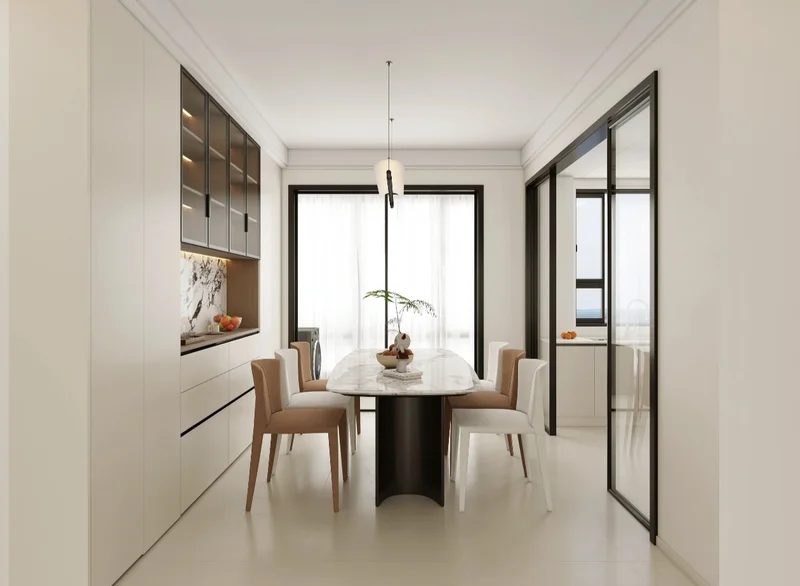
The aesthetic performance of an aluminum glass door system is a direct function of its material properties and manufacturing precision. The combination of high-grade aluminum extrusions and advanced laminated glass creates a platform for modern design that does not compromise structural or safety integrity.
Aluminum Frame Engineering:
Modern profiles are extruded from 6063-T5 or 6063-T6 aluminum alloys, achieving a yield strength exceeding 160 MPa. This allows for remarkably slim sightlines—frame depths from 45mm to 120mm—while maintaining torsional rigidity. The anodized or powder-coated finishes are not merely cosmetic; a Class II anodization (≥25µm) or a thermosetting polyester powder coat (≥60µm) provides exceptional corrosion resistance (exceeding 1,000 hours in salt spray testing per ASTM B117), ensuring the sleek appearance endures in harsh environments.
Laminated Glass Customization:
The laminated interlayer is the key to unifying safety with aesthetics. The standard polyvinyl butyral (PVB) interlayer, typically 1.52mm thick, can be substituted or combined with specialized materials to meet design criteria:
- Acoustic Performance: Using a stiffer, acoustically dampened PVB or SentryGlas® (SG) interlayer can achieve a Sound Transmission Class (STC) rating improvement of up to 5 dB over monolithic glass of the same thickness.
- Solar & Thermal Control: Glass panes can be specified with low-emissivity (Low-E) coatings, fritted patterns, or tinted. When combined with a grey or blue PVB interlayer, solar heat gain coefficients (SHGC) can be reduced to 0.25 or lower.
- Decorative Integration: Digital ceramic printing, silk-screening, or incorporation of decorative fabrics/meshes within the interlayer laminate allows for full branding or artistic expression without affecting the safety rating.
Technical Specifications for Design Integration:
The following parameters must be coordinated between aesthetic intent and structural performance.
| Design Parameter | Technical Consideration | Typical Performance Range / Standard |
|---|---|---|
| Maximum Panel Size | Dictated by glass thickness, wind load, and frame reinforcement. | Up to 3.2m x 2.4m for 10mm laminated (2x5mm glass + 1.52mm PVB). |
| Glass Configuration | Balance of safety, weight, and insulation. | Laminated: 6mm to 12mm total thickness. Insulated Glass Units (IGU): Laminated outer pane + air gap + tempered inner pane. |
| Thermal Insulation (U-Factor) | Primarily driven by thermal break in frame and glass type. | With 24mm polyamide thermal break and Low-E IGU: Uf ≤ 1.6 W/(m²·K) per EN 10077. |
| Visible Light Transmittance (VLT) | Determined by glass tint, coating, and interlayer. | Clear system: ~82%. With tinted glass/grey PVB: 40% to 70%. |
| Fire-Rated Glazing | Requires ceramic glass with intumescent interlayer in a rated frame. | Can achieve EI30 to EI120 integrity and insulation ratings (EN 13501-2). |
Functional Advantages of the System:
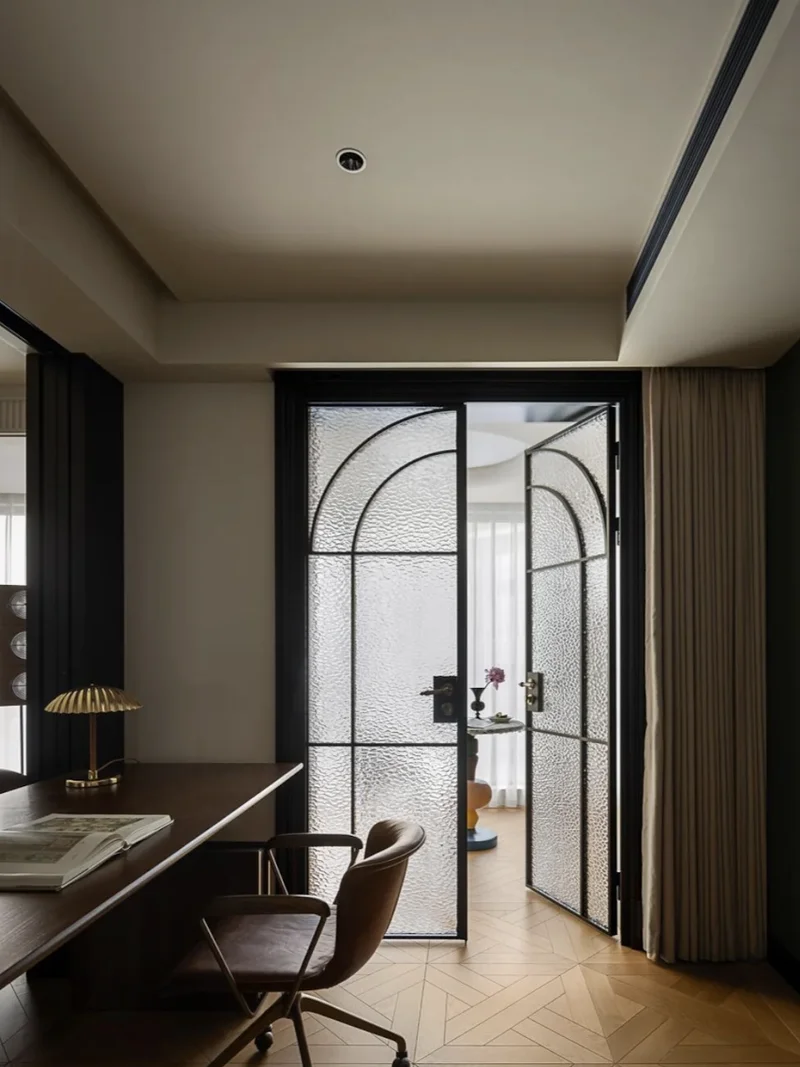
- Design Continuity: Slim profiles and minimal hardware allow for seamless visual transitions between interior and exterior spaces.
- Material Stability: Aluminum’s coefficient of thermal expansion (23.2 x 10⁻⁶/°C) is compatible with glass, preventing stress-induced failure at the glazing bead.
- Maintenance & Longevity: The inert, non-porous surfaces resist UV degradation and require only minimal cleaning, preserving design intent for decades.
- Integration Readiness: Engineered to interface precisely with adjacent cladding, flooring, and ceiling systems, supporting a cohesive architectural detail.
Technical Specifications and Installation Insights: Key Features for Optimal Performance and Fit
Technical Specifications and Installation Insights: Key Features for Optimal Performance and Fit
Core Material Specifications
- Aluminum Alloy: Fabricated from 6063-T5 or 6061-T6 temper alloys, providing a minimum yield strength of 160 MPa. Profiles are thermally broken with polyamide 66 GF25 (25% glass fiber) strips to achieve a thermal transmittance (Uf) of ≤ 1.6 W/m²K.
- Laminated Glass: Composed of multiple plies of annealed or heat-strengthened glass bonded with polyvinyl butyral (PVB) or SentryGlas® (SGP) interlayers. Standard configuration is 6.38mm (3mm glass + 0.38mm PVB + 3mm glass). For enhanced security, configurations escalate to 10.38mm, 12.38mm, or utilize glass plies up to 12mm thick with multiple interlayers.
- Hardware Integration: Hinges, multi-point locks, and floor springs are rated for a minimum of 500,000 cycles (tested per EN 1935:2002). Locking points must engage with a minimum shear strength of 3000 N per point.
Critical Performance Parameters
| Parameter | Specification / Performance Standard | Notes |
|---|---|---|
| Wind Load Resistance | Class 4 (EN 12211) / ≥ 2000 Pa | Verified via structural calculation and/or physical testing for project-specific conditions. |
| Water Tightness | Class 9A (EN 12208) | Minimum pressure of 600 Pa without water penetration. |
| Air Permeability | Class 4 (EN 12207) | Maximum air leakage of 3.0 m³/(hr·m²) at 100 Pa differential. |
| Acoustic Insulation (Rw) | Up to 42 dB (with appropriate gasketing) | Achieved using asymmetric glass ply thicknesses and acoustic PVB interlayers. |
| Safety & Impact Rating | Compliant with CPSC 16 CFR 1201 Cat. II / EN 12600 Class 2B1 | Laminated glass retains fragments upon breakage. Higher classes available (e.g., EN 356 P5A for attack resistance). |
| Thermal Insulation (Uw) | As low as 1.2 W/m²K | Dependent on profile design, glass configuration (e.g., Low-E, argon fill), and thermal spacer. |
Functional Advantages for Security & Durability
- Blast & Forced-Entry Mitigation: Laminated glass interlayers absorb energy and maintain glazing integrity, preventing through-passage. The bond between glass and aluminum frame, using structural silicone or pressure gasket systems, is critical for overall assembly performance.
- Long-Term Frame Stability: High-precision extruded aluminum profiles with a minimum anodic oxidation coating thickness of 15µm or a 70µm polyester powder coating (tested to EN ISO 9227:2017, >1000 hours salt spray resistance) ensure dimensional stability and corrosion resistance.
- Maintained Performance Under Load: The integrated system of thermally improved aluminum, laminated glass, and heavy-duty hardware is engineered to resist deflection, ensuring consistent operation and sealing under sustained wind loads and frequent use.
Installation & Integration Insights
- Structural Tolerances: The supporting structure (floor, lintel, jambs) must be plumb and level within a tolerance of ±1.5mm over a 3m span. The frame must be shimmed and anchored with stainless steel fasteners at centers not exceeding 500mm.
- Glazing Methodology: For structural silicone glazing (SSG), substrate surfaces must be chemically cleaned and primed per the sealant manufacturer’s strict protocol. The minimum bite and edge clearance must be maintained as per ETAG 002/EN 13022.
- Sealing & Weatherproofing: A continuous, uncompressed EPDM or silicone gasket system is required. All perimeter joints must be sealed with a high-modulus, UV-stable silicone sealant compatible with both aluminum and glass.
- Load Path Management: The installation must ensure all dead, wind, and operational loads are transferred directly to the building structure, avoiding stress on the glazing infill. The head detail is particularly critical for managing deflection and water runoff.
Trusted Quality and Compliance: Meeting Industry Standards for Safety and Reliability
The structural integrity and safety performance of aluminum glass doors are defined by the precise engineering of their components and adherence to rigorous international standards. Compliance is not a claim but a verifiable outcome of material selection, manufacturing process control, and independent certification.
Core Material & Performance Specifications
- Laminated Glass Interlayer: The critical safety component. Standard polyvinyl butyral (PVB) interlayers at 1.52mm thickness provide basic impact resistance and glass retention. For enhanced security or overhead applications, stiffer ionoplast (SentryGlas®) interlayers are specified, offering superior tear strength and rigidity under load.
- Aluminum Alloy & Fabrication: Profiles are extruded from 6063-T5 or 6063-T6 temper aluminum alloys, ensuring optimal strength-to-weight ratio. Minimum anodizing film thickness of 15-20µm (AA20) or architectural-grade polyester powder coating (70-80µm) to QUALICOAT Class 2 or equivalent is standard for corrosion resistance.
- Thermal Insulation: Thermally broken aluminum frames with polyamide 6.6 strips (24mm minimum) are mandatory for performance. The overall door system U-factor is calculated per EN 10077 or NFRC 100, with values typically ranging from 1.6 to 2.2 W/(m²·K) depending on glazing configuration.
- Acoustic Performance: Achieved through a combination of laminated glass (which provides inherent damping), specialized acoustic PVB interlayers, and perimeter sealing. Performance is quantified per EN ISO 10140, with Rw ratings up to 45 dB for specialized systems.
Governance Through Standards & Testing
All systems are engineered to meet or exceed the following key benchmarks:
| Standard Category | Standard Reference | Key Performance Parameter |
|---|---|---|
| Glass Safety & Impact | EN 12600 / ANSI Z97.1 | Classifies impact resistance (e.g., Class 1B1, 2B2). Mandatory for human impact safety. |
| Laminated Glass | EN ISO 12543 / ASTM C1172 | Defines construction, durability, and optical quality of laminated glass. |
| Door System Performance | EN 14351-1 / ASTM E283, E330 | Governs air permeability, water tightness, wind load resistance, and operational force. |
| Security Forced Entry | EN 1627 / ASTM F476 | Grades resistance to manual attack (e.g., RC2, RC3 per EN 1627). |
| Fire Resistance | EN 13501-2 / ASTM E119 | Provides fire integrity (E) and insulation (I) ratings (e.g., EI30, EI60). |
| Quality Management | ISO 9001 | Certifies the controlled manufacturing process from raw material to finished assembly. |
Functional Advantages of a Compliant System
- Predictable Failure Mode: Laminated glass, when subjected to catastrophic impact, remains largely adhered to the interlayer, minimizing the risk of injury from falling shards and maintaining a barrier until replacement.
- Long-Term Weathering Stability: Certified coatings and gaskets (e.g., EPDM with a minimum Shore A hardness of 70) ensure consistent operation and environmental sealing, with tested resistance to UV degradation and thermal cycling.
- Load-Bearing Consistency: The aluminum alloy temper and profile design ensure minimal deflection under sustained wind load and repeated use, maintaining alignment and seal compression over the product’s service life.
- Traceability & Accountability: ISO 9001 certification and test reports from accredited laboratories (e.g., per EN 17025) provide full traceability of material batches and performance validation, de-risking specification and procurement.
Frequently Asked Questions
How do aluminum-glass doors with laminated glass prevent structural warping in humid climates?
The aluminum alloy must have a low thermal expansion coefficient, typically around 2.3 x 10⁻⁵/°C. Pair this with a thermally broken frame and laminated glass using PVB or SGP interlayers. This combination minimizes differential expansion, ensuring dimensional stability and preventing warping or seal failure in high humidity.
What formaldehyde emission standards apply to the composite materials in these door systems?
Insist on E0 (<0.5 mg/L) or ENF (≤0.025 mg/m³) certified materials for any wood-plastic composites (WPC) or cores. For WPC components, verify a density ≥ 650 kg/m³ and the use of non-formaldehyde adhesives like PMDI. This ensures indoor air quality and compliance with stringent green building standards.
How is impact resistance quantified and achieved in safety-rated laminated glass?
Impact resistance is rated by standards like EN 356 or ANSI Z97.1. For safety, specify a minimum 10.76mm laminated glass configuration: two 5mm tempered glass panes with a 1.52mm PVB or stiffer 0.89mm SGP interlayer. This assembly can withstand significant blunt force and remains coherent upon breakage.
What thermal insulation properties (U-value) can be expected?
A high-performance system achieves a U-value as low as 1.0 W/(m²·K). This requires a polyamide thermal break of ≥ 24mm in the aluminum profile, coupled with double or triple glazing using low-E coatings and argon fill. The laminated glass interlayer also contributes marginally to overall insulation.
Are there specific standards for UV resistance and finish longevity on exterior doors?
Yes. Specify a PVDF (Kynar 500®/Hylar 5000®) resin-based coating with a minimum 25μm thickness. This finish, applied via a multi-step pretreatment and curing process, provides a 20+ year warranty against chalking and color fade (ΔE<5), per AAMA 2605 or Qualicoat Class 2 standards.
How is sound insulation (STC/Rw) performance enhanced?
Target an STC 40+ rating. Use asymmetric laminated glass (e.g., 6mm + 8mm panes) with a 1.14mm acoustic PVB interlayer. Ensure the aluminum frame incorporates continuous EPDM gaskets and a multi-chamber design filled with polyurethane foam. This disrupts sound wave transmission effectively.
What core reinforcement is used to prevent sagging in large door panels?
For oversized leaves, integrate a reinforced core. This typically involves an LVL (Laminated Veneer Lumber) or aluminum honeycomb core within the frame, combined with heavy-duty stainless steel continuous hinges. This provides the necessary torsional rigidity to prevent sagging over decades of use.
How does the system address condensation and thermal bridging?
A true thermal break—a polyamide bar mechanically locked and poured with polyurethane foam—is critical. It must completely separate interior and exterior aluminum profiles. Combined with warm-edge spacers in the glass unit, this raises the interior frame surface temperature, moving it above the dew point to prevent condensation.