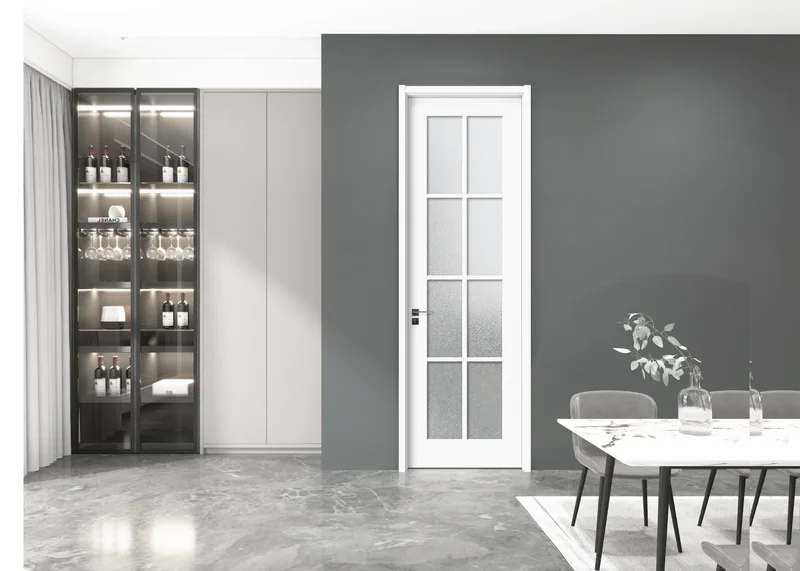
Aluminum glass door ODM for custom designs
In the world of architectural design, the entrance is more than a threshold—it is a statement. For developers, architects, and discerning homeowners seeking to translate a unique vision into reality, off-the-shelf solutions often fall short. This is where the power of Aluminum Glass Door ODM (Original Design Manufacturing) becomes transformative. Moving beyond standard catalogs, ODM partnerships empower you to collaborate directly with manufacturing experts, tailoring every element—from the precise profile of the thermally broken aluminum frame to the type of glazing and hardware finish—to your exact specifications. It is a process that merges uncompromising structural integrity with boundless creative potential, ensuring your project features a door that is not merely installed, but meticulously crafted to embody both innovative design and enduring performance.
Transform Your Space with Custom Aluminum Glass Doors: Tailored Solutions for Modern Architecture
Custom aluminum glass doors represent a synthesis of advanced material engineering and architectural intent. The core value of an ODM partnership lies in translating bespoke design parameters into performance-certified assemblies. Success hinges on the precise specification of alloys, glass types, and thermal breaks to meet structural, environmental, and aesthetic criteria.
Material & Performance Engineering
The performance envelope is defined by the specification of each component system.
- Aluminum Alloy & Finishing: We utilize 6063-T5 or 6061-T6 alloys, with minimum 15-micron anodized or 70-micron powder-coated finishes per AAMA 2603-2605 standards. For coastal or high-pollution environments, fluorocarbon (PVDF) coatings are specified.
- Glass Insulation Units: Configurations range from double-pane Low-E argon-filled units to triple-pane laminated acoustic variants. Typical center-of-glass U-factors achieve ≤ 0.28 W/(m²·K), with Sound Transmission Class (STC) ratings up to 45 dB for specialized acoustic glazing.
- Thermal Break & Structural Integrity: Polyamide 66 with glass fiber reinforcement (25% minimum) is used for thermal break profiles. This ensures a minimum thermal barrier width of 24mm, critically reducing thermal transmittance and preventing condensation. Structural calculations for wind load (up to 2400 Pa) and deflection are performed per ASTM E1300 and EN 12210.
- Hardware Integration: The door system is engineered for compatibility with high-cycle floor closets, multi-point locking systems, and automated operators, requiring precise tolerance control within ±1.0mm across the frame.
Technical Specifications for Custom Configuration
The following parameters are defined during the ODM project phase to meet specific architectural and performance requirements.
| Performance Category | Standard Specification | Enhanced / Custom Specification | Governing Standard / Test Method |
|---|---|---|---|
| Thermal Insulation | U-value (whole door): ≤ 1.8 W/(m²·K) | U-value (whole door): ≤ 1.2 W/(m²·K) | ISO 10077-1, NFRC 100 |
| Acoustic Performance | STC Rating: 30 dB | STC Rating: 38 – 45 dB (laminated glass) | ASTM E90, ISO 10140 |
| Structural Performance | Wind Load Resistance: Class 3 (1600 Pa) | Wind Load Resistance: Class 4 (2000 Pa+) | EN 12211, ASTM E330 |
| Air & Water Infiltration | Air Permeability: Class 4 (≤ 1.5 m³/(h·m²)) Water Tightness: Class 5A (700 Pa) |
Air Permeability: Class 4E (≤ 0.5 m³/(h·m²)) Water Tightness: Class 7A (1050 Pa) |
EN 12207, EN 12208 |
| Security & Durability | Cycle Testing: 100,000 cycles (hinges) Locking Point: 3-point |
Cycle Testing: 200,000 cycles Locking Point: 5-point or multipoint |
EN 12217, ANSI/BHMA A156.13 |
Architectural Integration & Functional Advantages
- Sightline Optimization: Slim profile designs with minimal visual obstruction, enabled by reinforced corner cleats and high-strength alloy, provide maximum glass area and daylight penetration.
- Seamless Threshold Design: Integrated drainage channels and adjustable sill systems ensure ADA compliance and barrier-free access while maintaining watertight integrity.
- Bespoke Finishing & Color: Full RAL and Pantone color matching is available for powder coatings, with options for woodgrain thermal laminates or two-color anodized finishes on a single profile.
- Integrated Glazing: Compatibility with structural silicone glazing (SSG) or pressure plate cap systems allows for flush, curtain-wall-like appearances and continuous facade lines.
The ODM process is governed by a stage-gate protocol from design freeze to production, ensuring every custom door system is validated for performance, fit, and function prior to shipment.
Unmatched Durability and Weather Resistance: Engineered for Long-Term Performance in Any Environment
The structural integrity and longevity of an aluminum glass door system are determined by the precise engineering of its materials and assemblies. For custom ODM projects, this requires a foundation in advanced material science and adherence to international performance standards, ensuring the assembly performs as a cohesive unit under environmental stress.
Core Material Engineering for Extreme Conditions
- Alloy Specification & Surface Integrity: We utilize 6063-T5 or 6061-T6 aluminum alloys, thermally treated for optimal strength-to-weight ratio. Surface protection is achieved through a multi-stage pretreatment followed by either:
- Powder Coating: Applied to a minimum thickness of 60μm, tested to ASTM D968 for abrasion resistance and ASTM D2247 for 1000+ hours of salt spray corrosion resistance without blistering or underfilm corrosion.
- Anodizing: A 15-25μm AA-M31-C22 anodic layer provides exceptional hardness (>500 Vickers) and integral, non-fading color.
- Thermal Stress Management: The thermal break, a critical component for condensation resistance and thermal efficiency, is a polyamide 6.6 (PA66) strip with glass fiber reinforcement (≥25%). It undergoes a mechanical roll-press or injection process to create a permanent bond, achieving a minimum shear strength of 24 N/mm² (tested per EN 14024). This ensures the integrity of the insulating barrier across the profile’s lifespan.
- Glazing System Resilience: We engineer for full compatibility with insulated glass units (IGUs) under wind load and thermal cycling. Critical parameters include:
- Sealant Compatibility: The glazing gasket material (EPDM or silicone) is selected for its compression set resistance and long-term adhesion to both glass and aluminum.
- Drainage & Pressure Equalization: Concealed weep channels within the frame are designed to manage water ingress and equalize air pressure, preventing moisture buildup and ensuring smooth operation.
Quantified Performance Against Environmental Stressors
| Performance Parameter | Test Standard / Metric | Engineered Result |
|---|---|---|
| Air Infiltration | ASTM E283 / EN 1026 | ≤ 0.5 cfm/ft² (≤ 1.5 m³/hr·m²) at 75 Pa |
| Water Penetration Resistance | ASTM E331 / EN 1027 | No leakage at 15% of design pressure (e.g., 2.0 psf / 100 Pa) |
| Structural Performance (Deflection) | ASTM E330 / EN 12179 | L/175 or less under positive/negative design pressure |
| Thermal Insulation (U-factor) | NFRC 100 / EN ISO 10077-1 | Uf (frame) as low as 1.8 W/m²·K, full assembly Ug (glass) dependent on IGU specification |
| Condensation Resistance | AAMA 1503 / NFRC 500 | CRF ≥ 50 for thermally broken systems |
| Operational Cycle Testing | AAMA 920 / EN 12400 | >10,000 cycles of repeated opening/closing without failure |
Long-Term Reliability Assurance
- Joint & Hardware Durability: Corner cleats are machined from stainless steel and fastened with self-tapping screws into pre-tapped holes for a rigid, rack-resistant joint. Heavy-duty, adjustable hinges and multi-point locking gear are load-tested to exceed 100,000 cycles.
- Finish Weatherability: All exterior finishes are certified to AAMA 2604 (High-Performance Organic Coatings) or AAMA 611 (Anodized), guaranteeing 10+ years of color and gloss retention without significant chalking or fading under UV exposure.
- Compatibility & Compliance: Systems are engineered to integrate seamlessly with structural silicone glazing (SSG) or pressure plate curtain wall systems. Full material traceability and compliance with relevant building codes (IBC, EN) are documented for project submittals.
Precision Engineering for Structural Stability: Ensuring Safety and Reliability in High-Traffic Applications
Structural stability in high-traffic aluminum glass door systems is a non-negotiable requirement, achieved through a foundation of precision engineering in both aluminum fabrication and glass specification. The system’s integrity is determined by the synergistic performance of its components under dynamic loads, environmental stress, and constant use.
Core Engineering Principles:
- Alloy Specification & Thermal Break Design: Primary structural members utilize 6063-T5 or 6061-T6 aluminum alloys, chosen for their optimal yield strength-to-weight ratio. Extrusions are engineered with multi-chamber thermal break profiles using polyamide (PA66) bars with glass fiber reinforcement (GF25). This design decouples interior and exterior frames, managing structural loads while mitigating thermal bridging and condensation.
- Glass Integration & Load Transfer: The glass is not merely an infill but an integral structural component. Engineered glazing units, often laminated or tempered, transfer wind and impact loads to the frame via a continuous, compression-grade silicone sealant system. The bite depth of the glazing channel and the design of the pressure plate system are calculated to ensure uniform load distribution without creating stress points in the glass.
- Hardware Interface Engineering: Hinge and locking mechanisms are mounted to reinforced aluminum sections or internally welded steel reinforcements. The mounting interface is designed to distribute operational forces over a larger area, preventing localized deformation and ensuring consistent alignment over the door’s lifecycle.
Functional Advantages for High-Traffic Performance:
- Predictable Load-Bearing Capacity: Finite Element Analysis (FEA) validates deflection under design loads (e.g., EN 12210, ASTM E330), ensuring performance in high-wind zones and for oversized door leaves.
- Long-Term Dimensional Stability: Precision-machined joinery—employing corner cleats, shear blocks, and structural epoxy—maintains squareness and prevents racking, critical for automated door systems.
- Cyclic Durability: Hardware is tested to exceed 100,000 cycles (EN 16361) without degradation in operation force or sealing performance.
- Maintained Weather Integrity: Structural design incorporates dedicated water management chambers and drainage pathways, ensuring that mechanical loads do not compromise the primary weather seals.
Technical Parameters for Specification:
| Component | Key Parameter | Standard / Typical Value | Performance Implication |
|---|---|---|---|
| Aluminum Profile | Minimum Wall Thickness (Structural) | 2.0mm – 3.0mm (varies by profile role) | Determines resistance to bending and torsional stress. |
| Thermal Break | Shear Strength (PA66 GF25) | ≥ 80 N/mm² (EN 14024) | Ensures structural integrity of the insulated profile under load. |
| Glazing System | Minimum Design Bite Depth (Laminated Glass) | 18mm – 22mm | Secures glass under negative wind pressure; critical for structural glazing applications. |
| Hardware | Hinge Load Rating (Heavy-Duty) | ≥ 150 kg per hinge set | Supports mass of large, insulated glass units with safety factor. |
| System | Air Infiltration (Class 4) | ≤ 1.5 m³/(m·h) @ 600 Pa (EN 12207) | Validates that structural rigidity maintains seal compression under test pressure. |
| System | Water Tightness (Class 9A) | ≥ 1,800 Pa (EN 12208) | Confirms integrated water management performs under severe wind-driven rain. |
Reliability is engineered from the outset. By specifying alloys, profiles, and connection details based on quantifiable performance data, the system delivers predictable safety and enduring operation in demanding commercial, institutional, and public access environments.
Advanced Materials and Eco-Friendly Construction: Formaldehyde-Free and Sustainable Design Options
The structural integrity and environmental profile of an aluminum glass door system are fundamentally determined by its core materials and composite construction. For custom ODM projects, specifying advanced, sustainable substrates is critical for meeting stringent architectural, performance, and green building standards.
Core Material Technologies
Modern door leaf cores and framing components utilize engineered composites that surpass traditional solid wood and particle board in stability and sustainability.
- High-Density Wood Plastic Composite (WPC): Engineered with a wood flour/PVC ratio typically exceeding 60/40 and densities from 1.25-1.45 g/cm³. This formulation ensures minimal water absorption (<0.5% over 24 hours) and superior dimensional stability against warping, critical for large-format door panels.
- Formaldehyde-Free LVL (Laminated Veneer Lumber): Constructed with phenol-formaldehyde or polyurethane-based adhesives classified as F**** (Japanese Agricultural Standard) or E0 (EN 13986). LVL provides a homogeneous, cross-banded core with predictable mechanical properties and a coefficient of thermal expansion aligned with aluminum framing.
- Solid Aluminum Reinforced Profiles: For maximum rigidity in oversized applications, a reinforced aluminum core within the door leaf provides a neutral axis that eliminates deflection under load, compatible with heavy-duty pivot hardware systems.
Performance Specifications and Standards
Material selection directly translates to quantifiable performance metrics required for project specifications.
| Parameter | Material/Standard | Performance Value | Architectural Benefit |
|---|---|---|---|
| Formaldehyde Emission | EN 16516 / E0 Grade | ≤0.062 mg/m³ (3m³ chamber) | Ensures indoor air quality (IAQ) compliance for LEED, BREEAM, WELL. |
| Fire Rating | EN 13501-1 / ASTM E84 | Class B-s1, d0 / Class A | Non-combustible core materials contribute to compartmentalization. |
| Thermal Insulation (U-value) | EN ISO 10077-1 | Uf (frame) ≤ 1.8 W/(m²·K) | Achieved through thermal break polyamide bars and low-conductivity core materials. |
| Acoustic Insulation (Rw) | EN ISO 10140-1 | Up to 42 dB (C;tr) | High-density core materials dampen sound vibration through the door leaf. |
| Moisture Resistance | EN 321 (Cyclic Test) | Swelling rate < 12% | Guarantees performance in high-humidity environments (e.g., lobbies, coastal areas). |
Functional Advantages of Specified Composites
- Dimensional Stability: Coefficient of linear expansion below 4.0 x 10⁻⁵ /K, preventing stress on glass seals and hardware alignment.
- Mechanical Fastening: Superior screw withdrawal strength (>65 N/mm) compared to particle board, allowing for secure and reusable hardware mounting.
- Surface Preparation: Provides a perfectly uniform substrate for high-pressure laminate (HPL), real wood veneer, or powder-coat finishing without telegraphing imperfections.
- Lifecycle & Recyclability: Aluminum framing is 100% recyclable without loss of properties. WPC and LVL cores utilize post-industrial recycled wood and polymer content, supporting cradle-to-cradle design principles.
Quality Assurance Framework
Material sourcing and fabrication are governed by integrated management systems: ISO 9001 for quality control, ISO 14001 for environmental management, and FSC®-chain-of-custody certification for responsibly sourced wood components. All composite materials are supplied with Declarations of Performance (DoP) and Environmental Product Declarations (EPD) for full transparency.
Seamless Integration and Customization: From Design to Installation with Expert ODM Support
Seamless integration of custom aluminum glass doors into a building envelope requires a methodical ODM process, from initial architectural concept to final site installation. This is not merely fabrication, but a collaborative engineering discipline that ensures performance specifications are met without compromising design intent.
The ODM Engineering Workflow: A Technical Collaboration
-
Concept & Feasibility Analysis: We analyze your architectural drawings and performance requirements. This stage identifies critical parameters: structural load calculations for oversized panels, thermal bridging analysis at junctions, and compatibility with adjacent wall systems (e.g., curtain wall, timber frame). Material selection begins here, evaluating alloy temper (e.g., 6063-T5 vs. 6061-T6), glass type (annealed, tempered, laminated), and thermal break profile design.
-
Technical Design & Detailing: Our engineering team develops detailed shop drawings, structural calculations, and fabrication specs. This includes:
- Frame Engineering: Profile extrusion design for optimal strength-to-weight ratio, thermal break integrity, and drainage path engineering.
- Glazing Analysis: Determination of glass thickness, interlayer (for laminated acoustic or safety glass), and spacer technology (warm edge vs. aluminum) to achieve target U-factors and sound reduction indices (Rw/Ctr ratings).
- Hardware Integration: Precise specification and pocketing for architectural-grade hardware (hinges, multi-point locks, closers) to ensure cycle life exceeding 100,000 operations.
-
Prototyping & Validation: A full-scale prototype or critical detail mock-up is manufactured for physical validation. This tests:
- Operational feel and hardware synchronization.
- Air infiltration (≤1.5 m³/(h·m²) @ 100Pa per EN 12207), water penetration resistance (≥600Pa per EN 12208), and structural performance under negative pressure.
- Visual match to approved finishes (anodizing Class I/II, powder coat thickness 60-80μm, PVDF fluorocarbon coating).
-
Certified Production & Quality Assurance: Manufacturing proceeds under ISO 9001:2015 protocols, with in-process checks. Key verifications include:
- Dimensional tolerances (typically ±1mm on overall dimensions).
- Glass optical quality and edgework.
- Finish adhesion and corrosion resistance (salt spray testing per ASTM B117).
-
Logistics & Installation Support: We provide comprehensive installation manuals, annotated CAD files, and sequenced packing lists. For complex projects, on-site technical supervision is available to ensure proper assembly, sealing, and adjustment.
Core Technical Advantages of Expert ODM Support
- Performance Certainty: Doors are engineered as complete systems, not assembled components. This guarantees published performance metrics for thermal insulation (U-factors as low as 1.0 W/(m²·K)), acoustic attenuation (Rw up to 45 dB with appropriate glazing), and structural integrity.
- Material & Finish Integrity: Direct control over the supply chain—from aluminum billet sourcing to final coating—ensures consistent alloy composition, mechanical properties, and finish durability. We specify and audit suppliers for critical materials.
- Regulatory Compliance: Systems are designed and documented to meet or exceed relevant international standards, including EN 14351-1, ANSI/AAMA 2505, and regional building codes for fire egress, safety, and energy efficiency.
- Risk Mitigation: The prototyping and detailed technical review phases identify and resolve conflicts (e.g., interference with structural elements, inadequate clearance for hardware) before fabrication, eliminating costly site modifications.
Customization Parameters: Technical Scope
| Parameter Category | Typical Specification Range | Notes / Governing Standard |
|---|---|---|
| Frame & Sash | ||
| Profile Width | 45mm – 120mm | Custom extrusion dies for unique sightlines. |
| Thermal Break | Polyamide (PA66 GF25) or Polyurethane | Minimum 24mm break width for high-performance applications. |
| Glazing | ||
| Glass Configurations | Double, Triple, Laminated, Insulated | Laminated glass for acoustic (STC) or safety (CPSC 16 CFR 1201). |
| Cavity Fill | Argon, Krypton | Improves U-factor; requires high-quality edge seal. |
| Spacer | Stainless Steel, Warm Edge (TPS, SWISSPACER) | Reduces linear thermal transmittance (Ψ-value). |
| Performance | ||
| Thermal Transmittance (Uw) | 1.8 – 1.0 W/(m²·K) | Dependent on full system design. |
| Sound Reduction (Rw) | 30 – 45 dB | Achieved with asymmetric laminated glass and sealed frames. |
| Air Permeability | Class 4 (EN 12207) / A3 (AAMA 2505) | |
| Water Tightness | Class 9A (EN 12208) / WS5 (AAMA 2505) | |
| Finishes | ||
| Anodizing | AA-M10-C22, AA-M12-C22, Clear or Color | Thickness 15-25µm. |
| Powder Coating | Qualicoat Class 1/2, GSB Master | Standard or custom RAL colors. |
| PVDF Coating | 70% PVDF resin minimum (AAMA 2605) | Superior color and chalk resistance. |
The ultimate deliverable is a fully documented, performance-certified door system that installs as designed, interfaces seamlessly with adjacent construction, and fulfills its long-term functional role within the building envelope.
Trusted by Industry Leaders: Proven Quality and Compliance with Global Standards
Our engineering and manufacturing protocols are built to meet the exacting specifications of global architectural projects. We achieve this through a foundation of certified quality management and a material science-driven approach to performance.
Core Compliance & Certification Framework
- Quality Management: Manufacturing processes are certified to ISO 9001:2015, ensuring traceability and consistency from raw material sourcing to final assembly.
- Material Health & Safety: All composite materials, sealants, and finishes comply with stringent international formaldehyde emission standards (E0/E1, CARB Phase 2) and VOC regulations.
- International Performance Standards: Products are engineered and tested to relevant regional benchmarks, including EN (European Norm) and ASTM (American Society for Testing and Materials) standards for structural performance, thermal cycling, and operational durability.
Engineering Specifications for Critical Performance
Key performance parameters are rigorously validated through independent laboratory testing.
| Performance Category | Test Standard / Metric | Typical Achieved Specification |
|---|---|---|
| Thermal Insulation | U-factor (EN ISO 10077-1 / ASTM C1363) | ≤ 1.2 W/(m²·K) for door system |
| Acoustic Insulation | Sound Reduction Index (Rw) (EN ISO 10140 / ASTM E90) | Up to 42 dB for specified configurations |
| Structural & Durability | Cycle Testing (EN 12219 / ASTM D3652) | > 100,000 cycles for hardware and moving parts |
| Fire Performance | Reaction to Fire (EN 13501-1) / Fire Resistance (ASTM E119) | Class B/s2,d0 (European) / Up to 90-minute rated assemblies (US) |
| Material Stability | Dimensional Stability (Moisture Absorption) (EN 317 / ASTM D1037) | ≤ 12% thickness swelling after 24-hour water immersion |
Material Science & Architectural Advantages
- Aluminum Alloy Integrity: Utilization of 6063-T5 or 6061-T6 temper alloys, with minimum 10-micron anodized or 70-micron powder-coated finishes, ensuring corrosion resistance and structural longevity.
- Glazing Performance: Support for monolithic, laminated, or insulated glass units (IGUs) with low-E coatings and argon fill, achieving Ug-values as low as 0.5 W/(m²·K).
- Sealing System Efficacy: Multi-chamber EPDM or silicone gaskets provide consistent compression set resistance, critical for long-term weatherproofing and thermal break efficiency.
- Hardware Integration: Frames are engineered to accommodate high-grade, load-rated hardware for smooth operation and sustained alignment under frequent use.
Frequently Asked Questions
How do you prevent warping in aluminum-glass doors under high humidity?
Our doors integrate WPC panels with 1,250 kg/m³ density and LVL core reinforcement, ensuring minimal moisture expansion. The aluminum alloy undergoes a powder coating with 60-80μm thickness, creating a barrier. This system maintains dimensional stability, preventing warping even in 85% relative humidity environments.
What thermal insulation standards do your custom doors meet?
We utilize thermal break aluminum profiles with PA66 GF25 nylon strips and double-glazed Low-E glass (U-value ≤1.6 W/m²K). The WPC infill panels have a thermal conductivity of ≤0.15 W/mK. This assembly achieves a door system K-value below 2.0, significantly reducing energy transfer and meeting passive house principles.
Are your composite materials compliant with strict formaldehyde regulations?
All wood-plastic composites and adhesives used are certified to E0 (≤0.5 mg/L) and EN 717-1 standards. We employ isocyanate-free PUR bonding agents and source WPC raw materials with formaldehyde emissions below 0.05 ppm, ensuring indoor air quality safety for healthcare and residential projects.
How is impact resistance engineered into the door system?
The structure features a 1.2mm thick aluminum alloy frame (6063-T5) reinforced with steel cores at stress points. WPC panels have a Charpy impact strength ≥25 kJ/m². Glass options include 6+6mm tempered or laminated panes, achieving Class 3 impact rating per ANSI Z97.1 standards.
What acoustic performance can be expected?
Our acoustic series doors achieve STC 38-42 dB through engineered seals and mass-loaded design. We use asymmetric glass thickness (6mm+12mm air gap+8mm) and triple magnetic perimeter seals with 12mm compression. The WPC core’s density provides additional sound damping across frequencies.
How do you ensure long-term weather resistance?
Aluminum components undergo 8-step pretreatment including chromate-free nanoceramic coating before 70μm PVDF fluorocarbon spray. WPC surfaces receive UV-cured acrylic topcoats with 5,000+ hours QUV resistance. All hardware is 316 stainless steel, ensuring performance in C5-M marine atmospheres per ISO 12944.
Can you accommodate specialized fire rating requirements?
Yes, we engineer doors to meet EI30-EI90 ratings using ceramic fiber-filled aluminum profiles, intumescent seal strips expanding at 200°C, and fire-rated glass with gel interlayers. The WPC composite formulation includes magnesium oxide additives for flame retardancy (Class B1 per GB 8624).
What customization limits exist for oversized door designs?
Our structural limit is 3.2m height × 1.8m width per leaf. Beyond 2.4m, we integrate reinforced aluminum mullions (3.0mm wall thickness) and dual-point multi-lock systems. For extra-large designs, we perform FEM analysis to calculate load distribution and specify appropriate hinge configurations (minimum 4 per leaf).