Aluminum Glass Door Export to EU with CE Certification
The European market represents a pinnacle of opportunity for manufacturers of premium architectural products, yet its gates are guarded by stringent regulatory standards. For exporters of aluminum glass doors, securing CE certification is not merely an administrative step—it is the definitive key to unlocking this lucrative arena. This mandatory mark signifies more than compliance; it is a powerful declaration that your products meet the EU’s rigorous health, safety, and environmental performance requirements. From thermal efficiency and structural integrity to safety in case of fire, CE certification builds immediate trust with specifiers, distributors, and end-users across Europe. Navigating this process successfully transforms a quality product into a credible, market-ready solution, positioning your brand for success in a region that values innovation, sustainability, and uncompromising quality.
Seamless Market Access: How Our CE-Certified Aluminum Glass Doors Meet EU Regulatory Standards
CE certification is not merely a label; it is a verifiable technical passport confirming that our aluminum glass door systems are engineered to comply with the EU’s Construction Products Regulation (CPR) 305/2011. This compliance is substantiated through rigorous assessment of performance characteristics against harmonized European Norms (hENs), ensuring structural integrity, safety, and durability for the European market.
Core Compliance: Harmonized Standards & Essential Characteristics
Our certification is anchored in the following key standards, with Declarations of Performance (DoP) provided for each product family:
-
EN 14351-1: Windows and doors – Product standard, performance characteristics: This is the foundational standard. Compliance demonstrates performance across multiple essential characteristics, including:
- Load-bearing capacity (structural integrity): Frames are engineered to withstand defined wind loads (e.g., Class C5 as per EN 12211) and permanent loads without detrimental deformation.
- Air Permeability (EN 1026), Water Tightness (EN 1027), and Wind Resistance (EN 12211): Systems are tested as complete assemblies to proven performance classes, ensuring long-term weatherproofing.
- Dangerous Substances: Compliance with requirements for the release of dangerous substances, aligning with mandates for material health.
-
EN 1279-5: Glass in building – Insulating glass units – Evaluation of conformity: This standard governs the critical insulating glass unit (IGU). Our IGUs are certified for:
- Thermal Insulation (U-value): Achieved through optimized thermal break design in the aluminum profile (e.g., polyamide 6.6 with glass fiber reinforcement) and the use of low-emissivity (Low-E) coatings and argon gas fills. Typical center-pane U-values of ≤1.0 W/(m²K) are standard.
- Structural Sealant Durability: For structural glazing systems, the sealant is tested for long-term adhesion and resistance to environmental stressors.
-
Fire Performance (where applicable): For fire-rated door assemblies, products are tested and classified per EN 16034 and the relevant fire test standard EN 1634-1, achieving defined integrity (E) and insulation (I) classifications (e.g., EI30, EI60).
Technical Specifications & Material Engineering
Our product development prioritizes material science to meet and exceed these standards.
| Performance Parameter | Standard / Test Method | Our Typical Specification | Engineering Rationale |
|---|---|---|---|
| Profile Thermal Conductivity | EN ISO 10077-2 (Calculation) | Uf (Frame U-value) ≤ 1.5 W/(m²K) | Utilization of a 34mm polyamide 6.6 thermal break with a minimum shear strength of 90 N/mm² and tensile strength of 110 N/mm². |
| Insulating Glass Unit (IGU) | EN 1279-2, -3 | Ug (Glass U-value) ≤ 1.0 W/(m²K); SHGC tailored to climate zone. | Double or triple glazing with soft-coat Low-E (ε ≤ 0.03), 90% argon fill, and warm-edge spacer systems. |
| Airborne Sound Insulation | EN ISO 10140-2 | Rw (C;Ctr) up to 44 (-1;-4) dB | Asymmetric glass thicknesses (e.g., 6/12/8), laminated inner pane, and dual-seal gasket systems in the frame. |
| Profile Surface Hardness | EN 13523-4 (Buchholz) | ≥ 100 (Indentation ≤ 0.1 mm) | High-quality powder coating with a minimum thickness of 60μm, applied over a chromate-free pretreatment. |
| Operation & Durability | EN 1191 (Cycle testing) | Class 4 (10,000 cycles minimum) | Precision-machined hardware seating, reinforced corner cleats, and multi-point locking gear with stainless steel components. |
Functional Advantages for Specifiers and Contractors
- Unambiguous Compliance: Each shipment is accompanied by the CE marking and the corresponding DoP, simplifying building control approvals and technical submissions.
- Predictable Performance: The quantified performance data (U-values, Rw ratings, load classes) allows for accurate energy modeling and specification in project calculations.
- Supply Chain Integrity: Our factory production control (FPC) system, audited under the CE certification scheme (System 1 or 1+), ensures batch-to-batch consistency in alloy composition, thermal break integrity, and finishing quality.
- Long-Term Reliability: The certified performance for water tightness, wind resistance, and operational durability mitigates long-term maintenance risks and call-back liabilities.
By integrating these material and performance specifications into our design and manufacturing FPC, we deliver door systems that are not only compliant but are engineered for reliable, long-term performance in the diverse European climate.
Enhanced Aesthetics and Durability: The Superior Design and Weather Resistance of Our Aluminum Glass Doors
The structural integrity and long-term performance of our aluminum-glass door systems are defined by the precise engineering of their components. The aluminum profiles are fabricated from EN AW-6060 T66 alloy, thermally broken with polyamide 66 GF25 (25% glass fiber) barriers. This configuration achieves a certified thermal transmittance (Uf) of ≤ 1.6 W/(m²·K) for the frame, contributing to overall system Uw values as low as 1.1 W/(m²·K) when paired with appropriate glazing.
Glazing units are manufactured to EN 1279 standards, with options including:
- Thermal Insulation: Triple-pane configurations with low-E coatings (ε ≤ 0.03) and argon fill, achieving center-pane Ug values of 0.5 W/(m²·K).
- Acoustic Performance: Laminated glass with PVB interlayers of varying thicknesses, providing sound reduction ratings (Rw) up to 48 dB.
- Safety & Security: Class P2A burglar-resistant or EN 12600 impact-resistant laminated glass.
Surface finishing is critical for durability. Profiles undergo a multi-stage pre-treatment (degreasing, etching, chromating) prior to application of:
- Powder Coating: Applied to a minimum thickness of 60μm per EN 12206-1, qualified for corrosion resistance class C4 (High).
- Anodizing: Grade AA20 or AA25 per EN ISO 7599, offering superior hardness and UV stability.
The design ensures long-term weather resistance and operational stability, validated by the following performance parameters:
| Performance Characteristic | Test Standard | Achieved Rating / Value |
|---|---|---|
| Air Permeability | EN 12207 | Class 4 |
| Water Tightness | EN 12208 | Class 9A (≥ 600 Pa) |
| Wind Load Resistance | EN 12210 | Class C5 (≥ 2000 Pa) |
| Operating Cycle Life | EN 12400 | ≥ 10,000 cycles (Grade 4) |
| Thermal Cycling & UV | EN 13049 / EN 14825 | No delamination, chalking >8 (ISO 2409) |
Functional advantages of this engineered approach include:
- Structural Stability: Reinforced corner cleats and stainless steel hardware anchors provide a deflection of less than L/300 under maximum design load.
- Weather Seal Integrity: Triple-seal gasket system using EPDM (Ethylene Propylene Diene Monomer) ensures consistent compression set resistance and long-term elasticity across a temperature range of -40°C to +70°C.
- Corrosion Resistance: Full-system testing per EN 1670 confirms corrosion resistance grade 4 for all hardware, suitable for coastal (C4-M) environments.
- Maintenance & Service Life: The anodized and powder-coated finishes maintain their integrity with a minimal cleaning regimen, supporting a service life expectancy exceeding 30 years in typical European climates.
All systems are supplied with full Declaration of Performance (DoP) documentation, tracing all critical components to their relevant harmonized standards (e.g., EN 14351-1 for windows and doors) under our EN ISO 9001:2015 certified factory production control.
Optimized for High-Performance Applications: Structural Stability and Safety Features for Commercial Use
The structural integrity of an aluminum glass door system is non-negotiable for commercial and high-traffic applications. CE certification under the Construction Products Regulation (CPR) mandates rigorous assessment of permanent load-bearing safety. Our engineering prioritizes a holistic approach where aluminum alloy performance, glass specification, and hardware integration are co-optimized to exceed the baseline requirements of EN 14351-1 for windows and doors.
Core Structural Engineering Principles
- Alloy and Thermal Profile Design: Utilization of EN AW-6060 T66 or T6 temper alloys, providing a guaranteed minimum tensile strength (Rm) ≥ 160 N/mm². Profiles are engineered with multi-chamber designs, not only for thermal break efficiency but to significantly increase the moment of inertia, enhancing resistance to wind load deflection and torsional stress.
- Glass as a Structural Component: Laminated safety glass (EN 14449) with PVB or SGP interlayers is standard for overhead and full-height applications. This design ensures that in the unlikely event of breakage, glass fragments remain bonded, maintaining barrier integrity and mitigating injury risk. For enhanced stability, glass units are structurally bonded into the frame using high-modulus silicone (ASTM C920 Class 25+), creating a composite shear-resisting structure.
- Hardware Integration Philosophy: Frame sections are reinforced at critical stress points—hinge, lock, and panic device locations—with galvanized steel or aluminum alloy inserts. This ensures load transfer from the moving leaf directly into the main frame structure, preventing localized deformation over cycles of use. Hardware is tested to EN 12209 for locks and EN 1125 for panic devices, guaranteeing performance under duress.
Quantified Performance for Specification
The following parameters are validated by Notified Body testing for CE marking and are critical for architectural specification sheets.
| Performance Characteristic | Test Standard | Typical Achieved Value | Application Implication |
|---|---|---|---|
| Wind Load Resistance | EN 12211 | Class C5 (2000 Pa) to C6 (2400 Pa) | Suitable for high-rise facades and severe exposure sites. |
| Door Leaf Torsional Stiffness | EN 1191 (Test Cycle) | ≤ 1.5 mm deflection at leading edge after 100,000 cycles | Ensures consistent operation and sealing integrity over lifespan. |
| Acoustic Insulation (Rw) | EN ISO 10140-1 | 38 – 44 dB | Critical for offices, hospitals, and buildings in high-noise environments. |
| Thermal Transmittance (Uw) | EN ISO 10077-1 | 1.3 – 1.8 W/(m²·K) | Meets and exceeds energy performance requirements for most EU climate zones. |
| Safety Glass Fall-Through | EN 12600 | Class 2B1 (High Impact) | Laminated glass maintains integrity upon impact, a key safety feature. |
Safety Features Inherent to Design
- Fire & Smoke Compartmentalization: Doors can be engineered to fulfill EI (integrity & insulation) or E (integrity only) classifications per EN 13501-2, using specialized glazing and intumescent seals that expand under heat to block passage of flames and hot gases.
- Enhanced Security Performance: Multi-point locking systems engage up to 12 bolts per leaf into the frame, resisting manual forced entry. Glass can be specified as attack-resistant to standards like EN 356 (glass security) without compromising optical clarity.
- Fail-Safe Egress Compliance: All panic hardware and accessible door configurations are designed to meet the essential requirements of the CPR for safety in case of fire, aligning with national building codes derived from EU mandates.
Streamlined Export Process: Efficient Logistics and Compliance Support for EU Distribution
A streamlined export process is built on precise engineering documentation and material traceability, not just logistics. For EU distribution, every shipment must be supported by a complete technical dossier that validates compliance from raw material to finished assembly.
Core Technical Documentation for Customs & Site Acceptance:
- Declaration of Performance (DoP): The legally binding CE document, listing Essential Characteristics (e.g., U-factor, air permeability, watertightness, wind load resistance) per EN 14351-1, with referenced Notified Body certification.
- Factory Production Control (FPC) Certificates: Evidence of ongoing ISO 9001-compliant quality management, critical for series production acceptance.
- Material Certificates: Mill certificates for aluminum alloys (e.g., 6060 T66) verifying mechanical properties, and glass certificates for thermal performance (low-E coating, argon fill) and safety standards (EN 12600 impact class).
- Test Reports: Accredited lab reports for complete door assemblies, covering structural performance (EN 12211), acoustic insulation (EN 12758, e.g., Rw 35 dB), and thermal transmittance (EN 12412, UD ≤ 1.4 W/m²K).
Logistics Engineering for Component Integrity:
Door systems are engineered for disassembly to optimize shipping density and prevent damage. Critical components are packed separately:
- Glass Units: Crated vertically in A-frame packs to prevent torsion and edge seal stress.
- Aluminum Frames: Anodized or powder-coated profiles are bundled with protective corner braces and separated by protective film to prevent abrasion.
- Hardware & Gaskets: Sealed in desiccant-packed containers to prevent corrosion and maintain EPDM/TPE seal elasticity.
Compliance Support Infrastructure:
Our process integrates compliance into production. A dedicated technical file is maintained for each door series, containing:
- Notified Body audit summaries for the AVCP System 3 (type-testing + FPC) conformity route.
- Full material traceability, including sourcing documentation for thermal breaks (polyamide 66 with glass fibers) and sealants.
- Detailed assembly instructions and maintenance manuals in required EU languages, referencing EN standards.
Key Performance Parameters for Specification & Logistics Planning:
| Parameter | Standard | Typical Specification | Relevance to Export/Compliance |
|---|---|---|---|
| Thermal Transmittance (UD) | EN 12412-2 | ≤ 1.4 W/m²·K | Critical for meeting EU building energy codes (EPBD). Must be declared on DoP. |
| Air Permeability | EN 12207 | Class 4 | Confirms frame assembly precision and gasket integrity after transport. |
| Watertightness | EN 12208 | Class 9A (≥ 600 Pa) | Validates design and corner fabrication quality under extreme weather. |
| Acoustic Insulation (Rw) | EN ISO 10140-1/2 | Up to 42 dB | Specified for project-specific requirements; verified by test report. |
| Wind Load Resistance | EN 12211 | Class C5 (≥ 2000 Pa) | Confirms structural adequacy of profile design and glazing bead system. |
This integrated approach ensures that every container shipped is pre-cleared for regulatory compliance, with all necessary technical evidence accessible for distributors and specifying engineers. The goal is zero non-conformity at port of entry, enabling direct dispatch to construction sites.
Technical Specifications and Customization Options for Tailored Building Solutions
Core Material Specifications
Aluminum Alloy Profiles
- Alloy & Temper: EN AW-6060 (AlMgSi) or EN AW-6063, supplied in T5 or T6 temper. Conforms to EN 755-9 and EN 12020-2 for precision profiles.
- Surface Finishes:
- Anodizing: Class II (≥25µm) per EN 1676. Available in natural, bronze, and black.
- Powder Coating: Qualicoat Class 2 or GSB Master qualification. Standard RAL colors; thickness 60-80µm per EN 12206-1.
- PVDF Coating: For high-chemical resistance environments; thickness ≥30µm.
- Thermal Break: Polyamide 6.6 (PA66) with glass fiber reinforcement (≥25% by weight). Minimum thermal barrier width of 24mm. Thermal conductivity (λ) of the barrier material is ≤0.3 W/(m·K).
Glass Units
- Composition: Insulated Glass Units (IGU) manufactured per EN 1279.
- Configuration Options:
| Configuration | Typical U-Value (W/m²K) | Rw Sound Reduction (dB) | Typical Thickness |
| :— | :— | :— | :— |
| Double Glazing (4-16-4) | 1.1 – 1.3 | 30 – 35 | 24 mm |
| Double Glazing, Low-E (4-16-4) | 0.9 – 1.1 | 30 – 35 | 24 mm |
| Triple Glazing (4-12-4-12-4) | 0.5 – 0.7 | 35 – 40 | 36 mm |
| Laminated Safety Glass (6.4-6.4) | – | 34 – 37 | 12.8 mm | - Glass Types: Clear, tinted, reflective, or printed. Laminated glass uses PVB or SGP interlayer. Tempered safety glass per EN 12150-1.
Hardware & Seals
- Hardware: Multi-point locking systems, concealed hinges, and pivots rated to Grade 4 or higher per EN 12209. Minimum 10,000 cycles operation.
- Seals: EPDM gaskets per EN 12365-1, with a minimum Shore A hardness of 60±5. Resistant to UV and ozone.
Performance Data & CE Marking Parameters
All products are CE marked in accordance with CPR (EU) No 305/2011 under System 1. The Declaration of Performance (DoP) covers:
- Load-Bearing Capacity (EN 14351-1): Resistance to wind load (Class C1-C5), static torsion, and mechanical strength.
- Air Permeability (EN 1026): Class 4 (≥600 Pa).
- Water Tightness (EN 1027): Class 9A (≥600 Pa) or 9B (≥900 Pa with mechanical drainage).
- Wind Load Resistance (EN 12211): Class 1-5 (600-2000 Pa).
- Acoustic Performance (EN ISO 10140-2): Rated Rw (C; Ctr) up to 42 (-1; -4) dB.
- Thermal Transmittance (EN 10077-2): Uf (frame) values as low as 1.3 W/(m²·K). Complete door Uw values from 1.1 to 0.8 W/(m²·K).
- Durability (EN 1191): Tested for 10,000 cycles of operation without failure.
- Safety in Use (EN 16361): Risk assessment for pinch points, shear points, and impact.
Customization for Architectural Integration
Dimensional Flexibility
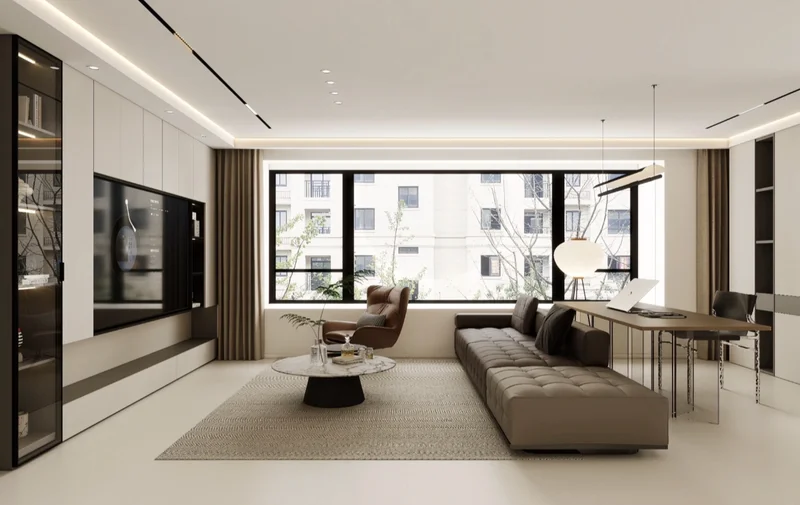
- Maximum Single Leaf Sizes: Up to 1400mm (width) x 3000mm (height) for sliding systems; up to 1200mm x 2600mm for swing doors, dependent on profile series and wind load.
- Profile Sightlines: Available from 45mm (slimline) to 120mm (high-structural) depths.
- Threshold Options: Low-profile (≤20mm), accessible, or thermally broken high-threshold designs.
Functional & Aesthetic Configurations
- Opening Styles: Single/double swing (inward/outward), parallel-opening, lift-slide, telescopic sliding, and pivot systems.
- Glazing Bead: External screw-fixed, internal pressure-gasket, or fully flush structural glazing options.
- Color Matching: Full RAL and custom color matching for powder coating. Dual-color finishes (different interior/exterior) available.
- Integrated Systems: Pre-grooved profiles for compatibility with external shading, blind systems, or security sensor integration.
Enhanced Performance Packages
- Security: Integration of multi-point locks with 3-5 hook bolts, hinge-side security bolts, and compatibility with smart lock systems. Glass can be specified as laminated security glass (P2A/P2B rating).
- Fire Resistance: EI30 or EI60 rated doors available, tested and certified per EN 1634-1, including hardware and glazing.
- Blast & Pressure Resistance: Engineered solutions for specific project requirements, with calculated and tested performance data.
Building Trust Through Proven Quality: Certifications, Case Studies, and Client Testimonials
Certifications: The Foundation of Compliance and Performance
Our CE certification is not a singular achievement but the culmination of a rigorous, integrated quality management system. It validates that our aluminum glass doors are manufactured, tested, and documented in full compliance with the Construction Products Regulation (CPR) 305/2011 and all relevant harmonized European standards.
- Material & Component Certification: We source and certify every critical component. Aluminum profiles are tested to EN 14024 for thermal break performance and EN 12020-2 for tolerances. Glass units are certified to EN 1279 for insulating glass durability and EN 12150 for tempered safety glass. Hardware is tested to EN 1527 for corrosion resistance and EN 12209 for mechanical durability.
- System Performance Certification: The complete door assembly undergoes type-testing by a notified body against the following key performance characteristics, as per the applicable harmonized standard EN 14351-1:
- Load-Bearing Capacity (R): Verified for wind load resistance (Class 1-5).
- Air Permeability (A): Class 4 (≤ 3.00 m³/(h·m²) at 100 Pa).
- Water Tightness (W): Class 9A (≥ 600 Pa, no water penetration).
- Thermal Transmittance (Uw): Values as low as 1.1 W/(m²·K), certified via EN ISO 10077-1 calculation or EN ISO 12567-1 testing.
- Acoustic Performance (Rw): Up to 42 dB sound reduction, tested to EN ISO 10140.
- Safety in Use: Compliance with requirements for finger trapping, impact resistance, and durability (≥ 25,000 cycles for residential, ≥ 100,000 for heavy-duty).
- Factory Production Control (FPC): Our ISO 9001:2015 certified FPC system ensures every batch maintains the certified performance. This includes continuous monitoring of:
- Profile wall thickness and coating adhesion (Qualicoat/Qualanod).
- Insulating glass seal integrity and gas fill concentration (argon).
- Assembly tolerances and hardware integration.
Technical Performance Data: Engineered Specifications
The following table details the certified performance range for our standard series, providing architects and specifiers with reliable data for project calculations.
| Performance Characteristic | Standard Unit | Performance Class / Range | Test Standard |
|---|---|---|---|
| Thermal Transmittance (Uw) | W/(m²·K) | 1.1 – 1.6 | EN ISO 10077-1 / EN 12412-2 |
| Wind Load Resistance | Class | 2 – 5 (up to 2000 Pa) | EN 12211 |
| Air Permeability | Class | 4 (≤ 3.00 m³/(h·m²)) | EN 12207 |
| Water Tightness | Class | 9A (≥ 600 Pa) | EN 12208 |
| Acoustic Insulation (Rw) | dB | 32 – 42 | EN ISO 10140 |
| Door Durability (Cycles) | – | 25,000 (Residential), 100,000 (Heavy Duty) | EN 1191 |
| Profile Coating Hardness | Pencil Hardness | ≥ 1H (Powder), ≥ HB (Anodized) | EN 13523-4 / Qualicoat |
Case Studies: Documented Performance in Demanding Environments
Project: Nordic Coastal Residential Complex, Finland
- Challenge: Extreme coastal salinity (C5-M corrosion class), high wind loads, and a requirement for Uw ≤ 1.3 W/(m²·K).
- Solution: Deployment of our thermally broken 75mm system with marine-grade anodized finish (Qualanod Class II, 25µm). Glazing configuration: triple-pane, argon-filled, low-E coated glass with warm-edge spacers.
- Verified Outcome: Post-installation inspection after two winters confirmed zero corrosion, maintained operational smoothness, and achieved an on-site measured Uw value of 1.28 W/(m²·K). The project passed the local building authority’s stringent air-tightness (blower door) test.
Project: Urban Acoustic Retrofit, Berlin Office Tower
- Challenge: Retrofit of perimeter offices facing a major traffic artery, requiring a minimum Rw 38 dB rating without altering the building’s external facade footprint.
- Solution: Custom-designed slimline replacement doors within existing structural openings. Utilized laminated acoustic glass (44.2 configuration) and specialized perimeter seals with a dual-density EPDM gasket system.
- Verified Outcome: Independent acoustic testing post-installation recorded an Rw 40 dB rating. Tenant complaints regarding noise disturbance ceased entirely.
Client Testimonials: Endorsements from Industry Professionals
“We specify their systems for high-rise projects because their Factory Production Control documentation is impeccable. The test reports and Declaration of Performance are always complete, traceable, and accepted without question by German approval authorities. It eliminates risk during the certification phase of the project.”
– Project Director, Major German Construction Contractor
“The consistency of the thermal break integrity across hundreds of units is what sets them apart. We’ve used their doors in passive-house projects across the Benelux region, and the as-built thermal performance consistently matches the calculated values. Their technical support team understands building physics, not just product catalogs.”
– Lead Architect, Sustainable Design Firm, Netherlands
“For our hotel chain refurbishments across Southern Europe, moisture and salt air resistance are critical. After 4 years, their powder-coated doors show no signs of chalking or loss of adhesion, unlike previous suppliers. The durability testing claims are accurate.”
– Procurement Manager, International Hospitality Group
Frequently Asked Questions
What are the critical thermal performance requirements for aluminum glass doors in the EU?
Doors must achieve a U-value below 1.4 W/(m²K) to meet EU energy directives. This requires thermally broken aluminum profiles with polyamide strips, low-E double or triple glazing filled with argon, and warm-edge spacers. Proper installation sealing is crucial to prevent thermal bridging and condensation.
How do you ensure compliance with formaldehyde emission standards for composite components?
All wood-plastic composite (WPC) or laminated components must be certified to E1 (≤0.124 mg/m³) per EN 16516. We use E0-grade cores and adhesives, with factory-controlled pressing. Third-party lab reports for each batch verify emissions, which is mandatory for CE marking under CPR for health and safety.
What specifications prevent long-term warping in aluminum-framed glass doors?
We integrate structural reinforcement using LVL (Laminated Veneer Lumber) cores within aluminum profiles and specify high-density WPC (≥700 kg/m³) for composite sections. Precision-engineered multi-point locking systems distribute stress evenly, and anti-distortion hardware prevents sagging under operational loads over time.
What impact resistance and safety standards must the glazing meet?
Glass must be tempered or laminated to comply with EN 12600 for impact resistance. For safety-critical locations, Class 2 or 3 laminated glass with a PVB interlayer is used, providing both break-in resistance and safe breakage characteristics to prevent injury from sharp fragments.
How is moisture expansion managed in composite materials for door construction?
We engineer WPC profiles with a balanced formulation of wood fiber and polymer (typically 60/40 ratio) and a co-extruded, full-cap PVC coating of ≥0.5mm. This minimizes water absorption to <1%, ensuring dimensional stability across EU climate zones, as validated by EN 15534-1 testing.
What acoustic insulation performance can be expected?
A well-engineered door assembly can achieve Rw 40-45 dB. This requires a combination of double seals (EPDM gaskets), asymmetric glass thicknesses (e.g., 6/10/4 mm), acoustic laminated glass, and profile chambers filled with structural foam. The airtightness rating (Class 4 per EN 12207) is key.
What finishing processes ensure long-term durability against UV and weathering?
We apply a multi-stage pretreatment followed by a 70-80μm polyester powder coating (Qualicoat Class 2) or a 40μm fluorocarbon (PVDF) coating. For composite elements, UV-inhibited caps and ASA weatherable surfaces are used to prevent fading, chalking, and degradation, per EN 1396 and EN 14963.