ASTM-Compliant Aluminum Glass Doors: Engineered for US Market Performance & Durability
In the competitive landscape of American construction, specifying the right aluminum glass door is a critical decision that balances aesthetics, performance, and long-term value. For exporters targeting the discerning US market, mere compliance is not enough; excellence is mandated. Doors engineered to meet and exceed ASTM International standards represent the pinnacle of this commitment, serving as a definitive passport to quality and reliability. These rigorously tested products are specifically crafted to withstand the diverse and demanding climatic conditions across the United States, from coastal salt spray to extreme thermal cycling. This introduction explores how ASTM-compliant aluminum glass doors are not just shipped products, but precision-engineered systems built for enduring performance, occupant safety, and seamless integration into some of the world’s most ambitious architectural projects.
Meeting US Building Standards: Why ASTM Compliance is Non-Negotiable for Your Project
ASTM International standards are the foundational technical language for construction materials in the United States. For aluminum glass door systems, compliance is not merely a preference but a contractual and safety imperative. These standards provide quantifiable, repeatable test methods and specifications that govern material integrity, structural performance, and long-term durability under specific environmental loads. Specifying non-compliant products introduces unacceptable risk regarding structural failure, water infiltration, energy loss, and liability.
Our engineering and manufacturing protocols are built around core ASTM standards that define performance for the US market. This ensures every component, from the aluminum alloy to the glazing system, meets the rigorous demands of American building codes and climate extremes.
Core ASTM Standards & Engineered Compliance:
- ASTM B221 – Standard Specification for Aluminum-Alloy Extruded Bars, Rods, Wire, Profiles, and Tubes: This governs the base material. We specify 6063-T5 or 6061-T6 alloys, ensuring a minimum tensile strength (typically 27 ksi for 6063-T5) and consistent metallurgical properties for precise thermal break fabrication and structural integrity of profiles.
- ASTM E283 – Standard Test Method for Determining Rate of Air Leakage Through Exterior Windows, Curtain Walls, and Doors: This quantifies air infiltration. Our engineered systems are tested to achieve a maximum air leakage rate not exceeding 0.3 cfm/ft² at 6.24 psf (75 Pa), a benchmark for high-performance enclosures that directly impacts energy efficiency and occupant comfort.
- ASTM E331 – Standard Test Method for Water Penetration of Exterior Windows, Skylights, Doors, and Curtain Walls by Uniform Static Air Pressure Difference: This validates water management. Systems are tested to withstand a minimum of 15% of the design pressure (typically 20% or higher) without water penetration, confirming the effectiveness of internal drainage pathways and sealant strategies.
- ASTM E1886 & E1996 – Standard Test Method for Performance of Exterior Windows, Curtain Walls, Doors, and Impact Protective Systems Impacted by Missile(s) and Exposed to Cyclic Pressure Differentials: For projects in hurricane-prone regions, this is critical. Our doors are tested and rated for large and small missile impact, followed by cyclic pressure sequencing, to certify performance for applicable wind zones.
Technical Performance Data: ASTM-Compliant Door System
| Performance Category | Test Standard | Our Specification | Industry Standard Baseline |
|---|---|---|---|
| Structural Load | ASTM E330 | Positive & Negative Pressure to ±4.0 kPa (83.7 psf) | Varies by project; typically ±2.0-3.0 kPa |
| Water Penetration | ASTM E331 | No leakage at 15% of design pressure (min. 20% tested) | 15% of design pressure |
| Air Infiltration | ASTM E283 | ≤ 0.3 cfm/ft² @ 75 Pa | ≤ 0.6 cfm/ft² @ 75 Pa (commercial) |
| Thermal Transmittance (U-factor) | ASTM C1199 / NFRC 100 | 0.40 – 0.55 Btu/(h·ft²·°F) (varies by glazing) | 0.60+ Btu/(h·ft²·°F) is common |
| Condensation Resistance | ASTM E2264 | CRF Rating: 50 – 65 (frame + glazing dependent) | CRF < 50 indicates higher condensation risk |
| Forced Entry | ASTM F588 | Meets Grade 40 requirements for door components | Often unspecified for standard systems |
Functional Advantages of Full ASTM Compliance:
- Predictable Structural Performance: Calculated deflection limits (L/175 or stricter per ASTM) under wind loads ensure operational reliability and glass integrity.
- Superior Weathertightness: Validated multi-stage sealing systems prevent water and air infiltration, protecting interior finishes and reducing building envelope energy loads.
- Code Acceptance: ASTM test reports are a prerequisite for submission to most Authority Having Jurisdiction (AHJ) for permit approval, especially under IBC and IECC references.
- Long-Term Asset Value: Compliance ensures material compatibility and performance durability, reducing lifecycle maintenance costs and preserving property value.
- Risk Mitigation: Documented compliance transfers performance liability from the specifier to the manufacturer and provides a clear basis for warranty claims.
Specifying ASTM-compliant aluminum glass doors is a fundamental engineering decision. It replaces assumption with validated data, ensuring the installed system performs as calculated in the design phase under real-world conditions. Our certification documentation provides the objective evidence required for your project’s approval, installation, and long-term performance assurance.
Engineered for Extreme Weather: Waterproof & Corrosion-Resistant Performance
The structural integrity and long-term performance of an aluminum glass door system in extreme US climates are determined by the synergistic performance of its aluminum alloy, protective finishes, and sealing system. Failure in any one component leads to water ingress, corrosion, and thermal failure.
Core Material & Protective Engineering
- Aluminum Alloy & Temper: We specify 6063-T5 or 6061-T6 alloys for optimal strength-to-weight ratio and extrusion quality. The T5/T6 temper provides stable mechanical properties, resisting permanent deformation under thermal cycling and wind load.
- Anodizing & Powder Coating: A multi-stage pretreatment (cleaning, chromating) ensures coating adhesion. We apply a minimum 70µm (2.8 mils) thickness of thermosetting polyester or fluorocarbon (PVDF) powder coat, tested to ASTM D968 (abrasion) and ASTM D2247 (100% humidity). For coastal (C5-M) environments, a 90µm+ coating over a chromate conversion coat is standard.
- Thermal Break: The polyamide 6.6 with 25% glass fiber (PA66 GF25) thermal barrier is injection-molded into the aluminum profile. It achieves a minimum tensile strength of 80 MPa and a deflection temperature under load (DTUL) exceeding 240°C, preventing cold bridging and maintaining dimensional stability from -40°F to 180°F.
Sealing System Performance
The waterproofing defense is a multi-chambered system. Primary seals provide weather stripping; secondary seals are the main water barrier; and tertiary seals manage equalization and drainage.
| Seal Component | Material Specification | Primary Function | Tested Performance Standard |
|---|---|---|---|
| Primary Seal (Glass & Frame) | EPDM (Ethylene Propylene Diene Monomer), Shore A 60±5 | Compression seal, dust & wind barrier. | ASTM C964, ASTM D2000 |
| Secondary Seal (Sash & Frame) | Silicone or Co-polymer (TPE), Shore A 70±5 | Main water-pressure barrier, structural adhesion. | ASTM C920, Class 25, Use NT, Grade NS |
| Tertiary Seal / Gasket | Closed-cell EPDM or Neoprene sponge | Drainage, air infiltration, thermal insulation. | ASTM D1056, Grade 2A2 |
| Glazing Sealant | Structural Silicone or Pre-formed Butyl Tape | Structural weatherproofing for insulated glass unit. | ASTM C1184 (Silicone), ASTM C1369 (Butyl) |
Validated Performance Against ASTM Standards
Doors are validated as complete assemblies in independent laboratory testing. Key certifications include:
- Water Penetration Resistance: Tested to ASTM E331/ E547 (static & cyclic pressure) and the more rigorous AAMA 501.1 dynamic water test. Our systems consistently achieve a minimum performance grade of ASTM E331 at 15% PSF, exceeding the typical 12.5% PSF requirement for most commercial applications.
- Structural Performance & Air Infiltration: Rated per ASTM E283 (air), E330 (structural), and E331 (water). Doors are classified for Performance Grade (PG) ratings—e.g., PG50 for coastal high-wind zones—which define the design pressure (DP) for water, air, and structural load.
- Corrosion Resistance: Aluminum extrusions and fasteners (300-series stainless steel) are tested per ASTM B117 (Salt Spray) for a minimum of 1,000 hours without red rust on the base metal, corresponding to AAMA 2604/2605 specifications for high-performance organic coatings.
Durability in Specific Climate Conditions
- Coastal / High-Salt (C5-M): The combination of enhanced powder coating thickness, stainless steel hardware, and sacrificial anodes in sub-frame assemblies mitigates galvanic corrosion. All exposed metalwork is non-ferrous or stainless.
- Freeze-Thaw Cycles: Sealant compounds are formulated for low-temperature flexibility, tested for adhesion and cohesion per ASTM C794 after repeated cycling from -20°F to 160°F. The thermal break material’s low coefficient of thermal expansion (CTE) prevents stress fractures.
- High Humidity & Driving Rain: The pressure-equalized frame design, coupled with positive drainage channels, prevents water from being driven into the cavity by wind pressure. Drainage weeps are sized and shielded to prevent blockage.
Superior Structural Stability: High-Traffic Durability for Commercial & Residential Use
The structural integrity of an aluminum glass door system is determined by the synergistic performance of its alloy, thermal barrier, and hardware integration. For high-traffic applications, the system must resist cyclical loading, impact, and long-term deflection without compromising operational smoothness or seal integrity.
Core Engineering for Load Management:
- Alloy Specification & Profile Design: Utilization of ASTM B221-21 compliant 6063-T5 or T6 aluminum alloys. The T5 temper offers an optimal balance of strength and formability for complex extrusions, while T6 provides higher yield strength for oversized or high-wind-load applications. Multi-chamber profile designs increase the moment of inertia, directly improving stiffness and reducing deflection under load.
- Thermal Barrier System: The polyamide (PA66) thermal break, with a minimum 24% glass fiber reinforcement (per AAMA 711), is mechanically locked and crimped within the aluminum profile. This construction ensures the barrier contributes to the overall structural performance, preventing shear failure under torsional stress.
- Reinforced Sash & Frame Construction: Critical stress points, such as meeting rail intersections and hinge jamb areas, are internally reinforced with galvanized steel or aluminum structural inserts. These are engineered to distribute point loads from hardware across a broader profile area.
Hardware Integration & Durability:
Structural stability is negated by inadequate hardware. Our systems are engineered for continuous use, with performance validated against relevant ASTM standards.
| Performance Aspect | Test Standard | Performance Benchmark | Application Implication |
|---|---|---|---|
| Cyclical Operation | ASTM F1574 | ≥ 250,000 cycles (Grade 1) for hinges & pivots. | Exceeds typical commercial life-cycle demands, ensuring longevity in public buildings, offices, and multi-family residential entries. |
| Static Load (Deflection) | ASTM E1300 / AAMA 2502 | ≤ L/175 for vertical members under design wind load. | Predictable performance under environmental loads, maintaining seal alignment and glass integrity. |
| Forced Entry Resistance | ASTM F588 / F476 | Achieves forced entry resistance grades for glazed door assemblies. | Provides quantified security performance for commercial and high-security residential applications. |
Glazing Contribution to System Rigidity:
The glass unit is not merely an infill; it acts as a shear panel within the sash. Laminated glass (using PVB or SGP interlayer) significantly increases the sash’s resistance to racking and impact. For maximum structural contribution, the glazing is set in a structural silicone sealant system (per ASTM C1184) or a mechanically captured wet-glazed system, creating a composite unit with the frame.
Resulting Functional Advantages:
- Minimized Long-Term Deflection: The engineered composite of reinforced aluminum, structural thermal break, and rigid glazing maintains alignment, preventing air/water infiltration failure and hardware bind over decades of service.
- Consistent Operational Performance: High-cycle-rated hardware, mounted on a stable and true frame, ensures smooth operation—door pull force remains within ADA guidelines, and automatic door operators function reliably.
- Damage & Fatigue Resistance: The system withstands incidental impact from carts, furniture, and high-frequency use common in commercial corridors, retail environments, and multi-unit housing without permanent deformation.
Precision Manufacturing: Consistent Quality & Easy Installation for US Importers
Precision manufacturing is achieved through a vertically integrated production process, from aluminum billet extrusion to final assembly. This control ensures dimensional stability and material integrity, critical for meeting the stringent tolerances required by ASTM standards and on-site installation crews.
Core Manufacturing & Quality Assurance Protocols:
- Aluminum Alloy & Thermal Break: We utilize 6063-T5 or 6061-T6 aluminum alloys, extruded to profiles that exceed ASTM B221 and B209 mechanical property requirements. The polyamide thermal barrier is co-extruded, achieving a minimum 24mm barrier width with a shear strength exceeding 4200 psi, as verified per AAMA 507.
- Glass Unit Fabrication: Insulated glass units (IGUs) are manufactured in a Class 1000 cleanroom environment. Units feature warm-edge spacers, argon gas fill (90% minimum), and dual-seal silicone/PIB systems to surpass ASTM E2190 performance standards for structural sealant durability.
- Process Certification: The entire manufacturing workflow is governed under ISO 9001:2015 quality management systems, with statistical process control (SPC) applied at critical stations—profile cutting, CNC machining, and hardware mounting.
Functional Advantages for Importers & Contractors:
- Predictable Installation: Pre-machined frames and sashes with consistent hole patterns eliminate field drilling. Hardware is pre-assembled and adjusted at the factory.
- Interchangeable Components: Sub-components (stiles, rails, glazing beads) within the same product series are fully interchangeable, simplifying replacements and reducing inventory complexity.
- Protected Shipment: Doors are fully assembled, glazed, and hardware-mounted before being crated in rigid, weather-resistant packaging. Critical edges and hardware are protected with custom-fit PVC caps and foam.
Key Technical Parameters for Specification:
| Parameter | Test Standard | Performance Data | Relevance for US Projects |
|---|---|---|---|
| Frame Straightness Tolerance | ASTM E2112 | ≤1.5mm over 3m length | Ensures plumb installation and proper sealant alignment. |
| Hardware Mounting Point Precision | In-house SPC | Hole position tolerance ±0.5mm | Guarantees perfect alignment of multi-point locks and hinges without shimming. |
| Air Infiltration | ASTM E283 | ≤0.10 cfm/ft² @ 6.24 psf | Verified performance prior to shipment, ensuring compliance with IECC/ASHRAE 90.1. |
| Thermal Transmittance (U-factor) | NFRC 100 / ASTM C1199 | Frame U-factor as low as 0.37 Btu/hr·ft²·°F | Provides reliable data for energy modeling and LEED documentation. |
| Structural Performance | ASTM E330 | Passes positive and negative pressure tests per project-specific design pressures (e.g., 50 psf). | Confirms structural adequacy for local wind load requirements. |
Supply Chain Consistency: We maintain a controlled inventory of primary materials—aluminum, glass, and hardware—buffered for 8-12 weeks of production. This mitigates supply chain volatility and ensures consistent lead times and material properties across multiple shipments. Each shipment is accompanied by a Certificate of Compliance (CoC) and mill test reports for aluminum alloys, providing full traceability.
Technical Specifications: ASTM Certifications, Load Ratings & Material Composition
Material Composition & Metallurgical Standards
- Aluminum Alloy: Extruded from 6063-T5 or 6061-T6 aluminum alloys, conforming to ASTM B221. These alloys provide an optimal balance of strength, corrosion resistance, and extrudability. The T5/T6 temper ensures yield strengths exceeding 25,000 psi (172 MPa) for structural integrity.
- Thermal Barrier: A fully poured and debridged polyamide 6.6 thermal break, manufactured in compliance with AAMA 812. Minimum thermal barrier depth of 1.4 inches (35 mm) is standard, with performance validated per ASTM C1363.
- Glass & Glazing: Insulated Glass Units (IGUs) utilize tempered or laminated safety glass per ANSI Z97.1 / CPSC 16 CFR 1201. Standard configurations are dual-pane with 1″ (25.4 mm) overall thickness, argon fill (≥90%), and warm-edge spacers. Low-E coatings (e.g., ε ≤ 0.04) are applied to meet specified U-factors.
- Finishes: Architectural-grade anodizing per ASTM D1679 (Class I or II) or fluoropolymer paint coatings (70% PVDF) per AAMA 2605. Dry film thickness measures 0.8 – 1.2 mils (20 – 30 microns) for superior weatherability and corrosion resistance.
ASTM Certifications & Structural Performance
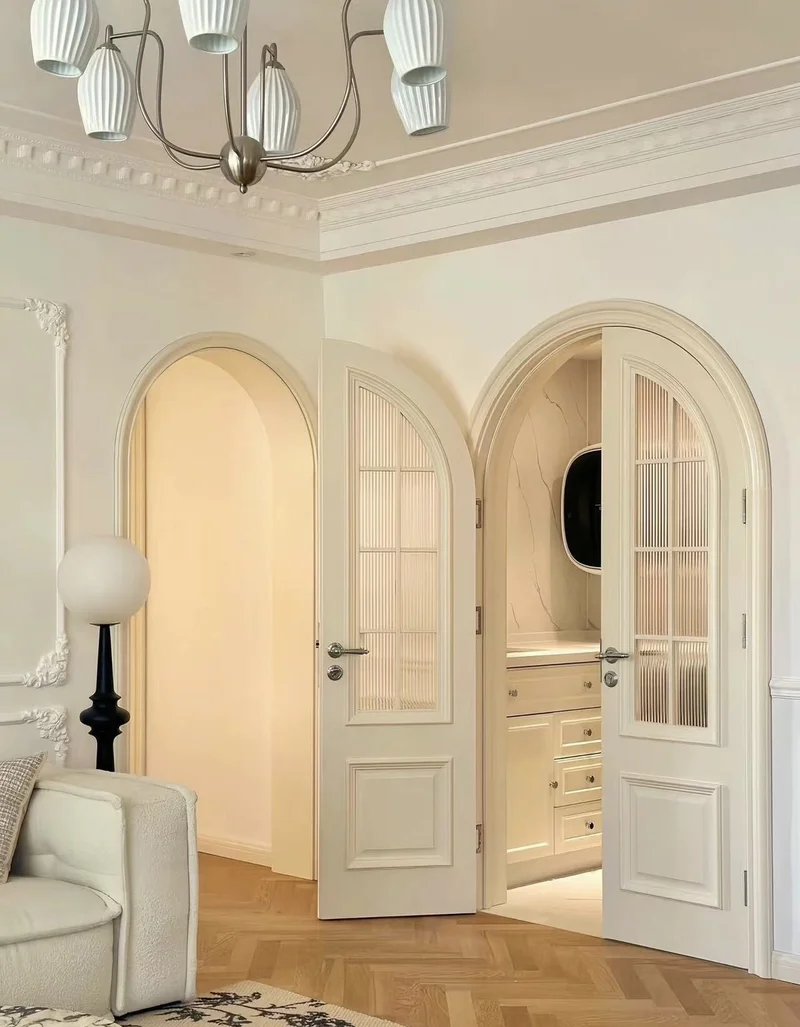
All load-bearing calculations and testing protocols adhere to the following ASTM standards, ensuring predictable performance under US building code loads.
| Performance Category | Governing ASTM Standard | Typical Performance Rating / Specification |
|---|---|---|
| Structural Wind Load | ASTM E330 | Positive & Negative Pressure tested to project-specific requirements (e.g., 50 psf / 2.4 kPa Design Pressure). |
| Water Penetration Resistance | ASTM E331 | Tested at 15% of Design Pressure (min.) or per AAMA 501.1 water curtain test. |
| Air Infiltration | ASTM E283 | Classified per AAMA 920, typically achieving ≤ 0.10 cfm/ft² (0.51 L/s/m²) at test pressure. |
| Forced Entry Resistance | ASTM F588 / F842 | Grade 40 or higher hardware integration for meeting forced-entry resistance requirements. |
| Cyclic Wind Pressure | ASTM E1996 & E1886 | Tested for impact and cyclic pressure differentials to comply with hurricane-prone region codes. |
| Thermal Transmittance (U-Factor) | ASTM C1363 / NFRC 100 | Center-of-glass U-factors as low as 0.27 Btu/(hr·ft²·°F) (1.53 W/m²·K). Whole product U-factors certified per NFRC. |
Load Ratings & Engineering Parameters
- Design Pressure (DP): Engineered for DP ratings from 25 psf to 60 psf (1.2 kPa to 2.9 kPa), validated per ASTM E330. Maximum allowable deflection is L/175 or L/360, as specified.
- Hardware Integration: Doors are engineered to accommodate multi-point locking systems and heavy-duty continuous hinges rated for a minimum of 500,000 cycles per BHMA A156.13 Grade 1. Hinge shear load capacity exceeds 1000 lbs (454 kg).
- Anchorage & Framing: Sub-sill and frame anchor spacing is calculated per ASTM E2112 to transfer design loads to the supporting structure without exceeding allowable stresses in the aluminum.
Critical Performance Characteristics
- Condensation Resistance: Certified Condensation Resistance Factor (CRF) per AAMA 1503, typically > 50 for thermally broken systems.
- Sound Transmission: Glazing configurations achieve Outdoor-Indoor Transmission Class (OITC) ratings up to 38 and Sound Transmission Class (STC) ratings up to 42, tested per ASTM E90 and E413.
- Durability & Maintenance: Finish warranties are contingent on compliance with ASTM D1679 (anodizing) and AAMA 2605 (paint), ensuring long-term color stability and chalk resistance per ASTM D2244/D659.
Trusted Global Exporter: Proven Track Record with US Distributors & Contractors
Our supply chain and product engineering are built for the North American specification market. We operate a vertically integrated manufacturing complex certified to ISO 9001:2015, with dedicated production lines for ASTM-compliant fenestration. This ensures batch-to-batch consistency in alloy temper (6063-T5/T6), powder coating thickness (minimum 2.0 mils per AAMA 2604), and glass insulation performance.
Key Technical & Logistical Advantages for US Partners:
- Material Traceability & Compliance: Full mill certificates for aluminum extrusions and temper verification. All sealants (structural silicone, EPDM gaskets) are sourced from US-based chemical suppliers (Dow, GE) to guarantee ASTM C920 and C1184 compliance.
- Engineered for US Climate Zones: Door systems are pre-configured for performance thresholds. Glazing units are calculated for condensation resistance (CRF > 50) and thermal insulation (U-factors as low as 0.30 Btu/hr·ft²·°F) specific to project location.
- Precision Fabrication: CNC machining of frame corners with tensile shear connectors ensures structural integrity. Hardware preparation is machined to ANSI/BHMA A156.115 standards for seamless integration with US-specified locksets and closers.
- Streamlined Logistics for Contractors: Master carton packaging with ASTM D5118 edge protectors. Palletization is optimized for container load (40′ HQ) and includes clear, site-ready labeling with SKU, dimensions, and installation quadrant.
Performance Validation for Specification-Grade Projects:
| Parameter | Test Standard | Performance Range | Application Note |
|---|---|---|---|
| Air Infiltration | ASTM E283 | ≤ 0.10 cfm/ft² | Exceeds AAMA/WDMA/CSA 101/I.S.2/A440 for commercial grade. |
| Water Penetration Resistance | ASTM E331 | ≥ 15% DRF (Design Pressure) | Validated for 50-year storm event profiles in coastal regions. |
| Structural Performance | ASTM E330 | Positive & Negative to 50 psf (typ.) | Engineered for high-wind zones; calculations stamped by US PE available. |
| Acoustic Transmission | ASTM E90 | STC 35-42 rating achievable | Achieved through laminated glass configurations and dual-seal thermal breaks. |
| Cyclic Durability | AAMA 920 | 10,000+ cycles (Grade 40) | Hardware and frame integrity tested for heavy-traffic commercial entrances. |
Our documentation package for distributors includes:
- Third-Party Certification: Validated test reports from IAS-accredited US laboratories.
- Installation Details: Engineered shop drawings (CAD .dwg) and submittal packages formatted for US architectural review.
- Lead-Time Reliability: Forecast-driven production scheduling, with dedicated container allocation for major projects to maintain 98% on-time delivery.
Frequently Asked Questions
What ASTM standards are mandatory for aluminum glass doors in US commercial construction?
Aluminum frames must comply with ASTM E283 for air infiltration, ASTM E330 for structural performance under wind loads, and ASTM E1886 for impact resistance. Glazing should meet ASTM C1036. For full assembly certification, seek testing per ASTM E1996 for hurricane zones and NFRC ratings for thermal performance (U-factor ≤ 0.48).
How do you prevent warping and ensure dimensional stability in humid US climates?
Utilize thermally broken aluminum profiles with a polyamide barrier (minimum 24mm) to decouple interior/exterior temperatures. For composite elements, specify WPC with density ≥ 1.3 g/cm³ and moisture absorption < 0.5%. All components must undergo cyclic humidity testing per ASTM D1037 to validate stability against expansion/contraction.
What are the formaldehyde emission requirements for door composite materials?
For any wood-plastic composite (WPC) or laminated components, compliance with CARB Phase 2 or EPA TSCA Title VI is mandatory, requiring emissions ≤ 0.05 ppm (equivalent to E0 standard). Specify urea-formaldehyde-free adhesives and provide third-party certification (e.g., CPAI-201) for all composite cores and finishes.
How is thermal insulation performance quantified and guaranteed?
Performance is defined by the NFRC-certified U-factor. For high-efficiency doors, specify double or triple glazing with Low-E coating (e.g., ε ≤ 0.04) and argon fill. The thermal break in the aluminum frame must have a minimum barrier width of 24mm, achieving a whole-door U-factor of ≤ 0.35 Btu/(ft²·h·°F).
What impact resistance is required for safety and hurricane-prone regions?
Doors must pass large missile impact testing per ASTM E1996 (9lb 2×4 timber at 50fps) and cyclic pressure testing per ASTM E1886. Specify laminated glass with a minimum 1.52mm PVB interlayer or SGP interlayer for enhanced performance. Frame anchoring must be engineered for ultimate wind loads ≥ 150 psf.
What finishing processes ensure long-term corrosion and UV resistance?
Employ a multi-stage pretreatment (chromate-free) followed by electrostatic powder coating with a minimum 60μm thickness per AAMA 2604 or 2605 for superior weatherability. For harsh coastal environments, specify fluoropolymer (PVDF) coatings per AAMA 2605, which offer 30+ years of color and gloss retention.
How is sound insulation performance measured and achieved for acoustic doors?
Sound Transmission Class (STC) ratings of 35-45 are typical. Achieve this using laminated glass with asymmetric pane thicknesses (e.g., 6mm/10mm), butyl acoustic interlayers, and fully perimeter seals with magnetic or compression gaskets. The door assembly must be tested per ASTM E90 in a certified laboratory.
What quality controls verify structural integrity and hardware compatibility?
Implement in-line CNC machining for consistent profile tolerances (±0.5mm). All hardware load points (hinges, locks) must be reinforced with stainless steel inserts or LVL (Laminated Veneer Lumber) core blocks. Conduct full-scale cycle testing per ANSI/BHMA A156.115 for a minimum of 250,000 cycles to ensure longevity.