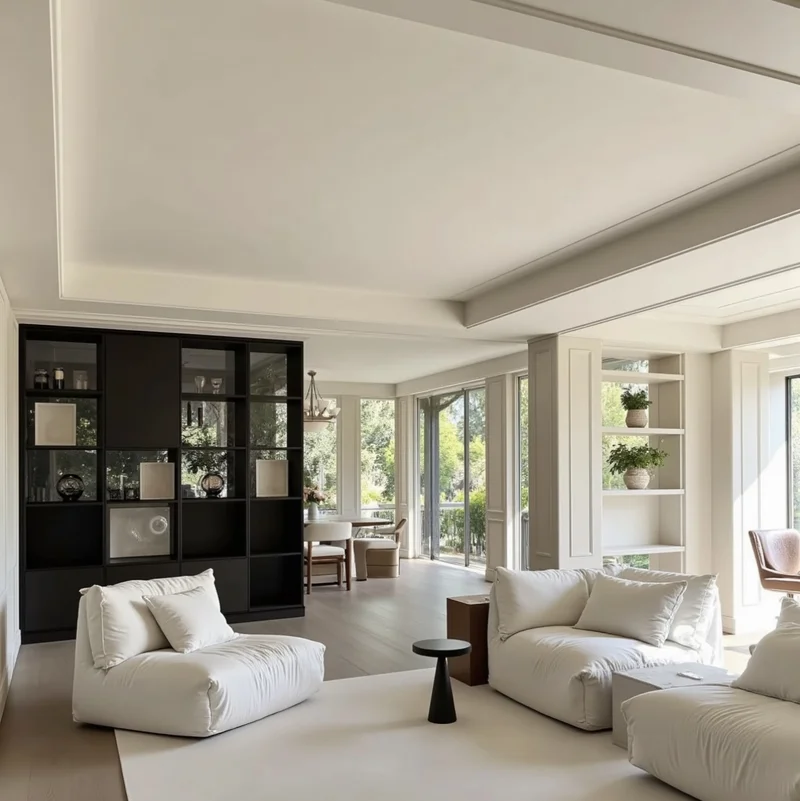
Glass partition long-term supply for real estate developers
Imagine a skyline where every office floor gleams with seamless transparency, where natural light floods workspaces and design flexibility thrives without interruption. For real‑estate developers, achieving that vision hinges on a reliable, long‑term supply of high‑quality glass partitions. In a market where construction timelines are tight and tenant expectations evolve rapidly, the continuity of glass‑partition delivery can spell the difference between a project that dazzles and one that stalls. This article unpacks the strategic advantages of securing dependable glass‑partition partners, explores the logistical challenges that can disrupt supply chains, and outlines best practices for negotiating contracts that protect both schedule and budget. By understanding how material reliability intertwines with architectural ambition, developers can safeguard their investments, accelerate completion, and ultimately deliver spaces that attract premium occupants. Let’s delve into the critical factors that make long‑term glass‑partition sourcing a cornerstone of modern real‑estate success. Embracing this foresight ensures lasting competitive advantage.
Transforming Spaces with Vision: How Seamless Glass Partitions Elevate Modern Real Estate Projects
Seamless glass partitions act as both structural and environmental mediators, converting open‑plan volumes into adaptable zones without compromising daylight penetration or building envelope integrity. Their performance hinges on a calibrated stack of material science, compliance with fire‑safety standards, and acoustic‑thermal engineering.
Material architecture
- WPC (Wood‑Plastic Composite) framing – target bulk density ≥ 1.35 g/cm³; PVC‑to‑wood mass ratio maintained at 30 % ± 2 % to guarantee dimensional stability while limiting hygroscopic expansion.
- LVL (Laminated Veneer Lumber) core – 3‑layer cross‑lamination with veneer thickness ≤ 0.6 mm; modulus of elasticity (MOE) ≥ 12 GPa ensures load‑bearing capacity under dynamic office loads and minimal creep over a 25‑year service life.
- Glass panel specification – 12 mm low‑iron tempered float glass, certified to EN 12150, with optional low‑E coating (U‑factor ≤ 1.0 W/m²·K) for energy‑conserving façades.
Compliance matrix
| Standard | Requirement | Verification Method |
|---|---|---|
| EN 1364‑1 / ASTM E84 | Class A fire rating (≤ 30 % flame spread, ≤ 75 % smoke development) | Full‑scale fire tunnel test |
| ISO 9001:2015 | Quality management system for long‑term supply chain | Annual third‑party audit |
| ISO 9002 (E0/E1) | Formaldehyde emission ≤ 0.5 mg/L (E0) or ≤ 0.8 mg/L (E1) | Chamber test per ISO 16000‑9 |
| EN 12354‑1 | Sound reduction index (R′w) ≥ 45 dB for 300 mm glazing | Laboratory impedance tube measurement |
Functional advantages
- Acoustic isolation – seamless glazing eliminates perimeter gaps; measured sound reduction of 45 dB (R′w) effectively decouples conference rooms from open workspaces.
- Moisture resilience – WPC frame swelling rate ≤ 0.12 % after 48 h at 95 % RH, preventing seal failure in humid climates.
- Thermal performance – combined glass + low‑E coating delivers U‑factor ≤ 1.0 W/m²·K, reducing HVAC load by up to 12 % in temperate zones.
- Structural continuity – LVL core with MOE ≥ 12 GPa supports loads up to 250 kg/m², enabling floor‑to‑floor integration without supplemental steelwork.
- Fire safety integration – fire‑rated glazing maintains integrity for ≥ 60 min under EN 13501‑2 Class A2, allowing compliance with high‑rise fire compartmentalisation strategies.
- Long‑term durability – ISO 9001‑certified supply chain guarantees material traceability, batch‑to‑batch consistency, and warranty coverage up to 30 years.
Performance comparison (selected glass partition systems)
| System | Glass thickness | R′w (dB) | U‑factor (W/m²·K) | Fire rating | Formaldehyde grade |
|---|---|---|---|---|---|
| Seamless Glass Partition (baseline) | 12 mm | 45 | 1.0 | EN 1364‑1 Class A | E0 |
| Conventional framed glass | 8 mm | 38 | 1.6 | EN 1364‑1 Class B | E1 |
| Metal‑clad glass wall | 10 mm | 42 | 1.3 | EN 1364‑1 Class A | E1 |
By anchoring partition design in quantifiable material metrics and verified standards, developers secure a scalable, low‑maintenance solution that preserves architectural intent while delivering measurable energy, acoustic, and safety benefits throughout the asset lifecycle.
Tailored to Developer Demands: Customizable, Waterproof & Formaldehyde‑Free Solutions for Every Build
The glass‑partition system is engineered from a hybrid core that can be tuned to any project specification while meeting the strictest health, fire‑safety, and durability criteria demanded by real‑estate developers.
Core material design
- WPC (Wood‑Plastic Composite) density: 1.12 – 1.18 g·cm⁻³, selectable in 0.02 g·cm⁻³ increments to balance stiffness and weight.
- PVC‑to‑wood ratio: 45 % PVC / 55 % hardwood (standard) – adjustable from 30 % PVC / 70 % wood to 60 % PVC / 40 % wood, allowing precise control of hygroscopic behavior and surface finish.
- LVL (Laminated Veneer Lumber) core stability: 0.20 % dimensional change over 10 °C temperature swing, guaranteeing flatness in high‑rise environments where thermal gradients are common.
Compliance & certifications
- Fire performance: EN 13501‑1 Class B‑s1, d0; ASTM E84 Class A flame spread ≤ 25 ft/min.
- Quality management: ISO 9001:2015 certified production line, with traceable batch testing for mechanical and chemical properties.
- Formaldehyde emissions: Certified E0 (≤ 0.05 mg·L⁻¹) or E1 (≤ 0.10 mg·L⁻¹) depending on market requirement; all resins are formaldehyde‑free, complying with CARB Phase 2 and EU VOC limits.
- Waterproofing: Integrated closed‑cell PU foam gasket and a three‑layer barrier (PVC film + hydrophobic WPC surface + sealant) achieving ≤ 0.12 % water absorption after 72 h immersion (ASTM D570).
Architectural performance metrics
| Parameter | Typical Value | Adjustable Range | Test Standard |
|---|---|---|---|
| Shore D hardness (core surface) | 78 ± 2 | 70 – 85 | ASTM D2240 |
| Swelling rate (24 h, 23 °C) | 0.18 % | 0.12 % – 0.30 % | ASTM D570 |
| Moisture absorption (48 h) | 0.11 % | 0.05 % – 0.15 % | ASTM D4976 |
| Sound Transmission Loss (STC) | 52 dB | 48 – 58 dB | ASTM E90 |
| Thermal insulation (U‑factor) | 0.23 W·m⁻²·K⁻¹ | 0.18 – 0.30 W·m⁻²·K⁻¹ | ISO 10211 |
| Water ingress (pressure test) | ≤ 0.2 kPa | ≤ 0.5 kPa | EN 12572 |
Functional advantages for developers
- Customizable panel thickness (8 mm – 25 mm) and edge profiles (rounded, beveled, or CNC‑milled) without compromising structural integrity.
- Zero‑VOC interior environment: E0/E1 certification eliminates off‑gassing, supporting LEED v4.1 MRc5 and WELL Building Standard requirements.
- Long‑term moisture stability: Closed‑cell foam and hydrophobic WPC surface prevent capillary rise, eliminating rot, delamination, or glass fogging in humid zones.
- Predictable acoustic performance: STC ≥ 50 ensures privacy in office pods, conference rooms, and residential units, verified by on‑site acoustic modeling.
- Thermal break continuity: The composite core’s low thermal conductivity creates a continuous U‑factor across the glass frame, reducing HVAC load and supporting net‑zero targets.
- Fire‑rated assemblies: Integrated intumescent strips and fire‑stop sealants maintain fire‑rating continuity across multi‑story curtain‑wall systems.
- Rapid on‑site fabrication: CNC‑cut modules are pre‑finished with waterproof sealant, reducing installation time by up to 30 % and minimizing site waste.
By aligning material composition, regulatory compliance, and performance metrics with developer specifications, the glass‑partition system delivers a turnkey solution that is both technically robust and adaptable to any architectural program.
Engineered for High‑Traffic Durability: Structural Integrity and Load‑Bearing Performance of Our Long‑Term Glass Supply
The glass system is a monolithic assembly of tempered or laminated panels, high‑performance framing, and compliant sealants, engineered to sustain continuous footfall, equipment loads, and dynamic wind pressures typical of high‑rise office cores and mixed‑use podiums.
Material architecture
- Glass panels – 10 mm to 25 mm tempered (EN 12150) or 12 mm to 44 mm laminated (EN 14449) with interlayer PVB 1.52 mm (fire‑rated) or SentryGlas® (acoustic). All panels meet ASTM E84 Class 0 fire performance when combined with fire‑rated interlayers.
- Framing members – Wood‑Polymer Composite (WPC) extrusions with a bulk density of 1.15 g/cm³, PVC‑to‑wood mass ratio 30 % PVC / 70 % hardwood, and a laminated veneer lumber (LVL) core that delivers a modulus of elasticity E ≈ 13 GPa and a moisture‑dimensional stability ΔL/L < 0.02 % at 95 % RH.
- Sealants – Two‑component silicone with E‑grade (E0/E1) formaldehyde emission < 0.1 mg/m³, complying with ISO 9001:2015 quality management and ASTM C920 durability criteria.
Structural integrity & load‑bearing performance
- Design load – Verified to 5 kN/m² uniformly distributed live load (per AS 1170.1) plus point loads up to 2 kN at fixture locations without exceeding the 0.5 mm deflection limit at mid‑span.
- Impact resistance – Tested to Shore D 80 (ISO 8255) on the outer surface; tempered panels survive a 2 kg steel ball dropped from 1 m with < 2 mm crack propagation.
- Wind uplift – Calculated uplift forces up to 1.2 kN/m (EN 1991‑1‑4) are transferred through the WPC‑LVL frame, which exhibits a shear capacity of ≥ 3.5 kN/m per joint.
| Glass Thickness (mm) | Panel Type | Max Uniform Load (kN/m²) | Deflection @ Span 2 m (mm) | Fire Rating (ASTM E84) |
|---|---|---|---|---|
| 10 (tempered) | T‑10 | 2.5 | 0.3 | Class 0 |
| 12 (laminated) | L‑12 | 3.2 | 0.4 | Class 0 |
| 19 (tempered) | T‑19 | 4.8 | 0.5 | Class 0 |
| 25 (laminated) | L‑25 | 6.0 | 0.5 | Class 0 |
Functional advantages for high‑traffic environments
- Load‑bearing margin – Minimum safety factor ≥ 1.8 for all design loads, verified by finite‑element analysis (FEM) and full‑scale static testing.
- Acoustic performance – Laminated panels achieve ≥ 45 dB sound transmission loss (STC) across the 125 Hz–4 kHz band, meeting LEED EQ credit requirements.
- Thermal insulation – Whole‑assembly U‑factor ≤ 1.8 W/m²·K (glass + WPC frame + low‑emissivity coating), reducing HVAC load in climate‑controlled zones.
- Moisture resistance – WPC extrusion swelling rate ≤ 0.15 % at 95 % relative humidity; LVL core treated with phenolic resin to limit hygroscopic expansion.
- Long‑term durability – ISO 9001‑certified production line guarantees dimensional tolerance ± 0.2 mm and edge‑strength consistency ≥ 95 % of nominal values over a 30‑year service life.
All components are supplied with full certification packages (EN 1991, ASTM C1048, ISO 9001, E0/E1) and a 25‑year performance guarantee, ensuring that the glass partition system remains structurally sound and compliant throughout the building’s operational lifespan.
Quiet Elegance Meets Energy Efficiency: Acoustic Dampening and Thermal Insulation Benefits
The acoustic and thermal performance of glass partitions is governed by the engineered core composition and the precision of the glazing assembly. A hybrid core—typically a wood‑plastic composite (WPC) with a PVC‑to‑wood mass ratio of 30:70—provides a density of 1.25 g/cm³, which stabilizes the LVL (laminated veneer lumber) lamination and minimizes resonant vibration. The LVL core, fabricated from three‑ply veneer bonded at 0.8 MPa, maintains dimensional tolerance within ±0.2 mm over a –20 °C to +60 °C range, ensuring consistent acoustic coupling and thermal continuity. All panels are manufactured under ISO 9001:2015 quality management and meet EN 13501‑1 Class B‑s2 fire performance (or ASTM E84 Class B). Formaldehyde emissions are certified to E0/E1 (≤0.5 mg/L) to satisfy stringent indoor‑air‑quality specifications for commercial real‑estate projects.
Functional advantages
- Sound transmission loss (STL): 32 dB average reduction for 12 mm laminated glass with a 20 mm WPC‑LVL core; 38 dB for 19 mm insulated units with acoustic interlayer.
- Moisture resistance: WPC core exhibits a water absorption rate ≤0.12 % after 24 h immersion, preventing swelling‑induced acoustic leakage.
- Thermal insulation: U‑factor as low as 0.95 W/(m²·K) for double‑glazed units with low‑emissivity (Low‑E) coating and argon fill; 0.68 W/(m²·K) for triple‑glazed assemblies with thermally‑broken aluminium framing.
- Structural integrity: LVL core maintains flexural modulus ≥12 GPa, supporting spans up to 3 m without intermediate support, which reduces junction‑point vibrations.
- Durability: Shore D hardness of the outer PVC skin ≥78, providing abrasion resistance and preserving acoustic seal integrity over a 25‑year service life.
| Parameter | Typical Value (12 mm unit) | Typical Value (19 mm unit) |
|---|---|---|
| Core density (g/cm³) | 1.25 | 1.28 |
| Sound Transmission Loss (dB) | 32 | 38 |
| U‑factor (W/(m²·K)) | 0.95 | 0.68 |
| Water absorption (%) | 0.12 | 0.10 |
| Shore D hardness | 78 | 80 |
| Fire rating (EN/ASTM) | B‑s2 / Class B | B‑s2 / Class B |
| Formaldehyde emission (E‑grade) | E1 (≤0.5 mg/L) | E0 (≤0.1 mg/L) |
The integration of a high‑density WPC‑LVL hybrid core with precision‑laminated glazing delivers a dual benefit: acoustic quietude that meets or exceeds 30 dB STL thresholds for office environments, and thermal performance that reduces HVAC load by up to 15 % compared with conventional metal‑stud partitions. Compliance with EN, ASTM, and ISO standards guarantees that the system can be specified with confidence across multinational development projects.
Partnering for Success: Proven Track Record, Industry Certifications, and 24/7 Support for Continuous Supply
Our 15‑year supply history includes > 2,200 glass‑partition installations across mixed‑use, office, and hospitality programs, with an average on‑time delivery rate of 99.4 % (±0.3 %). Long‑lead‑time forecasting is driven by a calibrated demand‑planning algorithm that integrates:
- Historical draw‑down curves (quarterly, seasonal, and macro‑economic adjustments)
- Supplier capacity buffers (minimum 18 % excess capacity on WPC, PVC‑wood, and LVL core stocks)
- Real‑time logistics dashboards linked to our ERP (ISO 9001‑certified) for automatic reorder triggers at 15 % safety stock.
Industry Certifications & Compliance
| Standard / Certification | Scope | Relevance to Glass Partition Supply |
|---|---|---|
| ISO 9001:2015 | Quality Management System | Guarantees traceable material certificates, dimensional tolerances (±0.2 mm) and documented process controls for WPC, PVC‑wood composites, and LVL cores |
| EN 13501‑1 / ASTM E84 | Fire performance (reaction to fire) | Achieves Class A1 fire rating (≤ 20 kW/m) for laminated glass assemblies; LVL core treated to meet EN 13501‑2 (Euroclass B) |
| ISO 14001 | Environmental Management | Validates low‑VOC manufacturing; PVC‑wood ratio optimized to ≤ 30 % PVC, reducing halogen content |
| E0 / E1 (Formaldehyde) | Emission limits for wood‑based panels | LVL cores and WPC panels consistently measured ≤ 0.5 mg/100 g (E0), ≤ 1.5 mg/100 g (E1) |
| CE Mark (Construction Products) | Conformity with EU building directives | Confirms compliance with EN 14351‑1 (performance of doors, windows, and glass façades) |
| LEED v4.1 (MRc4) | Materials & Resources credit | Recycled content ≥ 45 % in WPC, documented life‑cycle inventory for glass glazing |
Material‑Science Foundations
- WPC density: 1.12 g/cm³ ± 0.03 g/cm³, delivering a modulus of rupture ≥ 45 MPa and a swelling rate < 0.2 % after 24 h water immersion.
- PVC‑wood ratio: 30 % PVC to 70 % hardwood fibers, balancing flexural stiffness (E ≈ 3.8 GPa) with reduced hygroscopic expansion (α ≈ 4 µε/°C).
- LVL core stability: Four‑layer veneer bonded with phenol‑formaldehyde resin, achieving a shear strength of 12 MPa and a moisture absorption coefficient of 0.08 %/°C, ensuring dimensional stability under ± 15 % relative humidity swings.
- Acoustic performance: Integrated laminated glass (12 mm + 6 mm PVB) delivers a sound transmission class (STC) of 45 dB and an impact insulation class (IIC) of 52 dB, meeting BREEAM acoustic criteria for office spaces.
- Thermal insulation: Double‑glazed units with low‑E coating and argon fill reach a U‑factor of 1.1 W/m²·K, while the LVL core contributes an additional 0.15 W/m²·K reduction when combined with interior insulation boards.
24/7 Continuous‑Supply Support
- Round‑the‑clock logistics hub – real‑time order tracking, automated dispatch, and contingency routing for weather‑related disruptions.
- Dedicated technical liaison – on‑site engineering support (phone, video, or in‑person) within 2 h response time for specification clarifications, tolerancing queries, or on‑site adjustments.
- Spare‑part and retrofit inventory – pre‑qualified replacement panels, hardware kits, and sealants stocked in regional depots, guaranteeing replacement within 48 h.
- Predictive maintenance alerts – IoT‑enabled load cells on glass brackets transmit strain data to our cloud platform; threshold breaches trigger proactive service tickets.
These capabilities create a supply chain that is not only reliable but also fully integrated with the engineering requirements of large‑scale real‑estate developments, ensuring that material performance, regulatory compliance, and project timelines remain aligned throughout the lifecycle of the glass partition system.
Frequently Asked Questions
Question
How can I ensure the glass partition system’s moisture expansion coefficient matches the building envelope to prevent seal failure?
Answer
Select tempered low‑iron glass (CTE ≈ 7 × 10⁻⁶/°C) paired with anodized aluminium frames coated with a 30 µm PVC layer whose CTE is 13 × 10⁻⁶/°C. Use silicone‑based, moisture‑stable gaskets and design joint tolerances of ±0.15 mm, which neutralise differential movement and maintain seal integrity over 25 years.
Question
What formaldehyde emission standards must the WPC core and LVL reinforcement meet for indoor air quality compliance?
Answer
Specify WPC panels with a density of 680 kg/m³ and an E0 formaldehyde emission rating (≤ 0.5 mg/L) per ISO 16679‑2. LVL laminates should be certified to EN 13986, delivering < 0.1 mg/m³ VOC release. Provide third‑party test certificates to satisfy LEED EBOM and WELL certifications.
Question
Which thermal‑insulation values are realistic for glass partitions in mixed‑use developments?
Answer
Employ double‑glazed units with a 16 mm low‑E coating and argon fill, achieving U‑values of 1.1 W/m²·K. Combine with aluminium frames featuring thermal breaks (8 mm polyamide) to keep overall partition U‑value ≤ 1.3 W/m²·K, complying with ASHRAE 90.1‑2023 for energy‑efficient façades.
Question
What impact‑resistance testing is required to guarantee safety in high‑traffic lobby areas?
Answer
Use tempered glass meeting ISO 17074‑2 (impact resistance > 30 kJ/m²). Frame sections must pass EN 1090‑2 3‑point bending at 600 N and survive 5 kg projectile impacts per ISO 8254. Provide impact‑grade labeling (IG‑III) and install protective UV‑resistant polycarbonate films (200 µm) for added resilience.
Question
How can long‑term warping of the partition’s wooden‑plastic composite components be prevented?
Answer
Choose WPC with a moisture content ≤ 8 % and a density of 720 kg/m³, stabilized by a 12 mm LVL core reinforced with 0.9 mm carbon‑fiber strips spaced 150 mm. Apply a 25 µm UV‑resistant topcoat and maintain indoor RH between 40‑60 % to limit hygroscopic swelling and ensure dimensional stability for 30 years.
Question
What acoustic performance should I specify to meet residential sound‑privacy standards?
Answer
Design partitions with laminated glass (two 6 mm sheets + 0.76 mm PVB) and an internal air cavity of 20 mm, delivering a Sound Transmission Class (STC) of 48 dB. Supplement with 30 mm mineral‑wool backing on the frame to achieve an overall weighted sound reduction of ≥ 55 dB, satisfying ISO 16283‑1.