Aluminum Garage Doors: Lightweight Design for Smooth and Easy Operation
Garage doors are no longer just functional entry points—they’re integral elements of home design and performance. Among the most innovative solutions in modern garage door technology are aluminum garage doors, which combine sleek aesthetics with exceptional functionality. Renowned for their remarkably lightweight construction, these doors offer effortless, smooth operation that enhances both convenience and longevity. Unlike heavier materials that strain opening mechanisms and increase wear over time, aluminum reduces stress on springs and openers, ensuring quieter performance and lower maintenance demands. Advanced engineering has made it possible to achieve structural strength without sacrificing weight, allowing for larger door designs without compromising ease of use. Whether in contemporary homes seeking minimalist appeal or properties in coastal environments requiring corrosion resistance, aluminum garage doors deliver a perfect balance of durability, elegance, and operational efficiency—transforming the way homeowners interact with one of their most frequently used home features.
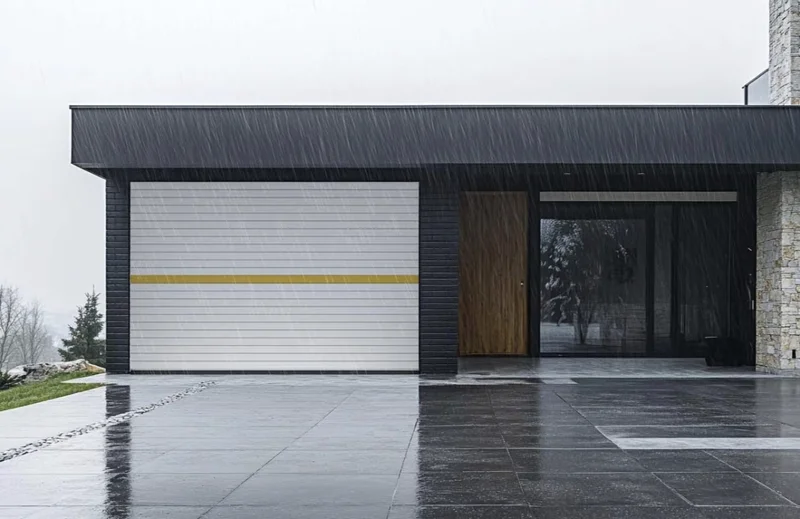
Why Aluminum Garage Doors Offer Superior Lightweight Performance
-
Aluminum garage doors deliver superior lightweight performance due to the inherent material properties of aluminum alloys, which provide a high strength-to-density ratio unmatched by traditional door materials such as steel or wood. This structural efficiency allows for large door panels without proportional increases in mass, directly contributing to reduced mechanical stress on operating components.
-
The reduced weight translates into significantly smoother operation. Garage door systems, particularly torsion spring and opener mechanisms, experience diminished wear when handling lighter doors. This not only enhances operational fluidity but also extends the service life of critical hardware. Motors require less torque to initiate and sustain movement, resulting in quieter performance and lower energy consumption—key factors in long-term operational efficiency.
-
Aluminum’s corrosion resistance further amplifies its performance advantages. Unlike steel, aluminum forms a self-passivating oxide layer when exposed to moisture, eliminating the need for heavy protective coatings. This characteristic maintains consistent weight over time and prevents material degradation that could compromise balance and operation. In coastal or high-humidity environments, this resistance ensures reliable function without added maintenance burden.
-
Design flexibility is another consequence of aluminum’s lightweight nature. Engineers can incorporate larger glazed sections, intricate panel profiles, or integrated insulation without exceeding safe operational weight thresholds. This enables architects and homeowners to achieve aesthetic sophistication and thermal performance without sacrificing functionality.
-
Installation and structural requirements are also positively impacted. Lighter doors impose lower loads on framing, tracks, and foundations, reducing the need for structural reinforcement—particularly beneficial in retrofit scenarios or lightweight construction systems. Handling during transport and mounting is safer and more efficient, decreasing labor intensity and associated costs.
-
When compared to steel doors of equivalent size, aluminum units typically weigh 30–50% less while maintaining structural integrity under normal loading conditions. This weight reduction directly correlates with faster cycle response, improved balance calibration, and reduced risk of system failure.
In summary, aluminum garage doors offer a performance-optimized solution where low mass, durability, and operational precision converge. The material’s lightweight nature is not merely a convenience—it is a foundational attribute that enhances mechanical reliability, energy efficiency, and design adaptability across diverse residential and light commercial applications.
The Connection Between Lightweight Materials and Garage Door Functionality
- Reduced mechanical strain on operating components
- Enhanced cycling speed and responsiveness
- Lower energy consumption in automated systems
- Improved long-term durability through balanced load distribution
The integration of lightweight materials in garage door design fundamentally influences operational efficiency, reliability, and system longevity. Aluminum, with a density approximately one-third that of steel, exemplifies how material selection directly dictates functional performance. The use of aluminum in garage door construction significantly reduces the overall mass of the door assembly, resulting in decreased demand on critical mechanical elements such as torsion springs, cables, rollers, and track systems. This reduction in load translates into diminished wear and fatigue over time, mitigating the risk of premature failure and minimizing maintenance frequency.
A direct consequence of lower inertia is improved responsiveness in both manual and automated operation. When the door is lighter, operators—whether human or motorized—expend less force to initiate movement. In automated systems, this allows the garage door opener to function with greater efficiency, drawing less current and reducing thermal stress on internal motors and gear trains. This contributes to longer service intervals and enhances the reliability of safety mechanisms, including automatic reversal systems, which depend on consistent torque feedback.
Furthermore, lightweight aluminum panels facilitate smoother travel along tracks, particularly in configurations with complex articulation such as sectional or tilt mechanisms. Reduced friction and binding decrease lateral stress on rollers and hinges, promoting consistent alignment and minimizing noise during operation. This balance between structural integrity and low mass is achieved through engineered profiles and ribbing, which maintain rigidity without adding unnecessary weight.
From a lifecycle perspective, aluminum’s corrosion resistance complements its mechanical advantages, ensuring consistent performance in diverse environmental conditions. Unlike heavier materials prone to rust-induced stiffness, aluminum retains dimensional stability and surface integrity, preserving operational smoothness over decades. Thus, the strategic adoption of lightweight aluminum is not merely a design consideration but a functional imperative—directly enabling quieter, safer, and more energy-efficient garage door systems that meet the demands of modern residential and commercial applications.
Energy Efficiency and Durability Benefits of Aluminum Construction
-
Aluminum construction in garage doors delivers exceptional energy efficiency and long-term durability, making it a preferred material in modern residential and light commercial applications. Its inherent properties, combined with advanced engineering techniques, ensure superior thermal performance and resistance to environmental degradation.
-
Aluminum is non-ferrous, rendering it immune to rust and corrosion—a critical advantage in coastal or high-humidity environments where steel components often deteriorate. When paired with thermal breaks—insulating barriers that separate interior and exterior aluminum profiles—the material significantly reduces thermal conductivity. This design mitigates heat transfer across the door assembly, contributing directly to improved building envelope performance and reduced HVAC load.
-
High-performance aluminum garage doors are often fabricated with polyurethane or polyisocyanurate insulation injected between dual aluminum skins. This composite structure achieves thermal resistances (R-values) ranging from R-12 to R-18, aligning with stringent energy codes and supporting sustainable building objectives. The precision extrusion of aluminum profiles ensures tight panel joints, minimizing air infiltration and enhancing overall thermal integrity.
-
The durability of aluminum extends beyond corrosion resistance. It maintains structural stability across wide temperature fluctuations, resisting warping, cracking, or dimensional changes common in wood or composite alternatives. With a lifespan exceeding 25 years under routine maintenance, aluminum doors exhibit lower lifecycle costs due to reduced need for repair or replacement.
-
Surface treatments such as powder coating or anodizing further enhance longevity. These finishes provide robust protection against UV degradation, chalking, and color fading while offering a broad spectrum of aesthetic options. The coatings adhere tenaciously to the aluminum substrate, ensuring long-term visual consistency and minimal maintenance.
-
From an operational standpoint, aluminum’s high strength-to-density ratio enables lighter door assemblies without sacrificing structural integrity. This reduced mass decreases stress on opening mechanisms, springs, and tracks, promoting smoother operation and extending the service life of moving components. The synergy between lightweight design and durable materials results in a reliable, energy-efficient system that performs consistently over time.
-
In sum, aluminum construction provides a technically advanced solution that balances energy efficiency with enduring performance, meeting the demands of both architectural specification and environmental resilience.
Customization Options That Combine Style with Easy Operation
-
Customization in aluminum garage doors extends beyond aesthetics, integrating functional design elements that enhance both visual appeal and operational efficiency. Homeowners and architects can select from a range of panel profiles—including flush, raised, recessed, and carriage-house styles—that emulate traditional materials while maintaining the inherent advantages of lightweight aluminum. These profiles are engineered to distribute structural stress evenly, reducing strain on the operating mechanism and contributing to smoother, quieter movement over time.
-
Finish options play a critical role in both durability and style. High-quality powder-coated finishes offer superior resistance to chipping, fading, and corrosion, ideal for coastal or high-exposure environments. These coatings are available in a broad spectrum of colors and textures, including wood-grain laminates that replicate the appearance of cedar or mahogany without the maintenance burden. Integration of thermal breaks in insulated models further enhances performance, minimizing thermal transfer while preserving design flexibility.
-
Operational ease is augmented through tailored hardware selections. Counterbalance systems—torsion or extension springs—are precisely calibrated to the door’s weight, ensuring minimal effort during manual operation and prolonged lifecycle of automated openers. Hinges, rollers, and tracks can be upgraded to heavy-duty, low-friction components, reducing wear and enhancing glide performance. Contemporary designs often incorporate quiet-lift mechanisms, ideal for homes with adjacent living or bedroom spaces.
-
Integration with smart home ecosystems enables intuitive control and monitoring. Options include silent DC motor openers with battery backup, smartphone-enabled access, and programmable auto-close features. These systems complement the lightweight nature of aluminum, requiring less energy to operate and delivering near-silent performance.
-
Glazing packages offer another layer of customization, combining natural light transmission with security. Tempered, insulated glass in varying opacity levels—clear, frosted, or tinted—can be arranged in geometric, horizontal, or accent-panel configurations. Aluminum framing ensures structural integrity around glass inserts, maintaining the door’s slim profile and operational lightness.
-
Ultimately, the convergence of material science and design intelligence allows aluminum garage doors to deliver tailored aesthetics without compromising ease of use. Each customization choice is engineered to sustain performance, ensuring long-term reliability alongside visual distinction.
Maintenance and Long-Term Value of Lightweight Aluminum Garage Systems
-
Conduct routine inspections biannually to assess fastener integrity, track alignment, and seal condition. Focus on hinge points and roller mechanisms, as even minor misalignments can compromise operational smoothness due to the precision engineering inherent in lightweight aluminum systems.
-
Clean panel surfaces quarterly using a non-abrasive detergent and low-pressure rinse. Avoid solvent-based cleaners that may degrade protective anodized or powder-coated finishes. Residual dirt and environmental contaminants, particularly in coastal or industrial zones, accelerate surface oxidation and reduce long-term aesthetic value.
-
Lubricate moving components—rollers, hinges, springs, and tracks—every six months with a silicone-based or lithium-free lubricant. Petroleum-based products attract dust and particulates, leading to increased wear. Proper lubrication preserves the kinetic efficiency that defines lightweight aluminum designs.
-
Inspect weatherstripping annually for brittleness, compression set, or detachment. Replacement with manufacturer-specified profiles ensures sustained thermal performance and ingress protection. Given the dimensional stability of aluminum, seal degradation is typically the primary cause of air and moisture infiltration over time.
-
Monitor balance and alignment by disconnecting the opener and manually operating the door. A well-balanced system should remain stationary when lowered to mid-travel. Drift indicates spring tension deviation, which, if uncorrected, increases strain on components and reduces cycle life.
-
Address dents or impact damage promptly. Although aluminum resists corrosion, structural deformation—even minor—can alter load distribution across the panel assembly. Repair via professional realignment or panel replacement maintains design integrity and prevents stress propagation.
-
Ensure opener calibration matches the reduced mass of aluminum doors. Overpowered operators induce shock loading, accelerating wear on brackets and mounting points. Modern openers with adjustable force settings should be configured to match the door’s operational profile.
-
Prioritize use of OEM or engineered-compatible replacement parts. Non-specification components may introduce material incompatibilities or dimensional variances, undermining performance and voiding warranties.
The long-term value of lightweight aluminum garage systems is directly tied to disciplined maintenance. These systems deliver exceptional operational smoothness and energy efficiency over decades when maintained with technical rigor. Their inherent corrosion resistance and structural stability reduce lifecycle costs significantly compared to heavier alternatives, provided care protocols align with design intent.
Frequently Asked Questions
How does aluminum contribute to lightweight garage doors?
Aluminum is inherently lighter than steel—typically weighing up to 60% less—while maintaining substantial strength. When engineered with ribbed or reinforced panel designs, aluminum garage doors achieve an optimal strength-to-weight ratio, reducing the load on garage door openers and hardware, making them ideal for smooth and energy-efficient operation.
Are aluminum garage doors durable enough for long-term use?
Yes. High-grade aluminum used in garage doors, often 5052 or 6063 alloys, offers excellent resistance to corrosion, warping, and rust—even in humid or coastal environments. When anodized or powder-coated, the material withstands UV exposure and maintains structural integrity for decades with minimal maintenance.
Can a standard garage door opener handle an aluminum door?
Absolutely. Due to their reduced weight, aluminum garage doors place less strain on openers, allowing even mid-range belt-drive or chain-drive models to operate efficiently. This can extend the lifespan of both the door mechanism and opener, reducing wear and energy consumption.
What are the maintenance benefits of aluminum over steel garage doors?
Aluminum doors require no painting and resist rust inherently, eliminating the need for frequent repainting or anti-corrosion treatments. Cleaning typically involves only mild soap and water, making them a low-maintenance option ideal for homeowners seeking durable, long-term performance without upkeep hassles.
Do lightweight aluminum doors compromise insulation?
Not necessarily. Modern aluminum garage doors often integrate polyurethane or polystyrene insulation within composite or thermal break designs. These constructions maintain lightness while achieving R-values up to R-16, providing effective thermal performance without sacrificing ease of operation.
How do aluminum garage doors perform in extreme weather?
Aluminum handles temperature fluctuations well with minimal expansion or contraction. When combined with thermal breaks—insulating barriers between interior and exterior panels—the door resists heat transfer, preventing warping or binding in freezing winters or scorching summers.
Are aluminum garage doors energy efficient?
Yes, especially when designed with thermal breaks and insulated panels. These features reduce heat exchange between the garage and living spaces, improving HVAC efficiency. The lightweight nature also allows for tighter seals and better weatherstripping integration, minimizing air infiltration.
Can aluminum garage doors be customized in design and finish?
Definitely. Aluminum is highly malleable and can be extruded into various profiles, enabling modern, traditional, or custom aesthetics. It accepts powder coating in nearly any color, can mimic wood grain, and supports large glass inserts—offering both design flexibility and low maintenance.
What safety advantages do lightweight aluminum doors offer?
Lighter doors reduce the risk of injury during manual operation or emergencies. Their reduced inertia decreases stress on springs and cables—critical safety components—lowering the chance of sudden failures. This also enhances the performance of safety sensors and auto-reverse mechanisms.
How does the lifespan of aluminum garage doors compare to other materials?
Aluminum doors routinely last 25–30 years or more, outperforming wood (prone to rot) and steel (vulnerable to rust). With no need for refinishing or structural reinforcement, they offer superior longevity, especially in harsh climates, making them a cost-effective investment over time.
Can aluminum garage doors enhance home security?
While inherently lighter, aluminum doors achieve high security when reinforced with internal steel bracing or composite cores. Multi-point locking systems and tamper-resistant hardware can be seamlessly integrated, making them as secure as heavier alternatives without compromising ease of use.
Are aluminum garage doors eco-friendly?
Yes. Aluminum is 100% recyclable without loss of quality, and many garage door manufacturers use recycled content exceeding 75%. Combined with long life spans and energy-efficient operation, aluminum doors contribute to sustainable building practices and qualify for green building certifications.