Galvanized Steel Doors for Coastal Construction: Durable, Corrosion-Resistant Solutions for Harsh Marine Environments
In the demanding conditions of coastal construction, where relentless salt spray, high humidity, and powerful storms accelerate material degradation, selecting the right building components is not just a matter of aesthetics—it’s a critical decision for longevity and safety. Galvanized steel doors have emerged as a premier solution for architects, engineers, and builders seeking unmatched durability and corrosion resistance in marine environments. Engineered with a protective zinc coating that shields against rust and environmental wear, these doors maintain structural integrity while withstanding the harshest coastal elements. Beyond their resilience, galvanized steel doors offer exceptional strength, low maintenance requirements, and long-term cost efficiency—essential qualities for projects where exposure to the elements is constant. As coastal development continues to rise, demand for building materials that combine performance with reliability grows ever more pressing. Galvanized steel doors meet this challenge head-on, delivering enduring protection and peace of mind in one robust, intelligently designed solution.
Why Galvanized Steel Doors Are Ideal for Coastal Building Projects
-
Superior Corrosion Resistance:
Galvanized steel doors are engineered to withstand the aggressive conditions typical of coastal environments, where salt-laden air, high humidity, and frequent moisture exposure accelerate material degradation. The hot-dip galvanization process applies a protective zinc coating that forms a robust barrier against corrosion. This zinc layer not only shields the underlying steel but also acts sacrificially—corroding preferentially to protect the base metal—ensuring long-term integrity even in the face of constant marine exposure. -
Structural Durability and Longevity:
Coastal construction demands materials capable of enduring extreme weather cycles, including tropical storms, high winds, and prolonged UV exposure. Galvanized steel doors offer exceptional tensile strength and dimensional stability, resisting warping, cracking, and delamination common in wood or composite alternatives. Their resilience ensures reliable performance over decades, minimizing maintenance and replacement costs in infrastructure where access and repairs are logistically complex and expensive. -
Low Maintenance Requirements:
In remote or high-salinity coastal zones, maintenance windows are limited and labor-intensive. Galvanized steel doors require minimal upkeep—typically limited to periodic inspections and cleaning—due to their inherent resistance to rust and surface degradation. This operational efficiency is critical for facilities such as marine terminals, offshore support structures, and coastal research stations, where downtime must be avoided. -
Compatibility with Protective Coatings:
For projects requiring enhanced aesthetics or additional protection, galvanized steel provides an ideal substrate for powder coating or paint systems. The zinc layer bonds effectively with these finishes, creating a dual-defense system that extends service life while allowing for architectural customization. This versatility supports compliance with both functional and design standards in mixed-use or high-profile coastal developments.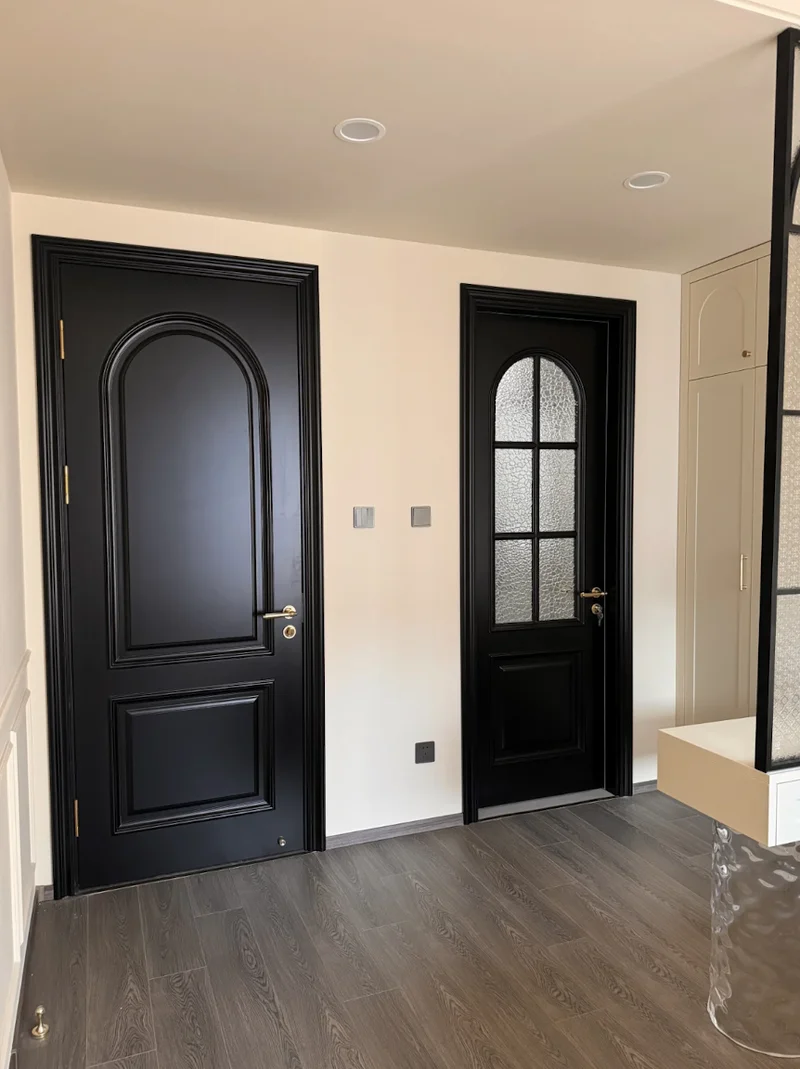
-
Proven Performance in Marine Applications:
Extensive use in offshore platforms, shipbuilding, and port infrastructure underscores the reliability of galvanized steel in maritime contexts. Independent studies and field data confirm that galvanized steel components outperform untreated or organically coated metals in salt spray and humidity testing, validating their selection for mission-critical building elements in corrosive environments.
Galvanized steel doors represent a technically sound, lifecycle-cost-effective solution for coastal building projects, combining material science with practical durability to meet the unique challenges of marine construction.
How Galvanization Protects Steel Doors from Saltwater Corrosion
-
Galvanization is a metallurgical process in which steel is coated with a layer of zinc to provide long-term protection against corrosion, particularly in aggressive environments such as coastal regions exposed to saltwater aerosols and high humidity.
-
The primary mechanism by which galvanization protects steel is through barrier protection. The zinc coating forms a dense, adherent layer that isolates the underlying steel from corrosive elements, including chloride ions present in salt-laden air and moisture. This physical barrier significantly retards the onset of oxidation and rust formation.
-
Beyond barrier protection, galvanization offers cathodic (sacrificial) protection. Zinc is more electrochemically active than steel, meaning it will preferentially corrode when exposed to an electrolyte such as seawater or salt-contaminated moisture. This electrochemical behavior ensures that even if the coating is scratched or damaged, exposing small areas of base steel, the surrounding zinc will continue to protect the exposed site by acting as an anode in the corrosion cell.
-
In coastal construction, steel doors are subjected to continuous exposure to airborne chlorides, which accelerate corrosion in uncoated or inadequately protected metals. Galvanized coatings, particularly when applied via hot-dip galvanizing, produce a robust, multi-layered structure consisting of zinc-iron alloy phases bonded metallurgically to the steel substrate. This ensures excellent adhesion and durability under mechanical stress and environmental cycling.
-
The longevity of galvanized steel doors in marine environments depends on coating thickness, uniformity, and adherence to recognized standards such as ASTM A123. Thicker coatings typically extend service life proportionally, with hot-dip galvanized doors often providing decades of maintenance-free performance in mild to moderate coastal zones.
-
Additionally, post-galvanization treatments such as passivation or topcoating with corrosion-inhibiting primers can further enhance performance, creating duplex systems that synergistically improve resistance to saltwater corrosion.
-
Regular inspection and maintenance—such as rinsing with fresh water to remove salt deposits—complement the inherent durability of galvanized steel, ensuring sustained integrity and function over time.
-
As a result, galvanized steel doors represent a technically sound, cost-effective solution for coastal buildings where reliability, structural integrity, and resistance to saltwater corrosion are paramount.
Critical Performance Benefits in High-Humidity and Wind-Prone Areas
-
Superior Corrosion Resistance in Salt-Laden Atmospheres
Galvanized steel doors leverage a zinc-iron alloy coating applied through hot-dip galvanization, forming a robust barrier against chloride intrusion. In coastal zones, airborne salt particles accelerate oxidation in standard steel and aluminum systems, leading to pitting, delamination, and structural degradation. The zinc layer sacrificially corrodes before the underlying steel, significantly extending service life—often exceeding 25 years with minimal maintenance—making galvanized steel the optimal choice for structures within 1.5 km of tidal waters. -
Structural Integrity Under High Wind Loads
Coastal regions are frequently exposed to high-velocity wind events, including tropical storms and hurricanes. Galvanized steel doors are engineered with reinforced frames and cores that meet or exceed ASTM E330 and AISC 341 standards for structural performance. Their high yield strength (typically 36,000–50,000 psi) ensures resistance to wind-induced deformation and cyclic loading, critical for maintaining building envelope integrity during extreme weather. -
Dimensional Stability in Fluctuating Humidity
Unlike wood or composite alternatives, galvanized steel exhibits negligible hygroscopic expansion or contraction. In environments with relative humidity levels persistently above 80%, materials such as wood swell and warp, compromising door alignment and seal efficacy. Galvanized steel maintains dimensional consistency, ensuring long-term operability of hinges, locks, and weatherstripping—key for security and energy performance. -
Reduced Maintenance and Lifecycle Costs
In high-humidity, saline environments, maintenance cycles for untreated or poorly protected materials shorten dramatically. Galvanized steel doors require no painting, sealing, or chemical treatments to sustain performance. Field studies in Florida and Gulf Coast installations show up to 60% lower lifecycle maintenance costs compared to powder-coated aluminum or fiberglass doors over a 20-year period. -
Compatibility with Secondary Protective Systems
The galvanized surface provides an excellent anchor profile for supplemental coatings such as epoxy or polyurethane topcoats, enabling duplex systems that further enhance durability. This layered defense is particularly effective in splash zones or areas with frequent salt spray exposure, where corrosion rates are highest.
Selecting the Right Galvanized Steel Door for Marine Climate Zones
-
Select galvanized steel doors with a minimum G90 galvanization coating (0.90 oz/ft² zinc coating) to ensure adequate corrosion resistance in high-salinity environments. Higher-grade coatings such as AZ150 (aluminum-zinc alloy) offer enhanced performance in severe marine exposure zones.
-
Evaluate the door’s substrate and coating adhesion rigorously. Electro-galvanizing provides a uniform but thinner coating, while hot-dip galvanizing delivers a thicker, more durable layer with superior edge coverage—critical for coastal applications where salt-laden moisture penetrates vulnerable points.
-
Prioritize doors with supplementary protective finishes, such as epoxy primers or powder coatings, applied over the galvanized base. These dual-layer systems significantly extend service life by providing a barrier against chloride ion penetration and UV degradation.
-
Assess structural design for resistance to cyclic loading and thermal expansion. Marine environments subject building components to persistent wind-driven moisture, temperature fluctuations, and elevated humidity. Choose doors with reinforced frames and continuous welds to prevent seam failure and water ingress.
-
Verify compliance with ASTM A123 (standard for zinc coatings) and ASTM B117 (salt spray testing). A minimum 1,000-hour salt spray resistance at 5% NaCl is recommended for doors in Zone 3 (severe marine exposure), per ISO 9223 corrosion classification.
-
Consider proximity to the shoreline and exposure category when specifying. Doors within 1,500 feet of open coastlines or in windborne debris regions require impact-resistant glazing and storm-rated hardware to meet local building codes (e.g., Miami-Dade NOA, ASTM E1886/E1996).
-
Examine hardware compatibility—use only 316L stainless steel hinges, fasteners, and thresholds to prevent galvanic corrosion. Dissimilar metal contact between carbon steel and stainless components must be mitigated with dielectric isolation.
-
Insist on full system testing for air, water, and structural performance under ASTM E283, E331, and E330. Field performance in marine zones demands integrated seals and drainage channels to manage sustained wetting cycles.
-
Engage manufacturers with documented long-term performance data in coastal installations. Request project references in similar climatic conditions and review maintenance logs to validate durability claims.
Selecting the appropriate galvanized steel door for marine climates requires a holistic evaluation of material science, environmental stressors, and regulatory standards. Performance hinges not only on base metallurgy but on system integration, detailing, and long-term serviceability in aggressive salt-laden atmospheres.
Installation Best Practices to Maximize Longevity in Coastal Structures
-
Ensure substrates are structurally sound, level, and free of debris, salt residues, and contaminants prior to installation. Coastal environments accelerate degradation of compromised interfaces; a clean, stable mounting surface is critical for long-term performance.
-
Use only marine-grade, non-corrosive fasteners—stainless steel (AISI 316/L preferred) or hot-dip galvanized per ASTM A153—compatible with the galvanized door frame. Avoid dissimilar metals that may induce galvanic corrosion; insulate contact points with dielectric unions or nylon washers where necessary.
-
Install doors with a slight outward pitch (3–5 degrees) to promote water runoff and prevent pooling at thresholds. Stagnant water retention accelerates corrosion and undermines seal integrity.
-
Apply compatible, UV-stable sealants—such as polysulfide or silicone-based formulations—around perimeter joints and penetrations. Sealant application must comply with manufacturer specifications for bead size, adhesion, and substrate preparation. Re-inspect and maintain seals annually.
-
Maintain a minimum 6 mm clearance between door components and adjacent masonry or concrete to prevent wicking of moisture and chloride-laden runoff. Use non-absorbent, corrosion-resistant shims for alignment.
-
Integrate effective overhangs or canopies (minimum 600 mm projection) to reduce direct rain exposure and salt spray accumulation on door surfaces and hardware.
-
Avoid grounding electrical systems through door frames. Stray currents in coastal infrastructure can exacerbate electrolytic corrosion, particularly in humid or submerged conditions.
-
Coordinate installation during low-humidity periods when possible to minimize trapped moisture within assemblies. Condensation during curing of adjacent concrete or plaster can compromise adhesion and initiate undercutting corrosion beneath coatings.
-
Verify alignment and operation of hinges, latches, and operators post-installation under full load conditions. Misalignment increases stress on galvanized coatings and accelerates mechanical wear.
-
Provide site-specific commissioning documentation detailing fastener types, sealant batch numbers, and inspection checkpoints. Train facility maintenance personnel on early indicators of coating breakdown, such as white rust formation or pitting at cut edges.
-
Schedule biannual inspections focusing on hinge knuckles, threshold interfaces, and weld zones—common initiation sites for corrosion due to micro-cracking or incomplete zinc coverage.
Proper installation is not merely mechanical placement; it is a corrosion management strategy. In coastal construction, even high-performance galvanized steel doors will underperform without meticulous attention to environmental loading, material compatibility, and moisture control during and after installation.
Frequently Asked Questions
What makes galvanized steel doors suitable for coastal construction projects?
Galvanized steel doors are highly suitable for coastal environments due to their zinc coating, which provides a protective barrier against salt-laden air and moisture—two primary contributors to corrosion. The hot-dip galvanization process ensures complete coverage and long-term durability, making these doors ideal for high-humidity, saline conditions where material degradation is accelerated.
How does galvanization protect steel doors from saltwater corrosion?
Galvanization protects steel through a zinc-iron alloy layer formed during the hot-dip process. This layer acts as a sacrificial anode, meaning it corrodes preferentially to the underlying steel, even if the coating is scratched. In coastal zones with high chloride exposure, this cathodic protection significantly extends the service life of steel doors.
Are galvanized steel doors more durable than aluminum or wood in coastal climates?
Yes, galvanized steel doors generally outperform wood and standard aluminum in coastal settings. Wood is prone to rot and mold from humidity, while untreated or non-marine-grade aluminum can suffer from pitting corrosion. Galvanized steel, especially when further coated with powder or paint systems, offers superior structural integrity and longevity under salt exposure.
What ASTM standards should galvanized steel doors meet for coastal use?
For coastal applications, galvanized steel doors should comply with ASTM A123/A123M for zinc coating thickness and adherence, ensuring sufficient corrosion resistance. Additionally, compliance with ASTM B117 (salt spray testing) and AASHTO M270 for structural steel quality confirms suitability for high-corrosion environments.
Can galvanized steel doors be powder-coated for additional coastal protection?
Yes, applying a powder-coated finish over galvanized steel creates a dual-defense system known as duplex coating. The galvanization provides underlying corrosion resistance, while the powder coat adds a durable, UV-resistant, and aesthetic barrier against salt spray and moisture—highly recommended for Class 4 marine environments per ISO 12944.
How often do galvanized steel doors need maintenance in coastal zones?
Properly installed and spec’d galvanized steel doors require minimal maintenance. Biannual inspections for coating integrity and cleaning with mild detergent to remove salt deposits are typically sufficient. In extreme coastal exposure, recoating with compatible topcoats may be needed every 10–15 years, depending on environmental severity.
What are the common failure points in galvanized steel doors near oceans?
Common failure points include fasteners, welded seams, and cut edges where galvanization may be compromised. Using stainless steel fasteners (e.g., Grade 316) and ensuring field-cut areas are touch-up galvanized or painted with zinc-rich primers are critical to prevent galvanic corrosion and maintain system integrity.
How does salt spray affect the lifespan of galvanized steel doors?
Salt spray accelerates corrosion by depositing chlorides that break down protective layers. Unprotected steel can degrade rapidly, but hot-dip galvanized coatings resist penetration due to the formation of protective zinc corrosion products (e.g., zinc hydroxide, zinc carbonate). In C5-M (marine) environments, properly treated galvanized steel doors can last 30+ years.
Should galvanized steel doors be combined with cathodic protection in coastal builds?
While galvanization typically provides adequate protection, pairing it with cathodic systems is generally unnecessary for doors unless they are part of a larger submerged or buried metal structure. However, isolating galvanized components from dissimilar metals (e.g., copper or untreated steel) is essential to avoid galvanic corrosion.
What design considerations apply to galvanized steel doors in hurricane-prone coasts?
In hurricane-prone coastal areas, galvanized steel doors must meet impact-resistant standards (e.g., ASTM E1886, E1996) and be part of a Miami-Dade NOA-compliant system. Reinforced frames, secure anchoring, and wind pressure ratings matching local codes are mandatory, with galvanized components helping maintain structural function post-exposure.
How do I inspect galvanized steel doors for early signs of coastal corrosion?
Inspect for white, powdery zinc oxide (normal) versus red rust (steel base exposure). Focus on joints, hinges, and bottom rails where moisture collects. Use a magnetized thickness gauge to assess remaining coating. Any breaches should be cleaned and repaired with zinc-rich spray or cold-galvanizing compounds.
What are the cost-benefit advantages of galvanized steel doors over alternatives in coastal construction?
While upfront costs may exceed wood or standard steel, galvanized steel doors reduce lifecycle costs due to minimal maintenance, extended durability (30–50 years), and lower replacement frequency. Their resistance to termites, warping, and impact also enhances safety and insurance compliance in vulnerable coastal regions.